Second Snuggles: Rescuing plushies, restoring them, and finding them new homes
Mr. Big Stuff, a rainbow teddy bear, came to Second Snuggles hard and bumpy. To make him snuggly again, Amy Crank, the plushie restoration business founder, had to cut him open, and that’s when she found out it was packed with tiny styrofoam beads. They spilled out and clung to her hands and everything around her. Too stubborn to vacuum, they turned cleanup into a job of its own.
She filmed the process for Second Snuggles’ TikTok and Instagram, and the camera caught every moment. The video racked up almost 2 million views after it was posted in March 2026.
“For some reason, people really liked this video of me being uncomfortable,” Amy says with a laugh, “but also the transformation of the stuffed animal into something that could be loved again.”
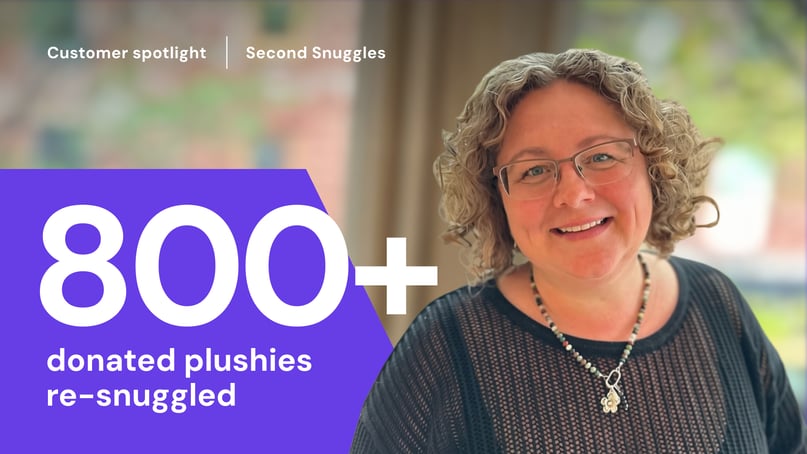
Within days of the video, every stuffed animal in the online store sold out, and the love kept coming. Today, more than 800 donated plushies have found new homes, donations arrive every week from around the country, and 200 people are on the 2027 waitlist for the Snuggle Spa, the family’s plushie restoration service.
But before all that, there was a rained-out children’s business fair in spring 2025, months of plushies with nowhere to go, and a website Amy built during Hostinger’s Black Friday sale that November.
A storm, an empty yard, and a camper full of plushies
Amy teaches sustainability and environmental science, so giving old things a second life has always been close to her heart.
She had no business background, but she and her husband, Andy, were raising two little entrepreneurs. Their daughters, Madeline and Amelia, were already running small ventures, selling eggs from the family’s chickens and making balloon animals for their community.
When a children’s business fair came along in spring 2025, the girls were eager to join, so the whole family pitched in. They took inspiration from a UK business that takes donated stuffed animals, repairs them, and finds them new homes, and decided to try something similar.
So the family opened a call for pre-loved plushies in their hometown in Vermont, hoping to gather enough to fill a table. The audience reactions were overwhelming. Within 24 hours, hundreds had arrived.
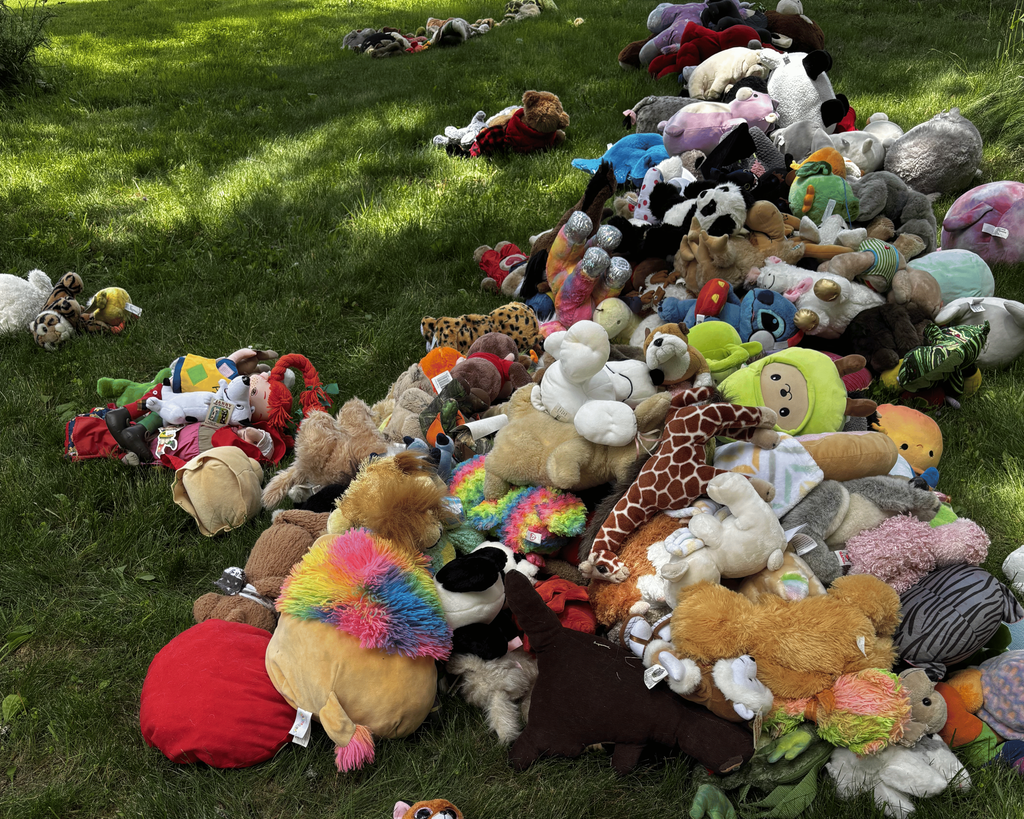
About a hundred made the cut for the fair, as many as they could take on at the time. Each one was cleaned, repaired if needed, named, given a personality, and finished with a little tag.
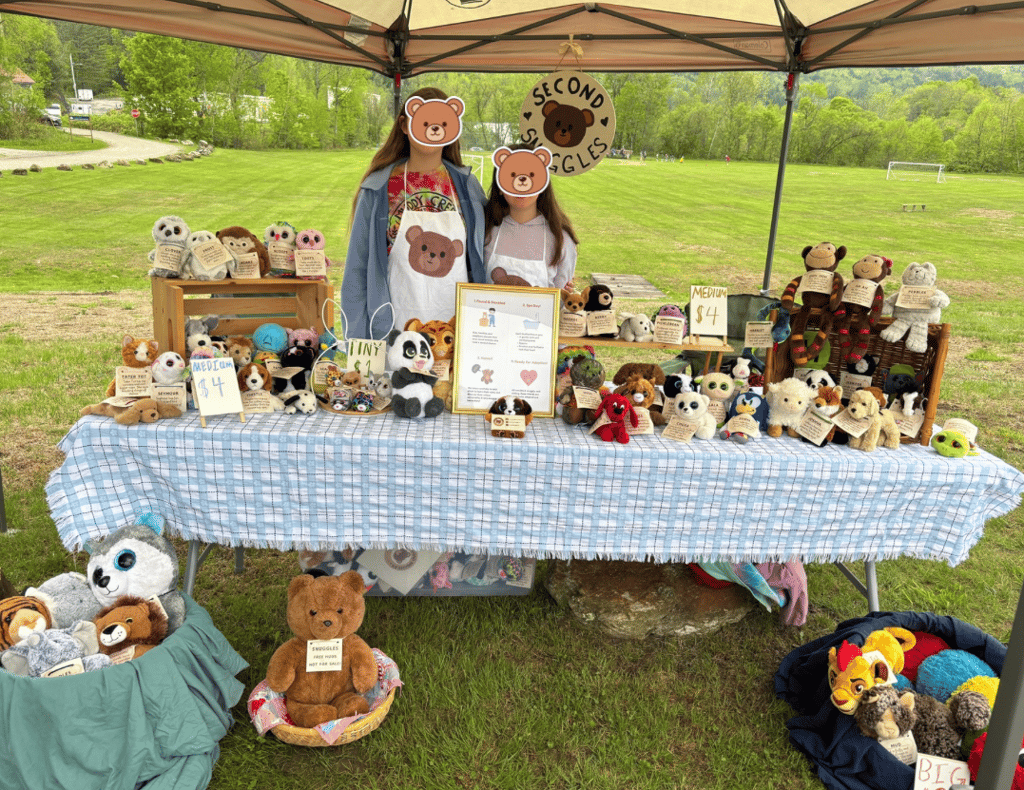
The plushies were ready for new homes. The weather wasn’t ready to let them go.
Right before the outdoor event began, a storm rolled in with thunder, lightning, and wind. No one came.
“We were very disappointed,” Amy recalls.
They took the stuffies home with no plan for what came next. After some time, the family explored ways to find new homes for the stuffed animals.
They built a pop-up tent in their front yard for a whole week, but nobody stopped by. Selling through local stores or flea markets wasn’t much of an option either, given how few people lived nearby. Amy also tried to find information about selling on Etsy, but secondhand plushies didn’t fit the platform’s rules.
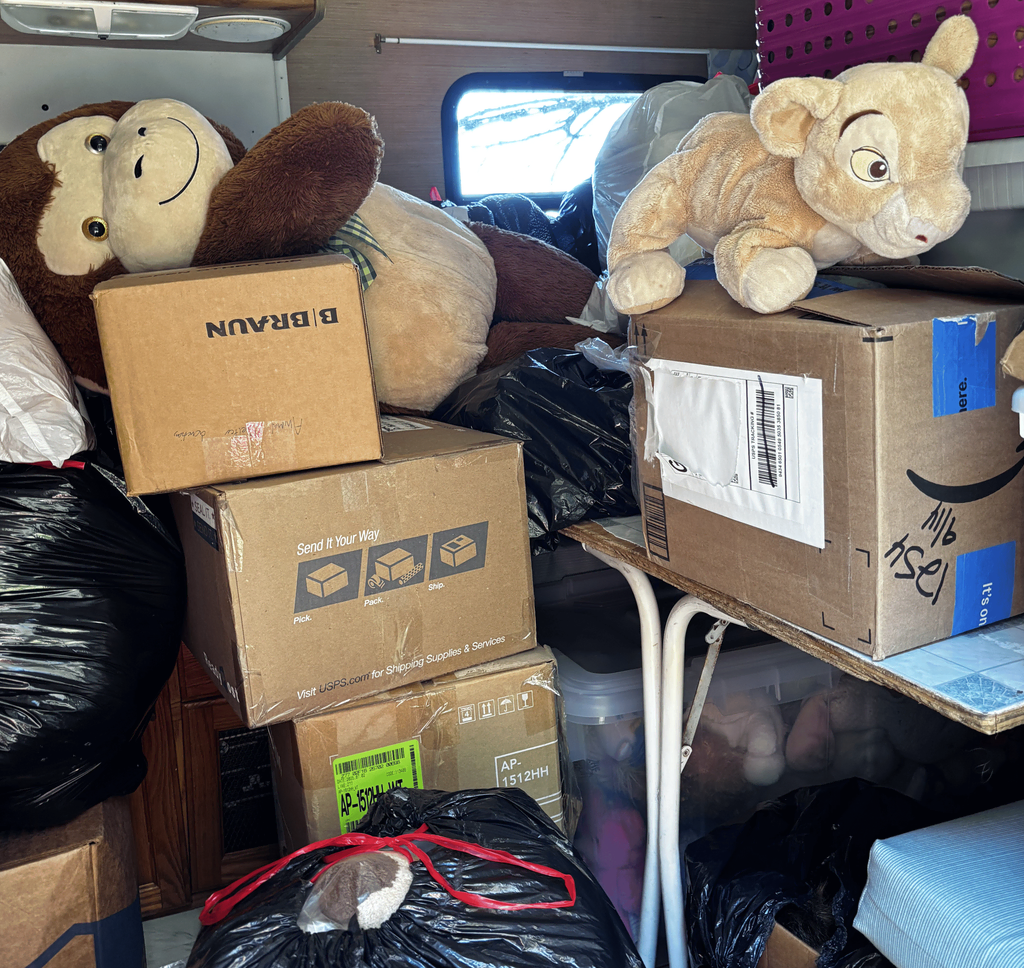
For months, the plushies just sat in a camper at home.
Building the Second Snuggles shop
Amy realized the plushies’ best chance of being re-snuggled was online.
She’d already started Instagram and TikTok accounts around the time of the fair, with no social media experience, just to see how people would respond. But she wanted Second Snuggles to have a home of its own.
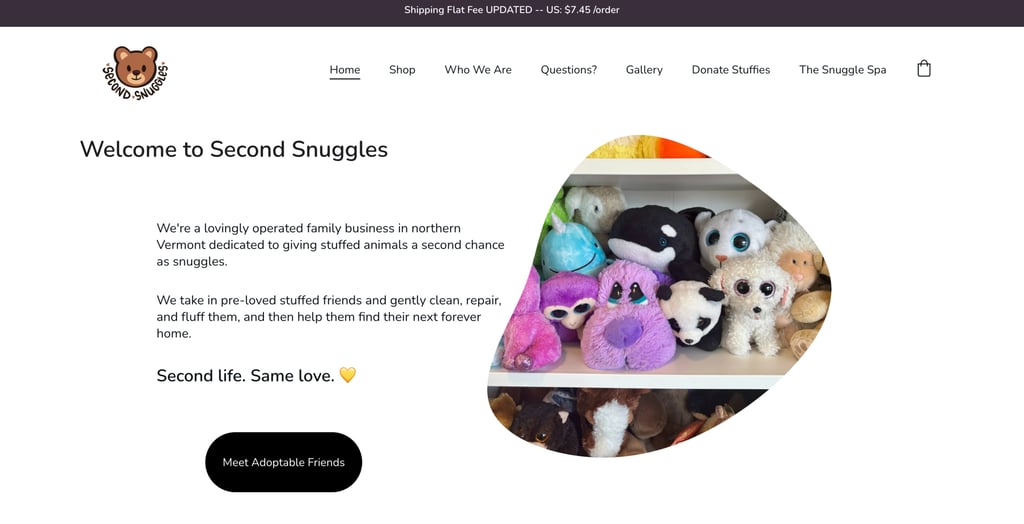
As plushie lovers themselves, the family wanted every donation to get the care they’d give their own. Telling that story properly required more room than a caption could provide, so Amy decided to create a website for Second Snuggles.
“I wanted to control the narrative,” Amy explains. “We’re not just getting stuffed animals at a thrift store and selling them again. We’re adding value to them.”
She created the website by herself, even though the last website she had built was a GeoCities page as a teenager in the ’90s. It took a while to work up the courage, and what finally pushed her was the timing.
It was November 2025, and the long Vermont winter, the family’s usual season for indoor projects, was about to set in. Hostinger’s Black Friday sale was also running, so building a small online corner for Second Snuggles wouldn’t cost much to try.
“We looked at a lot of different websites and avenues to sell, but Hostinger’s AI Builder was the most intuitive and most fun to work with,” Amy says.
She used the AI Builder to generate a few sites for inspiration, then built the store herself in the drag-and-drop editor.
Amy took every photo of the stuffed animals, uploaded them as product listings, and kept rearranging the website layout, testing what worked until the store felt like Second Snuggles.
Working in the evenings after teaching, she had the first version live within a few days, with roughly two pages. After that, she added a new page about every week.
Showing up until something clicked
In its first month online, Second Snuggles rehomed about nine stuffed animals. The months after were slow too, but the family kept going.
The girls named each plushie, gave it a personality, and wrote the description for its listing. They also helped clean the plushies and joined in on videos when their school schedule allowed.
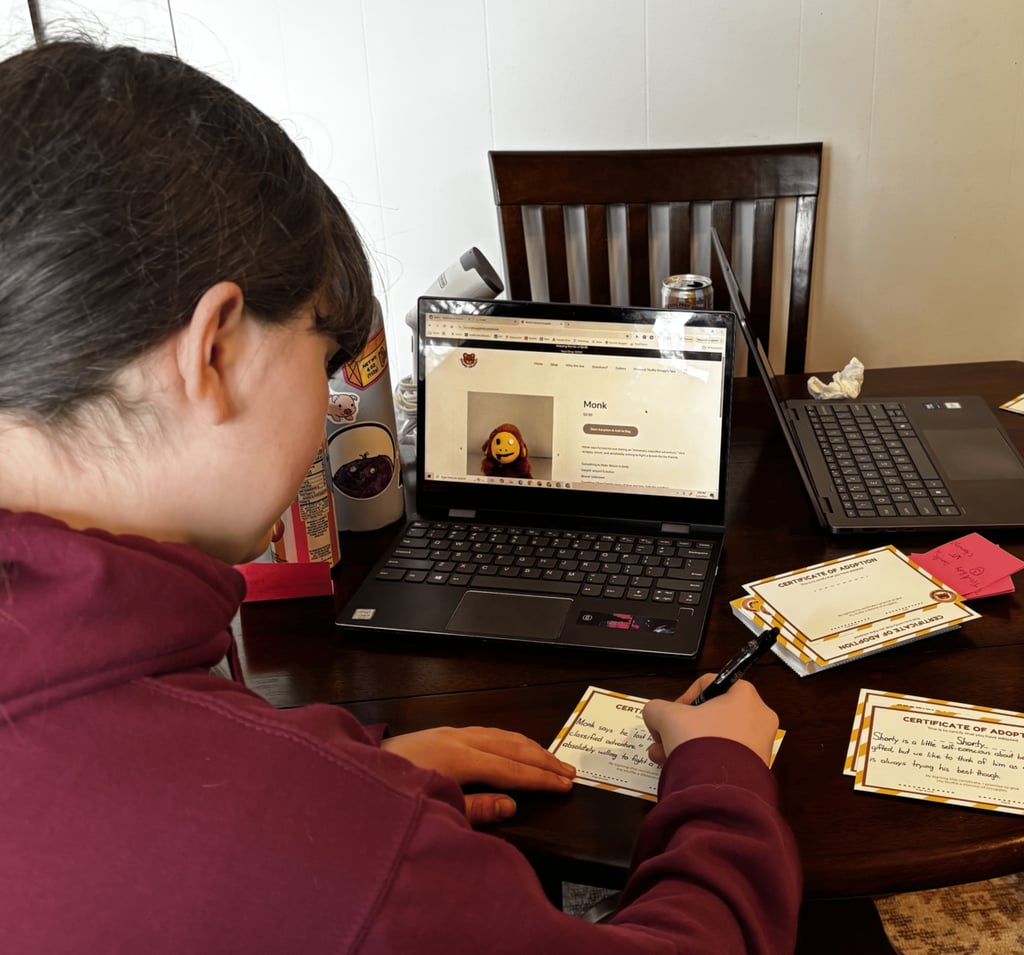
Amy did the repairs and ran the social media around her teaching job. Back then, she regularly listed plushies whenever they were ready. She also shared the stuffed animal cleanings and restorations on Instagram and TikTok, introducing each one by name.
Then came Mr. Big Stuff, the styrofoam-filled rainbow bear. Like her other restoration videos, this one showed a plushie’s transformation, but it also captured Amy’s reaction to the mess.
The video went viral, and they had their first sellout. After that, Amy added a larger batch of stuffed animals to the shop, and they were gone too. So was the one the following week.
“It’s been humbling,” Amy says. “I never expected so many people to keep showing love for these stuffies.”
Around the same time, people started asking if she’d clean their own stuffed animals, the ones they’d held on to for years. Amy had patched up her daughters’ torn toys over the years, so she decided to give it a try.
That became the Snuggle Spa, a second business line offering restoration for personal plushies. Demand took off right away.
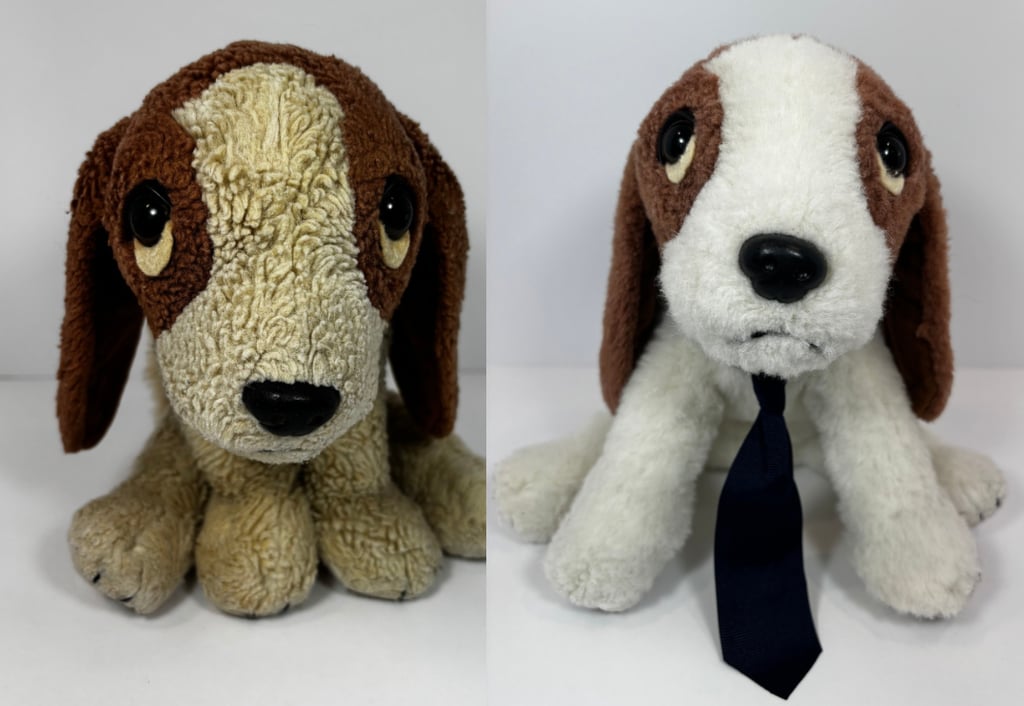
In the shop, each plushie is a one-of-a-kind listing that anyone can adopt. The spa works differently. Customers book one of a limited number of restoration slots, choose how to ship their stuffed animal, and pay for a personal order.
Amy didn’t want those personal orders appearing alongside the plushies up for adoption, so she gave the spa a home of its own. She also saw it as a chance to learn something new. She built the spa site on WordPress through Hostinger, which let her customize the booking calendar and checkout process in greater detail. Since the spa served a smaller group of people, it felt like a low-stakes place for her to experiment.
“I could personalize it more, but I also could learn a lot more,” she says.
The site took a few weeks of trial and error, with help from her husband, who has a tech background.
Growing at the family’s pace
With demand climbing on both sides of the business, Amy could have tried to scale as fast as possible. She chose a pace the family could sustain instead.
That thinking shaped how she sells. In the early days, she posted stuffed animals whenever they were ready. As her following grew, that started to feel unfair, because people kept missing the ones they wanted. So she switched to scheduled drops.
Second Snuggles now releases 40 to 50 stuffed animals every other Thursday, and most of each drop is adopted within the first two or three days.
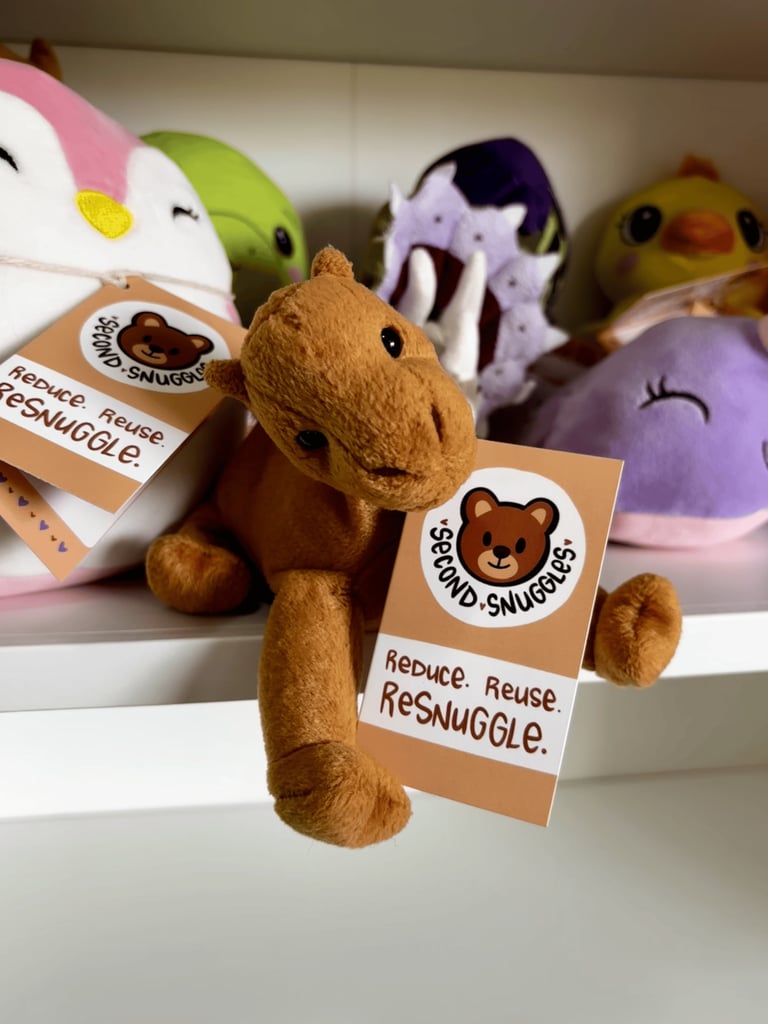
In the weeks in between, Amy runs Snuggle Spa days. That rhythm keeps her schedule manageable alongside teaching and family life. It also gives her social media a natural mix: one week for restorations, the next for plushie drops.
The day before every drop, Amy emails her Cuddle Pile newsletter subscribers using Hostinger Reach.
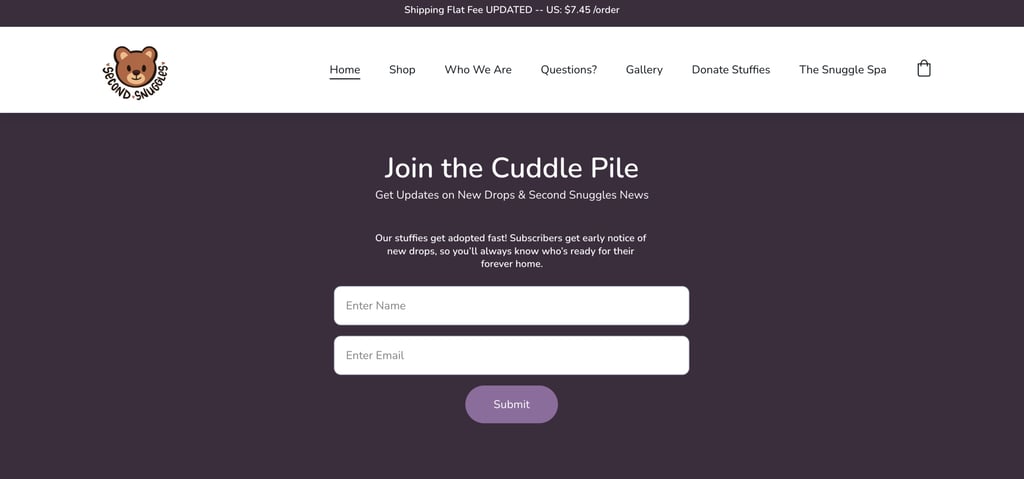
“Social media doesn’t always show you the things that you want to see,” she says. “So it’s a good way to keep in touch with people who might be interested in a stuffed animal and to keep reminding them that we’re here.”
She first tried Reach early on, when she had only one or two subscribers, because it didn’t cost anything to start. She found it quick and easy to use, and she just keeps reusing the email templates that get the most opens.
People join the Cuddle Pile through the website, when they place an order, or after Amy invites them on social media. Many are Snuggle Spa clients waiting for openings, which has helped the list grow to nearly 900 subscribers.
Once a drop goes live, a wave of admin follows. Amy creates shipping labels through Hostinger’s Shippo integration, which she calls “incredible” because she never has to leave her store dashboard.
For repetitive jobs, she turns to Hostinger Agent, an AI assistant included with the hosting plan that can carry out tasks for her, not just answer questions.
“Some tasks, like deactivating all of the sold-out products, are very time-consuming,” Amy explains. “So I ask it to make these not visible anymore if there’s no product. And it’ll do that for me.”
Amy started with just an online store, then added Reach, Shippo, and the WordPress spa site. Because everything sits with one provider, each new tool meant one more step rather than another account to juggle.
“Everything that we use for the business is through Hostinger, which I really like because it’s all in one place,” she says.
What comes next for Second Snuggles
Getting Second Snuggles going cost the family only about $200, enough for packaging, cleaning supplies, and the website. Since those first months in late 2025, sales have grown more than tenfold, and about one in five customers comes back to give another plushie a home.
Second Snuggles fills a big part of Amy’s week these days, and if it keeps growing, she can picture it becoming her full-time work. The plushies have outgrown the house too, so a building of their own is on the wish list.
She’s also thinking about ways to bring the Snuggle Spa into people’s homes, like an at-home guide and a cleaning kit, so anyone can give their own stuffed animals a little extra care.
Through it all, Amy doesn’t credit any special talent. “I have no special skill set,” she says. “I just like to learn, and I like to experiment, and I just keep doing the things that work.”
After the fair, the family just hoped to find homes for a hundred plushies. Since then, more than 800 have gone out into the world, each one with a name, a personality, and someone new to love it. And for the family, that’s the best part of it all.

Larassatti Dharma is a content writer with 5+ years of experience in the web hosting industry. She has populated the internet with over 100 YouTube scripts and articles around web hosting, digital marketing, and email marketing. When she's not writing, Laras enjoys solo traveling around the globe or trying new recipes in her kitchen. Follow her on LinkedIn