EME EFE ESTUDIO: The small steps behind one designer’s big leap
Manuel Ferre’s old company has asked him to come back three times, most recently with a better-paid offer. He’s said no every time.
The night he quit his job as a graphic designer, he had no other job lined up, and his friends asked him if he’d gone crazy.
His bet was to put everything into his design studio, EME EFE ESTUDIO. It looked like a reckless leap, and he was scared. What his friends didn’t see was how long he’d been getting ready.
If you have an idea of your own waiting for the right moment, you don’t need a perfect plan either. Manuel got ready through a lot of small steps, driven by curiosity, taken despite the fear.
An ambition he thought was impossible
Before Manuel ever designed a logo, he was working as a clerk in a clothing store. He’d drawn since he was a kid, tracing comics against a window to unwind. His grandmother was convinced he had real talent, but for him it was a hobby without a future.
“Nobody makes a living from drawing nowadays. I wish we could live off drawing,” he told her.
But grandma often knows best. She told him to study it anyway, since he had nothing to lose.
That’s easy advice to give to a teenager. Manuel was an adult with bills to pay, and art school meant juggling it with the job that covered them. But he’s curious by nature, and once something grabs him, he really gets into it. So he enrolled.
For two years, he went to art school in the mornings, worked a midday shift at the shopping center, and studied until 11:30 at night. Being older than most students gave him a sense of urgency. He felt he’d already lost time and didn’t want to lose any more.
“I told myself, ‘I can’t let any more time pass.’ I went all in on those two years, and I haven’t stopped since.”
When he finished, his grandmother turned out to be right. Versus, a sports betting company opening an office in his hometown of Melilla, Spain, hired him as a graphic designer, and he was finally making a living from drawing.
It was the same company he would later walk away from.
First steps with unknown outcomes
He’d been carrying the idea for a studio of his own since before he joined Versus. When he mentioned it at work, his colleagues said he was good enough to take on his own projects. His boss at the time even advised him to start gradually and use what he was learning at work on his own projects at home.
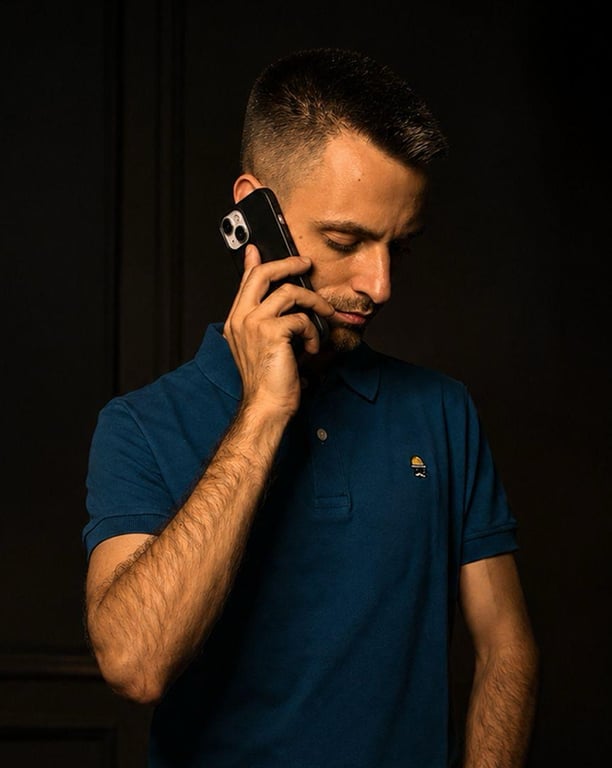
So Manuel bought a desktop Mac for $2,030, paying it off in installments, and added an Adobe subscription. His workday at Versus ended at 5:30 p.m., and from there he worked on EME EFE ESTUDIO until 2 in the morning.
The same curiosity that got him through art school now kept him at his desk long after everyone else had logged off.
About six months into the job, his first client came through a friend, a graphic designer who was about to stop working with a DJ and passed him on to Manuel. The DJ needed posters every weekend, Spotify cover art, and branding for his radio show and festivals. Manuel said he’d try.
Early on, he worried about everything, from how to propose a new idea to whether the client would think badly of him for disagreeing.
“Those times and those fears go away little by little.”
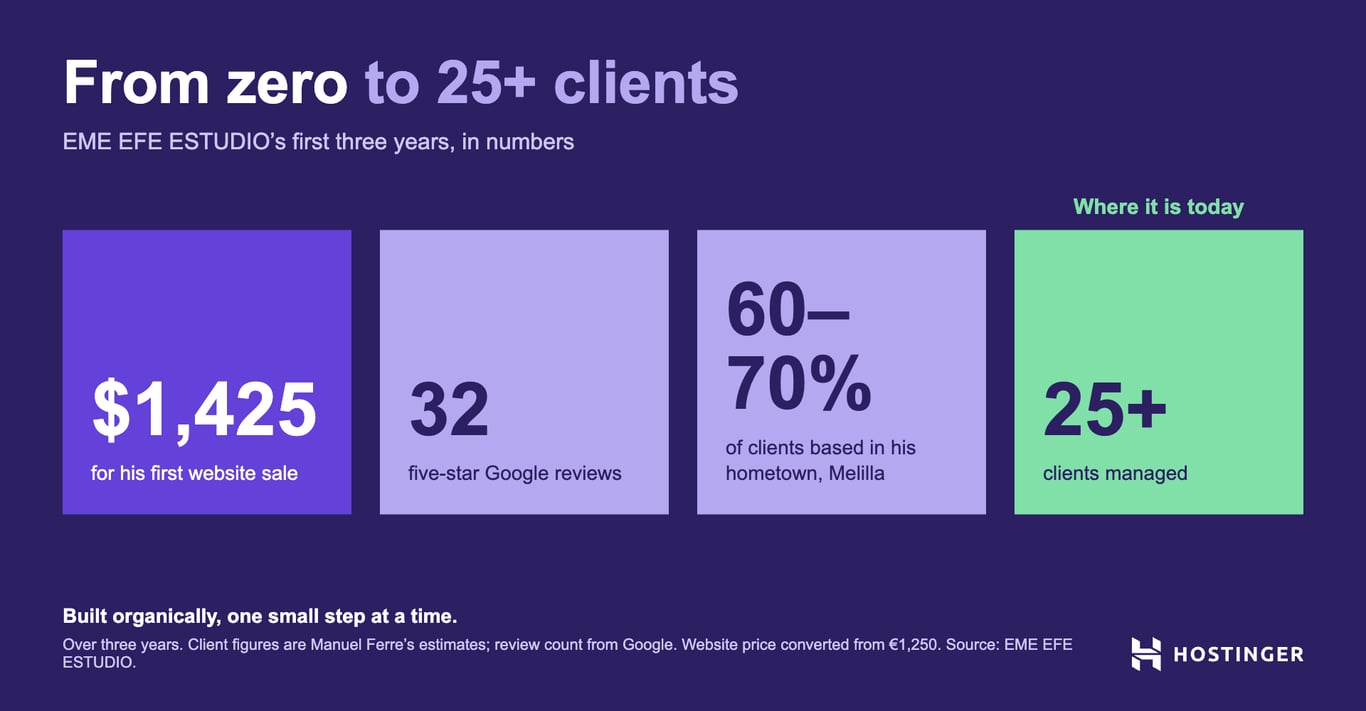
Before the end of that first year, a second client showed him freelancing could really pay. A local association asked him for its first website. Manuel had built a site for himself but never one for a client. He asked friends what to charge, searched online, and still wasn’t sure, so he named $1,425 based on nothing other than vibes. They agreed so fast that he left wondering what else he’d been undercharging for.
If a client would pay that without blinking, his work was worth more than he’d assumed. For the first time, he could see himself setting his own prices and his own pace, instead of letting a boss or a company decide both.
A big step built on small ones
In all, he spent three years at Versus, working on EME EFE ESTUDIO by night. Then things changed at work.
The pressure kept building, and he felt the responsibility he carried there wasn’t being recognized. Manuel takes real pride in his work, and he’d helped set the standard in that department from the start. When he felt he could no longer give the company the level it deserved, he decided it was time to go. One night, he quit.
That’s the moment his friends saw, and it looked like a big step. But it rested on years of smaller ones, and on the hope those steps had given him.
He’d studied art with bills to pay, said yes to a DJ client while worried about getting it wrong, and named a price for a website without knowing whether anyone would pay it.
Each step followed the same pattern: he was curious, he was scared, and he did it anyway. Leaving Versus was the same move on a bigger scale.
“If you only have one plan, you just have to follow that one plan.”
He’s honest that it sounds better said out loud than it felt, and that there were times when clients paid late and money stopped coming in when he needed it. He learned the hard way that sending an invoice and getting paid are two separate things.
Instead of getting discouraged, he did what he’d always done and went all in. He taught himself accounting, which nobody goes to art school for, and started tracking every small expense down to a receipt for a piece of paper.
The studio made it through, and the habits he built during those lean months still shape how he runs it.
So when Versus calls asking him to come back, the answer stays no. He never left for the money, and the studio gives him what the job couldn’t – the freedom to work at his own pace.
A portfolio that brings in clients
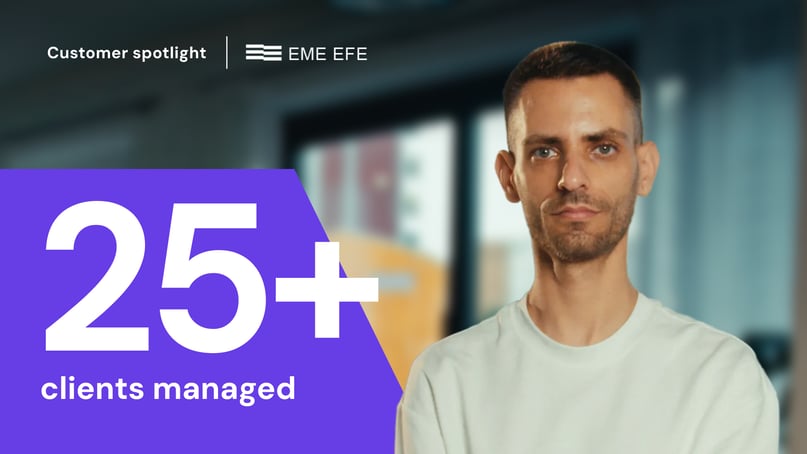
Today, EME EFE ESTUDIO handles design, websites, and social media for more than 25 companies, around two-thirds of them in Melilla. The DJ who took a chance on him back then is still one of them.
Like most designers, he started with an online portfolio that simply showed his work. He built it on Hostinger, which he’d found through a YouTube ad. The low entry price made it an easy first step, since a wrong guess wouldn’t cost him much.
Over time, he turned that site into a way to bring clients in. He’s put work into getting it to rank well on Google, and new clients often tell him they got in touch because they loved the design.
Then he added an articles section, including a post collecting every logo he’d designed since 2023. Within two weeks of publishing it, two new clients got in touch with the same message: they’d read the article, and they wanted a logo.
To know which inquiries come from the site, every contact button opens WhatsApp with a pre-filled message saying the person found him through his website. When Eli’s Coffee in central Madrid reached out that way, he knew right away where they’d come from.
“That tells me the website is working, and it gives me confidence to keep investing in what brings clients in.”
Start before you feel ready
Looking back, Manuel rarely felt ready for any of it. He just wanted to find out what would happen if he kept trying.
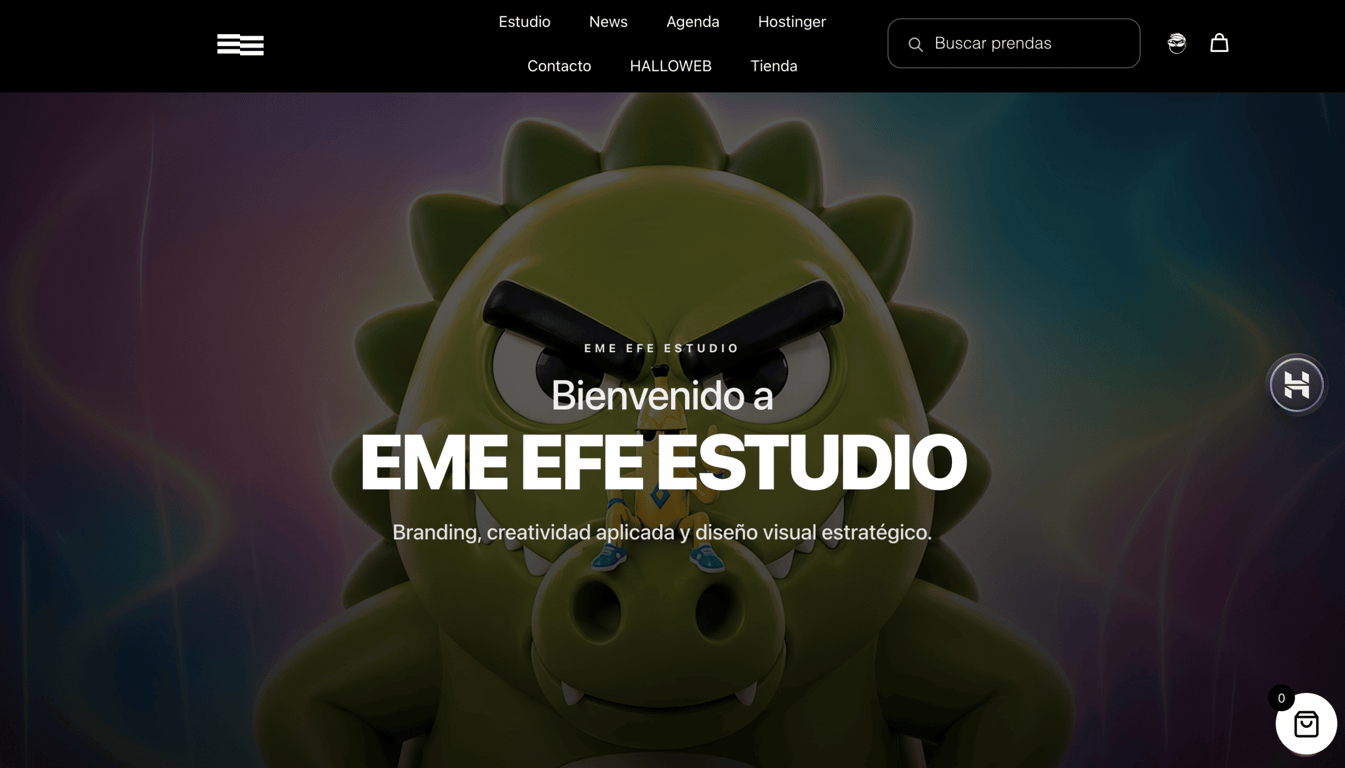
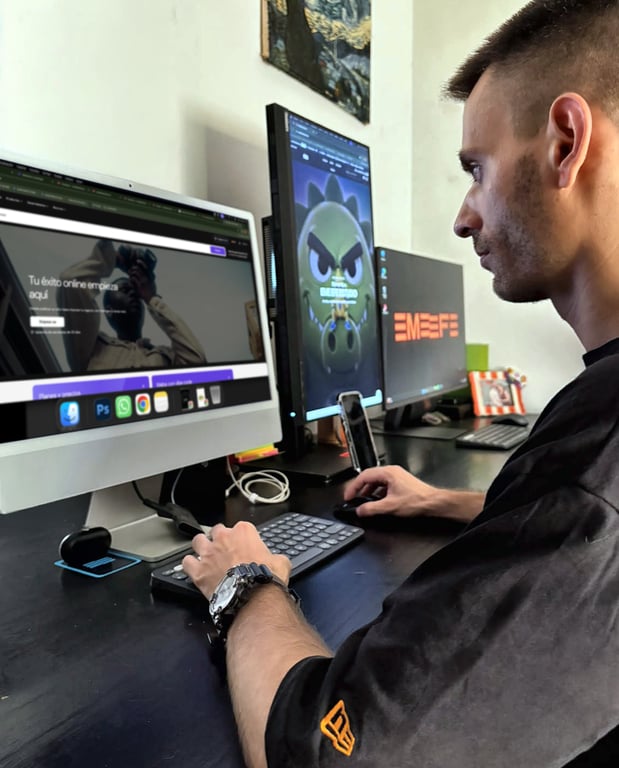
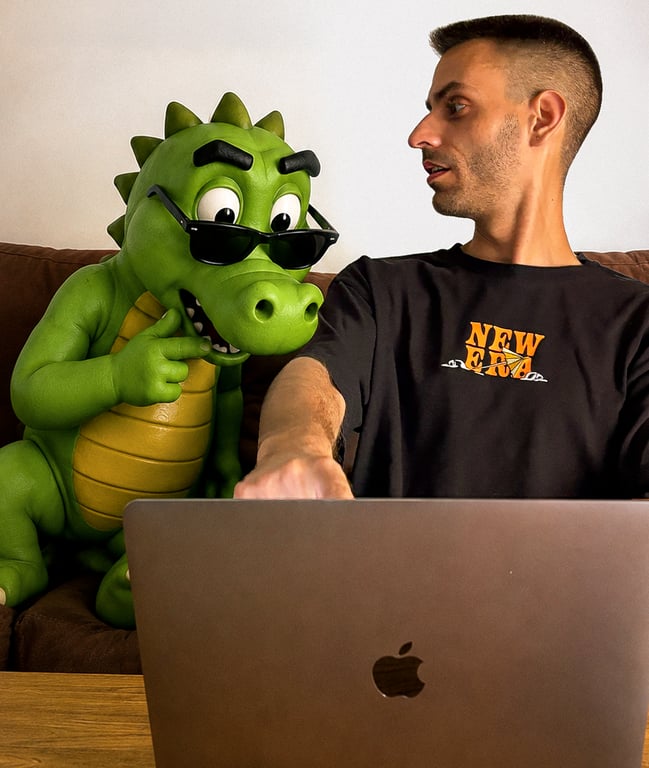
That same curiosity drives his side projects, from Bribón, a clothing brand he spun off from the studio, starring a green dinosaur and a banana, to a recipe app he had working after an hour with Hostinger’s AI Builder.
Like Manuel, you don’t need to know how your idea ends either. You need a first step small enough to take without overthinking it: a one-page portfolio with a contact button, a shop with three products, or a simple app you test with a few friends.
If you’ve been waiting for the right moment, Black Friday is a good one. Prices drop, and so does the cost of trying something new. That makes it easier to finally give your idea a chance. So, you could grab an exercise bike that ends up as a very expensive clothes rack, or spend a little to give your idea a real start.
Manuel’s grandmother told him he had nothing to lose. When the price of trying is this low, neither do you.
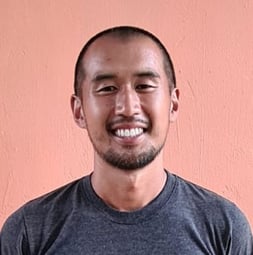
Simon is a dynamic Content Writer who loves helping people transform their creative ideas into thriving businesses. With extensive marketing experience, he constantly strives to connect the right message with the right audience. In his spare time, Simon enjoys long runs, nurturing his chilli plants, and hiking through forests. Follow him on LinkedIn.