How La’Oda turned Black Friday into its biggest growth story yet
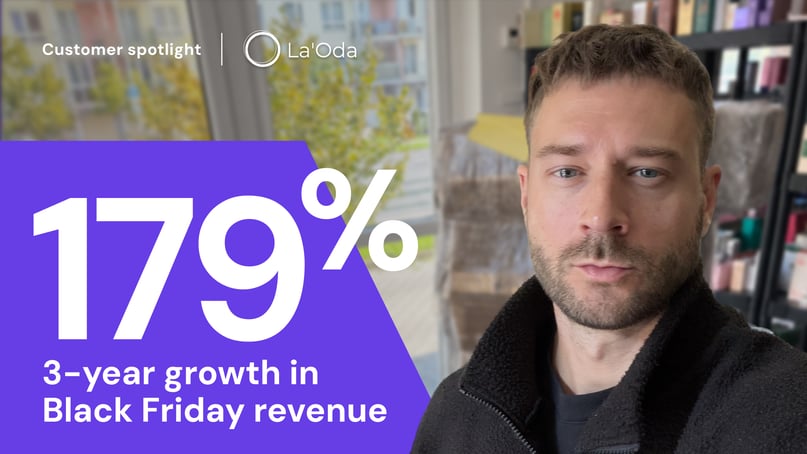
For La’Oda, Black Friday began as a winning experiment in 2023, bringing in over €16,000 in November revenue. A year later, that number had almost doubled, and by 2025, it reached over €46,000.
That’s a 179% increase across three Black Friday campaigns, which is impressive, but the more interesting story is what happened between them. The founder didn’t land on an exact formula and simply repeat it – instead, each campaign gave him something new to work with.
We spoke with Domas Simonovičius about how La’Oda’s Black Friday strategy evolved, and what three years of running the campaign taught him about growing an ecommerce business.
It started with simply giving it a shot
Domas founded La’Oda on August 31, 2022, stepping into a category he knew little about.
The idea came from his girlfriend, Eglė, a professional makeup artist who was already using Korean and Japanese beauty products herself. She introduced Domas to the category and saw an opportunity as interest in Asian beauty products began growing in Lithuania.
Domas had run a business before, but it was in the clothing industry, so cosmetics were unfamiliar territory. Still, he decided to give it a shot, with Eglė there to support him along the way.
Starting out mostly on his own, Domas decided early that La’Oda would be an online-first business. Instead of hiring a developer or agency, he built the store himself on Hostinger.
“In the beginning, you don’t necessarily want to make a large investment in an expensive ecommerce platform or a complicated custom-built website. Hostinger helped me tremendously when I was starting the business,” Domas said.
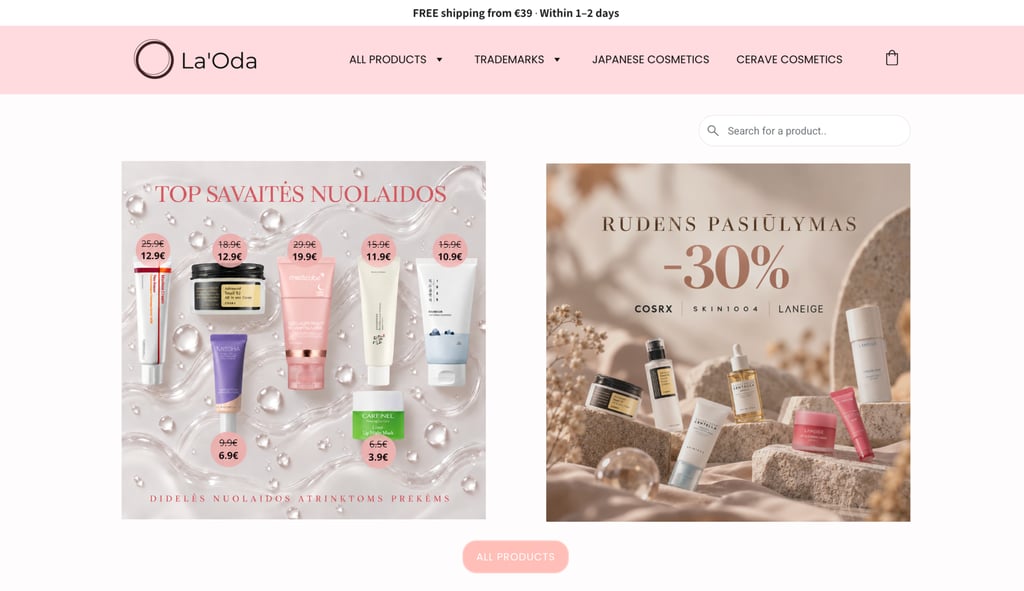
Four years later, La’Oda is on track to surpass €500,000 in annual revenue in 2026. That’s a 192% increase from its first full year in 2023, when the business generated €171,411 across 4,932 orders.
Today, La’Oda processes roughly 1,200 orders a month. Domas still handles most of the business himself, supported by a team of four in a small office space.
And Black Friday has become one of the biggest moments in that growth story.
Black Friday stopped being a weekend
La’Oda’s first Black Friday campaign revealed that customers weren’t necessarily waiting for the weekend after Thanksgiving.
“We already noticed in 2023 that the first half of November was performing quite well and that customers were not necessarily waiting until the traditional Black Friday weekend,” Domas explained.
When the 2024 campaign showed the same pattern, he finally felt confident enough to restructure La’Oda’s approach around it.
In 2025, the brand launched its Black Friday advertising in the second week of November – a shift that resulted in a 54% year-over-year increase in November orders.
Following the positive results, La’Oda will launch its Black Friday advertising in the second week of November this year.
Targeting customers instead of bigger baskets
Another pattern Domas noticed during Black Friday was that customers weren’t spending more on each purchase, as the average order value remained nearly unchanged.
At the same time, customer acquisition costs fell during the campaign, as shoppers arrived with stronger purchase intent.
“Black Friday did not create growth because customers suddenly started spending much more per order,” he said. “The main effect came from bringing in many more customers and generating many more orders at a lower acquisition cost.”
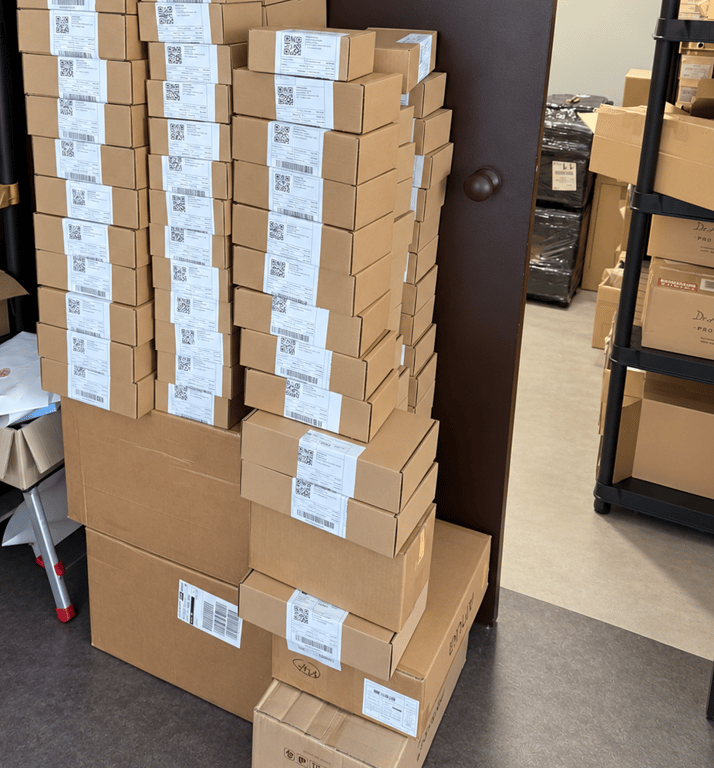
That gave Domas a clearer direction for La’Oda’s Black Friday strategy this year: reach more customers rather than simply increase the value of each order.
The offer itself will stay relatively straightforward – deeper discounts on selected products and bundles, along with a particularly eye-catching promotion: buy one, get one free. The real work will be in getting those offers in front of more people.
The channels changed with the season
In a typical month, Google Ads is La’Oda’s main source of paid traffic. Black Friday looks different.
In 2025, Meta Ads – across Instagram and Facebook – became the company’s largest paid advertising channel during the campaign.
TikTok played a different role. Rather than investing in paid ads, Domas worked with influencers to get La’Oda’s products in front of potential customers and build interest around the offers.
Email became more important, too. La’Oda sent Black Friday-specific newsletters to existing customers, highlighting promotions, showcasing specific products, and creating urgency around limited-time deals.
The impact stretched beyond November’s revenue numbers. As Domas put it, “We can clearly see that Black Friday helps us acquire customers who later return for other campaigns.”
In other words, Black Friday campaigns are for boosting sales and for customer acquisition, creating an opportunity to retain customers well into the following year.
So, this year, La’Oda will replicate a similar approach with its Black Friday marketing channel mix.
More creative testing, less website reinvention
Knowing that Meta Ads had the greatest impact last Black Friday, Domas plans to run around 60 active visual creatives across Meta alone, alongside thousands of keyword variations on Google this year.
“We usually test different creatives around specific products, brands, promotions, discounts, and different customer interests. The main idea is to create enough variations to see which messages, products, and visuals generate the strongest response,” Domas said.
It’s a deliberately high-volume approach: instead of trying to predict which single message will win, the team gives itself plenty of opportunities to find out what resonates.
The website itself, however, doesn’t need the same level of reinvention. Domas isn’t planning a new checkout flow, a structural redesign, or a maze of Black Friday landing pages.
The foundation already works. Instead, the team changes what’s on top of it, as Domas said, “What helped us most was how easy the website was to manage. We could quickly update banners, offers, and other information ourselves.”
Getting the marketing plans and infrastructure ready for Black Friday is one thing. Getting the right products in stock before it starts is another.
Stocking up for unpredictable demand
Last year, the red Biodance collagen mask and Dr. Althea’s 345 Relief Cream were gone within two days. Two of La’Oda’s most popular products had sold out before Black Friday weekend had barely started.
“Demand for highly popular products that receive a great deal of online attention can be particularly difficult to predict accurately,” Domas recalled.
He managed to restock both, but the experience highlighted a hard lesson: bringing customers to your store doesn’t help much if the product they came to buy isn’t available.
So for this year’s campaign, stocking up has become one of his earliest priorities. By the first week of September, he has already placed larger orders with multiple suppliers, giving the products more time to arrive before November.
“We would rather have some inventory left after Black Friday than lose sales because products are unavailable,” he affirmed.
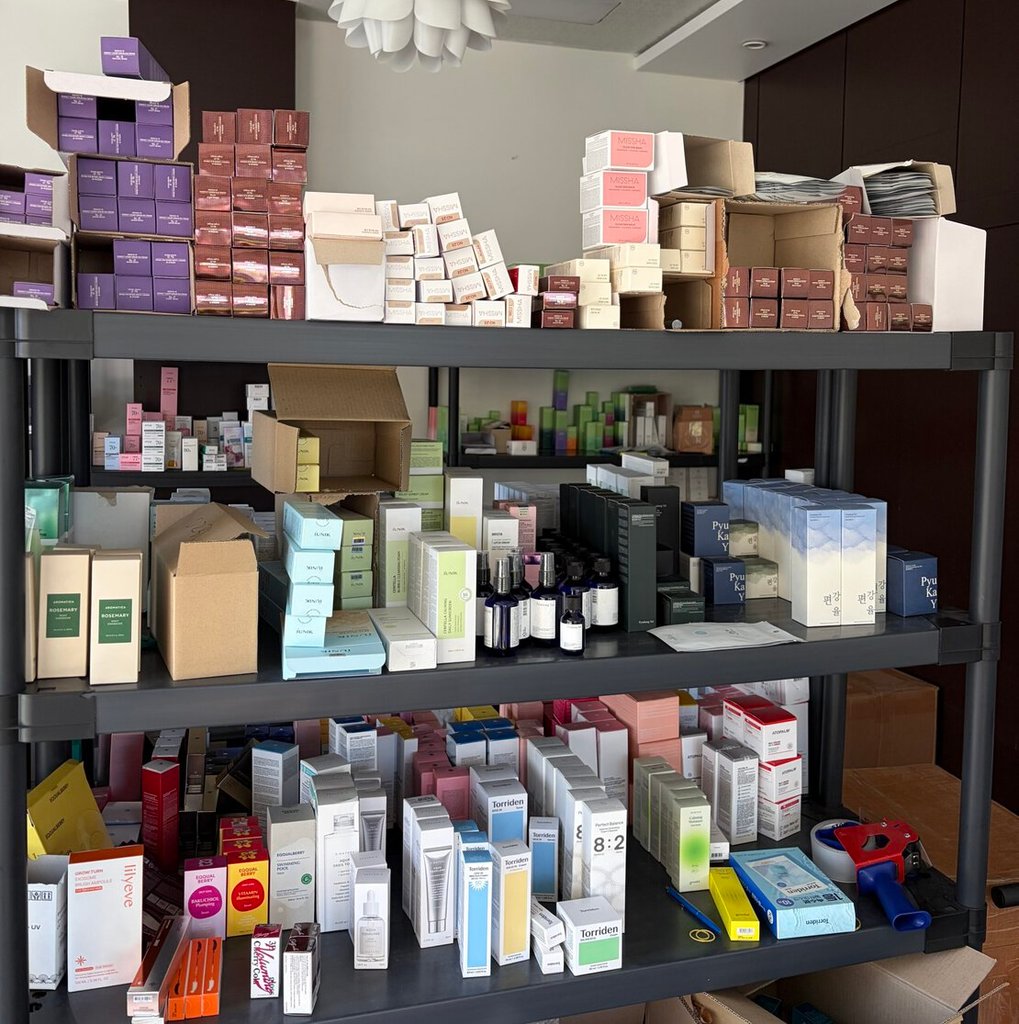
Domas is also comfortable ordering more, as cosmetics tend to have long shelf lives, so leftover stock doesn’t become a write-off after Black Friday.
Once inventory is all sorted out, Domas will move on to deciding which products can support deeper discounts and which need to stay closer to their usual margins.
First time setting a price for Black Friday?
Find 13 strategies to set Black Friday pricing for small businesses in our tutorial.
The strategy gets better every year
La’Oda’s Black Friday strategy wasn’t built in one campaign.
The lessons from 2023 shaped 2024. What happened in 2024 shaped 2025. And the surprises of 2025 are already influencing this year’s campaign.
That’s the biggest lesson from La’Oda’s three consecutive years of Black Friday campaigns: you don’t need to figure everything out the first time.
The first campaign gives you data. The next gives you something to compare it with. Eventually, patterns start to emerge – when customers shop, which channels work, what products move fastest, and where your biggest opportunities and bottlenecks are.
For La’Oda, that has meant starting earlier, buying more inventory, testing more creatively, and putting more emphasis on reaching new customers.
But Domas isn’t entering this year’s Black Friday campaign with a perfectly predictable playbook. And that’s the point.
You don’t need to have everything figured out, either. If you’re getting ready for Black Friday, explore our Black Friday hub for more stories, strategies, and practical guides to help you prepare.

Larassatti Dharma is a content writer with 5+ years of experience in the web hosting industry. She has populated the internet with over 100 YouTube scripts and articles around web hosting, digital marketing, and email marketing. When she's not writing, Laras enjoys solo traveling around the globe or trying new recipes in her kitchen. Follow her on LinkedIn