World Football Food: 48 countries, 288 recipes, one very hungry football fan
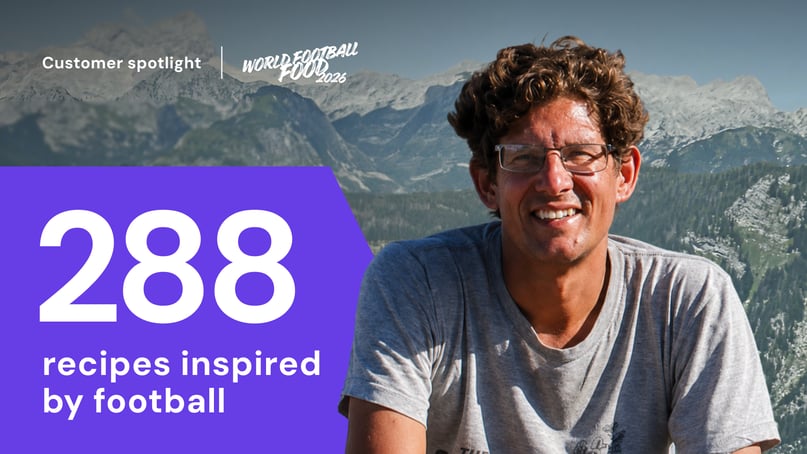
Will Gray is an author, journalist, and brand builder. He’s the kind of person who’s always got three business ideas on the go, and just enough energy to see them through.
He’s also a man of two great passions: football and food. Hard to argue with either one. It’s even harder to think of a better combination, and he’s spent the last 20 years proving it.
Every time England played, he’d look up what people actually eat in the opposing country, pull something together, and serve it up for friends and family alongside the game.
Yorkshire puddings stuffed with pulled pork for England vs USA? Yes, please. A homemade Iranian stew for a random Tuesday night qualifier? Absolutely.
It was never anything formal, never planned as anything more than a fun excuse to eat well and watch football.
But the idea of turning it into a proper cookbook had been rattling around in his head for years. He just never had the right moment, the right tournament, or the right tools to make it happen.
Then the 2026 FIFA World Cup started taking shape, and like an eager substitute in stoppage time with a chance at glory, Will’s moment had finally arrived.
The biggest World Cup ever, and a publisher who said no
The 2026 tournament is the first to feature 48 nations, hosted across the USA, Canada, and Mexico. For Will, it was now or never.
“I knew it was going to be a big tournament, the biggest World Cup ever,” he says. “I thought, if I’m going to do it, I’ll do it for this one.”
So he pitched it. He found a traditional publisher before Christmas and put together proposals, flat plans, sample page spreads, the whole package. They loved it.
Then they came back in January and said no.
Their reasoning made sense. A traditional print run means committing to thousands of copies upfront, and with a 200-page full-color book, printing isn’t cheap.
On top of that, the final eight qualifying teams didn’t lock in until late April, leaving barely two months before the tournament. For a traditional publisher, the risk didn’t add up.
But Will wasn’t ready to let it go. He’d done the research, built the layouts, and spent years thinking about this book. If a traditional publisher wouldn’t take the shot, he’d take it himself.
200 pages, zero budget, and a lot of late nights
With a traditional publisher out of the picture, Will turned to self-publishing through Amazon’s Kindle Direct Publishing (KDP).
Amazon prints each copy on demand when someone orders it, so there’s no need to commit to thousands of copies upfront. For a book with a narrow window before the tournament, that removed the biggest risk.
But figuring out how to publish was the easy part. Actually creating a 200-page full-color cookbook as a one-person operation? That was a different challenge entirely.
Will is a trained engineer from 30 years ago who describes himself as creative and knows his way around a good layout.
What he doesn’t have is a publishing team, a commercial kitchen, or a production budget. So he leaned on AI and modern design tools to close the gap.
He used AI to research traditional dishes from all 48 nations, cross-referencing everything himself to make sure it was accurate. He used it to keep 288 recipes consistent in format and spelling across the entire book.
For the layouts, he turned to Canva, coordinating colors with each nation’s flag and making sure every four-page spread felt polished and cohesive.
The creative decisions were all his. Which dishes to feature, how to structure the recipes for match-day eating, where to put his own twist on a classic. Every dish had to earn its place in the squad.
Some national dishes that had to be included didn’t fit neatly as a main course, so Will found ways to adapt them, tucking them into lettuce leaves as a snack or rethinking them entirely so they’d work as finger food.
“You come up with these things and you’re like, oh wow, that sounds really good,” he says.
All of it done as a side project, squeezed into evenings and weekends. One country per night, then off to bed and on to the next one.
Not bad for a side project
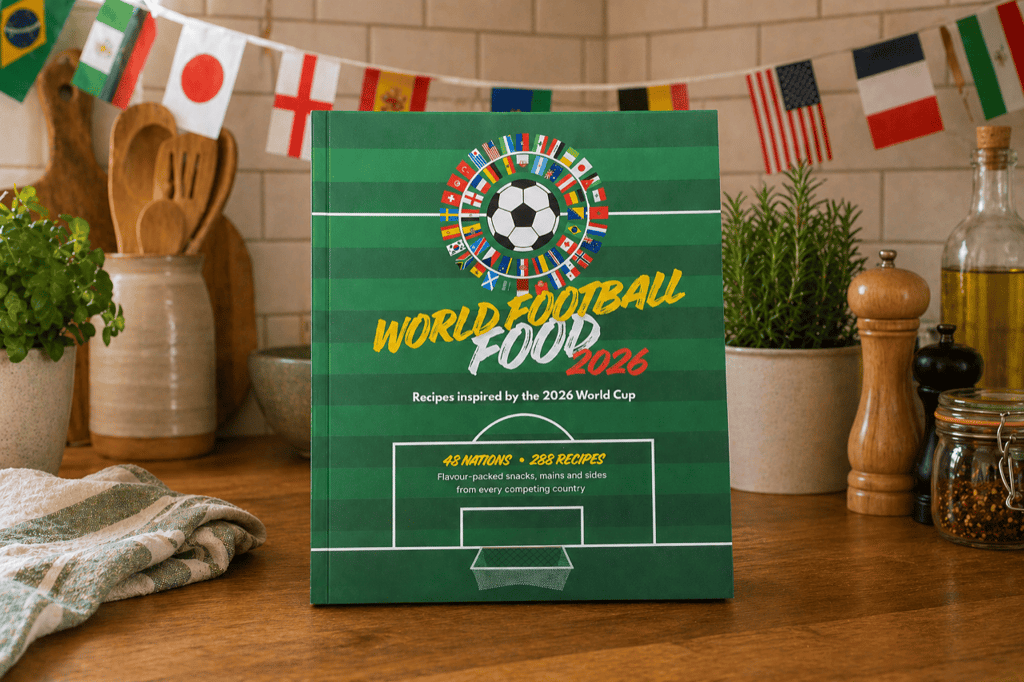
After six months, the book was done. All 200 pages of it, full color. World Football Food.
There’s something about cooking another country’s food while watching them play that makes the World Cup feel bigger than just football. You’re eating their food, but you’re also experiencing their culture. That’s what Will wanted to capture.
Every country gets six recipes: three snacks, one main course, and two sides. The format comes from years of Will figuring out what actually works on match day.
“Three snacks because it’s football and you want quick, easy things to eat,” he says. Nobody wants to be stuck in the kitchen when the game’s on.
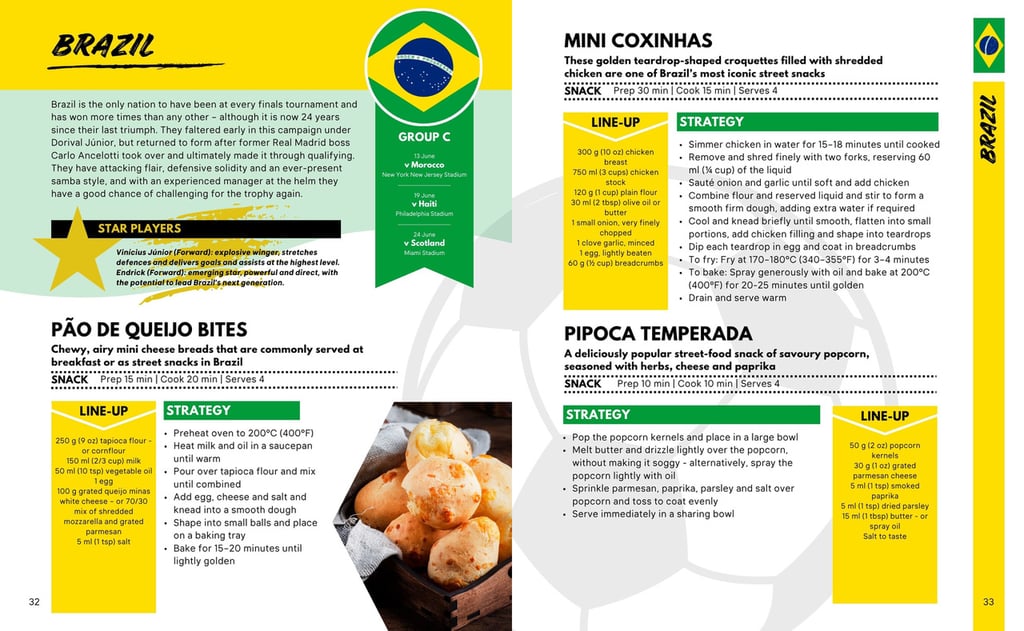
The main course is typically the country’s national dish, or Will’s take on it, for when you’d rather sit down for a proper meal before kickoff. And the sides are where things get really fun, because they let you mix and match between nations.
“Over the years, I’ve done a bit of fusion, or cross-pollination as it were,” Will says.
Brazil vs. Morocco? Pair pão de queijo bites against hummus kamoun and let the table decide who wins. A group-stage afternoon with three games back to back? Graze your way through asado beef and chimichurri from Argentina, Egyptian kushari, and pulled pork potato skins from the USA.
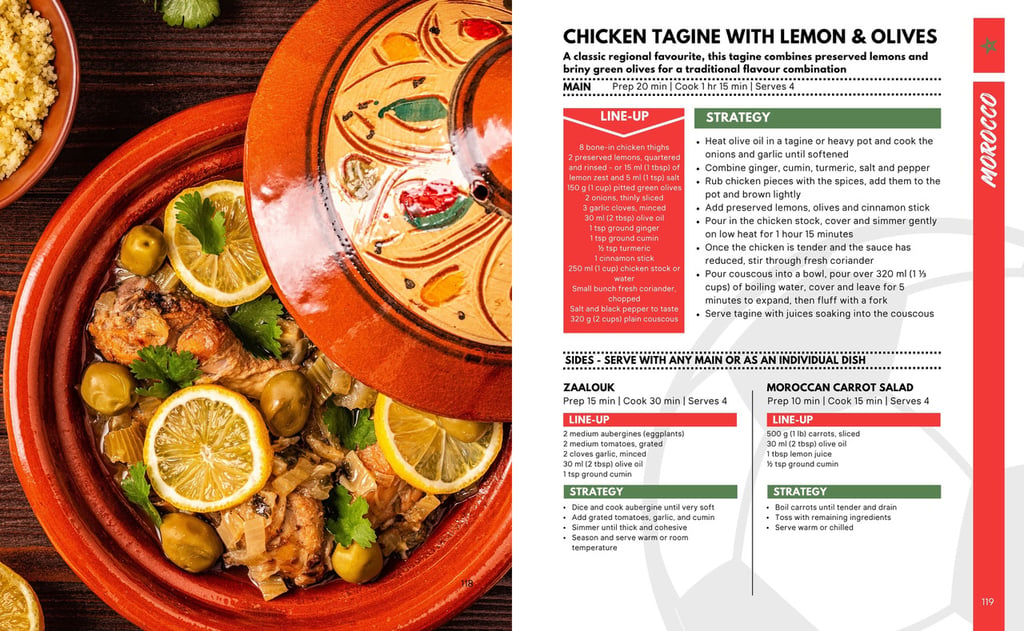
Every recipe is designed to be accessible, too. Almost every ingredient can be found at a regular supermarket. Where a dish traditionally calls for something hard to source, like plantain leaves, Will has included everyday substitutes. Spring greens work just fine.
“I love variation in food,” he says. “You can always play with things.”
It’s the kind of cookbook you’d keep using long after the final whistle. The recipes are so diverse that they work just as well for a Tuesday dinner as they do for a World Cup Saturday.
Getting the book out there
The book was done. Now people needed to actually see it. Amazon’s KDP handles the basics: cover image, description, “Look Inside” preview.
But Amazon product pages all look the same, and for a book as visual as this one, he needed a place he could actually show it off.
“Amazon does what Amazon allows you to do. But it doesn’t sell it the way I’d like it to.”
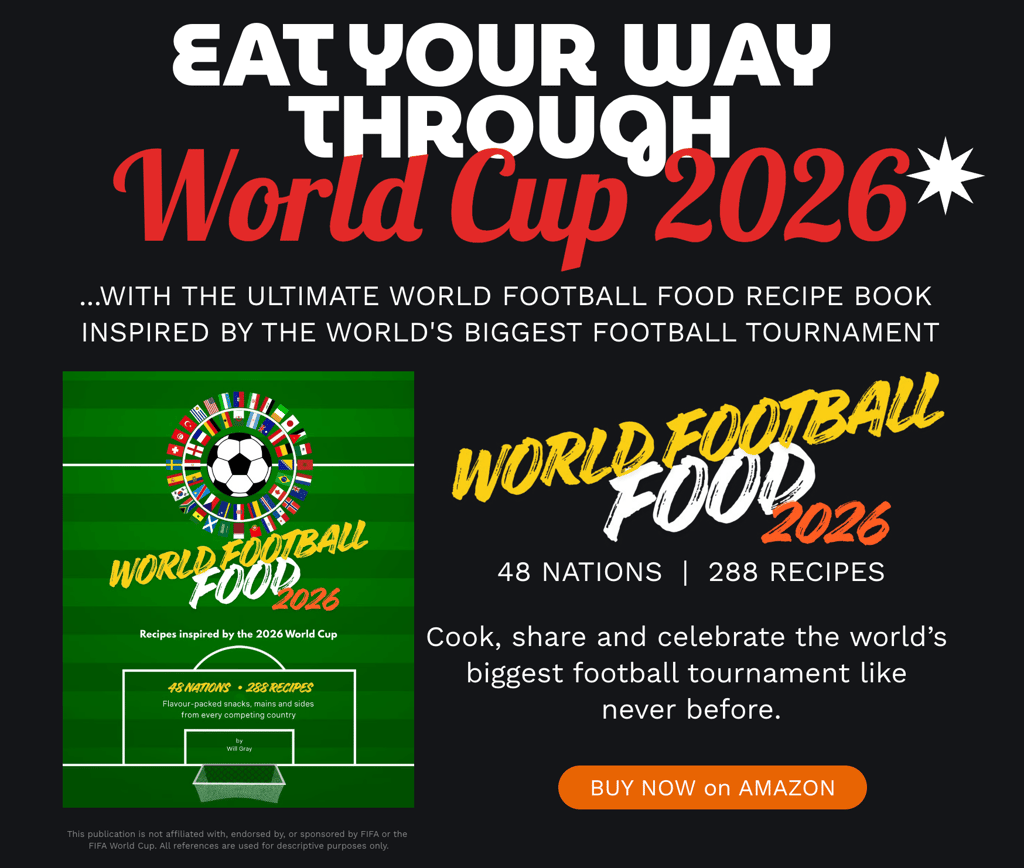
So he built worldfootballfood.com using Hostinger’s website builder. It took only about an hour and a half.
He’d already built several sites on his Hostinger plan for other projects, so he knew exactly where to start.
He picked a template he’d spotted while building one of his other sites, one that felt vibrant and bold. “Pizzazzy” was the word he used.
He swapped the colors, uploaded his page spreads and dish photos. The result is a site that actually feels like the book: vibrant colors, bold text, scrollable page spreads, and galleries of dishes that make you want to start cooking.
“It allowed me to go to market straight away with more about the book than Amazon had,” he says.
And with barely any marketing budget, having a professional website to include in press releases has been surprisingly powerful. One local lifestyle magazine recently ran a full-page spread about the book and drew visual inspiration directly from the website’s design.
That wouldn’t have happened from an Amazon link alone.
Do it because you enjoy it
When asked what advice he’d give to anyone sitting on an idea, Will doesn’t hesitate: do it because you enjoy it, not because you expect it to succeed.
He’s written a kids’ book that went nowhere. He’s got card game ideas stuck in the pipeline because there’s no print-on-demand option for cards. Not every idea works out, but each one taught him something. And when the right idea met the right moment, he was ready.
“I wanted to write a book. I’ve always wanted to write a book. Now, I’ve written a book,” he says. “I just want people to go and cook some food during the World Cup and enjoy it. That’s the aim.”
For Will, that was enough to get started. But he wasn’t about to stop at the minimum. He could have listed the book on Amazon and left it there.
Instead, he built a website, started a social media presence, and sent press releases. He’s posting daily Instagram reels as part of a 48-day countdown to the tournament and recently pulled off a six-recipe cookathon covering two dishes from each host nation.
“Going the extra mile makes a difference,” he says.
He’s even been sliding into footballers’ DMs. There’s a dish from DR Congo called Saka Saka, and naturally, Will felt it was his duty to inform Arsenal and England winger Bukayo Saka about his culinary namesake. No response yet.
Bukayo, if you’re reading this: check your requests.
Will’s not the only one in the family who’s going for it, either. His 13-year-old son has won national awards for nature photography and has started doing pet portrait sessions around the neighborhood, complete with a website they built together.
His wife launched a sustainability consultancy called Greener Schools, and after about a year of the site quietly sitting there, inbound inquiries started arriving on their own, including one from a university in India.
“These days it’s so easy to create things,” Will says. “It still takes effort, but the tools are there.” And Will has put in the effort.
Now, the teams are in the tunnel. The book is ready. The website is live. And in his kitchen, Will is already chopping onions for kickoff.

Simon is a dynamic Content Writer who loves helping people transform their creative ideas into thriving businesses. With extensive marketing experience, he constantly strives to connect the right message with the right audience. In his spare time, Simon enjoys long runs, nurturing his chilli plants, and hiking through forests. Follow him on LinkedIn.