Inkfire: Turning barriers into opportunities (and better websites)
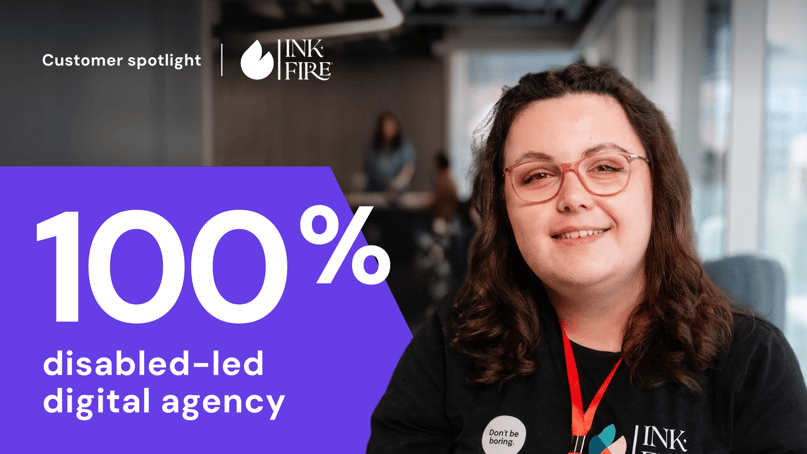
Inkfire is a 100% disabled-led business support agency handling marketing, IT, virtual assistant work, and website design. But they’re not looking for a pat on the back.
When co-founder Imali Chislett spoke at the UK Parliament’s House of Lords at the launch of the Lilac Review into disabled entrepreneurship, she wasn’t there to tell a story about overcoming the odds. “We’re not your inspiration, we’re your competition.”
Being disabled-led is easy to call inspiring. For Inkfire, it’s their edge.
When your whole team knows what it’s like to be overlooked, you build things that don’t overlook anyone. You notice what others miss. You design for the people most companies forget about, and the work ends up better for everyone.
Today, Inkfire has delivered more than 250 projects, grown to a team of 15, and earned multiple national awards while remaining entirely disabled-led.
It started with a closed door
Before the pandemic, Imali was working a corporate office job while managing serious physical health conditions that had put her in and out of hospitals for years.
When COVID approached, she requested the flexibility to work remotely due to significant health risks. That request wasn’t accommodated, ultimately leading her to leave her role and reassess what work could look like.
“I went freelance initially and just started doing graphic design because that’s what I knew how to do,” she says. It picked up quickly.
Cameron, her husband and co-founder, is neurodivergent and manages physical health conditions of his own. The traditional 9-to-5 didn’t suit him either, so when Imali’s freelance work started growing, he quickly joined.
By 2023, what had started as freelance survival had turned into a full team.
“We never set out to have a big team,” Imali says. “It kind of just ended up that way because we realized that our friends, our family, people that we care about were in a similar position. And we all wanted to help each other.”
People first, always
Inkfire’s model looks nothing like a traditional agency. There are no fixed hours. Nobody is forced into a client-facing role if that’s not their strength. The whole system is built around what each person needs to do their best work.
Some team members thrive working late at night, while others prefer early mornings. The team is no stranger to working from waiting rooms, infusion centers, or wherever life happens around them. The focus is on achieving the outcome, not on how they get there.
A client sees one point of contact, but behind the scenes, six or seven people might be contributing to the project, each picking up tasks that match their energy and strengths at that moment.
Despite the flexibility, the team consistently delivers complex projects for charities, social enterprises, SMEs, and national organizations.
“We’re people-led, not work-led,” Imali says. “If we’re not enjoying it, what’s the point?”
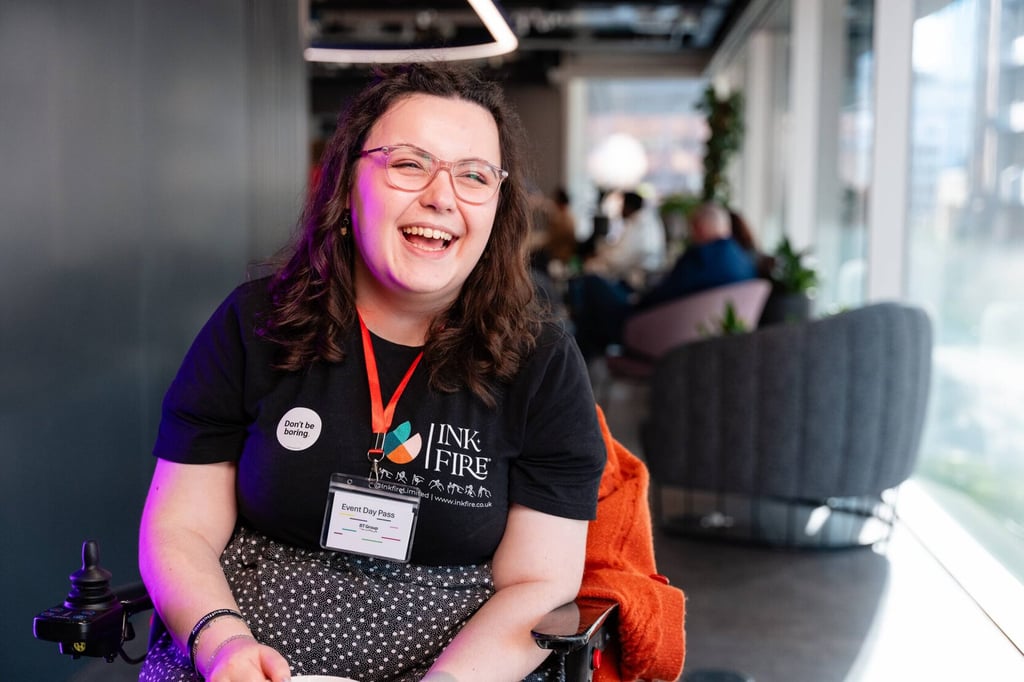
The willingness to let people find their own path runs through everything Inkfire does. Team members have arrived thinking they wanted to work in one area, tried it, hated it, and found their passion somewhere completely different.
“Everyone has the ability,” Cameron says. “It’s just whether you let them show it.”
Accessibility baked in, not bolted on
Most organizations treat accessibility as a checklist. Inkfire lives it. When you experience the barriers that bad design creates every day, you don’t need someone to tell you what’s wrong. You just build it right from the start.
“Often people will build a website and then say, ‘Now we want it to be accessible,'” Imali explains. “But actually what you get isn’t very good because they didn’t think about it from the beginning.”
Their lived experience shapes every decision, from color palettes and alt text written by humans to real testing with disabled people across different access needs.
At an event, a representative from Be My Eyes (an app that helps blind and visually impaired people) tested one of Inkfire’s websites using a braille box connected to her screen reader. Her reaction: it was one of the most accessible websites she’d ever used.
The business case is strong too. Cameron points to the curb cut effect: curb cuts were designed for wheelchair users but ended up helping parents with pushchairs, travelers with suitcases, and everyone in between. Accessible websites work the same way.
Build it right from day one and it’s better for all users, with the added bonus of stronger search rankings.
Inkfire believes accessibility and great design should go hand in hand. Compliance should never come at the expense of creativity, personality, or user experience.
If you want to see what that looks like in practice, spend five minutes on Inkfire’s website. You’ll wish every site was built that way.
Empathy and a whole lot of courage
The work only tells part of the story. Behind it is a culture built on care and empathy.
When someone has a great week, they might get a gift card. When someone’s having a rough one, they get a message to remind them the team’s got their back.
It sounds simple, but for people who’ve spent years being told to push through or just get on with it, having a team that actually notices makes a difference.
That care extends beyond the existing team. Inkfire runs the Back To Work scheme, which gives disabled people three months of hands-on experience on real projects. They get to try different roles, figure out what fits. Three people who came through the scheme are now permanent team members.
It takes courage to operate like this. To prioritize kindness over efficiency. To trust that if you look after people, the work will look after itself.
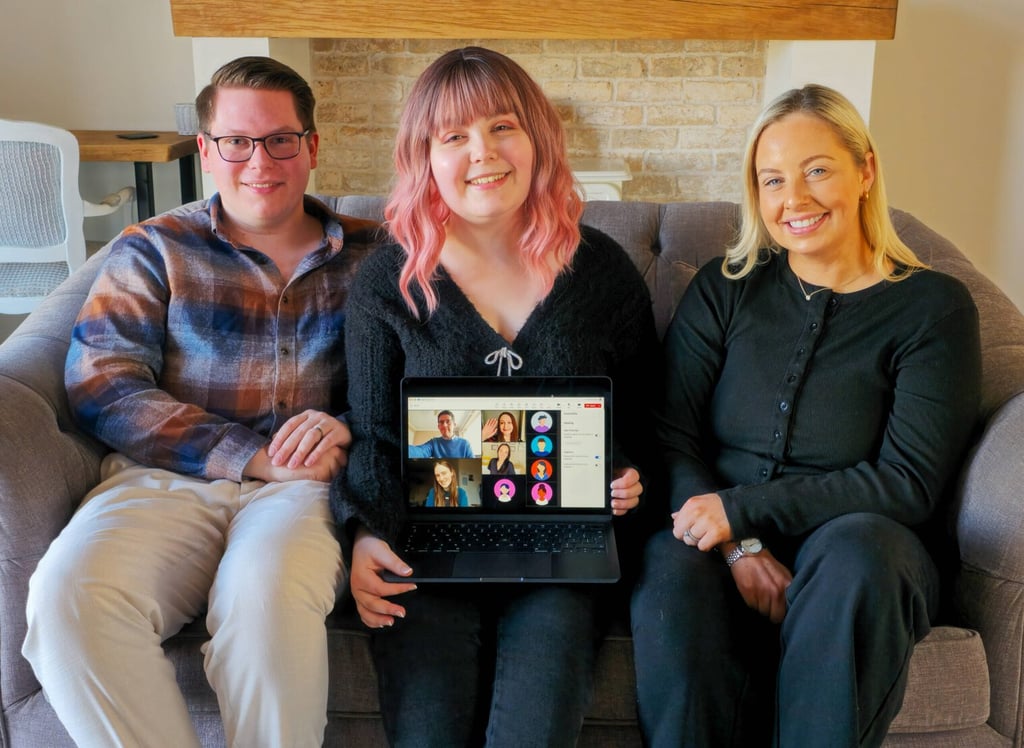
That same courage shows up in how they find work, too.
Back in January 2026, Imali sent a DM to mental health campaigner Ben West on Instagram to tell him his Reasons to Stay website wasn’t accessible. She didn’t expect a reply. That one message led to Inkfire helping rebuild the site and make it accessible.
Reasons to Stay has since been featured on the BBC, reposted by Jennifer Aniston, and opened the door to a collaboration with the Premier League. It’s become one of Inkfire’s most high-profile projects.
Imali says they can always tell when Ben’s been on TV because “we see everything spike and we go, ‘Oh, here we go again.'”
A site like that needs hosting that holds up under pressure, especially when the people visiting might be in a vulnerable moment.
Inkfire hosts all of their client sites with Hostinger. They switched about three years ago after their previous provider’s pricing had become hard to justify.
“We needed hosting that could grow alongside us without becoming a headache to manage,” Imali says.
Websites are often the first thing businesses come to Inkfire for, and, from there, the relationship tends to grow into other forms of support. The goal is to keep everything under one roof, one set of touchpoints, making it easy for the people accessing them.
250 projects and counting
When you do work that you’re proud of, people tend to notice. Inkfire won the Scope Awards 2025, which celebrate disability equality across the UK, and the Business Disability Awards 2025, which recognize companies leading the way in disability inclusion.
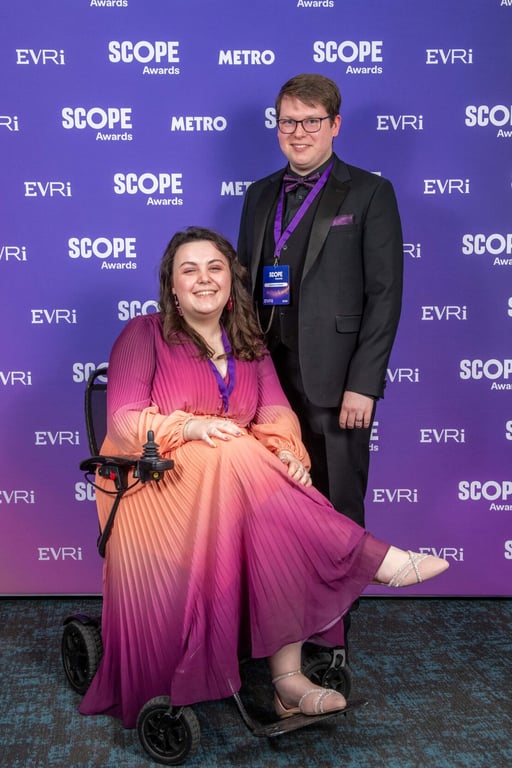
And behind it all is a business built on the belief that people do their best work when they’re supported, trusted and given the opportunity to thrive.
“Together we are a force to be reckoned with,” Imali says. “We’re incredibly capable together. We can do big things.”

Simon is a dynamic Content Writer who loves helping people transform their creative ideas into thriving businesses. With extensive marketing experience, he constantly strives to connect the right message with the right audience. In his spare time, Simon enjoys long runs, nurturing his chilli plants, and hiking through forests. Follow him on LinkedIn.