How much does a website cost in India in 2026?
Feb 26, 2026
/
By Hasna A.
/
17 min Read

A website in India typically costs between ₹5,000 and ₹50,000 for a small business site, while ecommerce websites range from ₹1,50,000 to ₹4,00,000 or more if developed by an agency. However, if you use a website builder or managed WordPress hosting, you can launch a professional website for as little as ₹2,000-₹6,000 per year, depending on your needs.
Website development cost in India depends on the method you choose, the number of pages, design complexity, ecommerce features, and ongoing maintenance. Many businesses overpay because they don’t understand what actually drives website pricing.
We’ll break down:
- The average website price in India by type (basic, business, ecommerce, custom)
- What factors increase website development cost
- How much a small business website realistically cost in India
- Ecommerce website cost breakdown for Indian sellers
- Recurring costs such as domain, hosting, and maintenance
- Website Builder vs WordPress vs agency pricing comparison
- How to reduce website costs without sacrificing quality
By understanding how website pricing works in India, you can set the right budget and avoid unnecessary expenses.

What is the average website price in India?
The average website price in India ranges from ₹5,000 for a basic informational site to over ₹10,00,000 for a large custom-built enterprise platform, depending on complexity, features, and the development method you choose.
Below is a realistic breakdown based on current Indian market pricing:
| Website type | Typical cost in India | Suitable for |
|---|---|---|
| Basic / static website (1–5 pages) | ₹5,000 – ₹50,000 | Freelancers, portfolios, small local businesses |
| Small business website (5–15 pages) | ₹10,000 – ₹80,000 | Restaurants, tuition centers, consultants, local services |
| Professional business website (10–20 pages, custom design) | ₹80,000 – ₹1,50,000 | Growing SMBs needing branding and advanced features |
| Ecommerce website | ₹1,50,000 – ₹4,00,000+ | Online stores with payment gateway and inventory system |
| Custom / enterprise website | ₹2,50,000 – ₹10,00,000+ | Startups, SaaS platforms, complex web applications |
These ranges typically reflect freelancer or agency pricing, with development, design, revisions, and project management bundled into a single quote.
However, the total cost depends heavily on:
- Whether the website is built using a website builder, WordPress, or fully custom code
- The number of pages and level of design customization
- Ecommerce features such as payment gateways, shipping modules, and product management
- Ongoing costs like hosting, domain renewal, and maintenance
For many small businesses in India, the final price is determined more by the development approach than by the website type itself. Choosing the right method can significantly reduce overall cost without sacrificing functionality.
What factors affect website cost?
Website costs in India depend on the development approach, feature requirements, design complexity, and long-term maintenance needs. The more customization, functionality, and third-party integrations a website requires, the higher the total investment.
- Development method. The development approach has the biggest impact on website price. A website builder typically costs ₹2,000–₹6,000 per year and includes hosting, templates, and security. WordPress with hosting usually costs ₹3,000–₹12,000 per year, depending on the themes and plugins you use. Hiring a freelancer may cost ₹10,000–₹80,000 as a one-time project fee. Agencies usually charge ₹50,000–₹2,00,000 or more because they include design teams, revisions, and project management.
- Number of pages. The more pages your website has, the more design and development time it requires. A 3–5 page website for a local service business costs far less than a 20-page corporate website or a real estate site with dozens of listings. Each additional page increases the work required for layout, formatting, and testing.
- Design complexity. Template-based websites cost less than fully custom-designed websites. Costs increase when you require unique branding, custom UI/UX layouts, advanced animations, or page-specific designs. A simple template customization may add ₹5,000–₹15,000, while a fully custom interface can increase costs by ₹50,000 or more.
- Ecommerce functionality. Adding ecommerce features significantly increases website development costs in India. Payment gateway integration, shopping cart setup, product filters, inventory management, GST configuration, and shipping automation all require additional configuration. Agency-built ecommerce websites typically start from ₹1,50,000, while simpler setups using structured platforms cost significantly less.
- Custom features and integrations. Advanced functionality raises both development and maintenance costs. CRM integration, booking systems, membership portals, multilingual support, API integrations, and AI chat tools can add ₹5,000–₹50,000 per feature, depending on complexity.
- Content creation and branding. Professional copywriting, product descriptions, logo design, photography, and brand identity packages increase total website cost. Content and branding services in India generally range from ₹5,000 to ₹30,000, depending on the scope.
- Hosting, domain, and maintenance. Recurring costs are often overlooked. A domain name typically costs ₹500–₹1,500 per year. Hosting ranges from ₹2,000 to ₹8,000 per year, depending on performance requirements. Ongoing maintenance or technical support may cost ₹1,500–₹10,000 per year if outsourced.
- Marketing and SEO. To drive traffic to your website, dedicate time, energy, and money to apply proper digital marketing and search engine optimization (SEO) best practices. Alternatively, hire professional marketers and SEO experts. If you go for complex, multi-channel strategies, your website cost will be higher.
Website price increases when multiple cost drivers combine, such as custom design, ecommerce functionality, and agency-based development. However, most small businesses do not require every premium feature at launch.
Cost of a WordPress website
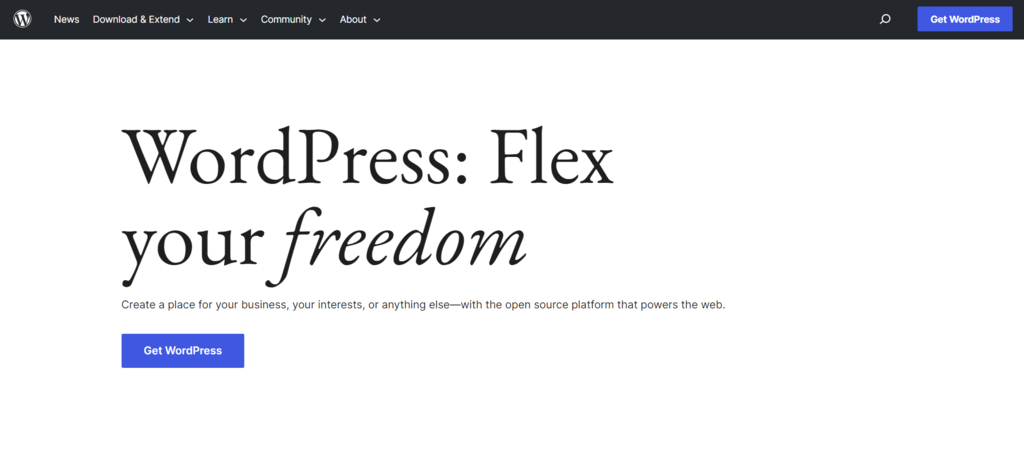
A WordPress website in India typically costs between ₹3,000 and ₹15,000 per year for small to medium websites, depending on hosting, themes, and plugins. Larger or ecommerce WordPress websites can cost significantly more if premium tools or developer support are required.
WordPress itself is free to use. However, launching a WordPress website requires several essential components.
1. Website essentials
Before building a WordPress website, you must purchase a domain name and hosting.
A domain name in India usually costs ₹500–₹1,500 per year for common extensions like .com, .in, or .net. Premium domains can cost more depending on demand. Many hosting companies, including Hostinger, also act as domain registrars. We bundle many of our hosting plans with a free domain name.
Domain Name Checker
Instantly check domain name availability.
Web hosting prices vary based on performance and traffic needs:
- Shared hosting: ₹2,000–₹5,000 per year (suitable for small websites)
- Managed WordPress hosting: ₹3,000–₹8,000 per year
- Cloud or VPS hosting: ₹6,000–₹20,000 per year
- Dedicated servers: ₹80,000+ per year
Most hosting providers include a free SSL certificate, which secures your website and enables HTTPS. Paid SSL certificates may cost ₹800–₹15,000 per year, but they are usually unnecessary for small businesses.
An SSL certificate enables HTTPS and secures user data. Most hosting providers include a free SSL certificate. Paid SSL certificates range from ₹800–₹15,000 per year, but they are generally required only for large ecommerce platforms or enterprise-level websites.
For a typical small business WordPress website in India, domain and hosting combined usually cost ₹3,000–₹8,000 per year, assuming standard performance requirements and free SSL inclusion.

2. Website design
Website design cost for a WordPress website in India depends on whether you use a pre-made theme, customize an existing layout, or hire a professional designer to build a custom interface.
WordPress offers thousands of free themes that let you launch a website without additional design costs. Free themes are suitable for blogs, portfolios, and simple small-business websites, but they offer limited customization options.
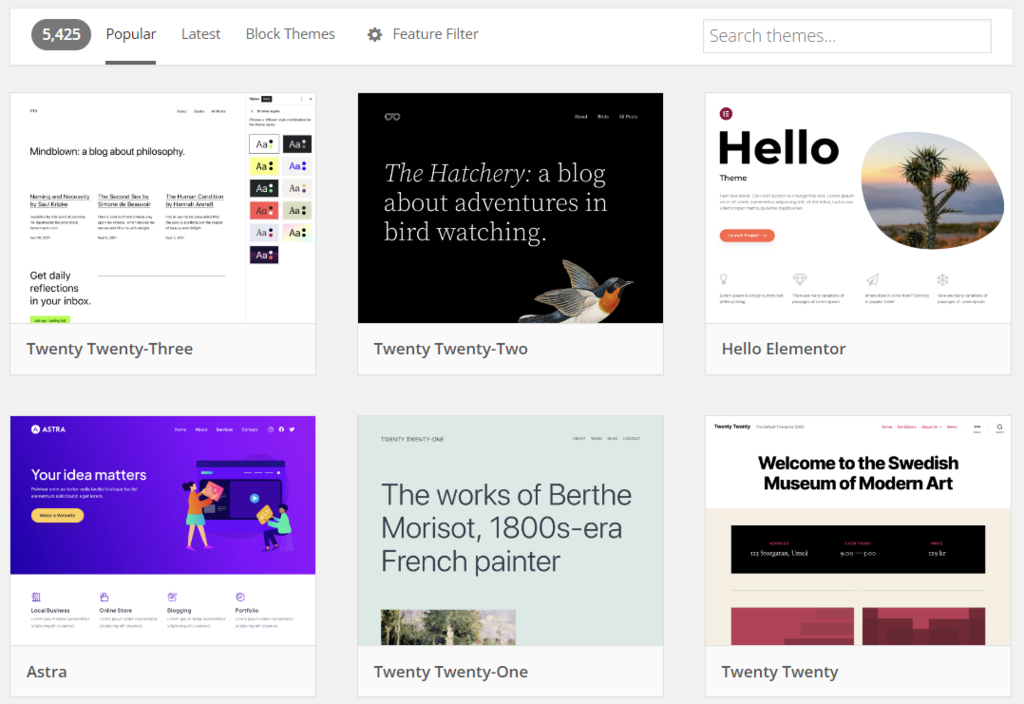
Premium WordPress themes typically cost ₹3,000–₹7,000 as a one-time license fee. These themes offer advanced customization, better support, responsive layouts, and built-in design elements. Most small businesses in India choose a premium theme to balance cost and professionalism.
If you hire a freelance web designer in India to customize your WordPress website, hourly rates typically range from ₹500 to ₹2,500, depending on experience and location. A partially customized website may cost ₹15,000–₹40,000, while a fully custom-designed WordPress website can range from ₹25,000 to ₹1,50,000 or more, depending on branding requirements, page count, and design complexity.
Design cost increases when you require:
- Unique UI/UX layouts for each page
- Custom animations or interactive elements
- Brand identity development (logo, color system, typography)
- Mobile-first optimization with advanced responsiveness
For most small businesses in India, using a premium theme with limited customization keeps total design cost under ₹10,000, while still delivering a professional appearance.
3. Ecommerce functionality
Adding ecommerce functionality significantly increases the cost of a WordPress website in India because it requires additional setup, integrations, and ongoing maintenance.
Most WordPress ecommerce websites use WooCommerce, which is free to install. However, running a fully functional online store involves several additional costs.
Payment gateway integration is essential for Indian ecommerce websites. Popular gateways such as Razorpay, PayU, and Stripe typically charge 2–3% per transaction, depending on the payment method (UPI, credit card, net banking, wallets). Some premium WooCommerce extensions for advanced payment or subscription handling may cost ₹2,000–₹8,000 per year.
Inventory management, product filtering, shipping configuration, and GST setup may require additional plugins. Premium ecommerce plugins generally cost ₹2,000–₹10,000 per year, depending on features.
Hosting requirements also increase for ecommerce websites. Unlike informational websites, online stores handle transactions, product databases, and higher traffic. Many ecommerce businesses upgrade to higher-performance hosting plans costing ₹5,000–₹15,000 per year.
If you hire a freelancer to build a WooCommerce store in India, development costs typically range from ₹25,000–₹1,00,000, depending on the number of products and the level of customization. Agency-built ecommerce websites usually start from ₹1,50,000 and can exceed ₹4,00,000 for advanced functionality.
For small online stores with limited products, the total annual cost of running a WordPress ecommerce website often falls between ₹10,000 and ₹30,000, excluding transaction fees.
Ecommerce costs increase when you add advanced features such as subscription models, multilingual support, custom checkout flows, marketplace functionality, or ERP integrations.
4. Plugins and add-ons
Plugins and add-ons expand the functionality of a WordPress website, but they also increase both initial and recurring costs. While many plugins are free, advanced features usually require paid versions.
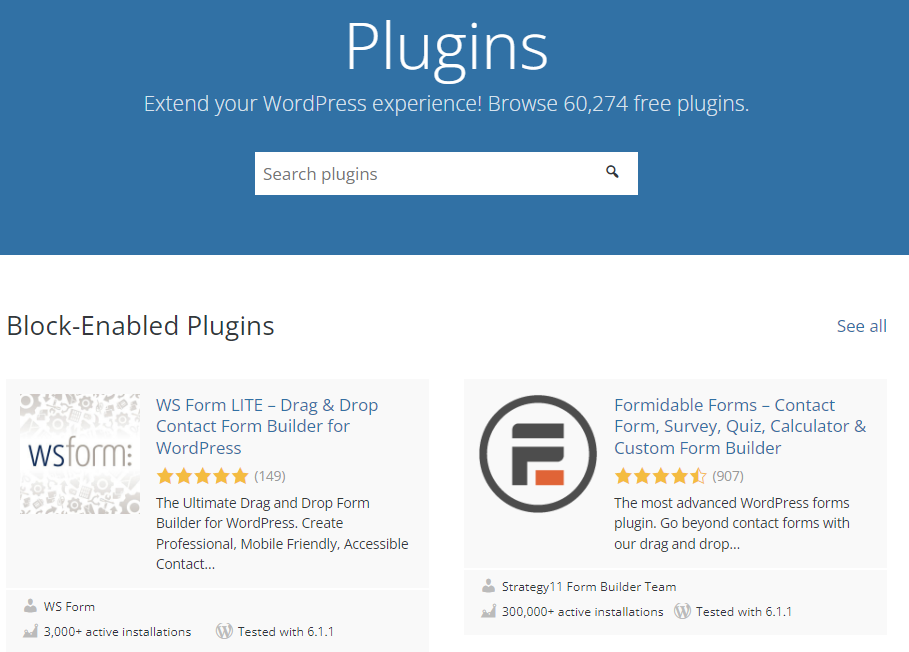
There are over 60,000 plugins in the official WordPress plugins directory. There are free, freemium, or premium plugins. Free plugins offer basic functionality, while premium plugins provide richer features.
Premium WordPress plugins in India typically cost ₹1,000–₹8,000 per year per plugin, depending on functionality and licensing terms. Websites that rely on multiple premium plugins can see annual costs rise quickly.
Here are some of the most popular plugin categories:
- Comments. Manage the comments section, protect the site from spam, and automate replies.
- PDF viewers. For embedding PDF documents into the site.
- Bookings. Help website visitors book reservations and appointments.
- Real estate. Lets you add property listings, mortgage calculators, automatic maps, and other features essential for a real estate business site.
- Menus. Add extra functionality and aesthetic elements to a site’s default menu bar.
- Instagram integration. Showcase Instagram feeds on a website.
- Google Analytics. Lets you integrate Google Analytics for monitoring site performance.
- Reviews. For adding product reviews and business evaluations to your website.
- Website migration. Lets you migrate data from an old website to a new one.
- Project management. For planning, organizing, and monitoring projects on your site.
- Donations. Add a donation button so that visitors can directly support a site.
- Pop-ups. Add pop-ups on pages, directing visitors’ attention to specific website content such as the company newsletter or promotions.
For example, a tuition center website may require a booking plugin and form builder, while a real estate website may need listing management and advanced search filters. Each additional premium feature adds to the annual operating cost.
A small business WordPress website that uses 2–4 premium plugins may spend ₹3,000–₹15,000 per year on plugins alone. Larger websites with ecommerce, automation, or multilingual features may spend significantly more.
Plugin costs are often underestimated when calculating website price in India. Over time, recurring plugin subscriptions can exceed the original hosting cost, especially if multiple advanced tools are required.
5. Marketing and SEO
Although WordPress core is already SEO-friendly, most sites need extra help to compete for traffic and generate sales in India. Fortunately, many tools can help you apply the best marketing and SEO techniques to your WordPress website.
Marketing and SEO costs vary depending on your business goals, competition level, and whether you manage campaigns yourself or hire professionals.
Hiring a digital marketing expert in India increases costs significantly. Freelance digital marketers typically charge ₹800–₹3,000 per hour, while agencies may charge ₹5,000–₹15,000 per hour or offer monthly retainers ranging from ₹8,000 to ₹50,000+, depending on scope and industry competition.
The do-it-yourself approach involves using WordPress SEO plugins, digital tools, and ads. While this method requires extra work, it’s more flexible budget-wise. Here are some DIY strategies to market your own site:
Below are the main marketing cost components:
- SEO tools. Professional SEO platforms such as Ahrefs, SEMrush, or Mangools typically cost between ₹2,000 and ₹10,000 per month, depending on the plan. Many WordPress users start with freemium plugins like Yoast SEO or All in One SEO to manage on-page optimization.
- Email marketing. Email platforms usually charge based on subscriber count. Entry-level plans range from ₹500–₹2,000 per month, while larger email lists increase costs. Some WordPress newsletter plugins offer free plans with limited features.
- Social media marketing. Promoting website content on platforms like Instagram, Facebook, LinkedIn, and YouTube requires either time investment or paid advertising. Social media management plugins may cost ₹500–₹3,000 per month.
- Affiliate marketing. Running an affiliate program requires tracking software or an affiliate plugin subscription, which typically costs ₹5,000–₹15,000 per year, depending on features.
- Pay-per-click (PPC) ads. In India, Google Ads typically cost ₹5–₹80 per click, depending on industry competition. Highly competitive niches such as finance, education, or real estate may exceed ₹100 per click. Facebook and Instagram ads often range from ₹3–₹50 per click, depending on targeting and audience size.
- Landing page tools. Premium landing page builders generally cost ₹2,000–₹8,000 per year, though some WordPress themes include built-in landing page functionality.
The total marketing budget for a small business website in India can range from ₹0 (fully DIY) to ₹10,000–₹40,000 per month, depending on advertising spend and outsourcing decisions.
6. Maintenance
Website maintenance is a recurring cost that keeps your WordPress website secure, up to date, and fully functional. Without regular maintenance, websites are vulnerable to security issues, experience performance problems, and suffer downtime.
If you manage your WordPress website yourself, maintenance costs remain minimal. However, you must handle:
- Core WordPress updates
- Theme and plugin updates
- Security monitoring
- Regular backups
- Performance optimization
- Fixing broken links or technical errors
Many small business owners in India choose to outsource maintenance to freelancers or agencies to avoid technical risks.
Freelance website maintenance services in India typically cost ₹1,500–₹10,000 per year for small websites. Larger websites with ecommerce functionality may require ₹10,000–₹25,000 per year, depending on complexity and support frequency.
Some maintenance providers charge monthly retainers ranging from ₹1,000–₹5,000 per month, especially for ecommerce stores that require regular monitoring.
Backup plugins and security tools may also involve premium subscriptions, typically costing ₹1,000–₹6,000 per year, depending on features.
For a small business WordPress website in India, total annual maintenance costs generally range between ₹0 (self-managed) and ₹15,000 per year, depending on whether you outsource support and use premium tools.
Maintenance is often overlooked when calculating website pricing in India, but over a 3–5-year period, these recurring expenses can significantly impact the total cost of ownership.
Cost of a website-builder-created website

A website builder lets anyone create a professional website without coding knowledge. It usually comes with a drag-and-drop website editor suitable for beginners.
In India, website builders are typically the most cost-efficient way to launch a small business website because they bundle hosting, SSL, and core features into one predictable annual fee.
Website builder pricing depends on the type of plan you choose. Basic plans are suitable for portfolios, service businesses, and informational websites. Ecommerce plans cost more because they include online selling features such as payment gateway integration, inventory management, and order tracking.
Most website builders operate on a subscription model. Instead of paying ₹50,000–₹1,50,000 upfront to a developer, you pay a fixed annual or monthly fee that includes maintenance and updates.
Hostinger Website Builder is included with Hostinger hosting plans, allowing users to build portfolio websites, small business websites, landing pages, or ecommerce stores without separate hosting costs.
Website builders have clear advantages and limitations.
Pros
- Quick setup. All you need to do is sign up, choose a suitable plan, and start building a website. There’s no need to buy a separate web hosting service.
- Beginner-friendly. Site builders are designed to help everyone – including complete beginners – to build a website. The drag-and-drop editor provides easy customization options, and the simple interface makes managing websites more accessible.
- AI tools. Site builders often include free AI-powered tools that can significantly reduce the cost of website creation. For example, Hostinger offers a free AI website builder that generates websites from scratch, an AI logo creator to design your website’s logo, and an AI writer for content creation.
Cons
- Limited flexibility. Unlike WordPress or other CMSs, you can’t install third-party software. Your options are limited to what the site builder offers.
- Potentially costly in the long run. With most website builders, you’ll have fixed ongoing website costs every month. There’s little flexibility in deciding how much you want to spend in a specific period.

In the following sections, we’ll break down how much it costs to use a site builder in more detail:
1. Website essentials
With a website builder, the essential components required to launch a website — hosting, SSL certificate, and technical infrastructure — are usually included in a single subscription fee. This significantly reduces both upfront and recurring costs compared to traditional WordPress or custom development setups.
In India, basic website builder plans typically cost ₹2,000–₹6,000 per year for informational websites such as portfolios, tuition centers, restaurants, or local service businesses. These plans generally include:
- Web hosting
- Free SSL certificate (HTTPS security)
- Access to templates
- Basic storage and bandwidth
- Technical maintenance handled by the provider
Unlike WordPress, you do not need to purchase hosting separately or configure server settings. This removes additional annual costs of ₹2,000–₹8,000 that are normally required for standalone hosting.
A custom domain name is still required. Domain registration in India typically costs ₹500–₹1,500 per year, depending on the extension (.com, .in, .net).
For small business owners who want predictable expenses, the bundled pricing model of a website builder simplifies budgeting. The total annual cost for a basic website using a builder in India often falls between ₹2,500 and ₹7,500 per year, including domain renewal.
Because infrastructure, updates, and security are managed by the platform, there are no separate technical maintenance fees at the basic level.
2. Website design
Website design costs are significantly lower with a website builder because templates and visual editing tools are included in the subscription.
Most website builders provide professionally designed templates for different industries such as restaurants, real estate agencies, tuition centers, freelancers, and ecommerce stores. These templates are included at no additional cost.
Unlike WordPress, where premium themes can cost ₹3,000–₹7,000 separately, website builders bundle design access into their annual plans. This eliminates one-time theme licensing fees.
Design customization is handled through a drag-and-drop editor. You can:
- Adjust layouts
- Change colors and typography
- Add images and sections
- Modify headers and footers
- Optimize for mobile devices

There is no need to hire a designer for basic customization. This removes potential design expenses of ₹10,000–₹50,000 that are common with freelance or agency-built websites.
If you require advanced branding, such as custom logos or unique visual identity systems, additional design services may still cost ₹5,000–₹25,000 depending on scope. However, many website builders include AI logo generators and basic branding tools that reduce these costs.
For most small businesses in India, website builder design costs are included in the base subscription fee, keeping total annual expenses predictable and under control.
3. Ecommerce functionality
Ecommerce plans on a website builder cost more than basic plans because they include online selling features such as payment processing, inventory management, and order tracking. However, they are still significantly more affordable than agency-built ecommerce websites.
In India, ecommerce website builder plans typically cost ₹5,000–₹15,000 per year, depending on features and product limits.
Most ecommerce builder plans include:
- Integrated payment gateways
- Product and inventory management
- Shopping cart functionality
- Secure checkout
- Order management dashboard
- Basic shipping configuration
Payment gateways in India (such as Razorpay, PayU, and Stripe) usually charge 2–3% per transaction, regardless of platform. These transaction fees are separate from the builder subscription.
Unlike WordPress, ecommerce builders do not require separate plugin purchases for essential store functionality. This removes additional annual plugin costs of ₹5,000–₹20,000 that are common in WooCommerce setups.
For small online stores selling 10–100 products, the total annual cost using a website builder typically ranges between ₹6,000 and ₹18,000, including subscription and domain renewal, but excluding transaction fees.
Ecommerce costs increase if you require:
- Multilingual functionality
- Subscription products
- Advanced shipping automation
- Marketplace-style features
- Custom integrations
For most small and medium-sized ecommerce businesses in India, a website builder offers the lowest upfront investment and predictable recurring costs compared to freelancer or agency development.
4. Plugins and add-ons
Website builders include most essential features within the subscription plan, which reduces the need for separate plugins or third-party add-ons. Unlike WordPress, you do not need to purchase individual plugins for SEO, security, caching, or backups.
Core features typically included in website builder plans are:
- Built-in SEO settings
- Security and SSL
- Hosting and performance optimization
- Contact forms
- Basic analytics integration
- Mobile responsiveness
Because these tools are bundled, there are usually no additional annual plugin licensing costs for standard functionality.
Some website builders offer advanced features as paid upgrades, such as:
- Advanced email marketing tools
- Expanded storage or bandwidth
- Advanced analytics
- Automation workflows
- Premium integrations
These upgrades may add ₹1,000–₹5,000 per year, depending on the platform and feature set.
For most small business websites in India, plugin-related costs remain minimal when using a website builder. The all-in-one structure prevents recurring plugin stacking costs common in WordPress environments, where multiple premium plugins can significantly increase annual expenses.
As a result, website builders provide more predictable total ownership costs, especially for beginners and small business owners who do not require highly customized functionality.
5. Marketing and SEO
Marketing and SEO costs for a website builder are similar to WordPress because traffic generation depends on strategy, not platform. However, website builders simplify technical SEO by handling performance, security, and mobile responsiveness automatically.
Most website builders include built-in SEO settings such as:
- Editable meta titles and descriptions
- Image alt text optimization
- Automatic sitemaps
- Mobile-friendly design
- SSL security
This removes the need to install separate SEO plugins.
If you manage marketing yourself, costs remain low. Many small businesses in India start with:
- Google Business Profile optimization
- Basic on-page SEO
- Organic social media marketing
- Content publishing
For paid marketing, typical costs in India are:
- Google Ads: ₹5–₹80 per click, depending on competition
- Facebook and Instagram ads: ₹3–₹50 per click
- Highly competitive industries (finance, real estate, education): ₹100+ per click
Email marketing tools usually cost ₹500–₹2,000 per month, depending on subscriber count. Some website builders include basic email marketing tools within ecommerce plans, reducing additional subscriptions.
If you hire a digital marketing freelancer in India, monthly retainers typically range from ₹8,000 to ₹30,000, while agencies may charge ₹20,000–₹75,000 per month, depending on scope and industry competition.
For small business websites built with a builder, marketing expenses often become the largest ongoing cost, not the website infrastructure. The platform cost remains predictable, while advertising and growth budgets scale based on business goals.
6. Maintenance
Website maintenance costs are significantly lower with a website builder because the platform manages technical updates, security patches, server performance, and backups automatically.
Unlike WordPress, where you are responsible for updating themes, plugins, and core software, website builders handle:
- Software updates
- Security monitoring
- SSL certificate renewal
- Hosting performance optimization
- Infrastructure management
There is no need to hire a developer for routine maintenance, which eliminates the annual support costs of ₹1,500–₹15,000 common with self-managed websites.
Maintenance is included in the subscription fee. As long as the plan remains active, the website continues to receive platform updates and security improvements.
For most small business owners in India, this eliminates technical risks and reduces long-term ownership complexity. The total annual cost remains limited to the builder subscription and domain renewal, without unexpected maintenance charges.
Over a 3-5 year period, the bundled maintenance model can result in lower total ownership cost compared to WordPress setups that require ongoing plugin updates and technical support.
Cost of a website by a professional web developer
Hiring a professional web developer is the most expensive way to build a website in India, but it offers maximum customization and control. Total cost depends on whether you hire a freelancer, a small agency, or a full-service digital agency.
In India, developer pricing varies significantly based on experience, location, and project complexity.
Freelance web developers typically charge ₹800–₹3,000 per hour. Small static websites may cost ₹10,000–₹40,000, while dynamic or business websites usually cost ₹40,000-₹1,50,000.
Digital agencies charge higher fees because they include designers, developers, project managers, and revision cycles. Agency-built websites in India commonly cost:
- Small business website: ₹50,000–₹1,50,000
- Ecommerce website: ₹1,50,000–₹4,00,000+
- Custom web applications or startup platforms: ₹2,50,000–₹10,00,000+
These quotes often include design, development, testing, deployment, and limited post-launch support.
Unlike website builders, professional development involves multiple cost layers:
- UI/UX design
- Frontend and backend development
- Testing and revisions
- Hosting setup
- Maintenance planning
- Ongoing technical support
You may also need to purchase hosting separately, which adds ₹2,000–₹20,000 per year, depending on infrastructure requirements.
Custom-built websites are suitable for businesses that require:
- Highly specialized functionality
- Unique database structures
- SaaS platforms
- Advanced integrations with ERP or CRM systems
- Marketplace or multi-vendor architecture
For most small businesses in India, custom development is not required at launch. However, startups and enterprises with complex workflows often justify the higher investment.
When evaluating developer pricing, it is important to consider long-term costs. Maintenance retainers, future feature development, and infrastructure upgrades can increase total ownership costs significantly over a 3–5 year period.
How to calculate your website cost
You can accurately calculate your website cost in India by breaking it into three components: setup cost, recurring annual cost, and growth cost. Once you understand these layers, you can eliminate unnecessary expenses and choose the most cost-efficient method.
1. Calculate your setup cost
Your setup cost depends on the development method:
- Website builder: ₹2,000–₹6,000 per year
- WordPress (self-managed): ₹3,000–₹15,000 per year
- Freelancer-built website: ₹10,000–₹1,00,000 one-time
- Agency-built website: ₹50,000–₹4,00,000+ one-time
If your business only needs a professional online presence, paying ₹1,00,000 upfront is usually unnecessary.
2. Add recurring annual costs
Recurring costs determine your long-term ownership expense. These may include:
- Domain renewal: ₹500–₹1,500 per year
- Hosting (if separate): ₹2,000–₹8,000 per year
- Plugin subscriptions (WordPress): ₹3,000–₹15,000 per year
- Maintenance support: ₹1,500–₹15,000 per year
- Marketing budget: Variable
For builder-based websites, most technical costs are already included in the subscription. For WordPress or custom builds, recurring plugin and maintenance fees increase the total cost over time.
3. Estimate 3-5 year total ownership cost
Many businesses focus only on the upfront quote. A more accurate approach is calculating total cost over 3–5 years.
For example:
- ₹1,50,000 agency website + ₹10,000 annual maintenance = ₹1,80,000–₹2,00,000 over 5 years
- ₹6,000 annual builder subscription × 5 years = ₹30,000
The difference becomes significant over time.
How to reduce website cost without reducing quality
Most businesses in India can lower website expenses by applying practical cost-control strategies.
- Start with essential features only. Avoid advanced custom development at launch. Add features after generating revenue.
- Use bundled platforms. Platforms that include hosting, security, and maintenance reduce recurring technical costs.
- Avoid unnecessary custom design. A well-optimized template often performs as well as a custom layout for small businesses.
- Handle basic updates yourself. Minor content edits do not require a developer.
- Scale marketing gradually. Begin with organic SEO and local search optimization before increasing paid advertising spend.
- Upgrade only when required. Higher hosting tiers, advanced plugins, or custom integrations should be added based on traffic and revenue growth — not assumptions.
For most small businesses in India, including restaurants, tuition centers, freelancers, local service providers, and small ecommerce stores, predictable annual subscriptions combined with gradual scaling offer the lowest financial risk.
By calculating both upfront and long-term costs, you can choose the development method that fits your budget while maintaining professional quality.
What should you do after calculating your website cost in India?
Once you understand how much your website will cost, the next step is choosing the right platform and launching efficiently.
If you want predictable annual expenses and minimal technical management, a website builder allows you to handle hosting, design, and security in one place. This keeps costs controlled and reduces the need for developer support.
If your project requires advanced customization or long-term flexibility, WordPress offers greater control but requires greater setup effort and ongoing maintenance.
Most small businesses in India benefit from starting with essential features and upgrading only when traffic and revenue justify it. Avoid large upfront investments unless your business model requires complex integrations.
When you’re ready to move from planning to execution, follow our step-by-step guide on how to make a website. It explains how to choose a domain, select a platform, design your pages, and launch your website correctly from day one.
Starting with the right structure reduces long-term expenses and helps you focus on growing your business instead of managing infrastructure.
This article is a localized version of How much does it cost to build a website in 2026?, originally published in English.
All of the tutorial content on this website is subject to Hostinger's rigorous editorial standards and values.

Hasna is passionate about tech, culture, and the written word. She hopes to create content that helps people succeed on the web. When not writing, rearranging, or polishing sentences, she enjoys live music and overanalyzing movies.



Comments
6 responsesAugust 06 2020
Awesome content with great price options. Thank you!!
September 16 2021
Good post. The factors mentioned here do affect the web design cost. Some companies offer maintenance totally free for specific period. The functionalities always affect the cost of web design. SEO price is always charged different. I know one web design company Ratna Technology that charges different.
January 06 2022
thx all
January 10 2022
I had purchased Histinger plan with an objective to develop different affiliate websites myself for Amazon, Digistore24, Jvzoo, Warriorplus and Alibaba (Aliexpress) with the help of FREE plugins and themes at the start. Later i would definitely buy all premium stuff when needed It would be a great help if i could get tutorials aligned with my above objectives. Thanks
January 11 2022
Hi! You can surely create and run your website with the free plugins as well - it's just that Premium plugins will often have more features. I'd suggest to start with our Affiliate Marketing Guide to get a better grasp of what your website needs and then continue with our How to Make a Website guide :)
March 29 2022
Thank you for sharing amazing blog on website development cost. We have been developing websites and software's from long time but we still had little confusion on how exactly evaluate web development cost.