Magento pricing in India: How much does Magento cost in 2026
Feb 26, 2026
/
By Ariffud M.
/
10 min Read
Magento pricing in India ranges from ₹1,50,000 to over ₹20,00,000+, depending on whether you use the free Magento Open Source edition or the paid Adobe Commerce edition and how much customization your store requires. While the core software can be downloaded at no cost, the total expense of running a Magento website includes development, hosting, custom design, extensions, payment gateway integration, maintenance, and marketing.
The total Magento cost in India depends on:
- The difference between Magento Open Source and Adobe Commerce licensing
- Developer hourly rates and full project development pricing
- Hosting type (VPS, cloud, or dedicated servers)
- Extension and theme purchases
- Payment gateway and transaction fees
- Ongoing maintenance and technical support costs
Understanding how these cost components combine determines whether Magento is financially suitable for your business size, technical capacity, and long-term growth plans.
Magento cost overview
The total cost of running a Magento website in India depends on licensing, development complexity, hosting infrastructure, extensions, and ongoing operational expenses. The table below summarizes the typical cost ranges for 2026.
| Cost category | Estimated price |
|---|---|
| License | Free (Magento Open Source) to ₹30,00,000+/year (Adobe Commerce, depending on GMV) |
| Hosting | ₹18,000 to ₹2,50,000+/year (VPS, cloud, or dedicated server) |
| Domain registration | ₹800 to ₹4,000+/year |
| SSL certificate | Free to ₹15,000+/year |
| Extensions | Free to ₹40,000+/extension |
| Themes | Free to ₹15,000+ (premium themes) |
| Custom development | ₹1,50,000 to ₹20,00,000+ (project-based) |
| Transaction fees | 2% to 3% + GST per transaction (varies by gateway) |
| Ongoing maintenance | ₹1,50,000 to ₹12,00,000+/year |
| Marketing and SEO | ₹1,00,000 to ₹25,00,000+/year |
Magento Pricing Breakdown
Let’s dive into the specific Magento costs to help you understand each expense category.
License cost
Magento offers two primary licensing options in India – Magento Open Source and Adobe Commerce (formerly Magento Enterprise). The license you choose directly affects your total Magento cost, scalability, and infrastructure requirements.
- Magento Open Source is free to download and use. There is no upfront licensing fee, which makes it attractive for Indian small and mid-sized businesses. However, you must pay separately for hosting, development, security, and ongoing maintenance. In practice, most Indian businesses spend ₹1,50,000 to ₹10,00,000+ on development and setup, even though the software license costs ₹0.
- Adobe Commerce is the paid version designed for enterprise-level businesses. Its pricing is customized and typically starts at $35,000 per year (approximately ₹29–30 lakh annually), depending on Gross Merchandise Volume (GMV) and business complexity. This fee does not include development or marketing expenses.
- For most Indian SMBs, Magento Open Source is financially viable, while Adobe Commerce is suitable for large brands with high revenue, advanced automation needs, and multi-store operations. In many cases, development and customization costs exceed the license fee itself, especially for complex Magento implementations.
Hosting and domain
Magento hosting cost in India depends on whether you use Magento Open Source or Adobe Commerce, and the type of server infrastructure your store requires. Hosting is mandatory for Magento Open Source users, while Adobe Commerce Cloud includes managed hosting within its enterprise license.
If you choose Adobe Commerce, hosting is bundled into the annual licensing fee. However, infrastructure requirements are reflected in the higher enterprise cost.
Magento Open Source users must arrange hosting separately. In India, Magento hosting typically falls into three categories:
- VPS hosting: ₹18,000 to ₹60,000 per year. Suitable for small to mid-sized Magento stores with moderate traffic.
- Cloud hosting: ₹40,000 to ₹1,20,000+ per year. Designed for scaling businesses that require flexible resource allocation.
- Dedicated servers: ₹1,00,000 to ₹2,50,000+ per year. Recommended for high-traffic or enterprise-level stores.
If you need help deciding which service to choose, we recommend VPS hosting. It has dedicated resources for better speed and reliability compared to cloud-based shared hosting, as well as more control and scalability without the high costs of a dedicated server.
Magento is a resource-intensive platform and does not perform reliably on low-cost shared hosting. Most Indian Magento stores require at least a properly configured VPS environment with optimized caching, CDN integration, and strong server-level security.
Hostinger is one of the best VPS hosting providers, offering robust solutions tailored to meet the needs of most eCommerce businesses. It provides up to 8 vCPU cores, 32 GB of RAM, 400 GB of NVMe disk space, and 32 TB of bandwidth for optimal site performance.
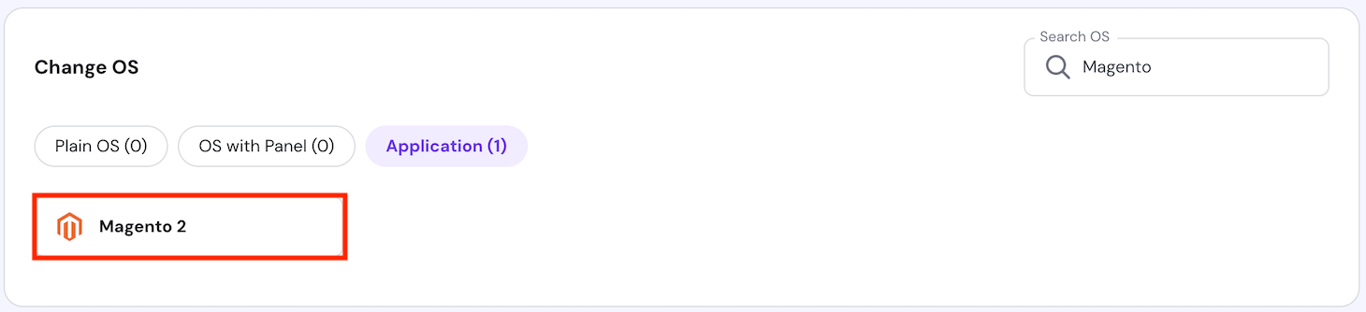
Additionally, Hostinger’s Magento VPS plans come with preconfigured templates, including for Magento. This allows you to install Magento and its required components with just a few clicks, bypassing the manual installation approach with commands.

In addition to hosting, you’ll need to purchase a domain name for your Magento store. Domain registration in India typically costs ₹800 to ₹4,000 per year, depending on the extension (.in, .com, .store, etc.). Renewal fees usually remain within the same range.
Domain Name Checker
Instantly check domain name availability.
Suggested Reading
For Hostinger customers, check out the guide on connecting your domain to our VPS service.
An SSL certificate is required to secure transactions and build customer trust. Many hosting providers include free SSL certificates. Premium SSL certificates range from ₹1,000 to ₹15,000 per year, depending on the validation level and warranty coverage.
For most Indian businesses using Magento Open Source, realistic annual infrastructure costs (hosting + domain + SSL) range between ₹20,000 and ₹1,50,000, depending on traffic volume and performance requirements.
Extensions and custom features
Magento extension and custom feature costs in India depend on the functionality your store requires and the level of customization needed. While extensions reduce development time, complex business requirements often require additional paid modules or custom coding.
Most Magento stores use between 5 to 15 extensions, depending on operational complexity. In India, extension pricing typically ranges from ₹5,000 to ₹40,000 per extension, depending on the vendor and feature depth.
Common Magento extension categories used by Indian businesses include:
- SEO extensions – Improve search engine visibility and metadata management.
- Security extensions – Strengthen protection against malware, brute-force attacks, and payment fraud.
- Payment gateway integrations – Enable Razorpay, PayU, CCAvenue, Stripe India, or PayPal.
- GST and invoicing modules – Automate GST calculation and invoice generation.
- Shipping integrations – Connect with Indian logistics providers such as Shiprocket, Delhivery, or Blue Dart.
- Analytics tools – Provide advanced reporting and customer behavior tracking.
Although some extensions are free, premium versions offer better support, updates, and compatibility. Over time, extension renewal and upgrade costs can increase the total Magento ownership cost.
Custom feature development significantly increases expenses. If your store requires marketplace functionality, ERP integration, multi-vendor systems, custom checkout flows, or multi-language support (Hindi and regional languages), you will need dedicated development work.
In India, small custom feature projects typically cost ₹50,000 to ₹2,00,000, while complex functionality can range from ₹3,00,000 to ₹10,00,000+, depending on development hours and technical complexity.
For most Indian Magento businesses, extension and customization costs often exceed the base software cost, especially when scaling operations or integrating with third-party systems.
Suggested Reading
Read our Magento 2 tutorial to fully utilize the platform, including how to install extensions.
Custom development costs
Magento development cost in India depends on project complexity, feature requirements, and the experience level of the developer or agency. Even with Magento Open Source, development accounts for the largest share of total expenses.
In India, developer hourly rates typically range from ₹800 to ₹2,500 per hour, depending on expertise and location. Tier-1 city agencies usually charge higher rates than freelancers or Tier-2 city developers.
For project-based pricing:
- Basic Magento store setup: ₹1,50,000 to ₹4,00,000
- Mid-level custom store: ₹5,00,000 to ₹15,00,000
- Enterprise or marketplace build: ₹15,00,000 to ₹20,00,000+
Small custom tasks may cost ₹50,000 to ₹2,00,000, while advanced integrations such as ERP systems, multi-vendor functionality, or custom APIs significantly increase development time and cost.
Hiring a dedicated Magento development team for long-term support can cost ₹8,00,000 to ₹25,00,000+ per year, depending on scope and workload.
For most Indian businesses, development and customization are the core of Magento pricing, often exceeding the combined costs of hosting and extensions.
Suggested Reading
Did you know that you can implement a progressive web app (PWA) in Magento? Read our Magento PWA article to see how they work together.
Themes and custom design
Magento themes and custom design costs in India depend on whether you use a ready-made template or invest in a fully customized store design. Design affects branding, user experience, and conversion rates, especially for competitive eCommerce niches.
Magento offers both free and premium themes.
Free themes provide basic layout and functionality, making them suitable for early-stage businesses with limited budgets. However, they often require additional customization to match brand identity.
Premium Magento themes typically cost between ₹5,000 and ₹15,000, depending on features, design flexibility, and vendor reputation. These themes offer better responsiveness, built-in customization options, and ongoing updates.
Businesses that require a unique storefront usually opt for custom design. In India, simple custom Magento theme development starts at ₹75,000 to ₹1,50,000, while complex, fully tailored designs with advanced UI/UX elements range from ₹2,00,000 to ₹5,00,000+.
Custom design increases upfront costs but improves brand positioning, mobile optimization, and conversion performance. For most Indian mid-sized Magento stores, design and UX refinement are necessary to compete effectively in crowded markets.
Suggested Reading
Check how brands like Liverpool FC, Land Rover, and Sigma Beauty design their Magento websites to get some inspiration.
Transaction fees and payment gateways
Magento transaction fees in India depend on the payment gateway you integrate and your monthly transaction volume. Magento itself does not charge transaction fees, but payment providers apply per-transaction charges and GST.
In India, most eCommerce businesses use local payment gateways that support UPI, credit/debit cards, net banking, and wallets.
Typical transaction fees in India:
- Razorpay: 2% to 3% per transaction + 18% GST
- PayU: 2% to 3% per transaction + GST
- CCAvenue: ~2% to 3% per transaction + GST
- Stripe India: ~2% per domestic card transaction + GST
- PayPal (international payments): 3.4%+ per transaction, higher for cross-border payments
For example, if your store processes ₹10,00,000 in monthly sales at a 2% gateway fee, you pay ₹20,000 in transaction charges, excluding GST.
International transactions, currency conversion, and EMI options may increase effective fees. Some gateways also charge annual maintenance or settlement fees.
When choosing a payment gateway for Magento in India, consider:
- Transaction percentage and GST impact
- Settlement time to bank accounts
- Support for UPI and recurring payments
- EMI and Buy Now Pay Later (BNPL) availability
- Cross-border payment capability
For most Indian Magento stores, payment processing fees represent a recurring operational cost that directly scales with revenue.
Support and maintenance
Magento support and maintenance costs in India depend on whether you manage the store in-house or outsource technical support to an agency or freelancer. Ongoing maintenance is essential to keep the store secure, up to date, and optimized for performance.
Magento requires regular:
- Core software updates
- Extension updates
- Security patch implementation
- Performance optimization
- Bug fixes and compatibility checks
Without consistent maintenance, Magento stores face higher security risks and performance issues.
In India, businesses typically choose between two support models:
In-house support involves hiring a dedicated Magento developer or technical team. Annual costs usually range from ₹6,00,000 to ₹18,00,000+, depending on experience and workload. This option offers faster response times and direct control but increases payroll expenses.
Outsourced support through agencies or freelancers typically costs ₹1,50,000 to ₹6,00,000 per year, depending on service level agreements (SLAs) and the complexity of the store. This model is more cost-effective for small and mid-sized businesses.
Maintenance costs increase as your store grows, especially if you run high traffic volumes, multiple integrations, or custom features.
For most Indian Magento businesses, support and maintenance are predictable recurring costs that ensure long-term stability and security.
SEO and marketing
SEO and marketing costs significantly influence the total cost of running a Magento store in India because traffic acquisition directly affects revenue growth. Unlike licensing or hosting, marketing expenses scale based on competition, niche, and growth targets.
Magento stores require both organic and paid marketing strategies to remain competitive in India’s crowded eCommerce market.
SEO services
Search engine optimization (SEO) improves visibility on Google and reduces long-term customer acquisition costs.
In India, professional SEO services typically cost:
- ₹15,000 to ₹50,000 per month for small to mid-sized businesses
- ₹60,000 to ₹2,00,000+ per month for competitive industries
These services usually include technical SEO optimization, on-page improvements, content creation, and link building. For a detailed breakdown of how to optimize a Magento store specifically, follow proven Magento SEO strategies that improve crawlability, site speed, structured data implementation, and category-level optimization.
Annual SEO investment for a Magento store in India typically ranges from ₹1,80,000 to ₹12,00,000+.
Paid advertising
Paid campaigns generate immediate traffic and are often used during product launches or seasonal sales.
Typical digital advertising costs in India:
- Google Ads (PPC): ₹5 to ₹150+ per click depending on industry competition
- Social media ads (Meta, Instagram): ₹5 to ₹80 per click
- Marketplace ads (Amazon/Flipkart integrations): Variable commission-based structures
Annual paid marketing budgets for Magento businesses commonly range from ₹1,00,000 to ₹25,00,000+, depending on scale.
Seasonal campaigns in India, such as Diwali, Navratri, Eid, wedding season, Republic Day, and Independence Day sales, often require higher advertising allocation due to increased competition and higher conversion rates.
Email and content marketing
Email marketing software typically costs ₹1,000 to ₹10,000 per month, depending on subscriber count. Content marketing expenses vary based on production quality, ranging from ₹2,000 to ₹10,000 per blog article or campaign asset.
For most Indian Magento stores, marketing and SEO represent recurring growth investments rather than fixed operational costs. Businesses that underinvest in traffic acquisition often struggle to recover their development and infrastructure expenses.
Example of a medium-sized Magento business cost
A medium-sized Magento Open Source store in India typically costs between ₹20,00,000 and ₹35,00,000 per year, depending on development complexity and marketing investment. The example below illustrates a realistic annual cost breakdown.
This estimate excludes transaction fees, which vary based on monthly sales volume and payment gateway charges.
Category Estimated annual cost License ₹0 (Magento Open Source) VPS hosting ₹40,000 Domain name ₹1,500 SSL certificate ₹5,000 Extensions (8–10 premium modules) ₹2,50,000 (one-time / renewal-based) Custom development & feature enhancements ₹8,00,000 Premium theme ₹12,000 (one-time) Custom design & UI/UX improvements ₹2,50,000 Outsourced support & maintenance ₹4,00,000 SEO services ₹4,80,000 Paid advertising (Google & social ads) ₹6,00,000 Email & content marketing ₹1,20,000 Estimated total ₹29,58,500 (~₹30 lakh annually) This example reflects a growing Indian eCommerce business generating steady traffic and investing consistently in marketing. Businesses operating in highly competitive niches such as fashion, electronics, or beauty may spend significantly more on advertising and conversion optimization.
For enterprise-level Magento implementations or Adobe Commerce licensing, total annual costs can exceed ₹50,00,000 to ₹1 crore or more.
Magento cost-saving tips
Reducing Magento costs in India requires optimizing infrastructure, limiting unnecessary customization, and planning development in phases. Since development and maintenance form the largest share of Magento expenses, strategic decisions significantly lower long-term costs.
1. Choose the hosting plan
Selecting the correct hosting plan prevents overspending on unused server resources. Many Indian businesses overestimate initial traffic and end up purchasing high-tier infrastructure unnecessarily.
Start with a properly configured VPS environment and upgrade only when traffic and revenue justify scaling. This approach maintains performance while controlling infrastructure costs.
Our VPS uses a fiber-connected network infrastructure with 1 Gb/s speed, ensuring higher uptime and faster loading even during peak traffic periods. This minimizes downtime and potential revenue loss.
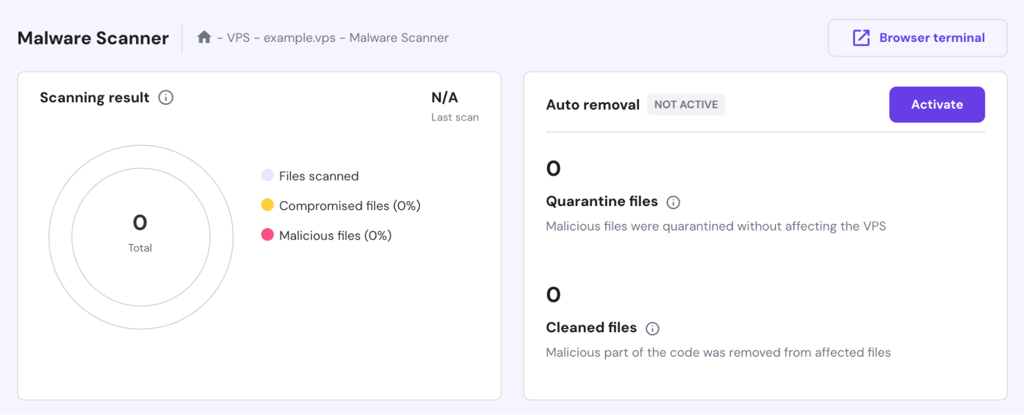
Hostinger also provides robust security features to protect your VPS. Our Wanguard DDoS filter and easy-to-configure firewall keep harmful traffic at bay. Meanwhile, the Monarx-powered malware scanner detects and removes malicious threats before they can infect your site.
Lastly, Hostinger’s plans are scalable, allowing your hosting to grow with your business. When you require more resources for your online store, you can upgrade to a higher-tier plan with just a few clicks.
2. Use reliable extensions instead of heavy custom development
Premium extensions often cost less than building features from scratch. Instead of custom-coding every feature, use well-supported modules for:
- Payment gateways
- GST automation
- Shipping integrations
- SEO optimization
However, avoid installing excessive extensions, as they increase maintenance complexity and may slow performance.
Reduce Operational Costs Without Compromising Performance
Here are some tips to cut operational costs while maintaining performance:
- Optimize resource usage. Regularly review and optimize your server resources to ensure you’re not overpaying for unused capacity.
- Automate tasks. Use automation tools to handle repetitive tasks, reducing the need for manual intervention and saving time and labor costs.
- Employ built-in features. Fully utilize Magento’s built-in features before investing in additional extensions or custom developments.
3. Plan development in phases
Launching with essential features reduces initial investment. Add advanced functionality such as marketplace modules, advanced personalization, or automation tools after revenue stabilizes.
Phased development improves cash flow management and reduces financial risk.
4. Optimize marketing spend based on ROI
Instead of spreading marketing budgets across too many channels, focus on high-conversion campaigns. During Indian peak seasons, such as Diwali or wedding sales, increase ad budgets strategically rather than maintaining a high year-round spend.
Organic SEO investment typically delivers stronger long-term returns compared to aggressive short-term paid advertising.
5. Avoid over-engineering the store
Many Magento projects exceed budget because of unnecessary custom features. Prioritize revenue-generating improvements such as faster checkout, mobile optimization, and conversion tracking before adding advanced technical enhancements.
For most Indian SMBs, disciplined planning and incremental scaling significantly reduce Magento’s total cost of ownership.
Is Magento worth it?
Magento is worth the cost in India only for businesses that require high customization, full code control, and long-term scalability. For small or first-time entrepreneurs, the total investment can exceed practical budget limits.
Magento Open Source offers flexibility without licensing fees, but development, hosting, maintenance, and marketing costs quickly raise total annual expenses to ₹20–30 lakh for a growing store. Adobe Commerce significantly increases that investment, with enterprise licensing alone starting at around ₹30 lakh per year.
Magento is most suitable for:
- Established D2C brands with steady revenue
- Large product catalogs (1,000+ SKUs)
- Multi-store or B2B operations
- Businesses requiring deep system integrations (ERP, CRM, custom workflows)
However, Magento requires ongoing technical management. Infrastructure optimization, security patches, and extension compatibility demand continuous developer involvement.
For many Indian small and mid-sized businesses, the total cost of ownership may outweigh the benefits of full customization. Simpler website-building solutions reduce technical overhead while lowering initial and recurring expenses.
Ultimately, Magento is a powerful eCommerce platform, but its pricing structure makes it financially practical only when the business scale justifies the investment.
This article is a localized version of Magento Pricing: How Much Does It Cost to Run a Magento eCommerce Site, originally published in English.
All of the tutorial content on this website is subject to Hostinger's rigorous editorial standards and values.

Ariffud is a Technical Content Writer with an educational background in Informatics. He has extensive expertise in Linux and VPS, authoring over 200 articles on server management and web development. Follow him on LinkedIn.



Comments
0 responses