Building for now, preparing for what’s next: Hostinger’s 2025 Sustainability Report
2025 marks the fourth consecutive year we’ve published our Sustainability Report in line with the Global Reporting Initiative (GRI) standards.
It’s also the year we put a name to something that has long shaped how we operate: ambidexterity – the ability to run today’s business with discipline while actively building for tomorrow.
In practice, this means maintaining operational excellence in everything we do today, while continuously innovating for what’s next. This report reflects how that balance played out in 2025, across our planet, our people, and the communities we serve.
Innovation at scale
At the core of Hostinger is a simple belief: making an online presence accessible to everyone, everywhere. Today, that mission is increasingly powered by AI as an extension of what we’ve always set out to do.
In the first quarter of 2025, we introduced Hostinger AI Builder, our AI-powered platform for building websites and web apps through zero-shot creation. Just a few months later, we launched Hostinger Reach, an AI-driven email marketing tool that enables businesses to create campaigns in minutes.
Amid all these launches, we strengthened and launched new features for our core products – hosting, domains, WordPress, VPS, and Hostinger Mail.
The result of all this is visible in how people are building online today.
By the end of 2025, more than 800,000 users had explored vibe coding with Hostinger AI Builder. Nearly one million websites were created using our AI Website Builder, and over 164,000 users launched their first email campaigns with Hostinger Reach.
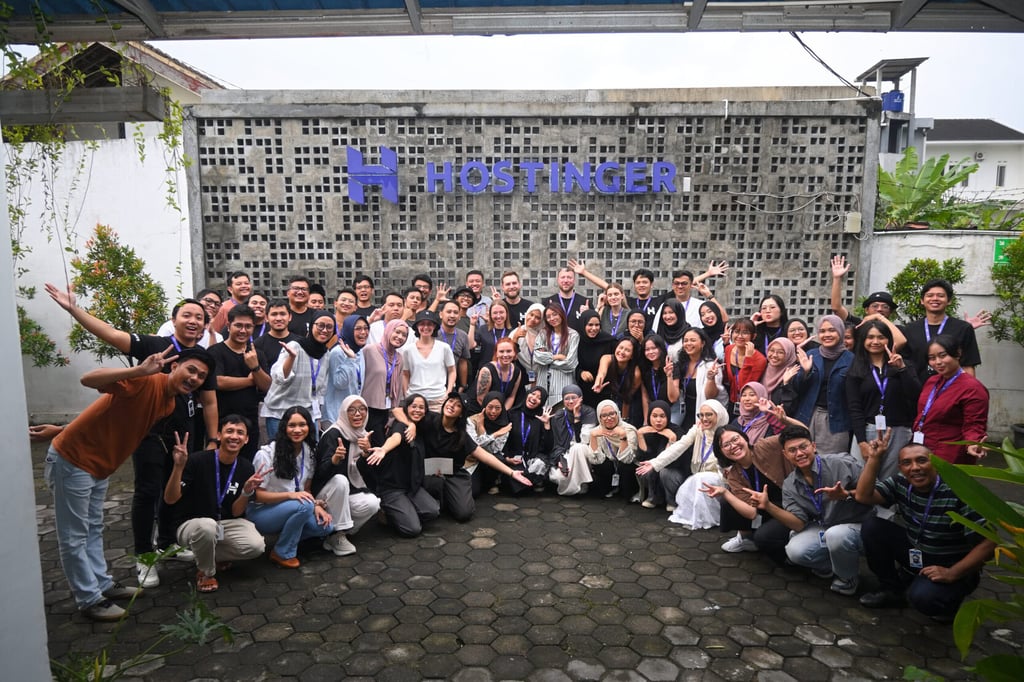
In total, we supported 4.6 million customers across more than 150 countries – including in Indonesia, where we brought the Niagahoster brand fully under the Hostinger umbrella to better serve that market as one unified team.
And with Kodee, our AI assistant agent, resolving 81% of customer inquiries automatically, support is available instantly, in the language our customers need.
These numbers represent more individuals and small businesses unlocking opportunities and entering digital markets, regardless of their technical background or location. That’s what makes them meaningful to us.
Operating with integrity
In 2025, we upgraded our information security compliance to ISO/IEC 27001:2022 and expanded our Information Security Management System to 32 security-related policies and standards, 11 of which were introduced in 2025.
Our systems are monitored around the clock, regularly scanned for vulnerabilities, and continuously tested by security researchers worldwide through our bug bounty program.
Beyond infrastructure security, our dedicated Abuse and Compliance team responded to 377,982 abuse reports in 2025 and acted on any content that violated our Terms of Service.
We also maintain a whistleblowing channel open to both employees and third parties – no qualifying reports were received in 2025. There were no confirmed incidents of corruption, discrimination, or anti-competitive behavior.
Integrity also shapes how we use the tools we build. As AI becomes central to how our teams work, we’ve put clear guardrails in place. Sharing sensitive data with AI systems requires prior approval from our cybersecurity team, AI-generated outputs require human review, and all employees receive ongoing training covering ethics, bias, data privacy, and intellectual property.
Staying committed to renewable energy as we grow
Our data centers maintained a 100% renewable electricity share in market-based reporting. This was achieved through a combination of renewable energy sourced by our colocation providers via direct contracts and renewable energy certificates. For facilities in Meppel, Asheville, Mumbai, and Jakarta, we secured these certificates directly to ensure full coverage.
As a result, our remaining emissions were limited to our office operations.
In market-based terms, our Scope 2 emissions remained at 23 tCO₂e – limited to heating in our office spaces.
As for the location-based method, which reflects the average grid emissions at our facilities’ locations, our Scope 2 emissions totaled 4,367 tCO₂e. Our Scope 1 emissions, primarily from cooling systems at our Yogyakarta office, totaled 0.2 tCO₂e.
Meanwhile, our total carbon footprint reached 20,680 tCO₂e in 2025 – a 50% increase from the previous year. The majority came from Scope 3 emissions (20,656 tCO₂e), which cover indirect emissions across our value chain, including purchased goods and services, capital goods, business travel, and employee commutes.
This increase reflects continued business growth, particularly in the Purchased Goods and Services category. As a growing company, we also expanded our infrastructure capacity by procuring additional servers, which contributed to the year-over-year increase.
Getting a clearer view of our emissions, including more granular data across our value chain, remains a priority for the year ahead. We automated 42% of our sustainability reporting data points in 2025, including emissions tracking, making our data more accurate and granular over time.
On circularity, 100% of our decommissioned servers and switches were reused or recycled in 2025 through structured processes with ISO 14001-certified partners.
And as we expand globally, every new data center must be matched with 100% renewable energy from day one. We signed contracts for new facilities in Malaysia and a second location in Brazil in 2025 – both aligned with that commitment.
Fostering a workplace to perform and transform
The systems we build matter, and so does the environment we create for the people building them. That foundation is reflected in how our people experience their work.
Our Employee Net Promoter Score (eNPS) reached 71, up from 64 the year before and well above the tech sector average of around 28. It’s a signal of something we care deeply about: creating a workplace where people feel supported, challenged, and genuinely invested in what they do.
We’ve also seen that reflected in retention. Employee turnover dropped to 28.3%, down from 34.2% in 2024. Among team members who most strongly identify with our culture, our Culture Peak group, turnover was just 1%.
At the same time, our internal mobility rate reached 33.7%, meaning one in three people stepped into a new role or expanded their scope, building the kind of cross-functional depth that makes an organization adaptable.
We believe representation follows from the right conditions – equal opportunities, shared principles, and a culture where everyone is evaluated on the same standards.
This is reflected in the fact that women now make up 44% of our global team and hold 52% of leadership roles. In IT positions specifically, women represent 21% of our workforce, compared to a European average of 19.4%.
These are outcomes we don’t take for granted. They reflect consistent investment in how we grow and support our people.
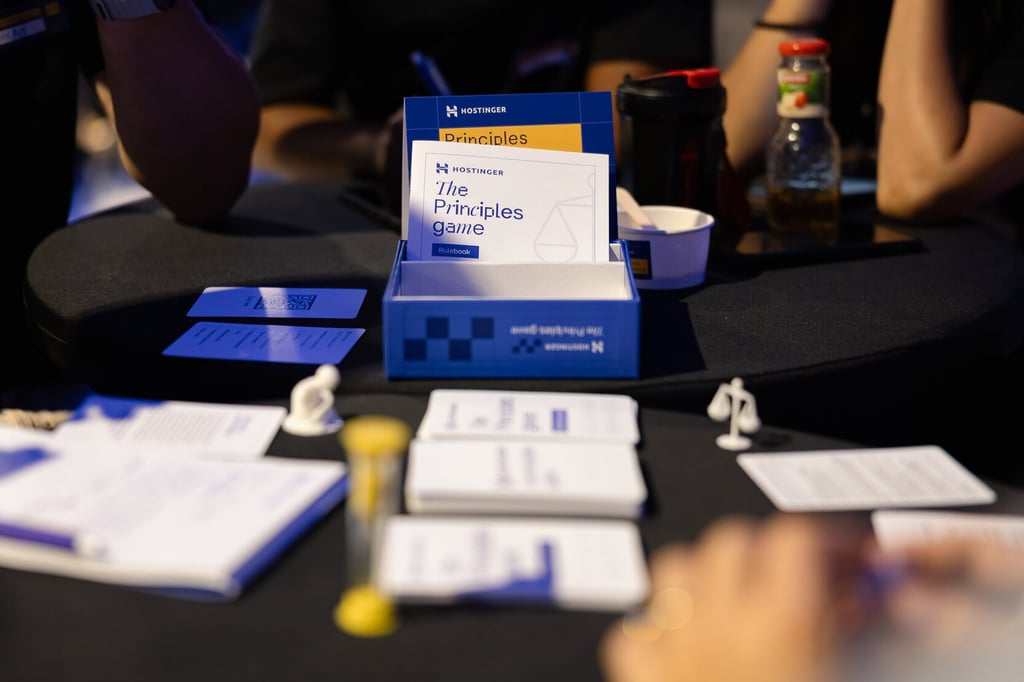
Alongside these structural efforts, we’ve invested in how culture shows up day to day. In 2025, we launched The Principles Game – a tool designed to bring our 10 company principles into real workplace scenarios.
Showing up for the communities around us
As Hostinger grows, our ability to contribute beyond our core business continues to expand. In 2025, we donated over 151,000€ to initiatives spanning culture, education, entrepreneurship, defense, and access to technology.
As part of our contribution toward defense efforts, we continued our support for Ukraine through monetary aid, the production of more than 55 FPV drones across five workshops, and a drone-flying training session to enhance operational readiness.
Additionally, we took part in the 4 Percent initiative, advocating for increased national defense funding in Lithuania.
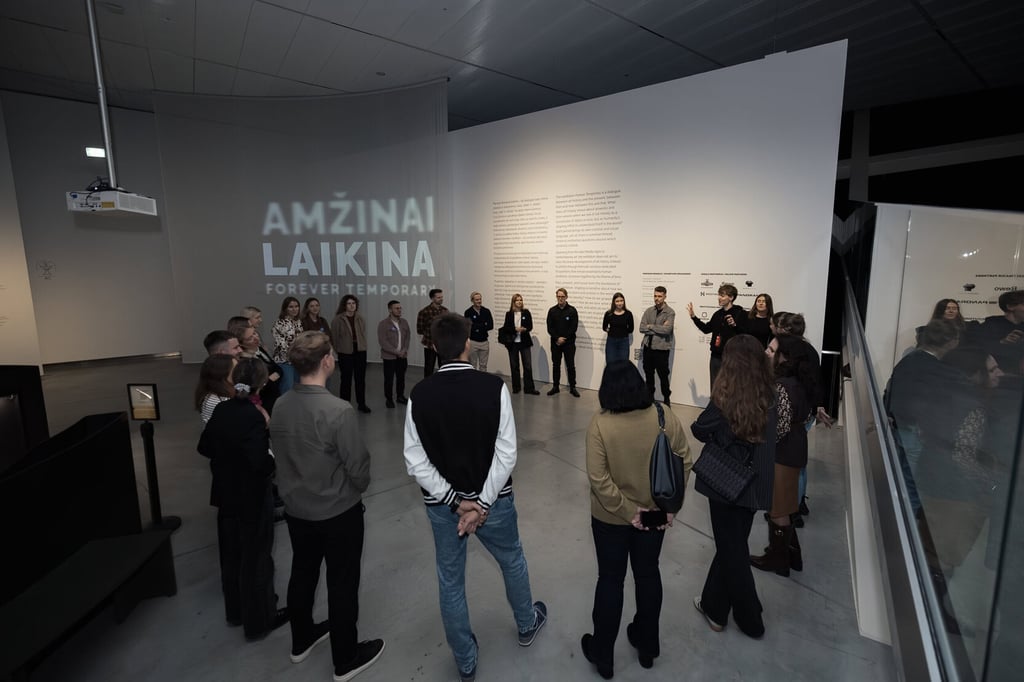
In culture, we became one of the main partners of the MO Museum, Lithuania’s leading contemporary art institution.
We also continued supporting the Groundbreaker Talents program, which provides full-time software engineering scholarships for young women from underprivileged communities in Uganda.
Knowledge that travels further than our products
The expertise, frameworks, and lessons we develop internally matter just as much as our products – and sharing them is critical to maximizing impact.
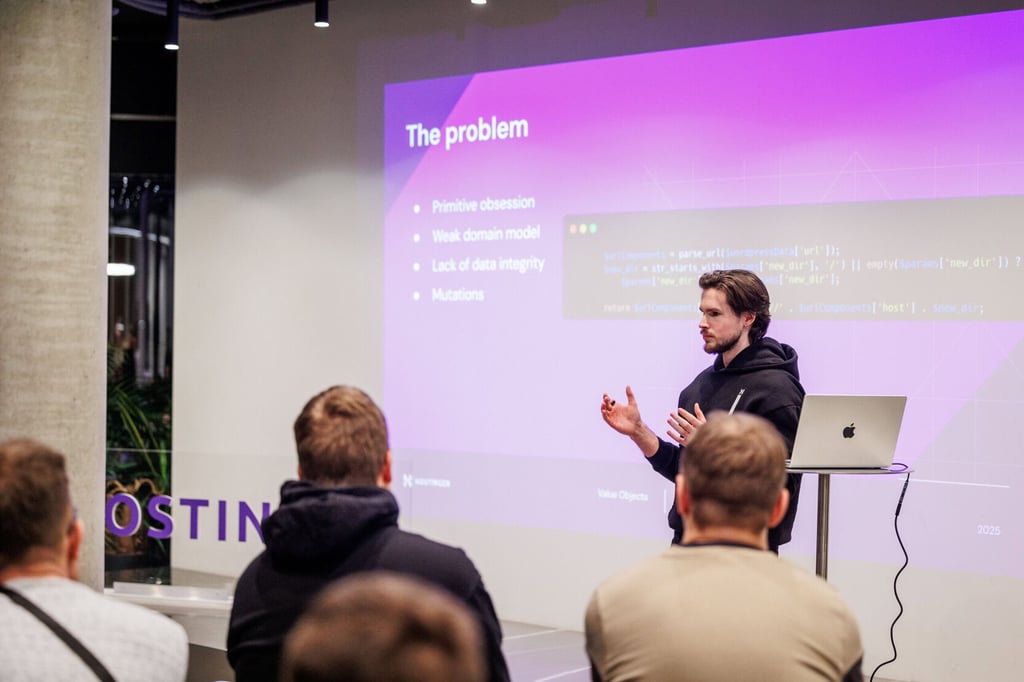
In 2025, this commitment translated into 67 knowledge-sharing events, reaching approximately 5,000 participants across the startup and entrepreneurship community.
One of the most defining initiatives was Generation AI. Launched in Lithuania in May 2025 in partnership with Tesonet, it’s a nationwide program giving schools free access to advanced AI tools, including Hostinger AI Builder and nexos.ai.
By the end of the year, more than 330 schools had registered, reaching over 47,000 students and 500 teachers in grades 9-12.
Through this initiative, we aim to help the younger generation see AI not as something that happens to them, but as something they can actively use.
This focus on empowerment extends beyond education. As part of our ongoing mission to empower small businesses worldwide, we launched three initiatives.
The Hostinger Microgrant program launched in Indonesia, providing selected entrepreneurs with funding and a suite of Hostinger services to help them build and scale their businesses. Delivered in two rounds, it supported ventures across sectors, including sustainable agriculture, waste reduction, community education, wellness, ethical fashion, and inclusive food products.
Building on this momentum, we expanded the initiative internationally. In Brazil, it continued as the Hostinger Start program, supporting early-stage businesses focused on digital inclusion, community education, sports technology, and youth empowerment.
In Mexico, it was introduced as the Impulso Hostinger program, supporting businesses developing solutions in areas such as rural connectivity, animal-assisted therapy, and environmental conservation.
Read the full report
Our 2025 Sustainability Report shares the full picture, bringing together the data, methodology, and context behind everything we’ve covered here.
We’re proud of the progress we’ve made, clear-eyed about what still needs work, and committed to reporting on both.
If you have questions or feedback about the report or our sustainability efforts, feel free to email sustainability@hostinger.com.
Thank you for following the journey.

Larassatti Dharma is a content writer with 5+ years of experience in the web hosting industry. She has populated the internet with over 100 YouTube scripts and articles around web hosting, digital marketing, and email marketing. When she's not writing, Laras enjoys solo traveling around the globe or trying new recipes in her kitchen. Follow her on LinkedIn

Ruta Grigaliunaite is the Sustainability Manager at Hostinger, with over six years of experience in corporate sustainability across consulting and the IT sector. She is driven by a strong belief that businesses can do better for both the planet and the people who depend on it. In her role, she focuses on reducing environmental impact while encouraging more sustainable practices at work and in everyday life.