Saimonas’ growth story: How to thrive as a creative in the tech world?
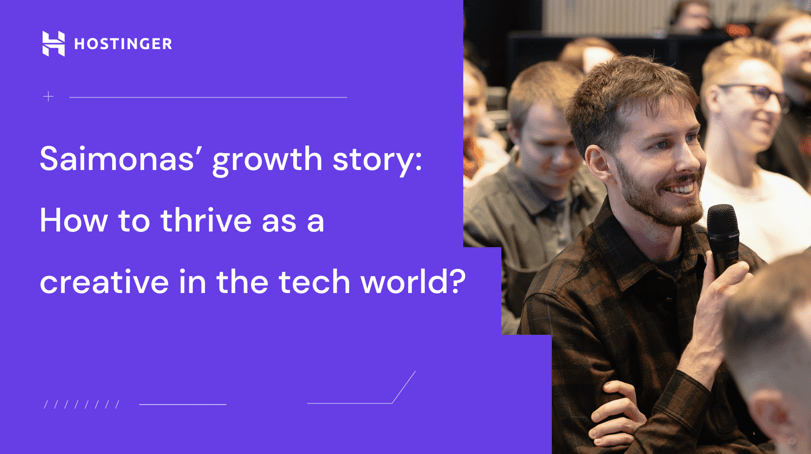
When it comes to the visual side of Hostinger’s brand, Saimonas Mureika is one of our go-to people. During more than five years he’s been with the company, he’s done it all – from designing Halloween-themed Meta campaign ad banners to pitching logos for flagship products, like Kodee. As a Graphic Design Team Lead, Saimonas makes sure that Hostinger’s design clicks, helps achieve our goals, and reflects who we are. I was curious to learn how creatives like Saimonas are faring and what growth opportunities they find in a tech-driven environment, such as Hostinger’s.
It’s been more than five years since you’ve been designing for Hostinger. Do you remember your very first serious project or task?
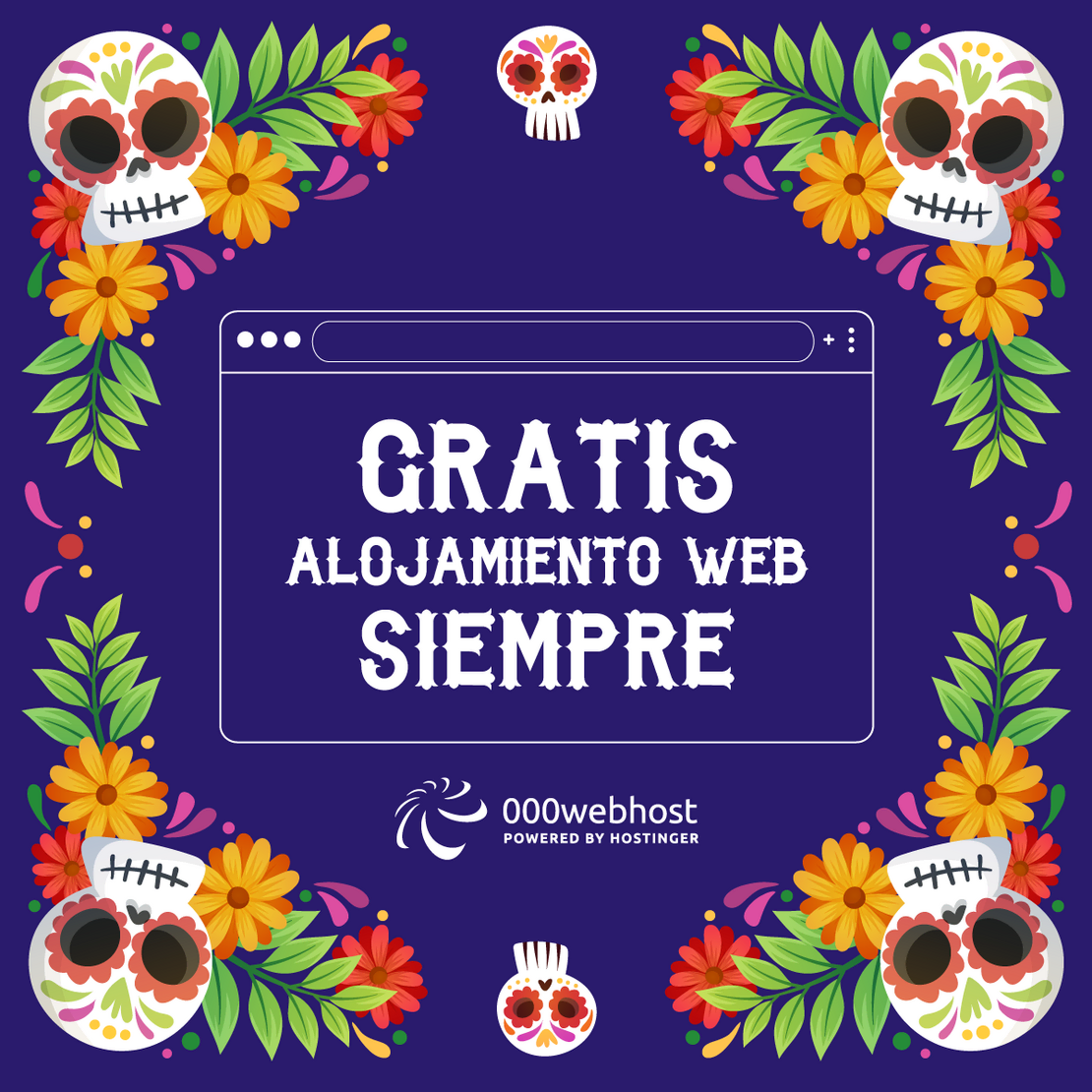
I remember it very well. I joined in October – right before Halloween. So, right after onboarding, I had to get myself into the “trick or treat” mood. The task was to design visuals for Meta’s ad campaign to promote 000webhost, one of our product at the time. These were really fun to work on, as we were adapting visuals to different regions. For example, Mexico got Santa Muerte-themed banners.
Much has changed since that time, hasn’t it? Now you’re the Graphic Design Team Lead. How has your role within the company evolved?
I joined as a mid-level designer and at first was working on smaller-scope campaigns or design requests from different marketing teams. The scope has grown significantly as Hostinger has grown, and my experience, skills, and knowledge grew alongside it. I naturally started taking part in more complex marketing projects, including the biggest sale campaigns of the year and product ads. In these, the role of a designer is not just to provide visuals, but to contribute to cross-team alignment, communicate, and collaborate. That progression took me to the senior design position, which required even more cross-team collaborations, as well as supporting and guiding junior and mid-level designers. Now as Team Lead, I’m overseeing the graphic design team while still contributing to major projects.
Do you feel like you’ve grown a lot? What does growth mean to you as a designer?
For me, growth correlates with learning things you don’t know or doing what you haven’t done before. In design, it means testing out new ideas and tools, searching for new perspectives and visual expressions that effectively communicate specific messages. As a leader, it means taking on more challenging projects and stepping into unfamiliar territory. One such recent experience was joining the marketing team responsible for launching an AI-powered, no-code platform for building web apps and websites – Hostinger Horizons. It pushed me to grow in areas like communication, cross-functional project team leadership, project and timelines management.
While growing as a professional, you also had a chance to witness the evolution of Hostinger. From a designer’s perspective – how did the company’s brand and visual communication change throughout those years?
Back when I started, all we had was a logo and a HEX code of a primary color. Today, we have a visual identity that our competitors are copying. The evolution is outstanding and is the result of the tremendous work of all the current and previous creatives in our company.
One might imagine design as inherently reflective and contemplative work. But you emphasised communication and collaboration as essential areas for growth. How much of that does your daily work involve?
Quite a lot, in fact. The most frequent and always ongoing collaboration is with our website team designers. We coordinate with them to communicate campaign messages on our websites. It is the most important placement where all marketing communications eventually lead. My goal is to ensure that both advertising designers and website designers have the same marketing context and make design decisions in line with it. We also frequently collaborate with the product design team – especially when creating product-specific marketing campaigns. So, yes – communication is a big part of the game.
There must be some creative differences between not only different teams, but also within your own. How do you manage that?
I don’t think it’s a big challenge. We have a brand book that every designer must know and apply. It allows for consistency across different placements and platforms. Of course, every designer has their own strengths and visual expression. I try to embrace mine and adapt it to Hostinger’s needs, and I encourage my team to foster and expand their own.
Let’s talk about your biggest achievements. What’s one creative project or visual you’ve worked on at Hostinger that you’re most proud of?
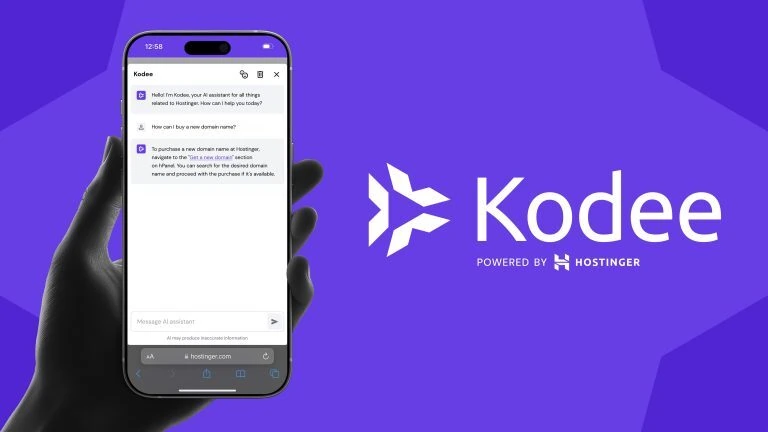
I think I’d pick designing a logo for our AI assistant Kodee. It was really bumpy but, in the end, a rewarding project. Our team was short-handed at the time, so we decided to get help from a freelance designer. But we quickly realised that the process was getting complicated – we were failing to collect and provide all the context to someone external, because Kodee was under rapid development. We weren’t reaching the desired result. So, we decided to get start fresh and do it internally. I took ownership of the project.
But logo design is tricky – sometimes you can find the solution that works in just a few iterations and sometimes it takes hundreds of sketches to find something interesting and original. With the Kodee logo, the latter was the case. I designed many different sketches but none of them was good enough. The deadline was approaching, and so was my vacation, which I’d planned for half a year. I was stressed out. It wasn’t easy to admit that I didn’t yet have a solution and to communicate that to stakeholders. But with a suggestion from my team lead at the time, I did. I went on vacation, got back, and it took me a single day to design a logo which we now use across different placements of Hostinger products and marketing materials.
That’s how this somewhat complicated project taught me that you can always adjust the deadline for a better result. It also proved once again that taking a break and stepping away for a bit can lead to a better outcome.
How do you recharge your creativity outside of work?
Just simple breaks from design and creative routines, like being outdoors or doing something physical like changing my car’s oil, repainting the garage door, doing some yard work with a shovel. Activities that help me stop thinking about design completely. When I come back from it, I have a fresh perspective.
I also enjoy going to specialized conferences like OFF, Awwwards or Adobe MAX to feel the pulse of what’s happening in the creative industry and see what other creators and agencies are working on. It’s the opposite of escaping the field, but it helps me stay inspired and keep up with the latest trends.
One of my hobbies is model building, the kind where you have to cut up parts by hand, then sand, paint and glue them together. A single project can take me over a year to finish, but I love it.I think if I weren’t a graphic designer, I would probably want to be an industrial designer or engineer, designing or constructing parts for cars, motorcycles, or bicycles.
So, what’s next for your team? Are you still looking for additions?
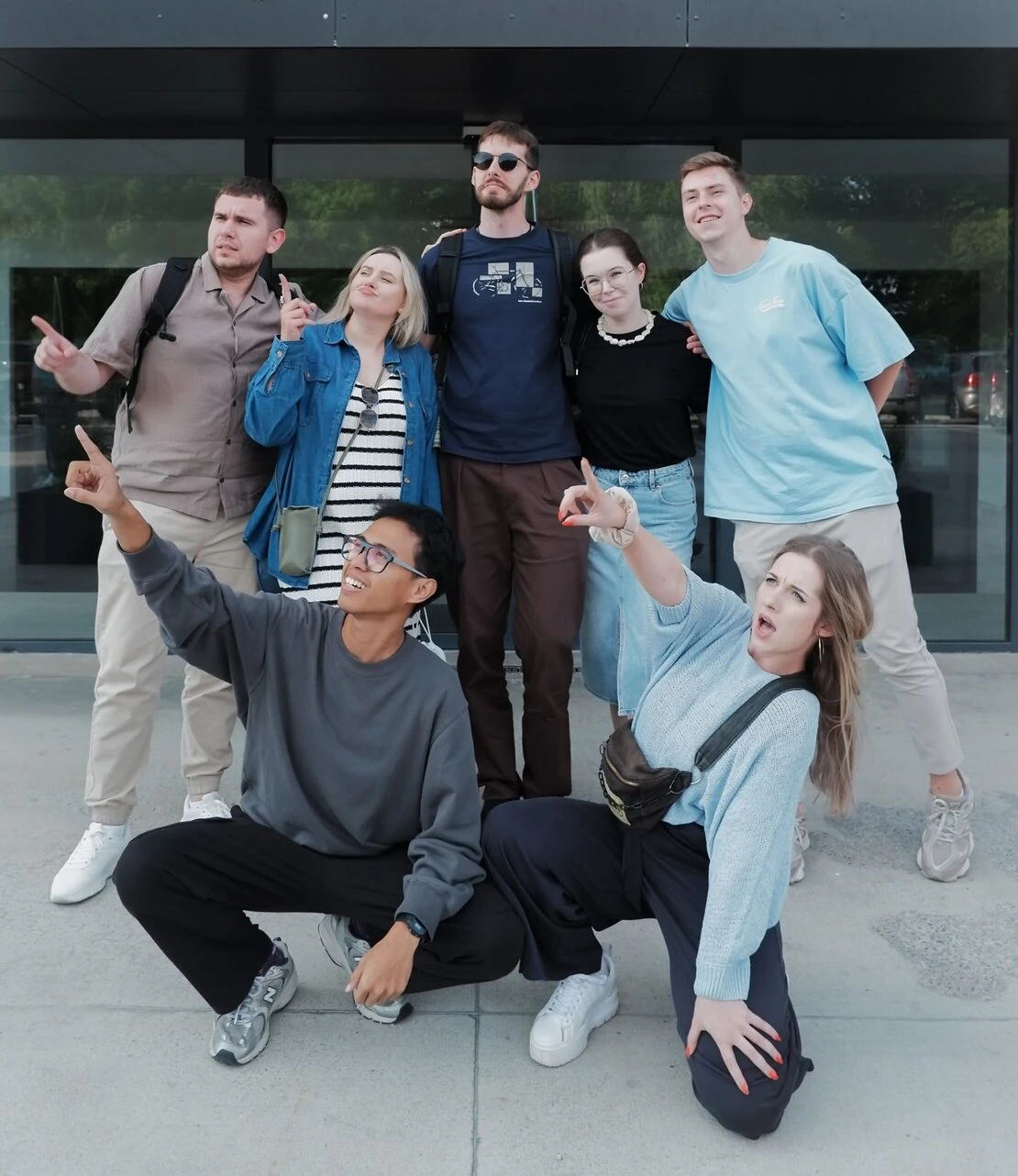
Yes, we’re currently looking for a senior designer – based in Europe, ideally in Lithuania – to strengthen the team. Right now, we’re six plus one designer who’s on maternity leave. We have people from Indonesia, Poland, Ukraine, Lithuania – so truly an international team. So if anyone reading this fits the profile and is looking for exciting projects, a fun environment, and plenty of room to grow, we’d love to hear from you!
Monika is the Employer Branding Manager at Hostinger, where she enjoys uncovering the unique stories within each employee. With a love for books and writing, she brings employee experiences to life, sharing them in a way that reflects the company’s principles and culture.