Future readiness: Are you hiring for today – or for what’s next?
Work is changing fast – new tools, new ways of teaming up, and new expectations. The skills that got us here won’t always get us where we’re going.
At Hostinger, we’re learning in real time what it means to stay adaptable while still delivering results. Growth here isn’t a straight line – it’s testing, adjusting, and learning from what works (and what doesn’t).
The future of work doesn’t belong to the ones who get everything right. It belongs to those who stay curious, ask questions, and keep moving forward when things are uncertain.
Great performance is no longer enough
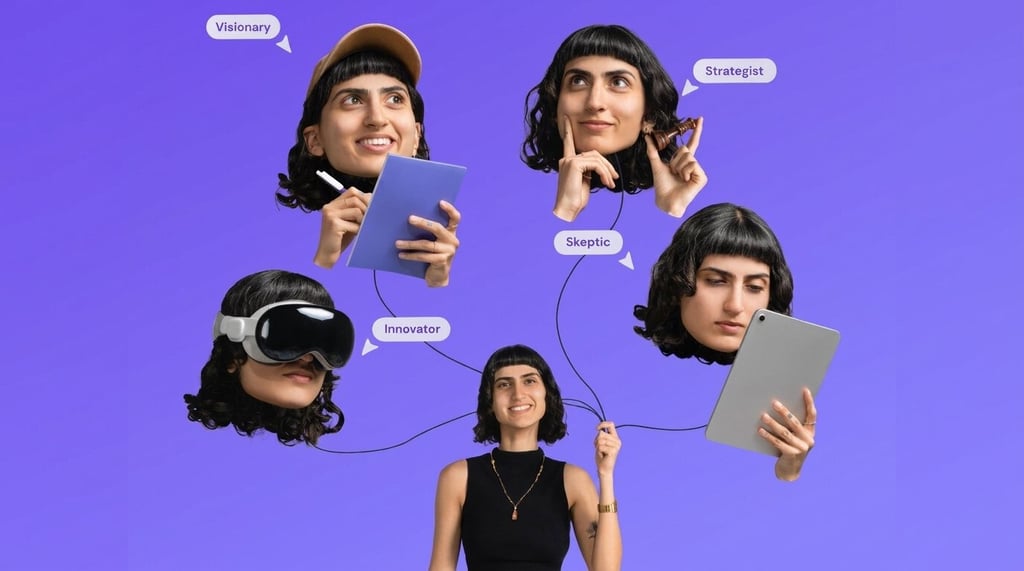
Modern organizations are learning to perform and transform simultaneously. In management research, this dual capability is called organizational ambidexterity – delivering results today while preparing for tomorrow. Yet, in practice, balancing these competing priorities remains challenging.
When growth accelerates, pushing the needle further becomes harder. The space to expand narrows, and each new move demands sharper decisions. Uncertainty often emerges exactly at this inflection point – when it’s unclear whether to keep the current direction or explore a new one. The search for that next direction can lead to a slowdown, not because ambition fades, but because redefining what progress means takes time. That pause is where real growth begins – the moment the ground is prepared for the next leap.
At Hostinger, we took this leap in 2019. Assuming that performing and transforming couldn’t happen within the same team, we separated the two. One part of the organization focused on performance, continuing to scale our hosting business. The other started exploring transformation by establishing a new start-up — Zyro, which later turned into Hostinger Website Builder, an AI-powered platform for creators and entrepreneurs to quickly create, customize, and publish websites without any coding skills.
Zyro launched within a year – remarkable timing, considering , that this happened before AI emerged as a major global trend.
By late 2024, we faced a different challenge. AI began reshaping the competitive market at unprecedented speed, and we needed to act quickly. Between Christmas and New Year’s, we made a conscious decision to build something new – Hostinger AI Builder – an AI-powered, no-code platform for building and publishing websites and web apps.
Here’s a message that became the starting point for Hostinger AI Builder, shared by Giedrius Zakaitis, Head of Product, on December 23, 2024:

This time, instead of creating a new team, we mobilized existing personnel. Within two months, Hostinger AI Builder went live – and within six, more than 500,000 people had adopted the platform. This experience revealed something new: contextual ambidexterity – transformation occurring within existing teams, without big structural changes. The same people running daily operations also drove innovation.
This approach became the foundation for the tools that followed in 2025 – Hostinger Reach and Hostinger Mail – AI-powered tools that make communication and email management easier, faster, and more focused, each built even faster than the previous one.
Not long ago, the idea of developing three new products within a single year would have seemed unrealistic. What has changed isn’t that the work has become easier, but that we are learning to respond to change with greater agility and collaboration.
The human side of change
As organizations evolve, change reshapes not only how we work but also how we adapt, connect, and move forward through uncertainty together.
When we built Hostinger AI Builder in two months, the energy was incredible. The excitement was real, and it inspired people across the company. But for those deeply involved, it wasn’t easy. Long hours, fast decisions, and constant change made it intense at times.
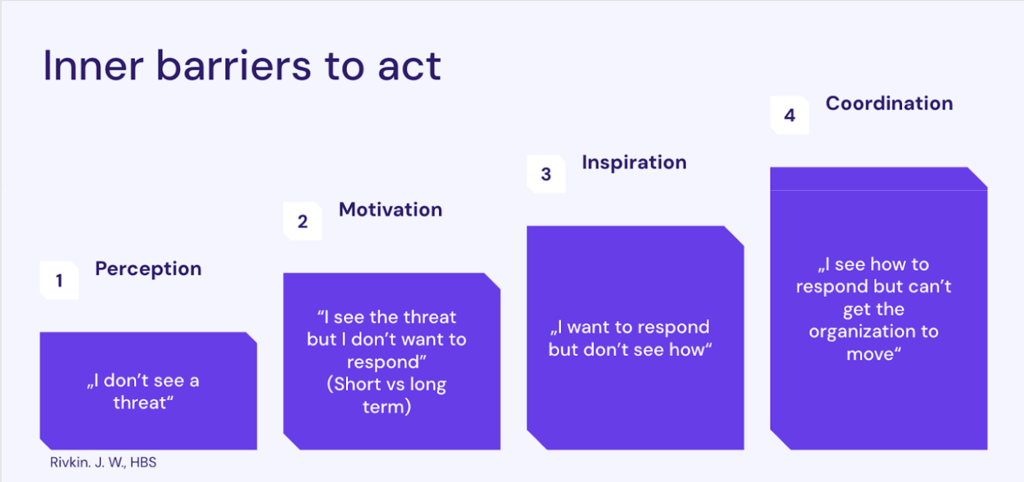
Through surveys and one-on-one conversations, we observed that people experience change differently. Some embrace it with enthusiasm; others approach it with more caution — both natural responses to unfamiliar situations. Harvard Business School professor J.W. Rivkin’s research on “internal barriers to act” – perception, motivation, and coordination – explains what we witnessed firsthand. Not everyone feels the same urgency or recognizes opportunity at the same pace, which is making guiding change both complex and deeply human.
As HR professionals, our role is to recognize these varied responses and help teams navigate them – not by eliminating uncertainty, but by building resilience, optimism, and trust.
Rethinking potential and talent
Change affects not only how we support our teams, but also what we look for when bringing new talent on board. For a long time, we’ve been hiring for “today” – relying on structured competency frameworks and fixed definitions of “high potential.” Yet these frameworks only work when we know exactly where that potential will be applied.
As we navigate an era of new tools, new ways of collaborating, and shifting expectations, it’s clear that we have to start hiring for what’s next. But how do we identify potential for the unknown?
Step by step, we’re learning to recognize and nurture dynamic potential – the ability to learn quickly, adapt to change, and experiment fearlessly. The most valuable people aren’t those who already have answers, but those curious enough to discover them.
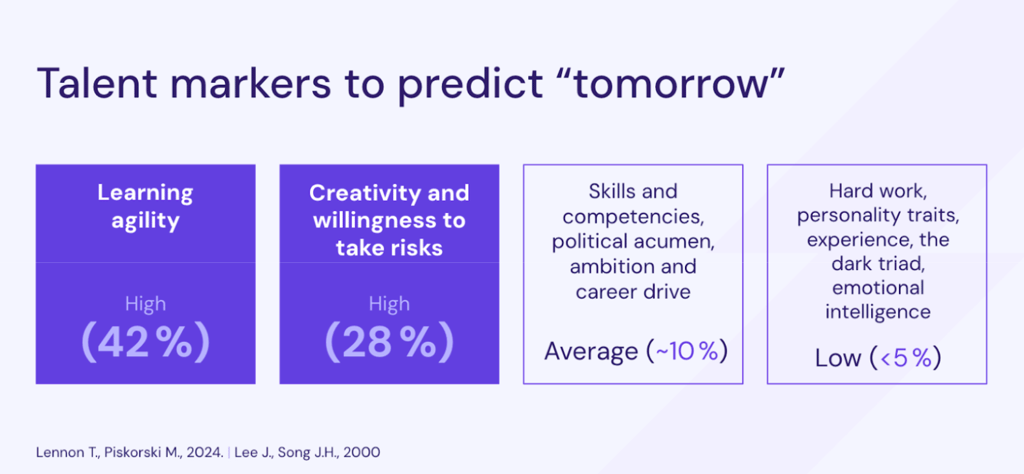
According to “Talent’s New Lexicon: Agility, Adaptability, and Ambidexterity” by Tania Lennon and Misiek Piskorski, the strongest predictors of long-term success today are learning agility, creativity, and the courage to experiment – even at the risk of failure. These qualities empower individuals to move confidently from one challenge to the next, continuously expanding and strengthening their capabilities.
Spotting learning agility
As we rethink potential, we’re also re-examining the foundations of our hiring decisions. In a world where roles evolve faster than job descriptions can keep up, relying solely on experience no longer tells us enough. Experience shows where someone has been – but not how they responded, what they learned, or how they might grow in unfamiliar territory.
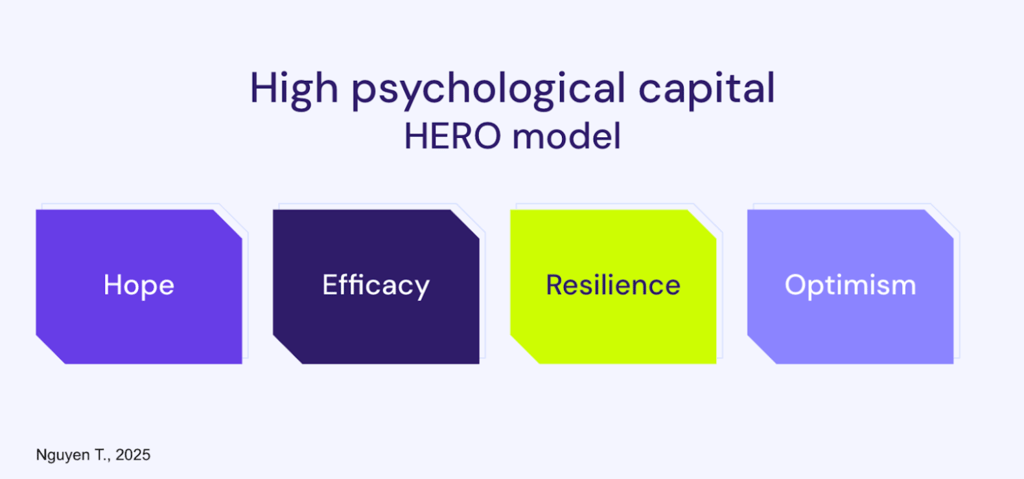
This is why, when interviewing at Hostinger, we look beyond experience and focus more on people who are hungry to learn: who see challenges as opportunities and reflect on what each experience teaches them. Beyond technical skills or past achievements, we’re beginning to explore psychological capital (PsyCap), or the HERO model, which stands for hope, efficacy, resilience, and optimism.
These qualities, as discussed in “Ambidextrous Leadership and Innovation” (Emerald Insight, Journal of Knowledge Management, Vol. 29, No. 5, 2025), highlight how leaders who balance exploration with disciplined execution create environments that foster both stability and creativity. By learning to identify and nurture these ambidextrous leadership traits during hiring, we aim to build teams that are not only capable but adaptable, innovative, and resilient in dynamic environments.
Hope helps people imagine better outcomes. Efficacy gives them the courage to act. Resilience helps them recover after setbacks. And optimism keeps them moving forward, even when things don’t go as planned.
In the end, whether we’re managing change, redefining potential, or hiring new talent, it all comes down to one principle: growth happens when people have the courage – and the space – to keep learning.
The future of HR
The future of work belongs to people who stay curious, keep learning, and adapt with intention. Building such organizations starts with hiring and developing people who embody that same duality – steady yet adaptable, skilled yet curious, grounded yet brave enough to experiment.
At Hostinger, we’re still learning what it takes to grow this way. Our processes, tools, and culture continue to evolve. But if there’s one lesson that stands out, it’s this: real progress is rarely linear. It’s a rhythm of iteration – of performing, transforming, and learning together.
Today’s world of work no longer rewards those who simply know; it rewards those who learn. The future belongs to ambidextrous thinkers—and to the teams that empower them.
Gabrielė is the Head of People at Hostinger. With deep experience in people strategy and leadership support, she helps build a strong, values-driven culture across the company. Gabrielė believes in authentic leadership and continuous growth for both people and the business.

Monika is the Employer Branding Manager at Hostinger, where she enjoys uncovering the unique stories within each employee. With a love for books and writing, she brings employee experiences to life, sharing them in a way that reflects the company’s principles and culture.