Ocean Material: How Toni’s love for the ocean grew into a circular economy business
For more than 30 years, the ocean has been Toni Kienberger’s happy place. But by around 2018, the beaches he visited and the waters he dove in were increasingly littered with plastic waste.
His escape had become the site of a problem he couldn’t ignore.
Determined to do something about it, Toni began organizing beach and river clean-ups, first in Hong Kong and later in Indonesia and the Philippines. The events brought communities together and left coastlines visibly cleaner, but the impact rarely lasted.
“Picking up waste is important, but it does not solve the system behind it,” Toni says. That thought eventually led him to found Ocean Material, which he has led as CEO ever since.
Building the skills before the mission
Long before the beach clean-ups he initiated, Toni grew up in Germany, studied business administration in Munich, and started his career with fashion brands in the textile industry, where he was first exposed to materials as a business.
Then, a job opportunity brought him to Hong Kong, a city he describes as fascinating for its mix of green countryside and glittering skyline. For years, Toni worked across Hong Kong and China in IoT, wearable technology, and the watch industry before founding his own innovation agency in 2019.
“When I looked back at my 20 or 25 years of experience and the skills I’d picked up, it all led me to do something for the ocean where I could use everything I’d learned.”
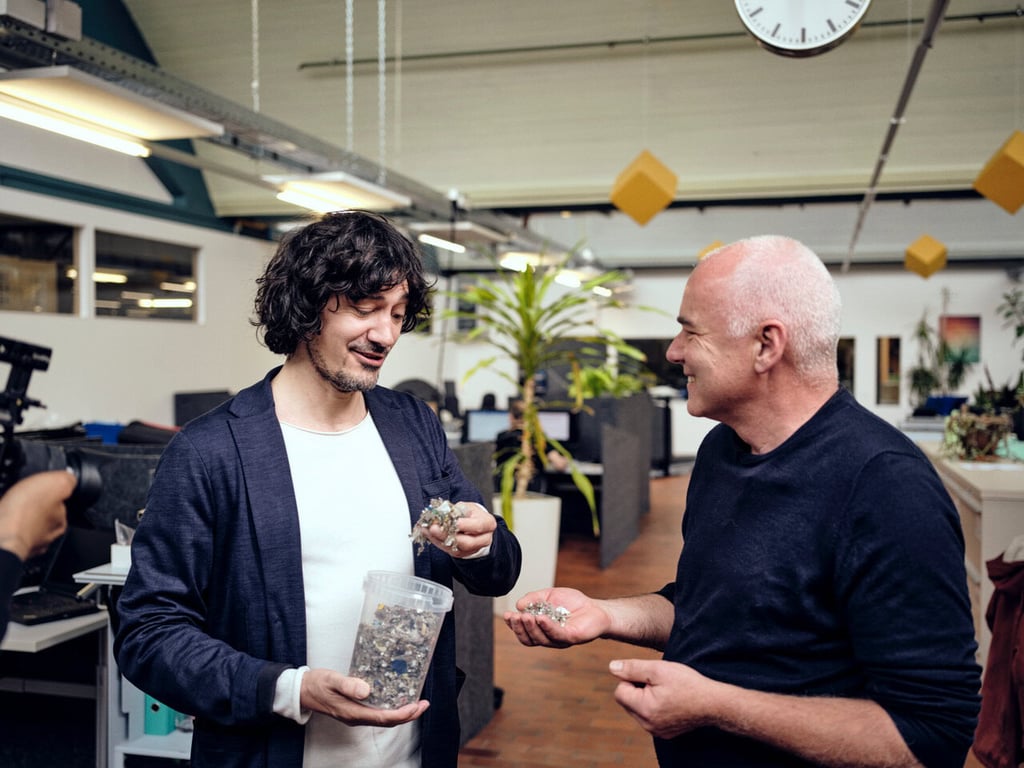
Looking beyond ocean clean-ups
In 2020, Toni launched Ocean Material in Hong Kong as a supply chain program. It connects brands, recyclers, and manufacturers with materials collected from coastlines, helping turn discarded waste into new products ranging from beverage crates and logistics pallets to strollers and kickboards.
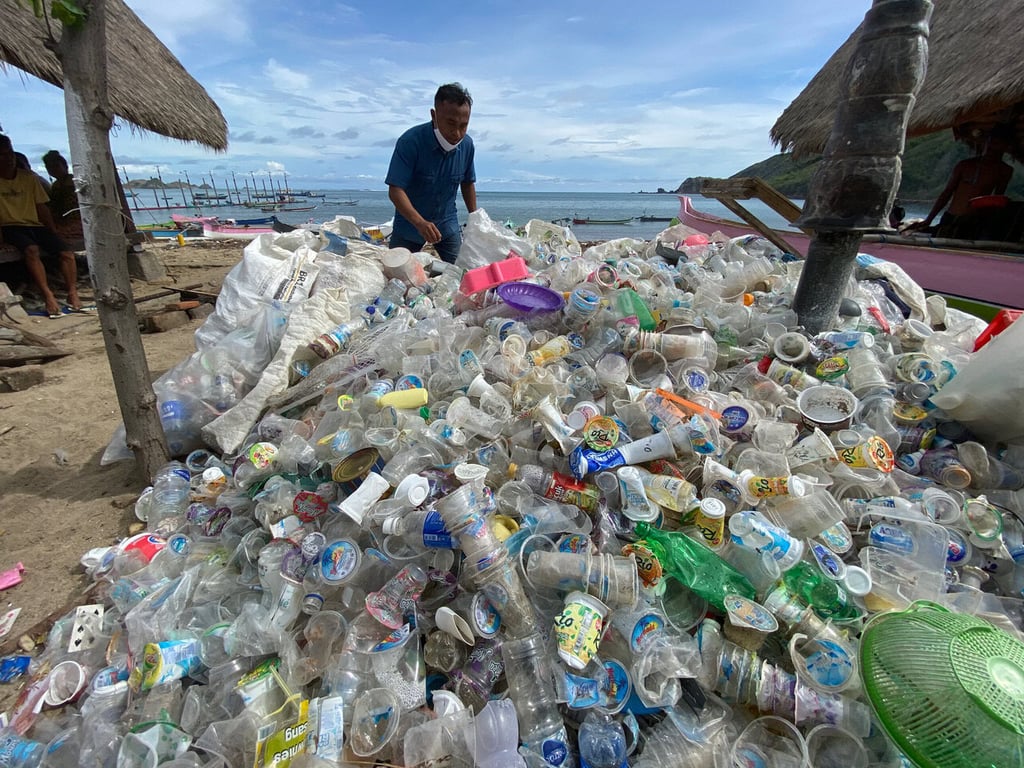
It was a major step forward, but he eventually realized that not every recycled product creates the same impact. Toni points to beverage crates as one of the strongest examples of circular design. Built to be reused for years before being recycled into new crates, they create greater long-term value than many products made once and thrown away.
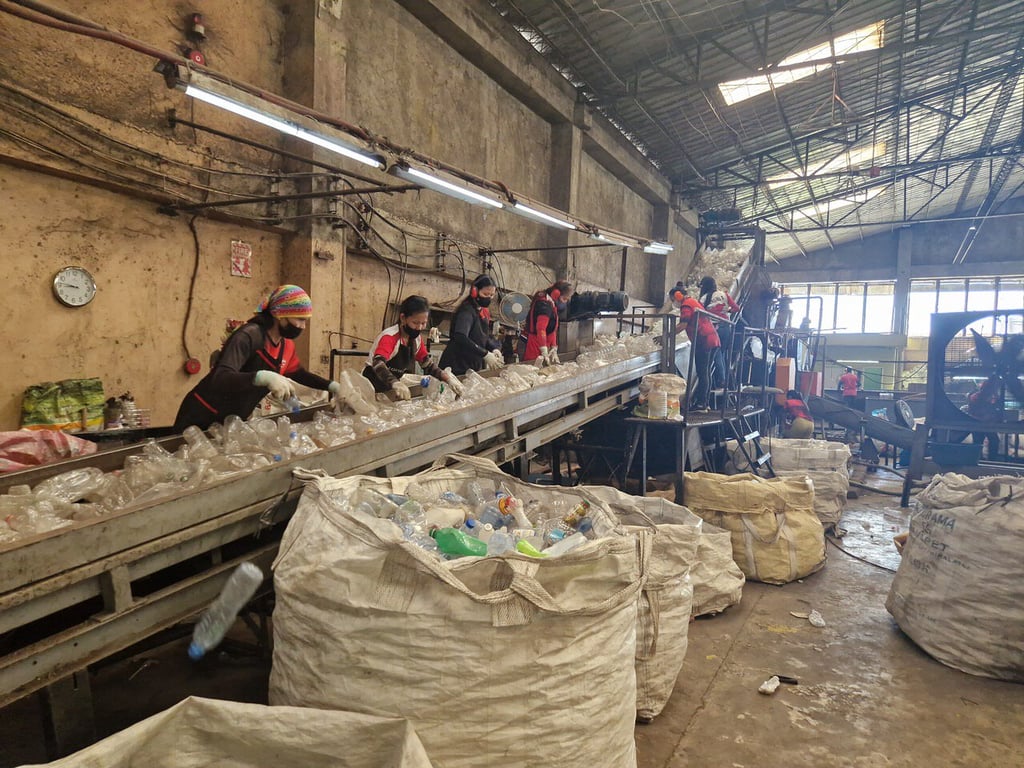
The supply chain solved one part of the problem, but not the hardest one. Much of the plastic collected during clean-ups is technically recyclable, yet not economically viable.
According to Toni, the cost of collecting, sorting, and processing mixed plastics often exceeds their value, meaning much of it still ends up in landfill or incineration.
“It’s not enough to collect. It’s not enough to recycle alone, and not only the easy materials, because that is a fact in our industry,” Toni says. “People are all fighting for the same easy-to-recycle materials.”
Over the past few years, instead of accepting that limitation, Ocean Material has expanded beyond its role as a supply chain program.
Together with technology and research partners, the company is helping commercialize a patented, energy-efficient process that transforms complex, contaminated, and low-value plastic waste into a lightweight timber substitute for applications such as logistics pallets and temporary construction materials.
A prototype machine is already running, and the first industrial-scale machine is in development.
That broader approach has opened new opportunities. One example is a project in partnership with Oceanic Environmental Cables (OEC) to retrieve and develop a new circular material stream from retired subsea communication cables in the Mediterranean Sea.
A small team, a wide network
Today, Toni is based between Hamburg and Vienna, while Ocean Material’s operations continue to span Europe and Hong Kong.
Despite its international reach, Ocean Material remains a lean operation. Its core team consists of just five people, but it’s supported by a wider network of consultants, engineers, legal advisors, and volunteers.
The company also works with university and research partners in Hamburg, including Inspire AG, a research institute closely connected to ETH Zurich.
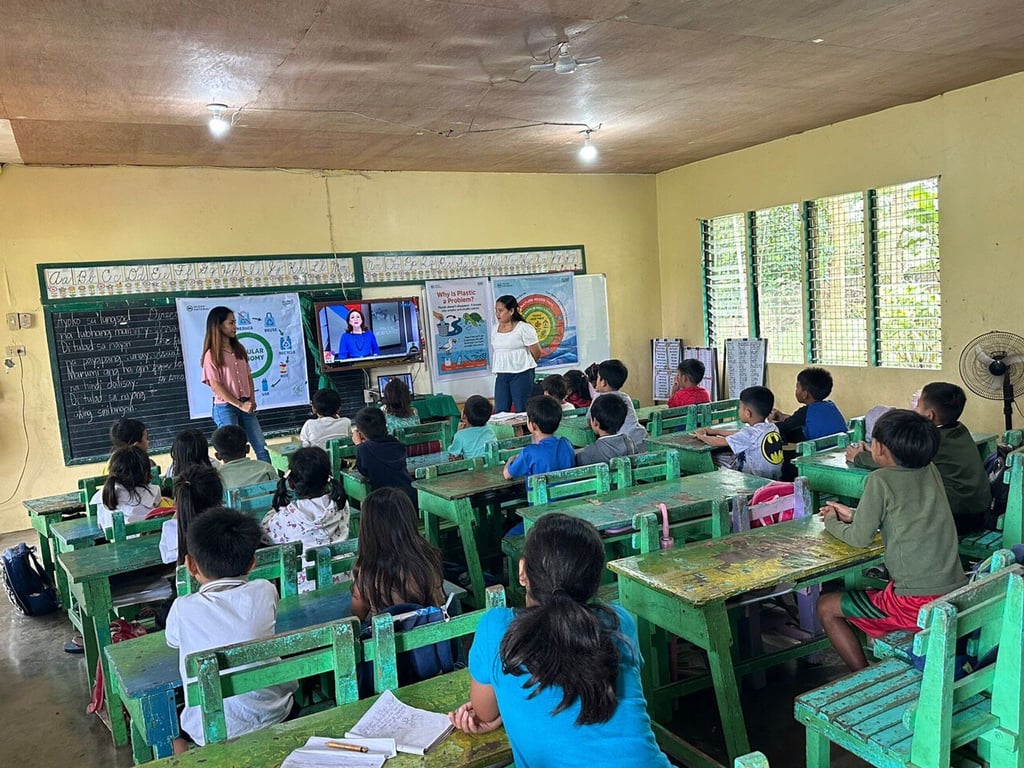
While Ocean Material is commercially structured, a significant part of its work still carries a strong impact and education component. Funding comes from a mix of commercial revenue, external funding, and donations.
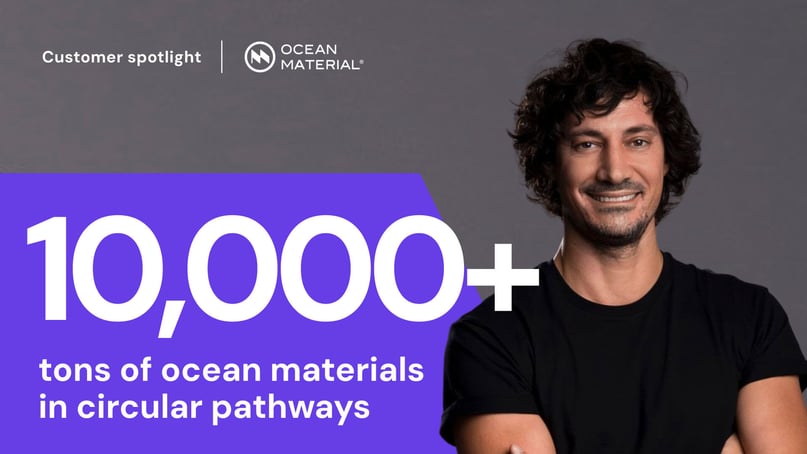
Through this network, the company operates across multiple countries, has redirected more than 10,000 tons of material into circular pathways, has supported hundreds of educational workshops and clean-ups, and has helped create more than 120 jobs and income opportunities in waste collection, sorting, and recycling.
Building trust before the handshake
Most people first discover Ocean Material through LinkedIn, industry events, media coverage, or search before visiting the company’s website to validate what they’ve learned.
“People should quickly understand what you do, why it matters, who is behind it, and why they can trust you,” Toni notes.
Getting the foundation right for the company’s website took some trial and error. After two hosting providers didn’t work out, Toni compared the remaining options himself.
“I did intense research, and from all the services – the pros and cons, and the price – Hostinger was actually number one. So we went with it,” he recalls.
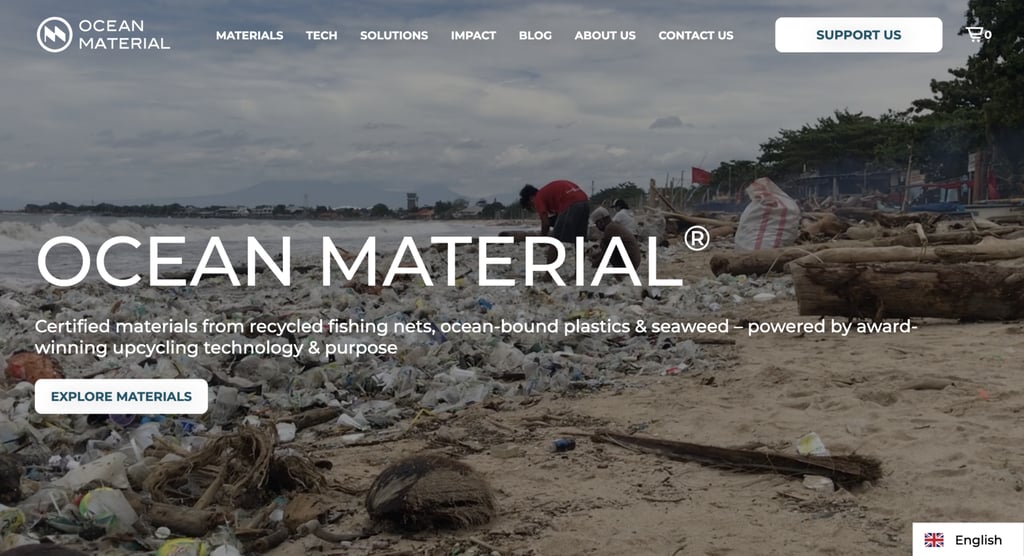
Now, as the business evolves beyond its original supply chain program, the website is evolving as well. Toni is rebuilding the site to better reflect Ocean Material’s growing focus on materials, technology, and environmental impact.
Although most of the development is handled by an external developer, Toni says, “Hostinger is very user-friendly, even for someone like me who is not an IT expert. I can fix small things myself through the dashboard without needing to involve our web developer every single time.”
Keeping the momentum going
Eight years after organizing his first beach clean-ups, Toni no longer measures success by how much waste is collected in a day. Instead, he’s focused on building systems that keep materials in circulation long after the clean-up ends.
That approach is now moving into its next phase. Together with its partners, Ocean Material is working on the first industrial-scale machine for the timber-substitute process, and the Mediterranean cable-recovery operation is set to begin this year.
“It’s really fun. I never regret doing exactly what I do,” Toni says with a smile.

Larassatti Dharma is a content writer with 5+ years of experience in the web hosting industry. She has populated the internet with over 100 YouTube scripts and articles around web hosting, digital marketing, and email marketing. When she's not writing, Laras enjoys solo traveling around the globe or trying new recipes in her kitchen. Follow her on LinkedIn