UHM Digital: How six people keep a big-agency promise
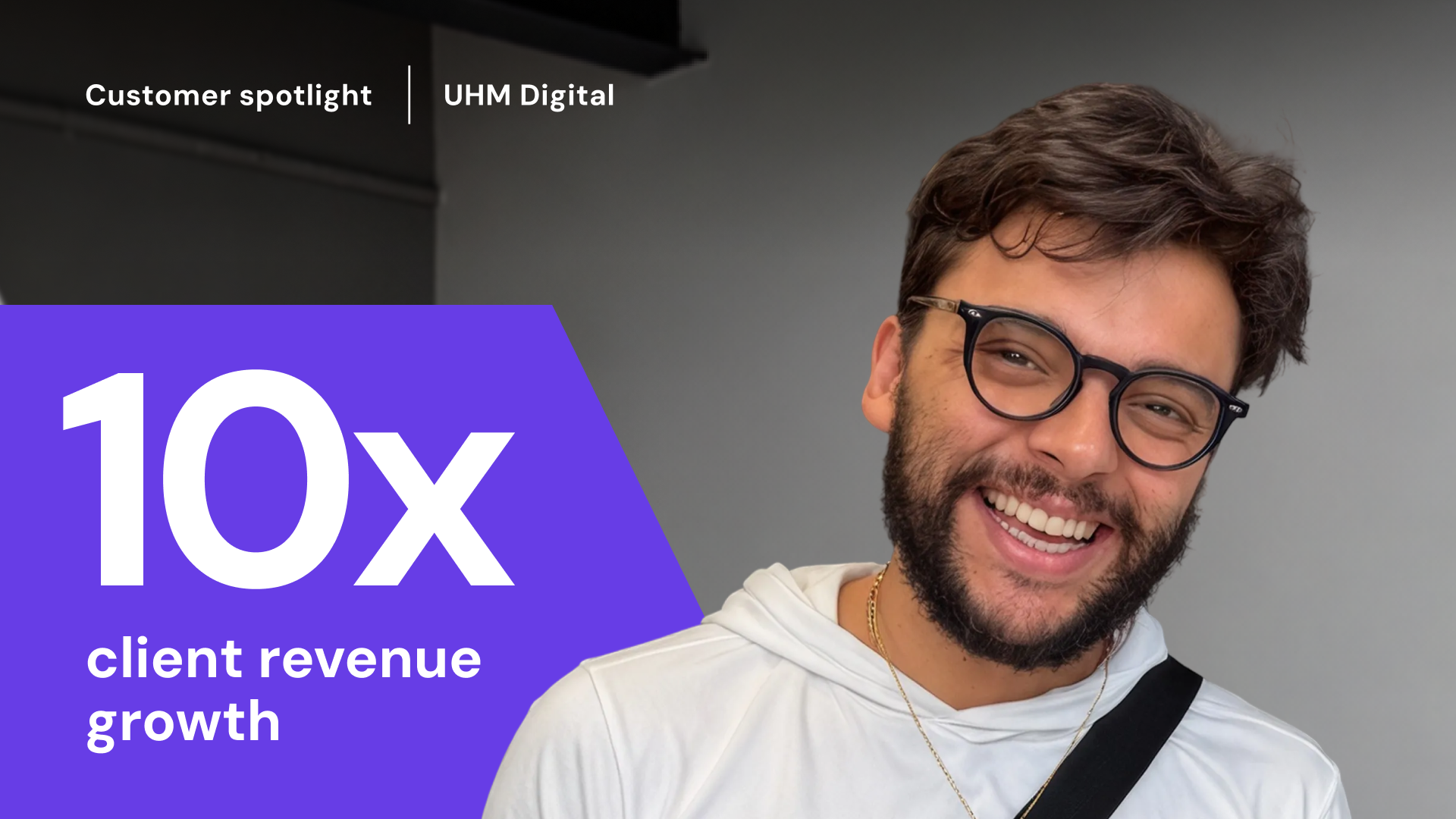
“If you think it, we can do it.” It’s the big promise Alex Obando makes to every client whose project lands in his lap.
It’s the same attitude that has taken him to more than 50 countries and let him live out his dream of seeing the world.
But there was a time when he couldn’t keep that promise. A few years ago, Alex was running a big team and following the oldest rule in the entrepreneur’s playbook: if you want to grow, you hire more people.
Yet the playbook never told Alex what to do when the rule stopped working. Then again, Alex had never been one to play by the rules.
Success was an obligation, not a dream
Alex was 17 when his mom put him on a plane from Miami to Budapest. He was going as a high school exchange student, and he had no say in it.
The first few months were tough. Alex didn’t speak a word of Hungarian, and he found himself alone in the middle of Europe with little to do besides eat, study, and sleep.

So Alex filled his hours by doing what he had always done: opening his laptop and going online. He’d been on a laptop since he was 8, and his curiosity had already taught him to code. He couldn’t speak Hungarian, but he could speak the language of the internet. And during that one year abroad, he was already helping US businesses get more traffic, leads, and sales online.
His host mom would knock on his door, wondering what he was doing all that time. “Wow, you just won’t go off your laptop, kid,” she told him.
“I’m just trying to make it work,” Alex would answer.
For Alex, making it work wasn’t a dream. It was an obligation. He wouldn’t take no for an answer, and he wouldn’t close his laptop until he had a business of his own. And he did. From that bedroom, thousands of miles away from home, he built his first company, UHM Digital, an agency that helped businesses grow online.
That stubbornness did the rest. Over time, the one-man operation grew into a portfolio of companies spanning software, digital marketing, hospitality, capital, and international trade.
A bigger crew, a slower boat
Over the next decade, UHM Digital got better at its craft and worked with businesses across many niches. Sending clients more traffic meant building the places that traffic landed, so websites became part of the job.
Then clients started asking for more, like full web apps and mobile apps for iOS and Android. UHM Digital opened a new vertical: software.
Bigger projects called for more people. So Alex did what the playbook said you should do when you want to keep growing: he hired a big team of 30 developers to take on all the new clients.
Back then, that’s how software got built everywhere. Every line of code was written by hand, and every change had to pass through many hands before it could go live. Even something as small as moving a button a few pixels to the right could take days.
That made Alex’s promise hard to keep. When a client asked for something, he could say yes, but he couldn’t always say when.
The playbook said to keep hiring. Luckily, Alex’s curiosity and stubbornness were two things he never grew out of. And in the back of his mind, he kept wondering: what if there was another way?
Why you should never skip an ad
That’s when a YouTube ad for Hostinger popped up. Alex pays for YouTube Premium, but that day, chance was on his side. He happened to be on his other account. “I was like, ‘Oh, wow, this is pretty interesting.’ So I clicked on it, and it hooked me,” he says.
What hooked him was how easy Hostinger’s AI Builder looked. “You could just write to an AI what you wanted, and it would make it real, without needing to be an expert,” he says.
Alex did what he’d always done. Like the kid he was in Budapest, he opened his laptop and wasn’t going to close it until he’d figured it out. He invested his own time and money, building project after project to see what it could do.
Then he put it to the real test. His team had spent about four months building a web app for FlashGas, one of his own ventures, by hand. Alex rebuilt it with AI Builder in just a few days.
He brought what he’d learned back to his team, and as the way they built changed, so did the team. It became smaller, and the developers who stayed made AI part of their work. They got better at prompting, learned new tools, and developed skills in cybersecurity and networking.
That shift also changed how Alex hires to this day. He doesn’t ask for resumes or diplomas. Instead, he asks what’s the biggest problem you’ve solved and what you’ve built.
“We have people here that have no degrees, but they have a great attitude,” he says. “And we believe that the attitude is the number one thing.”
He compares working with AI to driving a car. “You’re behind the wheel,” he says. “You’re the orchestrator.” His developers prompt, edit the code, and steer the AI toward the results they want.
Alex calls the switch “a complete game changer.”
Abracadabra, it’s in production
Technology closed the gap between Alex’s ideas and what his team could build. Today, UHM Digital runs on a team of six, and they can bring almost any client’s idea to life online.
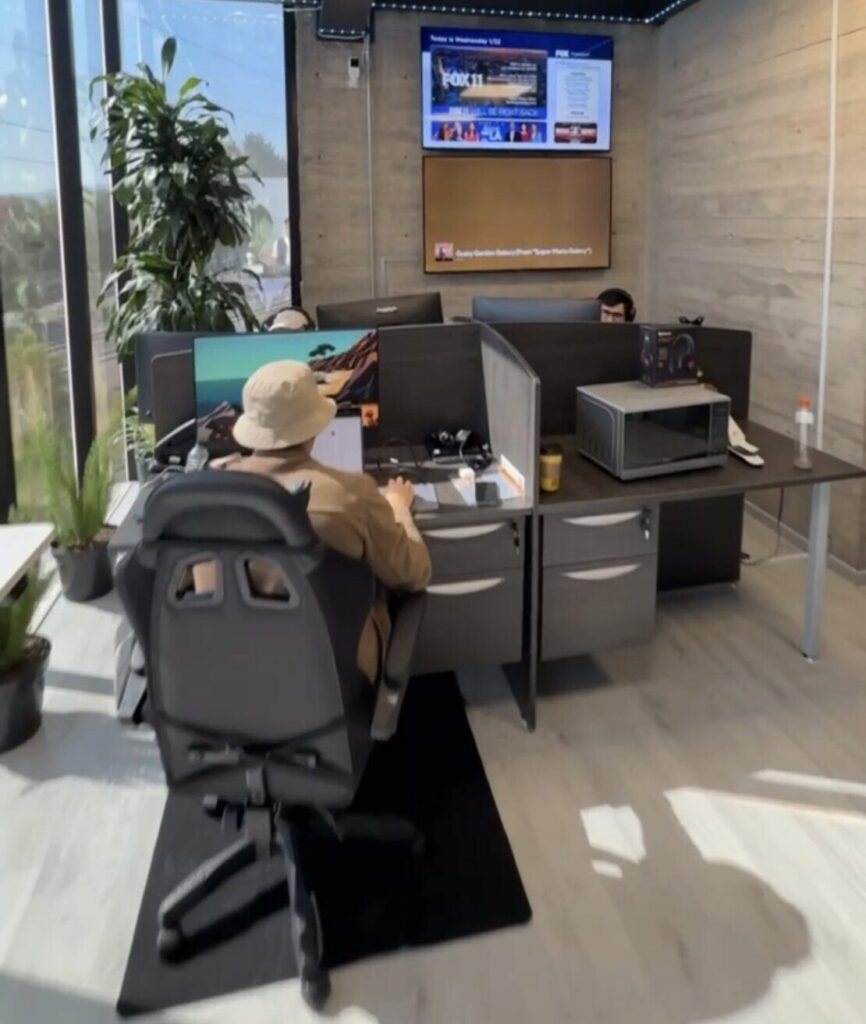
Every client gets their own Discord server with a channel for requests. They drop in a message (“I need this, I need that”), and within 24 hours, the change is live. Some clients can’t believe it. “They’re like, ‘Is this even possible?’” Alex says. “We’re like, ‘Yes, don’t worry. If you think it, we can do it.’”
For Alex, that freedom is what makes his dream of seeing the world possible. The office goes wherever his laptop does.
Take Double G Archery, an indoor archery range in Texas. For years, it ran the old-school way. Bookings, payments, and memberships were all handled in person, with a big machine, a ticket printer, and what Alex calls “dinosaur hardware.” There was no website and nothing customers could use from home.
When the range got a new owner, he came to UHM with one request: “Dude, we need to speed this thing up. We’re launching in a week.”
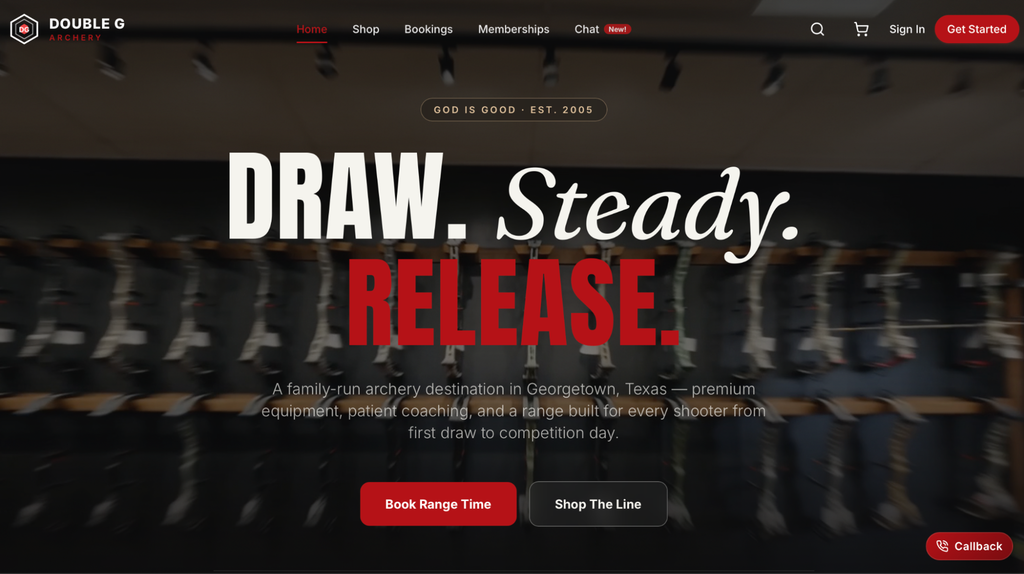
The team built the range’s new website and booking platform using Hostinger’s AI Builder, and the site went live on time. Customers can now book a time online and come back to buy again, while operators manage everything from a back office.
Curious about how far they’d come, the new owner dug through the old paper records in a cabinet. Back then, the range hadn’t even been making $5,000 a month. Today, with the new platform and some Google and Meta ads, it brings in between $40,000 and $50,000. That’s a 10x jump.
No wonder people are amazed. “They think we are magicians,” Alex says.
Fueling the next big thing
Another big project is FlashGas, which Alex owns and runs himself. It’s one of his MVPs, as he calls them, and the first real project he rebuilt with AI Builder. It works like an Uber for propane tanks. The idea was simple, but getting customers to actually order wasn’t.
Anyone who found FlashGas landed on a WordPress site that pointed them to the App Store. Before they could order a single tank, they had to download and install the app and create an account. Every extra step was a chance to lose them.
So Alex flipped the order. Using AI Builder’s agentic mode, his small team built a web app connected to the same database as the company’s iOS and Android apps. One login works everywhere. Now customers can order directly from their browser, and the app is optional rather than required.
“By having that web environment, we really deleted that entry barrier,” Alex says.
And they didn’t stop there. The team now launches new features on the web first, tests them with operators and customers, and only then brings them to the mobile apps.
Features, flows, and tools that used to take weeks now ship in a fraction of the time. Revenue grew by 30–40%, and over the last 12 months alone, FlashGas generated $179,093 from 545 completed orders, with a 35.9% profit margin.
Even support runs lean. When something’s off, Hostinger Agent connects to the site itself and asks for permission before submitting a fix. “I think that solves a lot of problems before even reaching a human,” Alex says. For a team of six, that’s time they can spend building instead.
Same man, higher ceiling
Today, Alex also coaches the clients whose platforms his team builds, so they can run their businesses independently. “We’re going to build you a Ferrari,” he says. “I give you the keys.” Or, if they’d rather learn along the way, he’ll ride in the passenger seat and explain everything.

All while running his own businesses from wherever in the world he happens to be. Not so long ago, he was the kid in a bedroom with just a laptop. Now he’s the same man, with far more experience helping people and companies thrive.
Somewhere between countries, a new request lands in the Discord channel. Twenty-four hours later, it’s live.
If you think it, they can do it.
Still thinking about getting behind the wheel? Take Hostinger AI Builder for a spin.

Sebastian has been telling stories since he was a kid. He spent four years scriptwriting animated videos at an award-winning motion studio for U.S. and Canadian audiences. He then helped over 500 human trafficking survivors tell their stories for T visa applications. Those stories changed lives, and today he keeps writing with the same passion: to move and inspire people. Follow him on LinkedIn