The domain life cycle is comprised of the different stages that a domain goes through, from being available for registration to its expiration and eventual deletion. Getting to know these phases can help you keep your domain active and avoid losing it.
This cycle can be divided into the following phases:
Available
All domains start by being available for purchase. To register a new domain, use the Hostinger domain name search, where you can also explore alternative options in case your preferred name is already taken.
Active
The domain becomes active after you purchase it and complete the registration process. The minimum active period is one year. Most domain extensions (TLDs) can also be registered for 5 or 10 years, and the available periods depend on the TLD. Select the period from the dropdown list in the cart when you purchase the domain. A domain’s expiration date can’t be more than 10 years in the future.
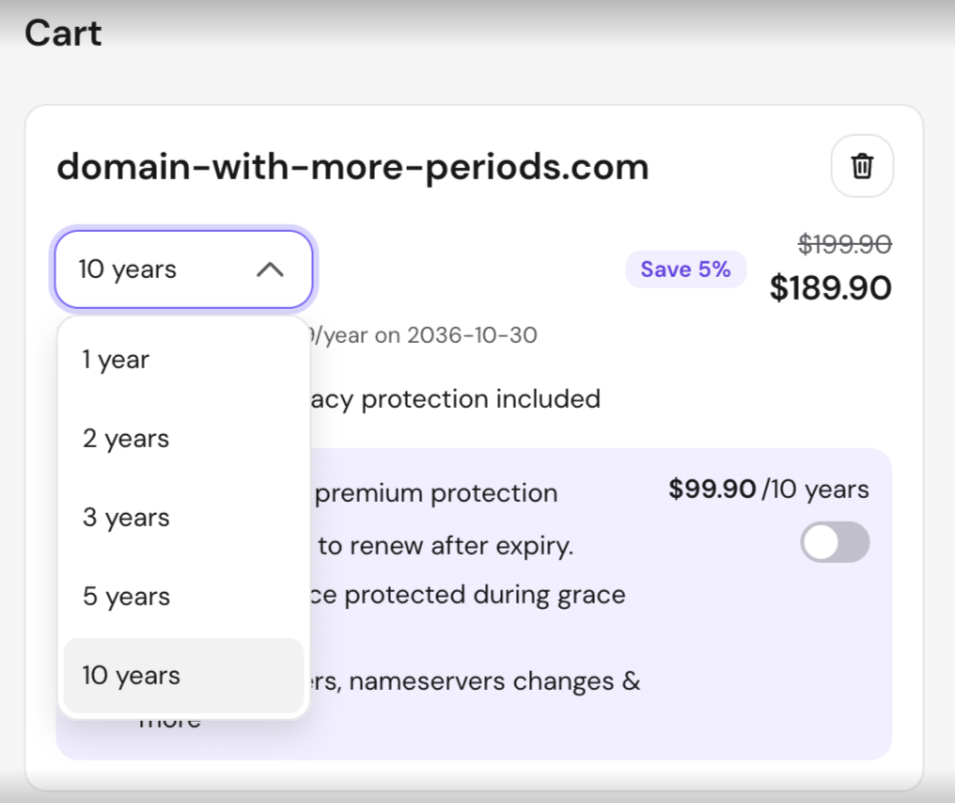
You can keep ownership of the domain as long as you renew it on time.
Expired
As soon as the domain expires, it will stop working. The website will display an error, and email services will be suspended. To prevent these interruptions, consider enabling auto-renewal.
Expiration consists of two possible periods: grace and redemption. You can still renew an expired domain, though the renewal process varies based on the period.
Grace Period
Within this phase, the domain name can be reactivated without risk of deletion by paying the standard renewal fee. Please consider that some TLDs don’t feature a grace period and directly enter the Redemption period upon expiration. The duration of the grace period, when applicable, can differ based on the TLD. For the periods that apply to .com and other TLDs, see the Expired registration recovery policy and How to renew an expired domain at Hostinger.
Redemption Period
After the grace period concludes, or following expiration for domains lacking a grace period, the domain enters the redemption or redemption grace period. To redeem the domain, an additional fee is required, aside from the renewal cost.
A few TLDs do not have a redemption period, going directly to Pending Deletion after expiration (or the grace period, if applicable). The redemption period’s length, if present, depends on the TLD.
Pending Deletion
When the redemption period ends, or if the domain has a grace period but not redemption, the domain moves to the pending deletion phase. The only option to recover a domain pending deletion is to wait until it’s fully deleted.
Once it’s available, it is possible to repurchase it. Please note that the domain will be accessible for anyone to purchase.The exact day a domain is released depends on the TLD, so check the domain name search regularly to see when it becomes available.
By taking these phases into account and ensuring the timely renewal of your domain — such as through automatic renewal — you can maintain a consistent online presence and brand identity.