BenihBunbun: A mother, a village, and a business that slows down when the kids come home
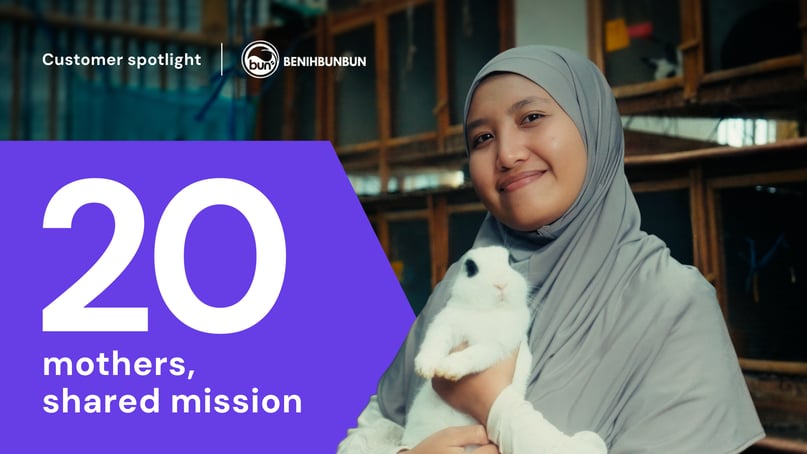
BenihBunbun is a sustainable enterprise based in West Java, Indonesia. Azifah An’amillah founded it, runs it, and has built it into something that now employs 20 women, all of them mothers in her village.
Azifah has one rule she doesn’t break: when her children are home, they come first. She might still reply to a message or check in on something, but the pace changes. Work fits around her kids, not the other way around.
It sounds simple, but that rule has shaped everything. The business model, the team structure, the products, even the website. Every decision Azifah has made with BenihBunbun started from the same question: Can I do this and still be home when my kids need me?
But the story of how it started is a lot less polished than that sounds.
It started with a stack of thesis papers
In the final stretch of her biology degree, Azifah was revising her thesis. That meant printing out draft after draft for her advisors, getting notes back, and printing again. By the time she was done, she had a stack of used paper that could easily have been tossed in the trash.
It bugged her. This wasn’t greasy food packaging or dirty napkins. It was clean paper. It could be recycled, reused, or turned into something. But nobody was sorting it. Nobody seemed to care.
So she kept it. She wasn’t sure what she’d do with it yet, but she started collecting her paper waste and looking for ideas.
Azifah lives in Lembang, a highland area near the city of Bandung, known for its plant nurseries and seedling farmers. Despite studying biology, she’d never been particularly interested in growing things.
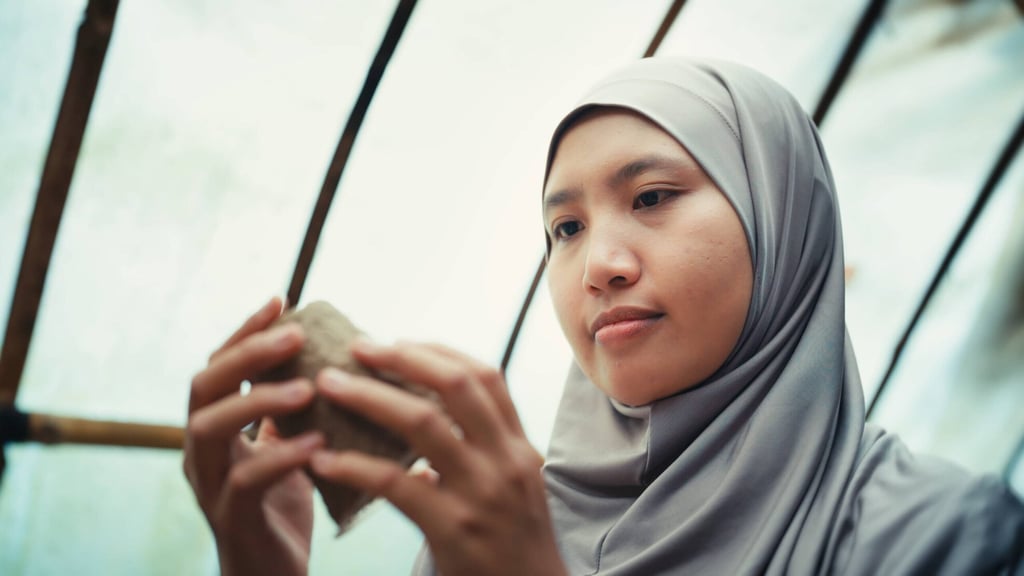
Then, she stumbled on something online that changed that: you can grow seeds with just paper. So, she tried it. Made the pulp, found seeds from local farmers, scattered them in, and waited.
When it finally sprouted, she could see the roots forming, the stem pushing through, the first leaves unfolding. It was the kind of thing you’d miss entirely in a pot of soil.
“I had never planted anything before,” she said. “And watching it grow from paper was amazing.”
She thought to herself, if it worked for her, a biologist who had never bothered with plants, what would it do for someone who’d never thought about waste or sustainability at all?
In her experience, planting tends to pull other habits along with it. Once someone grows something, they start wondering about fertilizer, pesticides, where things come from, and where they end up. If she could get people to take that first step, the rest might follow.
So she figured out how to get that experience into other people’s hands. She shaped the paper pulp, dried it, embedded seeds inside, and made it into a small kit that anyone could take home, water, and watch grow. A souvenir that actually turns into something alive.
It was the kind of product she could make from her kitchen table. Which mattered, because by then she was already becoming a mother.
One product became three (and the village joined in)
As demand for seed kits grew, she needed a steady supply of seeds, which meant growing flowers and farming. Azifah could have tried to do it all herself, but she chose to look around at the women in her village.
Many of them were already growing plants in their yards. Some had flowering plants on their porches that produced seeds every season.
Azifah’s pitch was simple: “If you grow this flower, once the seeds dry up, sell them to us.”
It worked because it fit. A mother with a toddler on her hip could tend a few plants between meals and school runs.
She didn’t need to commute anywhere, didn’t need childcare, and didn’t need to choose between earning money and being present for her family. The income came to her front porch.
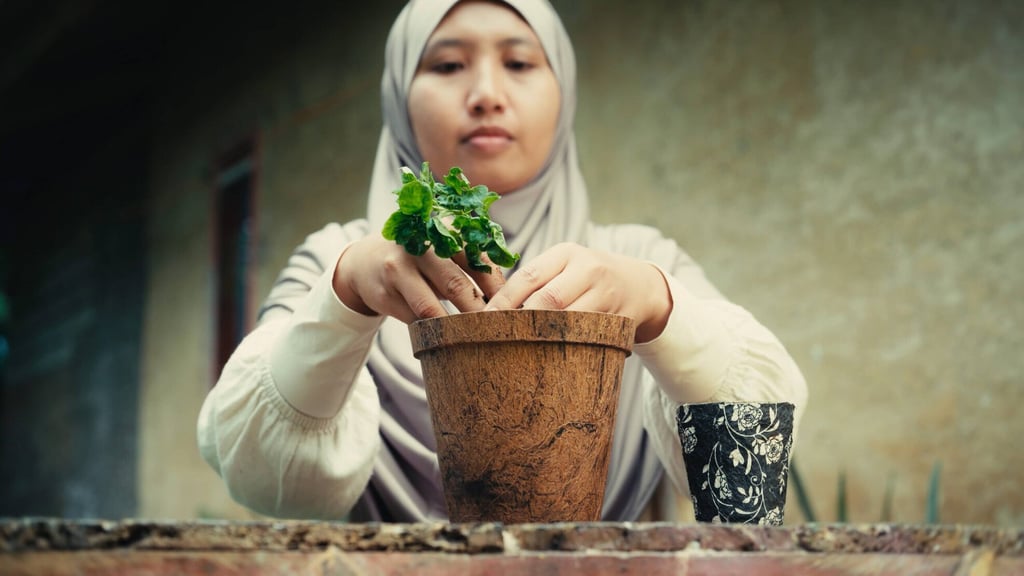
What started as a loose arrangement between neighbors gradually became something more structured. More mothers joined, the variety of plants grew, and Azifah began organizing the work.
That’s when Benih Bunbun took shape as a real enterprise, and the combined growing efforts eventually came together in one place: the Minibun Farm, where the team now handles its own planting, composting, and even keeps animals.
But for Azifah, selling seed kits was only part of the point. She wanted people to learn from what she was building, maybe even replicate it.
That idea became the Edugreen Tours. Visitors come to the farm, and Azifah walks them through everything.
She’ll point out a betel plant and explain how locals use it as medicine, when they harvest it, and what the traditional preparation looks like.
At the bamboo grove, she’ll pause to share how it stores water underground and absorbs carbon – and how cutting it down weakens the soil’s ability to hold water during heavy rains.
Then, she’ll show how fruit peels can be fermented into eco-enzymes that work as natural pesticides, or how soapberry fruit replaces chemical dish soap.
Part botany lesson, part cultural history, part sustainability crash course, all told through the plants growing right there on the land.
What started as one woman experimenting with paper pulp in 2017 has grown into a team of 20 producing over 5,000 seed kits a month, with more than 20 visitors coming through the Edugreen Tours each month.


Building capacity she didn’t know she had
Azifah wasn’t someone who dreamed of running a farm or leading a team. She was a biology graduate who was annoyed about paper waste.
But once the seeds started growing, things kept unfolding. A woman who had never planted anything became a farmer. A woman who had never thought of herself as an entrepreneur started managing production teams, supply chains, and customer relationships.
Those skills built up, one unfamiliar challenge at a time, in the same way the business itself grew from one product to three.
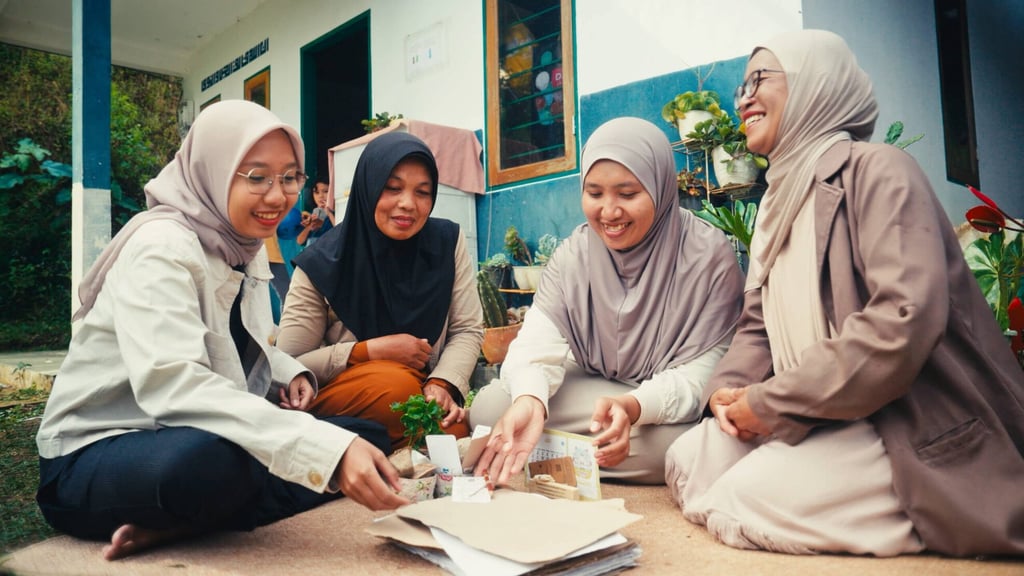
Azifah sees that same potential in the women around her. At BenihBunbun, a mother might join the production team and discover she has a knack for packaging.
She builds confidence through it, and soon, she’s teaching the skill to another woman who once thought she couldn’t do it.
Many of these women were already the financial backbone of their households. What changes is how that strength begins to reflect back at them.
Because the team is paid per task rather than fixed monthly salaries, they can work in a way that fits their family’s rhythm.
It’s the same principle Azifah lives by – extended to everyone around her.
A writer who ran out of time (and the tool that changed that)
Azifah studied biology, but she’s always been drawn to writing. And now she has something she wants to write about: the women who make each product, the plants that grow on the farm, and the reasoning behind every design choice.
“I actually love writing,” she said. “I just don’t have the time.”
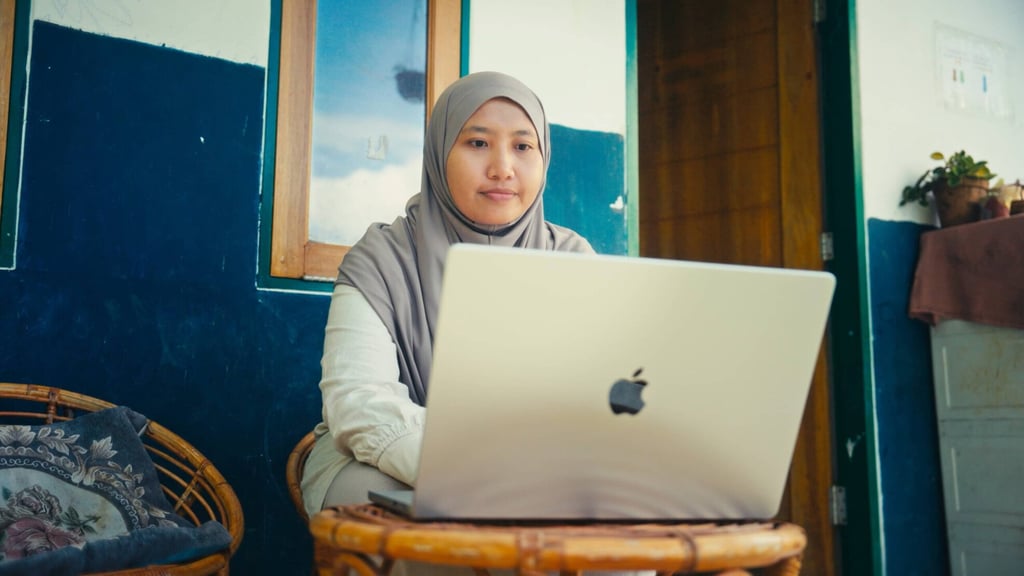
Azifah runs the entire digital side of BenihBunbun alone. Her team handles farming and production. She handles customer conversations, admin, social media, and the website.
The blog hasn’t been updated since last year. She’s got the ideas, it’s just that there are only so many hours between school drop-off and pick-up.
The website itself isn’t really a shop. Customers prefer buying through Shopee, TikTok Shop, or WhatsApp, and Azifah is fine with that. What frustrated her was the assumption that a website should only do one thing.
“Why do writing and selling have to be separate?” she said. “Can’t we combine them?”
On the BenihBunbun website, she can explain the mission, show the impact, and let institutions and partners see the full picture. It’s a trust builder, not a checkout page.
But the thing that caught her attention is the WordPress AI Content Creator, one of the AI tools available in Hostinger’s managed hosting for WordPress. In her eyes, it’s what she’s been waiting for: a way to get the ideas out of her head and onto the page before the school day ends.
For a founder who’s also a solo content team and a mother with young children, the difference between wanting to publish and actually publishing often comes down to having a tool that saves an hour here and there.
What comes next for BenihBunbun
Azifah wants to expand the market so more people discover the products, and she’s planning to offer a wider range of innovations for seed paper workshops. But the ambition was never about scale for its own sake.
“Profit is just a requirement for sustainability,” she said. “The ambition is people and planet first.”
What she really wants is for other grassroots businesses across Indonesia to see that the circular economy model works at the community level.
That you can run a business without making profit the purpose. That the women in your village have more capacity than anyone gives them credit for. That change doesn’t require waiting for government programs or big investors. It can start in your own yard, with a flowering plant on the porch and a handful of seeds.
The website is how she’ll make sure those stories reach people who need to hear them. But the rule stays the same. When her children walk through the door, they come first.
“Being a mother is a gift,” she said. “I’ve strategized my work so that it can be done from home, so I can do my best to remain a mother.”

Simon is a dynamic Content Writer who loves helping people transform their creative ideas into thriving businesses. With extensive marketing experience, he constantly strives to connect the right message with the right audience. In his spare time, Simon enjoys long runs, nurturing his chilli plants, and hiking through forests. Follow him on LinkedIn.