The Himalayan Chocolate: Made in the Himalayas, built around the women who make it
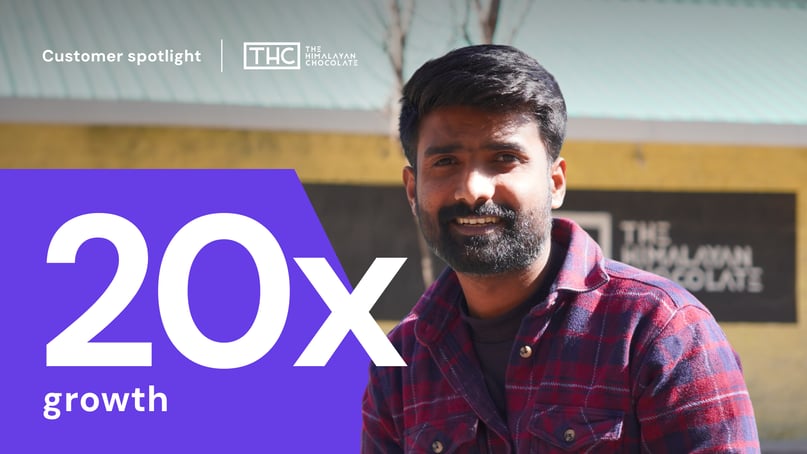
In March 2020, Rohan Keshewar was traveling through Himachal Pradesh, Western Himalayas, when COVID-19 shut the world down overnight.
He found himself stranded in Manali, a mountain town in the Kullu Valley, with no way out and no timeline for when things would reopen.
Most people would have waited it out. Rohan started a chocolate company.
Why the Himalayas
Rohan grew up in Mumbai, where he eventually chose to study commerce and enrolled in a master’s program in social entrepreneurship at the Tata Institute of Social Sciences.
To earn his degree, the program asked him to step out into the real world, find a problem that genuinely mattered, and try to solve it through a business.
That’s what led Rohan to the Himalayas. He noticed that local economies relied heavily on tourism and government jobs, with very little manufacturing to support long-term stability.
At the same time, many women were effectively shut out of paid work – held back by a mix of limited opportunities and social expectations.
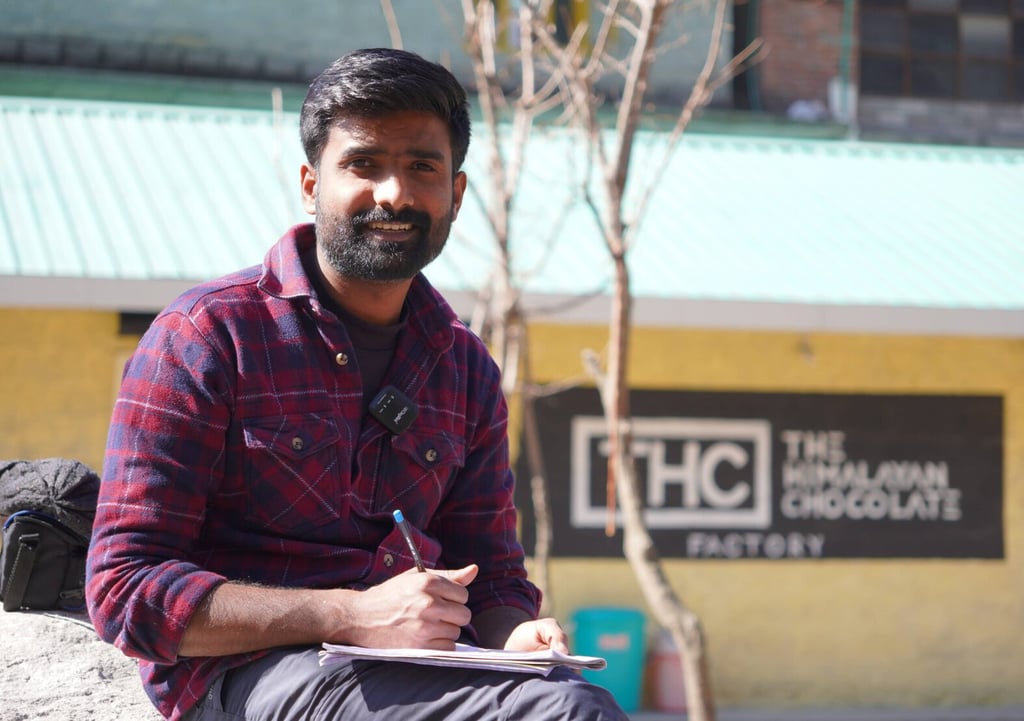
“Coming from a background like mine, brought up in Mumbai, having an education, I felt I should not take up a job and instead help people around, or do something which can create impact,” he said.
Chocolate, though, wasn’t in his original plan.
A borrowed mold and a small room
After graduating, Rohan joined the Nuropa Fellowship in Leh-Ladakh, a program supporting people who wanted to start businesses in the Himalayas.
He’d been developing a brand called Ladakh Naturals there – an early attempt to build something rooted in the region’s native produce and the communities that depended on it.
In the evenings, he and a few friends would borrow the communal kitchen’s gas burner, haul it into a hostel room, and experiment with the very ingredients he’d been thinking about all day.
They melted chocolate and started throwing things in.
Barley, a staple Himalayan crop that locals traditionally roast and puff, was part of the early experiments. Mixed into melted chocolate, it became what would eventually be one of The Himalayan Chocolate‘s signature flavors: Ladakhi Roasted Barley.
A pinch of Himalayan pink salt, added on a whim, turned into another. “Just a random flavor we were curious about,” Rohan recalled, “and it turned out well.”
Ladakh Naturals never made it past this stage – COVID saw to that. And that’s when Rohan found himself stranded in Manali with nowhere to go.
When he looked around, he recognized the same problem he’d always been trying to solve: a tourism-dependent economy, limited manufacturing, and women with few options for a steady income.
So he stayed and decided that if the problem existed here too, so could the solution.
He found a local baker who ran a cake business out of a van and borrowed his chocolate molds. “I really met good people around that time,” Rohan recounted. “They helped me.”
But not everyone shared his enthusiasm. During those early lockdown months, Rohan was open about his plans with almost anyone he met.
He’d tell strangers about his idea, ask people to partner with him, and pitch it to whoever would listen. Most thought he’d lost it.
His family wasn’t on board either. They didn’t want to fund his chocolate experiment in the mountains, as he had a degree from a prestigious institution and could just get a job.
He convinced them by being stubborn. He told his family he wasn’t coming back to Mumbai and that he needed a small amount to get started, just enough to begin. So, eventually, they relented.
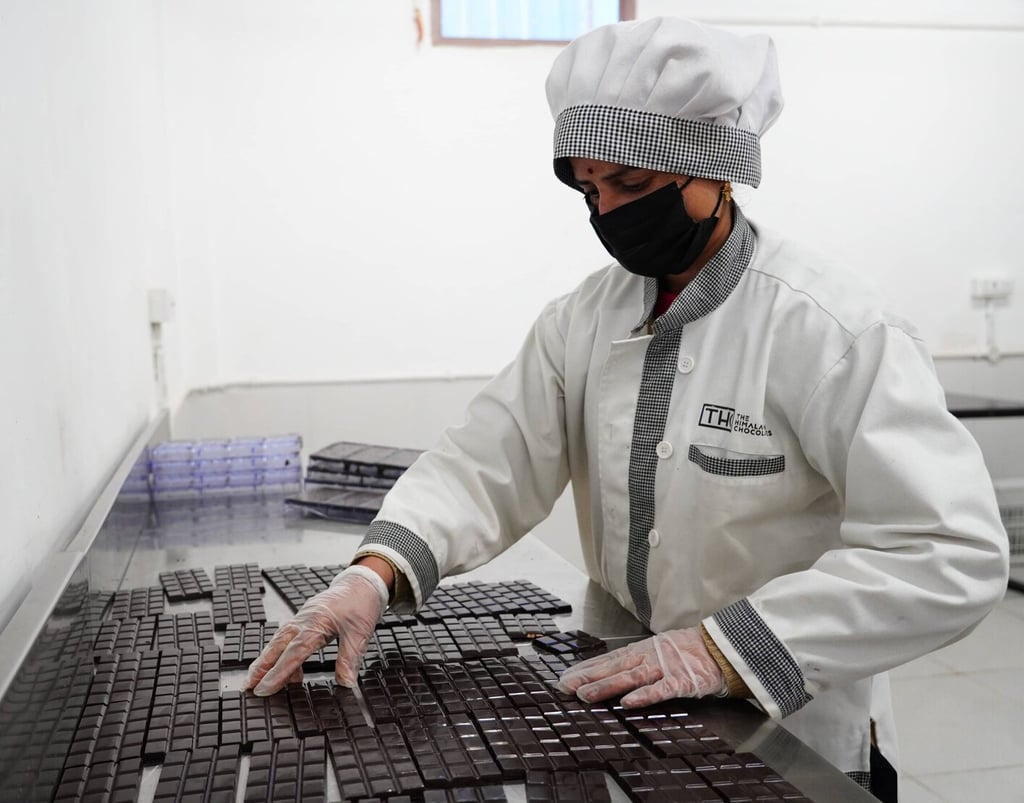
Then, he kept going. With two local women willing to learn, a small room, and borrowed equipment, he officially registered the business on October 10, 2020, and began manufacturing.
Five days, one small stall
For the first couple of months, nothing moved.
The two women making chocolates with Rohan started getting nervous. They’d worry about the storage filling up. He’d tell them not to worry and to keep the production going.
Then December came. Lockdown restrictions eased, and a wave of pent-up tourism hit the mountains.
Rohan set up a small stall in Kasol, a town in the Kullu district, and within five days, they sold roughly ₹1 lakh (about $1,200) worth of chocolate.
For a brand that hadn’t existed two months earlier, operating out of a single room in the mountains, it was a lot. “That was the time when we realized, okay, this is something that is working, and people are really liking the brand,” Rohan said.
Beyond the chocolate bars
Chocolate is the product. The point has always been creating paid work for women in the Himalayas.
The Kullu Valley, where Manali sits, is a place where those words carry real weight. Work for women is hard to find – held back by a male-dominated social structure, limited manufacturing, and a caste system that still shapes everyday life.
Some of the women who joined early were widows with children and few income options of their own. Others were young graduates who had searched for jobs without success. Some had never earned their own money because they’d simply never been given the chance.
“Once they become financially independent, they no longer have to rely on someone else for every small thing,” Rohan said. “Even if they want to buy lipstick, they can now make their own decision.”
That independence tends to carry forward. Women who earn are more likely to invest in their children’s education, and those small decisions compound over time.
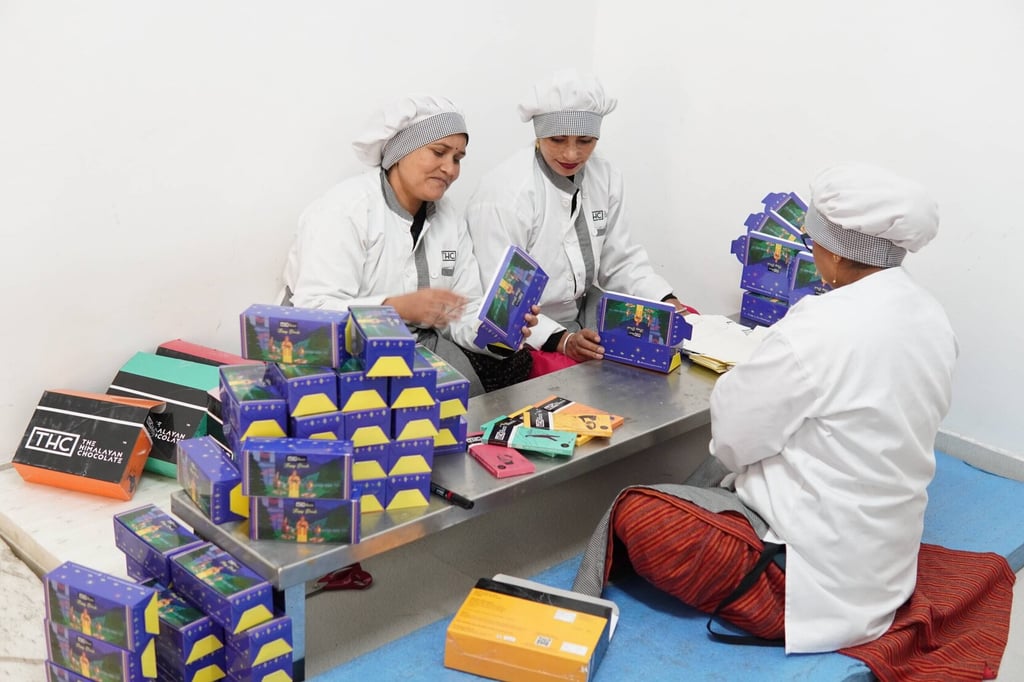
Building a workplace has also meant confronting things Rohan hadn’t expected.
When caste differences surfaced within the team, with some women reluctant to eat together or drink from the same tap, he didn’t address them head-on.
Instead, he started celebrating birthdays. He’d bring a cake, everyone would cut it, and eat together. A small gesture, repeated often enough to slowly start shifting things.
“I’m trying to learn about myself and to be a better person,” he said. “In social business, there is no way out. You have to keep on improving.”
From 100 chocolate bars to 2,000
Within the first year of operating The Himalayan Chocolate, Rohan grew the business through local shops, cafés, and tourist foot traffic in Manali.
It worked, but only up to a point. The limit became clear through customer messages.
People who had discovered the chocolate during their trips wanted more once they returned to cities like Mumbai, Bangalore, or Hyderabad, but there was no way to reach them.
So he built a website. He wasn’t a tech person and didn’t pretend to be, but he needed to give them a way to order.
The site runs on Hostinger’s managed WordPress hosting, which he switched to after running into issues with a previous provider. Since then, the online side of the business has grown steadily.
Even without significant investment in ads, the website now accounts for 10-15% of the business’s revenue, generating roughly ₹50,000-₹1 lakh ($600-$1,200) per month – driven mostly by organic search and QR codes on packaging.
“I was never a tech person,” Rohan said. “But over the years, I’ve realized that tech has huge potential.”
With the online store up and running, demand no longer depended on foot traffic, and production began to scale. What started with two women making fewer than 100 chocolates a day has grown into a team of 10 to 12 in manufacturing, producing around 1,500 to 2,000 bars daily.
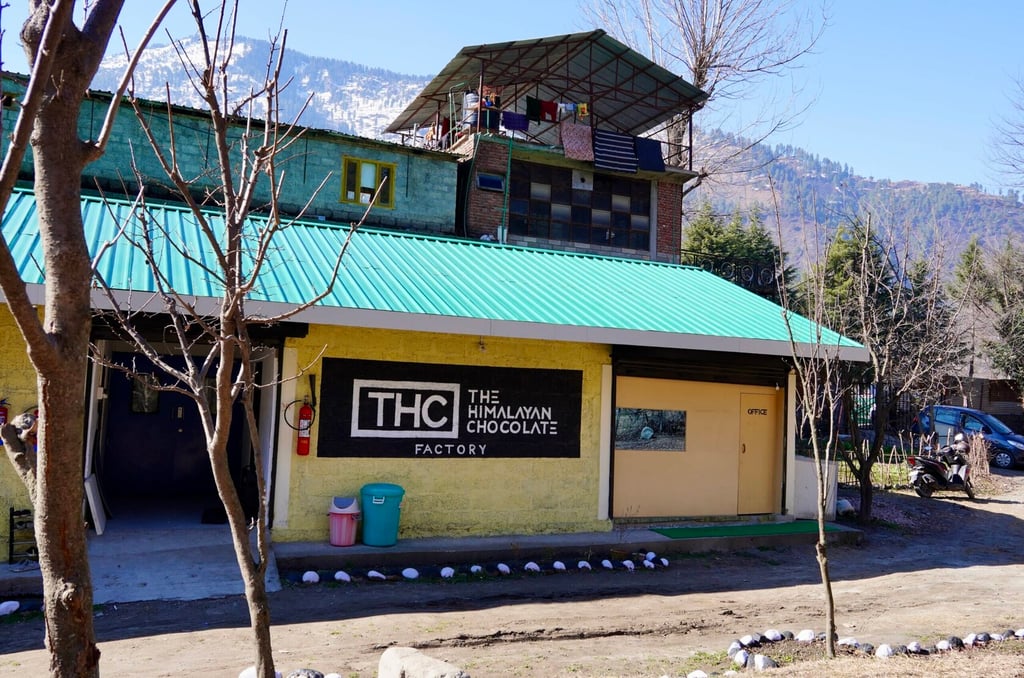
The range has expanded as well, now including 10 chocolate bar flavors – from Ladakhi Roasted Barley and Himalayan Pink Salt to Rose Pistachio and Kesar Almond – along with chocolate-coated almonds.
Rohan has also deliberately kept sales off third-party marketplaces, even as the online side has grown.
“Direct-to-customer is the future,” he said. “In India, D2C has become a really huge thing. And I think you get a lot of control. You can track how orders reach your customers, handle issues directly, and issue refunds easily.”
The positioning remains the same: an affordable souvenir from the Himalayas, shaped around the Indian palate.
And through it all, the business has stayed bootstrapped. No outside investors. Every rupee earned goes back into the business. That’s a deliberate choice.
Taking outside money would mean answering to people whose priorities might not align with the reason the company exists: employing local women, paying fair wages, and reinvesting in the community rather than optimizing for margins.
“I don’t want to bring in big investors and change the narrative,” Rohan explained. “I want to keep the social part intact, because that’s what got me here.”
What’s coming next for The Himalayan Chocolate
Over the next two to three years, the focus is on expanding the product range and strengthening the direct-to-consumer side of the business. That means investing more in the website and social media, while building the capability to ship internationally.
Beyond that, the vision stretches further. Rohan talks about building a full-scale factory capable of supporting 1,000 or more jobs. Exporting to Europe is part of the picture, too. He mentioned Amsterdam, only half-jokingly.
“I’m in the long game, and I’m really happy with whatever I’m doing,” he said.
When asked about his proudest moment, Rohan didn’t mention revenue or recognition. He talked about his parents.
At first, they were skeptical. With a strong education behind him, they had expected him to take a job instead of moving to the mountains to make chocolate.
Now, they tell people their son runs a chocolate factory.
“Seeing them happy… I feel like I’ve done something, at least,” he said.
Even as the plans grow bigger, the Himalayan Chocolate remains, in many ways, what it was at the start: a small operation in the mountains, with production handled by a team of local women the brand was built to employ.
He started hoping to give two women a livelihood. Now he thinks about a thousand.
The goal has always been the same: create work for women in a place where paid work is hard to find. The scale of what that could look like is just bigger now.

Larassatti Dharma is a content writer with 5+ years of experience in the web hosting industry. She has populated the internet with over 100 YouTube scripts and articles around web hosting, digital marketing, and email marketing. When she's not writing, Laras enjoys solo traveling around the globe or trying new recipes in her kitchen. Follow her on LinkedIn

Simon is a dynamic Content Writer who loves helping people transform their creative ideas into thriving businesses. With extensive marketing experience, he constantly strives to connect the right message with the right audience. In his spare time, Simon enjoys long runs, nurturing his chilli plants, and hiking through forests. Follow him on LinkedIn.