How to sell jewelry online in 8 steps
Sep 08, 2026
/
By Alma F.
/
9 min Read
To sell jewelry online, first work out what kind of pieces you have and where buyers are most likely to trust that type of item. Then prepare them for sale, clearly show their condition, price them against actual sales, choose secure payment methods, and protect the jewelry during delivery.
A marketplace such as Etsy, eBay, or Amazon is a practical starting point when you want access to existing buyers. Specialist services can help sell fine, designer, and inherited pieces that meet their acceptance rules. Worthy runs auctions for accepted jewelry, while myGemma offers direct purchases and consignment.
If you plan to sell regularly, your own online store gives you more control over prices, presentation, and customer relationships.
Here’s how to approach it:
- Identify the jewelry type. Work out what you want to sell and what buyers will expect from it.
- Choose where to sell it. Compare marketplaces, specialist jewelry services, and your own store.
- Prepare the pieces. Clean them safely, check for damage, and gather any packaging or documents.
- Take clear photos. Show the complete items, their size, identifying details, and visible flaws.
- Write the listing. Describe the materials, measurements, condition, documents, shipping, and returns.
- Set the price. Compare completed sales, the value of the metal and stones, the condition, and a professional appraisal when needed.
- Arrange payment, shipping, and returns. Choose secure payment methods, protect the jewelry during delivery, and set clear return terms.
- Attract buyers. Use search, social media, email, reviews, and referrals to reach the right audience.
1. Choose your jewelry type
Identify the jewelry type or types before listing, because they affect where you sell, how you set the price, and which details buyers expect.
Some pieces fit more than one type. For example, a Cartier ring can be both designer and fine jewelry, while a 30-year-old handmade brooch can be both handmade and vintage.
Common jewelry types include:
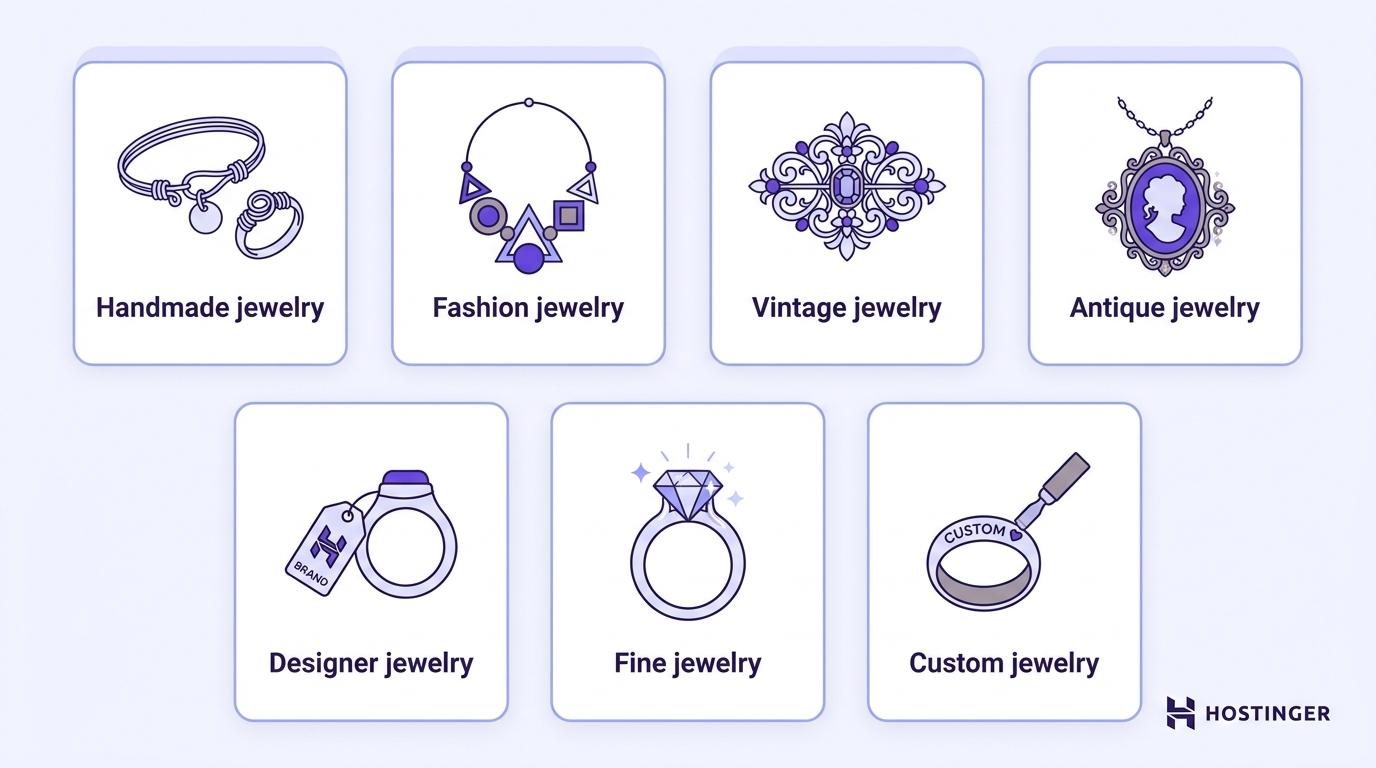
- Handmade jewelry. Pieces made or designed by an individual seller. Buyers want to know who made the item, which materials were used, and how it was produced.
- Fashion jewelry. Trend-led pieces made with lower-cost metals, plating, glass, beads, acrylic, or imitation stones. The price usually depends more on the design, brand, condition, and demand than on the value of the materials.
- Vintage jewelry. Pieces valued for their age, era, style, maker, condition, or rarity. Etsy, for instance, considers an item vintage when it is at least 20 years old.
- Antique jewelry. Generally, pieces that are over 100 years old. Their value depends on the maker, materials, condition, rarity, and buyer demand, not age alone.
- Designer jewelry. Branded pieces from names such as Tiffany, Cartier, or David Yurman. Buyers expect proof that the item is authentic and clear photos of its identifying marks.
- Fine jewelry. Pieces made from precious metals such as gold, platinum, or silver, sometimes with natural or lab-grown gemstones. Metal purity, stone quality, documents, and condition can affect the price.
- Custom jewelry. Pieces made to a buyer’s chosen size, engraving, stone, metal, or design. Buyers need clear production times, available options, and return terms.
If you’re building a business, focus on jewelry you can make or source regularly. For example, a handmade seller needs a steady supply of materials, while a vintage seller needs regular access to estate sales, auctions, or dealers.
2. Choose where to sell jewelry online
Choose where to sell based on what kind of jewelry you have, how much it may be worth, how quickly you want to sell, and how much work you want to do yourself.
A marketplace is useful when you want to reach buyers who are already shopping for jewelry. A specialist service can help when you have a valuable piece and want someone else to inspect, photograph, or sell it.
Your own online store makes more sense when you plan to sell regularly and want more control over your prices and customer experience.
Platform | Best for | Pros | Cons | Typical fees |
Etsy | Handmade, custom, and qualifying vintage jewelry | Buyers already search for handmade and distinctive pieces | Strong competition and rules about what sellers can list | Listing, transaction, payment-processing, and optional advertising fees |
eBay | Vintage, designer, collectible, and secondhand jewelry | Large audience with fixed-price and auction listings | You handle the listing, buyer questions, and shipping | Final-value, per-order, and optional listing or promotion fees |
Facebook Marketplace | Local sales and lower-priced personal pieces | Simple local listings and collection arrangements | Payment, shipping, and seller protection vary by location | Local sales may have no platform fee; shipping and checkout costs depend on availability |
Amazon | Fashion jewelry and businesses listing many new products | Large existing audience and tools for managing a product catalog | Strong competition, detailed seller rules, and approval for some fine jewelry | Selling-plan, referral, fulfillment, and optional advertising fees |
Worthy | Eligible diamond, designer, and estate jewelry, plus luxury watches | Handles shipping, cleaning, grading, photography, and the auction | Doesn’t accept every item, and successful sales carry a fee | A percentage of the successful auction price |
myGemma | Selected designer and fine jewelry | Direct offers, insured shipping, and consignment options | Focuses on accepted luxury brands and jewelry types | No seller fee for a direct purchase; consignment terms vary |
Your own store | Sellers with a growing catalog and repeat buyers | Control over products, prices, branding, and customer communication | You must set up the store and attract buyers | Store-plan and payment-processing fees |
Fees and features can change depending on where you live, what you sell, and which services you use. Check the platform’s current fee page before deciding on a price.
For a few pieces or your first attempt at selling, a marketplace such as Etsy, eBay, or Facebook Marketplace is usually the easiest place to start. Buyers are already searching there, although your jewelry will appear beside competing listings, and each order may carry fees.
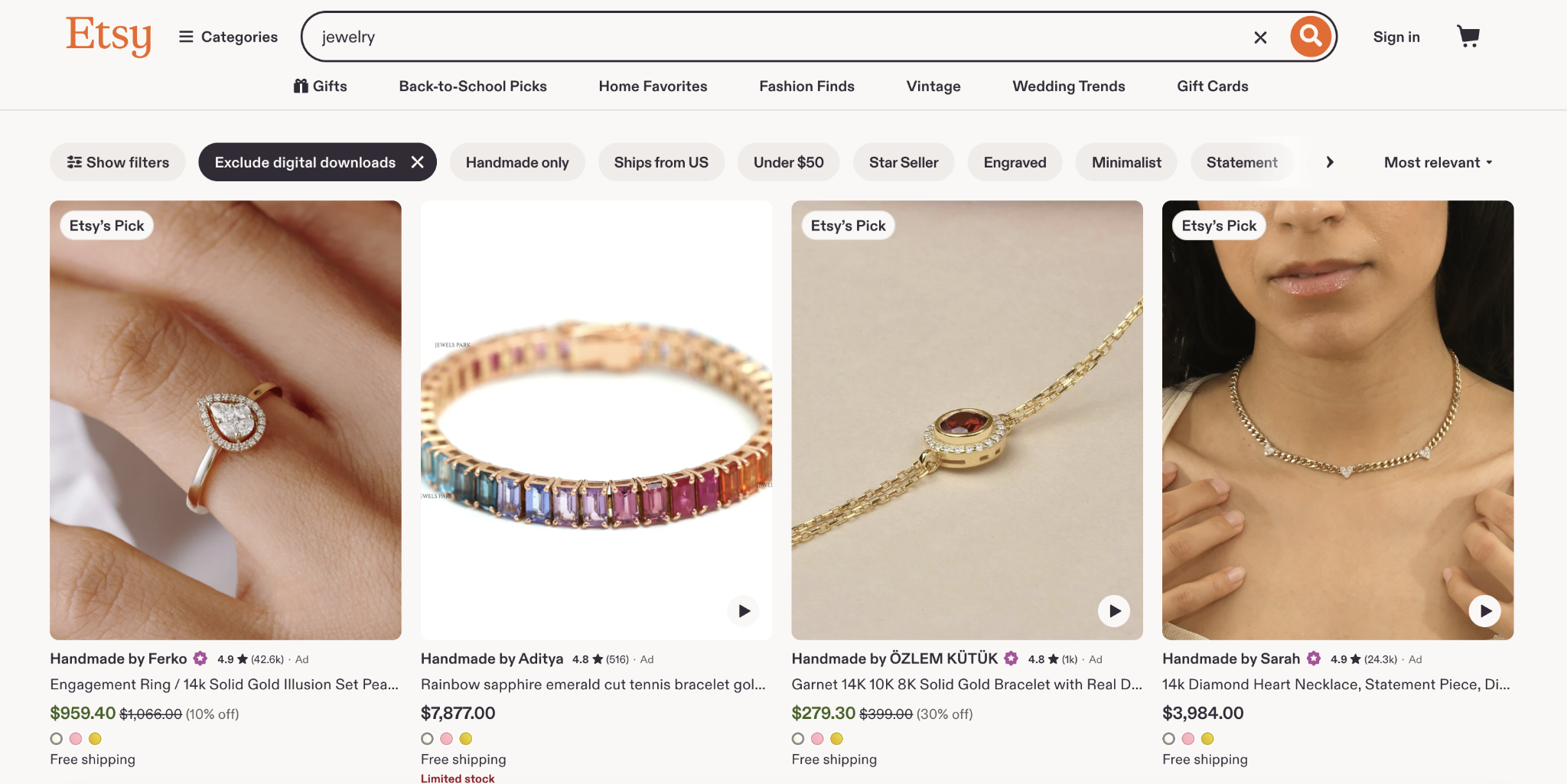
Worthy auctions accepted jewelry to a network of vetted professional buyers, while myGemma lets you sell directly to the company or use consignment.
Whichever online selling site you compare, check more than how many shoppers it has. Find out whether you set the price, who checks valuable pieces, who handles shipping, when you get paid, and how much you keep after fees. These details show how much work you’ll need to do and how much control you’ll have over the sale.
If you plan to sell regularly and don’t want to rely only on marketplaces or specialist services, you can create your own website where customers browse and buy your jewelry.
Tools like Hostinger Ecommerce can help you build your store, add products, track stock, manage orders, and keep marketplace listings connected in one place.
3. Prepare your jewelry for sale
Prepare your jewelry for sale by carefully cleaning it, checking its condition, and gathering any items that help identify it. Careful preparation shows buyers what they will receive and reduces disputes over damage, missing documents, or missing accessories.
Start by cleaning the piece. Remove fingerprints and loose dirt with a soft, dry microfiber cloth.
Avoid strong cleaners, rough brushes, and polishing products when you don’t know the metal, stone, coating, or age. The wrong method can scratch stones, remove plating, loosen glued parts, or damage an older finish.
Check for damage. Look for:
- Loose, chipped, or missing stones
- Bent prongs or damaged settings
- Broken clasps, chains, hinges, or earring backs
- Worn plating or discoloration
- Dents, deep scratches, and previous repairs
- Missing links, charms, or other parts
Ask a jeweler to inspect loose stones, damaged settings, or valuable pieces before attempting any repairs. Changing an original part on vintage or antique jewelry can reduce its value.
Record every flaw you find so the photos and listing describe the same condition.
Gather anything included with the sale, such as:
- Original box or pouch
- Receipt
- Brand card or proof of authenticity
- Diamond or gemstone grading report
- Appraisal
- Warranty or repair records
- Spare links, stones, clasps, or other parts
Keep these items with the jewelry and photograph them separately. Hide your address, payment details, and other private information before adding photos of documents to the listing.
4. Take high-quality jewelry photos
Take clear, accurate photos that show the whole piece, its size, important details, and every visible flaw. Buyers can’t hold the jewelry or inspect it closely, so the photos need to show exactly what they will receive.
Use soft daylight near a window or a small photography lightbox. Avoid direct flash and strong overhead lights because reflections can hide scratches, settings, and other details.
A smartphone is enough for most listings. Clean the camera lens and place the phone on a tripod or steady surface to keep the photos sharp.
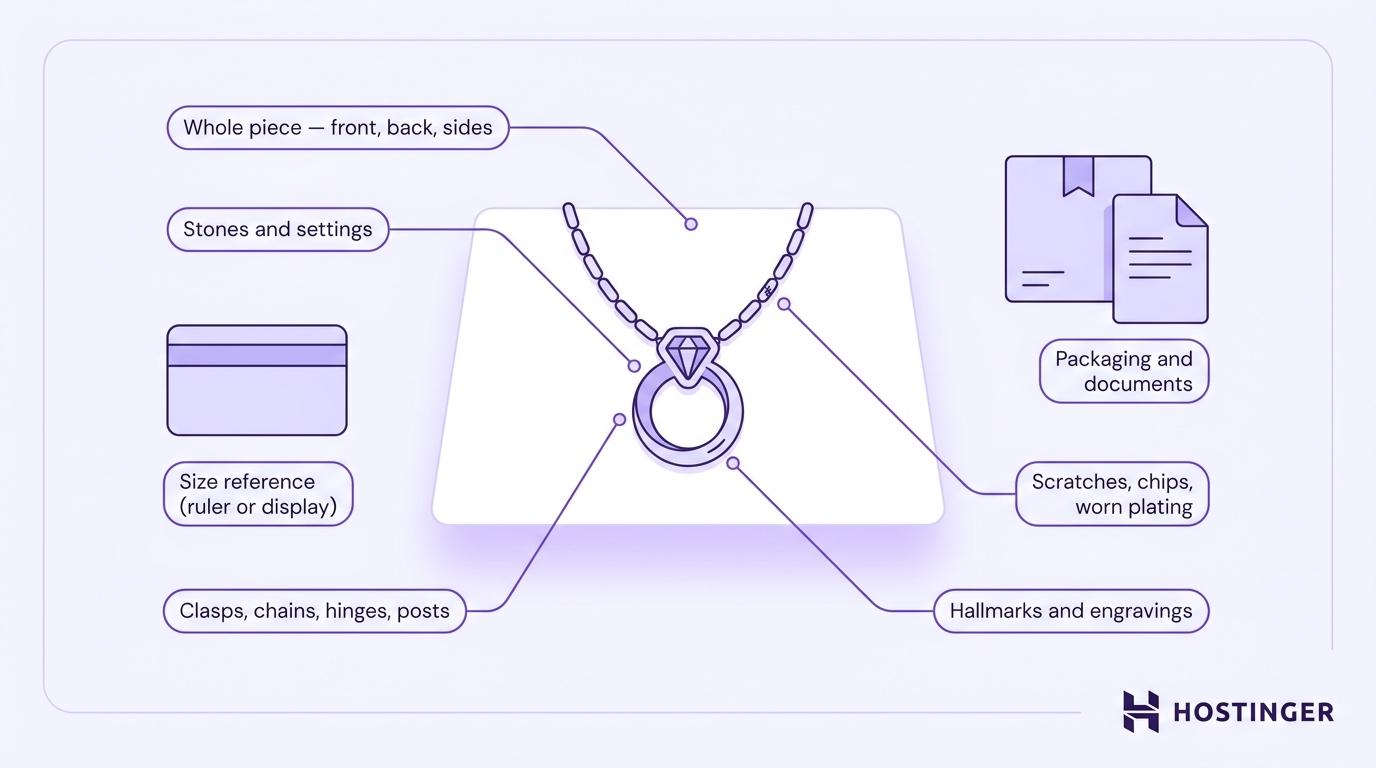
Make sure to photograph:
- The whole piece from the front, back, and sides
- Stones, settings, clasps, chains, hinges, and earring posts
- Hallmarks, signatures, model numbers, and engravings
- Packaging, documents, and other included items
- Scratches, chips, worn plating, repairs, and other flaws
- A size reference like a ruler or a coin
Use a plain background that contrasts with the jewelry. Limit editing to cropping, straightening, and adjusting the brightness. Don’t hide scratches, change the color of a stone, or make worn metal look new.
If you want to showcase several pieces, use the same angles and distance for each item so buyers can compare them easily.
5. Write a detailed jewelry listing
Write a detailed listing that helps buyers identify the jewelry and understand exactly what they’ll receive. When writing clear product descriptions, put the identifying details first, then add the condition, included items, shipping time, and return terms.
Start with a clear title that names the jewelry type and its main details. For example: 14K yellow gold solitaire ring with a 0.75 ct diamond.
Include:
- Jewelry type and style
- Brand or maker
- Metal, stones, and other materials
- Size, weight, and measurements
- Color and finish
- Hallmarks, signatures, engravings or model numbers
- Scratches, chips, repairs, or missing parts
- Box, documents, spare links, and other included items
- Shipping time and return terms
Only make claims you can support. Don’t describe a piece as genuine gold, a natural diamond, or an authentic designer item based on appearance alone. Use hallmarks, receipts, grading reports, appraisals, or other records where available.
Describe flaws plainly and make sure the wording matches the photos. For example:
14K yellow gold solitaire ring with a 0.75 ct round diamond and GIA grading report. Light scratches are visible on the band, and the prongs are secure. The original ring box is included.
For handmade jewelry, explain who made the piece, which materials were used, and whether small differences may appear between items. For custom jewelry, list the available sizes, metals, stones, engravings, production time, and return rules.
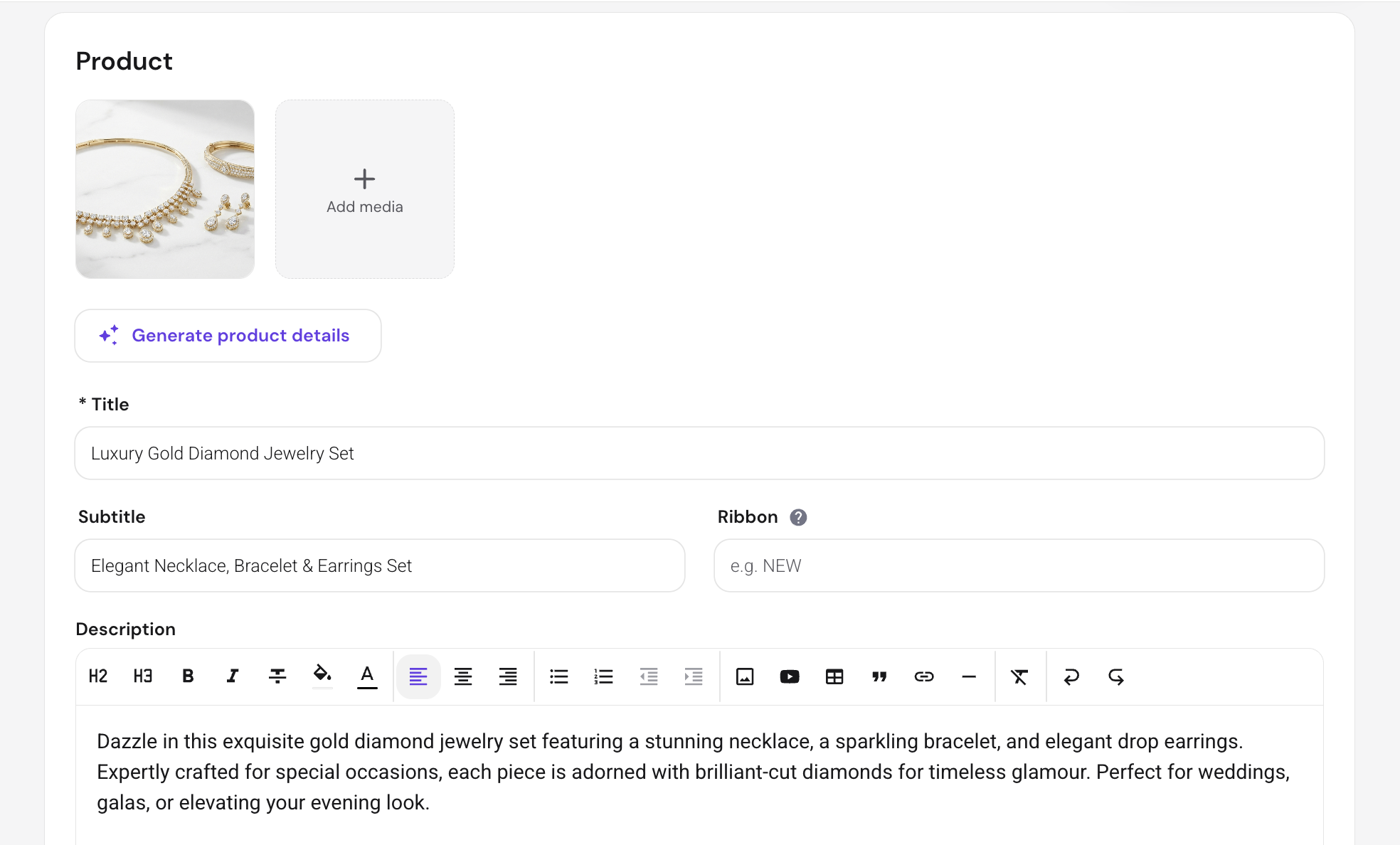
If you have many products to add, a tool such as Hostinger Ecommerce can create an editable description from uploaded product photos. Check every detail before publishing because a photo can’t confirm metal purity, exact measurements, grading-report information, or flaws that are difficult to see.

6. Set the right price for your jewelry
Set the price by checking what similar jewelry has sold for, then adjust it for the brand, materials, age, condition, documents, and buyer demand.
For resale jewelry, look at completed sales instead of active listings. A seller can ask any amount, but a completed sale shows what a buyer actually paid.
Compare pieces that are as close as possible to yours. Check the:
- Brand or maker
- Metal and stones
- Age and style
- Size or weight
- Condition
- Grading reports, receipts, or other documents
- Original box and packaging
An appraisal can help identify and describe a valuable piece, but the appraisal amount isn’t always what a buyer will pay. Recent sales give you a clearer idea of its current market price.
For handmade jewelry, include the cost of materials, labor, packaging, selling fees, and other business expenses. When calculating a profitable product price, add enough profit to cover your work and support the business.
For example:
$120 sale price − $30 materials − $12 packaging and shipping − $15 selling fees = $63 to cover labor and other business costs, plus your profit.
Finally, decide how the price will be set:
- Fixed price – You choose the amount and wait for a buyer.
- Auction – Buyers place bids, so the final price depends on how much interest the piece attracts.
- Direct offer – A dealer or specialist service examines the jewelry and offers to buy it from you.
7. Set up secure payments, shipping, and returns
Set up secure payment, delivery, and return options before accepting orders so buyers know how the sale will work.
Use secure payments. When selling through a marketplace or specialist service, use its payment system rather than arranging payment outside the platform.
For your own store, connect a secure payment gateway that processes card payments without requiring you to handle the buyer’s card details directly.
Protect the jewelry during delivery. Place the piece in a box or pouch, wrap it so it can’t move, and pack it inside a strong, plain outer box. Photograph the jewelry and included items before sealing the parcel so you have a record of what you sent.
Use tracked shipping for every order. For valuable pieces, check that the carrier’s insurance covers jewelry, insure the parcel for its sale value, and require a signature on delivery.
Set clear return terms. Tell buyers how long they have to request a return, who pays for return shipping, what condition the jewelry must be in, and whether custom, engraved, or resized pieces can be returned. Make these terms easy to find before checkout.
8. Market your jewelry online
Market your jewelry on the channels where people already look for the type of pieces you sell.
The best channel depends on who you’re trying to reach and what type of jewelry you sell. Someone shopping for handmade earrings won’t look in the same places as someone searching for an estate diamond ring, for example.
Jewelry type | Best channels | What to show |
Handmade and custom | Instagram, TikTok, Pinterest, and Etsy | The design process, materials, customization options, and finished pieces |
Fashion | Instagram, TikTok, and creator partnerships | Styled photos and short videos showing how the jewelry looks when worn |
Vintage and antique | Etsy and eBay | The era, style, maker, condition, and identifying marks |
Designer and fine | Google search, email, and specialist selling services | Proof of authenticity, grading reports, close-up details, and secure delivery options |
When planning how to market your online store, start with one or two places where your buyers already spend time. See which posts, listings, or emails bring people to your products and lead to sales, then focus on those.
Jewelry is highly visual, so use clear photos and videos that show each piece from multiple angles and when worn. You can also sell on Pinterest by linking product images to your store or listing.
Ask customers for reviews after their order arrives, and email them when you add new pieces or collections. Previous buyers already know what buying from you is like, so you don’t need to earn their trust from the beginning.
How to grow your jewelry business
Grow your jewelry business by using your sales results to decide what to restock, where to sell, and which tasks need a simpler process.
Track the profit from each product, not just the sale price. A piece may sell regularly but leave little profit after materials, selling fees, shipping, returns, and the time spent making or listing it.

Use those results to:
- Restock pieces that sell consistently and leave enough profit
- Improve or stop selling products that take too long or receive frequent returns
- Focus on the selling sites that bring profitable orders
- Email previous customers when you add new pieces or collections
You don’t need to leave marketplaces that bring in sales. As the business grows, starting your own online store gives buyers one place to see your full collection and return for future purchases. You can build that store with Hostinger Ecommerce while continuing to sell through marketplaces that work for you.
As you scale your ecommerce business, use one process for adding products, updating stock, packing orders, handling returns, and contacting customers. Add another selling site only when you can keep its listings and orders accurate.
All of the tutorial content on this website is subject to Hostinger's rigorous editorial standards and values.

Alma is an AI Content Editor with 9+ years of experience helping ideas take shape across SEO, marketing, and content. She loves working with words, structure, and strategy to make content both useful and enjoyable to read. Off the clock, she can be found gaming, drawing, or diving into her latest D&D adventure.