How to start a photography business in India in 10 steps
Mar 12, 2026
/
By Nurul S.
/
14 min Read
Starting a photography business in India requires choosing a profitable niche, planning your services, setting competitive pricing, and building a strong online presence to attract clients. The demand for photography services continues to grow across weddings, eCommerce, restaurants, and corporate events, creating opportunities for photographers who combine creative skills with a structured business approach.
Launching a photography business involves researching your local market, registering your business legally, investing in the right equipment, and promoting your work effectively. A professional portfolio website and consistent client relationships help photographers secure recurring projects and expand their reputation.
There are 10 essential steps to start a photography business in India:
- Build a network of clients and partners to generate referrals and recurring projects.
- Research the photography market to identify demand, competitors, and underserved niches in your city.
- Choose a photography niche such as wedding, product, portrait, or event photography.
- Select a business name and build your brand identity to create a recognizable photography brand.
- Write a business plan that outlines your services, target clients, and financial projections.
- Register your photography business and complete required registrations such as GST or local business licenses.
- Choose the right photography equipment including cameras, lenses, lighting, and editing software.
- Set competitive pricing based on your costs, services, and local market rates.
- Create a photography website to showcase your portfolio and allow clients to book sessions online.
- Promote your photography services through social media, local partnerships, and online listings.
1. Research the photography market
Researching the Indian photography market helps you identify profitable niches, understand local demand, and position your services effectively before launching your photography business. Market demand varies significantly across cities, industries, and client segments, so analyzing your local area is essential.
Start by evaluating which photography services are most in demand in your city or region. In India, several niches consistently generate steady work for photographers:
- Wedding and pre-wedding photography – One of the largest markets due to India’s extensive wedding industry.
- Product photography for eCommerce sellers – Amazon, Flipkart, and Shopify stores require high-quality product images.
- Food photography for restaurants and cafés – Local businesses frequently need images for menus, Zomato, and social media.
- Real estate photography – Property listings increasingly use professional visuals.
- Portrait and maternity photography – Family shoots and milestone sessions are popular in urban areas.
- Corporate event photography – Conferences, seminars, and company events require professional coverage.
Next, analyze photographers already operating in your niche. Look at their:
- pricing packages
- portfolio style
- target clients
- social media presence
Platforms like Instagram, Google Maps, and Google Business Profile listings make it easy to evaluate competitors in your city. This research helps you understand what clients expect and how you can differentiate your services.
Finally, identify market gaps where demand exceeds supply. For example, many cities have hundreds of wedding photographers but fewer specialists in eCommerce product photography or restaurant content creation. Targeting an underserved niche can help a new photography business attract clients faster.
By understanding your local market, competitor positioning, and client demand, you can choose a niche that aligns with both your skills and the business opportunities available in India.
2. Find your photography niche
Choosing a photography niche helps you specialize in a specific service, attract the right clients, and build a recognizable brand in a competitive market. A clear niche makes it easier to market your services and develop expertise in a particular type of photography.
Start by identifying the types of photography that match both your skills and the demand in your area. In India, some niches generate significantly more work than others because they align with common events, growing businesses, and social media needs.
Here are some of the most profitable photography niches in India:
- Wedding photography – The largest segment of the photography market in India. Weddings often include multiple events such as engagements, pre-wedding shoots, ceremonies, and receptions.
- Pre-wedding photography – Dedicated outdoor or themed shoots before the wedding day.
- Product photography – Images for Amazon, Flipkart, Meesho, and independent eCommerce websites.
- Food photography – Restaurants, cafés, and cloud kitchens need professional photos for Zomato, Swiggy, and social media.
- Portrait and family photography – Individual portraits, maternity shoots, baby photoshoots, and family sessions.
- Corporate and event photography – Conferences, company events, product launches, and networking events.
- Real estate photography – Photos and videos for property listings and real estate agencies.
Expert Tip
I never saw myself as a wedding photographer, as I thought I’d never be capable of capturing such a big day! I was lucky enough to have a family friend ask if I’d capture their special day, and from then on, I was in love with capturing the love of two people celebrating with all their family and friends.

Tilly Edwards
Owner of Tilly Rose Creative
When choosing your niche, consider three factors:
- Your interests and shooting style – Working in a niche you enjoy improves creativity and consistency.
- Market demand in your city – For example, wedding photography dominates in many cities, while product photography is growing rapidly in eCommerce hubs.
- Revenue potential – Some niches, such as weddings and commercial photography, typically offer higher budgets than casual portrait sessions.
Many photographers start with multiple small projects to build their portfolio, then specialize once they identify the type of work they enjoy and the clients who request it most often.
Focusing on a niche helps you position yourself as an expert in that category, making it easier for potential clients to understand what services you offer and why they should hire you.
Expert Tip
For my photography business, I switched to weddings as they tend to be more profitable while still staying in the event photography sphere, which is my comfort zone. Weddings allow all that and pay, on average, 2.5 to 3 times more than working with other businesses. Wedding clients also tend to be a little less demanding, believe it or not!

Kari Bjorn
Owner of Kari Bjorn Photography
3. Choose a business name & establish your brand identity
Choosing a clear and memorable photography business name helps clients recognize your brand and makes it easier for people to find and recommend your services. Your name should reflect your photography style, the services you offer, and the audience you want to attract.
Here are common approaches photographers in India use when naming their businesses:
- Using your personal name – Adds credibility and a personal touch.
Examples: “Rahul Sharma Photography,” “Ananya Gupta Studio.” - Creative brand names – Reflect a specific photography style or emotion.
Examples: “Golden Frame Studio,” “Captured Memories Photography.” - Location-based names – Help attract local clients searching for photographers in their city.
Examples: “Delhi Wedding Studio,” “Mumbai Portrait Photography,” “Hyderabad Events Photography.” - Initial-based names – Short and professional branding.
Examples: “RS Photography,” “AK Visuals.” - Emotion-driven names – Highlight storytelling and special moments.
Examples: “Forever Moments Studio,” “Timeless Memories Photography.”
Before finalizing your name, test your ideas with friends, family, or potential clients to see which option is the most memorable and professional.
Next, check that your business name is available online. Ideally, you should secure:
- a matching domain name (such as
.comor.in) - consistent social media handles on Instagram and Facebook
Having the same name across platforms helps clients find your business more easily and strengthens your brand identity.
Domain Name Checker
Instantly check domain name availability.
Your brand identity includes the visual elements that represent your photography business.
Start with a professional logo that reflects your photography style. Wedding photographers often use elegant and soft designs, while commercial or product photographers typically prefer minimal, modern logos.
Next, choose brand colors that match your niche. For example:
- Commercial photographers may choose bold, modern colors that communicate professionalism.
- Wedding photography brands often use soft pastel colors or gold accents to communicate romance and celebration.
- Portrait photographers frequently use black, white, or neutral tones to emphasize timeless aesthetics.
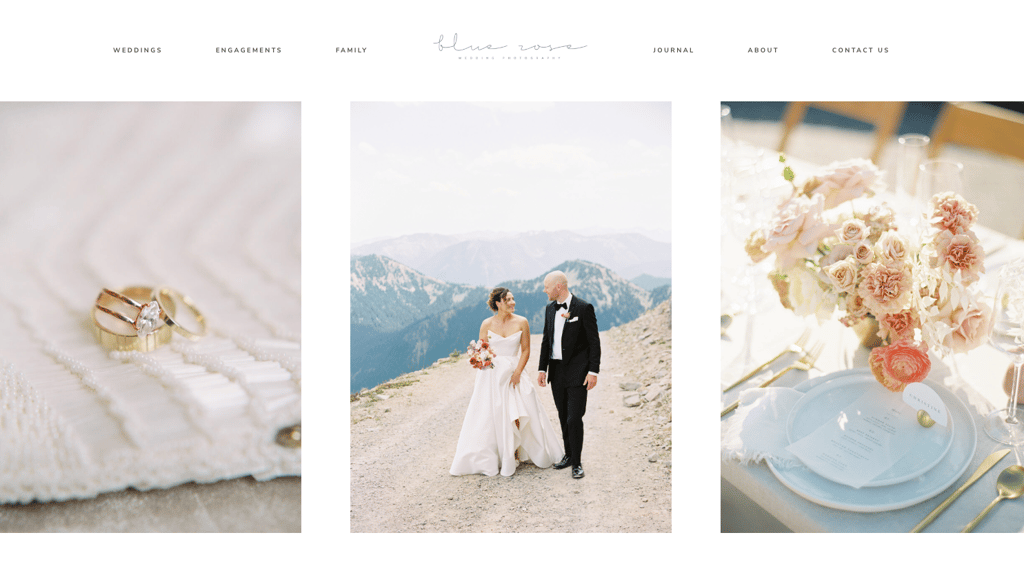
Then select two complementary fonts that work well across your website, social media graphics, and marketing materials. Tools like Google Fonts offer a wide selection of clean, professional typography.
Finally, apply your logo, colors, and fonts consistently across all platforms, including your website, social media pages, and business cards. Consistency is key when building a brand.
4. Write a business plan
A photography business plan defines your services, target clients, pricing strategy, and financial expectations before you start operating. A clear plan helps you manage costs, identify profitable niches, and create a sustainable photography business.
A practical business plan for a photography business in India should include the following components:
- Executive summary. The executive summary provides a short overview of your photography business. It explains your niche, target clients, and business goals. For example, your summary may describe a wedding photography studio serving couples in Delhi or a product photography service helping small eCommerce brands create images for stores.
- Market analysis. This section helps you determine the demand for your services and how to position yourself effectively based on your target audience, competitors, and market trends.
- Business structure. The business structure explains how your photography business will be legally organized. Many photographers in India start as sole proprietors because it is simple to set up and manage. As the business grows, some photographers register as a partnership or limited liability partnership (LLP) to improve credibility and manage larger projects. Your business plan should also outline roles and responsibilities, especially if you plan to work with assistants, editors, or second photographers.
- Services. Describe the range of services you will provide. If you focus on portrait photography or own a photo studio, describe your services, packages, and special deals.
- Financial projections. Outline your startup costs, such as equipment, marketing, and initial operational expenses. Project your revenue streams, including session fees, prints, and digital downloads.
Adjust your business plan to fit your photography niche. For example, a pet photography business plan would target pet owners in the market analysis, providing themed photo sessions and outdoor shoots.
A photography studio business plan outlines studio setup, portrait and commercial sessions, local advertising, and social media marketing.
5. Register your business
Registering your photography business in India allows you to operate legally, accept payments professionally, and build trust with clients. Proper registration also helps separate your personal finances from your business activities.
Here are the key steps to register your photography business in India:
- Register your business name. Start by registering your business name depending on your chosen business structure. Many photographers operate under their personal name, while others choose a studio or brand name. Before registering, ensure the name is not already in use and secure the matching domain name and social media handles.
- Choose a business structure. Your business structure determines how your photography business is legally organized and taxed. Common options in India include a sole proprietorship, partnership, or limited liability partnership (LLP). Most photographers start as sole proprietors because it requires minimal paperwork and is easy to manage.
- Complete required registrations and licenses. Depending on your state, you may need to register your business before operating. Common requirements include Shops and Establishment registration, GST registration if annual turnover exceeds ₹20 lakh, and identity verification using PAN and Aadhaar.
- Open a business bank account. A dedicated business bank account helps you manage income, track expenses, and maintain accurate financial records. Most Indian banks allow you to open a current account using your PAN, Aadhaar, and business registration details.
- Get business insurance. Photography equipment is expensive, so insurance helps protect your cameras, lenses, lighting equipment, and laptops from theft, damage, or accidents during shoots.
- Maintain tax compliance. Photography businesses must comply with Indian tax regulations. This typically includes filing income tax returns, maintaining proper invoices and expense records, and collecting GST if registered. Many photographers work with a chartered accountant (CA) to manage tax filings efficiently.
Registering your photography business creates a professional foundation for working with clients, managing finances, and scaling your services as your reputation grows.
6. Choose the right equipment
Choosing the right photography equipment ensures you can deliver professional-quality images and work efficiently with clients. Start with essential gear that supports your photography niche and expand your equipment as your business grows.
Here are the key types of equipment most photography businesses start with:
- Camera. Invest in a reliable camera that suits your photography style. Entry-level DSLR or mirrorless cameras are a practical starting point for most photographers. Popular beginner setups often cost between ₹40,000 and ₹1,50,000, depending on the brand and model.
- Lenses. A versatile lens helps you shoot different types of photos in various environments. Many photographers begin with a 50mm prime lens or an 18-55mm zoom lens. As you specialize in a niche, you may add lenses such as wide-angle lenses for events or landscapes, or macro lenses for product photography.
- Lighting equipment. Good lighting significantly improves photo quality. Beginners often start with a portable flash or continuous LED light, then expand to a full lighting setup with softboxes, reflectors, and diffusers for studio or indoor shoots.
- Photo editing software. Editing software helps you refine images and deliver professional results. Adobe Lightroom and Adobe Photoshop are widely used tools for color correction, retouching, and organizing your photography workflow.
Start with the essentials and upgrade your equipment gradually as your client base grows. Many photographers also rent equipment for large events or specialized shoots, which reduces initial investment and allows you to test gear before buying.
Expert Tip
Choosing equipment was a case of prioritizing versatility and sustainability. Trendy gadgets can be alluring, but we ended up investing in industry-standard cameras, lenses, and lighting: affordable but, most importantly, future-proof.

Andrew Cussens
Owner of FilmFolk
Buying second-hand equipment can also reduce startup costs. Many photographers upgrade their gear regularly, so you can often find well-maintained cameras and lenses at lower prices through trusted resale marketplaces or photography communities. When purchasing used gear, always verify the seller’s reputation and test the equipment whenever possible.
7. Set your pricing
Setting the right pricing for your photography services ensures your business covers expenses, stays competitive in the local market, and generates sustainable profit. Pricing should reflect your experience, equipment costs, time spent on editing, and the type of photography services you offer.
Start by choosing a pricing model that suits your services:
- Hourly rates – Common for portrait sessions or small events.
- Flat fees – A fixed price for specific services, such as product photography.
- Package pricing – Frequently used for weddings and events, where clients receive coverage for a set number of hours along with edited photos or albums.
To set profitable prices, calculate all the costs involved in running your photography business. These typically include:
- camera and equipment maintenance
- editing software subscriptions
- transportation to photoshoot locations
- marketing and advertising
- the time spent shooting and editing photos
Understanding your total costs ensures your pricing covers expenses while leaving room for profit.
Researching local competitor pricing also helps you understand the market. Photography rates vary widely depending on the city, experience level, and niche. For example, typical photography prices in India may look like this:
- Portrait sessions: ₹3,000–₹10,000
- Product photography: ₹500–₹3,000 per product
- Pre-wedding shoots: ₹10,000–₹50,000
- Wedding photography packages: ₹40,000–₹3,00,000 or more depending on coverage
These ranges help you estimate what clients expect to pay in your area.
Review your prices regularly as your experience, portfolio, and client demand grow. Increasing your rates over time reflects the improved quality and value of your work while keeping your business profitable.
Expert Tip
I’d recommend starting small – and if you have a full-time job, hold on to it while you gather experience and a set of portfolio-worthy images. You should first figure out what it will cost you to run your business in a year. Then, figure out how much you will need to live comfortably after taxes and how many shoots you can expect to book in a year.
Kari Bjorn
Owner of Kari Bjorn Photography
8. Create your photography website
Your website, or online portfolio, serves as a platform for showcasing your work and attracting clients. A strong photography website combines great design with easy navigation and showcases your best images in a visually appealing way.
To create your photography website, start by choosing the right platform. We recommend Hostinger Website Builder which offers the following features:
- AI builder to generate a unique website based on your photography business.
- Value for money with reliable hosting resources and a free domain name for the first year.
- An appointment booking system to schedule photoshoots and meetings with clients.
- SEO tools to help your website rank higher on search engines.
- Built-in control panel to manage your website and hosting account.
- Responsive, designer-made templates suitable for your photography business.
Expert Tip
It’s so easy to design the exact website you’re after, and you don’t have to be a website guru to create a great website! My favorite feature of Hostinger is that I can see every contact submission in my emails and on the website, so I don’t lose track of potential clients!
Tilly Edwards
Owner of Tilly Rose Creative
We recommend choosing the Business Website Builder plan because it includes the appointment booking feature and online store functionality. With this plan, you can also schedule client sessions and sell prints or digital downloads of your photography. The plan is ₹249.00/month.

Use the AI builder
For this article, we’ll use the AI Website Builder to create the website.
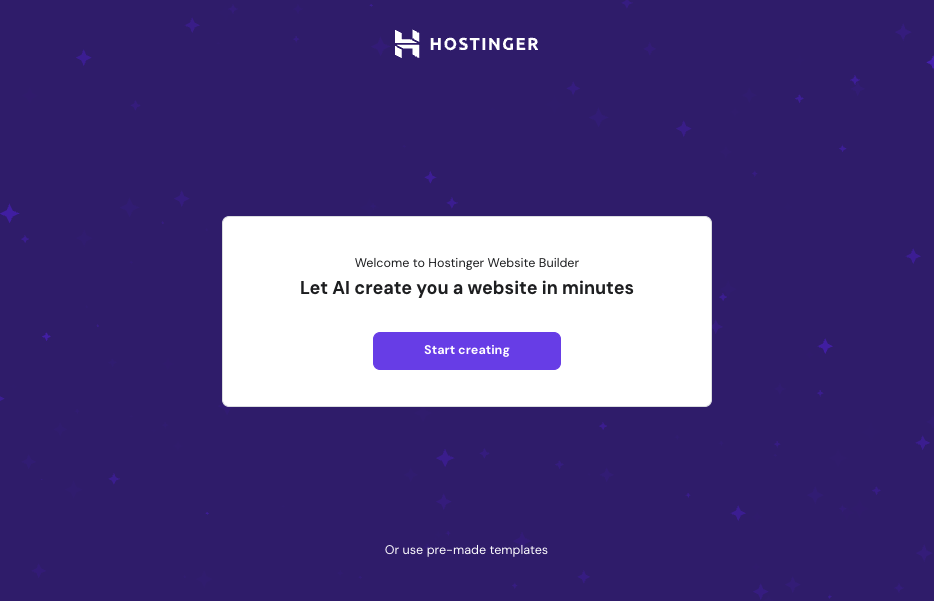
Click Start creating button and fill out your business details. This includes website type, brand name, and description. Also, include your preferred colors and fonts for the website.
Below is an example of how to add your details. For your photography business, choose Online store as the website type. For description, be as detailed as possible so AI can create a better website.
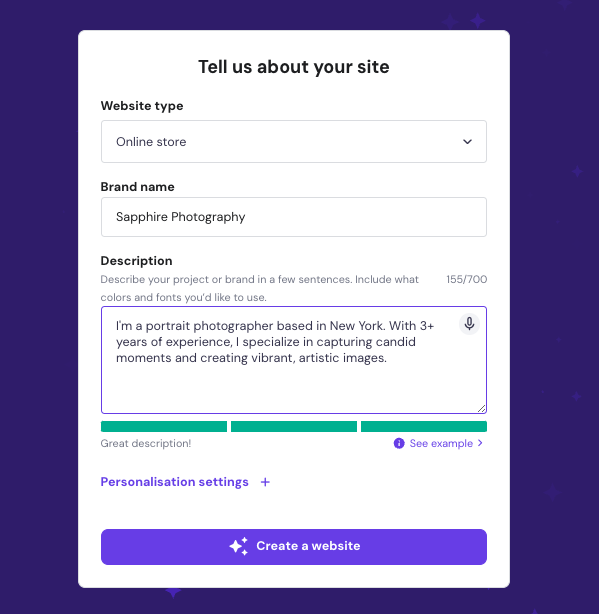
Click Create a website once you’re ready, and AI will start generating the website. Once done, the website will have all the essential pages: Home, Shop, Portfolio, and Contact.
You can start customizing the website by clicking the Edit button on the top right corner.
After that, the website setup flow will take you to the online store creation.
Set up your store
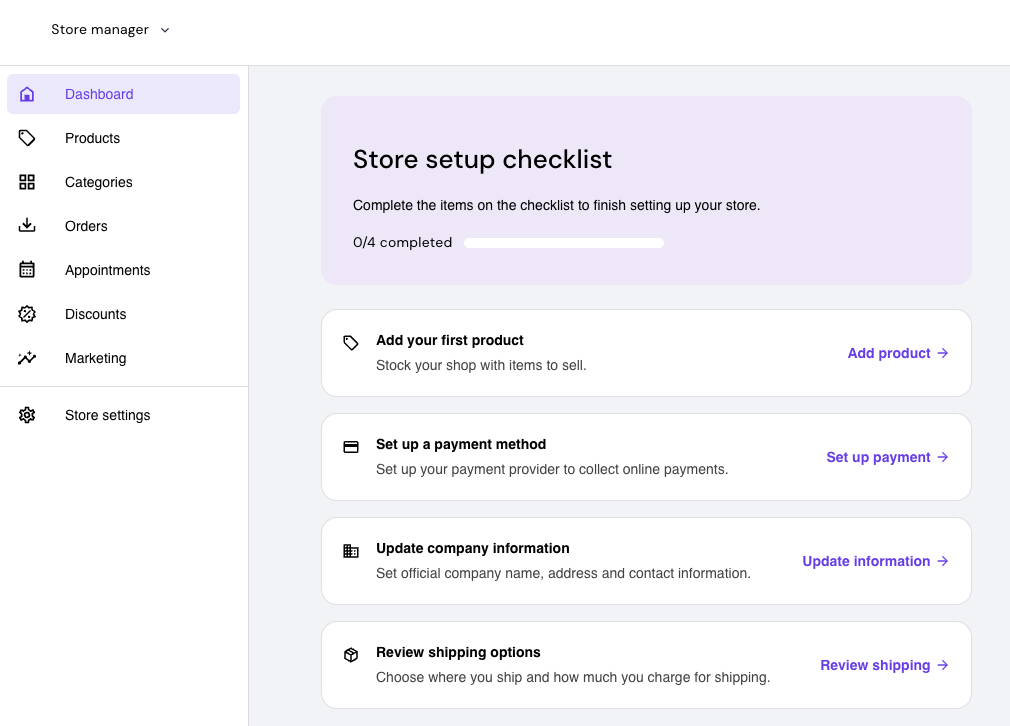
On the online store setup page, you can add your country and currency. Once done, you’ll be directed to the Store manager dashboard. Continue the store setup process by going through the checklist.
Add products
Still on the store setup checklist page, you can add your first product. Click Add product and choose between Service or Appointment for clients to book your photography services.
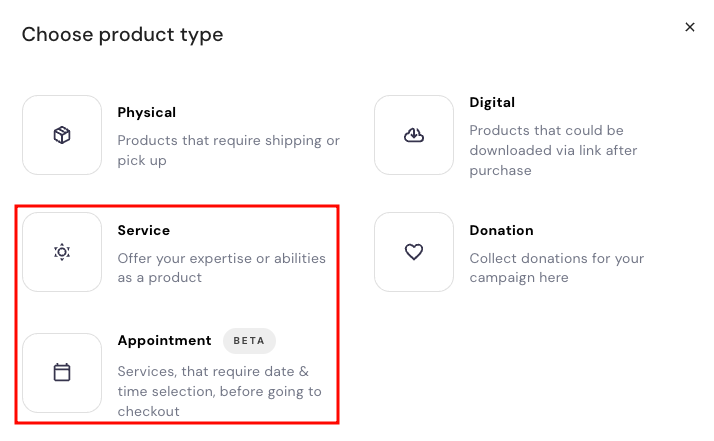
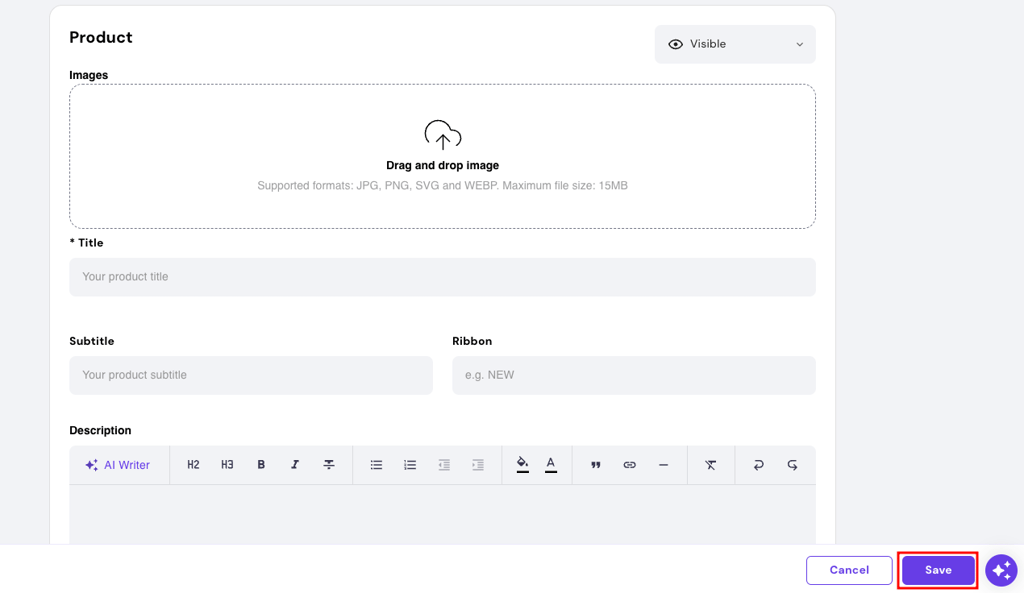
We recommend choosing Appointment so you can schedule photo sessions easily. Enable the appointment feature, then start adding your details. Once you’re done, click Save.
Set up a payment method
Connect your website with payment gateways so clients can easily pay for photography sessions or book appointments online. In India, commonly used online payment options include Razorpay, PayU, and Stripe, which support card payments, net banking, and UPI transactions.
Many photographers also enable UPI payments using services like Google Pay, PhonePe, or Paytm, since UPI is one of the most widely used payment methods in India. Offering multiple payment options makes it easier for clients to pay deposits, booking fees, or full-session payments directly on your website.

Add business information
The next step is to add your business name, logo, contact details, and address. Simply fill out all the required information and save your progress.
Once the online store is set up, click Edit website to start customizing the rest of the site.
Personalize your website design
On the editor page, you can adjust colors, fonts, and styles to better align it with your branding.
For website design inspiration, check out our photography website examples built with Hostinger Website Builder. The list ranges from fashion to wedding photographers with various layouts and color palettes.
Upload your photography work
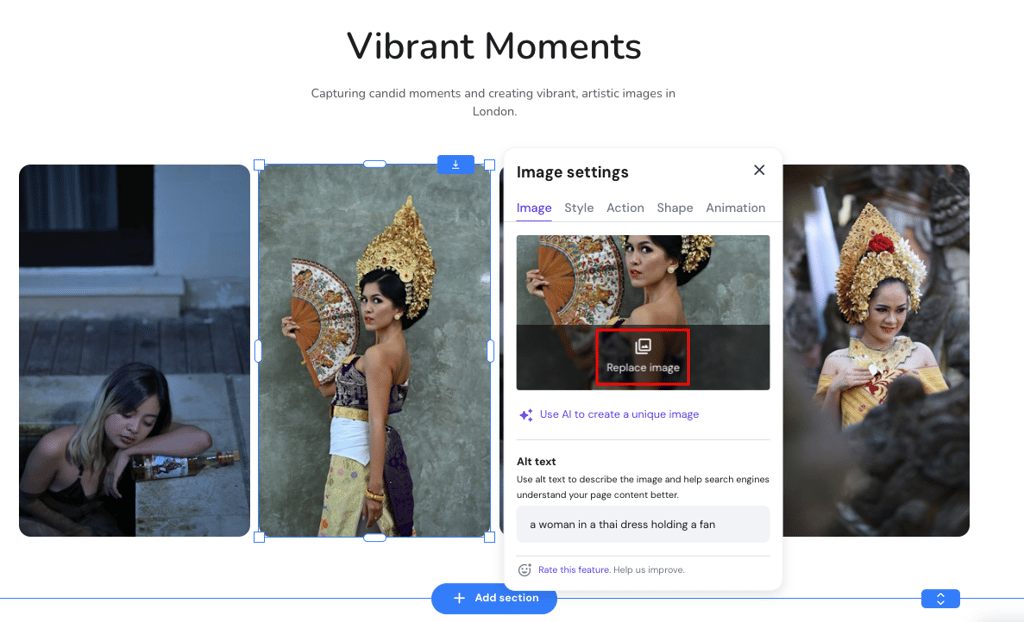
Your website isn’t complete without a photography portfolio page. On the site editor page, go to the Portfolio page to start uploading photos. Click on an existing photo → Edit image → Replace image. This will open your media library, where you can upload your photos.
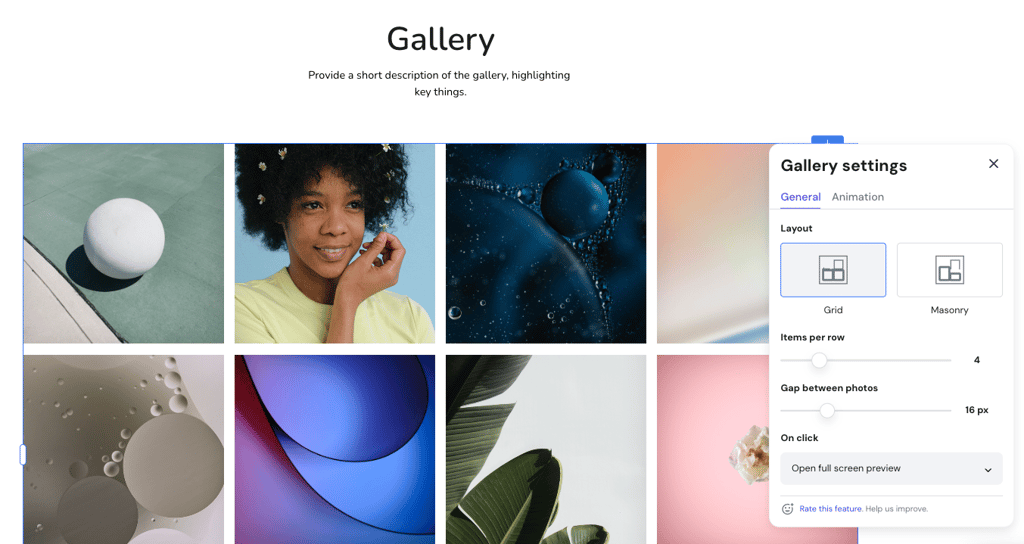
Additionally, you can add a photo gallery to your portfolio page. Go to the section where you want the gallery, then click Add section.
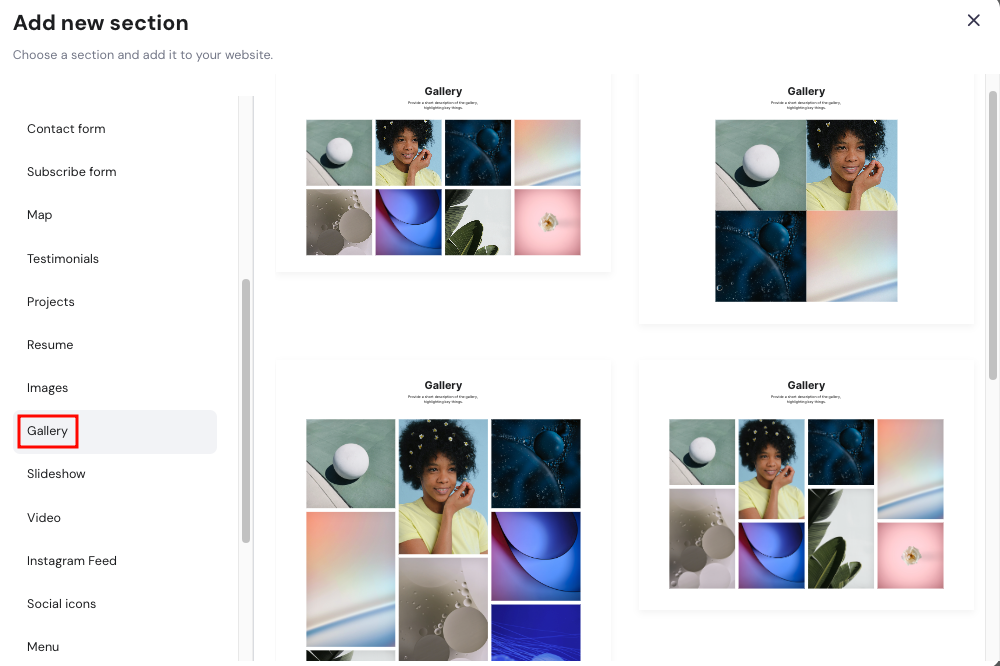
Choose your preferred gallery layout, and click Edit gallery to open the gallery settings page. Here, you can adjust the number of items per row, the gap between photos, and more.
Publish the website
Before clicking the Publish button, ensure all pages are complete and ready for visitors. Additionally, start tapping into search engine optimization (SEO) strategies. SEO helps your website rank higher in search engine results, making it easier for potential clients to find you.
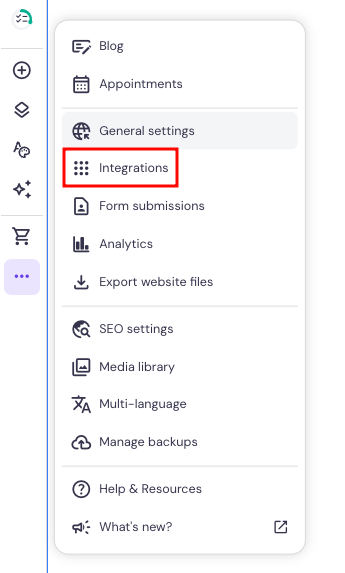
Consider setting up Google Analytics to track your website’s performance and gather insights on visitor behavior. You can integrate your Google Analytics account by going to Website settings → Integrations page.
Suggested Reading
For a more comprehensive guide, check out our article on making a photography website.
9. Promote your business
Promoting your photography business effectively helps attract potential clients and builds a strong presence. Social media can be used as a platform to showcase your work and engage with potential clients.
Start by creating profiles on some of the most popular social media platforms: Facebook, YouTube, Instagram, and TikTok. Each platform offers a unique setup for sharing photos, interacting with followers, and promoting your services.
Facebook can provide a more in-depth view of your business. Use this platform to share longer posts and albums of your work, and to engage in photoshoots with potential clients via comments and messages.
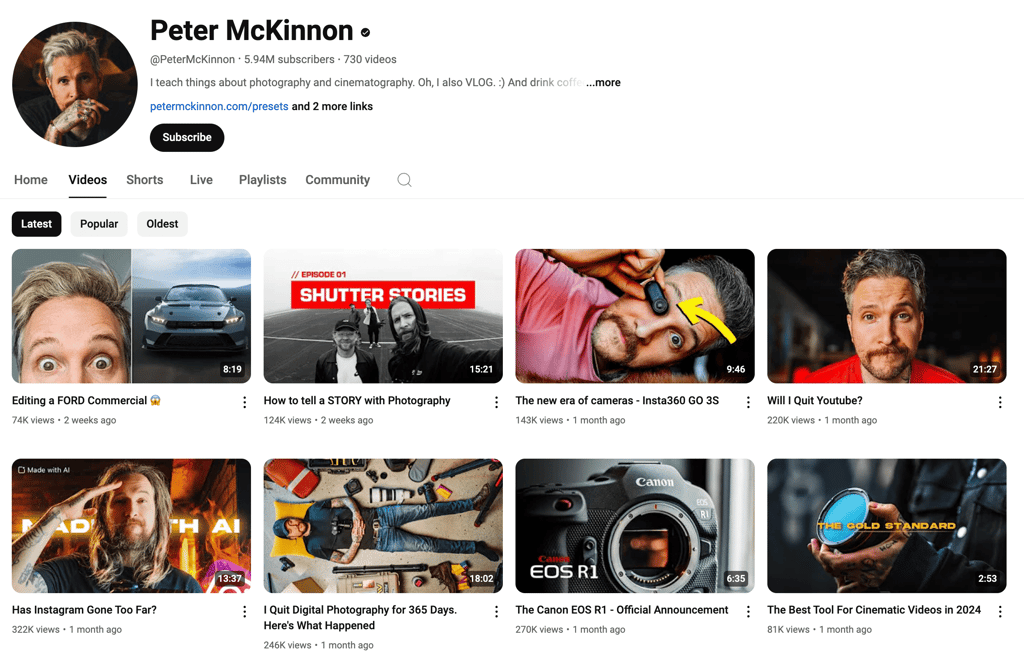
YouTube is a great platform for sharing behind-the-scenes videos, tutorials, and client testimonials. This can give viewers a closer look at your work and help them better understand your style. Take inspiration from Peter McKinnon’s channel, which has over 5 million subscribers.
Instagram is all about visual content, making it the perfect place to showcase your photography skills. Use hashtags relevant to your niche and engage with other users by liking and commenting on their posts.
TikTok has quickly become a popular platform for businesses to promote themselves. With its short-form video format, you can create quick, eye-catching previews of your work that will capture the attention of potential clients.
10. Build a network of clients
Building a strong client network helps your photography business generate consistent bookings and long-term referrals. In India, many photography projects come through recommendations, partnerships, and local connections.
Start by focusing on delivering excellent results for every client. Provide high-quality photos, meet delivery timelines, and communicate professionally throughout the project. Satisfied clients often recommend photographers to friends, family members, and colleagues.
You should also actively build relationships with professionals who regularly work with photographers, such as:
- wedding planners and event organizers
- banquet halls and wedding venues
- makeup artists and stylists
- event management companies
- restaurant owners and local businesses
These partnerships often lead to repeat work and referrals.
Next, ask satisfied clients for testimonials and online reviews. Positive feedback increases credibility and helps potential clients trust your services.
Encourage clients to leave reviews on platforms such as:
- Google Business Profile
- Google Maps
Online reviews improve your visibility in local searches and act as powerful endorsements for your photography business.

How to scale your photography business?
Starting a photography business requires more than great photos; it involves choosing the right niche, building a portfolio, setting competitive pricing, and consistently promoting your services. By researching your market, investing in essential equipment, and building strong relationships with clients, you create a solid foundation for long-term growth.
Once your photography business is established, the next step is to expand your online presence. A professional website, social media marketing, and online bookings allow you to reach more clients and generate consistent leads. Many photographers also diversify their income by selling prints, offering digital downloads, or working with businesses that need regular visual content.
If you want to expand beyond local photography services, learning how to start an online business can help you create additional income streams. For example, photographers often build websites to sell photo prints, offer online courses, or provide digital products like presets and templates.
All of the tutorial content on this website is subject to Hostinger's rigorous editorial standards and values.

Nurul Siregar has over 3+ years of experience in the tech industry with a passion for writing about digital marketing. Nurul enjoys reading fiction novels and making digital illustration in her free time. Follow her on LinkedIn.



Comments
0 responses