How to start a candle business in India in 9 steps
Mar 06, 2026
/
By Nurul S.
/
14 min Read
Starting your own candle business can be an exciting and rewarding venture. Whether you’re drawn to the idea of crafting custom scents or designing beautiful creations, a candle business gives you the opportunity to blend artistry with commerce.
If you’re curious about how to launch a candle business, this guide is for you. We’ll walk you through each phase, from the initial idea to the final execution. Plus, we’ll provide tips from industry experts to help you along the way.
1. Conduct market research
Conducting market research is essential before starting any business, and the candle industry is no different. In India, understanding your target audience and the latest trends can help you identify a unique selling proposition (USP) that resonates with local customers.
The candle market is constantly evolving. Stay updated on popular trends in India by following platforms like Google Trends, Instagram, and Pinterest to see what consumers are looking for. Additionally, festival-driven trends, such as Diwali-themed or wedding gift candles, can significantly impact demand at certain times of the year.
The candle market in India typically divides into three main consumer segments:
- Luxury Candles: These are high-end products, often priced between ₹500 and ₹2,500, with unique scents and premium packaging. They are suitable for high-end boutique stores or online platforms.
- Mid-Range Candles: Priced between ₹200 and ₹500, these candles offer good quality at a moderate price. These candles appeal to customers who seek value but still want a pleasant experience. Social media platforms like Instagram and Facebook are ideal for promoting these.
- Affordable Candles: Mass-market candles, priced between ₹50 and ₹200, are typically sold on online marketplaces like Amazon or Flipkart and often cater to younger consumers or budget-conscious buyers.
Candles in India are not just for ambiance but are deeply tied to cultural traditions. Popular segments include:
- Aromatic & Scented Candles: In India, sandalwood, jasmine, rose, and other floral scents are preferred due to their cultural significance and relaxing properties.
- Therapeutic Candles: With a growing wellness culture, soy- or beeswax-based candles infused with essential oils (such as lavender or eucalyptus) are gaining traction, especially in urban centers.
- Decorative Candles: These candles are often themed for festivals like Diwali and Holi. Brightly colored and shaped like traditional Indian symbols, they are a favorite for home décor.
- Researching the Competition: Analyze your competitors’ products, pricing, and strategies. In India, local brands like Bombay Perfumery and The Candle Company often cater to a niche market with premium candles. You can also check platforms like Amazon India, Flipkart, and Nykaa for what’s trending. This will help you understand market gaps and positioning.
2. Define your brand
Creating a strong and unique brand identity is essential for differentiating yourself in the competitive candle market. In India, where there’s an increasing emphasis on local craftsmanship and sustainable products, establishing a brand that resonates with your audience is key.
Choosing a specific niche can also help differentiate your brand. Some popular candle niches in India include:
- Luxury Candles: Growing demand among India’s affluent consumers, especially in urban centers. These products can be marketed as premium items with unique scents and high-end packaging.
- Therapeutic and Aromatherapy Candles: With the rise of wellness trends, candles made with essential oils like lavender, eucalyptus, and sandalwood are gaining popularity, especially among health-conscious buyers.
- Festival-Themed Candles: Given the significance of festivals like Diwali, Holi, and Navratri, candles designed specifically for these events, often featuring traditional scents or designs, can be a great way to capitalize on seasonal demand.
- Eco-Friendly Candles: Candles made from soy wax, beeswax, or other natural, non-toxic materials are becoming popular as sustainability becomes a key concern for Indian consumers.
Your visual identity, including your logo, color scheme, and packaging design, should align with your brand’s message. In India, packaging plays a big role in consumer decisions, and colors like red, gold, and green hold cultural significance. For luxury candles, a minimalist design with subtle accents might work well, while festive candles could feature bright colors and traditional motifs that resonate with Indian consumers.
For example, a candle business aiming to evoke luxury and calm might choose a color palette of black with a touch of soft gold and cream, like Jo Malone candles.
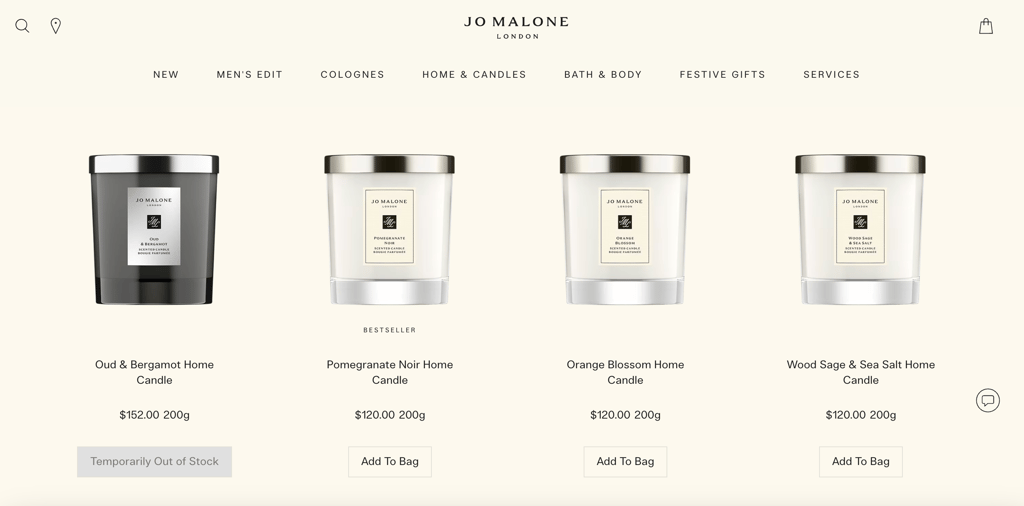
Ultimately, your unique selling proposition (USP) should make it clear why your brand is different. Whether it’s your focus on local craftsmanship, your eco-friendly approach, or your seasonal offerings, make sure your USP speaks directly to your target audience’s values. Building brand recognition will also require a strong online presence, especially on social media platforms like Instagram and Facebook, where Indian consumers are highly engaged. Participating in local events and pop-up shops, particularly during peak festival seasons, can also help create deeper connections with customers.
3. Choose a business name
Choosing the right business name is crucial for your candle business, and in India, it should resonate with the cultural context, be easy to pronounce, and have the potential for strong brand recall. Your business name should be memorable, simple, and easy to spell so it stands out in a competitive market.
Start by brainstorming combinations of words that capture the essence of your business. Consider candle business names that are easy to remember and reflect the unique qualities of your products.
To widen your options, create a mind map or use online name generators to find potential names. Adding a touch of fun or a playful element can also make your business name memorable. Consider the following:
- Cultural Resonance: You may want to incorporate elements of Indian culture, spirituality, or heritage into your name, especially if you’re selling products for religious or festival-based occasions like Diwali. Names inspired by nature, such as Sandalwood Glow or Lotus Flame, could be popular with Indian customers who associate these items with peace and spirituality.
- Language Considerations: Choose a name that’s easy to pronounce across different regions and languages in India. Consider popular local languages (Hindi, Tamil, Bengali, etc.) and select a name that can work well in both English and regional languages. For example, a name like Roshni Candles (meaning “light” in Hindi) has wide appeal.
- Memorability: Keep it short and catchy. You could use simple, yet meaningful words that evoke the qualities of your candles. Incorporating words related to light, flame, or aroma into your name might attract customers seeking ambiance and relaxation.
To widen your options, you can use tools like online name generators or create a mind map to explore combinations of words. Adding a fun or playful element can also make your business name more memorable. For example, Flicker & Glow or Scented Bliss may appeal to younger consumers or those looking for gift items.
Expert Tip
I wanted something straightforward, memorable, and strong. Before settling on “Lice Busters,” I considered several names, including “Lice Terminators,” “Lice No More,” “Lice Erasers,” and “Lice Fighters.” However, none had the same clear impact.
“Who you gonna call? Lice Busters!” It may sound a bit like Ghostbusters, but that’s part of the charm. “Lice Busters” felt just right because it conveyed action, reliability, and a promise to our clients that we would effectively tackle their lice problems.

Dalya Harel
Founder of Lice Busters NYC
5. Estimate startup costs
Calculating the initial investment for your candle business is essential to ensure you’re financially prepared. In India, costs can vary depending on whether you’re starting small-scale at home or planning
The basic materials required to start your production include wax, wicks, essential oils, containers, molds, and equipment such as a thermometer and a wax melter. In India, the cost of these materials can vary based on quality and supplier. For example, soy wax and essential oils might cost more than paraffin wax, but are more popular with eco-conscious consumers. You can source materials locally through platforms like IndiaMart or Amazon India, or import them, which may incur additional shipping and customs costs.
Shipping and packaging are critical expenses for delivering your candles in perfect condition. Packaging in India can be affordable, but if you’re focusing on high-end or eco-friendly packaging, such as custom boxes or biodegradable materials, the costs can add up. You’ll need to factor in the cost of packaging materials, such as boxes, wrapping, and labels. For domestic shipping, India has several options, such as Blue Dart or India Post. International shipping will require you to account for customs duties and logistics costs.
As your business grows, your operational expenses will increase. These include:
- Utilities: Power and water bills for your production space. If you’re running your business from home, these costs might be minimal, but for larger operations, you may need to rent a dedicated production space.
- Marketing and Advertising: Digital marketing through social media platforms like Instagram and Facebook will be an essential cost to consider. You may also need to budget for paid ads or influencer collaborations, especially in a highly competitive market like India.
- Rent for Production Space: If you’re not operating from home, the cost of renting production space can vary significantly by city and location. For example, renting in metropolitan areas like Mumbai or Delhi will be much more expensive than in smaller cities or towns.
- Permits and Licenses: In India, you’ll need to register your business (as a sole proprietorship, partnership, or LLP), and obtain necessary GST registration, Udyam registration (for MSME benefits), and possibly trade licenses from local authorities. The cost of these permits is generally low, but it’s important to factor them into your budget.
These initial and recurring expenses will affect your monthly budget and cash flow, so be sure to carefully estimate your total expenses before launching your business.
6. Make your business official
Making your candle business official involves several key steps to ensure you are legally compliant and able to operate smoothly in India.
Register your business
In India, the first step is registering your business under an appropriate legal structure. Depending on the scale of your operations and your long-term goals, you may opt for a sole proprietorship, partnership, Limited Liability Partnership (LLP), or Private Limited Company. For small businesses, starting as a sole proprietorship is common and easy to manage. However, if you plan to scale, a Private Limited Company or LLP might be more suitable.
When registering, you will need to apply for an Employer Identification Number (EIN) or Permanent Account Number (PAN), which are essential for tax purposes. Also, check for any FSSAI (Food Safety and Standards Authority of India) certification if you are dealing with scented candles or ingredients that come in direct contact with the skin.
Obtain necessary permits and licenses
Depending on where you plan to operate your candle-making business, you may need specific business licenses and permits. Key registrations include:
- GST Registration: If your annual turnover is expected to exceed ₹40 lakh (₹20 lakh for certain states), registering for Goods and Services Tax (GST) is mandatory. This will enable you to legally collect taxes on your products.
- Udyam Registration: If your candle business is categorized as a Micro, Small, or Medium Enterprise (MSME), registering for Udyam provides access to various government schemes, subsidies, and tax benefits.
- Local Trade License: A trade license issued by the municipal corporation or local government is typically required to legally operate a business. This ensures your business complies with local regulations, including zoning laws if you’re operating from home.
- Pollution Control Board: If you’re involved in manufacturing, you may need to apply for an environmental clearance or obtain NOC (No Objection Certificate) from the local Pollution Control Board, especially if your production involves materials that could harm the environment.
Ensure that you consult with a chartered accountant or legal advisor to understand the full set of regulatory requirements specific to your state or city.
Open a bank account
To maintain clear financial records, it’s crucial to separate your personal and business finances. Open a business bank account in India, which will help you with tax filings and streamline payments. You’ll need the following documents to open the account:
- Business registration details (PAN, GST registration)
- A government-issued ID (Aadhaar, Passport, or Voter ID)
- Proof of address (electricity bill, rent agreement, etc.)
- Partnership deed (if applicable)
Ensure you choose a bank that offers good customer service, minimal fees, and online banking options to help you track your expenses and revenue easily. Major banks like HDFC, ICICI, State Bank of India (SBI), and Axis Bank offer specialized accounts for small businesses.
Set up accounting software
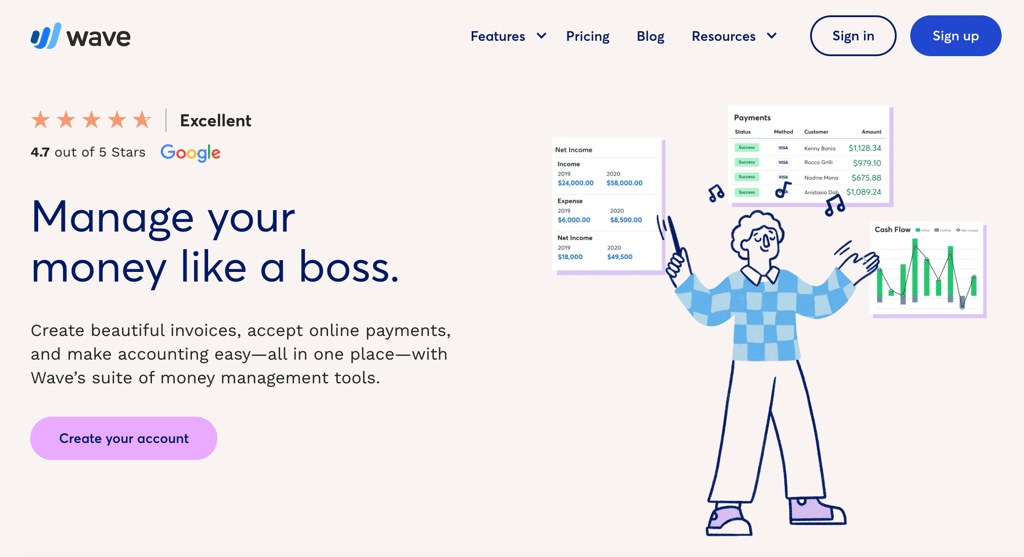
Managing your finances effectively is crucial for the growth of your business. Setting up accounting software from the start can help you accurately track income, expenses, and profits. You can use free software like Wave, Zoho Books, or Google Sheets if you’re just starting out. As your business grows, you may want to switch to more advanced accounting tools, such as QuickBooks or Tally.
Use free software like Wave or Google Sheets to avoid adding more expense to your budget.
7. Create your initial inventory
Your first inventory determines your initial investment and helps you calculate your profit margins. In India, creating your inventory requires careful planning, as raw materials and production methods can vary by region and budget. Let’s break down the process into two: producing the candle and creating the initial inventory.
Producing your candle
Based on your market research, plan and produce an initial batch of candles. The first decision to make is whether you’ll make the candles yourself or outsource production.
- Outsourcing Production: If you decide to outsource, you’ll need to find a reliable local manufacturer. There are several small-scale candle manufacturers in India, particularly in regions like Uttar Pradesh and Maharashtra, who can produce candles at a lower cost. Make sure to calculate the cost per candle, including production costs, packaging, and shipping, and factor that into your pricing.
- Making Candles Yourself: If you plan on making the candles yourself, begin by purchasing all the necessary materials. In India, the cost of materials like wax (soy wax, paraffin, or beeswax), wicks, fragrance oils, and containers can vary based on quality and sourcing. Consider buying in bulk from IndiaMart, Amazon India, or local suppliers to save on costs. You’ll also need a heat source (like a double boiler) and basic tools (digital scale, thermometer, etc.).
Once you have all your materials, you can follow a tested recipe or create your own using trial and error. Track the amount spent on each batch, including additional costs such as shipping or packaging materials. Be mindful of customs duties if you plan to import materials, as they can increase costs.
Creating the first inventory
Once you’ve learned the candle-making process and refined your technique, it’s time to start creating your first batch. The production run will help you determine your production capacity, i.e., how many candles you can produce in a set period.
In India, production capacity may be influenced by factors like electricity availability or the size of your workspace. Be sure to calculate how much you can realistically produce within a given time, especially if you’re working from home.
To manage your inventory effectively, use a spreadsheet or inventory management software to track each candle’s type, size, fragrance, and quantity. This will allow you to see when supplies are low and need restocking. Additionally, if you’re in an area with limited access to materials, planning ahead for supply chain disruptions is essential.
Expert Tip
We strategically started with a limited, carefully selected range that could exemplify our commitment. The return on this investment wasn’t immediate; it took patience and persistence, but after several months, we began to see a steady return.

Guillaume Drew
Founder of Or & Zon
8. Build your online store
A candle business is made complete with a website. Having your own website simplifies product purchases, helps reach a larger audience, and expands your business.
Choose an eCommerce platform
We recommend using Hostinger eCommerce Website Builder. As a comprehensive website builder, it offers:
- Built-in store analytics. Allows you to manage your products and track sales.
- Easy customization. With a user-friendly interface and an intuitive grid, the builder lets you easily customize the website.
- Secure payment options. Your customers’ safety should be a top priority. Hostinger Website Builder offers secure payment options like PayPal and Stripe.
- AI SEO assistant. Boost your website’s visibility with the help of an AI-powered SEO assistant.
- Third-party app integration. Various applications to help boost your site functionality, such as Google Analytics, Facebook Pixel, WhatsApp, and Google AdSense.
For candle business owners, the Business plan would be the best choice. It costs ₹249.00/month and offers more than enough hosting resources for your online store.
Additionally, it comes with eCommerce functionality. This allows you to sell products online with 0% transaction fees and 20+ payment methods.
It also offers comprehensive AI tools to help enhance your business website. These tools include an AI Website Builder, Heatmaps, a Blog Generator, and SEO Tools.
Build the website
Once you have purchased the plan, you’ll be directed to the setup page. There, you can choose to create your website with AI or use a pre-made template.
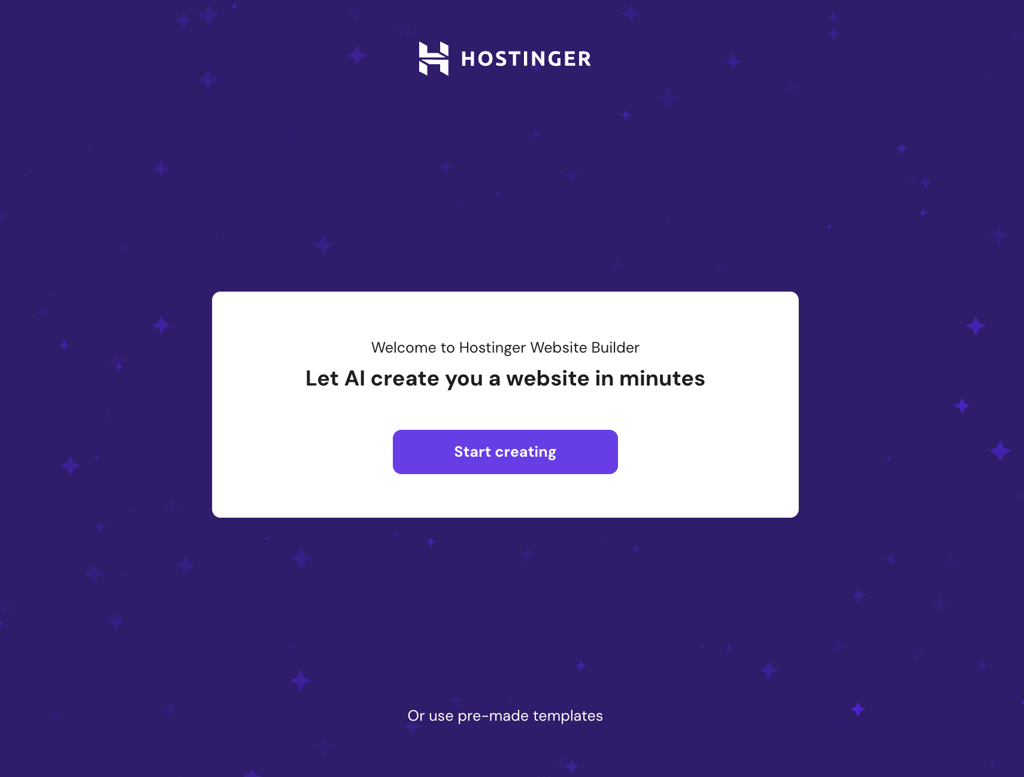
With AI, you need to add your business name and description. Be as detailed as possible. When ready, click Create a website.
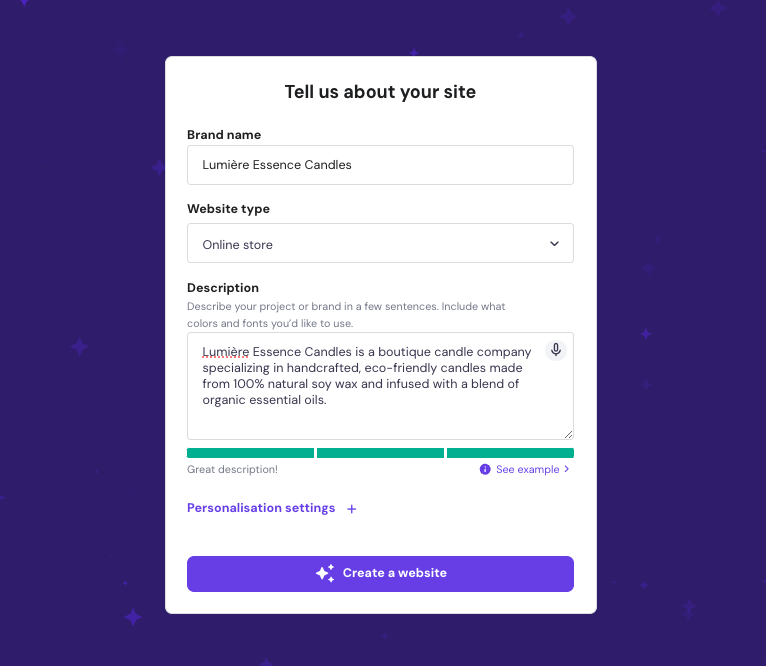
Based on the description above, here’s what the finished website looks like.
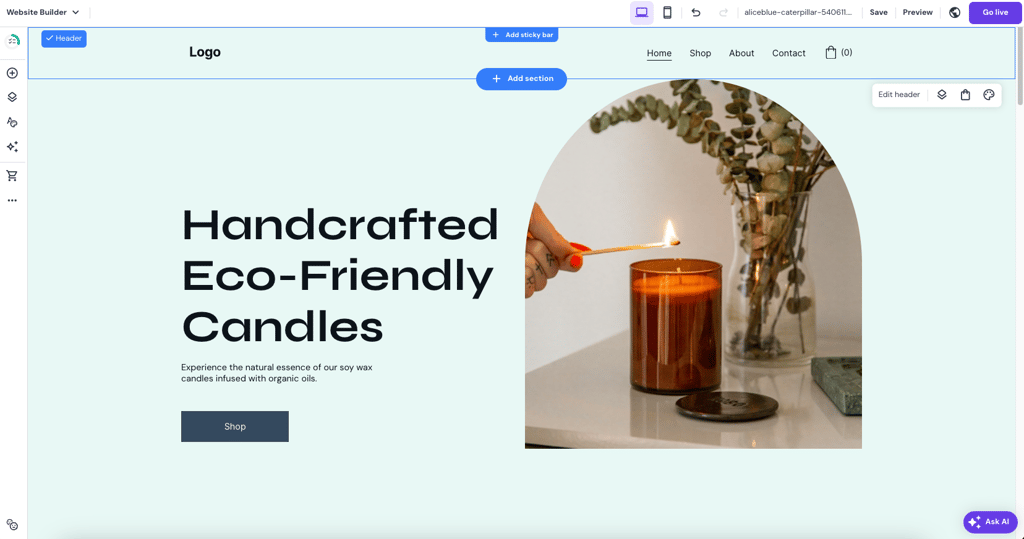
As you can see, the builder provides all the essential pages, including the Shop page. Click Edit site in the top-right corner to start customizing your website.
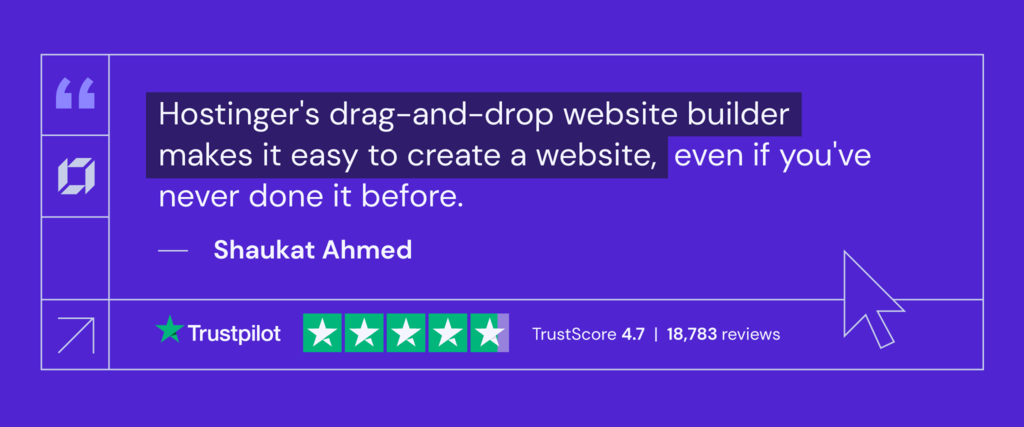
Go to the Shop page to set up your online store. There, you’ll need to enter your business location and currency.
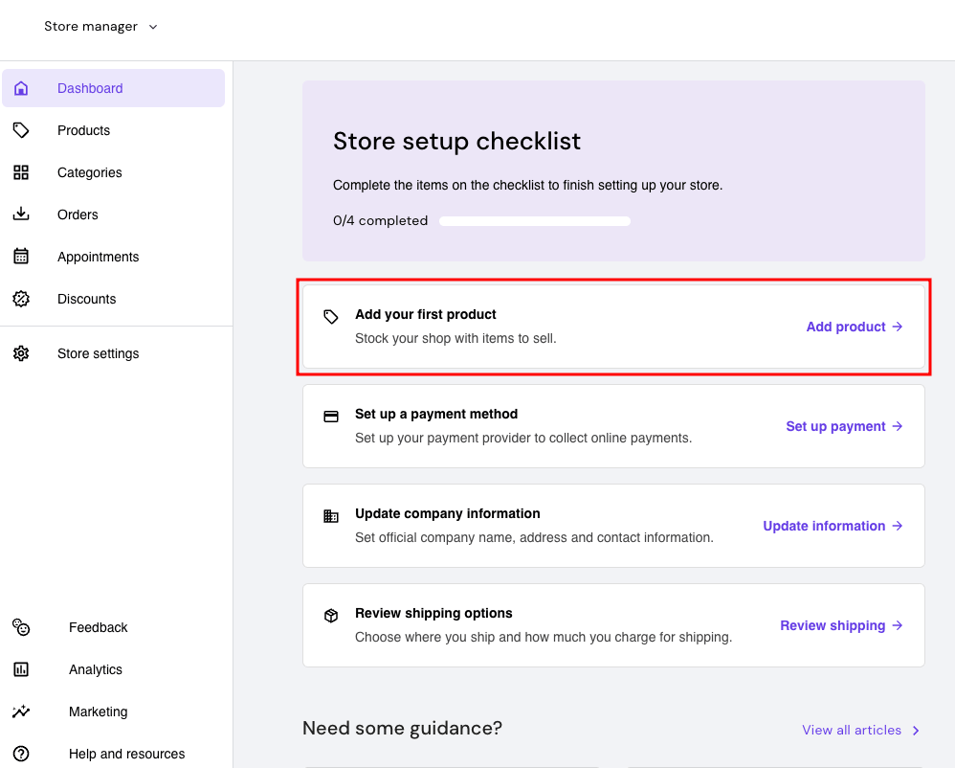
Once you’ve done this, you’ll be directed to the Store manager. Here, you can view and manage your online store, as well as track your sales and inventory.
Upload high-quality product photos
Original, high-quality photos are essential for effectively showcasing your candles. After capturing your images, use photo editing tools like Adobe Photoshop or Pixlr to enhance their visual appeal and reflect your branding.
After that, compress these images to prevent them from slowing down your website’s load time. Tools like TinyPNG or Adobe’s online image compressor can reduce file sizes without compromising image quality.
Next, upload your images to the website. On the Store manager page, choose Add your first product.
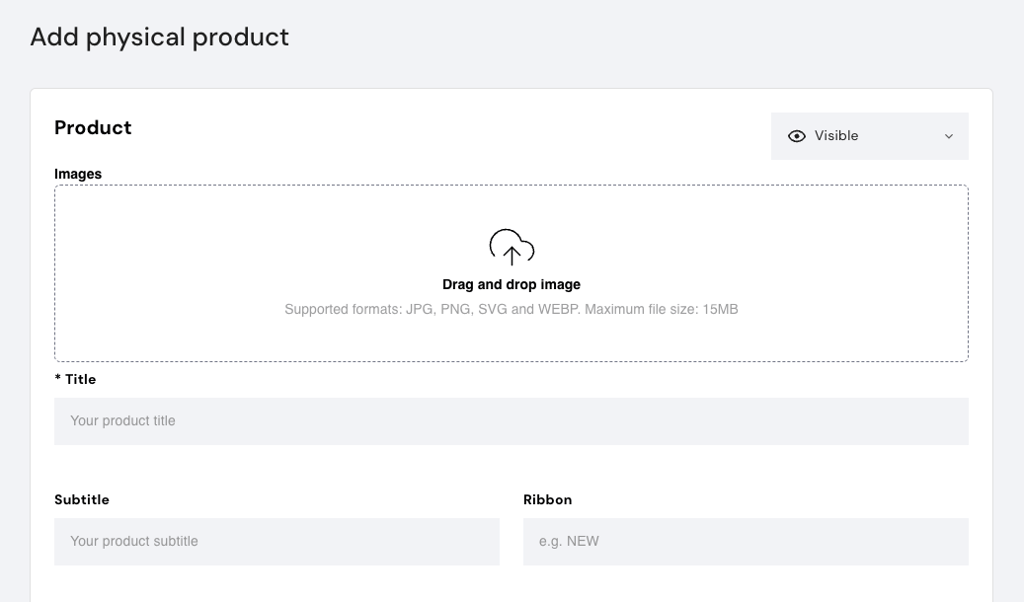
Choose the product type, then fill out all the details. This includes the title, description, and price. You can also add quantity and category to specify your product further.
Include detailed product descriptions
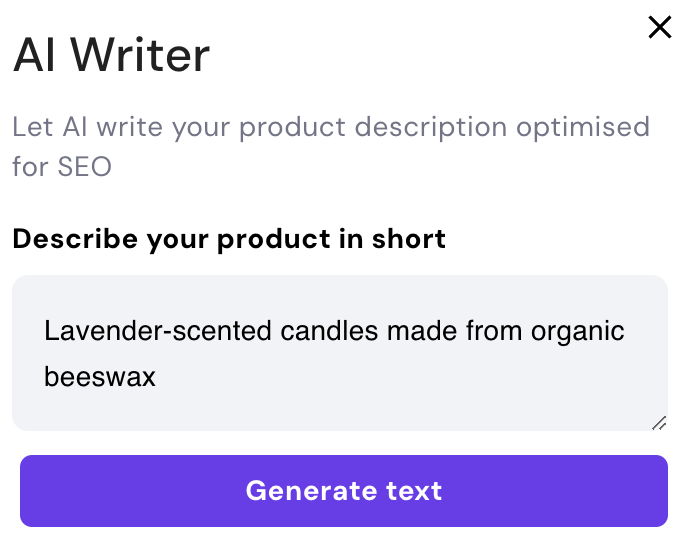
The next step is adding product descriptions. Still on the same page, ask AI Writer to create an engaging product description for you. Simply describe what makes your product unique and AI will do the rest.
Highlight any unique selling points or advantages that your candle has over others in the market. Also, make sure to mention the candle’s scents and ingredients. For example, check out Spoken Flames’ product description below.
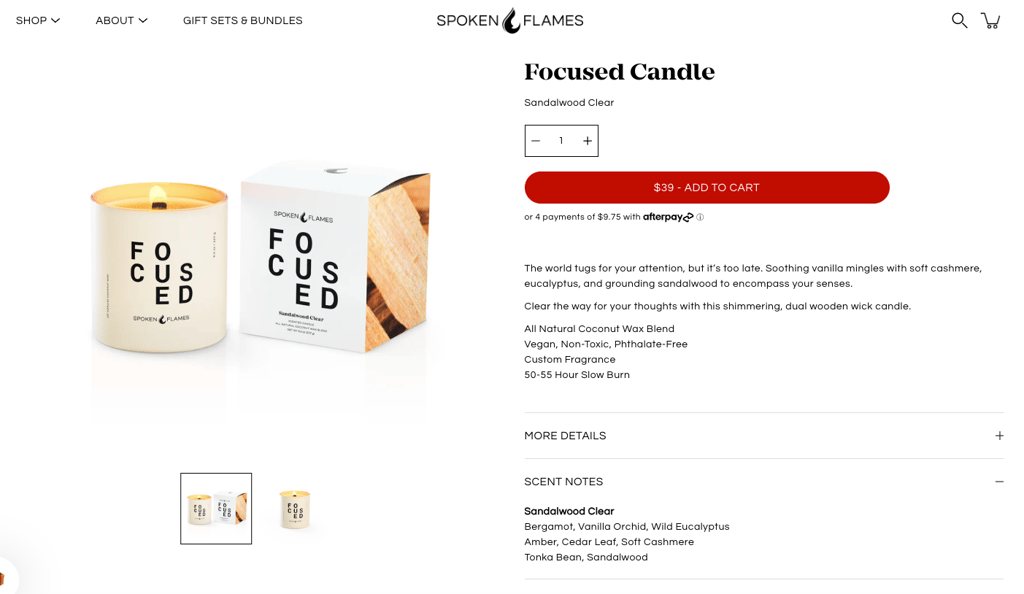
Starting with a description of what inspired the candle’s name, it continues with the ingredients and scent notes.
Optimize for search engines
Search engine optimization (SEO) is crucial for increasing visibility and attracting more traffic. On the builder’s homepage, go to Website settings → SEO settings.
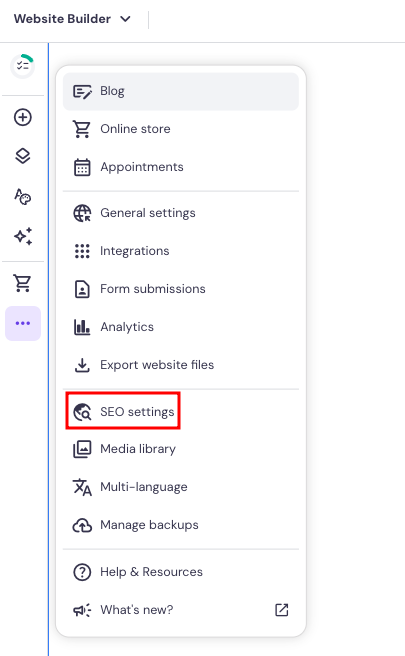
It will open the SEO settings for all website pages. You can add meta descriptions, keywords, and titles to improve your SEO ranking.
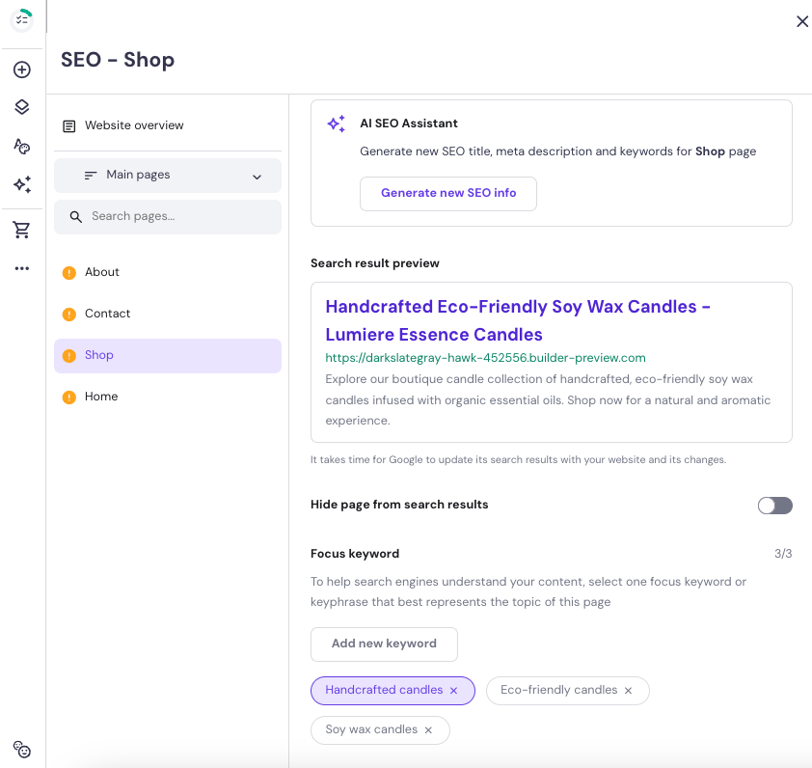
Use the AI SEO Assistant to help generate the page’s SEO title, meta description, and keywords. Simply click Generate new SEO info and add your page description for AI to start generating.
Offer multiple payment options
Providing multiple payment options is crucial for ensuring a smooth purchasing experience, especially in India, where consumers expect flexibility. Offering a variety of payment methods can significantly increase conversion rates by allowing customers to pay with their preferred method.
In India, popular payment options include:
- UPI (Unified Payments Interface): This is one of the most popular payment methods in India, especially for small businesses. UPI is fast, secure, and widely used by consumers through apps like Google Pay, PhonePe, and Paytm. It’s an essential payment method to integrate, as many Indian customers prefer it for ease of use and instant transactions.
- Cash on Delivery (COD): This remains a favored option in India, particularly for consumers who prefer to pay only after receiving the product. Offering COD as a payment option can help you reach a broader audience, especially in tier-2 and tier-3 cities, where trust in online payments may be lower.
- Credit/Debit Cards: Visa, MasterCard, and RuPay cards are commonly used in India. Ensuring your website integrates with secure payment gateways that support Indian cards is essential.
- Net Banking: Many Indian consumers prefer paying through Net Banking (direct bank transfers) for larger purchases. Offering this option can appeal to customers who may not be comfortable with digital wallets or credit cards.
- PayPal and Stripe: These are also widely used for international transactions, especially for customers outside India or those who prefer using these platforms for online payments.
By offering these payment methods, you cater to a diverse audience and increase conversion rates. It’s important to ensure your website uses secure payment gateways and complies with India’s online transaction regulations, including PCI-DSS for payment security.
9. Develop your marketing plan
Strong marketing is crucial for your candle business to reach its potential, especially in India, where there is a vast market of diverse consumers. Here are some recommended marketing strategies tailored to the Indian market to increase visibility and attract more traffic:
- Social Media Marketing: Social media is one of the most powerful marketing tools in India. Platforms like Instagram, Facebook, and Pinterest are ideal for showcasing your candles. Instagram is especially effective for visual products like candles, where you can use reels and stories to engage customers. Facebook groups and pages also help you build a community. For regional markets, consider using WhatsApp for direct customer engagement, as it’s widely used in India for both personal and business communication.
- Content Marketing: Content marketing is essential for telling the story behind your brand and connecting emotionally with your audience. Create video content that showcases your products and the candle-making process. For Indian audiences, consider using YouTube Shorts and Instagram Reels to highlight behind-the-scenes footage of how you make your candles or the packaging process. Show how your candles fit into Indian homes, festivals, and traditions. Share stories related to eco-friendly products, local craftsmanship, or festivals like Diwali to make your content relatable.
- Email Marketing: Email marketing is an effective way to keep customers updated on new products, special promotions, and upcoming events. However, in India, many small businesses struggle with email engagement, so it’s important to segment your audience and use language that resonates with them. Personalized emails that offer discounts or highlight festival offers like Diwali-specific candles can be especially effective.
- Paid Ads: Running paid ads on platforms like Facebook, Instagram, and Google Ads is a great way to target specific segments of the Indian market. Use Facebook Pixel and Instagram ads to retarget customers who have interacted with your website or social media pages. In India, Google Ads is effective for capturing search traffic for specific queries such as “handmade candles in Mumbai” or “eco-friendly candles in Bangalore”.
Local SEO is vital for small businesses in India. Creating a Google Business Profile and optimizing your website with local keywords will help you rank higher in local search results. For example, using keywords like “handmade candles in [your city]”, “organic beeswax candles near me”, or “Diwali candles in [your region]” will help potential customers in your area find your business more easily. Focus on hyper-local optimization, especially if you’re targeting specific cities or states where candles are in high demand during festivals.
Some local keyword examples are handmade candles in [your city] or organic beeswax candles near me. This will help potential customers in your area find your store easily.
India is a country where in-person connections and events can have a significant impact. Consider organizing workshops or pop-up events at local markets, malls, or festivals, particularly during high-demand times like Diwali or Holi. Not only does this create brand awareness, but it also allows customers to interact with your products in person, fostering stronger connections. Participating in craft fairs, exhibitions, or corporate gifting events can also help you expand your network and build a loyal customer base.
Conclusion
With the growing interest in handmade and eco-friendly products in India, starting a candle business is an achievable and rewarding venture with the right approach. The Indian market is diverse, and there is immense potential for candles that cater to a variety of preferences, from luxury and therapeutic candles to festival-themed products.
This article outlines nine clear steps to starting your candle-making business in India. Each phase, from conducting market research and understanding local consumer preferences to choosing a meaningful business name and developing an effective online presence, is crucial to setting the foundation for success in the Indian market.
With the expert tips shared, we hope you feel confident and equipped to start your candle business in India. Whether you’re targeting local consumers during festive seasons like Diwali or catering to eco-conscious buyers in urban cities, your business can grow by connecting with the right audience. Best of luck on your entrepreneurial journey!
All of the tutorial content on this website is subject to Hostinger's rigorous editorial standards and values.

Nurul Siregar has over 3+ years of experience in the tech industry with a passion for writing about digital marketing. Nurul enjoys reading fiction novels and making digital illustration in her free time. Follow her on LinkedIn.


Comments
0 responses