Friday November 27, 2026
Hostinger P.
AI made building online easy. Hostinger Headless takes care of what comes next
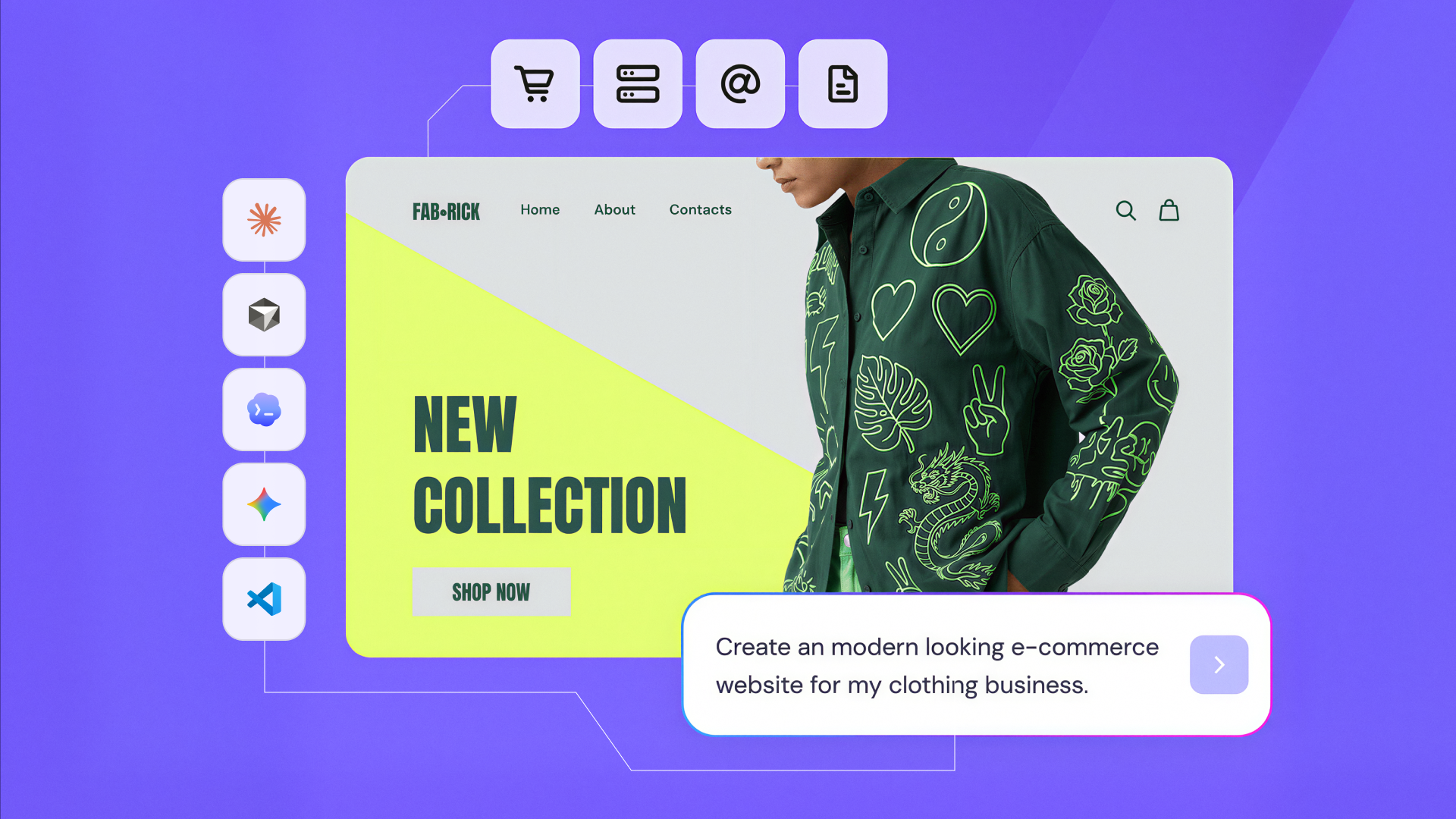
- Hostinger Headless takes projects built with AI coding tools live on Hostinger.
- The assistant picks and sets up the backend itself, including WordPress, Hostinger Ecommerce, and PocketBase.
- Hosting, backend, domain, and email come from one provider on one invoice.
AI coding assistants have made building a website, online store, or web app as simple as describing one. But a finished build on a screen is not yet a business: it needs somewhere to run, a domain, a way to manage content and orders, and room to grow. Hostinger has launched Hostinger Headless to close that gap. It lets customers go live with their projects built with Claude Code, Codex, Cursor, or Antigravity, with the backend and infrastructure set up for them.
AI coding assistants and agents are already mainstream, with 66% of developers using them as the most common way to build. In addition, the share of freelance and self-employed developers rose from 3.9% to 10.5% in a year, which may reflect that AI agents are making it easier to work solo.
For many of those builders, the hard questions start once the code is written. Where should the project be hosted? Where are products, orders, and user accounts stored? And how does it reach the people it was built for? Answering them usually means signing up for hosting, a content management system, a commerce platform, and a database separately, then connecting them by hand.
Hostinger Headless turns that tangle of sign-ups and connections into a few clicks and a prompt. The customer describes the project, and the assistant chooses and configures the backend that fits best. For example, a content site gets WordPress, and a blog with a shop adds WooCommerce. A custom storefront runs on Hostinger Ecommerce, while a web app with user logins and stored data uses PocketBase. But customers can just as easily ask for a custom stack, like a Node.js app with a MySQL database, and the assistant builds that instead.
When done, the assistant deploys the finished project to Hostinger.
“For decades, hosting was designed for people clicking through control panels. AI flipped that in a matter of months. Infrastructure now has to make sense to agents, not just to people, and Hostinger Headless is built that way from the start,” said Saulius Lazaravičius, Chief Product Officer at Hostinger.
From a prompt to a live address
Getting started takes a few steps. In the Hostinger dashboard, the customer creates a new website, chooses Hostinger Headless, and picks a domain. Hostinger then gives them a ready-made prompt to paste into their AI coding tool, or opens the tool with the prompt already in place.
From there, the assistant takes over. It connects to Hostinger through Hostinger Connector, asks a few questions about the idea, and then sets up the backend, builds the site, and puts it online. If a build is interrupted, it can resume, because progress is saved on the customer’s own machine.
Headless supports popular frameworks and tools such as Next.js, Astro, Nuxt, SvelteKit, and Vite. Customers who built something with an AI coding tool earlier can connect it to Hostinger as well.
What happens after launch
Once live, the project keeps running on managed hosting with SSL, a web application firewall, DDoS protection, and a global CDN. Customers keep updating it through their assistant and can view and manage it in the Hostinger dashboard.
Hosting, the backend, a domain, and email come from one provider on one invoice. Capacity follows the hosting plan and can be upgraded as the project grows, with agentic and human support available 24/7.
Hostinger Headless sits alongside AI Builder, built for customers who create without code, as a second route from an idea to a live business online.