Your AI agent is a brilliant intern with no onboarding
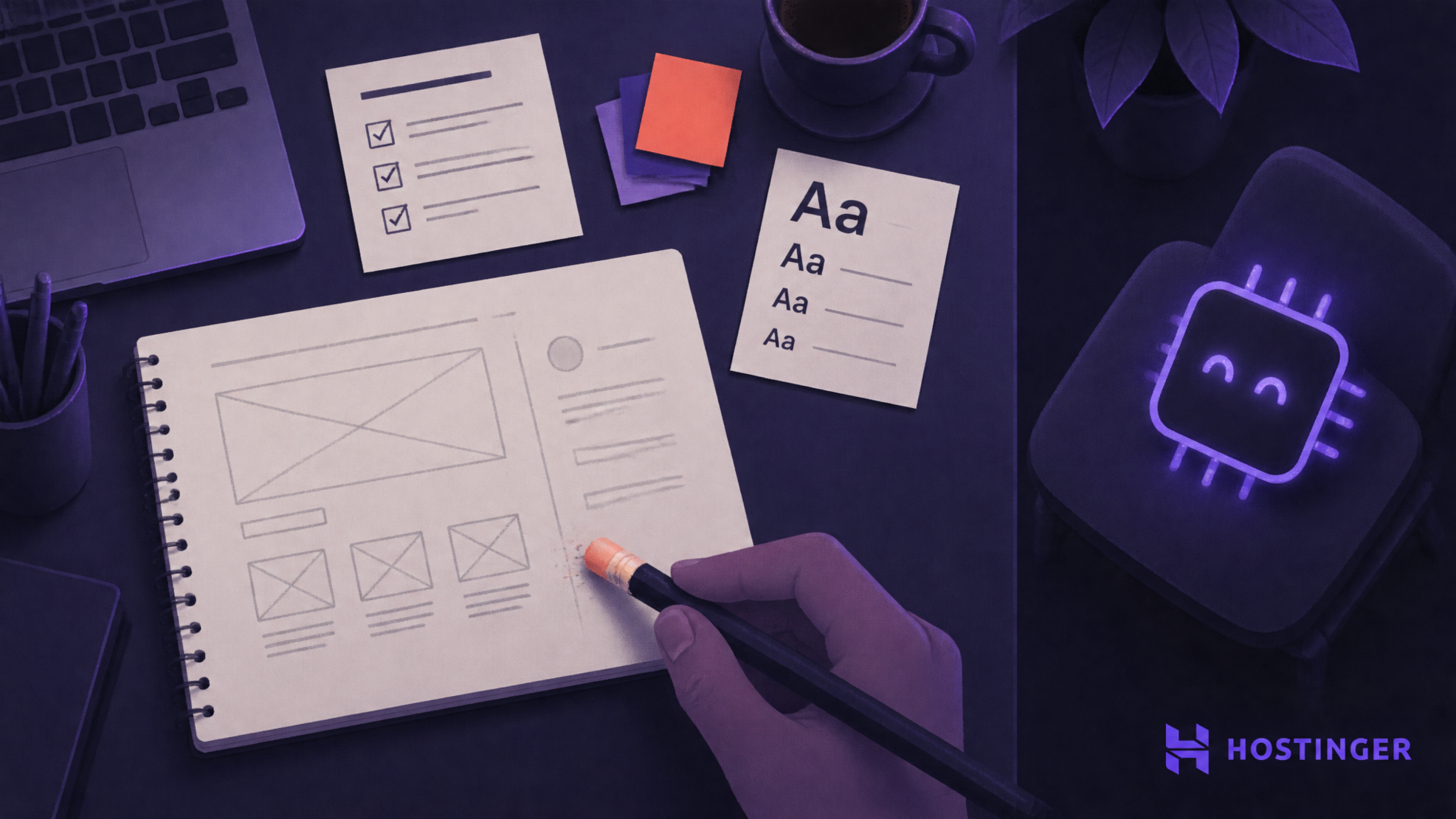
Imagine it’s your intern’s first day. You walk them to their seat, throw a laptop at them, and tell them to design the new homepage. “Make it good-looking,” you say on your way out. “Oh, and I need it on my desk by lunch.” They aced the interview, after all, so one sentence should be enough.
They sit down, confused, and look around. Gray cubicle walls on every side. No one to ask, nothing to copy from, only the screen in front of them. “I’ve done this hundreds of times,” they think. “I know how to do this”.
They open the file but there’s nothing to go on. No brand colors, no old designs, no indication of who the website is even for. Still, they’re optimistic, upbeat, and confident. So, based on the one sentence you gave them, they guess and fill in the blanks.
Just before lunch, they hand it over. You look at it and nod. It looks pretty good. Then you lean in closer. Those aren’t your brand colors. That’s not your font. And who asked for that section? So much for one sentence.
Sound familiar? That’s your AI agent, every time you give it a quick prompt and hope for the best.
Meet the designer who learned to lead his AI
Levan Kurashvili, a product designer on Hostinger’s Web Hosting and WordPress team, figured out how to be the boss who gives his intern what it needs. It took him almost two years to get there.

His craft goes back long before AI. For most of his 15 years in design, he worked on all kinds of projects without it.
When he started designing with AI agents almost two years ago, it was frustrating. The results were inconsistent and full of mistakes, the kind anyone could notice, not just an experienced designer like Levan. “You could spot an agent’s mistake from across the room,” he says. He lost hours explaining things. “Things just felt out of my control.”
Over time, agents got better at following instructions. Two months ago, Levan realized they were finally good enough to change the way he works. Not just pushing out screens, but following him through the messy parts too, like requirements, edge cases, feedback, and decisions.
Today, most of his work starts with an agent. But even when the agent follows his lead, there’s still a part of the work it can’t do for him.
In a talk at Hatch Conference, Cassie Groos, design system wrangler at Unily, shared a number that stuck with Levan: AI can get you about 80% of the way to good design. The last 20% is still human work: the taste, the decisions, the details.
And that part is getting trickier. To someone who isn’t a designer, the results look ready to ship. But today’s mistakes hide in plain sight. They’re decisions you never made, guesses the AI took the liberty of filling in, like a button style you don’t have or a spacing value nobody chose. Catching them takes a trained eye.
So how do you give your AI less to guess?
It’s not your intern. It’s your brief.
Your intern isn’t bad at design. It’s working blind. It only knows what you put in front of it, and a one-line prompt doesn’t add much there.
Unlike a human colleague, it won’t stop to ask. It just fills in the blanks, confidently.
It doesn’t matter much which intern you hired. Levan works in Claude Code these days, but he’s quick to point out that some agents are stronger than others, and most are strong enough. “It’s not about the tool,” he says. “It’s still about us.”
That’s why Levan puts so much into what he gives it. “Every rule I don’t write down is a gap I’m leaving for it to fill with a guess,” he says.
Everything you give an AI to work with is called context: your brief, your examples, your rules, your design system. As Cassie Groos puts it, what we call documentation when people read it is context when an agent reads it.
Levan builds that context the way you’d onboard an intern, in three stages: before day one, on day one, and every day after.
Before day one
Confucius probably wasn’t thinking about AI when he said that success depends on preparation. But he would’ve made a great intern manager. Levan takes that seriously.
Before his AI touches a single pixel, he does three things:
- Let the idea sit. Give a new project a day or two before you bring in AI. Experiencing the world and thinking more about the idea helps it mature into something more human. New ideas are fragile, as Jony Ive, former head of design at Apple, likes to say. When you feed your first, half-baked ideas into AI, you get an early crop that looks like every other idea online. That’s why we see so many similar projects right now. Let it ripen first, and the AI follows your idea instead of you following its.
- Show it what good looks like. Send it to research first, with one rule: report back, don’t build. Tools like Mobbin, a library of real app screens, let it pull real examples instead of inventing patterns.
- Write a real brief. A typical first prompt is about 60 words. Levan’s was about 760, with everything he’d give a human designer. “It feels like a lot of work up front,” he says. “But everything is easier afterward.”
Day one: hand over the house rules
Every company runs on rules nobody ever wrote down: how things look, how things sound, what’s off-limits. And your intern can’t read minds. So on day one, Levan suggests writing them down:
- Set design rules. “‘Modern and clean’ means nothing to an agent,” Levan says. “Rules do.” Cover components, spacing, text sizes, colors, and tone of voice. Rules can be simple. In his experience, AI tends to use many different text sizes, so he follows a tip from Stephen Haney, founder of the AI design tool Paper, and limits them to three.
- Pack your experience into skills. A skill is a small set of instructions your AI loads for one specific job, like a recipe. Write it once, and it uses it every time. Then tell your AI one more thing: “If you don’t have a skill for the job, say so instead of improvising.” Remember, it won’t stop to ask on its own. This rule makes it. Instead of guessing, it flags the gap so you can decide what happens next.
- Lock it into a design system. Rules are instructions in words. A design system turns them into something built and reusable, like the actual colors, text styles, and components. Once one page looks right, have your AI build the system from it. From then on, it follows the system instead of reinventing it.
Every day after: stay the boss
Even a fully onboarded intern still needs a boss. That’s where Levan’s experience comes in. Years of design tell him which direction to pick and when the agent is confidently wrong. So every day, he keeps two habits:
- Ask for options, then pick. Never let your AI run with its first idea. Ask for two or three directions, each with a short pitch, what’s delightful, what’s risky, and which one it recommends. Then it waits for you to choose. That’s the key: the choice is still yours. “In the end, my name is on the design, not the agent’s,” Levan says. “I have to be able to explain every choice.”
- Make it take notes. Have your AI keep track of decisions as you work: what you tried, what you picked, and why. That way, it remembers your rules and decisions next time. Keep a handoff file too, covering what’s done, what’s next, and how it all works. So at any moment, anyone on your team can pick up the project.
Anyone can design, but not everyone knows what great looks like
Everyone can design now. At the end of the day, we make design decisions all the time, like arranging our desks or moving apps around our home screens until it feels right. What held most people back was the craft it took to get those instincts onto a screen. Agents lowered that wall.
But, as Levan puts it, “not the wall to judging them.” Knowing what great looks like still takes years of experience. That’s where the designer’s job is shifting, from making every pixel to steering the AI toward something great.
While Levan was building the slides for his “Designing with Agents” workshop at Hostinger, the AI he was using made a clean table and added a divider line under the last row. Nobody asked for it, and nobody would call it a mistake. But to his sharp eye, it didn’t need to be there. It made the slide feel heavier.
So he removed it. “It’s almost invisible,” he says. “But that’s exactly the kind of detail an agent adds by default and a designer’s eye catches. Multiply that by every screen of a product, and you can feel the difference between something generated and something cared for.”
That’s the last 20%. So always lean in closer.
Ready to onboard your own intern?
Start with three rules before your next prompt.
Hostinger AI Builder is a good place to try it. It’ll get you to 80%. The rest is yours.

Sebastian has been telling stories since he was a kid. He spent four years scriptwriting animated videos at an award-winning motion studio for U.S. and Canadian audiences. He then helped over 500 human trafficking survivors tell their stories for T visa applications. Those stories changed lives, and today he keeps writing with the same passion: to move and inspire people. Follow him on LinkedIn