Is .in a good domain?
Mar 27, 2026
/
Alma F.
/
5 min Read

Yes, .in is a good domain for a website built for the Indian market. If your audience, customers, or brand identity ties to India, this extension makes your positioning clear and supports local search visibility.
But that same geographic signal can also work against you. If your brand is globally neutral or your audience spans multiple countries, .in can narrow how people see you – and limit your reach.
Whether it’s right for you depends on your audience, your SEO goals, how you want your brand perceived, and whether India is your primary market or one of many.
When is .in a good domain choice?
The .in domain works best when India is central to your audience or business. It signals local focus from the start, which makes Indian users more likely to trust your site.
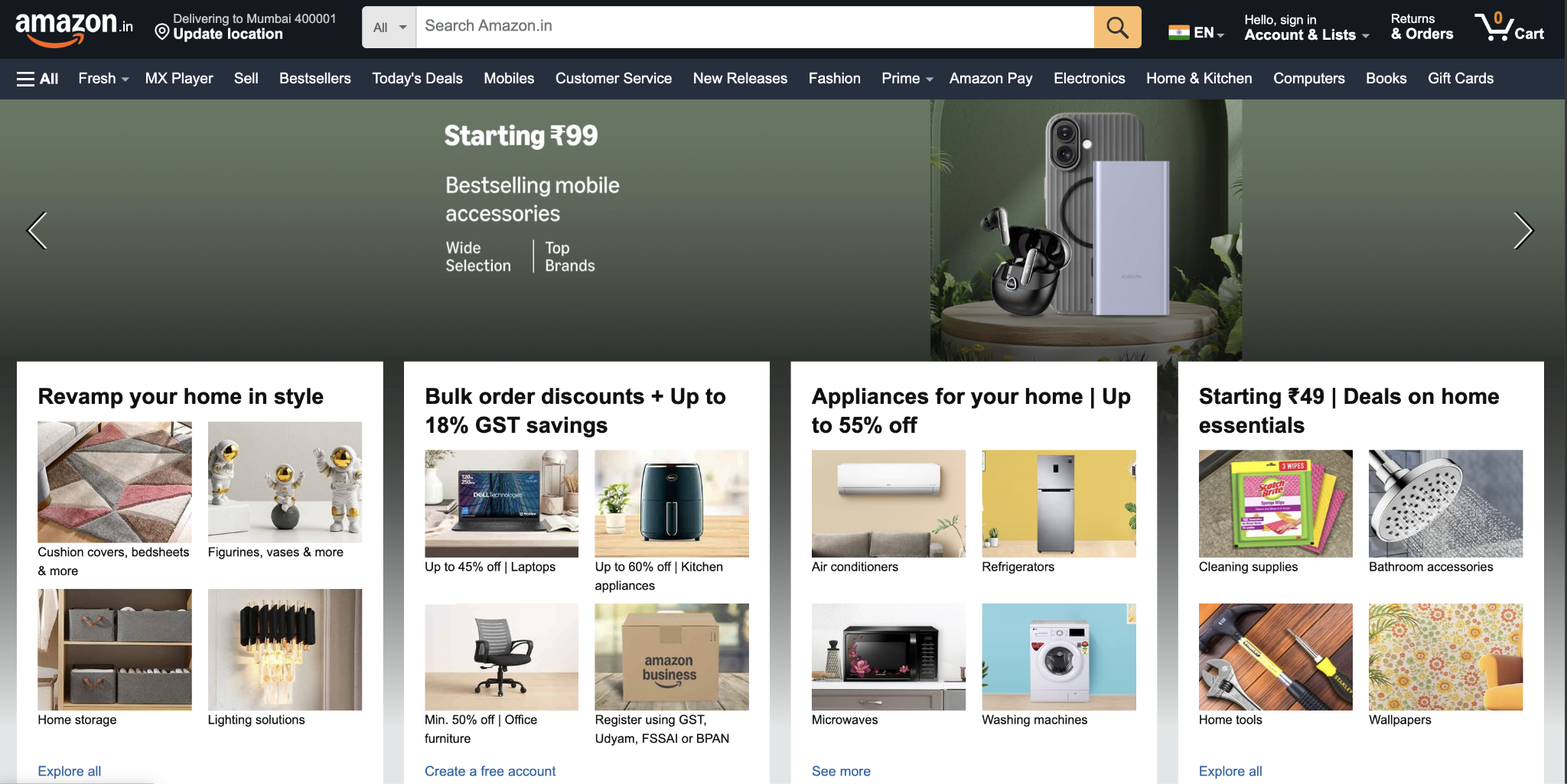
If you sell products, offer services, or create content for Indian customers, a .in domain tells them you’re local. Indian consumers connect this extension with businesses that understand local payments, shipping, and cultural norms.
An ecommerce store selling regional handicrafts, for example, builds more credibility with .in than with a generic .com. It works the same way as customers prefer buying from a local shop over an unfamiliar international one.
The same goes for startups, freelancers, and creators based in India. The .in domain positions you inside the local business scene. A freelance web developer in Bangalore attracts more local clients with a .in portfolio than with a vague .net or .org.
Understanding what a domain name represents in your web presence helps explain why this geographic signal matters so much.
Sometimes, even global companies use .in to show commitment to India. Many international brands launch a .in version for India-specific campaigns, localized content, or regional support. It tells Indian customers you’re not just available – you’re invested.
The common thread is alignment. Indian users already know what the .in domain name means and assume the site understands their needs and preferences. That assumption gives you an edge before they even read your content.
When is .in not a good domain?
The .in domain helps when your audience is Indian. But if it’s not, the domain itself can get in your way.
The biggest issue is first impressions. If you’re pitching a global SaaS product or emailing prospects in the US, .in raises a question before you even get to your offer: “Is this an Indian company? Do they serve my market?”
That small doubt costs you replies and meetings. With .com, the question never comes up.
It also creates balance issues if you serve multiple regions. Say you’re targeting India, Southeast Asia, and the Middle East equally. A .in domain positions your brand as India-focused everywhere.
Prospects in Singapore or Dubai may feel like an afterthought – even if your product works just as well for them. A .com or a multi-domain setup (using .in, .sg, and .ae separately) keeps things even.
Then there’s the trust gap in certain industries. In fintech, enterprise software, or B2B services, some buyers still connect .com with scale and credibility. That’s not always rational, but it affects buying decisions.
According to domain name statistics, .com leads global registrations because of this trust factor. If your buyers expect .com and you show up with .in, you start from behind.
None of this makes .in a bad domain. It just means .in is misaligned when your brand, audience, or growth plan doesn’t center on India.
Pros and cons of using a .in domain
The same features that make .in powerful for India-focused businesses create limitations for globally neutral brands. Your market positioning determines whether .in’s geographic signal works for you or against you.
Pros of using a .in domain
- Lower registration cost than .com – At Hostinger, .in starts at $2.99/year, while .com typically runs $10–$20/year. For a bootstrapped startup or solo founder, that gap adds up – especially when you’re managing several domains in year one.
- Creative naming opportunities – .in doubles as a word, which opens up wordplay that .com can’t match. Think log.in, check.in, or trade.in. If your brand name ends with “in,” you get a short, catchy domain. And this advantage has nothing to do with geography.
- Higher availability than .com – .in is less crowded, so you’re more likely to get the exact name you want. No hyphens, numbers, or awkward workarounds needed.
- Stronger local SEO for India-specific searches – Google uses ccTLDs as a geographic signal. A .in domain tells Google your site is relevant to Indian users, which can help you rank higher in local results. It’s not a guarantee, but it’s one more edge.
- Open registration for everyone – Unlike some ccTLDs restricted to local residents, .in is open to anyone. You can test the Indian market without setting up a local entity – just be ready for the registry’s verification process.
Important! The .in registry now requires mandatory KYC/e‑KYC verification for all .in registrations. Foreign registrants may need to show their connection to India (for example, via a signed declaration and ID). If you’re not comfortable with that, .in may not be the right fit.
Cons of using a .in domain
- Less weight outside India – .in is well-known within India, but users in North America or Europe may assume your product is region-specific or doesn’t serve their market.
- Harder to scale across regions – If you need to expand beyond India later, .in makes multi-market positioning harder.
- Costly to rebrand later – If you outgrow India and need .com, migrating means 301 redirects, possible SEO losses, and a full rebrand. That exit cost is worth thinking about before you register.
- Possible email friction internationally – Established ccTLDs like .in don’t carry the same risks as cheap extensions like .xyz or .top. But .com still performs best in global inbox placement.
These trade-offs matter most when you factor in how .in affects your search visibility, which depends on where your audience actually searches from.
Is .in good for SEO?
Yes, if most of your traffic goals center on India.
When your main audience is in India, .in makes you more visible in local search results. It’s easier to compete for country-specific keywords when your domain matches the region.
But domain extensions don’t decide rankings on their own. Content quality and user signals matter more. Understanding what SEO is helps put the domain’s role in perspective – it’s one factor among many.
The real question is your traffic strategy. If you want to build organic traffic around India, .in supports that focus. If you want international visibility under one domain, a neutral extension gives you more flexibility as you grow.
.in vs other domain extensions for businesses
Each domain extension sends a different signal about your market – and that signal shapes how customers see your brand before they read a word on your site.
.in vs .com
The core difference between .in and .com is geographic focus versus global reach.
The .in extension positions your business inside the Indian market. It connects faster with Indian customers who expect INR pricing, local support, and regional familiarity.
A .com domain doesn’t signal any country. It’s the global default for businesses of all sizes, making it the safest choice if you plan to serve multiple markets and flexibility and worldwide recognition are important to you.
.in vs .co
The question of whether .co is a good domain extension to use instead of .in depends on identity, not geography.
The .in extension signals national focus. The .co extension is popular with tech companies and SaaS startups as a shorter, modern alternative to .com. It doesn’t carry a strong geographic meaning, so it feels product-focused and global.
If your advantage is local trust in India, .in is stronger. If you’re building a modern, tech-driven brand for an international audience, .co is a better fit.
Your extension should match the market you want to lead. Among the three, .com has the widest recognition, .co is common in startup circles, and .in builds the strongest local trust within India.
Should you choose .in for your website?
So, is .in a good domain for your business? Ask yourself these three questions :
- Is most of your audience in India?
- Are your business goals focused on India?
- Does your branding connect to Indian identity?
If the answer is yes, then the .in extension is the right fit for you. Otherwise, a neutral extension gives you more room to grow.
Choosing the right domain name means weighing these factors against your business model and where you want to take it.
Domain Name Checker
Instantly check domain name availability.
All of the tutorial content on this website is subject to Hostinger's rigorous editorial standards and values.

Alma is an AI Content Editor with 9+ years of experience helping ideas take shape across SEO, marketing, and content. She loves working with words, structure, and strategy to make content both useful and enjoyable to read. Off the clock, she can be found gaming, drawing, or diving into her latest D&D adventure.