AI is advancing fastest on screen-based work. AI models can now complete software tasks that take a human expert about 12 hours, and the length of those tasks roughly doubles every four months. Outside the screen, progress is far slower: robots succeed in only 12% of realistic household tasks in testing.
Even on-screen, finished work lags behind the benchmarks. When Hostinger gave seven AI models 50 real pull requests from its own codebases, only 47 of 350 runs matched the engineer’s change exactly. That gap is the short answer to how fast AI is advancing: quickly on screen-based tasks with answers you can check, and slowly everywhere else.
Top AI growth statistics for 2026
- About four months is how long it takes for the length of tasks AI can complete at 50% success to double.
- 12 hours of expert human work is the longest software task an AI model has completed at 50% success in measurements its evaluator treats as reliable.
- 2.6 times is how much global AI computing capacity grew in the year to mid-2026.
- 18.8% of the world’s working-age population used a generative AI product in June 2026.
- 81.2% is the top AI score on ARC-AGI-3, a test of unfamiliar games, up from 0.50% at its launch.
- Roughly half of AI-written pull requests that pass automated tests fail project maintainers’ review.
- 47 of 350 runs by seven AI models on real production pull requests matched the engineer’s change exactly.
- 500,000+ fully autonomous Waymo rides take place each week in the U.S.
- 12% is the share of realistic household tasks robots complete successfully on a benchmark.
- 2042 is the year by which AI researchers give high-level machine intelligence a 50% chance of arriving.
How fast is AI advancing? AI capabilities by task length
The length of software tasks AI models can complete has doubled about every four months since 2023. Time horizon data from Model Evaluation and Threat Research (METR) puts the doubling time at 128.7 days, measured at a 50% success rate. Task length measures how long a human expert takes to do the task, not how long the AI runs.
In March 2023, GPT-4 could handle tasks that take an expert about four minutes. By February 2026, Claude Opus 4.6 reached a time horizon of 718.8 minutes, about 12 hours, or roughly 180 times longer.

One newer model, an early version of Claude Mythos Preview, measured about 17.4 hours. METR treats results above 16 hours as unreliable with its current task suite, though, and the time horizon page stopped updating in September 2026. Every figure here is a 50% success rate, not a reliable completion rate.
A broader index shows the same speed-up. Since the first reasoning models arrived in September 2024, the frontier of the Epoch Capabilities Index has climbed by 14 points per year, compared with six points per year for non-reasoning models. As of November 2026, the top score is 173.44, held by Claude Fable 5.2. That’s about 52 points above GPT-4’s 121.77 in March 2023.
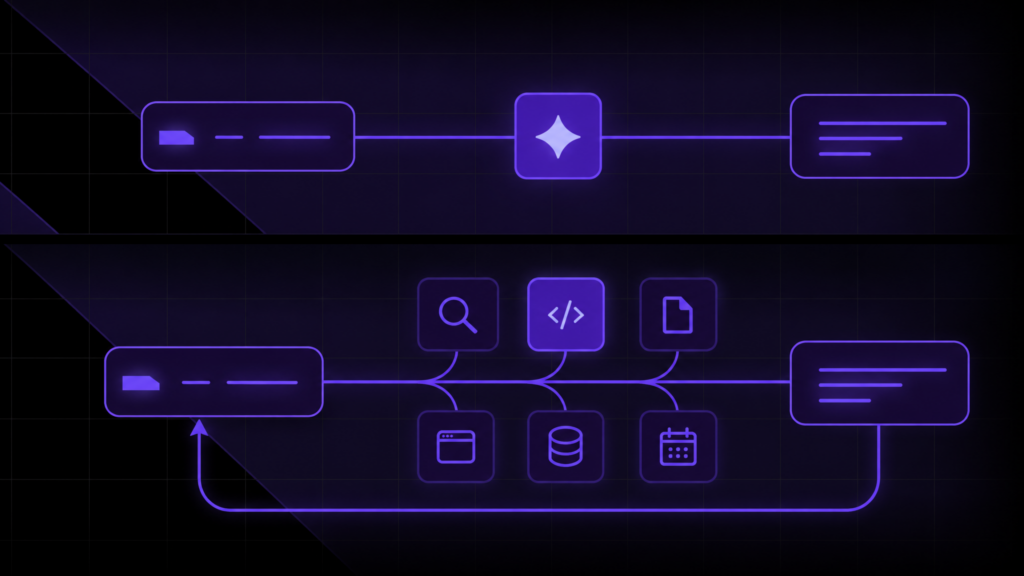
Reasoning models also sit behind agentic AI, systems that plan and carry out multi-step tasks. Test an AI tool again before ruling it out if it failed at a multi-step task for you more than a few months ago.
How fast is AI improving on benchmarks?
AI models are improving quickly, even on benchmarks designed to be hard for them. According to the Stanford AI Index, frontier models gained 30 percentage points in a single year on Humanity’s Last Exam, a benchmark built to be hard for AI. At the International Mathematical Olympiad (IMO), Gemini Deep Think scored 35 points, a gold-medal standard, in 2025. In 2024, Google DeepMind’s AlphaProof and AlphaGeometry 2 scored 28 points, a silver-medal standard.
The gap between AI labs is only months, too. The Center for AI Standards and Innovation (CAISI) at the National Institute of Standards and Technology (NIST) found that DeepSeek V4 Pro’s capabilities lag the frontier by about eight months across CAISI’s benchmarks.
Why is AI advancing so quickly?
AI is advancing quickly because computing capacity keeps multiplying while performance costs keep falling. Global AI computing capacity grew 2.6 times between mid-2025 and mid-2026, down from 3.5 times the year before, according to chip sales data from Epoch AI. Capacity added each quarter has grown about 2.5 times a year since 2024, from 0.8 million H100-equivalents in early 2024 to 6.3 million in the second quarter of 2026.
One H100-equivalent matches the processing power of one Nvidia H100. The H100 is a data center graphics processing unit (GPU) that cloud providers rent out by the hour, at cloud GPU pricing that varies widely by provider.
- Over 60% of global AI compute capacity runs on Nvidia AI chips (Stanford AI Index).
- Five times per year is how fast the compute used to train frontier language models has grown since 2020, with a 90% confidence interval of four to six times per year, as of February 2026 (Epoch AI).
- About 47% per quarter, or 13 times per year, is how fast the cost of reaching a given level of AI performance has fallen since 2023. The decline varies by task, and the authors caution against reading the figures as exact (Epoch AI).
Hostinger’s own coding experiment shows what falling AI costs look like on real work. Seven AI models attempting 50 production pull requests from 11 codebases, 350 runs in all, cost about $608 in AI usage. Average costs per task ranged from $0.28 to $5.02 depending on the model. The costs use list prices.
Get a new quote before deciding an AI tool costs too much if you priced it for a task a year ago.
How fast is AI growing among people and businesses?
In June 2026, 18.8% of the world’s working-age population used a generative AI product, up about 1 percentage point from the first quarter. The share has risen in every period measured, according to the Microsoft AI Economy Institute: 15.1% in the first half of 2025, 16.3% in the second half, and 17.8% in the first quarter of 2026. The periods differ in length, so the series shows direction rather than a precise growth rate.

Use is getting more frequent, and business adoption is rising too:
- 8% to 19% is how much the share of U.S. adults who used AI on at least six days of the previous week rose between March and August 2026, though the two polls worded the question differently (Epoch AI and Ipsos).
- Around 12% to around 35% is how much the share of U.K. businesses with 10 or more employees using at least one AI technology rose between late 2023 and mid-2026 (Office for National Statistics).
- 13.5% to 20.0% is how much the share of EU enterprises with 10 or more employees using AI technologies rose between 2024 and 2025 (Eurostat).
These surveys track the speed of change. As for where adoption stands, nearly nine in ten respondents to McKinsey’s State of AI survey said their organizations regularly use AI in at least one business function. Chatbots such as ChatGPT run on large language models (LLMs), and these LLM statistics cover how their usage and market share are shifting.
Businesses that sell to the public should expect more of their customers to use AI tools each week, and some to shop through them: one of this year’s agentic AI trends is that AI-referred visitors bring U.S. retailers more revenue per visit than other traffic.
Is AI slowing down? Where progress is still uneven
AI is not slowing down, but its progress is uneven. The top AI score on ARC-AGI-3 (Abstraction and Reasoning Corpus for Artificial General Intelligence), a benchmark of unfamiliar interactive games, reached 81.2% with Claude Fable 5.2 as of November 2026. That’s up from 0.50% at its launch in March 2026, according to the ARC Prize leaderboard. Humans can solve every one of its environments, and a score of 100% means matching human efficiency. The gap is closing fast, but it hasn’t closed.

Passing a test is still different from doing the job. In a METR research note, project maintainers reviewed AI-written pull requests that passed the automated tests of SWE-bench Verified, a common coding benchmark. They would not have merged roughly half of them. Their merge rate came in about 24 percentage points below the automated test scores. The tests themselves have flaws: Stanford’s AI Index found invalid-question rates ranging from 2% on MMLU Math to 42% on GSM8K, two widely used math test sets.
Hostinger’s coding experiment points the same way. Only 47 of 350 runs produced the same change the engineer made. On a match score from 0 to 1, the five models behind the leader finished within 0.04 of each other. A perfect score of 1 means a model’s change matched the engineer’s exactly. Partial scores mean the change was partly right, so runs without an exact match weren’t all failures.
Expert tip
Matching an engineer’s change exactly is a high bar. In our tests, writing the code was the easy part for the models; deciding what should happen in the awkward cases was not, and that is still where a reviewer earns their time.

Tomas Rasymas
Head of AI at Hostinger
Has AI plateaued?
AI has not plateaued on capability measures. Epoch AI’s April 2026 analysis found a roughly two to three times faster trend for reasoning models than for earlier models on three of its four capability measures. The speed-up is concentrated in programming and math, where answers are easy to check. AI moves fastest where a test can confirm the result.
Keep a person reviewing AI-written code or content before it goes live. In AI-driven software development, the developer still decides which AI suggestions to accept.
AI in the physical world: Waymo rides per week vs. household robots
AI is advancing much faster on the road than in the home. Waymo surpassed 500,000 fully autonomous rides per week by April 2026, doubling in less than a year, with operations in 11 major U.S. cities. In 2025, Waymo more than tripled its annual volume to 15 million rides and passed 20 million lifetime rides. Stanford’s AI Index reports that Baidu’s Apollo Go provided 11 million fully driverless rides in China in 2025, a 175% increase over 2024.
Household chores are a different story. Robots complete only 12% of full household activities, such as cleaning and cooking, on BEHAVIOR-1K, a benchmark set in realistic simulated homes, according to Stanford’s AI Index. On RLBench, which tests controlled manipulation tasks in simulation, success has reached 89.4%.

For businesses that work in physical spaces, today’s AI evidence is strongest in the screen-based parts of the job, such as scheduling and quoting.
AI predictions for 2030 and beyond: experts keep pulling their dates closer
In the Expert Survey on Progress in AI run by AI Impacts in December 2024, the mean forecast of 1,580 AI researchers gives a 50% chance of high-level machine intelligence by 2042. The same survey series put that date at 2061 in 2016, so the expected horizon shrank from 45 years to 18.
Forecasters have also underestimated benchmark progress. A Forecasting Research Institute review found that in forecasts made in mid-2022, superforecasters assigned the outcomes that actually occurred on four AI benchmarks an average probability of 9.7%, compared with 24.6% for domain experts. IMO gold arrived in July 2025, five years before the median expert forecast.
On compute, Epoch AI projected in August 2024 that training runs of 2e29 floating-point operations (FLOP) would likely be feasible by 2030. That’s about 5,000 times larger than Llama 3.1 405B.
How to plan around AI’s pace
Retest AI tools on a schedule. Task length doubles about every four months, and the cost of a given capability falls about 13 times a year. A tool that couldn’t handle a job six months ago, or cost too much, is worth testing again now.
Keep a person checking anything that ships. Maintainers would not have merged roughly half of test-passing AI pull requests, and only 47 of 350 runs in Hostinger’s experiment matched the engineer’s work, so review time belongs in the plan.
Start where results are easy to check. Progress is fastest in code, math, and other screen-based tasks with clear right answers, and slowest in physical work, where robots still succeed in only 12% of benchmark household tasks. Hostinger Agent, part of Hostinger’s agentic AI hub, plans, writes, and schedules a sales campaign, and you can check every output before it goes live.
The pace keeps shifting, so the most useful number to track is your own: how much of a real task AI finishes correctly each time you test it.
This article is a localized version of How fast is AI advancing? Key data on AI progress, originally published in English.

Daniela is an Off-Site SEO Specialist with extensive expertise in link building, digital PR, and content optimization. She has led international outreach campaigns across the U.S., Brazil, France, and Spain, securing high-quality backlinks. Follow her on LinkedIn.