10 best Klaviyo alternatives compared
May 18, 2026
/
Simon L.
/
11 min Read

Klaviyo is a powerful marketing automation tool built for ecommerce businesses. It excels at syncing your store’s sales history, automating emails based on customer behavior, and combining them with SMS to boost sales.
However, many users look for Klaviyo alternatives because the platform can become expensive and difficult to manage as they grow. With pricing starting at $45/month once you exceed 1,000 contacts, costs rise sharply, often pricing out smaller brands.
Others simply find the steep learning curve a major hurdle, preferring modern AI tools for quick creation over Klaviyo’s data-heavy dashboard.
Our top picks for the best Klaviyo alternatives are:
- Best for simplicity: Hostinger Reach, ideal for business owners who want professional emails without the technical learning curve.
- Best for ecommerce: Omnisend, a direct competitor offering SMS and web push features at a better price point.
- Best for beginners: MailerLite, perfect for those who need a clean interface and a generous free plan.
- Best for advanced automation: ActiveCampaign, the industry leader for complex CRM and customer experience automation.
- Best for value: Moosend, perfect for accessing advanced automation features without the enterprise price tag.
Here’s a detailed look at the top 10 Klaviyo alternatives to help you decide which one fits your business best.
1. Hostinger Reach
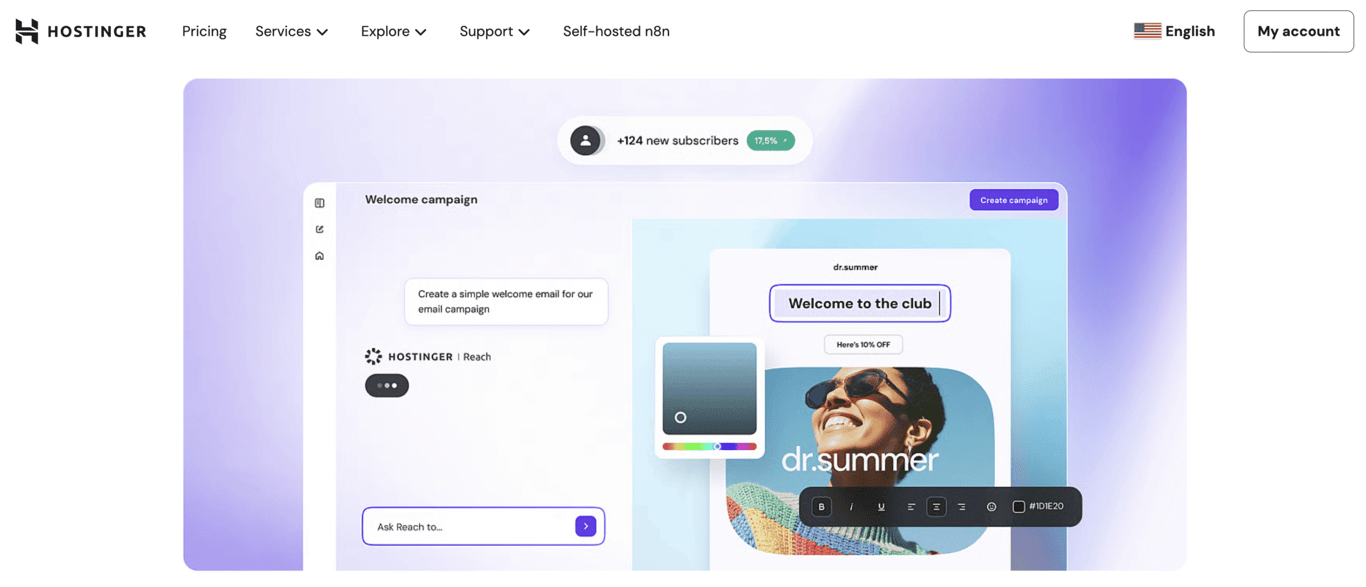
Hostinger Reach is an AI-powered email marketing solution that strips away the complexity of traditional platforms like Klaviyo.
While Klaviyo requires manual template building and extensive setup, Hostinger Reach uses advanced AI to automate the design and writing process, handling the technical heavy lifting for you.
It allows business owners to bypass the hours of configuration usually needed for segmentation and design, enabling them to launch professional campaigns in minutes rather than days.
Key features of Hostinger Reach:
- AI email creation: Describe your idea and the AI email marketing tool generates a professional layout, writes the copy, and even suggests smart subject lines to boost open rates instantly.
- Conversational AI segmentation: Instead of building complex Boolean logic filters like in Klaviyo, you can simply chat with the AI to describe the contacts you want to reach, and it will build the segment for you based on their details and activity.
- Seamless integrations: It offers a dedicated plugin to sync leads from WordPress sites hosted with Hostinger and automatically pulls new form submissions from Hostinger Website Builder in real-time, with a one-click domain connection for existing users.
- Automatic branding: Your logo, brand colors, and social links are auto-applied to every email template, eliminating the need to manually format every campaign.
Limitations of Hostinger Reach:
- Less granular data: It doesn’t offer the same depth of historical purchase data as Klaviyo, making it less suitable for enterprise-level ecommerce stores requiring complex behavioral triggers.
- Fewer integrations: While it has a powerful WordPress plugin, its third-party integration ecosystem is smaller compared to Klaviyo’s massive library of connections.
Hostinger Reach pricing:
Hostinger Reach is significantly more affordable than Klaviyo, offering a free option and low-cost paid tiers.
- Free plan: Available for one year with up to 100 unique subscribers and 200 email sends per month.
- Paid plans: Start at $5.99/month for up to 500 unique subscribers, 3,500 emails, and 5 AI credits per month, and come with a 30-day money-back guarantee.
2. Omnisend
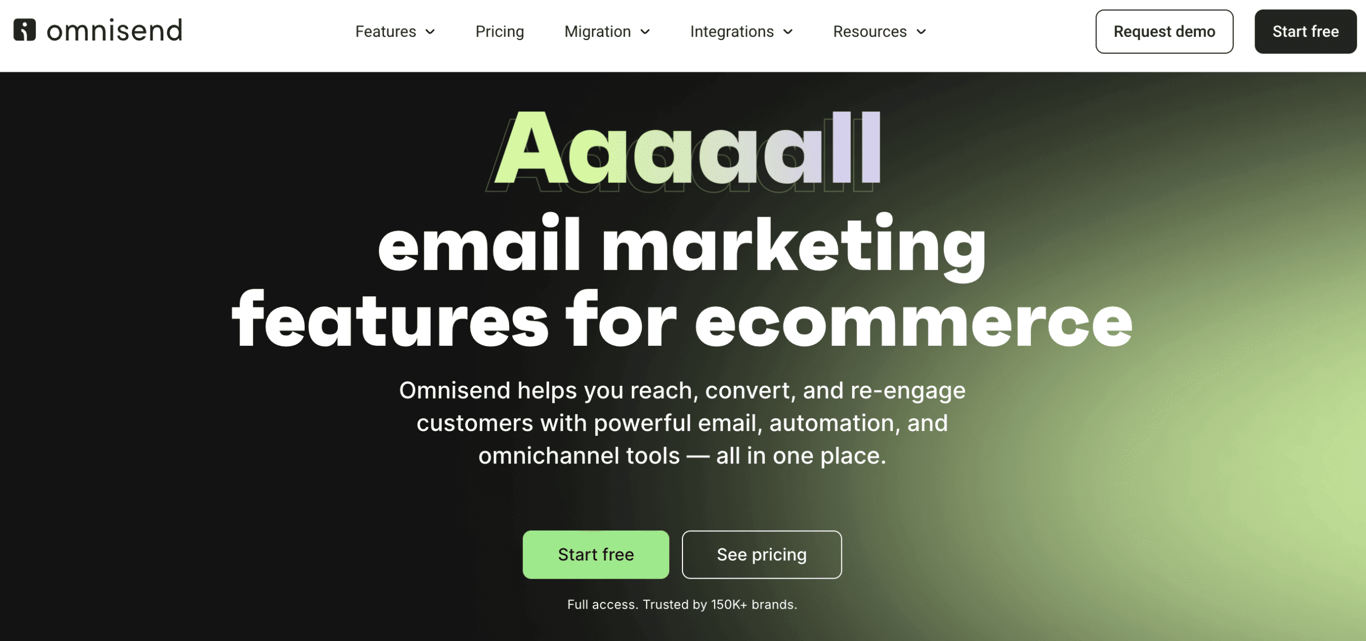
Omnisend is arguably the most direct Klaviyo competitor for ecommerce brands. It mimics many of Klaviyo’s core strengths but packages them in a way that is often easier to use and cheaper.
It allows online stores to go beyond simple email by combining SMS, web push, and automations into a single strategy – all without needing an expensive specialist to manage it.
Key features of Omnisend:
- Unified workflows: It combines email, SMS, and web push notifications into single automation flows, helping to increase conversion rates.
- Ecommerce product picker: Display products directly from your store into your emails, and suggest items based on past purchases and browsing history.
- Award-winning support: Unlike many competitors where support is hard to reach, Omnisend boasts customer service with 24/7 priority support and live chat even on lower tiers.
Limitations of Omnisend:
- Design flexibility: The email builder, while functional, offers slightly less design freedom for custom layouts compared to Klaviyo.
- Data depth: While great for ecommerce, the granular segmentation capabilities are slightly less powerful than Klaviyo’s deep data science tools.
Omnisend pricing:
Omnisend offers a free plan that includes SMS credits (unlike Klaviyo’s trial), and its paid tiers generally offer better value for businesses.
- Free plan: Includes up to 250 contacts, 500 emails/mo, free SMS credits, and access to all features, such as popups and pre-built workflows.
- Paid plans: Start at $16/month for 500 contacts, 6,000 emails/mo, and unlimited web push notifications. Higher-tier plans include free SMS credits equal to the full price of the plan.
3. MailerLite
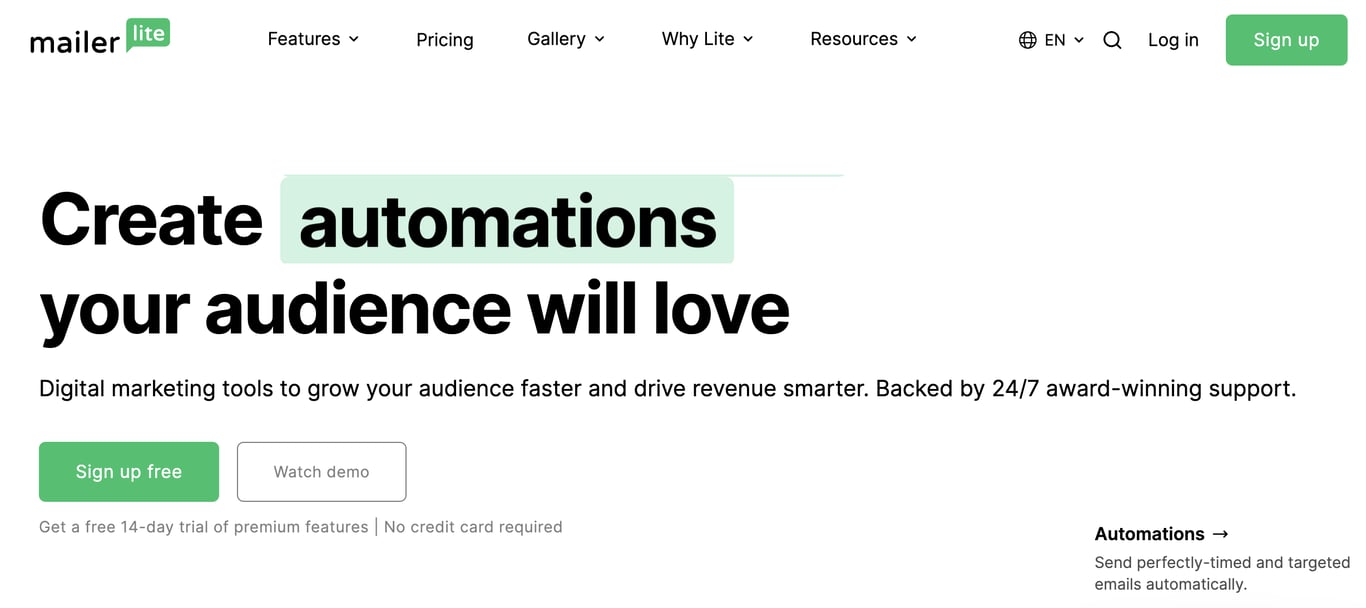
MailerLite is widely recognized for its clean, minimalist interface and ease of use. Unlike Klaviyo, which throws deep analytics and complex flow builders at you immediately, MailerLite focuses on getting campaigns running with zero friction.
It is an excellent choice for content creators, bloggers, and small businesses who find Klaviyo’s ecommerce features unnecessary and distracting.
Key features of MailerLite:
- Advanced drag-and-drop editor: One of the smoothest editors in the market, featuring over 70 pre-built content blocks, with support for dynamic content, allowing you to show or hide specific blocks for different users within the same email based on their data.
- Monetization tools: Sell digital products and manage paid newsletter subscriptions directly through the platform using Stripe integration, without paying a commission to MailerLite.
- Lead generation suite: Beyond just emails, it includes a flexible landing page builder with interactive pop-ups to help you grow your list.
Limitations of MailerLite:
- Limited automation: While it handles basic sequences well, it lacks the complex, branching logic based on minute user behaviors that Klaviyo offers.
- Strict approval process: MailerLite has a very strict approval process for new accounts to maintain deliverability, which can delay setup for some users.
MailerLite pricing:
MailerLite is far cheaper than Klaviyo and offers a transparent pricing structure.
- Free plan: Includes up to 500 subscribers and 12,000 monthly email sends for one user.
- Paid plans: Start at $10/month for up to 500 subscribers with unlimited emails, three users, and dynamic content features.
4. Moosend
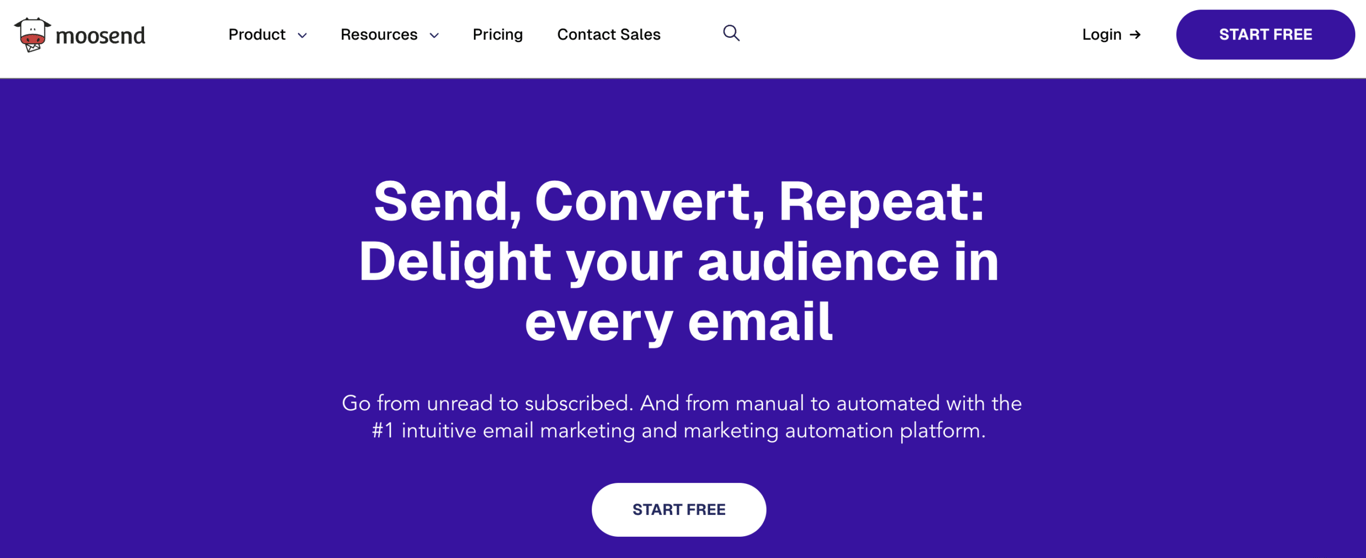
Moosend is a strong contender for businesses that want the automation capabilities of services like Klaviyo but cannot justify the high price tag.
It balances power with a user-friendly interface, making it accessible for mid-sized businesses that want to go from manual blasts to automated revenue.
Key features of Moosend:
- Visual automation editor: Offers a drag-and-drop workflow builder that rivals Klaviyo’s in function but is generally easier to visualize. It allows you to put repetitive tasks on autopilot with pre-made automation templates.
- AI-enhanced content: Includes an AI writer to help draft copy and offers a library of 130+ professionally designed templates that you can customize easily.
- Growth tools: Includes built-in subscription forms and a landing page builder to help you capture leads, meaning you don’t need separate tools to grow your list.
Limitations of Moosend:
- Native integrations: While it connects to major tools like WooCommerce, its native integration list is shorter than Klaviyo’s.
- Mobile app: The mobile management options are limited compared to competitors who offer full mobile CRMs.
Moosend pricing:
Moosend is budget-friendly, offering a 30-day free trial and paid plans that are significantly lower than Klaviyo’s equivalent subscriber tiers.
- Free trial: A 30-day free trial allows you to test all features with no credit card required.
- Paid plans: Start at $9/month for up to 500 subscribers and include unlimited email sends, landing pages, and the automation builder.
5. Mailchimp
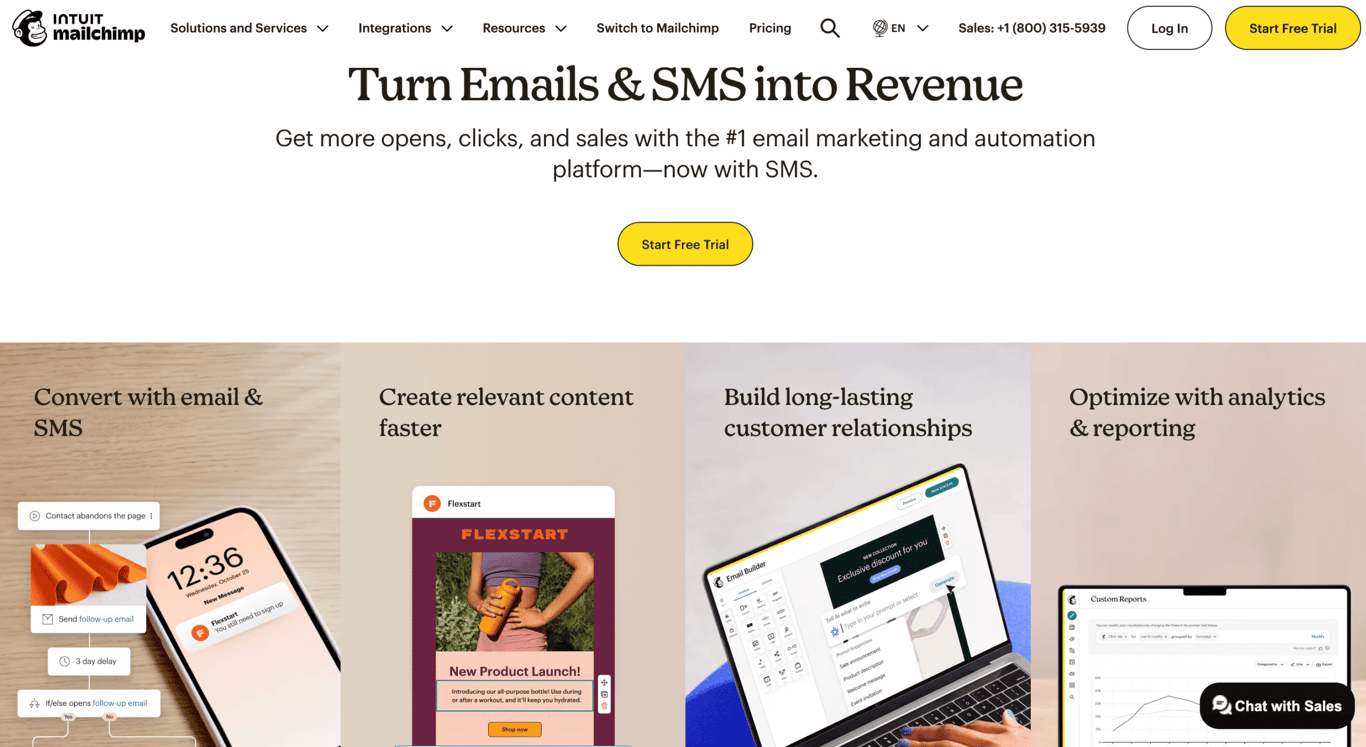
Mailchimp started as a simple newsletter tool, but has evolved into an all-in-one marketing platform under Intuit.
It offers a range of tools that extend beyond email marketing to cover social media scheduling, postcards, and website building, whereas Klaviyo stays strictly focused on email and SMS data for online stores. When comparing Mailchimp and Klaviyo, the main trade-off is between Mailchimp’s broader marketing toolkit and Klaviyo’s deeper ecommerce automation.
Key features of Mailchimp:
- Massive integration library: Connects with over 300+ third-party tools, meaning it likely integrates with any software you’re already using.
- Creative AI assistant: Includes strong AI tools that help write copy and design brand assets for different channels, such as Facebook and Instagram.
- Cross-channel management: Unlike Klaviyo, which is hyper-focused on owned channels like email and SMS, Mailchimp allows you to manage social media ads and organic posts alongside your email campaigns from one dashboard.
Limitations of Mailchimp:
- Ecommerce limitations: While it integrates with online stores, you won’t get the same level of predictive data regarding customer lifetime value that you do in Klaviyo.
- Billing for unsubscribes: Counts unsubscribed contacts toward your total billing volume, which can inflate costs significantly compared to other tools like Mailchimp that only charge for active subscribers.
Mailchimp pricing:
Mailchimp has a complex pricing structure that can become expensive, but its entry-level plans are generally more accessible for non-ecommerce businesses than Klaviyo.
- Free plan: Includes up to 500 contacts and 1,000 monthly email sends with a daily limit of 500.
- Paid plans: Start at $13/month for A/B testing, scheduling, advanced customer journey builders, and behavioral targeting.
6. Drip
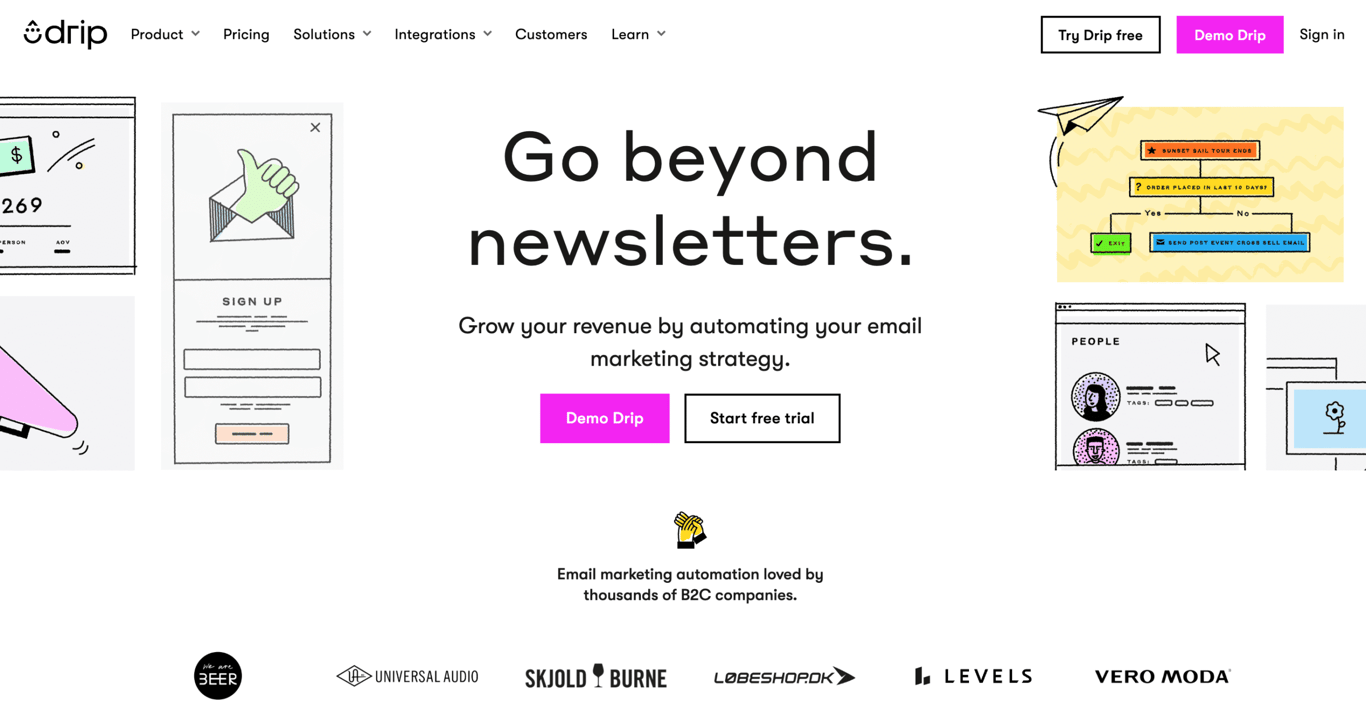
Drip focuses heavily on independent ecommerce brands that want to build strong relationships with customers.
It offers a more visual approach to data than Klaviyo’s spreadsheet-style analytics, making it one of the best alternatives to Klaviyo for brands on WooCommerce that want a better user interface without sacrificing power.
Key features of Drip:
- Visual workflow builder: Known for its colorful automation maps, Drip allows you to easily build complex sequences using pre-built playbooks like welcome series and abandoned carts.
- On-site campaigns: Built-in tools for pop-ups, slide-ins, and quizzes that connect directly to your email flows to capture new leads.
- Deep segmentation: Matches Klaviyo’s ability to tag and segment users based on specific actions and lifetime value.
Limitations of Drip:
- Template library: While it offers industry-specific templates, the overall selection of pre-designed email layouts is smaller compared to Klaviyo’s vast community library.
- Learning curve: The interface is easier to use than Klaviyo, but mastering the tagging logic and automation rules still requires a learning curve compared to simpler tools.
Drip pricing:
Drip uses a simple, transparent pricing structure based strictly on list size, with no hidden fees for features.
- Free trial: A 14-day free trial is available to test the platform (no credit card required).
- Paid plans: Start at $39/month for up to 2,500 contacts, unlimited email sends, all features, and email support. Price increases based on list size.
7. ActiveCampaign
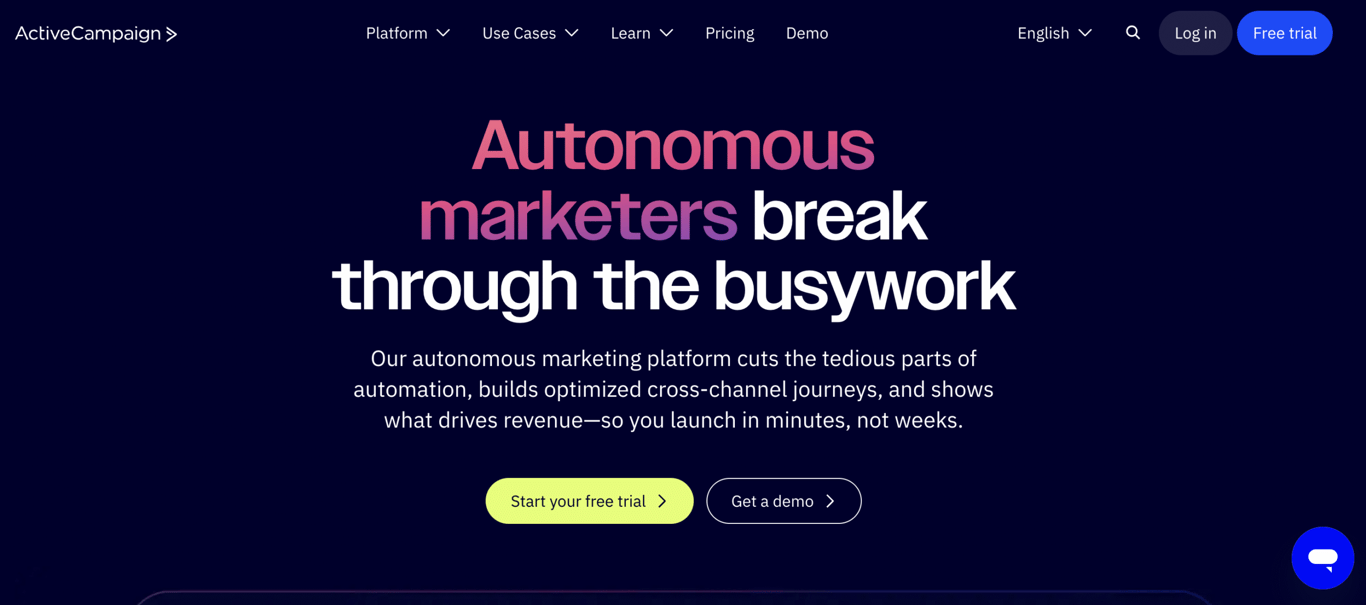
If your reason for considering leaving Klaviyo is that you need more management of the customer journey, then ActiveCampaign is the answer.
It goes beyond software like Klaviyo by functioning as a full Customer Experience Automation (CXA) platform, using AI agents to figure out your next best move rather than just waiting for you to build a flow.
Key features of ActiveCampaign:
- AI agents: The tool uses AI agents and a conversational interface to build complex workflows, write content, and suggest the best time and channel to message a customer.
- Built-in CRM: Includes a full sales CRM to manage deals and pipelines, plus it integrates SMS and WhatsApp automation directly into your customer journeys.
- Premium support for all: A huge advantage over Klaviyo is the support. Every paid plan includes free 1:1 onboarding coaching and free migration services to move your templates and lists from your old provider.
Limitations of ActiveCampaign:
- Overwhelming for simple needs: If you just want to send a newsletter or a simple welcome series, this tool is overkill.
- Ecommerce setup: While powerful, setting up deep ecommerce data requires more configuration than Klaviyo’s one-click sync.
ActiveCampaign pricing:
ActiveCampaign offers a tiered pricing structure based on the depth of features you need, but accessing the advanced CRM and ecommerce features can get expensive, comparable to Klaviyo.
- Free trial: A 14-day free trial is available to test the platform with no credit card required.
- Paid plans: Start at $15/month for basic features, though accessing advanced automation and CRM capabilities requires higher-priced tiers.
8. GetResponse
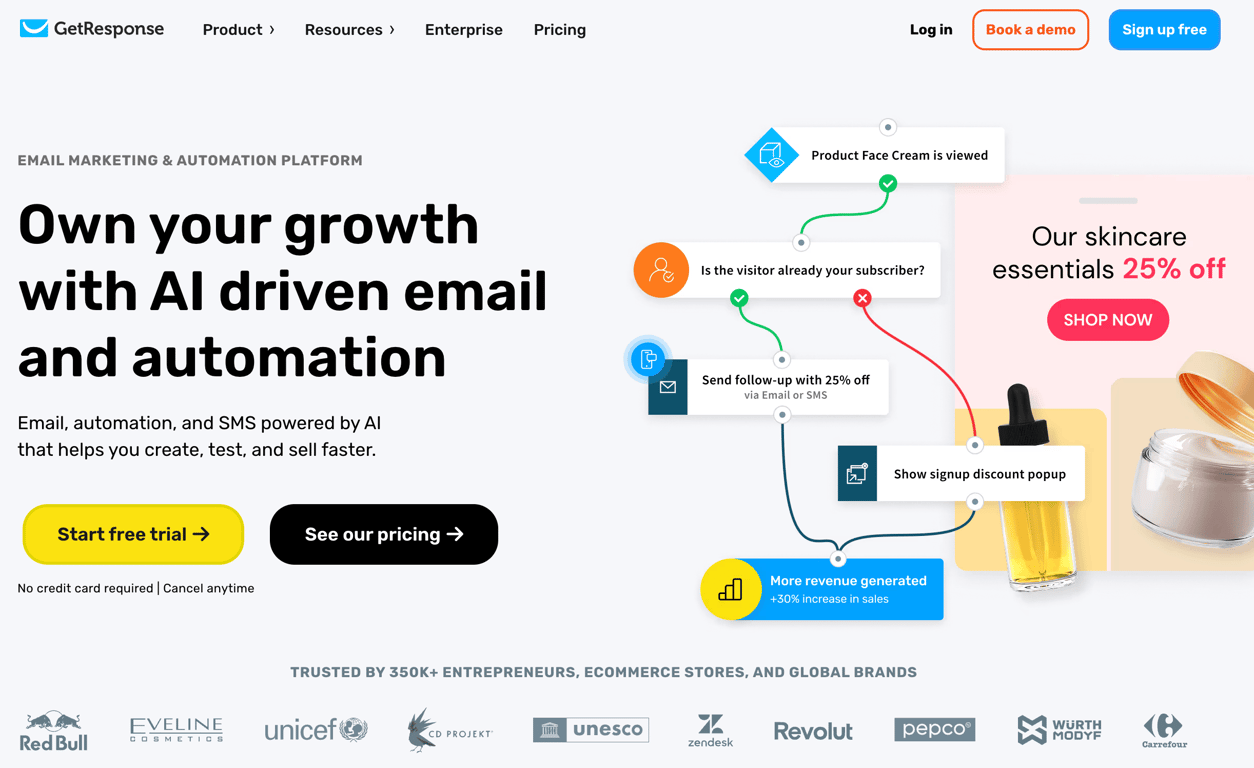
GetResponse is a great Klaviyo alternative for businesses that want to consolidate their tech stack.
Instead of paying for separate tools for email, webinars, and course hosting, GetResponse puts it all under one roof, making it much broader in scope than Klaviyo.
Key features of GetResponse:
- Webinars and course creation: Unlike Klaviyo, which is strictly for messaging, GetResponse includes a native webinar platform and a course creator, allowing you to monetize your knowledge and engage leads via video without leaving the tool.
- Automated sales funnels: Features a funnel builder that visualizes and automates the entire journey from ad click to final sale using pre-built templates.
- Unlimited sending: Even on the entry-level plans, GetResponse offers unlimited monthly email sends and powerful AI tools that write subject lines and tailor content to your audience.
Limitations of GetResponse:
- Ecommerce Depth: While it has ecommerce tools, the data analytics for individual customer lifetime value are less detailed than Klaviyo.
- Jack of all trades: Since it does so much, some specific features, like the email designer, might feel less specialized than a dedicated tool.
GetResponse pricing:
GetResponse is a tool that stays affordable as you scale, offering flat-rate plans with unlimited sends.
- Free trial: A free trial is available to test the platform with no credit card required.
- Paid plans: Start at $19/month for 1,000 contacts and include unlimited emails. Higher-priced plans enable automation workflows and segmentation.
9. Pipedrive
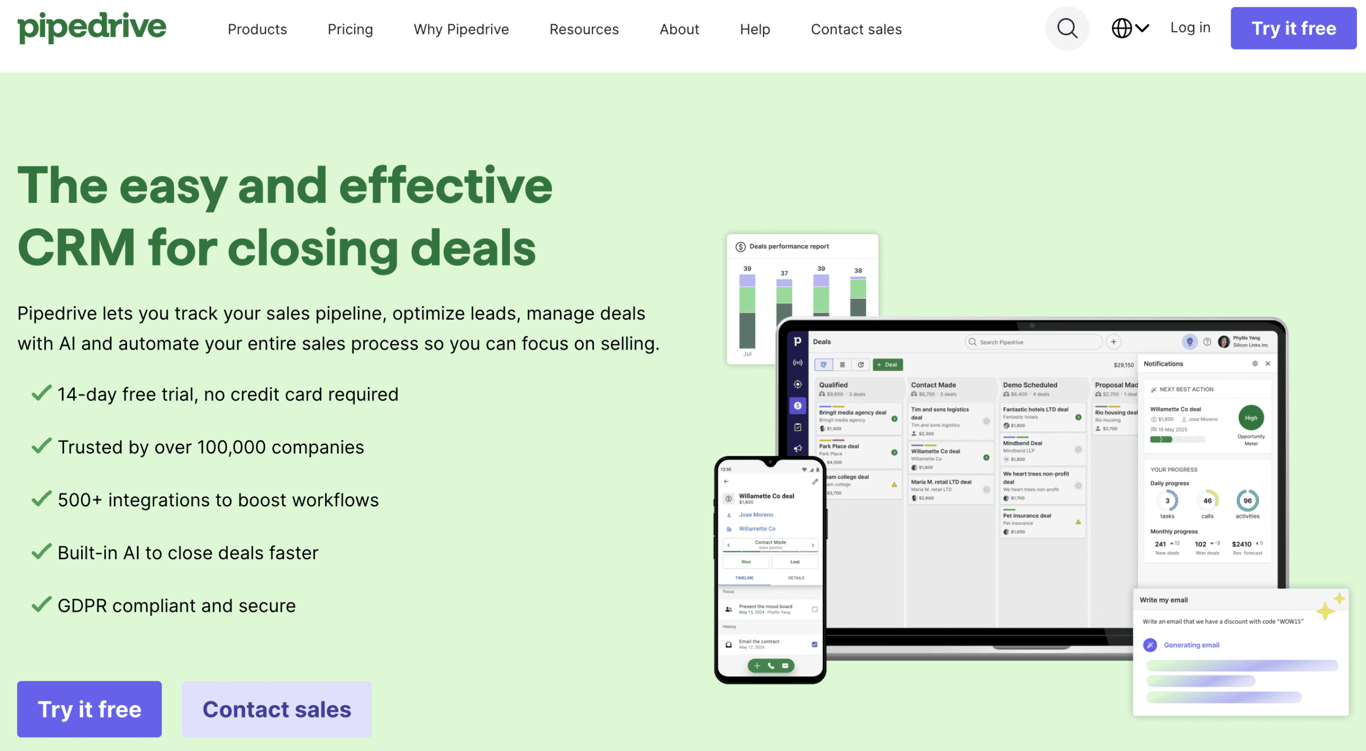
Pipedrive is primarily a sales CRM, but its Campaigns add-on makes it a viable alternative for B2B companies.
While similar to Klaviyo in that it sends mass emails, Pipedrive is fundamentally different: it is built for sales teams closing high-ticket deals, not ecommerce stores selling t-shirts.
If your business relies on sales reps making calls rather than shopping carts processing orders, Pipedrive is the superior choice.
Key features of Pipedrive:
- Sales integration: Email activity such as opens and clicks is directly visible to sales reps, helping them time their follow-up calls exactly when a prospect is reading an email.
- Visual pipeline management: Its core strength is its unmatched visual pipeline for managing sales stages. You can filter and segment contacts based on exactly where they are in the deal cycle.
- Simple campaign editor: Offers a drag-and-drop interface, professional templates, and the ability to send plain-text style emails that look like personal outreach rather than marketing blasts.
Limitations of Pipedrive:
- Not for ecommerce: Lacks cart abandonment flows, product feeds, or transactional ecommerce triggers.
- Basic automation: While efficient for sales, the marketing automation logic is limited compared to Klaviyo’s complex, branching behavioral flows.
Pipedrive pricing:
Pipedrive’s pricing is unique because you pay for the CRM license plus the marketing add-on. For B2B teams, this consolidation is often cheaper than paying for a separate marketing platform.
- Free trial: A 14-day free trial is available for the CRM to test the full system with no credit card required.
- Paid plans: The CRM license starts at $14/user/month, while the marketing add-on starts at $16/month.
10. Postscript
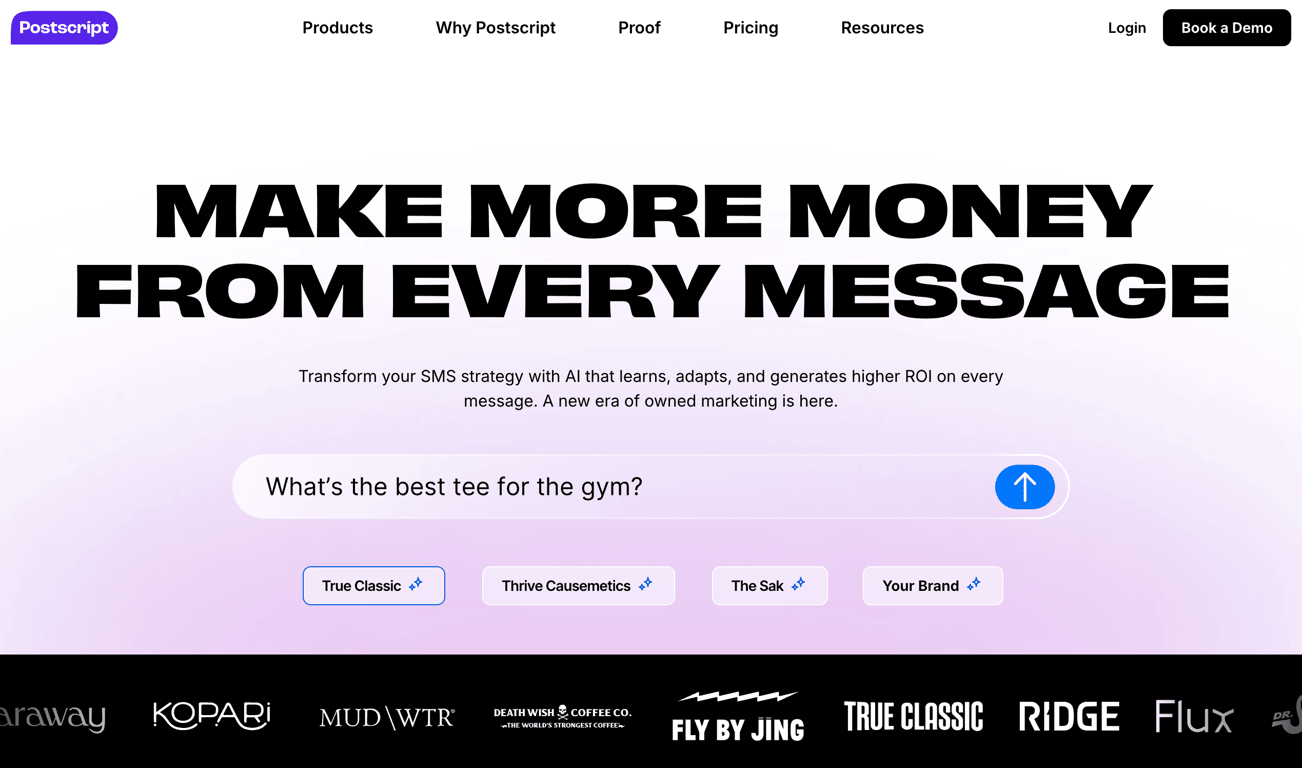
If you’re looking for a tool for SMS marketing, Postscript is an excellent option. It allows for highly specific, conversational text marketing for ecommerce stores.
You would usually pair this with a dedicated email tool to form a complete strategy, as this is an alternative specifically for the SMS side of Klaviyo.
Key features of Postscript:
- Conversational SMS: Unlike standard broadcast tools, Postscript is designed for two-way conversations with customers, allowing them to reply to texts to buy or ask questions.
- Safe send: Includes built-in features that prevent you from over-texting customers and annoying them, protecting your brand reputation.
- Shopify specific: Built exclusively for Shopify, ensuring deep integration with store data. This allows for list growth features like Onsite Opt-ins that can convert better than standard pop-ups.
Limitations of Postscript:
- No email: It is SMS only. You cannot send emails with Postscript, so you will need a separate subscription for your email provider.
- Platform lock: Currently, it only works with Shopify, whereas Klaviyo works with other platforms.
Postscript pricing:
Pricing is based on credit usage (messages sent). It can be more cost-effective for heavy SMS users who want specialized features that Klaviyo’s add-on SMS lacks.
- Free trial: A 30-day free trial is available, which usually comes with free credits to test the system.
- Paid plans: Start at $100/month, which includes API access and priority support. There is also a pay-as-you-go option with no fixed monthly fee, though it requires a $30/month minimum spend on credits.
How to choose the best tool for email marketing?
To choose the best tool for email marketing, identify your primary business needs and technical comfort level. Instead of looking for the tool with the most features, look for the one that removes the specific bottlenecks slowing you down right now.
- Consider your business type: If you run a high-volume ecommerce store, stick to data-heavy tools like Omnisend or Drip. If you are a service business or creator, prioritize ease of use with Hostinger Reach or MailerLite.
- Evaluate your “Time-to-Send”: Test how long it takes you to create a campaign in a trial. A powerful tool is useless if it takes you three hours to design one email.
- Check the integration ecosystem: Ensure the tool connects natively to your website builder or CRM without needing third-party services like Zapier.
- Analyze scaling costs: Look at the price jump for 5,000 and 10,000 subscribers, not just the price for your current list size, to avoid being trapped in a platform that becomes unaffordable as you grow.
How to get the most out of your email marketing platform
To get the most out of your email marketing platform, shift your focus from sending campaigns to building systems. The real value of these tools lies in the automated background flows that generate revenue automatically.
Start by setting up a basic welcome sequence and an abandoned cart flow – these two automations alone typically account for a significant portion of email revenue.
Once your basics are running, use your platform’s data to clean your list regularly. Removing inactive subscribers improves your deliverability rates and lowers your monthly costs.
Finally, don’t be afraid to automate your emails using AI tools to speed up copy and design, ensuring you stay consistent without burning out. For more strategies on improving your open rates and engagement, check out our guide on best email marketing practices.
All of the tutorial content on this website is subject to Hostinger's rigorous editorial standards and values.

Simon is a dynamic Content Writer who loves helping people transform their creative ideas into thriving businesses. With extensive marketing experience, he constantly strives to connect the right message with the right audience. In his spare time, Simon enjoys long runs, nurturing his chilli plants, and hiking through forests. Follow him on LinkedIn.