How to write a product review that readers trust and share
Mar 09, 2026
/
By Margarita L.
/
10 min Read
Great product reviews drive purchasing decisions, establish you as an authority in your niche, and build trust with your readers.
The key to achieving this? It’s in combining detailed analysis with practical insights to help shoppers figure out if a product truly meets their needs.
This guide will show you how to write authentic product reviews by covering key steps like hands-on testing, understanding your audience, and crafting engaging content.
You’ll learn how to write attention-grabbing headlines, share meaningful experiences, and create honest comparisons.
1. Test the product first-hand
Testing products yourself is essential because people trust real experiences, not summaries of other reviews. Every detail you discover during testing helps build a complete picture of the product’s true value and makes your review authentic.
When testing a product, pay attention to:
- First impressions – How does that skincare product feel on your skin? Is that new app confusing to navigate? Such early experiences often reveal the biggest pros and cons.
- Basic features – Make sure the product does what it promises. A long-lasting lipstick should actually last through your coffee. And a laptop needs to handle your everyday tasks without lagging.
- Quality – Use the product regularly to spot issues before writing a review. A phone case might look great but crack on the first drop. A moisturizer could separate after a month in your drawer.
- Special features – Test what makes the product unique. Maybe it’s a coffee maker’s cold brew setting or a foundation’s perfect shade match. Your readers need to know if these extras are worth paying for.
- Real problems – Note any performance issues like battery life that doesn’t last as promised, clothes that shrink in the wash, and beauty products that cause reactions. These details help readers avoid costly mistakes.
It’s also important to systematically document your testing journey. Your initial product impressions might change over time, and keeping notes of such shifts makes your review more comprehensive and trustworthy.
Let’s look at a real-life example of an authentic review of a skincare brand for acne-prone skin. The author begins by sharing their struggle with acne, making the review instantly relatable.

They then explain how they tested the product and share their overall experience, encouraging the reader to keep scrolling for more details.

2. Define the product’s target market
After testing the product, use your experience along with pricing and marketing research to determine its target users. This helps you write reviews that match specific reader needs with product benefits.
Analyze these key areas:
- Test results vs marketing – Does your hands-on experience match the experience of those the product claims to serve? A “beginner-friendly” video editing tool might actually require technical knowledge and an acne-safe foundation might trigger breakouts.
- Price vs features – Compare what you learned from testing against the price. A $200 keyboard might justify its premium price with durability and special features professionals need, while a $50 one could offer better value for casual users.
- Unexpected uses – Your testing might also reveal that a product solves additional problems it wasn’t advertised for. For instance, a project management tool marketed to small businesses might work perfectly for wedding planning or home renovation.
Once you’ve made all these notes, put together a user profile of the people who would benefit most from the product you’re testing.
Consider demographics like age and income level, technical proficiency, lifestyle factors like personal interests, and specific needs – the problems they’re trying to solve.
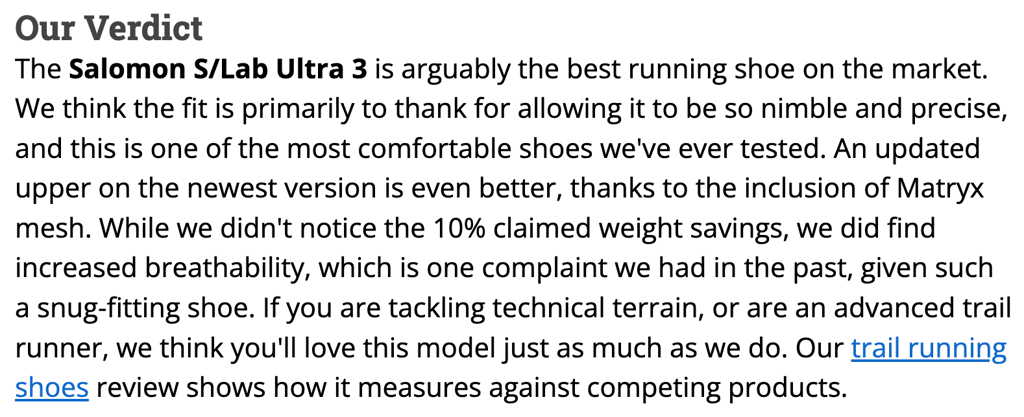
For instance, this review of hiking shoes specifies the ideal audience right away in the intro: ‘If you’re tackling technical terrain or are an advanced trail runner…’
3. Check for content gaps in existing reviews
Before writing your review, check how others have covered the same product. This research helps you spot what’s missing and where you can add unique value or a fresh perspective.
Visit review sites, platforms like Reddit and Quora, blogs, and YouTube channels covering the same product, and pay attention to:
- Questions in comments that go unanswered – e.g. “Does this work with X software?” or “How long does the battery actually last?”
- Missing real-world scenarios – e.g. no one tested that waterproof camera in rainy conditions.
- Skipped features or settings that could be important – e.g. a washing machine’s eco mode or a phone’s advanced camera settings.
- Lack of long-term usage feedback – e.g. everyone reviews it on day one, but what about after three months?
- Missing comparisons with specific alternatives – e.g. a gaming mouse compared only to premium options, ignoring mid-range alternatives.
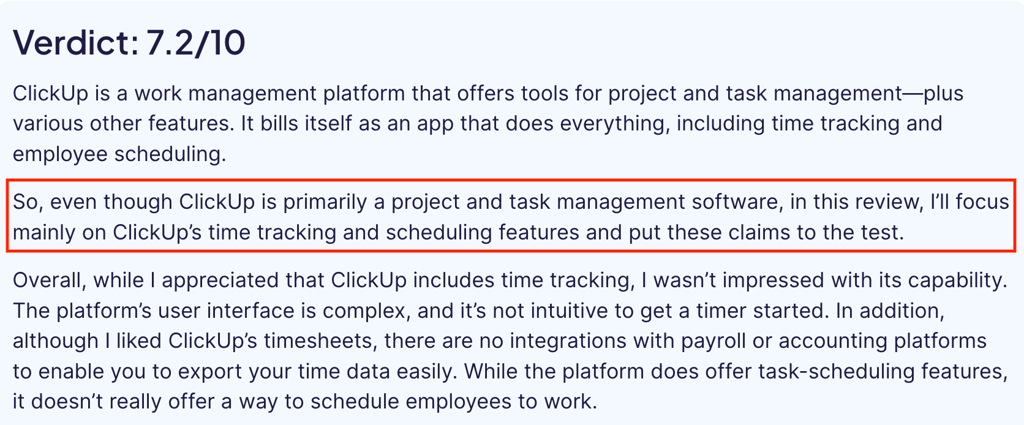
Similarly, you can highlight features that fulfill specific demands. For example, this review of ClickUp – a project management software – focuses specifically on the tool’s tracking and scheduling features, rather than just covering generic product management tool functionalities.
4. Outline the essential points to include in your review
After testing the product and researching other reviews, organize your findings into a clear outline. This structured approach helps you cover all crucial aspects and maintain a logical flow in your product review.
Here’s what your review outline should cover:
| Review section | What to include | Example (wireless keyboard) |
| Basic specs and pricing | Model details, technical specifications, cost | Logitech MX Keys, wireless connectivity, $119.99 |
| Target audience insights (best for) | Who benefits most from this product, based on testing | Best for professionals who work across multiple devices |
| Performance details | Real-world test results and experiences | Two-week battery life, smooth typing experience, works well across devices |
| Standout features | Unique selling points and special capabilities | Smart backlight that activates when hands approach, USB-C charging, dedicated macro keys |
| Common questions | Key concerns found in your research | iPad compatibility, typing noise level, battery life with backlight on/off |
| Comparisons and value | How it compares to alternatives, price justification | Performs better than cheaper alternatives for multi-device use, but is overkill for basic typing |
5. Start with an attention-grabbing headline
Start with writing an engaging, specific, and relevant headline for your review. It’ll determine whether readers will click through to your review or scroll past it.
To get it right, brainstorm a few headline ideas upfront, then refine and choose the best one once your review is complete.
Here’s how you can make your product review headlines more effective:
- Be specific about the focus of your review – For example, “Sony WH-1000XM5 vs Bose 700: Which Really Wins at Noise Canceling?” This creates interest by promising a specific comparison but doesn’t reveal the conclusion, prompting the reader to click.
- Feature key findings – “M2 MacBook Air: Impressive Speed Hampered by Heat Issues.” This works better than generic headlines because it shares real discoveries from testing, helping readers understand what makes your review valuable.
- Include real-world evidence from testing – “Breville Barista Express: 100+ Espresso Shots Later.” Mentioning specific testing details builds credibility and shows readers they’ll get insights based on thorough, personal experience.
- Focus on practical insights – “Budget Webcam Setup That Fixed My Video Quality.” This approach resonates because it addresses a real problem and promises a concrete solution rather than just describing features.
- Highlight important details – “Air Fryer’s Dual Basket System: A Game-Changer for Family Meals.” By focusing on a specific feature’s impact, you show readers exactly what makes this product worth their attention.
To make this even easier, use this formula:
[Product] + [Key Finding/Feature] + [Impact/Benefit] + [Hook]
Here’s a real-life example that follows it:

6. Write an engaging introduction
Next, write your introduction. The opening section helps you quickly establish trust and show readers you understand their needs.
A compelling intro makes readers think “This person gets my situation.”
Use these tips for writing engaging introductions:
- Share a relatable experience – e.g. “After three months of comparing every wireless earbud on the market, I finally found one that doesn’t hurt my ears during long workouts.”
- Address common frustrations – e.g. “Finding a laptop that’s both powerful and portable usually means spending a fortune. But this budget option surprised me.”
- Establish testing credibility – e.g. “I’ve spent the last month using this coffee maker daily, testing every feature and comparing it to similar models.”
- Be specific about your journey – e.g. “When my old food processor died mid-recipe, I needed a replacement fast. After researching 20+ models, here’s what I discovered about this one.”
- Show what’s at stake – e.g. “With photo editing being my livelihood, I can’t afford to monitor color accuracy issues. That’s why I was skeptical about this budget display.”
All this helps you showcase that your review is authentic, story-driven, and relatable right away. Here’s a formula you can use:
Effective intros: [Relatable Situation] + [Why This Product Matters] + [Your Testing Approach]
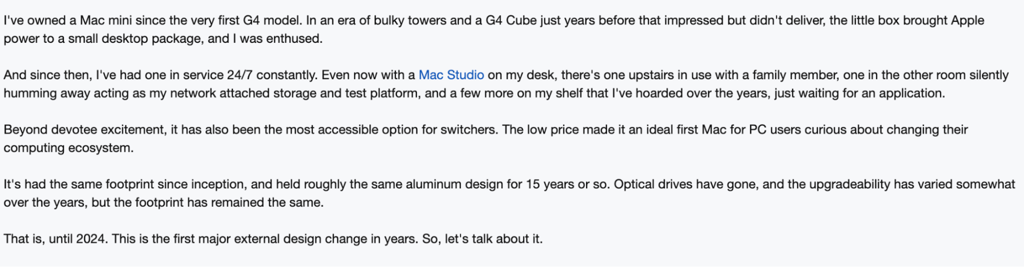
For example:
7. Share key features of the product
Next, provide an overview of the product’s core functionalities. This helps readers understand what they’re getting and why it matters to them.
While manufacturers love to highlight technical specifications, your job is to translate these numbers into real value for readers.
Take power banks – instead of simply mentioning the “24,000-mAh capacity and 140W charging,” explain that the device charges laptops and phones simultaneously and refills its own battery within an hour.

Most importantly, connect these features to your hands-on experience to reveal the true story behind each feature. Instead of simply listing specifications, explain how each of them enhances or limits the product’s core purpose.
Here’s another great example of how this can be done:

8. Share your experience and analysis
Next, describe your testing methodology and experience to build credibility for your product review. Break down your evaluation process in detail and mention:
- Duration of testing, in hours, days, or months
- Specific usage scenarios and conditions
- Any variables that might affect performance
- Your relevant background or expertise
- What do you compare it against
- Testing environment and circumstances
For example, the 47 Skin review we mentioned earlier talks about how long the product has been tested and by who:

This level of detail shows readers you conducted thorough, methodical testing rather than simply trying the product once or twice (or not trying it at all). It also helps them understand if your experience is relevant to their situation and trust your conclusions.
9. Focus on the product’s benefits
You will also need to explain how the product solves specific pain points for the target users.
While you’ve already tested the product and identified its key features, this step lets you dig deeper into the real value it offers.
Here’s what you should consider:
- Explain what problem the product solves – Instead of stating that a smartwatch tracks fitness, describe how it helps users stay consistent with their workouts, track progress over time, and improve sleep patterns for better recovery.
- Show why it stands out – Highlight additional benefits, such as its lightweight design that makes it comfortable for all-day wear, even during intense workouts or sleep.
- Connect benefits to specific users – If the smartwatch offers advanced recovery tracking, athletes can optimize their training, while busy professionals can ensure they’re getting enough rest.
- Highlight long-term value – Does the smartwatch maintain accuracy and performance over time? Does it replace the need for separate fitness trackers, making it a smarter long-term investment?
By focusing on these benefits, you’ll help your readers understand what the product does and why it’s worth their time and money.
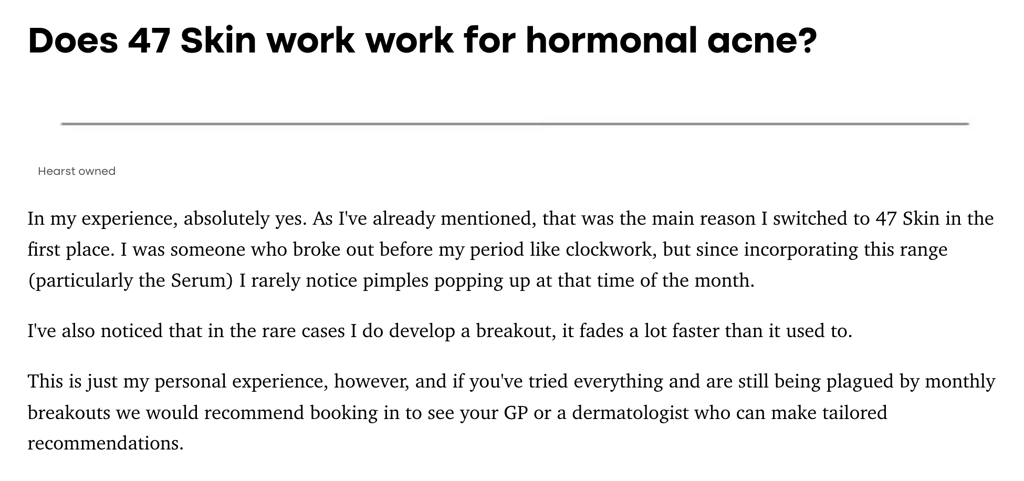
For instance, our 47 Skin review directly addresses the key user question: can this product tackle hormonal acne? This helps the readers quickly get to the bottom of it and decide whether the product is worth buying.
10. Provide honest pros and cons of the product
The pros and cons section is pretty much the golden standard of product reviews. Many readers skip directly to it to quickly assess a product’s value.
Why?
Because of its clear, skimmable format that makes it much easier to understand the review’s takeaways. Here’s a great example from TechRadar:
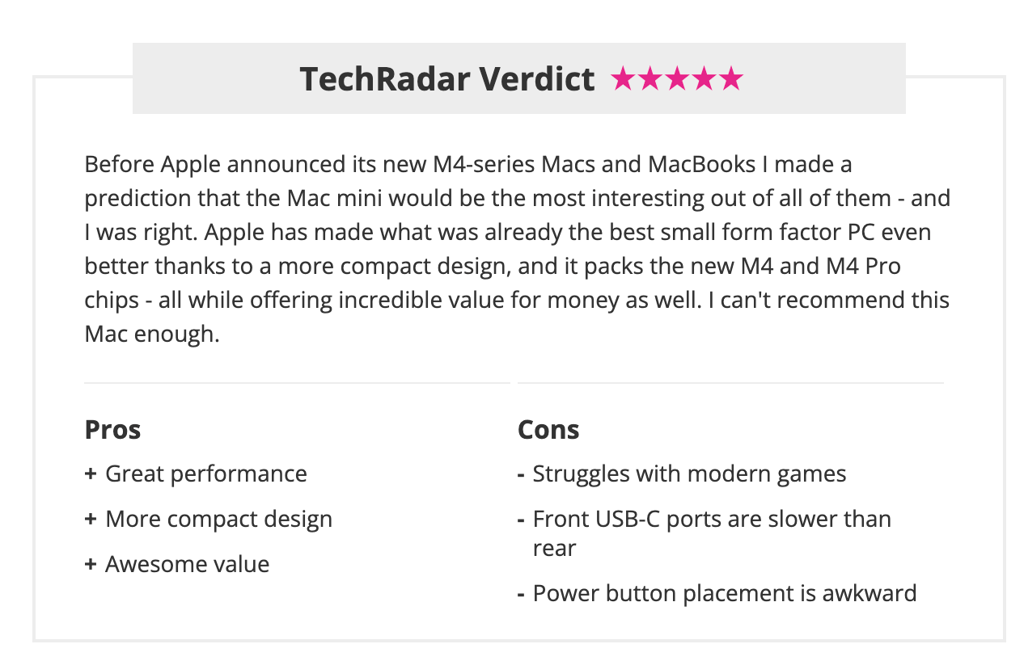
When writing the pros and cons section, be honest. Highlight what the product does well, but also mention any downsides or limitations. Use the following tips to structure it effectively:
- Keep it balanced – Even the best products have drawbacks, and the flawed ones might have their strong points.
- Focus on real-life impact – Instead of generic phrases like “good quality,” explain how a feature actually benefits (or limits) the user.
- Use bullet points for easy reading – Readers often just skim reviews, so make sure that yours is easy to read and scroll through.
11. Provide visual elements
Adding original images or videos to your product review page is another step that helps you build credibility and engagement. It also improves the overall user experience with your content and facilitates reading.
Here’s what you can capture:
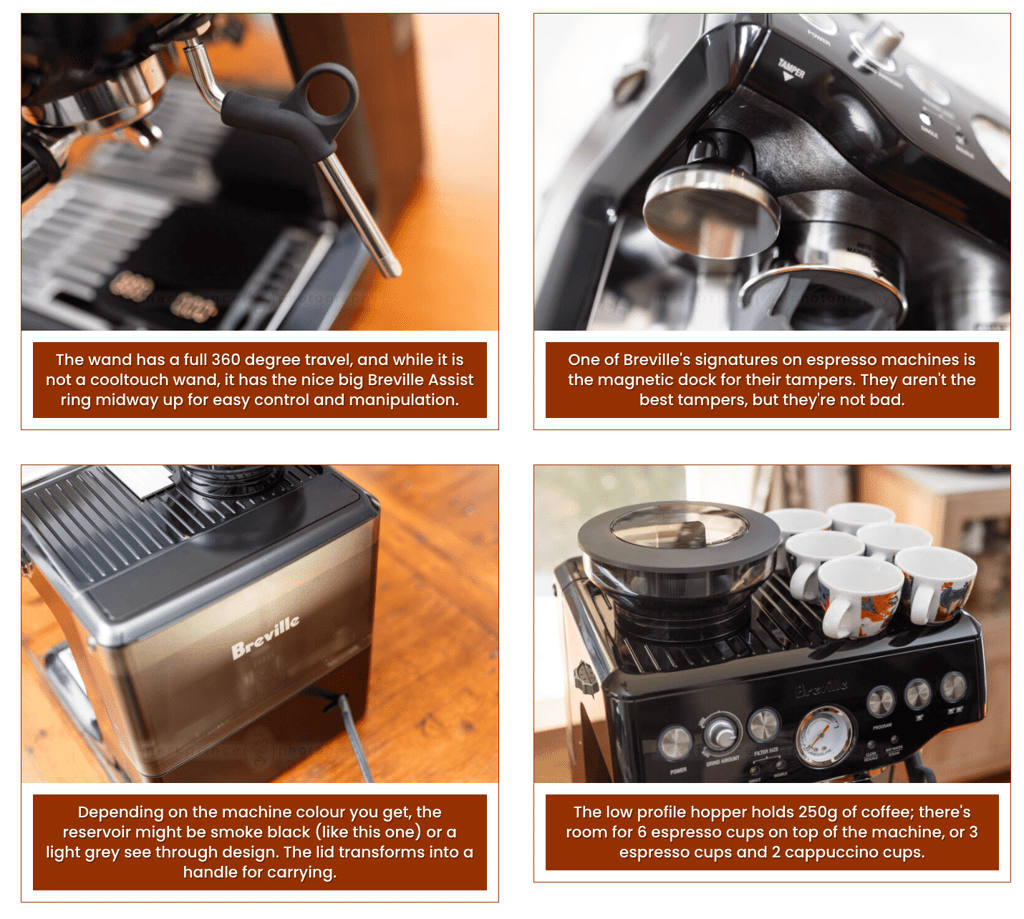
- Show the product in use – Take photos or videos of the product in action. For example, if reviewing a coffee maker, include videos of it brewing coffee.
- Highlight key features – Capture details like texture, size, or unique functions that might not be obvious from a description.
- Compare before and after results – If applicable, show how the product makes a difference over time. This works well for skincare, cleaning products, or performance-based tools.
- Include different angles or setting – If the product is used in multiple ways, showcase its versatility through different shots.
Here’s a great example of a coffee maker review providing detailed pictures of its core features:
12. Provide a comparison to similar products and offer your opinion
Finally, comparing the product to similar options helps readers understand if it’s the right choice or if something else might work better for their needs.
When making such comparisons, consider:
- Key differences in features – Does this product offer anything unique compared to others in the same price range?
- Price vs. value – Is it worth the cost, or are there cheaper alternatives with similar performance?
- Performance and user experience – How does it feel to use compared to other products? Does it solve the same problem more efficiently?
- Target audience fit – While one product might be great for professionals, another might be better suited for casual users.
For example, you can organize this information into a table that compares relevant tools across key dimensions, like it was done in the ClickUp review we reference earlier:

Why product reviews are important
So, why are product reviews valuable? Because they help both buyers and sellers by showing how a product actually performs. Here’s how:
For buyers, reviews help:
- Make informed buying decisions based on how the product works in everyday use
- Spot potential product issues that might not be obvious, like durability concerns
- Compare alternatives to find the best option for their needs
- Avoid wasting money on products that don’t meet expectations
For sellers, reviews:
- Build trust by showing that real-world users have tested and reviewed the product
- Provide useful feedback to improve future versions
- Increase sales since people are more likely to buy products with strong reviews
- Improve search rankings, making products easier to find online
How can you benefit from writing product reviews
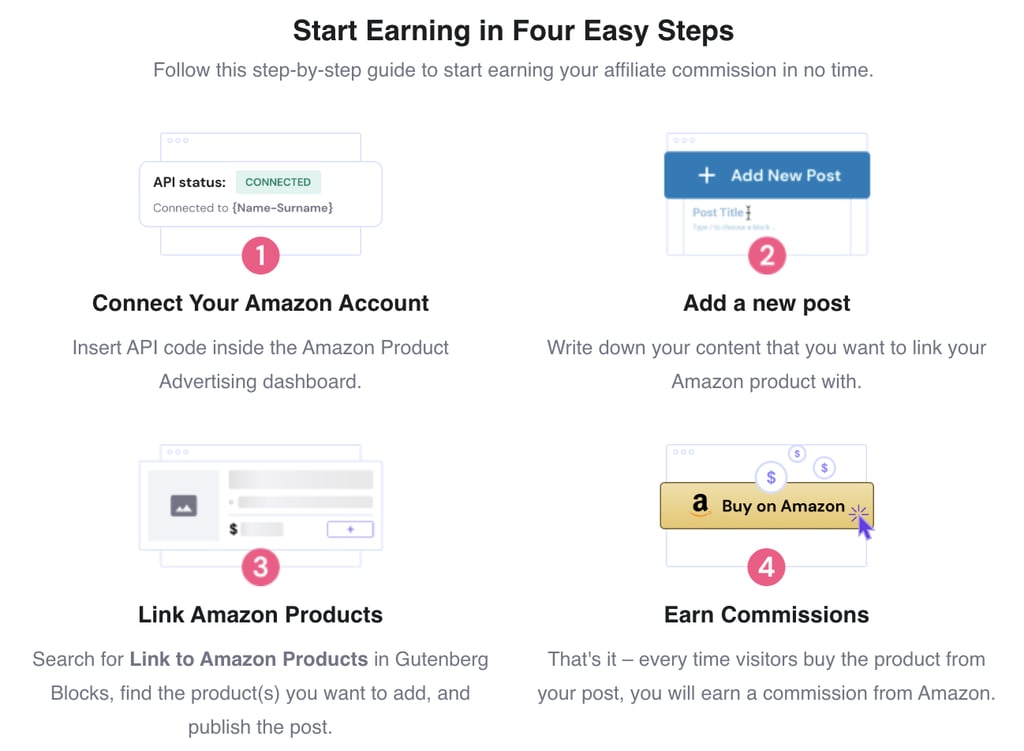
Writing online reviews is a great way to earn consistent affiliate marketing income. By including affiliate links, you get a commission when someone buys a product based on your recommendation.
One of the easiest ways to start is with Hostinger’s WordPress Amazon Affiliate integration, which helps you quickly build an affiliate website. You can use it to:
- Easily pull products from Amazon and display them on your website
- Add affiliate links to your product reviews without switching tabs
- Use pre-built templates designed to help your pages rank higher in search results
The best part? It’s extremely easy to set up and you can start creating content and growing your income right away.

Final thoughts
A product review should provide in-depth, honest details that help readers decide if a product is right for them. That means focusing on real experiences and exploring key benefits instead of simply describing existing product features.
To sum up, here’s how you write a strong review:
- Test the product yourself – First-hand experience makes your review more reliable.
- Define the target audience – Show who would benefit most from the product and make sure your review caters to their needs.
- Fill content gaps – Research existing online reviews and cover what others have missed to make your content stand out.
- Structure your review clearly – Include pricing, features, performance, and comparisons, among other things.
- Explain key benefits – Focus on how the product solves real problems.
- List pros and cons – Be honest about any potential drawbacks.
- Use original visuals – Add credibility and make your review page more engaging with photos and videos.
- Compare similar products – Help readers decide by demonstrating how the product stacks up against the alternatives.
By following these steps, you’ll create reviews that are helpful, trustworthy, and valuable to both readers and your own platform.
How to write a product review FAQ
How long should a product review be?
There’s no ideal content length for a product review. Instead, focus on making it long enough to cover key details without losing the reader’s interest. For simple products, 800–1,500 words could be enough enough. For more complex products, 2,000+ words may be necessary to include in-depth testing, comparisons, and long-term insights.
How can I make my product review more engaging?
You can make your product review pop by removing generic content and adding a personal touch. Weave in real stories, throw in some unexpected insights, and make readers feel like they’re getting the inside scoop. It’s also important to make it easy and enjoyable to read by adding detailed sections, bullet points, and useful images. The goal? Making your review feel authentic and practical right away.
What key points should I include in my review?
A strong product review should cover who the product is for, its main features, pros and cons, and how it compares to alternatives. Include first-hand testing insights, real-world performance reviews, and potential downsides. If relevant, mention pricing, long-term durability, and any limitations. Then, summarize it all with a final verdict or recommendation to help readers make a decision.
All of the tutorial content on this website is subject to Hostinger's rigorous editorial standards and values.

Margarita is a Barcelona-based marketer with over eight years of experience across various tech industries. She also teaches content marketing and SEO at business schools and blogs about digital marketing.