How to start a side business
Jun 16, 2026
/
Alma
/
12 min Read

Starting a side business means creating a reliable extra income stream alongside your main job, without putting your finances at risk or running yourself into the ground.
A side business sits between a hobby and a full-time company – it’s more intentional than something you do for fun, but it doesn’t demand the commitment or pressure of quitting your job. For many people, a side business is appealing because it diversifies your income, builds practical skills, and creates long-term flexibility.
Whether you’re testing side business ideas or planning to start a side hustle that grows gradually, a part-time business lets you move forward without putting everything on the line.
If you’re trying to figure out how to start a side business, the process looks like this:
- Choose side business ideas that fit your skills, time, and income goals
- Validate demand so you’re not guessing what people will pay for
- Set boundaries so the business stays part-time and sustainable
- Pick a business model and pricing that fit how you want to work
- Cover basic legal and financial setup before taking payments
- Launch small, earn extra income, and improve as you go
Most side businesses don’t grow overnight. What makes the difference is building something practical, sustainable, and aligned with how you actually want to live and work.
1. Identify the right side business idea
The best side business ideas start with what you can realistically sustain after a long day, not with trends or viral posts.
Start by looking inward. What skills do you already use at work? What problems do people ask you about? What tasks feel familiar instead of draining?
Then look for market signals – evidence that a problem is real and demand already exists. You’ll find them in repeated questions on Reddit or Facebook groups. Read Amazon reviews on products in your niche to see what frustrates people. Check job boards like Upwork or Fiverr to see what services are in demand.
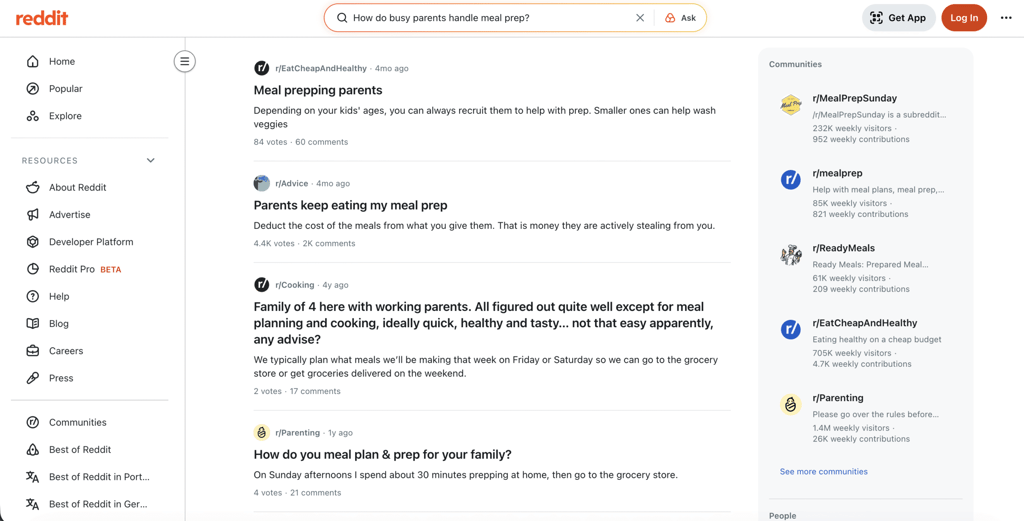
When the same issue shows up in conversations and transactions, it’s a strong signal the idea is worth testing. The next step is checking whether that problem turns into a profitable side business.
Strong ideas balance three things:
- Interest – you don’t resent the work after a few weeks
- Profitability – others already pay for similar solutions
- Time reality – it fits into your evenings or weekends
Once those three align, you can narrow your options to a few common side business ideas:
- Service-based work like freelancing, consulting, or virtual assistance
- Product-based options like handmade goods, reselling, or print-on-demand
- Digital and online side business models like templates, courses, content sites, or tools
To see what already works in practice, review profitable side business ideas and focus on ideas you could actually maintain long-term.
2. Validate demand and profitability
This step determines whether your idea becomes a profitable side business or quietly stalls.
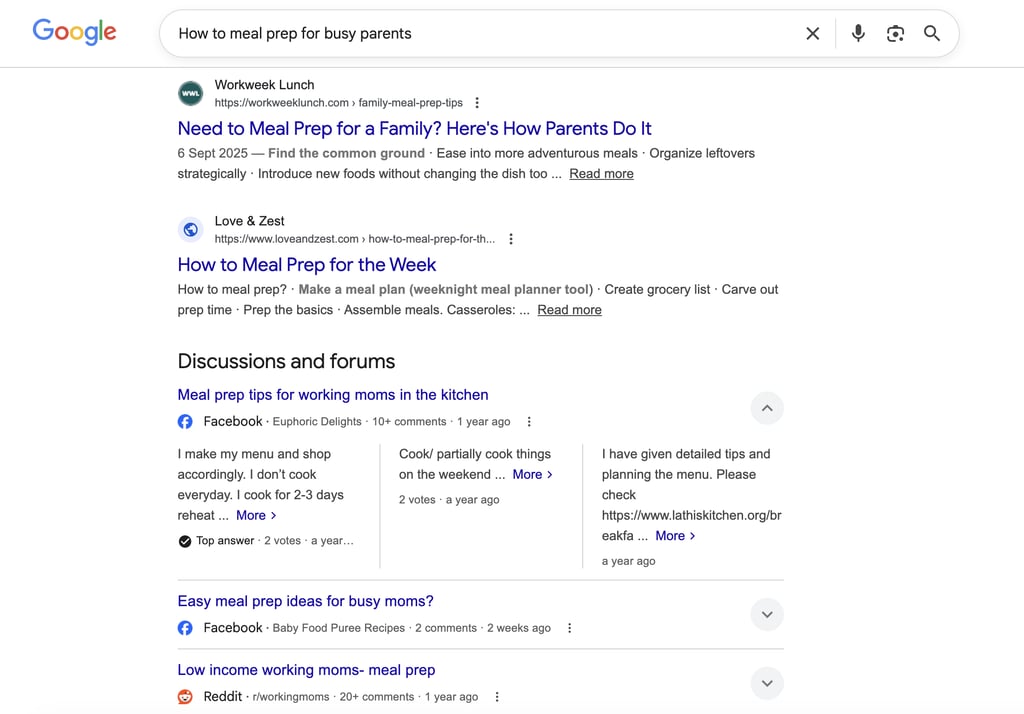
To validate a business idea, start by defining your target audience clearly. One specific group with a clear problem is easier to serve than trying to cater to “anyone who might be interested.” For example, “busy parents who need meal prep help” is more actionable than “people interested in cooking.”
Validation doesn’t need to be complex. You can test market demand using a few simple methods:
- Keyword research shows whether people actively search for solutions. Tools like Google Keyword Planner or AnswerThePublic help you see whether a problem comes up consistently or barely at all. If “meal prep service for families” gets 8,000 searches monthly, demand exists. If it gets 20 searches, reconsider.
- Competitor analysis reveals what already sells and how it’s positioned. Search for your idea and review the top results. Look at pricing, offers, and customer reviews to understand what people value and where current solutions fall short.
- Audience research shows how people describe the problem in their own words. Join Facebook groups, Reddit communities, or niche forums where your audience spends time. Pay attention to repeated complaints and the language people use to describe their struggles.

Then comes the math. Estimate what someone would realistically pay, subtract your costs, and see what’s left. This step helps you confirm whether the idea can support a profitable niche. Account for platform fees, basic tools, payment processing, a small marketing budget, and the value of your time.
Many ideas fail here, not because they’re bad, but because margins disappear once real costs are accounted for.
Skipping validation is one of the most common startup mistakes. According to CB Insights, 42% of startups failed because they built products nobody wanted. Validation takes effort upfront, but it’s far cheaper than discovering months later that no one is willing to pay.
Important! Compliments aren’t proof of demand. Encouragement from friends and family doesn’t equal customers opening their wallets. If someone isn’t willing to pay – or at least take a clear step toward paying – it doesn’t count as validation, no matter how supportive they sound.
Validation comes from evidence that your target audience is already paying for similar solutions. That’s why competition isn’t a warning sign – it’s proof the market exists. To understand what consistently sells, review the most popular products to sell and focus on patterns that repeat over time.
3. Set clear goals and constraints
A side business works only if it respects your limits. According to Hostinger’s entrepreneurship statistics, more than half of 2,000 small business owners say protecting evenings and weekends is essential to success, yet only 28% fully disconnect after work.
That’s why your goals need to be defined with both time and money in mind. Start by defining side business goals clearly. What level of extra income would actually change something for you? A few hundred dollars might cover groceries. A higher target could replace a car payment or childcare expense.
Be specific with your income targets. “Make extra money” is vague. “Earn $400 per month within three months to cover my car payment” gives you a clear benchmark and a reason to stay consistent.
Time matters just as much as money. Honest time management prevents burnout later, so decide how many hours you can commit each week without sacrificing rest, relationships, or your full-time job. According to our side hustle statistics, side hustlers spend an average of eight hours a week on gig work. 75% also balance their side hustle with a main job.
You also need to decide what you’re optimizing for. Short-term cash usually comes from service-based work, where you get paid this month for work you do this month. Long-term growth focuses on building assets – like content, products, or tools – that take longer to create but can compound over time.
Many people make faster progress by targeting one specific expense first. Replacing a subscription bundle, a utility bill, or a minimum debt payment keeps the goal concrete.
This clarity is what makes part-time entrepreneurship sustainable. When goals and constraints are defined upfront, the business fits into your life instead of competing with it.
4. Choose a business model and pricing
Your business model determines how you earn, how predictable your income is, and whether growth depends on more hours from you.
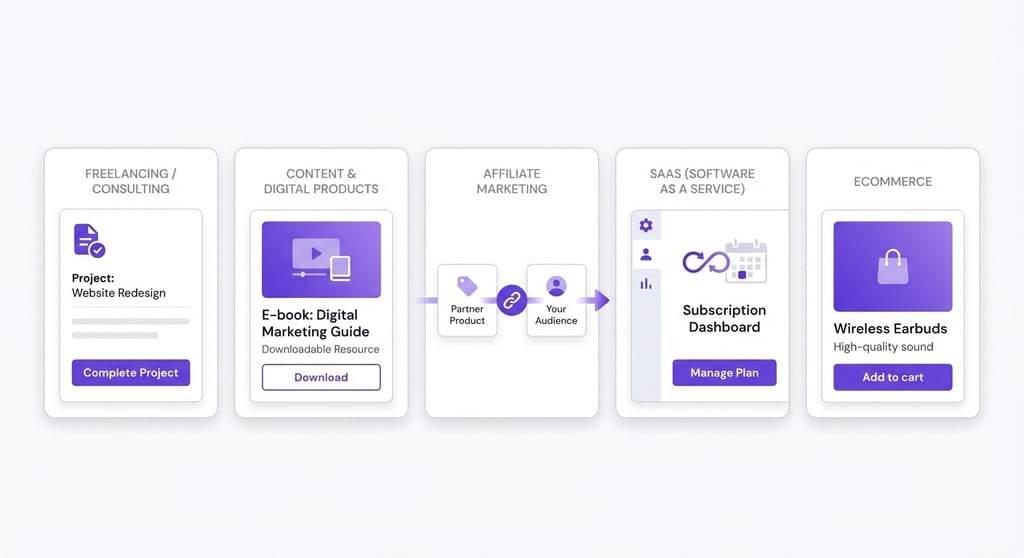
Here are five common online business models to consider:
- Freelancing or consulting. You sell a skill (writing, design, development, marketing, bookkeeping) and get paid per project or retainer. It’s the fastest path to revenue, but it usually scales by raising rates, productizing services, or hiring help.
- Content creation and digital products. You build an audience through YouTube, TikTok, newsletters, or a blog, then monetize with ads, sponsorships, or sales (templates, courses, downloads). It takes longer to gain traction, but it can scale without trading every dollar for an hour.
- Affiliate marketing. You recommend tools or products and earn commissions when someone buys through your link. It’s low-cost to start, but it depends on trust and consistent traffic. If you want the full setup, use our guide to start affiliate marketing.
- SaaS. You build a simple tool that people pay for monthly. It can become recurring revenue, but it requires more planning, support, and iteration. If this is your direction, read what SaaS is.
- Ecommerce. With an ecommerce business, you sell physical or digital products through your own store or a marketplace. Dropshipping and print-on-demand reduce upfront inventory risk, while holding stock can improve control and margins if demand is proven. For the basics, read what ecommerce is.
A simple way to choose is to match the model to your constraints. If you need income quickly, time-based services usually get you there sooner. If you want scalability, product-based models can grow beyond your available hours, but they require more patience upfront.
Now, set a pricing strategy that reflects reality. Price based on three inputs: the value you create, what the market already pays, and the effort it takes you to deliver consistently. Most side businesses don’t stall because the idea is bad – they stall because the price is so low the work starts to feel pointless.
To avoid underpricing, shift from hourly thinking to outcome thinking. For example, if you’re writing a blog post that helps a business generate leads, pricing per deliverable (or package) often fits the value better than a flat hourly rate.
Treat early pricing as a low-risk test:
- Set an initial price you can confidently deliver at.
- Offer it to a small number of people in your target audience.
- Watch what happens: if people say yes quickly, raise your price or tighten your offer; if they hesitate, improve the offer, clarify outcomes, or adjust the price.
- Keep iterating until the work feels worth it and customers buy without excessive convincing.
That’s the trade-off in one line: time-based models buy speed, product-based models buy scale – and the right pricing makes either one sustainable.
5. Handle legal and financial basics
At a minimum, your side business legal setup should cover three things: basic registration, whether a business license applies, and how you manage your business finances.
You don’t need to overcomplicate this early on, but skipping it entirely tends to create problems once money starts coming in. Most side businesses begin informally, often as sole proprietorships. This usually means fewer registration steps, but it also means there’s no legal separation between you and the business.
As income becomes more consistent or your work involves higher responsibility – such as selling physical products or providing services with potential liability – it’s worth reviewing whether a more formal setup makes sense.
Licensing requirements depend on what you sell and where you operate. Some online businesses don’t need a license at all, while others require state, county, or city registration. Selling digital products or services typically has fewer requirements than selling food, alcohol, or regulated professional services.
To understand what applies in your situation, review our guide on business license requirements for selling online.
Separating money from day one is one of the simplest ways to stay organized. A separate account for small business finances simplifies recordkeeping, supports basic online business compliance, and makes tax preparation far easier later.
You should also maintain basic tax awareness without overthinking it. Track income, keep receipts for expenses, and set aside a portion of what you earn for taxes as payments come in. You don’t need advanced accounting systems or legal advice at this stage – just consistent records and a clear trail.
Handled early, these basics fade into the background. Ignored, they tend to resurface later when fixing them costs more time and energy than doing them right the first time.
6. Create a simple launch plan
To launch a side business, focus on learning, not perfection.
Before anything else, it helps to be clear about what launching means at this stage. You’re not releasing a finished product or building a full system. You’re putting out the first version of something people can actually buy or use, so you can see how real users respond.
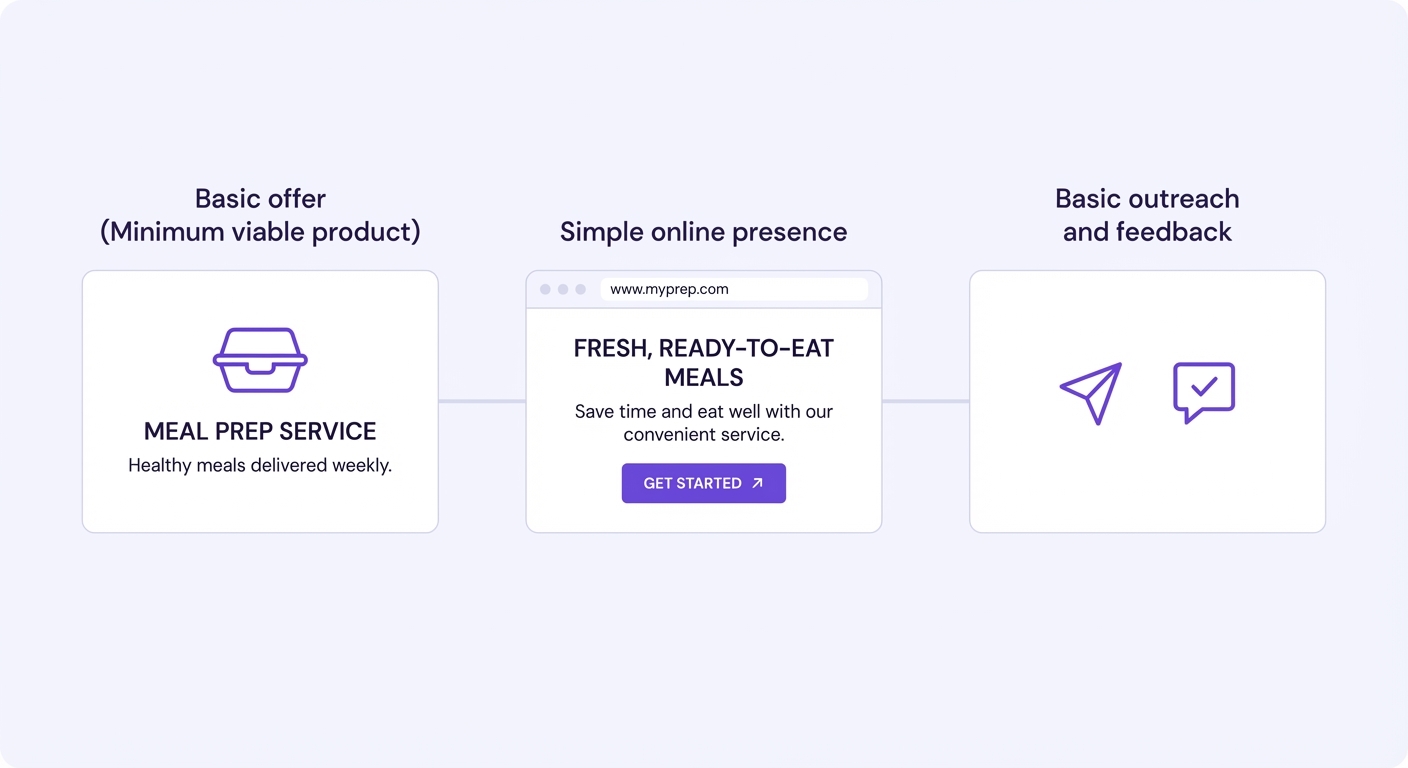
A practical business launch plan starts with a minimum viable product – the simplest version of your idea that solves one clear problem. This could be a basic service, a small digital product, or a limited product listing. The point is to test demand without overbuilding.
Alongside that, you need two basics: a simple online presence so people understand what you’re selling, and a fast, low-cost way to reach real users and collect feedback.
Starting small reduces risk. Most early mistakes don’t come from launching too soon – they come from spending too much time and money before learning what people actually want.
What you launch depends on what you’re selling:
- For services, this might be a short page or document that explains what you offer, how much it costs, and how to book you.
- For digital products, it could be one useful template, short guide, or basic tool – not a full course or platform.
- For physical products, it often means listing a small batch on a marketplace before committing to inventory.
Choose one place to start. That might be a website, a marketplace listing, or a single product page – the goal is to choose an online platform you can set up quickly and improve later. For many beginners, a simple website built with a tool like Hostinger Website Builder is enough to get online without dealing with technical complexity.
If you’re selling products, follow a focused path to launch an online store. If you’re still testing demand, it’s usually better to build a minimum viable product for testing instead of a full system.
Pro Tip
Keep your launch simple. You don’t need a polished brand, advanced features, or a complex funnel. You need a clear offer, a way to get paid, and a way to deliver value. Real user feedback will guide your next steps far better than trying to perfect everything upfront.
7. Market and acquire first customers
Your early goal isn’t to scale but to get proof that someone is willing to pay.
Effective side business marketing at this stage is about visibility and learning, not growth hacks. You’re trying to get first customers, understand what resonates, and refine your offer before doing more.
Most beginners find early customer acquisition through three simple channels:
- Start with people who already know you. Let friends, former colleagues, and existing connections know what you’re offering in a straightforward way. You’re not pitching – you’re making it easy for the right person to connect or refer you.
- Show up where your audience already spends time. Freelancers can use platforms like Upwork or Fiverr. Product sellers can list on marketplaces relevant to what they sell. If you provide services, participating in niche communities, forums, or professional groups helps you build trust before promoting anything.
- Use direct but respectful outreach when it makes sense. This works especially well for service-based businesses. Reach out to a small number of potential customers with a clear, specific message about how you can help. Focus on relevance, not volume.
As you do this, pay close attention to responses. Testing messaging doesn’t mean chasing likes or views. It means noticing which messages get replies, questions, or purchases. Early online marketing is about feedback.
Content can support this process if you keep it simple. Use the platform your customers already use – LinkedIn or email for professional services, Instagram or TikTok for consumer audiences, or a basic blog if people actively search for your solution. Pick one channel and show up consistently.
To support visibility over time, learn how to bring customers to your website using simple, repeatable tactics.
The first few customers matter more than any metric. They validate demand, reveal objections, and show you what to improve.
8. Manage time, energy, and risk
A side business only works if it fits into your life, not if it competes with it.
Maintaining side business balance starts with being honest about how your days actually look. If you work full time, you don’t need marathon sessions or perfect routines – you need work blocks you can keep. That might be two mornings before work or one longer weekend session.
The goal isn’t squeezing in more hours, it’s showing up consistently without resenting it.
Simple systems help you protect energy. Instead of juggling tasks in your head, keep one place where everything lives – what needs doing, what’s in progress, and what can wait. Prioritize work that directly moves the business forward, like serving customers or improving your offer. Tweaking logos or tools can wait when time is limited.
Important! Burnout creeps in when boundaries are unclear. Decide in advance when you work and when you don’t. Replying to messages once a day, instead of constantly checking notifications, keeps the business moving without draining you.
Managing business risk early is mostly about staying flexible. Keep expenses low, avoid long-term commitments, and don’t promise more than you can reliably deliver. Saying yes to everything might feel productive at first, but it’s also how reputations get damaged and energy runs out. Delivering fewer things well builds far more trust than overcommitting.
It also helps to zoom out occasionally. The way people work, hire, and earn is changing, and side businesses often benefit from that shift.
Understanding trends around automation, flexibility, and skills can help you make smarter long-term decisions. Insights into the future of work and the global job market can give you that perspective.
Here’s the thing most people miss: steady effort beats heroic effort. Working a few focused hours each week for months builds far more than pushing hard for a few weeks and burning out. When your side business respects your time and energy, it has room to grow.
What are the key benefits of starting a side business
Understanding how to start a side business helps you think beyond short-term income and focus on what the business can give you over time.
A well-run side business creates extra income comes with four practical benefits, namely:
- Extra income that eases pressure on your main paycheck
- Income diversification, so you’re not relying on a single source
- Transferable skills that strengthen your confidence, career options, and earning power
- Flexibility and career leverage, giving you more control in negotiations and job decisions
Over time, a side business can turn into a long-term asset because the work compounds. Systems replace manual effort, content or products keep selling after they’re created, and relationships or audiences continue to generate value.
Even if income pauses, the skills, processes, and brand you’ve built don’t disappear. They remain something you can restart, expand, or build on later.
Most side businesses don’t feel transformative at the beginning. Progress tends to be slow and uneven at first, with small wins that only add up over time – and that’s normal. When the business fits into your real schedule and grows at a pace you can sustain, those early efforts compound instead of burning you out.
Common mistakes to avoid when starting a side business
Most entrepreneur mistakes come from skipping fundamentals. Some of the most common startup mistakes include:
- Skipping validation and building something nobody asked for
- Underpricing work or ignoring real costs, which leads to burnout
- Chasing trends instead of following a clear strategy
- Expecting fast results and quitting before momentum builds
These online business mistakes are easy to make, especially early on. Avoiding them requires patience, testing, and consistency, rather than chasing perfection. Progress usually comes from doing the basics well, repeatedly.
Best practices for building a sustainable side business
Sustainable side businesses are built with intention over time. Here are four best practices that support long-term growth:
- Reinvest early profits into tools, education, or small tests that reduce friction – for example, better software, a paid course, or a low-risk marketing experiment.
- Build consistency with simple systems, such as fixed work blocks, checklists, or templates, so progress doesn’t depend on feeling motivated.
- Document workflows for recurring tasks – write down steps, save templates, or record short notes – so you’re not solving the same problems from scratch each time.
- Think in months and years, not days and weeks, and judge progress by steady improvement rather than short-term results.
Tracking long-term business trends can guide smarter decisions without chasing every new idea. That perspective makes it easier to build something that keeps working even when your schedule changes.
When to scale your side business
Most people start thinking about scaling when the business begins to demand more structure. That usually shows up when customers return consistently, delivery feels repeatable instead of rushed, and growth fits into your actual schedule. You’re no longer solving the same problems from scratch each week, and the business keeps running even when you step away briefly.
At that point, scaling becomes a practical decision. You might automate repetitive tasks, outsource work that doesn’t need your involvement, or expand into new channels where your offer already performs well.
If you’re running a side business alongside other commitments, tools like Hostinger AI agents can help manage the marketing side of growth. Its specialized agents can assist with content creation, campaign planning, and sales outreach, freeing up more time to focus on serving customers. These business growth strategies help reduce friction and protect your time as demand increases.
For some, this stage also marks a gradual shift from side income toward primary income. That transition usually happens in steps – covering a specific expense, then replacing a paycheck, and only later considering a full exit from a job. Stability matters more than speed during that phase.
Not every business needs to grow larger to be successful. In many cases, scaling simply means removing yourself from one recurring task so the business runs more smoothly. The time you regain can go into higher-value work or back into your life.
If ecommerce is your path, this guide on how to scale an online business walks through practical ways to grow without adding unnecessary complexity. Done well, online business scaling supports the way you want to work and live, rather than reshaping everything around growth.
All of the tutorial content on this website is subject to Hostinger's rigorous editorial standards and values.

Alma is an AI Content Editor with 9+ years of experience helping ideas take shape across SEO, marketing, and content. She loves working with words, structure, and strategy to make content both useful and enjoyable to read. Off the clock, she can be found gaming, drawing, or diving into her latest D&D adventure.