How to make money reselling: A guide to building a profitable reselling business
Apr 27, 2026
/
By Alma
/
15 min Read

To make money reselling, you need to buy items at a lower cost and resell them for a profit. A reselling business works because the same product can have very different values depending on where it’s sold and who’s buying it.
For example, a vintage jacket priced at $8 in a thrift store might sell for $45 on eBay or Poshmark, where buyers are actively searching for vintage clothes. After platform fees and shipping, the profit is what’s left.
Profitable reselling depends on five factors working together. Choosing the right niche determines demand, sourcing price affects margins, resale value sets pricing potential, platform fees reduce net profit, and operational efficiency determines how well the business grows.
It takes time to balance these factors, and small mistakes, like overpaying for inventory or forgetting to account for fees, can quickly wipe out profit, which is why most people start small.
Early on, five to ten hours per week is typical for sourcing inventory, creating listings, and shipping orders. Income varies, but many beginners earn $0–$500 per month in their first year while learning what sells and how to price correctly.
As sellers learn to manage these factors consistently, a reselling business becomes more predictable and easier to run. Focusing on a specific niche, refining sourcing processes, and maintaining a larger number of active listings allows sellers to build steady revenue and make money online through repeatable systems.
The process itself is straightforward: choosing a niche, product research, low-cost sourcing, item preparation, listing creation, order management, performance tracking, and reinvesting profits to grow the business.
1. Choose a profitable reselling niche
Choosing a reselling niche is about deciding which products you’ll focus on, rather than trying to sell everything you find. Common niches include clothing, electronics, books, or sneakers.
Sticking to a niche helps you recognize good deals faster and avoid competing directly with large stores. Buyers are also more likely to trust sellers who clearly specialize in what they sell.
Choosing reselling products you already know something about, like sneakers or vintage clothing, makes it easier to judge value, condition, and demand, and helps you avoid bad purchases.
But not every product in a niche is worth reselling. There are three things that matter most when you’re evaluating profitable niches for reselling: how fast an item sells (its sell-through rate), how much competition exists, and the average resale price.
Items that sell within about 30-60 days help keep money moving, while lower competition and higher-priced items usually lead to better margins for the same amount of work.
Some examples of products that often perform well:
- Limited sneakers from Nike, Jordan, and Adidas can double or triple in value if you know release cycles and how to spot fakes.
- Vintage 90s clothing, especially Levi’s, Carhartt, and concert tees, can turn $5 finds into $30–$50 sales.
- Designer handbags from brands like Hermès and Chanel can deliver strong profits but often take longer to sell and require authentication knowledge.
- Refurbished electronics, such as Apple accessories and gaming peripherals, tend to sell quickly and retain 50–70% of their original value.
2. Research products with resale potential
Before spending money on any item, do product research to confirm that people actually buy it. The price an item is listed for doesn’t matter, because anyone can set a high asking price and never sell. Only the prices items actually sell for show what buyers are willing to pay and reveal true resale value.
This check should happen before every purchase. Imagine you’re holding a jacket at a thrift store. Before buying it, you pull out your phone and search for the same jacket online. If similar jackets have sold recently at a profit, that shows market demand. If nothing like it has sold, or sales were rare or drastically lower, it may not be worth your investment.
On eBay, search for the item and filter by Sold Items to see real sales from recent weeks. Focus on the range where most items sold, not the very highest or lowest. For example, if plenty of a certain vintage Levi’s jacket sold between $35 and $55, a resale price around $45 is realistic. If only one sold for $90 months ago, that doesn’t prove consistent demand.
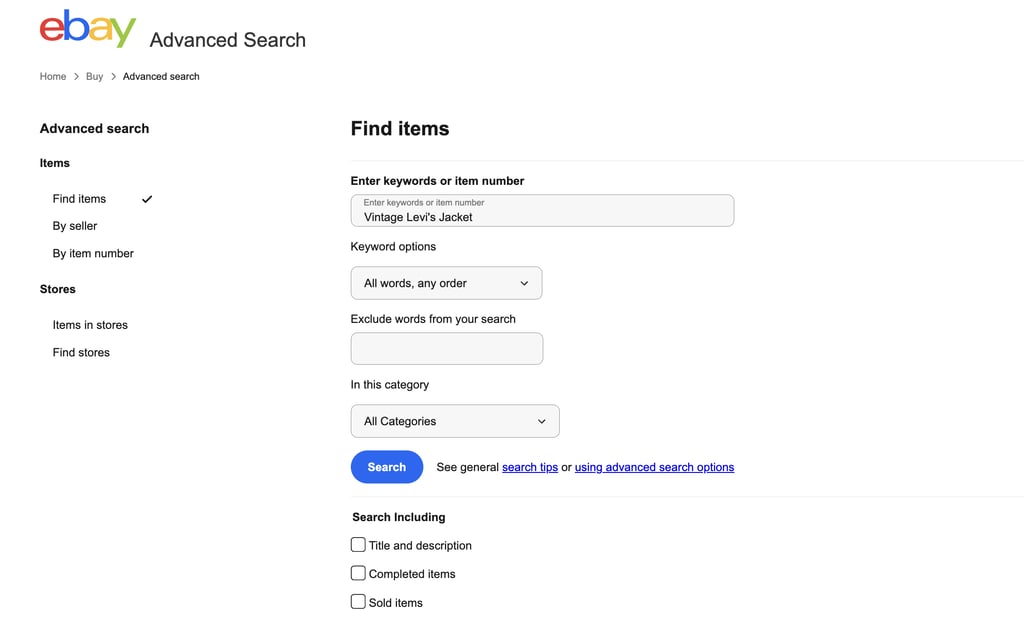
How often an item sells matters too. If many similar listings are active but only a few sell each month, that’s a sign of oversaturation and low demand. Products that sell regularly help keep cash flowing.
Once you know an item actually sells, compare the buy price to potential profitable products to resell using this formula:
Profit = Sale price − Item cost − Platform fees − Shipping − Packaging
Example:
- Sale price: $40
- Item cost: $8
- Platform fees: $5.30
- Shipping: $7.50
- Packaging: $0.50
That leaves about $18.70 in profit, which helps you decide whether it’s worth your time.
Seasonality and trends also influence resale value. Some products have higher demand at specific times of year, like winter gear in colder months or holiday-themed items near the end of the year, and others rise and fall with consumer interest (for example, tech gadgets or fashion items that get buzz online).
Keeping an eye on these patterns can help you time purchases and sales more strategically.
Pro Tip
As a beginner, it’s safest to aim to at least double your money. If you pay $10 for an item, look for something you can sell for $20 or more. Many resellers follow a simple 3× rule, meaning they only buy items they can realistically sell for three times what they paid.
To discover products with strong demand, check out our guide on trending products.
3. Source inventory at low cost
Where you buy items has a big impact on profit, and it’s something you get better at quickly with practice. Good product sourcing usually starts with simple, low-cost options and expands as you gain confidence managing reselling inventory.
Thrift stores are the most common starting point. Goodwill Outlet stores sell items by weight – often $1.79 to $3.99 per pound – so a jacket might cost just a few dollars. Regular thrift stores like Savers or Salvation Army are more curated and sometimes pricier, but deals still exist. Over time, you’ll get faster at scanning shelves for valuable brands instead of inspecting every item.
Estate and garage sales often offer higher-quality finds, including collectibles, electronics, and well-made clothing. Because these sales usually run for a set window of time, timing can make a difference. Arriving right when a sale opens gives you first access to the best items before other buyers arrive.
Pro Tip
Conversely, arriving at garage sales 30 minutes before closing time also yields good deals. Sellers are more willing to negotiate steep discounts on remaining items rather than pack them back up. A friendly 'Would you take $20 for all three?' works surprisingly well at this point.
Beyond in-person sales, inventory can also be sold online. Liquidation platforms are websites where large retailers sell excess inventory in bulk, such as customer returns and overstock they don’t want to store or resell themselves. These liquidation products are sold at a discount, often without individual inspection.
Sites like BStock can offer deep savings, but there’s more uncertainty about item condition. This approach works best once you’re comfortable with some risk, so starting with small boxes is a good way to learn without overcommitting.
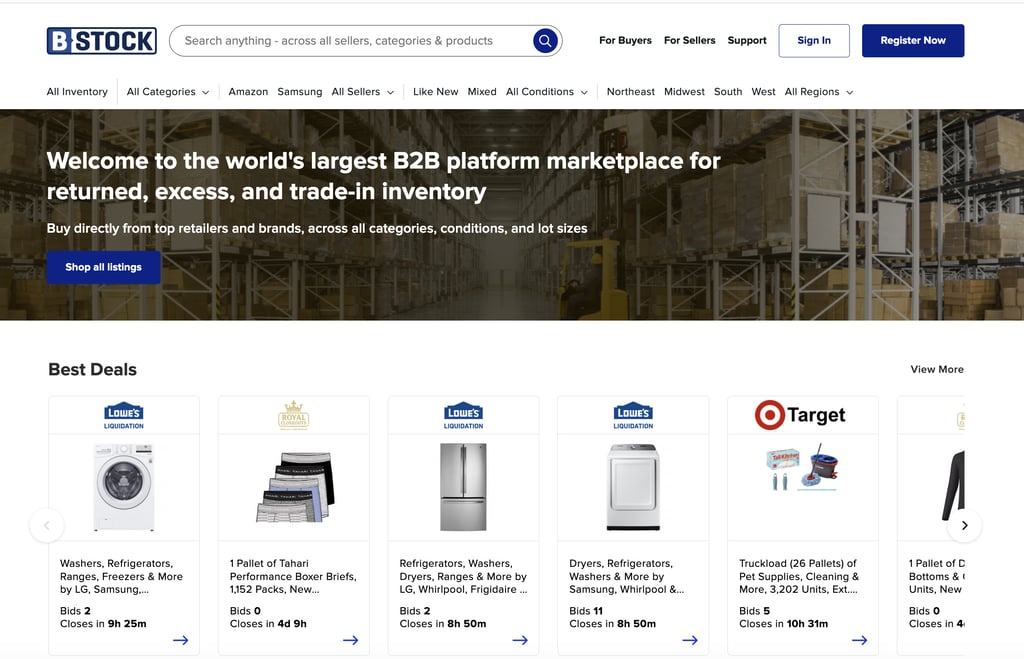
Retail clearance is another option many resellers use. Stores like Target, Walmart, and TJ Maxx discount items that may still sell for more online, especially during end-of-season sales. Online marketplaces like Facebook Marketplace can also be useful, especially when you want to inspect items in person.
Before buying anything, take a moment to check the condition:
- Look for obvious damage or heavy wear
- Test basic functionality on electronics
- Make sure all parts are included
From day one, keep simple inventory notes. You don’t need complex software – just track what you paid, where the item came from, and what it sells for. This helps you spot patterns, learn from mistakes, and feel more confident as you grow.
As your experience grows working with a consignment store can open up additional sourcing options for higher-quality items.
4. Prepare inventory for resale
How you prepare an item before listing it has a direct impact on how much it sells for – and how smoothly the sale goes. Items sold “as-found” tend to sell for less and are more likely to be returned. Basic inventory preparation, such as cleaning, testing, and minor repairs, can increase resale value by 20%–50% while also reducing buyer complaints.
Preparation doesn’t have to be complicated. The goal is to make the item look its best, work as expected, and match the description buyers see online. This kind of resale preparation builds trust and helps buyers feel confident about their purchase.
Different products need different levels of prep:
- Clothing – Remove wrinkles with a steamer, clear lint or pet hair, treat stains if possible, and replace missing buttons. Clean, well-presented clothing often sells for $10–$15 more than similar items listed in poor condition.
- Electronics – Test all buttons, ports, and key features before listing. For higher-value items, recording serial numbers can help protect you. If something works imperfectly, mention it clearly so buyers know what to expect.
- Books – Wipe down covers and flip through pages to check for writing, highlighting, or damage. Book buyers pay close attention to condition, so accurate descriptions matter.
But not every item is worth fixing. Knowing when to clean and repair products – and when to walk away – protects your time and margins.
For example, a $5 leather jacket that needs a $15 cleaning treatment and sells for $80 leaves plenty of room for profit. On the other hand, a $20 printer that needs $40 in parts to sell for $50 usually isn’t worth repairing.
Pro Tip
A simple way to decide if you should fix an item is to ask whether the repair cost, combined with what you paid and the time involved, still leaves enough profit to make the effort worthwhile.
Preparation also helps reduce returns and negative feedback. Most buyers expect used items to have small flaws, but they don’t like surprises. When items are cleaned, tested, and accurately described – including any remaining issues – buyers know what they’re getting before they order.
When an item doesn’t match expectations, returns are more likely. Returns are expensive because they usually mean losing the sale, paying for return shipping, and issuing a refund to the buyer. On a $40 item, that can easily turn into a $15 loss. Taking time to prepare the items helps avoid those situations and leads to smoother transactions overall.
5. Choose the right reselling platforms
Not all reselling platforms work the same way. Each one attracts a different type of buyer and charges different fees, which means where you list an item can significantly affect your profit.
The best approach is to start with one platform, learn how it works, and expand to others as you gain experience. Sellers who use multiple online marketplaces often reach more buyers and increase sales over time.
Here are some of the most common websites to sell online, and what each one is best for:
- eBay – Offers the largest audience, with over 180 million buyers worldwide. Fees typically range from 13%–15% per sale. eBay works well for electronics, collectibles, car parts, vintage items, and other non-fashion products where buyers search for specific items.
- Poshmark – Built for fashion and accessories. It charges a flat $2.95 fee on items under $15 and 20% on higher-priced sales. While fees are higher, Poshmark simplifies shipping by generating prepaid labels. Best for clothing, shoes, and designer items.
- Amazon – Provides massive traffic but has a steeper learning curve. Fees vary by category, and professional sellers pay a monthly subscription. Amazon works best for new or like-new products sold at scale and is often better suited for more experienced sellers.
- Etsy – Focuses on vintage items, handmade goods, and creative products. Fees are relatively low, and the audience values uniqueness and presentation. Etsy is a strong choice for items that benefit from storytelling or craftsmanship.
- Facebook Marketplace – Ideal for local sales. There are no fees for local pickup and lower fees for shipped items. It’s especially useful for furniture, large items, or anything expensive to ship, with the added benefit of fast, in-person transactions.
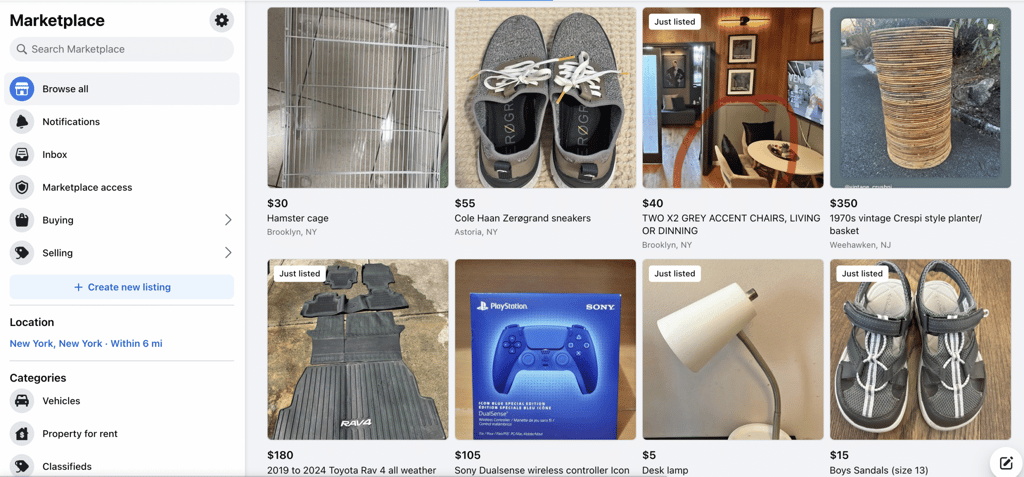
As your reselling business grows, listing items on more than one platform, often called cross-listing, can increase visibility and sales. Tools that post listings across platforms and automatically remove sold items help prevent double-selling and save time.
6. Price products to ensure profit
Pricing a product is where research turns into real profit, or disappears if costs aren’t accounted for. A strong pricing strategy starts with understanding your true costs, using real sales data, and setting clear rules so every sale contributes to profit instead of just cash flow.
Before setting a price, account for all the costs involved in the sale. This includes what you paid for the item, platform and payment processing fees, shipping costs, and basic packaging materials.
It’s also smart to leave a small buffer for returns – especially for clothing – where setting aside around 5%–10% of the sale price helps protect your margins.
Effective resale pricing builds on the sold listing research you did before buying. On eBay, for example, you can use recent Sold Items to confirm the realistic price range for your item, focusing on listings in similar condition and where most sales occurred.
That average reflects real buyer behavior and gives you a reliable benchmark for competitive pricing.
Adjust your price based on condition. If similar items sold for $45 but yours shows minor wear, pricing it closer to $38–$40 may help it sell faster. If your item is in excellent condition or still has tags, pricing it slightly higher – around $48–$52 – can make sense without pushing buyers away.
Many resellers use minimum margin rules before buying inventory to avoid low-profit sales:
- Aim for at least a 50% profit margin on items under $30
- Around 30% profit margin on items priced $30–$100
- At least 25% profit margin on items over $100
7. Create high-converting product listings
Writing strong product listings does more than show an item. They help buyers find it, understand it, and feel confident clicking “buy.” Clear photos, searchable titles, and honest descriptions all work together to optimize listings, directly affecting visibility, price, and returns.
Good product photography is one of the biggest trust signals for buyers. Aim for photos that are at least 1,000 × 1,000 pixels, well-lit, and easy to scan. A simple setup works – natural window light or a basic ring light, and a clean background like a white wall or poster board.
Show multiple angles, including the front, back, sides, brand labels, size tags, and any signs of wear.
Pro Tip
For clothing, flat-lay photos with measurements help buyers assess fit, while mannequin or on-body shots help them imagine wearing the item. Clear photos often increase perceived value and can add $10–$20 to the final sale price.
For titles, they should be written the way buyers search. Start with the most important details and move toward the specifics: brand name, item type, key attributes like size, color, or style, and condition.
For example, “Levi’s 501 Original Fit Men’s Jeans Size 32×30 Dark Wash NWT.” Placing the most important keywords first matters, since some platforms shorten titles in search results.
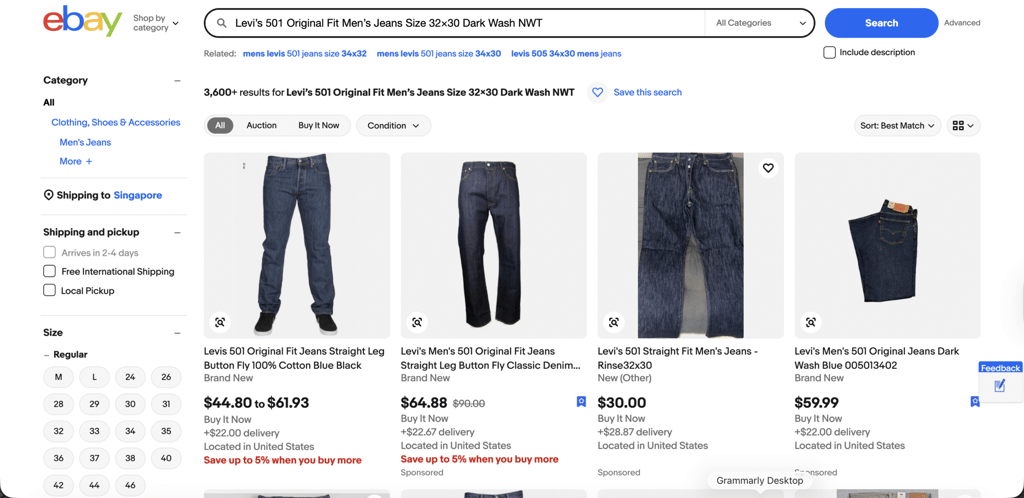
Your product descriptions should fill in everything photos can’t. Explain what makes the item special, list exact measurements and materials, describe the condition honestly, and mention any flaws clearly. Clear, honest descriptions build trust and set the right expectations, which helps sales go more smoothly.
Improving your listings over time pays off across your entire reselling business.
8. Manage orders, shipping, and customer service
As your sales grow, how you handle orders and shipping starts to matter just as much as what you sell. A consistent order fulfillment routine helps you stay organized, ship faster, and give buyers confidence that they’re dealing with a reliable seller.
Having a simple process you follow every time makes everything easier. When an order comes in, you:
- Confirm payment and the shipping address.
- Find the item in storage.
- Do a final quality check before packing.
- Pack it securely (a short thank-you note is optional but appreciated.)
- Create and print the shipping label.
- Drop the package off within 24 hours when possible.
- Mark the order as shipped and upload tracking.
Your shipping strategy affects both profit and buyer experience, so it’s worth choosing intentionally:
- USPS Ground Advantage (2–5 days) – A solid, affordable option for most packages under 70 lb
- USPS Priority Mail (1–3 days) – Faster delivery with $100 insurance included, useful for higher-value items
- Media Mail (2–8 days) – The cheapest option for books and certain educational materials (with restrictions)
- Pirate Ship – A free tool that gives you discounted USPS rates and can save $3–$7 per package

Packaging and tracking are part of your customer service for sellers. Using enough protection, recording serial numbers for electronics, and adding signature confirmation for high-value orders helps you avoid problems before they start. Uploading tracking promptly and setting realistic delivery expectations also cuts down on buyer messages.
Even when you do everything right, returns can still happen. Strong returns management starts before shipping, with accurate photos, honest descriptions, and careful packing. If a return does come up, staying calm, professional, and responsive goes a long way. How you handle them shapes your reputation more than the return itself.
As your volume increases ecommerce fulfillment services can help you spend less time packing boxes and more time growing your reselling business.
9. Organize operations and stay compliant
Once you start selling regularly, simple reselling operations help you stay organized without adding stress. You want to find items fast, track money easily, and meet basic small business compliance expectations.
Start with inventory organization. Keep all listed items in one main area, like a shelf or storage bin. When you create a listing, add a short note about where the item is stored. That way, when something sells, you can grab it quickly and ship on time.
Next, understand the basics of reselling taxes. Money you earn from reselling counts as income. You don’t need anything fancy to track it – just record what you paid for items, what you sold them for, and your shipping or supply costs. A simple spreadsheet works. At tax time, you’ll use your records to report your income.
Important! Most platforms, including eBay, Amazon, and Poshmark, handle sales tax for you, so you usually don’t need to worry about that part.
Finally, keep your reselling money separate from personal spending. Using a dedicated bank account or payment app makes it much easier to see how your reselling activity is doing. It doesn’t need to be a formal business account – just separate and easy to track.
10. Track performance and optimize decisions
Once you’ve sold a few items and have basic records in place, you can start using that information to guide better decisions. This is where simple reselling analytics help you move from guessing to intentional performance optimization.
Start by paying attention to how quickly items sell. This is your sell-through rate, and it’s one of the clearest signals of demand. Track the date an item is listed and the date it sells. After 10–20 sales, patterns usually emerge.
If vintage band tees sell in five days but kitchen gadgets take two months, that tells you where your sourcing time is best spent.
Next, focus on profit per item, not just the sale price. For each completed sale, subtract your item cost, fees, and shipping from the sale price. This gives you your true profit and is one of the most important resale metrics to watch when deciding what to keep sourcing.
Pro Tip
A $40 sale that nets $8 in profit can be more valuable than a $60 sale that only leaves $5.
Items listed for 60–90 days with little interest often become dead stock. At that point, the priority is freeing up cash. You might lower the price significantly, bundle the item with something that sells faster, donate it, or accept the loss and move on.
Letting go of slow items allows you to reinvest in products with stronger demand.
You don’t need new tools to do this – just a clearer use of the data you already have. Reviewing your existing sales tracking with an eye on days to sell and profit per item is enough to guide smarter sourcing and pricing decisions going forward.
11. Reinvest profits and scale your reselling business
Once you start making consistent sales, you’ll face a simple choice: take all the profit out, or reinvest some of it to grow. Early on, choosing to reinvest profits is one of the fastest ways to scale a reselling business without adding much risk.
Reinvesting works because it increases how much inventory you can work with. If you start with $200 and earn $150 in profit, taking all of it out means you’re stuck buying the same amount of inventory next month.
Putting even part of that profit back in lets you grow inventory, list more items, and create more chances to sell. Over time, that steady reinvestment leads to real reselling growth.
Scaling doesn’t mean going all-in overnight. For most people, it looks like gradually spending more time, sourcing more items, and managing more active listings as confidence grows. Consistency matters more than speed – showing up regularly and reinvesting profits compounds results far more reliably than big one-time efforts.
What are the best practices for making money reselling?
These reselling best practices work across niches and platforms. They’re simple habits that help you reduce risk and get more consistent results, whether you’re reselling clothing, books, or electronics.
Start small and test demand
When you’re starting out, your goal isn’t to go big – it’s to learn quickly without risking too much money. Buying a small number of items lets you test what actually sells before you scale.
For example, instead of spending $1,000 right away, you might start with a few Levi’s jackets from a thrift store. You list them, see how fast they sell, and learn what styles, sizes, or conditions buyers respond to. That short feedback loop helps you adjust early, while mistakes are still cheap.
Focus on the sell-through rate, not just profit
It’s tempting to chase the biggest profit per item, but speed matters more at the beginning. An item that sells quickly puts cash back in your hands and teaches you what works.
If one Levi’s jacket sells in four days with a $15 profit, while another sits for two months hoping for a $40 payout, the faster sale is often the better choice. Over time, you’ll want a mix – mostly fast-moving items, with a few higher-margin pieces – but early on, movement beats perfection.
Reinvest consistently instead of cashing out early
When you make your first profits, it’s natural to want to spend them. But reinvesting part of what you earn is how your reselling business starts to grow.
If you sell a jacket and make $18 in profit, putting some of that money back into buying another similar item lets you slowly increase the number of listings you have. Repeating this over time helps you grow your inventory and income together. Cashing out everything too early often keeps you stuck at the same level.
Avoid common reselling scams and pitfalls
Protecting yourself is part of building a sustainable business. When sourcing, be cautious of anyone offering “guaranteed profits” or asking for large upfront payments. Real opportunities don’t need pressure.
When selling, keep communication and payments on the platform. If someone asks you to text them, pay outside the marketplace, or rush the deal, it’s usually a red flag. Sticking to the platform protects you and makes problems easier to resolve.
Benefits of making money through reselling
One of the biggest benefits of reselling is how accessible it is. It’s a true low startup business that lets you learn how online selling works without taking on major risk or long-term commitments.
Reselling doesn’t require a storefront, inventory orders, or manufacturing. You can start with a phone camera and a small budget – often just $200–$300 – to test whether it’s right for you. If you decide it’s not, you haven’t lost much, and you’ve still gained practical experience.
It also offers flexible income that fits around your life. You can source items on weekends, take photos in the evenings, and ship orders during lunch breaks. There are no set hours, shifts, or location requirements, which makes reselling workable for parents, students, and full-time workers alike.
Beyond the income, reselling teaches skills that transfer to almost any online business. You learn pricing, product research, photography, writing descriptions, customer service, shipping, and basic operations. Many people use reselling as a starting point, then apply those same skills to launch brands, stores, or other online ventures.
How to grow and scale your reselling business
Once you understand sourcing, pricing, and daily operations, the next step is to scale a reselling business. At that point, growth comes from setting up systems that support higher volume without adding more work.
Marketplaces are useful early on, but relying on them long-term limits your ecommerce growth. Fees reduce margins, competition stays high, and you don’t own the customer relationship.
Adding a reselling website solves that. Your own site lets you sell products directly, keep more profit per order, and present your inventory professionally while building repeat buyers and brand recognition.
When you’re ready, starting an online store with Hostinger ecommerce tools makes this step practical, offering an easy website builder, built-in ecommerce features, and room to scale without technical complexity.
If you’d rather see the full process, from brainstorming a business idea to launching a site with AI, this short walkthrough on building a real business in 30 minutes a day covers each step.

All of the tutorial content on this website is subject to Hostinger's rigorous editorial standards and values.

Alma is an AI Content Editor with 9+ years of experience helping ideas take shape across SEO, marketing, and content. She loves working with words, structure, and strategy to make content both useful and enjoyable to read. Off the clock, she can be found gaming, drawing, or diving into her latest D&D adventure.


