Here’s how to make your 9-to-5 the biggest advantage as a woman entrepreneur
When people talk about starting a business, the advice tends to sound the same: quit your job, go all in, and figure it out along the way.
It’s a bold narrative, but it doesn’t reflect everyone’s reality. Especially for many of us women, our lives are often more layered than that.
You might carry financial responsibilities, family expectations, invisible caregiving roles, and the quiet pressure to have everything figured out before making a move. Dropping everything to chase a startup idea isn’t brave when it’s reckless.
And it’s definitely not the only path. Here’s what I’ve learned firsthand: your full-time job can actually be the best business asset you have.
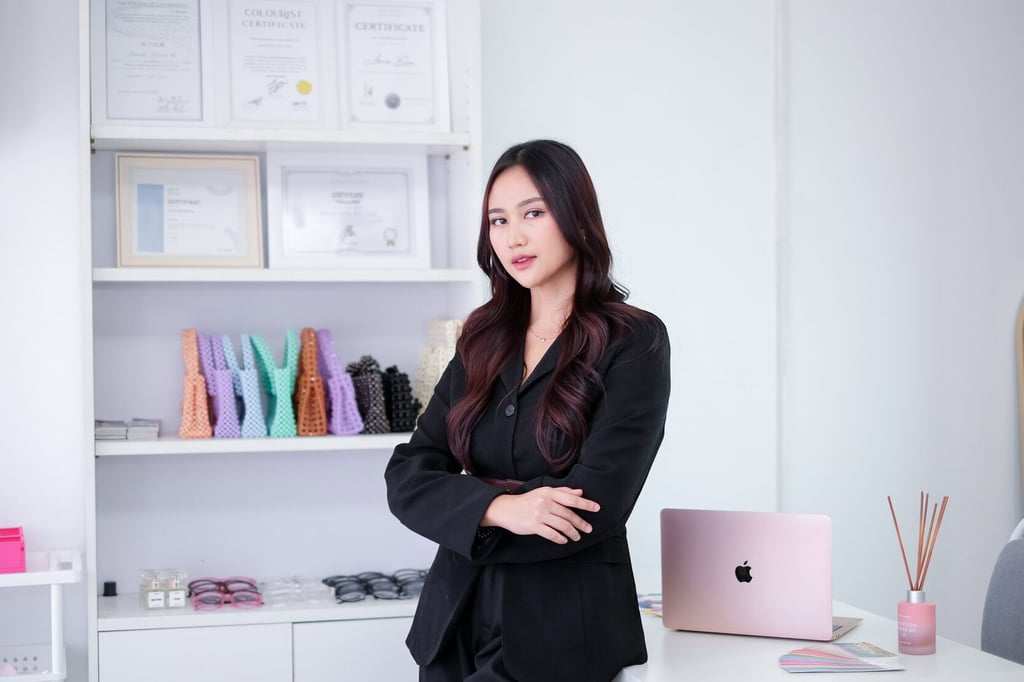
I’m Amanda, the host of Hostinger Indonesia’s YouTube channel. Over the past couple of years, I’ve built a thriving color analysis business with a certified studio, clients across cities, and brand collaborations, while also keeping my full-time role at Hostinger.
My journey didn’t follow a straight line. It involved a failed first idea, a loan from a friend, and more than a few moments of doubt. But the strategic choices I made along the way taught me that no woman ever needs to burn her life down to build a business.
For every woman who’s been wondering whether she can start something of your own while still holding down a job, you absolutely can. I’m living proof of that, so I’m going to share the journey that brought me here.
Let your constraints choose your business model
You don’t need to brainstorm a business idea from a blank page. You have a life you’ve been living up until now, with all the hobbies, social networks, interests, and routines. Instead of treating your current conditions as limitations, use them as a filter.
Change the question from “what business should I start?” to “what kind of business fits the life I already have?”
For women, especially, that reframe matters. We’re often carrying more than what shows up on a calendar – emotional labor, family logistics, the mental load of keeping things running for everyone else.
A business model that ignores those realities will burn you out before it takes off. One that accounts for them has a real shot at lasting.
My first business idea was a clothing line – I had a genuine interest in fashion, modeling experiences, and a promising social media following in that niche. But the reality hit fast.
Managing inventory. Coordinating shipping. Handling storage and logistics. Each of those demands ended up competing directly with my full-time job and my limited bandwidth.
Eventually, I stepped away. At the time, it felt like failure. But now I know it was just a redirection that gave me clarity.
That experience taught me exactly what kind of business wouldn’t work for someone in my position – and pointed me toward what would. I needed something service-based, low-overhead, flexible enough to run alongside a day job, and built on the skills I already had.
When I discovered color analysis – the process of identifying which colors naturally complement a person’s skin, eye, and hair tones – everything clicked.
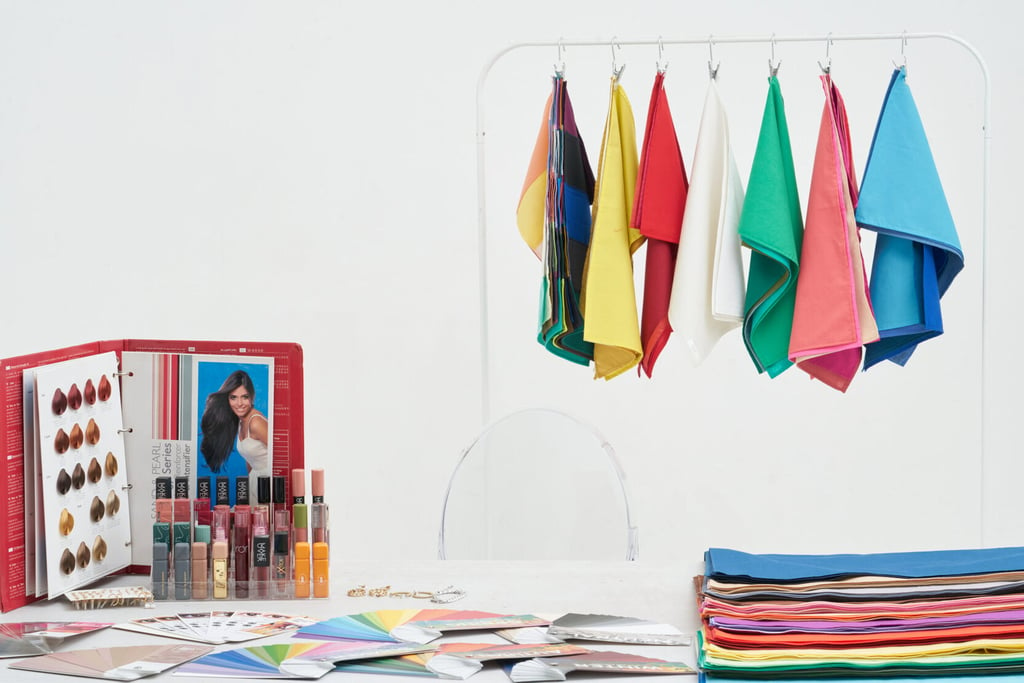
It drew on my fashion knowledge, my content creation experience, my existing audience, and my regular working schedule as a full-timer.
In general, services, knowledge-sharing, and digital products are easier to manage alongside a full-time job. But the more important question is whether your business idea sits in the intersection of your skills, your passions, and a market demand.
Having these three elements in place helps you keep a business sustainable without burning out from doing something you don’t truly enjoy.
If the idea is still vague even after you’ve heard multiple other similar tips, I’ve been there, too. I understand how the intersection between these elements isn’t always obvious, especially when you’re in the middle of a busy life.
That’s where AI tools like ChatGPT or Claude can actually help as a brainstorming partner to structure what you already know about yourself.
Here’s the really simple prompt that helped me get started:
I’m a marketer in my early thirties with a full-time remote job. I love fashion, modeling, and traveling. Help me think of how I can turn my personal limitations, such as time, budget, skills, and resources, into business ideas.
Spot opportunity where others aren’t looking
Once you start getting more concrete ideas on the business, assess whether they have a market value. Because no matter how brilliant an idea sounds, it won’t become a real business if no one is willing to pay for it.
When you’re building something alongside a full-time job, it’s often more practical to look for gaps that already exist rather than to create demand from scratch.
For me, that opportunity was right in front of me. Color analysis was gaining popularity in Jakarta, but I live in Makassar, a city on Indonesia’s eastern coast, far from the capital and its trends.
When I looked around, very few businesses were offering the service. It was an opening.
Instead of competing in an already crowded market, I had the chance to introduce something new to my own community. I could focus on building credibility and earning referrals rather than fighting for attention among dozens of competitors. And that’s exactly what happened.

The same logic applies broadly. When something is trending in a city or region, the best opportunities are closer to home. Is anyone serving your local community with this? Your niche? Your specific audience?
Being the first option in a smaller market can be far more powerful than being one of fifty in a larger one.
Another way to discover opportunities is to pay attention to everyday conversations – friends struggling to find meaningful gifts, family members wishing someone could plan their travel, colleagues looking for services that don’t yet exist.
You don’t need to look far or overthink it. Sometimes the opportunity is already showing up in the conversations around you.
Your full-time job can be your runway, not your cage
The first time I started exploring the idea of building my own business, I was still working full-time at Hostinger. One of the things I appreciated most was the flexibility of working remotely, which gave me the freedom to explore interests beyond my main responsibilities.
Just as importantly, my paycheck gave me the peace of mind to try different things without overthinking whether they’d pay off.
I experimented with content creation, social media partnerships, teaching pole dancing, and freelance work. Back then, I didn’t think of any of these as entrepreneurial – they were simply things I enjoyed doing.

But looking back, those experiences were quietly building the skills I would later rely on. Content creation helped me communicate ideas clearly. Working with brands taught me about marketing and partnerships. Teaching pole dancing strengthened my confidence in guiding people through a personal transformation.
By the time I decided to invest in my color analysis business, I wasn’t starting from zero. My salary allowed me to take that step thoughtfully: flying to Bangkok to get certified and running early sessions to build demand.

Because I still had a steady income, I didn’t need the business to sustain me immediately. I could focus on building something solid instead of something fast.
That’s an advantage most employed people don’t fully appreciate. When external funding isn’t accessible, your paycheck becomes your most reliable form of capital.
Collecting a monthly salary is never a sign that you’re not entrepreneurial. Instead, it gives you room to experiment, to learn, and to grow at your own pace rather than rushing decisions out of financial pressure.
With all that said, I want to be very honest that the early phase wasn’t comfortable. For almost a year, I gave up most of my free time. No weekends off, no Netflix, very little rest.
The early stage of building a business is both slow and demanding, and that can be draining. But when the days were rough, I talked to myself that this is the price I should pay for building something I’ve always wanted.
For women who already carry invisible responsibilities at home, this trade-off is sharper. You may be carving it from rest you actually need, on top of responsibilities that were already invisible on any schedule.
Accepting that honestly, rather than pretending it’s effortless, makes the discomfort feel purposeful rather than punishing.
Set a deadline that forces action
Ideas are patient. They’ll wait in the back of your mind for years if you let them. What moves an idea into reality isn’t motivation – it’s a constraint.
Mine came in the form of a personal loan. After getting certified, I needed equipment and a proper studio, so I borrowed money from a friend with one condition I set for myself: pay it back within three months.
That single decision changed the dynamic entirely. This was no longer a hobby I could ease into whenever it felt right. There was a financial commitment with a deadline attached. I had to launch, market, and start generating revenue within a fixed window – not eventually, but now.
Without that pressure, I can picture exactly how things might have played out: another month of “preparing,” another round of perfectionist tweaking, the slow drift of “I’ll get to it when things calm down.” For anyone juggling a full-time job, that moment rarely arrives on its own.
I’m not saying that you need to borrow money to start a business. But you need a forcing function.
That could be a pre-sold workshop with a date already set, a public launch announcement, or a paid deposit on studio space. Whatever it is, the point is to create a commitment that makes the “someday” mindset unsustainable.
Many of us were raised with the message, sometimes spoken, sometimes absorbed as a woman, that we should be in our best shape before we put ourselves out there.
That instinct to over-prepare can look like diligence, but it often serves to avoid the vulnerability of being visible before we feel perfect. A deadline redefines readiness as action, not perfection.
Don’t wait for the perfect marketing strategy
Once my studio was ready, I couldn’t bring myself to promote it, even with over 10,000 followers on Instagram already there.
I was looking at established brands with polished campaigns and assumed mine had to look just as professional from day one. The result was paralysis: overthinking instead of actually getting the word out.
Then I decided to just start with what I had. That meant organic, low-cost strategies – sharing posts on Instagram, offering free and discounted sessions to build testimonials, and letting social proof do the early heavy lifting.
It also meant accepting something counterintuitive: in the beginning, you will likely give more than you get. That’s not a loss. It’s an investment in momentum, in getting enough people talking about your work that growth starts to carry itself.
Later, I challenged another assumption – that paid advertising was only for companies with big budgets, not someone like me. I started small with Meta Ads and Google Ads, not as a desperate move to get clients, but as a skill to develop over time.
When you’re starting a business, your work can’t speak if no one knows it exists. Marketing isn’t bragging. It’s making sure the people who need what you offer can actually find you.
Start with what you can do today. Build social proof first. Then layer in paid strategies as you learn. The worst thing you can do is wait until everything feels polished – because it never will.
Systems beat hustle, every time
There’s a phase in building a side business where effort alone can carry you. You reply to every message personally, manage bookings in your head, and handle everything manually because the volume is still small enough to get away with it.
And then, almost overnight, it isn’t.
I hit that wall when the business started gaining traction. My Instagram DMs filled up with the same questions over and over: where’s the studio, how much does it cost, how do I book?
With a full-time job already taking up my working hours, replying individually was no longer viable. So I built a website for my business using Hostinger Website Builder.
It’s a simple tool that lets me create a website even though I have no prior experience. I built the site myself without outsourcing any work. I’d been telling people about this as part of my job for a while, but building the site myself was the moment I understood what that actually meant in practice.
Within a few hours, I had a website live with everything a new client needed: services, pricing, location, and booking details.

That one change saved me hours every week. Instead of typing out the same answers, I could direct people to the site. New clients could find what they needed without waiting for a reply. And the business immediately felt more professional and more credible to people encountering it for the first time.
That was a problem I solved. Then, as the business kept growing, I realized I couldn’t keep doing everything myself.
At first, I had a strong will to handle everything gracefully – at work, at home, and now in business too. What I eventually understood is that holding on to everything yourself has a cost. It’s just measured in energy spent and growth left on the table, rather than anything that shows up on a balance sheet.
So I started delegating: identifying the tasks that drained me most and didn’t require my specific involvement, then finding ways to hand them off, whether that meant hiring part-time customer support, outsourcing design work, or building automations.
Delegating isn’t a weakness or a sign that you can’t manage. It actually signals that you’re managing strategically.
One last thing, and it’s worth starting earlier than feels necessary: build your systems before you need them. From the days when I barely had any bookings, I started tracking client lists, payments, and session notes in a single spreadsheet.
At the time, it felt unnecessary. But as I kept building on it over time, that simple system turned into a database of over 1,000 clients – something I now use for upselling, insights, and planning.
Stay relevant by building around who you are
Trends evolve quickly. Marketing methods shift. New tools, especially AI, are constantly changing how businesses operate. It’s happening everywhere. For a while, I felt the pressure to chase every new trend just to keep up.
What helped me step off that treadmill was realizing that the most sustainable competitive advantage isn’t just the product or service you offer – it’s you. Your perspective, your story, the reason you started this in the first place. That’s what people connect with, and it’s the one thing competitors can’t replicate.
So I invested in personal branding. My website isn’t just a service page – it’s a platform that tells my story and shows people why this business matters.
I also show up consistently on Instagram and TikTok, not to be everywhere, but to make sure people can find me and understand what I stand for across more than one platform.

If you’re early in building a business, I’d encourage you to think about this sooner rather than later. Build a personal platform – a portfolio, a website, an Instagram page – anything that anchors your brand in something deeper than what you sell.
When everything around you is changing, that anchor is what keeps your business recognizable and trustworthy.
Being ready isn’t a feeling – it’s a decision
If there’s one thread running through everything I shared, it’s this: none of it happened because I felt ready.
I didn’t have a complete business plan when I signed up for a personal color analyst certification. I didn’t have all the funding when I opened my studio. I didn’t have a marketing strategy when I started offering sessions.
What I had was curiosity, a willingness to learn through doing, and the practical advantage of a stable income that gave me room to figure things out.
That’s the real playbook. You don’t need to blow up your life to build a business. You need a model that fits your constraints, an underserved market, a system that saves you time, and the willingness to start before everything feels figured out.
Like many women, I spent a long time navigating things that aren’t always visible on the surface – my own perfectionist tendencies, quiet responsibilities as a daughter, and even the physical realities of being a woman that won’t pause for any schedule.
But those things didn’t disqualify me from building a business. If anything, they made me better at it. When you’ve spent your whole life managing competing demands, you already know how to prioritize, adapt, and keep going when things don’t go to plan.
So, at some point, the only way forward is to start.
Is there something that’s still holding you back? Share it in the comments, I’d love to hear where you are.

Amanda is a WordPress and digital marketing enthusiast with a passion for helping others grow their businesses and careers. She enjoys producing content that is both informative and helpful. When she's not working, Amanda loves hiking, reading books, and filling her bullet journal.