Monika Sviderskė’s story: Building the life she wanted, as a mom and as a career woman
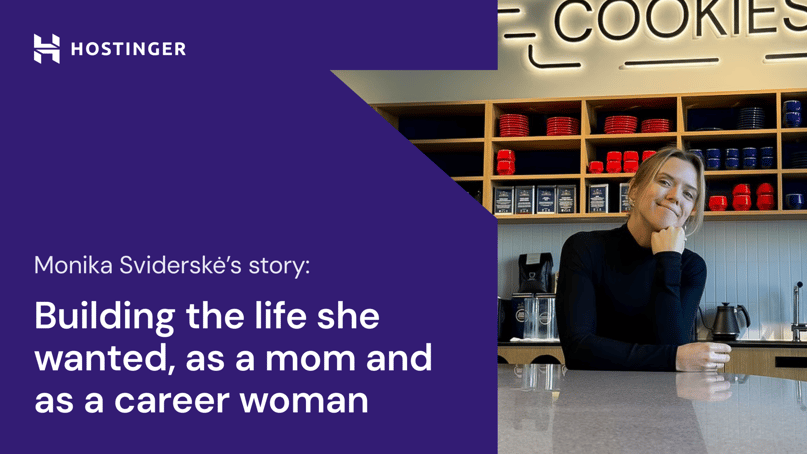
Monika Sviderskė is our Partnership Director for Europe and LATAM. Previously, she spent over five years as a chief marketing officer (CMO) in Web3 – the decentralized, blockchain-based evolution of the internet. It’s a space that has long been male-dominated, and she was often the only woman in the room.
She later launched her own Web3 marketing agency, which she eventually sold before joining Hostinger. Throughout it all, she raised a son without a nanny or a support village and continued building without a structural pause.
She describes herself as an overachiever, which she frames as a blessing in disguise – in the sense that reaching a goal simply reveals the next one.
Monika sat down with our team member, Elisabeth, to share her journey to becoming a mompreneur – watch the full interview below, or read on for the story behind the story.
Going left on purpose
At a time when many marketers were hesitant to touch Web3, Monika leaned into it.
The opportunity that drew her in was a project focused on sustainability in the blockchain space – helping offset the industry’s enormous electricity demand. “That’s a mission. I want to do that,” she recalled.
But the appeal wasn’t just that. Web3 had a shady, stereotypical image that most marketers wanted nothing to do with, but to Monika, that made it more interesting.
“I’m this kind of person,” she said, leaning in, “that if everybody’s going to the right, I’ll go to the left on purpose.”
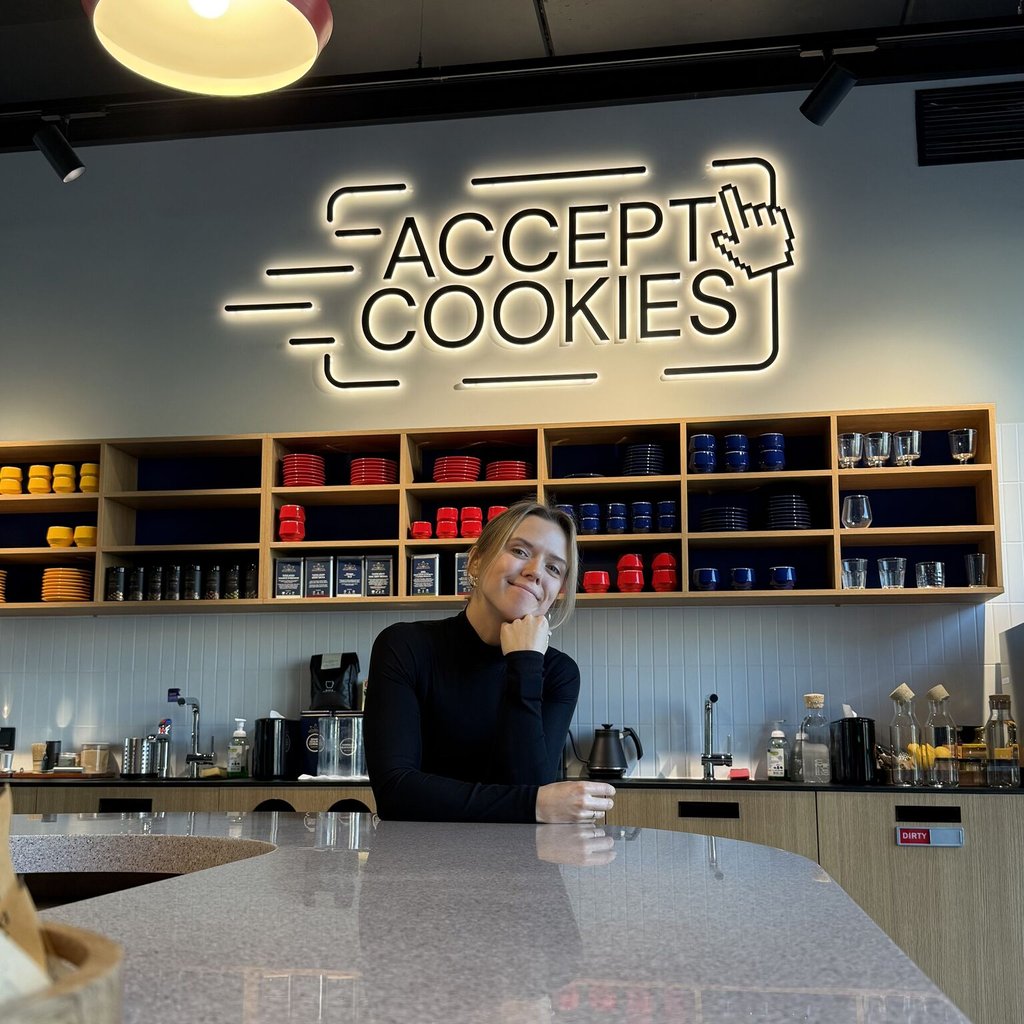
She also saw that very few women in marketing were working in the industry. The space was novel, the credibility landscape was wide open, and there was real room to build something of her own.
So she joined. And the first months were hard.
How she found her footing and what came after
The first two to three months in Web3 were, by her own account, disorienting. Marketing instincts that had worked elsewhere didn’t apply. The signals were different. The rules weren’t written down. And whenever she joined calls with potential investors or stakeholders, she could feel the room sizing her up.
“They try to grill you,” she recounted. “And without that solid experience, even though you come prepared, with homework, it still feels like you’re kind of out of place – until you properly have your footing.”
So she unlearned what she knew. She started from the ground up, reading the system from the inside – its language, its dynamics, the subtle ways credibility was earned.
Then repetition became recognition. Recognition became confidence. And confidence created space to do more than just execute.
She began moving across projects and niches, like GameFi, SocialFi, and InfoFi, applying the same core thinking in different contexts.
She wasn’t just running one track anymore. She was learning how to read the terrain.
Continuity over balance
In the Web3 industry, Monika learned to operate in uncertainty while still delivering results. She moved between niches, adapted quickly, and kept building without waiting for perfect conditions.
Over time, that mindset stopped being limited to work alone. It became the way she approached everything, including aspects of life that had nothing to do with a job title, like her motherhood.
For women, becoming a mother often comes as the natural moment to pause, make space, adjust, and step into a new rhythm. Each person makes a deliberate, deeply personal choice, and there’s no single way to navigate it.
Monika chose her part just as deliberately as she described, “I identify myself a lot through work – that’s how I stay grounded.”
At seven months pregnant, she went to the founder of the cybersecurity project she was working on. She told him she wanted to keep going if he was comfortable with it.
She was upfront that her working hours would be affected, but fortunately, her manager was supportive. He even offered to hire an assistant to help her manage the transition.
She declined that. A laptop, headphones, and a reliable internet connection were all she thought she needed. Her husband and her own mindset were her only support system back in the day.
Her son was born while she was still working as a CMO. She was holding him through calls and planning sessions, through strategy decks and client pitches.
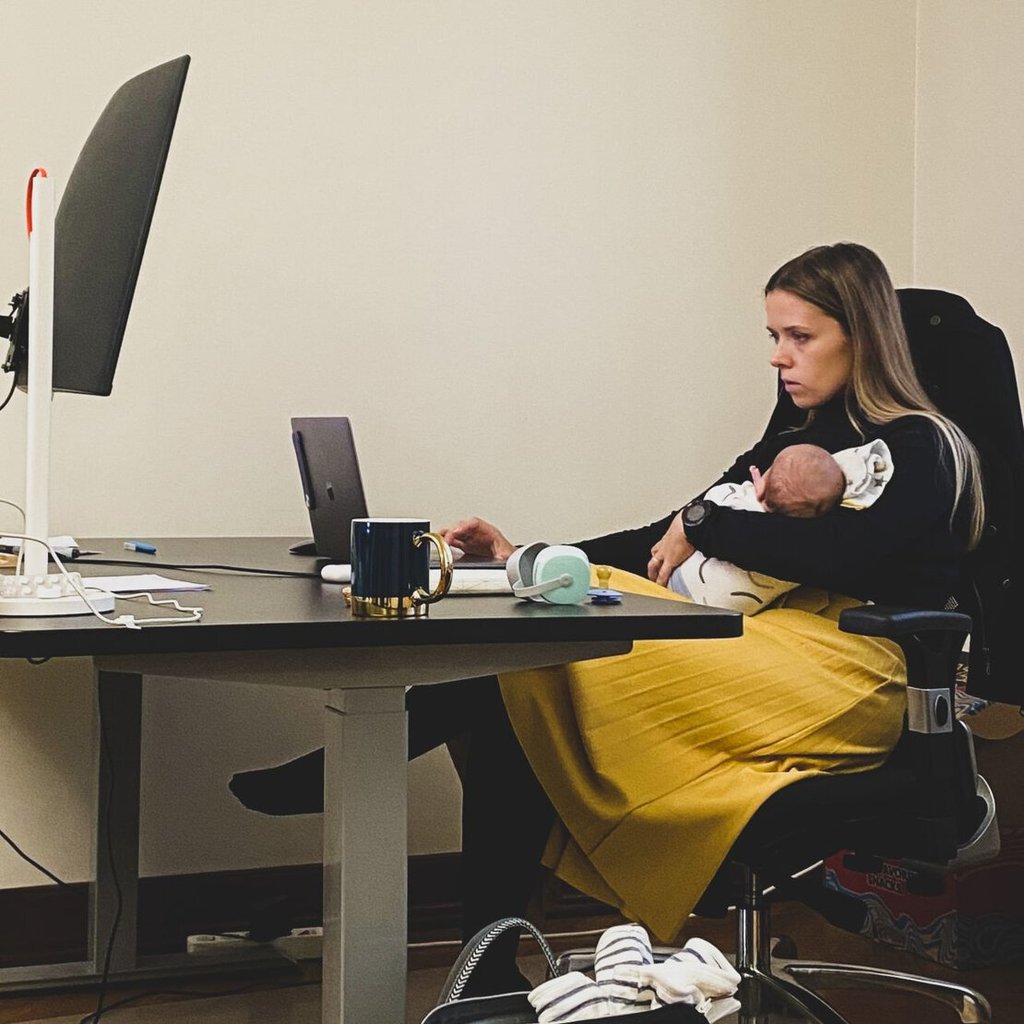
From the outside, this might look like usual multitasking. For Monika, it was something more intentional. She didn’t want one identity to replace the other. She kept both identities active under constraint, and in doing so, discovered moments of humanity she hadn’t expected.
When her son appeared on calls, the tone of the room shifted. “Nobody’s talking about the weather, nobody’s asking you that small talk that everyone hates. Everybody just becomes this fluffy, cute person,” she recalled.
In an industry defined by pressure and performance, her son’s presence didn’t undermine her credibility. It humanized it.
She wrote about this experience publicly on LinkedIn, making the case that working and motherhood could coexist on a person’s own terms, and that choosing not to take maternity leave was as valid as choosing to take it.
The response was sharp. Comments came in, questioning whether she’d be a rested employee, whether her son would get the time he deserved, and whether she’d burn out trying to hold it all together at once.
At the same time, women started sliding into her DMs, saying that they’d been thinking the same thing but didn’t feel safe saying it publicly.
The backlash was loud, but the private solidarity was louder.
“I just felt this purpose of telling mothers that they can work at the same time, if they want to,” she said. “That’s all. I’m not telling you that you have to. I’m telling you it was my choice. And if you were thinking about this, it’s actually possible to do.”
New tracks extend the old ones
About a year and two months into motherhood, without ever fully stepping away from her professional role, Monika started a Web3 marketing agency.
It started from a problem she’d been watching accumulate for years. She thought campaigns driven by artificial urgency, projects overpromising to stay competitive, and teams trying to build strategy, execution, and credibility all at once.
She’d also worked briefly at an existing agency and hadn’t liked what she’d seen.
“Why are crypto projects not doing proper marketing?” she said. “It’s all about FOMO [fear of missing out] – fake it till you make it. And whenever projects go that far ahead, they usually fail, because the demand is artificially made.”
She framed her business launch as a problem-solving mission, and she just went with it. She found like-minded people. They kicked off.
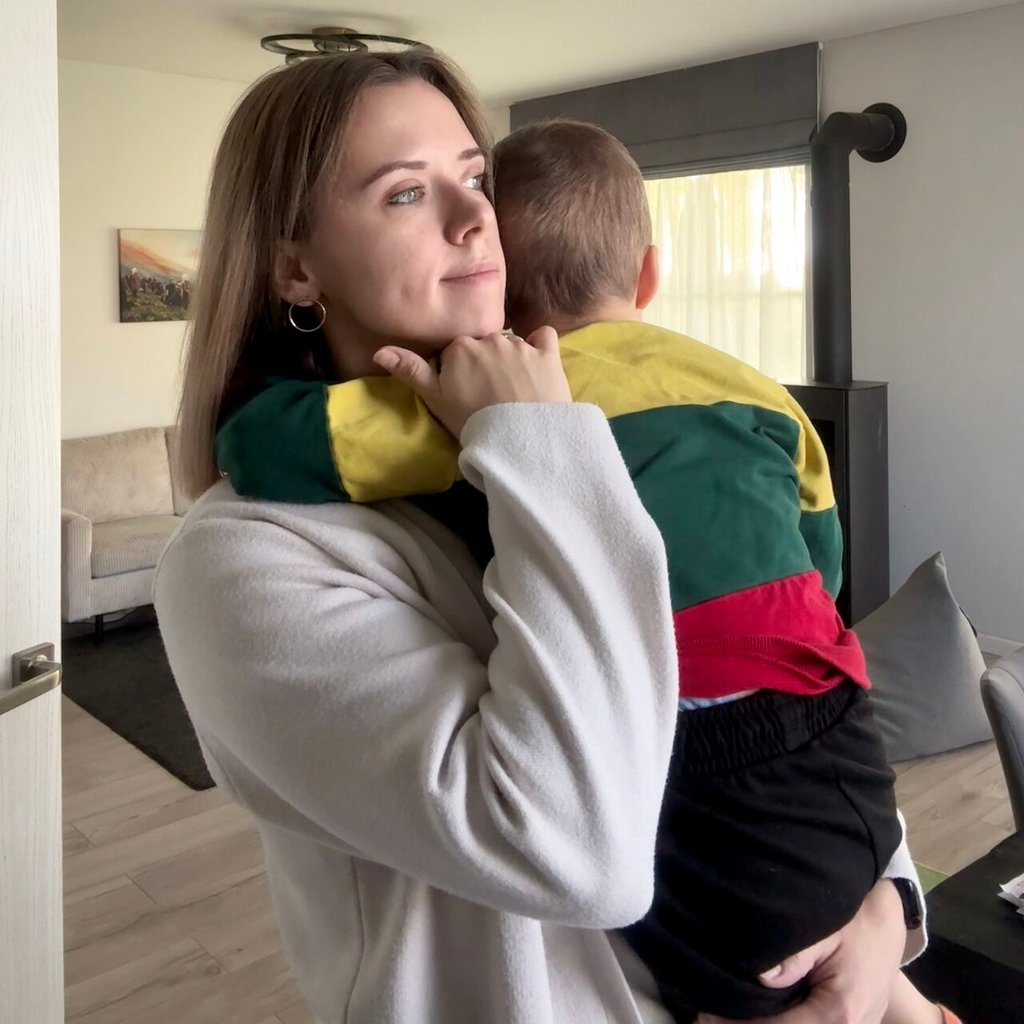
She was a new mother, still consulting, operating without a safety net beyond her own judgment. The conditions around her weren’t ideal, but the direction made sense.
Creating a room to pivot
What allowed Monika to launch the agency – and later to leave it by selling it – was years of quietly building optionality.
Her experience as a CMO gave her credibility. Her consulting work gave her range. Her exposure to different Web3 niches gave her flexibility. And her ability to move between strategy and execution meant she could respond to what each moment required.
None of it was wasted. All of it compounded.
After years of building something she was genuinely proud of, she began to notice a shift in the Web3 marketing landscape.
Engagement was being inflated by bots. Campaigns were increasingly designed to simulate traction rather than create it. The industry was starting to reward visibility over substance.
For someone who had built her reputation on doing the opposite, this wasn’t just a trend to ride out. “I need to have a purpose behind what I do – otherwise it drains you,” she said.
So she made another deliberate decision to let go of her agency, as she needed to maintain her standards. She found a buyer and exited on her terms.
If she were to do it again, she says she’d adjust a few things: hire an accountant from day one, bring on an account manager early, build proposals with real calculations rather than gut feeling.
“The first days were rocky, but the end result was very good. It was a very good business school,” she said. Knowing when to leave a track is just as important as knowing when to start one.
Bringing her founder mentality into scale
Monika had already been building with Hostinger for years, through her Web3 courses website, her agency’s domains, and the ecommerce experiments she kept testing along the way.
So, when she saw the opportunity to join Hostinger, the products felt familiar to her, and more importantly, they had earned her trust over time. And what ultimately shaped her decision was the culture behind it.
Hostinger’s principle of Freedom and responsibility felt like the exact mindset Monika had already been living by – self-motivated, self-disciplined, trusted to move fast without needing constant oversight.
After navigating the unpredictability of Web3 and running her own agency, she wasn’t looking for structure for the sake of structure. She was looking for a company that could keep up with her pace.
“I want to be proud of my work again. I want people to engage with my creations. I want to help businesses scale,” she wrote on her LinkedIn when she announced the move.
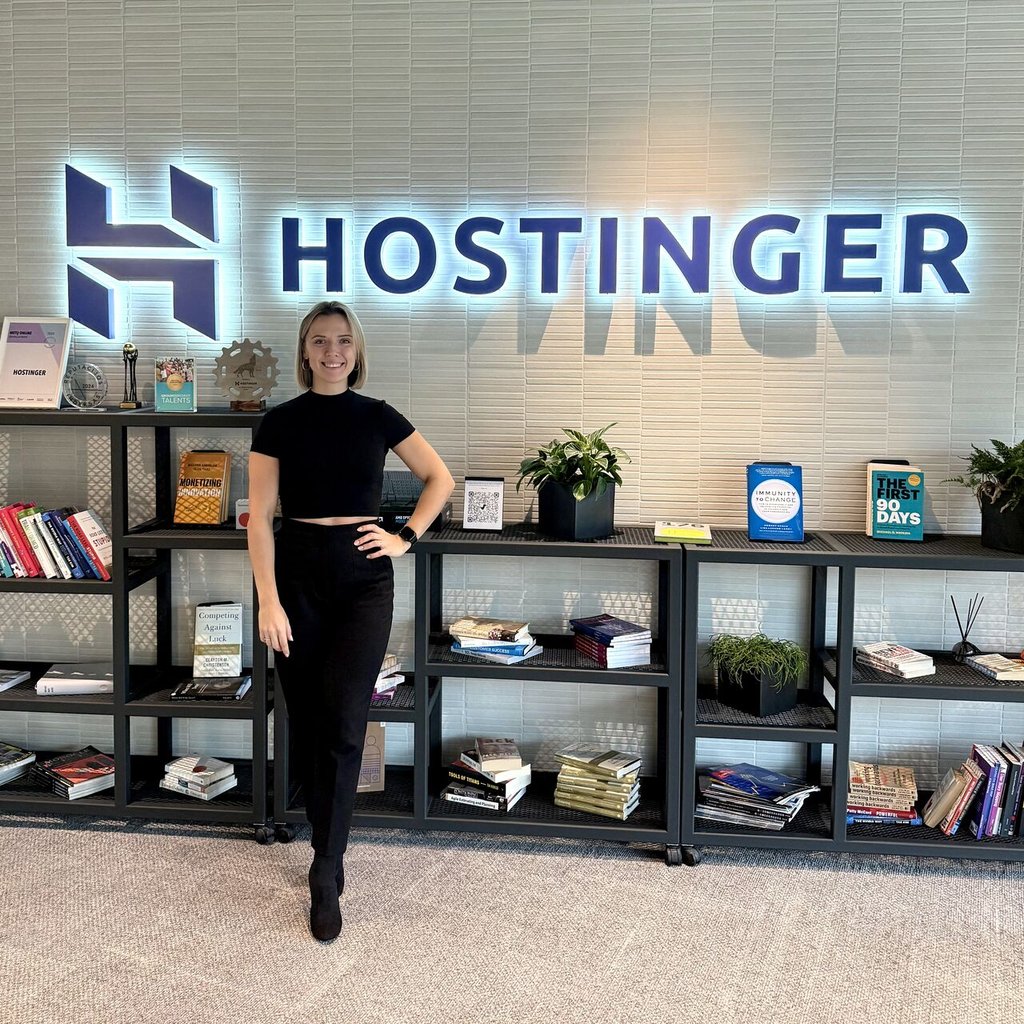
She joined as Partnerships Director for Europe and LATAM, bringing far more than just partnership experience. There was the founder instinct, the deep understanding of online communities, and years spent watching how influence actually shapes business growth.
That ability to operate across multiple modes at once – builder and operator, strategist and executor – closely reflects a concept known in management research as organizational ambidexterity: the ability to deliver results today while preparing for tomorrow. To perform and transform simultaneously.
It’s an idea we have increasingly embraced across Hostinger through our broader future-ready cultural shift.
For Monika, this way of working didn’t even begin with a framework or workshop. Long before she knew the term, she was already practicing it. Joining Hostinger felt less like reinvention and more like a natural extension of who she already was.
Within her first weeks, she helped shape the partnerships function, hired across new regions, and pushed a bigger idea forward: influencers shouldn’t be treated as a temporary marketing channel but as a long-term business infrastructure.
The thinking quickly gained traction. Just six months after joining Hostinger, she was already taking that perspective onto a conference stage.
At the same time, her builder mentality never switched off. She used Hostinger AI Builder to test an idea for her new project. The approach was familiar: build quickly, test honestly, keep moving.
The project Monika is currently building
Monika is working on a maternal wellbeing platform designed to support new and expectant mothers – helping them track their mental health, connect with others at a similar stage, and better understand experiences like baby blues and postpartum depression.
Again, the project started from a problem she encountered firsthand: how isolating early motherhood can be, and how hard it is to recognize what you’re going through when you’re in the middle of it.
She’s building it for all mothers.
Monika’s story was never about prescribing a single path. It was about expanding what women know is available to them. For her, full-time motherhood is just as deliberate a choice, and just as worthy of support. What she’s building reflects that directly.
When asked what she’d want any entrepreneur or first-time founder to take away from her story, she doesn’t reach for a framework. She simply says, “You can always restart.”
Plans fail. Industries shift. Standards change. The founders who last aren’t the ones with the cleanest first attempt. They’re the ones who understand that the path isn’t linear, and that going back is not the same as giving up.
“We think there’s only one path for us, and we kind of close down the others in our mind, but that’s not the case,” she said.
The platform follows the same pattern as everything else in her story: observe closely, notice what’s missing, and build alongside everything else – not after life slows down, but while it’s still in motion.
She found the problem in one of the most demanding seasons of her life. She’s solving it in the next.

Larassatti Dharma is a content writer with 5+ years of experience in the web hosting industry. She has populated the internet with over 100 YouTube scripts and articles around web hosting, digital marketing, and email marketing. When she's not writing, Laras enjoys solo traveling around the globe or trying new recipes in her kitchen. Follow her on LinkedIn