Stop using AI for the easy stuff and let it run your business
Think about your last workday. How many tasks did you start by opening AI first? Drafting an email, planning a campaign, replying to a tricky customer message. It’s become the starting point for almost everything.
That shift happened fast. And it’s quietly leveled the playing field for small businesses. Capabilities that once required a full team are now available to anyone.
But most small businesses are still using AI for one-off tasks. Writing a post, brainstorming a few ideas, generating a subject line. Useful, but isolated.
The real opportunity is using AI to run entire parts of your business. Your marketing, your customer support, how people find you, the workflows that eat your week.
The pattern is clear – the businesses thriving right now are the ones using AI where it matters most.
That’s what this report is for: the specific areas where AI makes the biggest difference for small businesses, and the steps to actually put it to work.
Where are you right now?
There’s no single way to adopt AI. But most small businesses fall into one of three stages:
Using it for the basics: You reach for AI regularly, mostly for drafting, brainstorming, or rewriting. It saves you time on small tasks, but it hasn’t changed how your business actually operates.
Getting deeper: You’re using AI for a few bigger things, maybe content creation or email marketing. Some regular processes are faster. But it still feels like something you add on top of how you already work.
Running with it: AI is woven into how your business works. Marketing, support, operations. You’re not thinking about it as a separate activity anymore. You’re saving hours every week and figuring out what to hand off next.
Wherever you land, the move is the same: start with one area, get a quick win, and build from there.
Make sure people can actually find you
For years the advice was simple: build a website, do some basic SEO, show up on Google. That used to work.
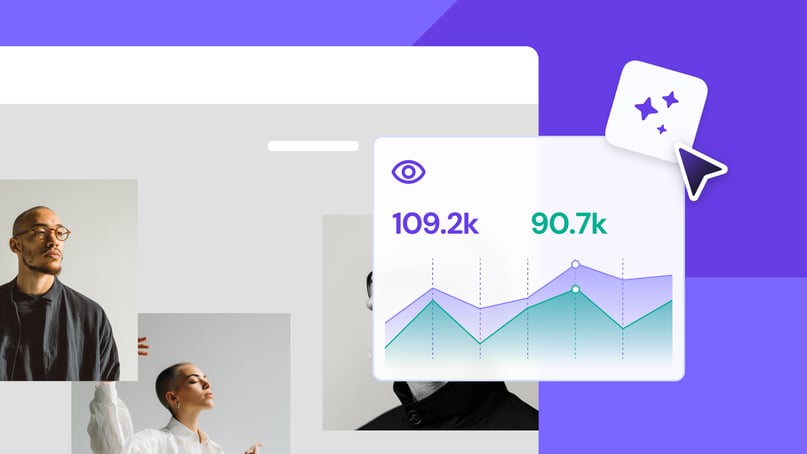
But now, when someone asks ChatGPT or Perplexity to recommend a local accountant or a plumber, it doesn’t just crawl your website. It looks at whether people talk about you on Reddit, whether you show up on YouTube, whether other sites reference you.
Most small businesses are invisible in AI search not because they’re bad at what they do, but because their entire presence lives in one place. One website. One Instagram account. Maybe a Google Business profile. That’s not enough anymore.
AI reads the whole conversation happening about your business and if that conversation only lives on your own pages, you’re not really in it.

It’s happening on two fronts. AI Overviews are taking over Google results, answering questions before anyone clicks through. And more people are skipping Google altogether, asking ChatGPT or Perplexity directly.
This means that even if you rank on page one in Google, fewer people are clicking through to your site than a year ago. The traffic small businesses depend on is quietly declining, and most haven’t noticed yet.
We saw this firsthand. Our own traffic from traditional search was declining, so we restructured 100 pieces of content around the questions AI is actually trying to answer.
Within three months, AI tools were recommending our content 52% more often.
The content was already good. The difference was making it easy for AI to find and use.
Action steps
1. Search for yourself the way a customer would. Open ChatGPT or Perplexity and type the question someone would ask before buying what you sell. Not your business name. The problem you solve. See what comes up. If you’re not there, you now know what you’re up against.
2. Turn your 10 most common customer questions into pillar content. The questions people ask before buying, right after, and when something goes wrong. Give each one a clear, in-depth answer on your site.
These are exactly the queries AI systems are answering right now. The clearest, most thorough response tends to be the one they cite. This is the foundation everything else builds on.
3. Get your business mentioned beyond your own site. Get listed on relevant industry directories. Encourage happy customers to review you or mention you online. Be active in one community or forum where your audience hangs out. Answer questions on Reddit or Quora in your area of expertise.
AI needs to see you referenced by others to trust you’re worth recommending and each mention is a signal.
Get more from the marketing you’re already doing
I keep seeing the same pattern. A business puts real effort into a blog post or a video, it does well, and then…they move on to the next thing. Nobody touches it again.
Meanwhile, AI can turn that one piece into a month of content across every channel. Social posts, newsletters, ad copy, landing pages. It’s all sitting right there.
The other thing people sleep on is competitive research. You can literally paste a competitor’s page and content into AI and get a breakdown of their entire messaging strategy in minutes.
If you want to do marketing well right now, figure out both: multiply what already works, and learn from what works for others.

AI search rewards businesses that show up in multiple places and now it’s actually possible to do that without a team or a big budget. But everyone has access to the same AI tools, which means the content AI produces on its own is the same content your competitors can produce.
Your job is to make sure the starting material is worth multiplying.
The thing that makes people share your work, link to it, and mention your business is something that only you can add: your experience, your specific results, your actual opinions. That’s what builds authority with both people and AI.
Action steps
1. Take your best piece of content and multiply it. Find the post, video, or update that got the most traction recently. Feed it to AI and ask it to create variations for every channel you’re active on: social posts with different angles, a newsletter intro, a short video script, ad copy, a summary for your website.
What used to take a full week of content planning now takes under an hour, built on something you already know works.
2. Turn one customer win into an entire campaign. Take your best testimonial, case study, or review. Feed it to AI and ask for ad copy, landing page headlines, email subject lines, and social media posts.
You now have a multi-channel campaign built around real social proof. One genuine customer story can fuel your marketing for a month.
3. Spy on what’s working in your space. Pick three competitors or businesses you admire. Feed their landing pages, ads, or top-performing content into AI and ask it to identify patterns: what messaging are they using, what angles keep showing up, what offers are they leading with.
You’ll spot trends and gaps you can use in your own marketing. This kind of competitive analysis used to take hours of manual work or an expensive agency. Now it takes 20 minutes.
Give your customers instant answers
The shift I’ve noticed is that customers stopped caring whether it’s AI or a human solving their issue, as long as it actually works. What they won’t forgive is waiting. A chatbot that resolves a billing question at midnight beats a human reply at noon the next day, every time.
The businesses getting this right aren’t doing anything exotic. They train their AI on the real questions their customers ask. Not a generic knowledge base, but the actual intents, the edge cases, the stuff that used to pile up in the queue. They add information they have about their customer to make it personal.
Customers feel the difference between a system designed to avoid them and one designed to actually help. We had a customer in Los Angeles mail a physical letter to our chatbot, Kodee, just to say thank you. Not an email. A letter. That doesn’t happen because the bot was fast. It happens because it felt genuinely helpful.

Most small businesses have started using AI for content and marketing. Far fewer have applied it to how they handle customers. That’s a missed opportunity.
When you’re running everything yourself, customer inquiries sit in your inbox while you’re busy doing something else. By the time you reply, some people have already moved on.
AI can cover the gap in ways that actually feel good to the customer, as long as you’re upfront that it’s AI.
Nobody minds getting an instant, accurate answer from a bot. They mind waiting three days for a human one. And they definitely mind finding out they were talking to AI when they thought they weren’t.
Action steps
1. Set up an AI chatbot trained on your actual business. Tools like Tidio and Chatbase let you feed in your website URL, FAQs, and product info, and they’ll create a chatbot that genuinely understands your business and answers questions in context.
A customer asks, “Do you ship to Portugal?” and the chatbot checks your shipping page and gives a real answer, not a link to a generic help article. Setting up a chatbot like this used to mean hiring a developer. With tools like these, you can have one running in an afternoon.
2. Build a self-service help page with AI. Go through your last few months of support emails and DMs. Copy the most common questions and your replies into ChatGPT or Claude and ask it to organize them into a clean FAQ page. Edit it, add anything that’s missing, and publish it on your site.
Your customers find answers themselves, you get fewer repetitive emails, and AI search systems have structured content to pull from when someone asks about your business.
3. Use AI to draft responses to real inquiries. The simplest version is to paste a customer’s email into ChatGPT and ask it to draft a reply in your tone. Review it, adjust, send. If you want to go further, tools like Help Scout and Freshdesk have AI features built in that draft responses automatically.
You can also build an AI personal assistant that connects your inbox to AI so drafts are waiting for you when you open your email. Either way, response time goes from hours to minutes while you stay in control.
Automate the tasks you keep doing manually
The most exciting thing I’m watching right now is non-technical people building real automations, and the reaction is almost always the same: ‘Why didn’t I do this months ago?’
Every business has that one workflow they do manually every week that eats more time than they realize. It might be chasing invoices, copying data between tools, sending follow-up emails, or updating a spreadsheet.
Individually, these feel too small to bother fixing. But when you actually map the steps out and automate the whole thing, you suddenly have hours back.
The hardest part is sitting down and identifying which task is costing you the most time. Once you do that, the automation itself is usually straightforward.

61% of small business owners using AI say the biggest benefit is saving time. Most of that comes from exactly this kind of work: the repetitive, invisible tasks that eat your day without any single one feeling big enough to fix.
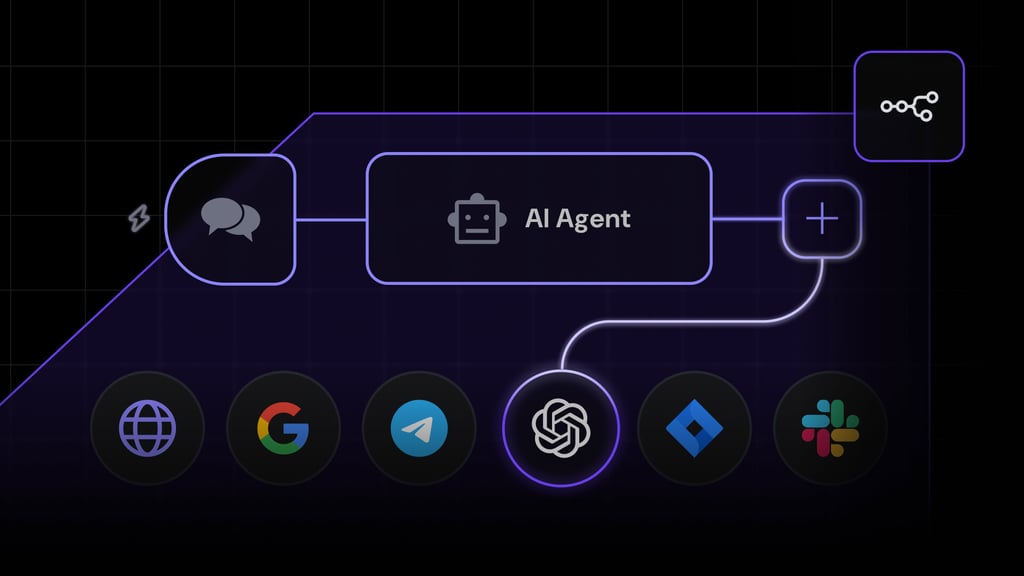
The tools to automate these have gotten dramatically easier to use. Platforms like n8n let you connect the apps you already use and build workflows without writing code.
And if no off-the-shelf tool does what your business needs, you can describe what you want to a vibe coding platform and have a working version built for you.
Action steps
1. Write down the five tasks you do every week that feel like a waste of your time. Be specific. Not “admin stuff.” More like: “I copy new form submissions into a spreadsheet, then send each person a welcome email, then create a follow-up task in my project tool.”
The more specific you are, the easier the next step is.
2. Pick the most annoying one and map out exactly what happens, step by step. Write it as a sequence: “customer fills out form → I copy their details into a spreadsheet → I send a welcome email → I create a task to follow up in three days.”
When you see it laid out like that, you’ll realize most of those steps can run without you.
3. Build the automation. Start by searching for an n8n template that matches your workflow. Most common ones (form to CRM, new customer to email sequence, invoice on project completion) already have templates you can customize in minutes.
Start with one automation. When it saves you 30 minutes this week, you’ll want to do the next one.


What AI still can’t do (and why that matters)
The thing that catches people off guard is how confidently AI gets things wrong. It doesn’t hedge.
It doesn’t say ‘I’m not sure.’ It’ll give you a made-up statistic or an incorrect policy with the same confidence as a real answer. And if that reaches a customer, the damage is real.
But accuracy is only half of it. AI also doesn’t know when to make exceptions, when to be gentle with a frustrated customer, or when a situation needs a human touch instead of an automated response.
If you want to use AI well, figure out both sides: check everything before it goes out the door, and be clear about where AI handles things and where you step in.

Those are the three areas where you need to stay in control: accuracy, judgment, and spending.
Get these right and AI will be the most productive part of your business. Get them wrong and you’ll spend more time fixing mistakes and canceling subscriptions than AI ever saved you.
Action steps
1. Create a three-question check for anything AI produces. Before it reaches a customer, ask: Are the facts accurate? Does it sound like us? Would I be comfortable if this went wrong publicly? Use it every time. It takes five minutes to set up, but it prevents the kind of mistake that takes months to recover from.
2. Decide where AI stops and you start. Not every customer interaction should be automated. Not every piece of content should be AI-assisted. Write down the specific situations where a human needs to be involved: sensitive support conversations, high-value sales, anything involving a complaint. Make that list clear for yourself and anyone on your team.
3. Audit your AI spending once a month. Open your bank statement, find every AI-related subscription, and ask: Did I actually use this in the past two weeks? Most of what you need can be done with tools you already pay for or free tiers. Cancel what you’re not using. Redirect the budget toward what’s working.
Now do something with this
Go back to the section that matters most to your business right now. Pick one of the action steps and actually do it this week. Not as a one-off task. As part of how you run your business.
Once you’ve done one, do the next. You don’t need to overhaul everything at once. Start with one thing, get it working, and keep going. That’s how you get the most from it.
AI is only going to get more capable from here. But it’ll always reward the people who actually use it over the ones still thinking about it.

Simon is a dynamic Content Writer who loves helping people transform their creative ideas into thriving businesses. With extensive marketing experience, he constantly strives to connect the right message with the right audience. In his spare time, Simon enjoys long runs, nurturing his chilli plants, and hiking through forests. Follow him on LinkedIn.