Feb 13, 2026
Ariffud M.
10min Read

Search engine optimization (SEO) is the practice of improving a website’s visibility in search engines such as Google, Bing, and Yahoo. The goal is to attract organic traffic without paying for ads.
It works by aligning your content, technical setup, and authority signals with what search engines consider useful and relevant.
SEO is a core digital marketing strategy because it attracts visitors through unpaid search results. Strong rankings put your site in front of users who are already searching for what you offer, which makes this traffic more valuable.
SEO includes three core components: on-page SEO (focused on content and HTML elements), off-page SEO (building authority through external signals like backlinks), and technical SEO (helping search engines crawl, index, and understand your site correctly).
Effective SEO combines keyword optimization, high-quality content, link building, and a clear site structure. Together, these efforts improve rankings, increase visibility, and drive steady traffic growth over time.
SEO helps search engines understand, evaluate, and rank your content for relevant queries. It doesn’t deliver instant results, manipulate algorithms, or work as a one-time fix.
Search engines use automated ranking systems to evaluate websites based on hundreds of signals. No single factor determines your ranking. Instead, these systems assess both individual pages and entire sites to build a complete picture of relevance and quality.
Search intent is what shapes every effective SEO strategy. Most searches fall into four main categories: informational (looking for answers), navigational (finding a specific site), commercial (comparing options), and transactional (ready to buy).
Matching search intent determines whether your content satisfies users and earns visibility in search results.
You can measure SEO success through clear outcomes such as keyword rankings, organic traffic volume, click-through rates (CTR), and conversions.
Google’s ranking systems evolve continuously. For example, the December 2025 core update reinforced that algorithms assess content at a fundamental level, evaluating quality, relevance, and usefulness.
Because of this, SEO-friendly websites that focus on long-term quality instead of short-term tactics tend to see more stable results across updates.
The key difference between SEO and SEM is focus. SEO earns organic visibility through optimization. Search engine marketing (SEM) combines organic and paid efforts, but it usually emphasizes paid results.
Organic traffic comes from unpaid search results. When your page ranks naturally for a query, users can click through without costing you anything per visit.
Paid traffic comes from advertisements, typically labeled “Sponsored” or “Ad.” You pay each time someone clicks on these results.
In practice, most marketers use “SEM” to refer specifically to paid search campaigns on platforms like Google Ads. SEO stays focused on improving organic rankings.
Here are the key terms to understand when comparing SEO and SEM:
SEO takes time to show results, but it delivers long-term visibility. SEM provides immediate exposure, but traffic stops once the ad budget runs out.
SEO matters because it increases visibility, builds credibility through organic rankings, and delivers cost-effective traffic that compounds over time.
These benefits apply to nearly every type of website, from blogs and ecommerce stores to local and service-based businesses.
In increasingly competitive industries, businesses invest in SEO for three main reasons: it delivers strong ROI compared to paid channels, builds brand authority through consistent visibility, and improves discoverability when potential customers search for solutions.
SEO positions your brand where buying decisions often begin: in search results.
Search engines discover, organize, and present information through three main processes: crawling, indexing, and ranking.
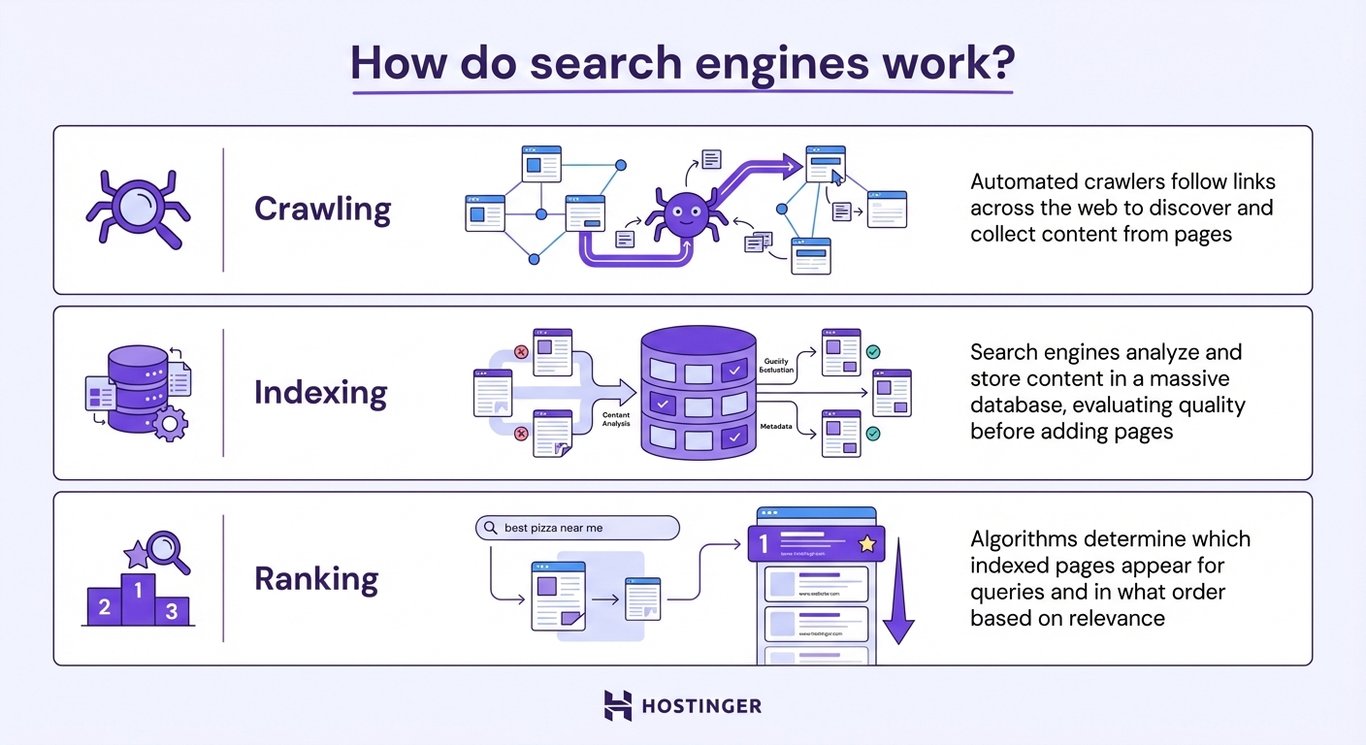
Crawling is how search engines find content. Automated programs called crawlers, or spiders, follow links across the web and collect text, images, and other content from discovered pages.
Crawlers usually start with known pages, then browse links to find new or updated content across the web.
Indexing is how search engines process and store content. After crawling a page, search engines analyze its text, images, videos, and metadata to understand what the page covers.
They then store this information in a massive database called the index. Not every crawled page gets indexed. Google evaluates quality and relevance before deciding whether to add a page.
Ranking determines which indexed pages appear for a search query and in what order. When someone searches, the engine pulls relevant pages from its index and applies ranking algorithms to surface the most valuable results.
Important! Google’s documentation clearly states that its search engine doesn’t accept payment to crawl sites more often or rank them higher. Rankings are determined programmatically based on content quality and relevance to the searcher’s query.
SEO includes several specialized approaches, such as on-site, off-site, technical, and local SEO. Each one focuses on a different aspect of search visibility.
As a core SEO technique, on-site SEO optimizes individual page elements, making your pages easier for both users and search engines to understand.
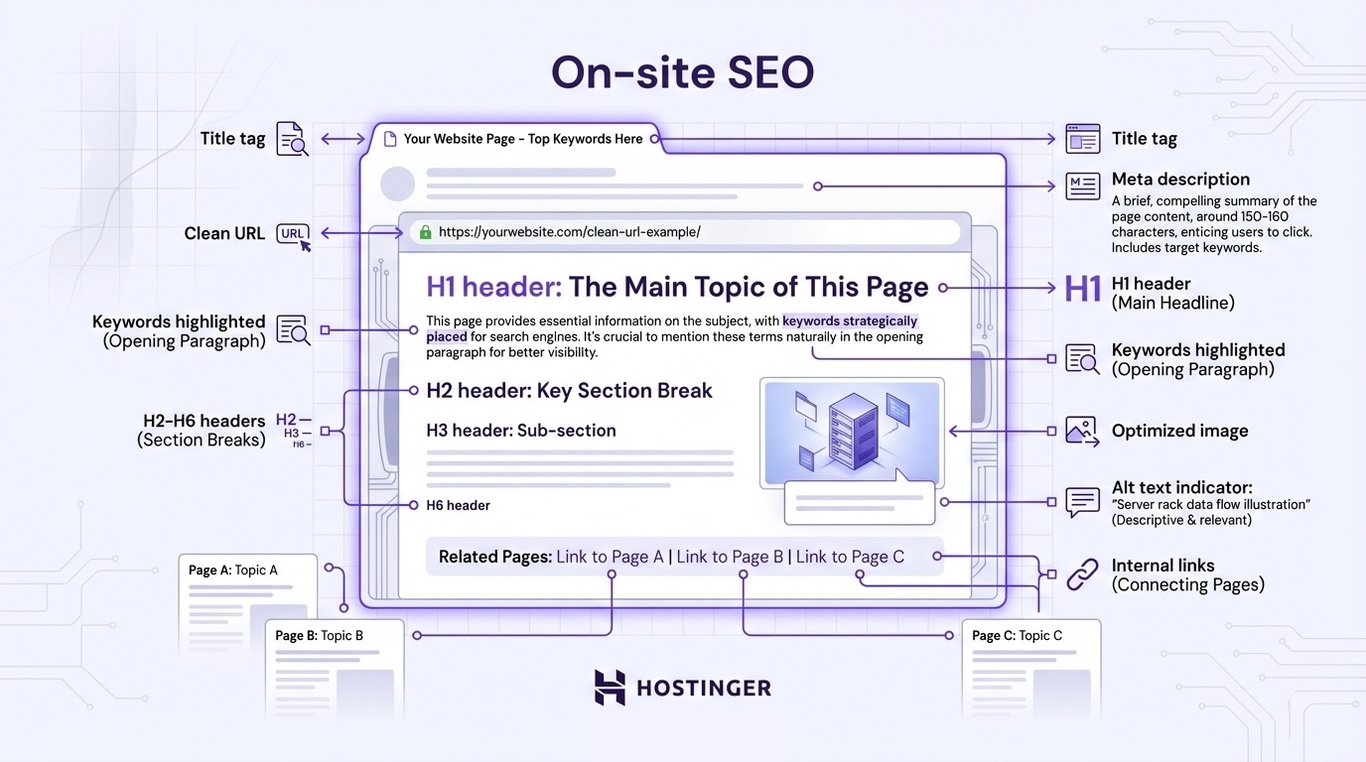
Run regular SEO audits to identify missing tags, weak content, and technical issues. Use these insights to prioritize on-site improvements with the greatest impact on performance.
As another crucial optimization technique, off-site SEO refers to actions outside your website that build authority and trust in front of search engines.
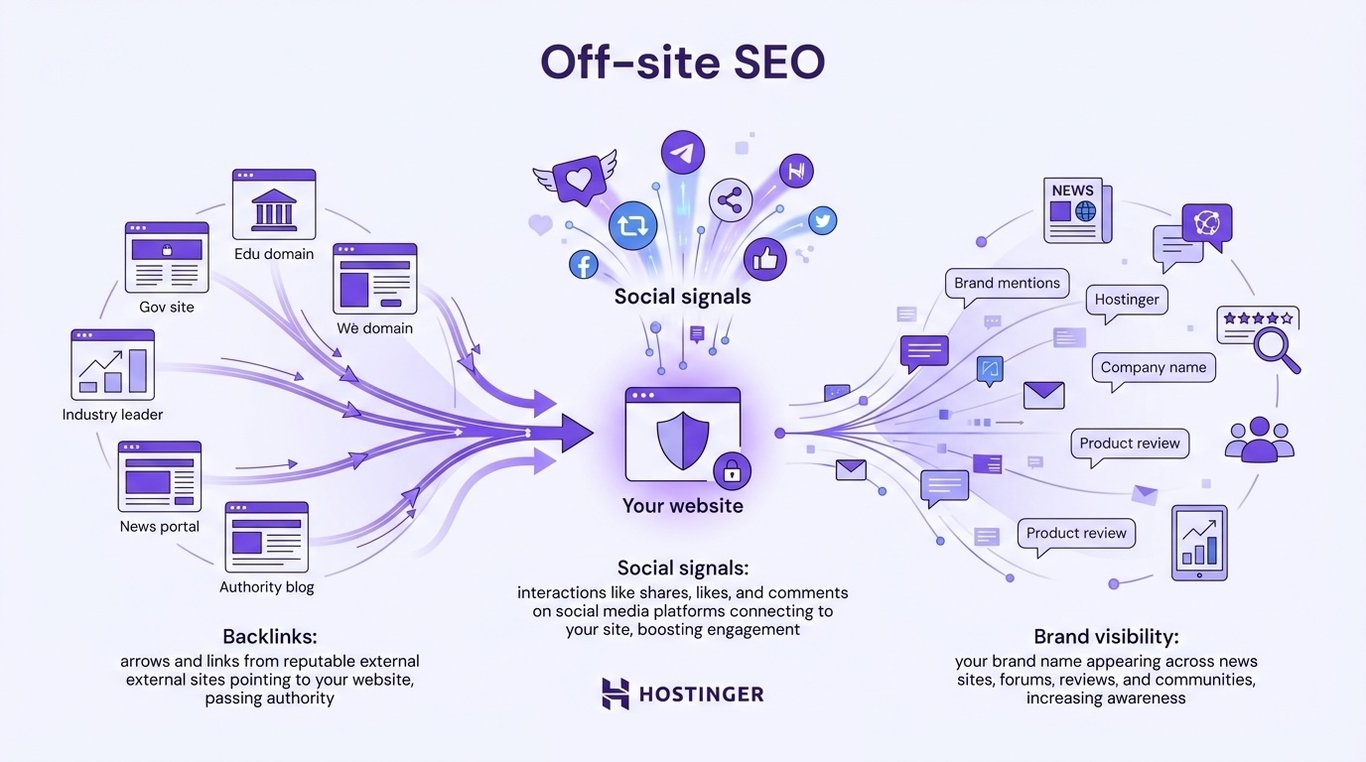
You can also participate in communities like Reddit by answering questions and sharing helpful insights. Put value first, then link only when it genuinely supports the discussion. Learn more in our Reddit SEO guide.
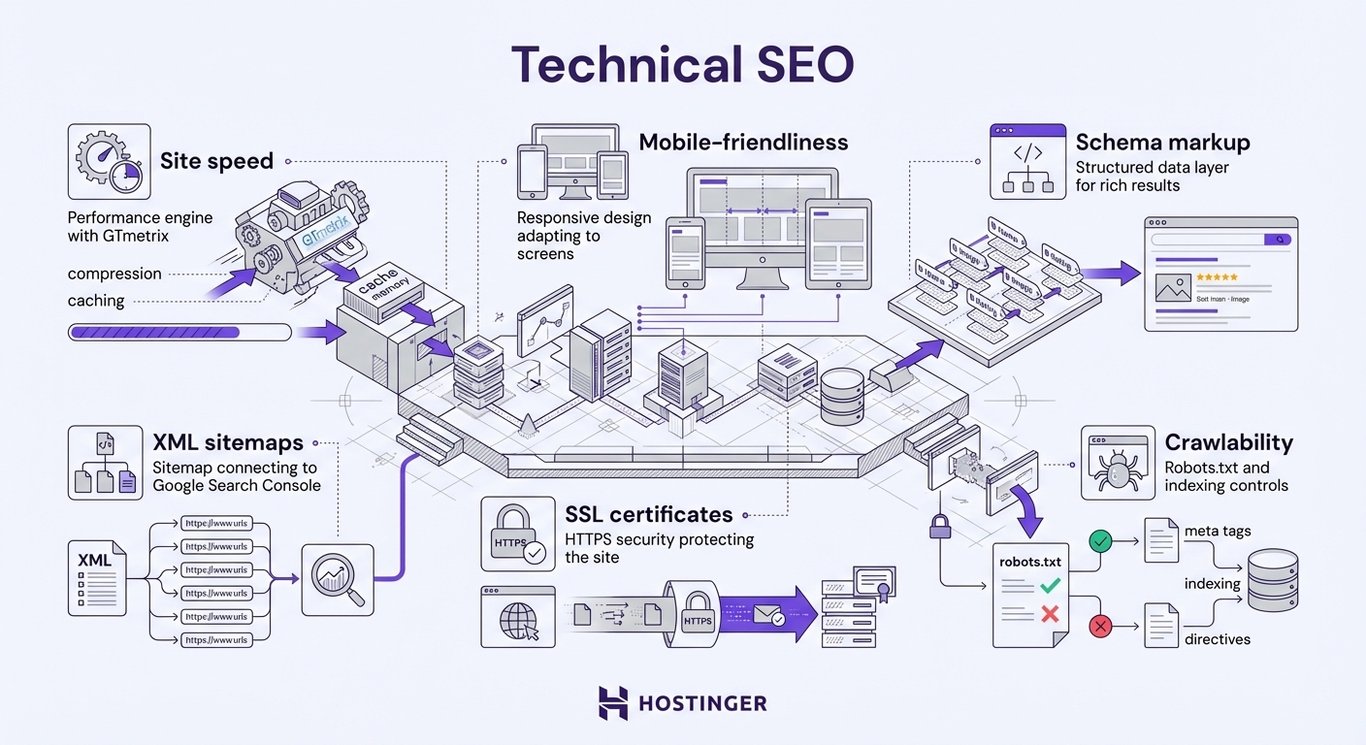
Technical SEO is all about making your site easy for search engines to crawl, index, and understand.
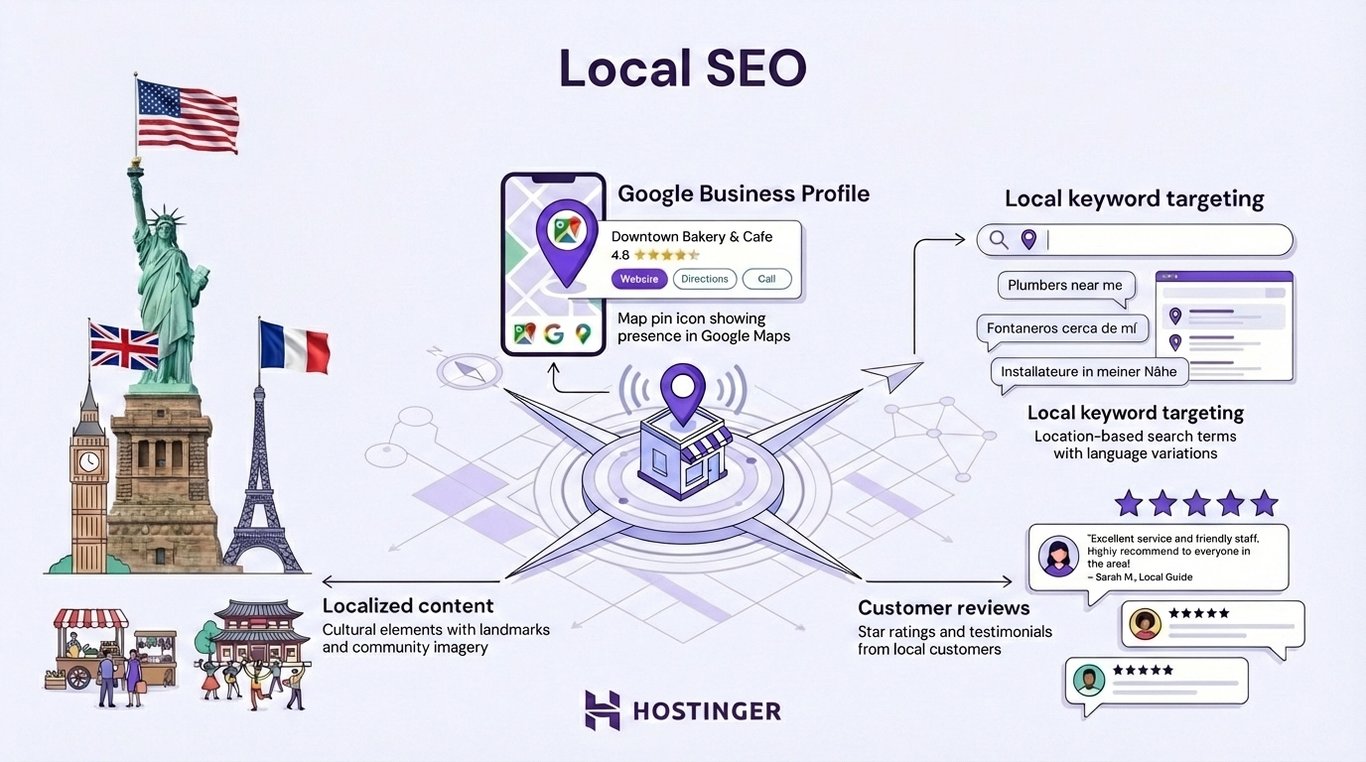
Local SEO helps businesses appear in geographically relevant search results. This improves visibility for nearby customers who are ready to take action.
Google uses multiple ranking systems and signals to evaluate pages. No single factor guarantees rankings because these signals work together to assess relevance, usefulness, and trustworthiness.
Google constantly refines its ranking systems to improve search quality. Instead of treating updates as “new algorithms” that replace everything you know, it’s better to see them as adjustments to how Google evaluates value.
Most updates aim to surface content that genuinely serves users and reduce the visibility of low-quality or spammy pages.
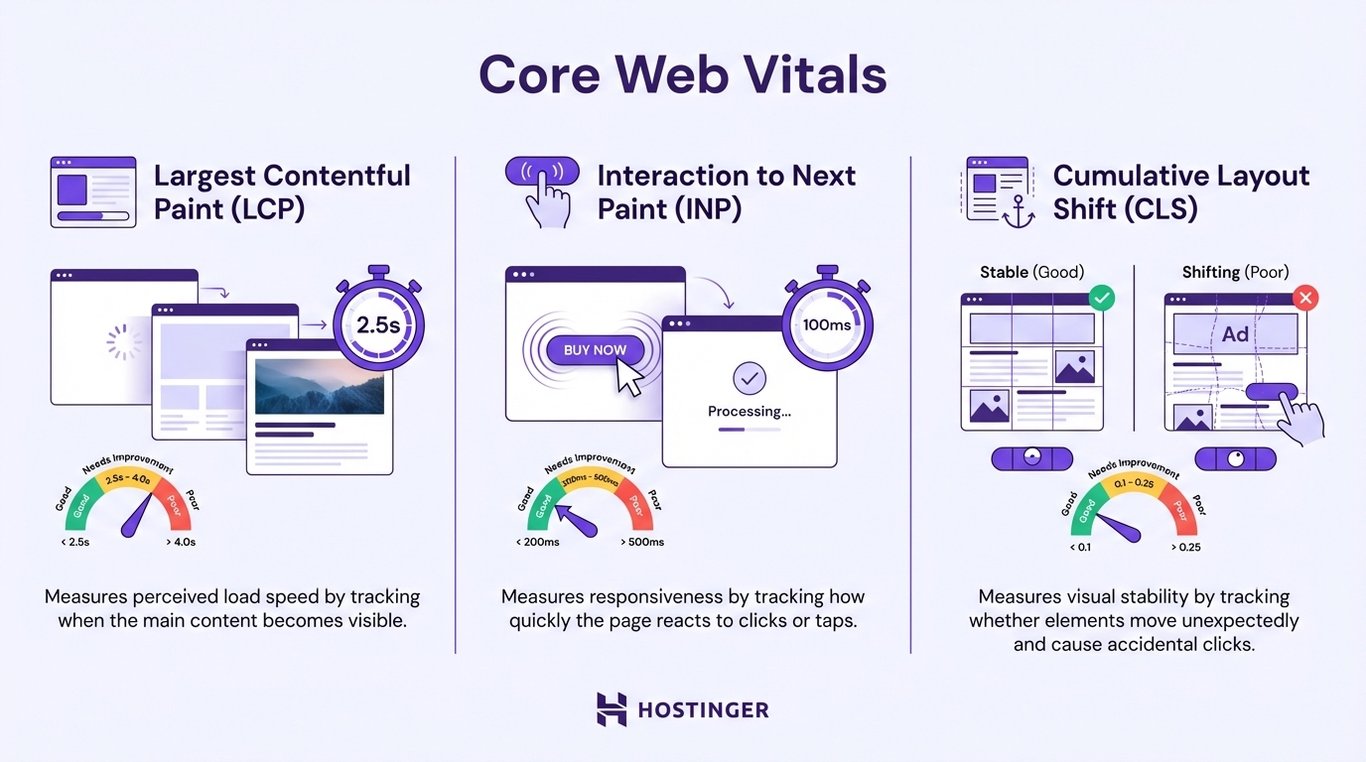
Page experience is a good example of this evolution. In the past, Google focused mainly on page speed as a standalone metric.
Today, it uses a set of metrics called Core Web Vitals to measure how users actually experience a page:
Google rolls out smaller updates continuously, often without announcements. Major core updates usually happen a few times each year.
If your rankings drop during an update, it’s not always a technical penalty. In many cases, Google has simply found other content that better answers the user’s query.
Because of this, chasing individual algorithm updates rarely works. The most sustainable approach is to focus on users. Create helpful content, keep your site secure and easy to use, and build genuine authority over time.
This strategy aligns with Google’s long-term goals and helps you stay resilient through ranking fluctuations.

Applying SEO starts with a solid foundation and continuous improvement, not quick wins. It means making sure your content, technical setup, and authority signals meet search intent.
Focus on getting the basics right before moving on to advanced tactics.
The most reliable resources to learn SEO include Google’s official documentation for technical guidance and trusted industry blogs for practical insights.
SEO remains foundational for search visibility. The core principles of relevance, quality, and trust still apply, even as search interfaces evolve. At the same time, search behavior is changing.
Users increasingly interact with AI-powered experiences that summarize information and deliver direct answers through conversational interfaces. This reduces reliance on traditional lists of blue links to find sources.
Tools like Google’s AI Overviews and ChatGPT now influence how people discover and consume content.
This shift has led to generative engine optimization (GEO). It focuses on making content discoverable, usable, and citable by AI-driven search systems. GEO builds on SEO instead of replacing it.
Websites with strong SEO foundations are better positioned to appear in generative results. AI systems rely on many of the same signals, including clarity, structure, authority, and trustworthiness.
If you want to future-proof your content strategy, our guide on how generative search works explores this topic in more detail.
In short, start with SEO fundamentals and apply them consistently. Stay adaptable as search continues to evolve. Brands that invest in strong foundations today will be ready for what comes next.
All of the tutorial content on this website is subject to Hostinger's rigorous editorial standards and values.

Ariffud is a Technical Content Writer with an educational background in Informatics. He has extensive expertise in Linux and VPS, authoring over 200 articles on server management and web development. Follow him on LinkedIn.

Email marketing performance metrics are the measurements used to evaluate how well your email campaigns reach, engage, and convert your audience. They...

On-site SEO, also called on-page SEO, is the practice of optimizing individual web pages to improve search engine rankings and user experience. It...
Off-site SEO refers to all optimization activities that happen outside your website and influence search engine rankings and authority. Unlike on-site...
Comments
January 11 2020
Great article, Conclusion got me especially on the last part and you are right, SEO is an ongoing process without. end. BUT continue to come along in our environment.
January 07 2022
Hey! Nabilla, Thanks for sharing this article about SEO. Yes, SEO has an excellent chance to appear on the top search results and get an increase in traffic. SEO is only going to grow in 2022 and coming years. Keep writing and Sharing."
January 23 2022
Nice article on seo, breaking down all the important aspects without creating technial jargon. keep up the good work.
March 25 2022
a very useful blog for beginners like me thanks for sharing!!!
March 29 2022
Happy to hear you liked it!