How to start a small business
Jun 19, 2026
/
Ksenija
/
14 min Read

To start a small business, you need a real problem to solve, a clear plan for how the business will work, and the legal and financial basics in place before you launch. That preparation is what turns a rough concept into a small business startup you can run, improve, and grow.
A strong start usually follows the same path: validate the idea, build a practical business planning process, choose the right structure, register the business, secure funding, and set up daily operations.
Each step reduces risk in a different way. Validation tells you whether customers actually want the offer, planning shows how the business makes money, and legal compliance helps you launch without avoidable problems later.
That foundation matters because even a simple business has moving parts. You need to know who you serve, how you will reach them, what it will cost to operate, and what rules you need to follow from day one.
The process usually looks like this:
- Validating the idea
- Creating a business plan
- Registering the business
- Securing funding
- Setting up operations
- Marketing the business
- Staying compliant as it grows
1. Identify and validate your business idea
Start with what you already know. The easiest place to begin is to find the overlap between three things: what you are good at, what people need, and where there is room to compete.
A simple way to brainstorm is to make three lists:
- Skills you already have (e.g., designing simple websites, baking cakes, fixing computers, managing social media, tutoring math).
- Problems you see people complain about (e.g., “accountants take too long to reply,” “local gyms are too expensive,” “booking appointments is confusing”).
- Products or services you think are overpriced, slow, confusing, or poorly done (e.g., expensive meal delivery with small portions, websites that are hard to navigate, cleaning services that cancel at the last minute).
Then look for patterns. For example, if you have bookkeeping experience and know that many freelancers struggle with invoicing and tax prep, that points to a focused service business.
If you are a strong baker but your area already has ten similar bakeries, the better idea might be a narrower offer, such as custom allergy-friendly cakes ordered online.
After that, test whether the small business idea is viable. This is where many people skip ahead too fast. They assume that because something sounds useful, people will buy it. Validation is how you check that assumption before spending heavily on branding, inventory, or a website.
Start with basic market research. Talk to potential customers directly.
Ask simple questions:
- What are you using now?
- What frustrates you about it?
- What would make you switch?
- How much would you be willing to pay?
Keep the questions open. Do not ask, “Would you buy my idea?” People try to be polite. Ask about their current behavior instead. What they already do tells you more than what they say they might do.
Next, study competitors. Understand what existing businesses do well, where they fall short, and where you can be clearer, faster, cheaper, simpler, or more specialized.
Look at:
- Their pricing
- Their customer reviews
- How they describe their offer
- Who they target
- What customers praise or complain about
For example, if every local dog groomer has long wait times and poor communication, that gap matters. A new business that offers easy online booking and same-week appointments already has a sharper angle.
At this point, define your target customer and your value proposition based on that gap.
That gap tells you two important things. First, who your target customer is – busy pet owners who want fast and reliable service. Second, what your value proposition is – quick booking and clear communication instead of delays and uncertainty.
Your target customer is the exact type of person you want to serve. Your value proposition is the main reason they should choose you.
Be specific. “I help small businesses” is too broad. “I help solo fitness coaches set up simple websites that bring in local leads” is much clearer. It tells you who the service is for, what the service does, and why it matters.
A validated idea should answer four questions clearly:
- Who is the customer?
- What problem do they have?
- What are they using now?
- Why is your offer a better fit?
If you cannot answer those questions in plain language, the idea still needs work.
The goal at this stage is not to prove that your idea is perfect. It is to prove that there is enough real demand to justify launching a business.
2. Create a detailed business plan
A business plan shows how your business will work, how it will make money, and what it needs to stay viable.
You do not need a long, formal document full of jargon. You need a plan that helps you make decisions.
A useful business plan should be clear enough that a stranger could read it and understand what you sell, who you sell to, how you deliver it, and why it should work.
Start with your business model. This is the basic structure of how the business earns money. Define what you sell, who you sell to, how they pay, and how you deliver the product or service.
For example, if you run a bakery, you sell products directly to local customers. If you’re a consultant, you sell your time and expertise to businesses. If you build a subscription app, users pay monthly to keep access.
Once that is clear, define your goals. Goals should be concrete. “Grow the business” is too vague to guide action. “Get 20 paying clients in the first six months” is more useful because you can measure it and plan around it.
Then describe your target market. This is the group of people most likely to buy from you.
You don’t invent this from scratch. You pull it from real places where your potential customers already show up.
Start by looking in these sources:
- Customer conversations – talk to people you know or early prospects and listen to how they describe their problems.
- Online communities – Reddit, Facebook groups, forums, and Discord servers where your audience hangs out.
- Reviews of competitors – check Google reviews, Trustpilot, app stores, or marketplaces to see who is buying and what they complain about.
- Search behavior – look at what people type into Google (autocomplete and “People also ask” are enough to start).
As you go through these, write down exact phrases people use.
For example:
- “I don’t have time to post on social media.”
- “I hate dealing with invoices.”
- “Every service is too expensive for small businesses.”
Then group similar people and problems together.
For example, you might notice:
- Many small restaurant owners complain about not having time for marketing
- They rely on word of mouth
- They don’t understand social media
That leads to a clear target:
“small restaurant owners who don’t have time to handle marketing”
Next, explain your operations. This is how your business will run day to day. Decide where you will work from, what tools or software you need, and how you will deliver your product or service. For example, will you ship products yourself, use a supplier, or deliver everything online?
Focus on the full process from order to delivery. What happens after someone buys? How do you fulfill the order, communicate with the customer, and complete the service?
Marketing comes next and should be planned separately. It should explain how customers will find you. Do not list every possible channel.
Pick the ones that fit your audience. A local cleaning service might focus on Google Business Profile, referrals, and neighborhood groups. A digital template shop might focus on search traffic, Pinterest, and email.
Price your products with a clear rationale. Do not pick numbers at random or copy a competitor without thinking. Your price should reflect your costs, the value you provide, and the position you want in the market.
Include financial forecasts, even if they are simple. You need a rough estimate of:
- Startup costs
- Monthly fixed costs
- Variable costs
- Expected sales
- Expected profit or loss
This does not need to be complicated. A basic spreadsheet is enough at first. For example, if you expect 30 sales per month at $50 each, that is $1,500 in monthly revenue.
If your monthly costs are $900, you know your margin is still tight, and your sales target needs to rise.
3. Choose a business structure and register your business
Your business structure affects your taxes, your legal risk, and how the business is owned and managed. It shapes what happens if the business loses money, gets sued, takes on partners, or grows later.
A sole proprietorship is the simplest option. It means you and the business are legally the same. You keep all profits, but you are also personally responsible for any debts or legal issues.
For example, if the business cannot pay a loan or gets sued, your personal savings may be at risk.
An LLC, or limited liability company, separates you from the business legally. This means your personal assets are usually protected if the business runs into financial or legal trouble.
A corporation is more formal and more complex. It can make sense if you plan to raise outside investment, issue shares, or build a larger company with a more structured ownership model.
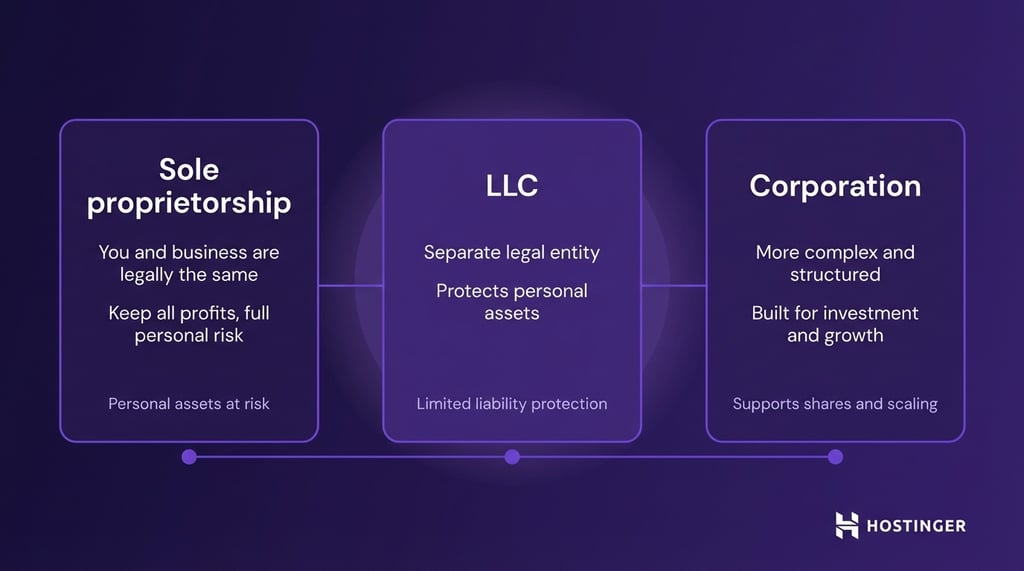
The best structure depends on your risk, your goals, and whether you are starting alone or with others. A freelance designer working solo has different needs from someone opening a retail shop with employees and inventory.
After choosing a structure, register the business. Start by registering your business name. Check your business name availability, and ensure it does not conflict with another business.
Before choosing your business name, check if it’s available online so you can register a domain name for your website.
Then register the business with the relevant state or local authority. The exact process depends on where you operate, but the basic flow looks like this:
- Choose the legal structure
- Submit the registration
- Pay any required fees
Next, check licenses and permits. These depend on what you do, where you operate, and whether you hire staff or serve the public directly.
A food business, daycare, salon, or construction company usually needs more approvals than a freelance writer working from home.
Think of licenses and permits as permission to operate legally in specific ways. For example, you might need approval to sell food, collect sales tax, put up signage, or run a business from your home.
Get this part right before launch. It is much easier to start clean than to fix registration, naming, or permit issues after customers have already paid you.
4. Secure funding and manage finances
Start by working out how much money you actually need. Separate one-time startup costs from monthly operating costs. Startup costs may include equipment, registration fees, software, branding, or initial inventory. Monthly costs may include rent, subscriptions, wages, packaging, and advertising.
Then choose the funding source that fits your situation.
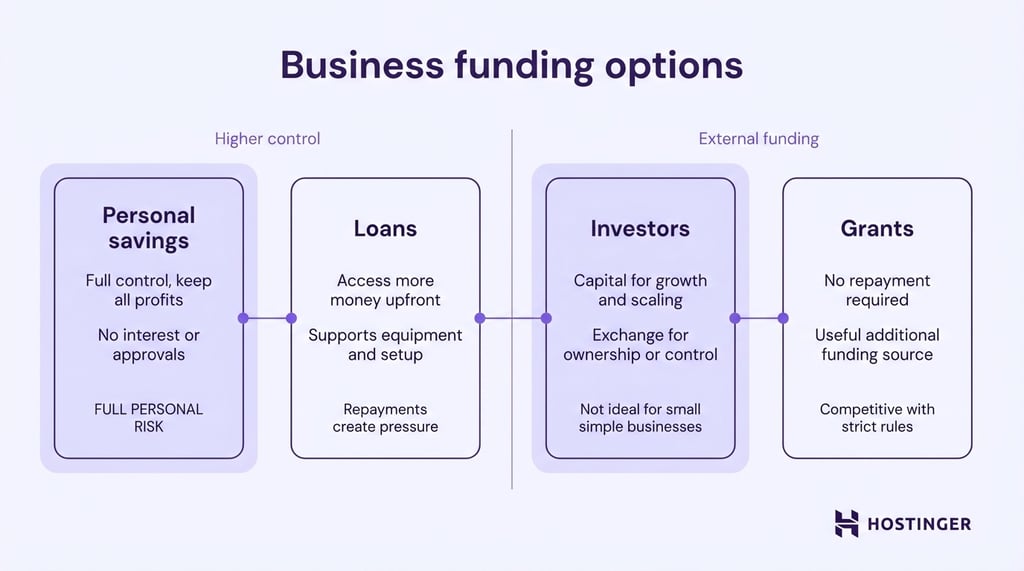
Personal savings give you the most control. You do not owe interest, and you do not answer to investors.
You can make decisions quickly without needing approval, change direction without pressure, and keep all profits as the business grows.
It also keeps your setup simple. There are no loan agreements, investor terms, or reporting requirements to manage early on.
The trade-off is that you carry all the risk yourself. If the business loses money, that loss comes directly from your personal funds.
Loans give you access to more money upfront. They can help when you need equipment, space, or inventory before revenue starts coming in. The downside is pressure. Repayments start whether the business is ready or not.
Investors bring capital in exchange for ownership or influence. This route makes more sense when the business has strong growth potential and needs outside money to scale. It is usually not the first step for a simple service business or a small local shop.
Grants are attractive because they do not need to be repaid, but they are competitive and often come with rules or narrow eligibility. They are worth exploring, but they should not be your only plan.
Once you have funding, set up the financial basics immediately. Open a separate business bank account.
Set up an accounting system early. This does not need to be complex. It can be accounting software or a clean spreadsheet if the business is still very small.
What matters is that you track income, expenses, invoices, and payment dates consistently.
Create a budget blueprint, showing:
- What you must spend every month
- What spending changes with sales
- How much revenue you need to cover both
Pay attention to cash flow. Profit and cash are not the same thing. You can make a sale today and still run into trouble if the customer pays late, inventory costs rise, or a large bill hits before cash comes in.
That is why you need to watch when money moves, not just how much you expect on paper.
Track every expense from day one. Small leaks add up. A few software tools, delivery fees, paid apps, and ad tests can quietly become a serious monthly burden.
A simple rule helps here: review your numbers on a set schedule. Weekly is best when you are starting. Look at what came in, what went out, what is overdue, and what looks off.
5. Set up your business operations
Business operations are the systems, tools, and routines that let you deliver your product or service consistently.
Start with where the business will operate. That could be a physical location, an online store, a home office, a rented studio, or a mix of those.
The right setup depends on the business model. A consultant may only need a laptop, video call software, and a payment tool. A café needs premises, equipment, suppliers, staff scheduling, and health compliance.
Then work out the tools and equipment you need to deliver your products or services. Keep this focused. Buy what helps you operate, not what makes the business look impressive.
For example, a handmade candle business may truly need packaging supplies, storage, a product photography setup, and shipping materials. It does not need a fancy office.
Next, map the customer journey from start to finish.
Ask yourself:
- How does someone discover the business?
- How do they place an order or book a service?
- How do they pay?
- What happens after they buy?
- How do you handle questions, delays, or returns?
This creates a clear process instead of disconnected tasks.
Once that process is defined, focus on how reliably you handle each step, from order to delivery.
Customer service directly affects this. Fast, clear communication builds trust and increases repeat business.
Feedback shows where your process works and where it breaks. Collect it through follow-up emails, short surveys, direct conversations, or reviews. Focus on repeated patterns, not one-off comments.
Then look for bottlenecks in your process.
If you are spending hours packing orders and falling behind, that is an operations problem. If customer questions are slowing you down, that is a support problem.
Hire only when there is a clear gap. Early hires should solve specific bottlenecks, not add complexity.
6. Create your marketing plan
A marketing plan explains how the right people will find your business, understand its value, and decide to buy.
Start by building your brand identity. Your brand is the overall impression people get from your business. It includes your name, tone, visual style, and how clearly you present your offer.
A strong brand feels consistent. If your business looks playful on social media, formal on your website, and unclear in email, people trust it less.
Then create a small business website. Your website gives people one clear place to understand what you do and what to do next. At a minimum, it should explain:
- What you offer
- Who it is for
- Why is it useful
- How to buy, book, or contact you
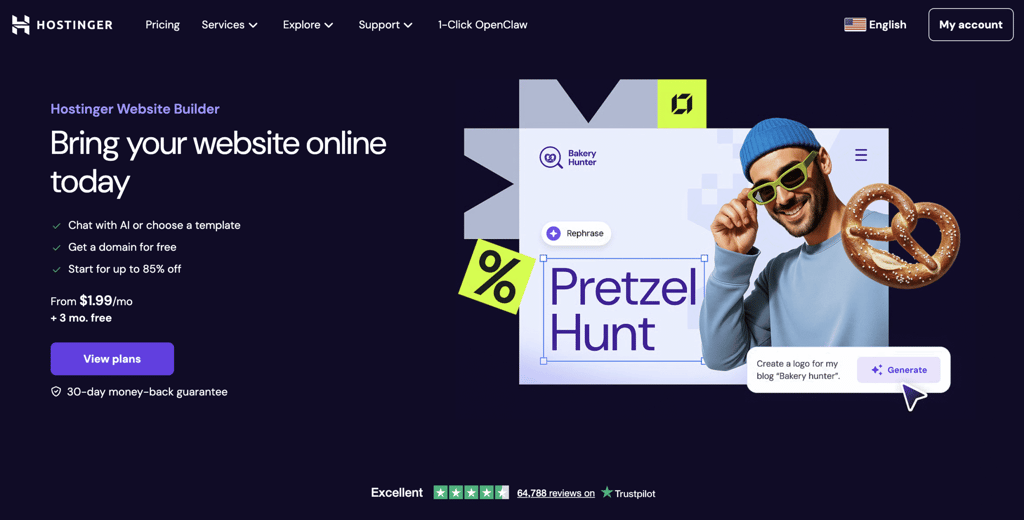
Hostinger Website Builder is one option for getting a small business website online without a complex setup. It allows you to build a simple, functional site quickly without technical skills, so you can start taking orders or inquiries without delays.
Once the website is in place, choose marketing channels that match your business.
Start with social media if your business is visual or personal. Pick one platform your audience already uses. Post your work consistently, show real results, and respond to comments or messages.
For example, a florist can post daily arrangements, a fitness coach can share short workout clips, and a bakery can show behind-the-scenes content.
Use search engine optimization (SEO) if customers are actively looking for your service. Set up a basic website with clear service pages and include the terms people search for. For example, a local plumber should have pages like “emergency plumbing in [city]” and register on Google, so they appear in local results.
Use email marketing to stay in touch and bring people back. Collect emails from day one through your website or after a purchase. Send simple updates, offers, or useful tips. For example, a service business can send reminders or seasonal offers, while a product business can announce new items.
Start small and stay consistent. One channel done well is more effective than trying to be everywhere at once.
Your marketing plan should also clearly articulate your competitive advantage. This is the real reason your business stands out.
Do not say you offer “great quality” or “excellent service” unless you explain what that means. Be specific. Faster turnaround, easier booking, clearer pricing, better customization, or stronger local expertise are all more believable than vague claims.
Start with a small number of repeatable actions. For example, publish one useful article a week, send one email every two weeks, and post customer work on social media three times a week. A simple plan you follow beats a large plan you abandon.

7. Comply with ongoing legal and tax obligations
Ongoing legal and tax compliance keeps your business active, protected, and free from preventable penalties.
Once the business is running, you need to stay on top of recurring responsibilities. That includes tax filings, license renewals, required notices, payroll rules if you have employees, and any industry-specific regulations that apply to your business.
Start by understanding what you need to file and when. Small business taxes vary by location and business type, but you should always know your deadlines before they become urgent. Late filings create fees, stress, and sometimes bigger legal problems.
Keep accurate records from the start. Good records should include your income, expenses, invoices, receipts, payroll details (if relevant), and any contracts or major agreements.
Think of record keeping as the proof behind the business. If you ever need to explain a deduction, dispute a payment, or respond to a legal question, organized records make the answer much easier.
Employment laws matter as soon as you hire. Once other people work for you, even part-time, you may need to follow rules on wages, hours, contracts, tax withholding, insurance, and workplace policies.
Licenses and permits also need attention after launch. Some expire and must be renewed. Others change if your location, products, staffing, or services change. For example, expanding from online sales into a physical space can create new requirements.
You do not need to become a tax lawyer or legal expert, but you do need to know where your limits are. An accountant, tax adviser, or business lawyer can help you avoid mistakes that cost more than the advice itself.
That is especially true when you start hiring, signing leases, taking on partners, or dealing with more complex taxes.
Best practices for starting a successful small business
A successful small business grows through steady improvement, strong customer relationships, and clear decision-making.
Start by tracking what is happening in your market every week. Spend 20–30 minutes reviewing customer messages, competitor activity, and reviews. Look for repeated questions, complaints, or requests. For example, if multiple customers ask for faster delivery, that is a signal to adjust your offer.
Build relationships by following up after every sale. Send a short message asking if everything went well or if they need help. Keep a simple list of repeat customers and prioritize them. For example, offer a small discount or early access to new products. Repeat customers are easier to retain than finding new ones.
Create a simple networking habit. Each week, reach out to 2–3 people in your space. This could be other business owners, suppliers, or potential partners. A simple message, comment, or introduction is enough. Over time, this builds referrals and opportunities without formal events.
Adjust quickly when something is not working. Set a rule: if a product, service, or marketing channel shows no results after a set period (for example, 2–4 weeks), review and change it. Do not keep investing time or money into something that is not producing results.
Use basic automation to remove repetitive tasks. Set up simple systems like:
- Automatic invoice sending
- Appointment confirmations
- Order updates
- Follow-up emails
For example, a booking confirmation email can reduce customer questions and save you time every day.
Track key metrics:
- How many sales you made
- How many people contacted you
- How many customers returned
Write these down weekly. If sales are flat but inquiries are rising, your offer may be unclear. If traffic is high but sales are low, your pricing or messaging may need work.
Set clear, short-term goals and review them regularly. Instead of vague goals, set targets like “get 10 new customers this month” or “reach $2,320 in revenue.” Review progress weekly and adjust your actions if you are off track.
Good businesses listen, adjust, track what matters, and improve the parts that directly affect customers and cash flow.
How to make your business operations more efficient with AI
Using AI in business operations helps you complete repetitive work faster, with less manual effort. In fact, 51% of businesses already use generative AI to improve their operations.
For writing, research, and basic planning, use tools like ChatGPT to:
- Draft emails to customers
- Write product descriptions
- Create social media posts
- Summarize competitor research
- Outline your business plan
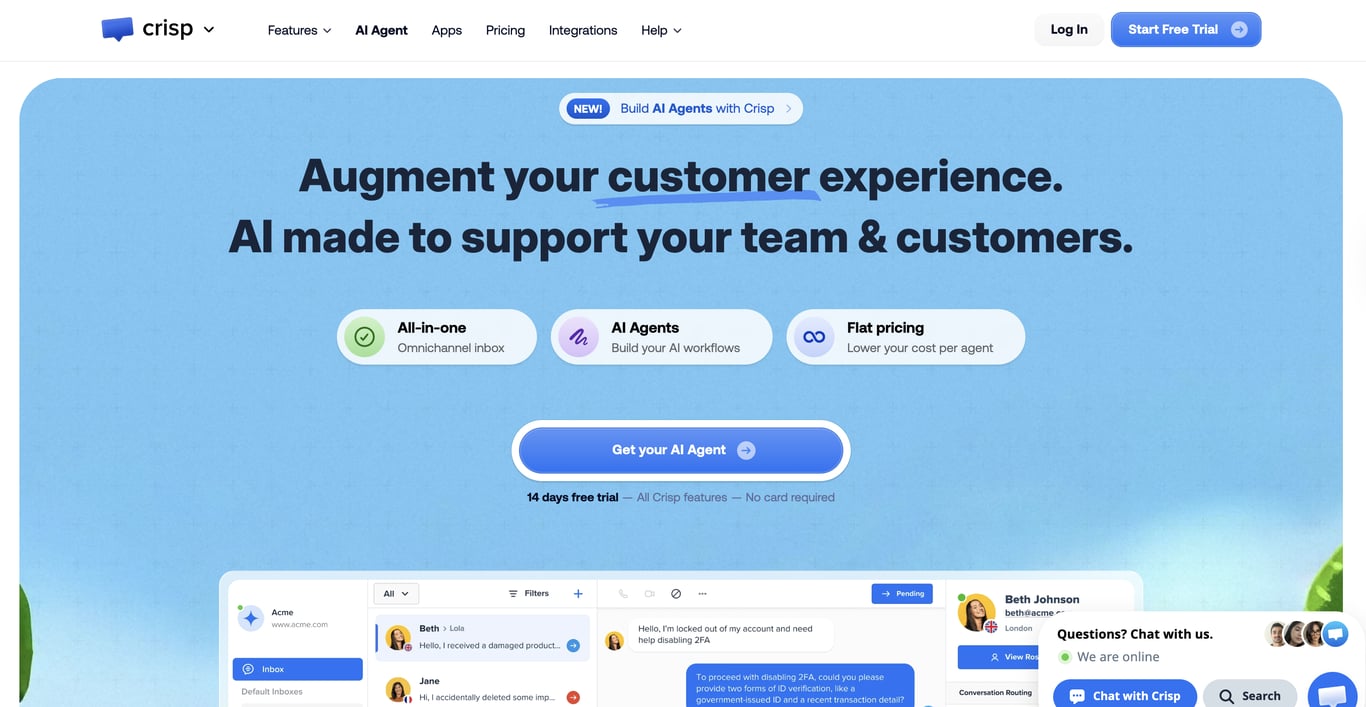
For customer support, use tools like Tidio, Intercom, or Crisp. These tools let you add a chatbot to your website that answers common questions automatically.
For content and design, use tools like Canva AI or Notion AI to:
- Create simple graphics for social media
- Generate captions or content ideas
- Organize notes, tasks, and workflows
For scheduling and admin tasks, use tools like Calendly or Google Workspace with AI features to:
- Automate booking and availability
- Send reminders
- Reduce back-and-forth emails
For basic data and reporting, use tools like Google Sheets with AI features or Notion AI to:
- Track sales and expenses
- Summarize trends
- Spot simple patterns in your data
If you’re looking for an all-in-one option, Hostinger AI Agents gives you a team of seven specialist agents covering business planning, SEO, marketing, content writing, legal basics, sales outreach, and customer communication. They are built into your hosting account, so there are no extra tools to set up and no prompts to memorize.
Each agent is trained for one job, so you get focused help on a specific task instead of a single generic assistant. That makes it a practical way to cover several of the areas above from one place as you launch.
Start small. Pick one or two areas where you repeat the same task and automate those first.
All of the tutorial content on this website is subject to Hostinger's rigorous editorial standards and values.

Ksenija is a digital marketing enthusiast with extensive expertise in content creation and website optimization. Specializing in WordPress, she enjoys writing about the platform’s nuances, from design to functionality, and sharing her insights with others. When she’s not perfecting her trade, you’ll find her on the local basketball court or at home enjoying a crime story. Follow her on LinkedIn.