Printful vs Printify: Which is better for your print-on-demand business?
Aug 06, 2026
/
By Simon L.
/
7 min Read
Printful and Printify are the two biggest print-on-demand platforms, and they differ in one key way: Printful prints everything in-house for consistent quality and stronger branding, while Printify connects you to a network of third-party providers for a bigger catalog and lower base costs.
Printful suits sellers who want predictable quality and white-label branding; Printify suits those chasing the widest product range and the best margins.
Both run on the same model – you upload designs, and products are printed and shipped only after a customer orders, so you never hold inventory. The difference is in fulfillment, and that ripples into your pricing, quality control, and shipping.
What makes this comparison particularly interesting is that in November 2024, Printful and Printify announced their merger as equal partners under the new company name Fyul.
However, both platforms continue to operate as separate brands with distinct features and approaches. Let’s break down the key differences between Printful and Printify.
| Feature | Printful | Printify |
| Product catalog | 400+ products | 1,000+ products |
| Pricing | Higher base prices, no monthly fees | Lower base prices, optional premium plan for discounts |
| International shipping | Ships from its own global fulfillment centers | Ships from a network of providers in different countries |
| Social commerce | Integrates with TikTok, YouTube, Etsy, etc. | Integrates with TikTok, YouTube, Etsy, etc. |
| Hostinger integration | Yes | No |
| Fulfillment model | In-house printing and fulfillment | Network of third-party print providers |
| DTG printing | Yes | Yes |
| DTF printing | Yes | Yes |
| Standard embroidery | Yes | Yes |
| Unlimited color embroidery | Yes | No |
What are the advantages of Printful over Printify?
If consistency and building a strong print on demand brand are your top priorities, Printful may be the right choice for you. The platform is built around controlling the entire process, which gives you a predictable experience.
Here are the main Printful advantages:
- Everything is done in-house. Printful prints, packs, and ships all products from its own facilities. It doesn’t outsource to other companies, which means the quality is consistent.
- Focus on product quality. Printful tends to use higher-quality materials and products. While this can mean higher prices, it helps you build a brand that people associate with good quality, not just affordable products.
- Better branding options. You get more ways to make the products feel like your own. Printful offers custom neck labels for shirts, personalized packing slips, and even branded stickers or inserts inside the package.
- Easy-to-use design tools. The product creation tool is beginner-friendly. You can upload your art, add text, and instantly see it on a realistic mockup. This helps you create professional-looking product images for your store in minutes.
- Simple pricing with no monthly fees. The price you see for each product is what you pay. You don’t need to sign up for a monthly plan to receive reasonable rates, which makes it easier to figure out your profit margins from day one.
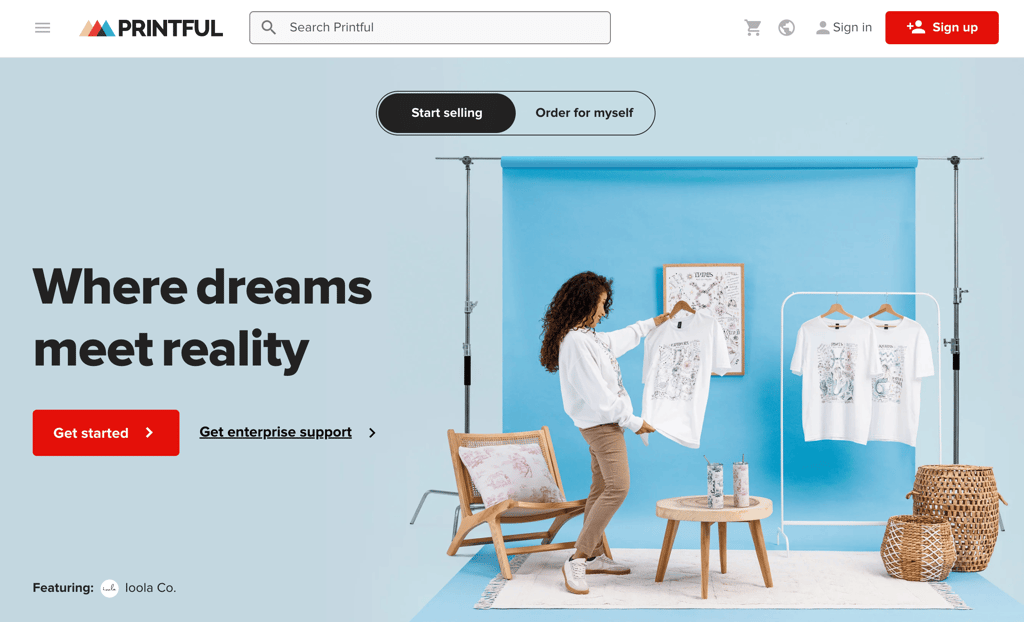
These Printful advantages make the company a strong choice for anyone who’s serious about building a clothing brand. It also connects easily with all the major ecommerce platforms, so you can sell wherever you want.
What are the advantages of Printify over Printful?
If you value variety, competitive pricing, and having more control over your suppliers, Printify offers a different approach that might be a better fit for you.
Here are the main Printify advantages:
- Wider product selection. Printify connects to a massive network of suppliers. You’ll find 1,000+ different products, giving you more creative freedom.
- More competitive prices. Prices are often lower as different printers compete for your business on the platform. You can compare suppliers for the same product and pick the one that gives you the best profit margin.
- Freedom to choose your printer. You can choose your print provider based on their price, location, or user ratings. This means you can select a supplier closer to your customers to speed up shipping.
- Around-the-clock support. Issues can sometimes arise when dealing with different suppliers. Printify offers 24/7 support to help you resolve any problems with your orders.
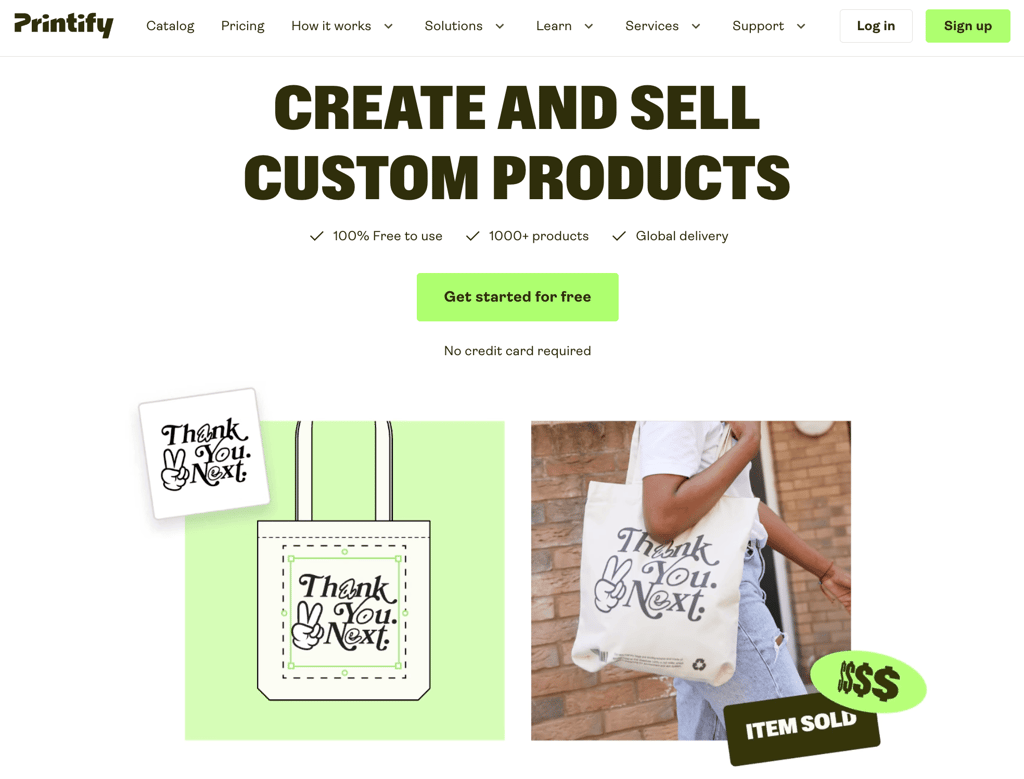
These Printify advantages allow you to build your business exactly how you want. It’s a powerful option for sellers who prioritize variety and want to find the best possible prices.
How do Printful and Printify pricing compare?
When comparing Printify vs Printful prices, it’s not just about the cost of a single product. The two platforms structure their pricing differently, which can affect your profits.
Printful’s approach is straightforward. The price you see for a product includes the item itself and the printing.
There are no monthly or yearly fees for using the platform, and the shipping costs are calculated separately at checkout. This all-in-one model makes it easy to figure out your costs for each item without needing a subscription.
With Printify, prices are more variable. Because it’s a marketplace, you can choose from various print providers who offer different prices for the same product. This means you can often find lower base prices.
Printify offers a free plan that works for most new businesses. It also has a subscription plan that gives you up to a 20% discount on all products, which can save you a lot of money if you have a high sales volume.
Here’s a simple breakdown of the main pricing differences:
| Feature/Cost | Printful | Printify |
| Subscription fee | None, free to use | Free plan available and Premium plan for $29/month |
| Product cost | All-in-one price (product + printing) | Varies by print provider, often lower |
| Shipping costs | Calculated at checkout | Varies by print provider |
| Discounts | Based on monthly sales volume | Up to 20% on all products with Premium plan |
What does this mean for you? Printful’s simple pricing is great for beginners who want predictable costs. With its lower base prices and Premium plan, Printify’s model is built for sellers focused on maximizing their profit margins, especially as they grow.
Ultimately, whether print on demand is profitable comes down to how well you manage these numbers. This means setting a retail price that covers the product cost, shipping fees, and any platform fees while leaving you with a healthy profit.
Which has better product quality, Printful or Printify?
Product quality is where the contrast between Printful and Printify’s business models becomes most evident.
Printful delivers consistent quality because it controls the entire production process in-house. It vets its products and uses the same machines and standards across all its locations, which means fewer surprises for you and your customers.
Printify’s quality depends on the print provider you pick. The platform has dozens of suppliers, so the research is on you — read reviews, check provider ratings, and order samples to find a printer that matches your brand.
Ultimately, the right choice depends on your business priorities.
Printful offers consistency and a guaranteed level of quality from the start. It’s also great for beginners who want to avoid the headache of managing different suppliers and minimize the financial risk of paying for reprints and refunds due to inconsistent quality.
You pay more for the peace of mind that comes with knowing every order will be consistent.
Printify gives you a wider range of quality options, but you’re the one responsible for vetting the printers.
This is a better fit if you’re budget-focused or want to offer a diverse catalog, but it also means you should order samples and read reviews to find a trusted partner.
Expert tip
Picking a printer is one part, but what about finding a profitable niche or creating a winning design? Read our guide on how to start a T-shirt business to explore the process.
What integrations do Printful and Printify offer?
Integrations connect your online store to Printful or Printify, allowing them to automate your delivery process.
Both connect with the most popular ecommerce platforms, but before choosing, it’s a good idea to check each platform’s complete list of integrations. Your decision might depend on where you plan to sell.
For example, if you’re building a POD store with Hostinger’s website builder, Printful’s integration is a key factor. If you plan to sell on Etsy and TikTok, you’ll want to confirm both are supported.
Without a direct connection, you would have to manually enter orders, defeating the primary purpose of using a POD service.
How do Printful and Printify compare on shipping?
Shipping is another area where the two platforms’ different business models create varying experiences.
Printful offers predictable shipping rates and times because it ships from worldwide locations, including North America and Europe. This keeps costs consistent and means you know what to expect with every order.
Printify’s shipping is more flexible but requires more management. You can choose a print provider closer to your customer for faster and cheaper delivery.
However, this also means that Printify’s shipping costs are inconsistent across your entire product catalog. A T-shirt from one provider and a mug from another will have separate shipping fees and timelines.
Ultimately, Printful is the better choice for simple, predictable shipping. On the other hand, Printify is a good option if you’re willing to manage different providers to optimize shipping costs and speed for specific regions.
What customization options do Printful and Printify offer?
Customization is about the branding options that create a unique experience for your customer. Printful provides a consistent set of branding choices for all its products, while Printify’s options vary depending on the supplier you pick.
Printful offers a full suite of branding options that apply to nearly all its products, making it easy to create a cohesive brand identity.
- Custom labels. You can add your own brand label to the inside or outside of apparel.
- Personalized packing slips. Every order includes a packing slip with your logo and a custom message.
- Branded pack-ins. You can add flyers, business cards, or stickers to your packages for a personal touch.
- Custom packaging. For an extra fee, you can use poly bags or mailers with your own branding.
Printify’s branding options are more limited and depend on the specific print provider you choose.
- Custom labels. A growing number of print providers offer custom neck labels on apparel.
- Personalized packing slips. A custom packing slip with your brand name is a standard option for every order.
- Branded shipping labels. Some providers allow your brand name to appear on the shipping label.
Which is easier to use, Printful or Printify?
Printful is generally easier to use for beginners. Its all-in-one model simplifies many of the steps involved in getting started.
They handle all the printing and shipping themselves, the interface is unified, and the process is the same for every product.
Printify is also user-friendly, but its marketplace model adds an extra layer of management. You have to research and choose from different suppliers for your products, which means comparing their prices, shipping times, and ratings.
Ultimately, Printful is simpler because it removes the need to manage print providers.
When should you choose Printful or Printify?
The best choice comes down to what matters most for your business. Here is a simple guide to help you decide.
Choose Printful if:
- Your top priority is consistent, high-quality products.
- You want the best branding options, like custom labels and packaging inserts.
- You prefer simplicity and don’t want to manage different suppliers.
Choose Printify if:
- Your top priority is finding the lowest possible prices to maximize profit margins.
- You want the largest product catalog to choose from.
- You want the flexibility of picking your own print providers based on price or location.
Both platforms offer powerful tools for creating and selling custom products. Selecting the one that aligns with your goals is a key first step that sets you up to start making money with print on demand.
This article is a localized version of Printful vs Printify: Which is better for your print-on-demand business?, originally published in English.
All of the tutorial content on this website is subject to Hostinger's rigorous editorial standards and values.

Simon is a dynamic Content Writer who loves helping people transform their creative ideas into thriving businesses. With extensive marketing experience, he constantly strives to connect the right message with the right audience. In his spare time, Simon enjoys long runs, nurturing his chilli plants, and hiking through forests. Follow him on LinkedIn.