12 customer retention strategies after Black Friday
Oct 15, 2026
/
By Alma
/
11 min Read
The best customer retention strategies after Black Friday come down to one thing: giving first-time buyers a reason to come back without another steep discount. Many Black Friday shoppers are new customers, gift buyers, or people who showed up for the deal. None of them has a reason to return unless you give them one.
Start by protecting the first experience – confirm the order, answer questions quickly, and make sure the next message fits what the customer actually bought. Then focus on giving them a reason to buy again – the right incentive, a useful recommendation, or a well-timed reminder.
The second purchase matters most because that’s when a one-time discount buyer becomes a repeat customer worth keeping.
1. Send a post-purchase thank-you email
Send a post-purchase thank-you email to confirm the purchase and explain what happens next. This lets customers know right away that their order went through.
Include the customer’s name, purchased items, order details, processing times, estimated delivery information, a link to your return policy, and a clear way to contact support. Make these details easy to scan, especially during a busy sales period when fulfillment may take longer than usual.
After receiving promotional emails all week, the customer needs helpful order information rather than another urgent offer. Your broader Black Friday email marketing strategy should also shift from promotion to service after the sale.
Keep transactional details separate from later sales messages. A coupon or product suggestion shouldn’t hide the delivery information that the customer opened the email to find.
2. Create a Black Friday customer segment
Create a Black Friday customer segment (a separate email list of everyone who bought during the sale), then divide it into smaller groups based on what customers bought and whether they bought it for themselves or as a gift. Segmentation helps you send relevant messages instead of treating every seasonal buyer the same way.
You can segment your email audience by whether they’re new customers, order value, product category, whether the order was a gift, how much discount they used, and purchase history.
To spot gift orders, add a gift option or gift message field at checkout. You can also ask customers in your post-purchase email whether the item was a gift.
Keep the original Black Friday segment as it is, even after you create smaller groups, so you can compare its overall performance later.
For example, a first-time coffee-machine owner may need setup tips and compatible filters. A gift buyer who purchased the same machine might be more interested in gift ideas for other occasions than in setup tips or filters Existing customers may benefit from recommendations based on their past orders, such as their favorite coffee beans.
These differences are easy to see but harder to act on without a way to group your customers. You can do this through an email marketing platform like Hostinger Reach, which lets you sort them by tags, source, subscription status, opens, clicks, and email delivery status.
Combine this information with purchase data to send more relevant messages, but don’t assume that a large first order guarantees loyalty.
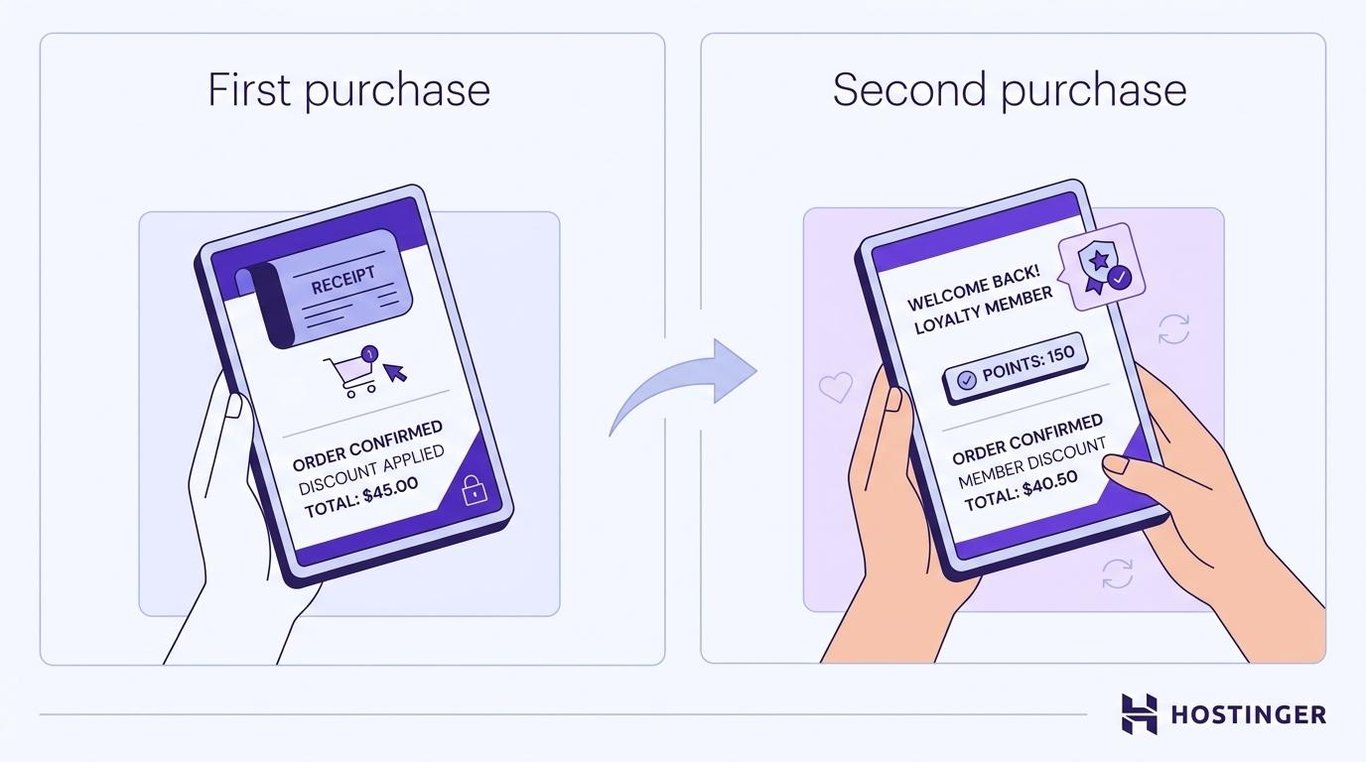
3. Offer a second-purchase incentive
To offer a second-purchase incentive, send first-time Black Friday buyers a reward they can use on their next order, such as free shipping or a bundle deal, a few weeks after their first order arrives. Pick an incentive that gives customers a reason to return without repeating your Black Friday discount. Match the offer to the customer, the product, and how much profit you’ll make on the next order.
Possible incentives include:
- A modest discount.
- Free shipping.
- A product bundle.
- Early access.
- A loyalty benefit, such as points or a member-only perk.
The incentive should support a likely next purchase rather than reduce prices across the store. For example, someone who bought a discounted skin care starter set might respond to a bundle of compatible refills. A storewide discount could unnecessarily reduce the margin on products they were already willing to buy.
For ideas on how to present these offers, check out these newsletter examples for the Black Friday season.
Measure profit rather than campaign revenue alone. Account for product margin, expected refunds, shipping costs, and the cost of the incentive.
For customers who used a large Black Friday discount, test messages about product quality, member benefits, or useful bundles before offering another big price cut. These can increase sales without making customers expect a discount every time they buy.
4. Recommend related products
Recommend products that complete, support, or naturally follow the customer’s original purchase. When the recommendation connects to what they already bought, they’re more likely to buy again.
You don’t need special software to get started. Create simple catalog pairings, such as a case for a device, replacement filters for an appliance, or care products for a pair of shoes. As you collect more data, refine these pairings using purchase history and browsing behavior.
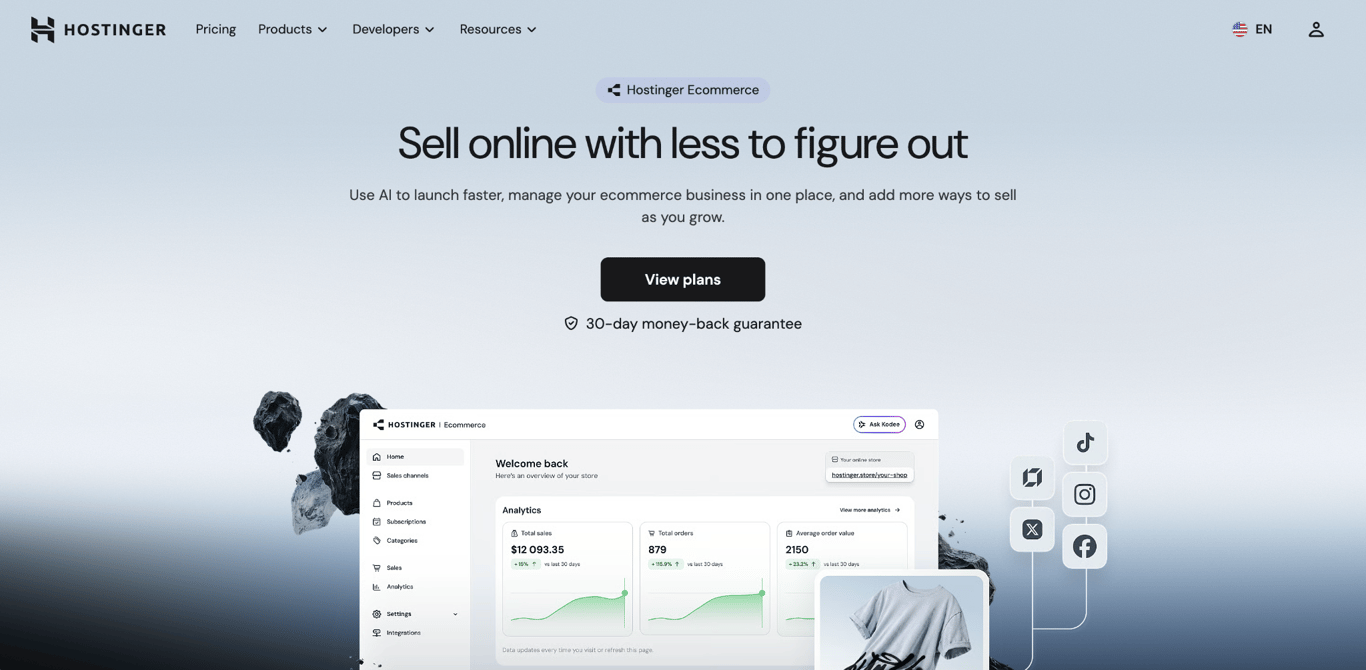
Before sending a recommendation, confirm that the product is compatible, in stock, and can ship to the customer’s location. An ecommerce platform with inventory management makes this easier. Hostinger Ecommerce, for example, lets you track stock levels for each product, so you can confirm availability before sending a recommendation.
Pro Tip
Be especially careful with gift orders. The buyer's browsing history won't match what the recipient actually wants.
5. Build a post-purchase email sequence
Set up a post-purchase email sequence, with each email timed to a stage of the customer’s experience: order processing, delivery, product use, and what they might need next. Give each email one job. Don’t mix a delivery update with a product pitch.
A clear onboarding email sequence starts with order updates. Tips on how to use the product come after, while recommendations arrive after the customer has had time to understand and use the purchase.
For example, a cookware buyer might receive care instructions after delivery, an email asking if they need any help after they’ve had time to use the product, and a recommendation for a compatible accessory later. A review request sent while the package is still in transit would come too early.
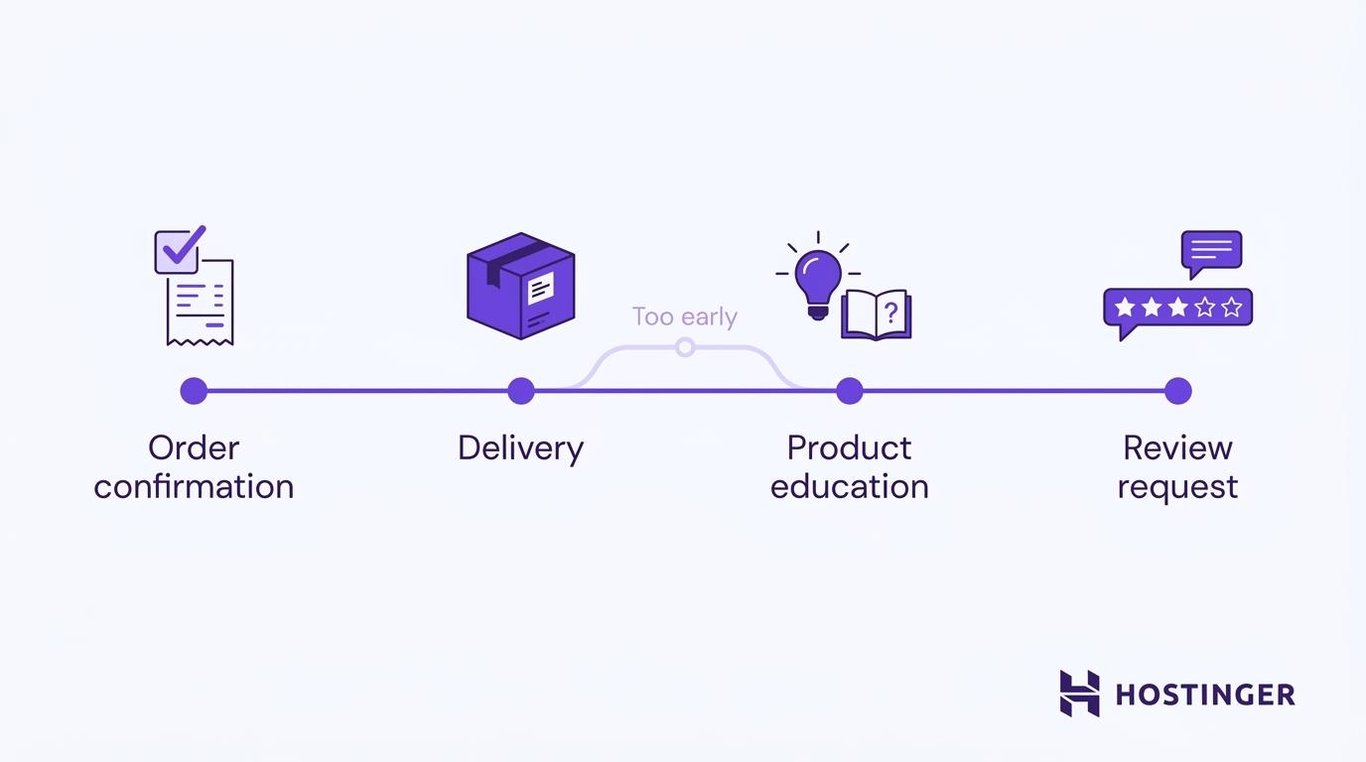
You can automate newsletter emails and follow-up sequences, but set the timing based on your fulfillment process, how long it takes the customer to start using the product, and the typical buying cycle, rather than following a universal schedule.
If an order is delayed or a support case is open, pause promotional and feedback messages. Continue sending service updates so the customer knows what is happening and where to get help.
6. Turn seasonal buyers into subscribers
Convert suitable seasonal buyers into product subscribers by offering automatic repeat deliveries for items customers use up and reorder regularly, such as coffee, pet supplies, or personal care products.
Wait until customers have had time to use the product before asking them to receive it regularly. Explain the delivery schedule, price, cancellation terms, and practical benefit, such as avoiding shortages or reducing the effort needed to reorder.
Keep product and marketing subscriptions separate. A product subscription creates recurring purchases, while an email subscription gives you permission to send marketing messages. Agreeing to one doesn’t mean the customer has agreed to the other.
Automatic repeat deliveries don’t work for one-time gifts, long-lasting products like furniture or electronics, or products people buy only now and then. Hostinger Ecommerce supports selling subscriptions, but only offer them when the product and the customer are a good fit.
7. Ask for reviews and user-generated content
Ask for reviews and user-generated content (photos, videos, or posts customers share about your products) after delivery is confirmed and the customer has had enough time to use the product. This timing allows customers to comment on their actual experience.
Before sending the request, check whether the customer has an unresolved problem with their order. Resolve it first, then ask for feedback after the issue is settled.
Invite customers who leave a positive review to share a photo or short video of the product in use. Make the request specific and explain where you may use the content.
Rewards for reviews, like a discount code or loyalty points, should go to every customer who leaves a review, regardless of whether the review is positive or negative. Incentivized reviews should also be clearly labeled so shoppers know the reviewer received something in return. Check the review and advertising rules for every country you sell in.
8. Improve delivery, returns, and support communication
Improve delivery, returns, and support communication by providing timely updates, clear instructions, and accessible help. Send these messages before any sales emails because another offer won’t help someone who is still trying to locate a package or arrange a return.
Send prompt delay notices, provide realistic delivery updates, and make return instructions easy to find. When something goes wrong, give customers a clear way to contact a person or find a useful solution.
A quick update still helps even when it can’t fix the delay. Explain what happened and state when the customer will receive the next update to reduce uncertainty, even if the package is late.
That same priority applies to your wider store customer experience – fix problems before you sell. Hold review requests and promotions until delivery or support issues are resolved.
Don’t treat every return as a retention failure. A fair and simple resolution can preserve trust, while a confusing return process can drive away a customer who otherwise liked the store.
9. Recover abandoned carts after the sale period
Recover abandoned carts after the sale by reminding past Black Friday buyers about items they left behind. Focus on customers who have already ordered from you, since this is about bringing them back for a second purchase.
Base each reminder on the items left in the later cart, their current availability, and a direct route back to checkout to improve your conversion rate.
For example, someone who previously bought running shoes and later left compatible socks in a cart needs a specific reminder, not another general Black Friday message.
Keep the recovery sequence short. End it when the customer buys or remains unresponsive, as repeated reminders can create pressure without providing a new reason to complete the order.
Before automating the sequence, confirm which platform detects the abandoned cart and sends the follow-up. Hostinger Ecommerce includes abandoned-cart and checkout features, while Hostinger Reach supports abandoned-cart follow-ups. Check how the platforms connect and which customer actions trigger each message.
10. Create loyalty offers for first-time buyers
Create loyalty offers that reward first-time buyers each time they order again. Unlike a single coupon, a loyalty offer keeps giving them a reason to come back.
Keep rewards simple, such as a free item after a set number of orders, early access to new products, or member-only discounts. For example, a first-time tea buyer may value early access to limited blends or a reward tied to a refill. Avoid complicated point systems that make it hard for customers to understand or use their rewards.
Measure reward use and profitable repeat purchases rather than enrollment alone. A customer who joins but never returns hasn’t been retained, while frequent redemptions can still be unprofitable if reward costs are too high.
11. Re-engage inactive Black Friday buyers
Re-engage inactive Black Friday buyers with a targeted email once the product they bought would typically run out or need replacing. Base this timing on how long each product usually lasts, rather than using the same number of days for every product.
Once a customer passes that point, use targeted email marketing to connect the message to the original order. Restock reminders, new arrivals, product updates, and back-in-stock notices provide stronger reasons to return than a generic “we miss you” email.
For example, someone who buys a 60-day supply shouldn’t receive a win-back email after two weeks. Send it near or shortly after the expected reorder window, then use purchase results to improve future timing.
Keep the win-back sequence short and end it after a purchase or if they stop responding. Hostinger Reach supports segmented campaigns, automation, sending, and performance tracking, but you still need to define the buying cycle for each product group.
12. Analyze retention metrics after the campaign
Look at your retention numbers to see whether your Black Friday customers came back to buy again, and whether those second purchases were profitable after discounts, refunds, shipping, and rewards.
Start with the second-purchase rate. This shows what percentage of your Black Friday buyers placed a second order.
Next, check your repeat purchase rate, average order value (AOV), and customer lifetime value (the value a customer brings to your business over time). These show whether returning customers are spending enough to justify the cost of bringing them back.
Other metrics add useful context:
- Email click rate shows whether people are acting on your messages, not just opening them.
- Unsubscribe rate tells you whether your frequency or relevance is off.
- Refund and return rate reveals whether customers kept what they bought.
- Revenue from post-Black Friday follow-up campaigns measures whether your retention emails led to actual sales.
When analyzing your metrics, make sure you separate first-time Black Friday shoppers from customers who have already bought from you. Existing customers may have returned anyway, which can make your retention strategy look more successful than it is.
For a fairer comparison, measure first-time Black Friday customers against first-time customers from a normal sales period or from last year’s Black Friday.
Review what worked and what didn’t, then use those Black Friday lessons to improve your next retention campaign.
Pro tip
Open rates are a less reliable metric because some email apps, like Apple Mail, use privacy protection to load content automatically, which can count an email as opened even if the customer never read it.
Common customer retention mistakes after Black Friday
Most post-Black Friday retention mistakes come from treating every buyer the same or going quiet after the sale ends.
- Going silent after Black Friday. Stopping all communication after the sale leaves first-time buyers with no reason to remember your store. They bought during a promotion – without a follow-up, they’ll move on to whoever emails them next. The after-sale step in Hostinger Agent’s Black Friday checklist closes that gap by drafting thank-you messages for your Black Friday buyers and a follow-up that gives them a reason to come back.
- Sending only more discounts. Repeated price cuts make customers expect a discount every time they buy, so they wait for the next sale rather than buy at full price. Try product education, bundles, or member access before defaulting to another markdown.
- Treating every buyer the same. A first-time buyer, a gift shopper, and a loyal customer all need different messages. A generic “thanks for your order” sequence misses the opportunity to align the follow-up with the purchase.
- Ignoring delivery delays. A customer waiting for a late package doesn’t want a promotion. They want to know where their order is. Send service updates first, and hold off on marketing messages until the issue is resolved.
- Asking for reviews too early. A review request sent before the customer has received or used the product feels premature. Wait until delivery is confirmed and the customer has had enough time with the item.
- Over-emailing customers. Too many messages too quickly lead to unsubscribes, especially from people who only bought once. Space your sequence according to the product and buying cycle, not a fixed daily schedule.
- Not tracking repeat purchases. Without measuring whether Black Friday buyers actually come back, you can’t tell which retention efforts worked. Tag Black Friday buyers when they order, so you can track whether and when they buy again.
Which customers should you prioritize after Black Friday?
Prioritize the customers who are closest to a second purchase and most likely to need your help getting there – a first-time buyer who just received their order, a repeat customer whose usual reorder window is approaching, or a gift shopper who hasn’t bought anything for themselves yet.
You can’t follow up with every Black Friday buyer the same way – someone who bought their first product needs a different message than someone who has been ordering from you for two years.
Customer type | Follow-up priority |
First-time buyers | Confirm the order, then create a clear path to a second purchase |
Existing repeat customers | Acknowledge the relationship and recommend based on their full history |
Gift buyers | Recommend products that match their interests, not the recipient’s |
Large-discount buyers | Test bundles, member access, or product education before another discount |
High-order-value customers | Give more personal attention, but treat loyalty as unproven until they return |
Abandoned cart returners | Send a reminder based on the specific items left behind, not a generic Black Friday message |
Repeat buyers from previous campaigns | Recognize their history and offer something new rather than repeating the same promotion |
Before making any retention offer, resolve any open delivery, return, and support cases. A customer with a problem needs help, not another email.
How to build a post-Black Friday retention plan
Plan your Black Friday follow-up strategy around three stages: right after purchase, when the customer is ready to buy again, and when they go quiet. Spacing these out prevents overlapping offers, review requests, and service messages.
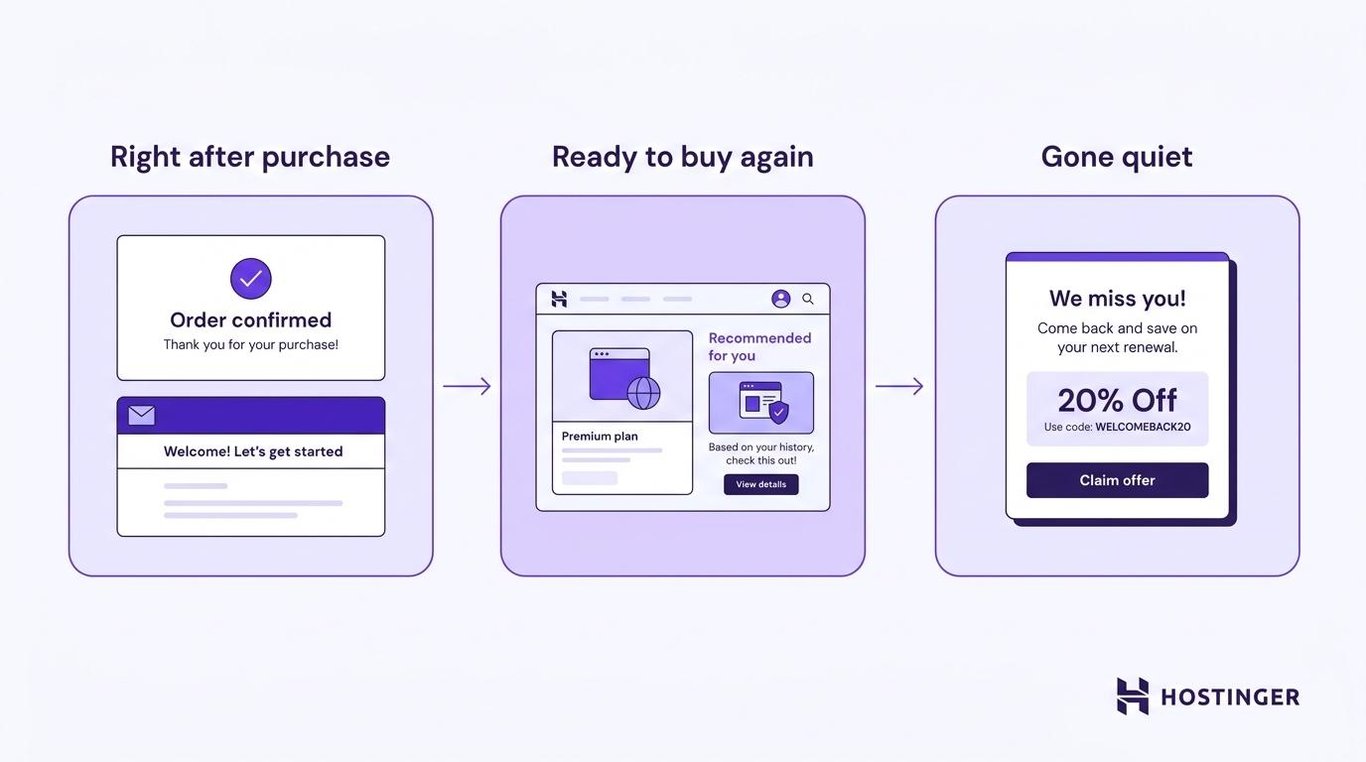
The first stage begins immediately after purchase. Confirm the order, label each customer consistently in your store or email tool (for example, ‘BF2026-first-time’ or ‘BF2026-gift’), and send fulfillment updates.
After delivery is confirmed, send how-to tips and support. Request feedback only after the customer has had enough time to use the item.
The second stage begins when the customer is likely ready to reorder. That timing depends on the product. For example, someone who bought a month’s worth of coffee will need more in three to four weeks, while someone who bought a winter coat won’t need another one for years.
Send a relevant recommendation, then add an incentive, loyalty benefit, or product subscription if it fits the customer and you can still make a profit.
The third stage is for customers who have gone quiet. If someone doesn’t reorder by the time their product would typically run out, move them into a short win-back campaign. Check the results at 30, 60, and 90 days. Compare against first-time buyers from a normal period or last year’s Black Friday group.
For each campaign, define:
- Who’s responsible for it.
- Who it’s for.
- What success looks like.
- When to pause it.
- What to measure.
For example, a how-to tips might go to first-time owners to help them use the product. Don’t send it to anyone who’s still waiting on a delivery, return, or support issue.
Once your first campaign is defined, test it on one customer group and one product. Use the second-purchase rate as your starting point, since it tells you whether Black Friday buyers actually came back.
As you collect more data, look at broader customer retention and loyalty metrics, including repeat purchase rate and AOV. Add follow-up revenue after costs and returns, then use email marketing performance metrics such as unsubscribes to see how customers respond to your follow-up campaigns.
This article is a localized version of 12 customer retention strategies after Black Friday, originally published in English.
All of the tutorial content on this website is subject to Hostinger's rigorous editorial standards and values.

Alma is an AI Content Editor with 9+ years of experience helping ideas take shape across SEO, marketing, and content. She loves working with words, structure, and strategy to make content both useful and enjoyable to read. Off the clock, she can be found gaming, drawing, or diving into her latest D&D adventure.