Best sites to sell online: 15 platforms for every type of seller
Jul 28, 2026
/
By Matleena S.
/
11 min Read
The best sites to sell online depend on what you’re selling, who you’re selling to, the fees you’re willing to pay, your shipping needs, and how much control you want over your brand. Handmade goods, fashion resale, bulky local items, and branded storefronts each point to a different platform.
They fall into five groups: general marketplaces, fashion resale platforms, handmade and vintage marketplaces, local selling platforms, and your own online store. Here are the top picks in each category:
- Best general marketplace: Amazon, for high-volume selling to the largest US ecommerce audience.
- Best for fashion resale: Poshmark, the most established US platform for selling clothing through a social shopping experience.
- Best for handmade and vintage: Etsy, where buyers shop specifically for unique, curated goods.
- Best for local selling: Facebook Marketplace, for fast, fee-free in-person sales.
- Best for your own store: Hostinger Website Builder, for full brand control with no per-sale fees.
Best general marketplaces
General marketplaces are broad, high-traffic platforms open to almost any product type. If you are selling online across multiple categories like electronics, books, home goods, and sporting equipment, these platforms give you the most volume and visibility.
Amazon
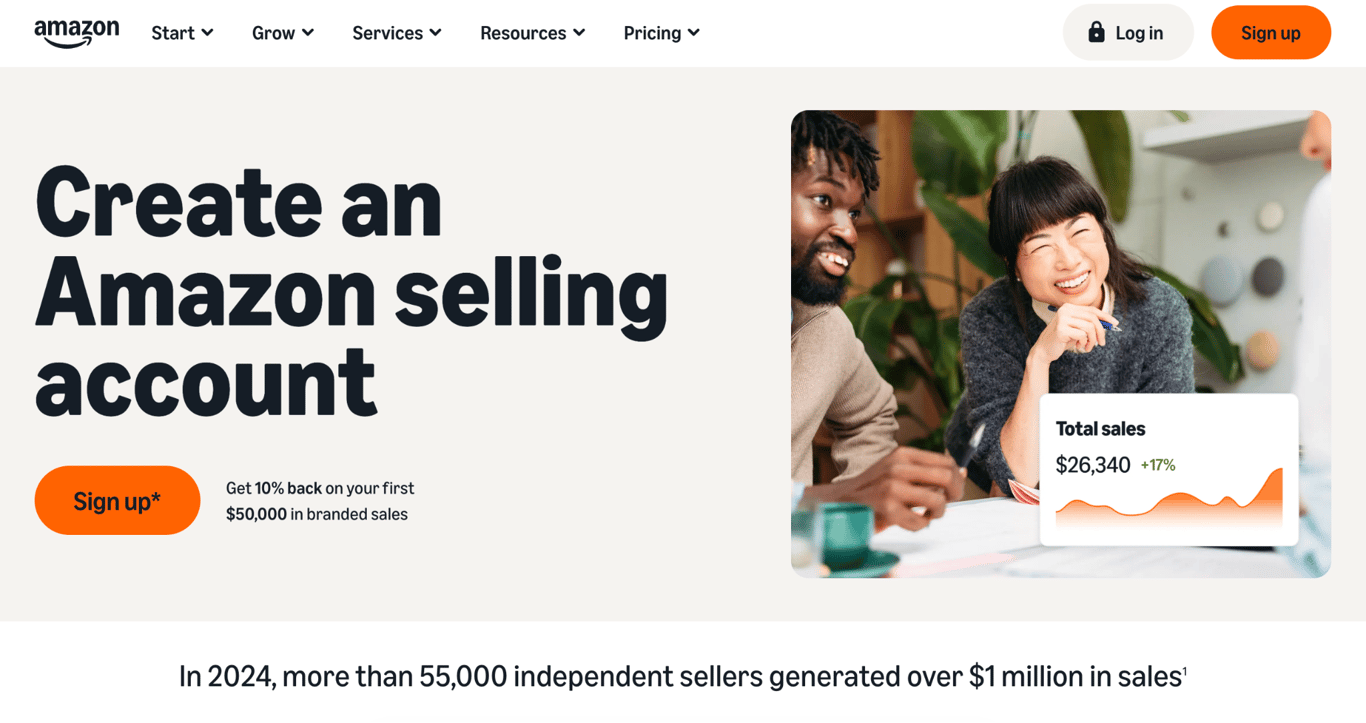
Best for: High-volume selling to a massive audience.
Amazon is the largest ecommerce marketplace in the US, with over 300 million active customer accounts worldwide. Its audience is broad, and its fulfillment infrastructure through Fulfillment by Amazon (FBA) lets you hand off storage, packing, and shipping entirely.
That reach comes at a cost. Amazon offers two selling plans: Individual at $0.99 per item sold, and Professional at $39.99/month. Both charge referral fees on top, typically 8%–15% depending on category, plus fulfillment and storage costs for FBA users.
Pro tip
If you have a registered brand, Amazon's Brand Registry program unlocks better listing control and anti-counterfeit tools. It’s worth doing before you scale.
You can also sell books online on Amazon, one of its historically strongest categories, though competition is high.
Amazon pros:
- Largest customer base of any US marketplace.
- FBA removes fulfillment from your plate entirely.
- Strong tools for brand registry and listing management.
Amazon cons:
- High competition in most categories.
- Fees stack up fast: subscription, referral, and possibly FBA.
- Limited direct access to your customer data.
eBay
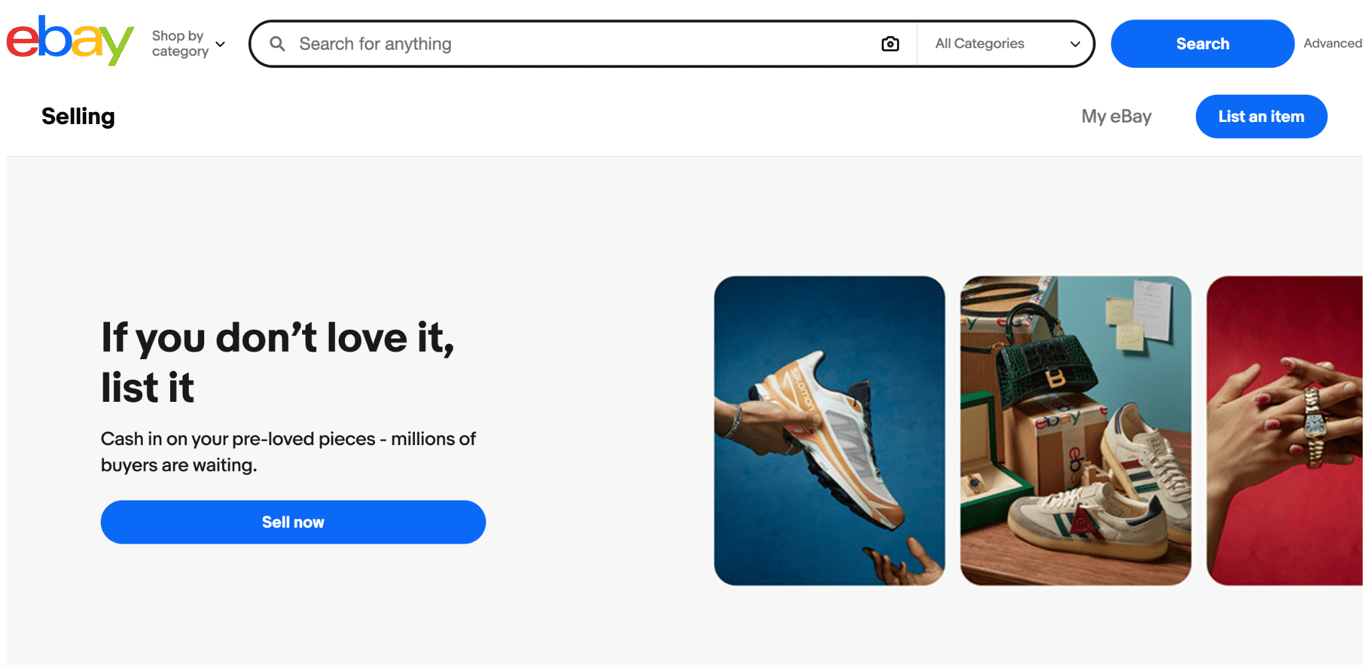
Best for: Auctions, secondhand goods, and collectibles.
eBay remains one of the most flexible marketplaces around. Auction-style listings let the market set the price, which works well for rare or hard-to-value items, while “Buy It Now” covers standard fixed-price selling.
The platform handles everything from used electronics to vintage toys to overstock inventory. For international orders, eBay International Shipping takes over customs forms and overseas delivery – you ship domestically to eBay’s US hub, and eBay handles the rest.
eBay’s fees depend on your category. Most charge a 13.6% final value fee on the total sale amount, including shipping and tax, with rates ranging from 3% to 15.3%. A per-order fee of $0.30–$0.40 applies on top.
Most sellers get 250 free listings per month. After that, a $0.35 insertion fee applies per listing (category exclusions apply).
eBay pros:
- Auction and fixed-price formats work well for very different types of inventory.
- Strong global buyer base.
- Long-established platform with built-in buyer trust.
eBay cons:
- Fees vary by category, so check yours before pricing.
- Buyers often come expecting deals, which can make premium positioning harder.
Bonanza
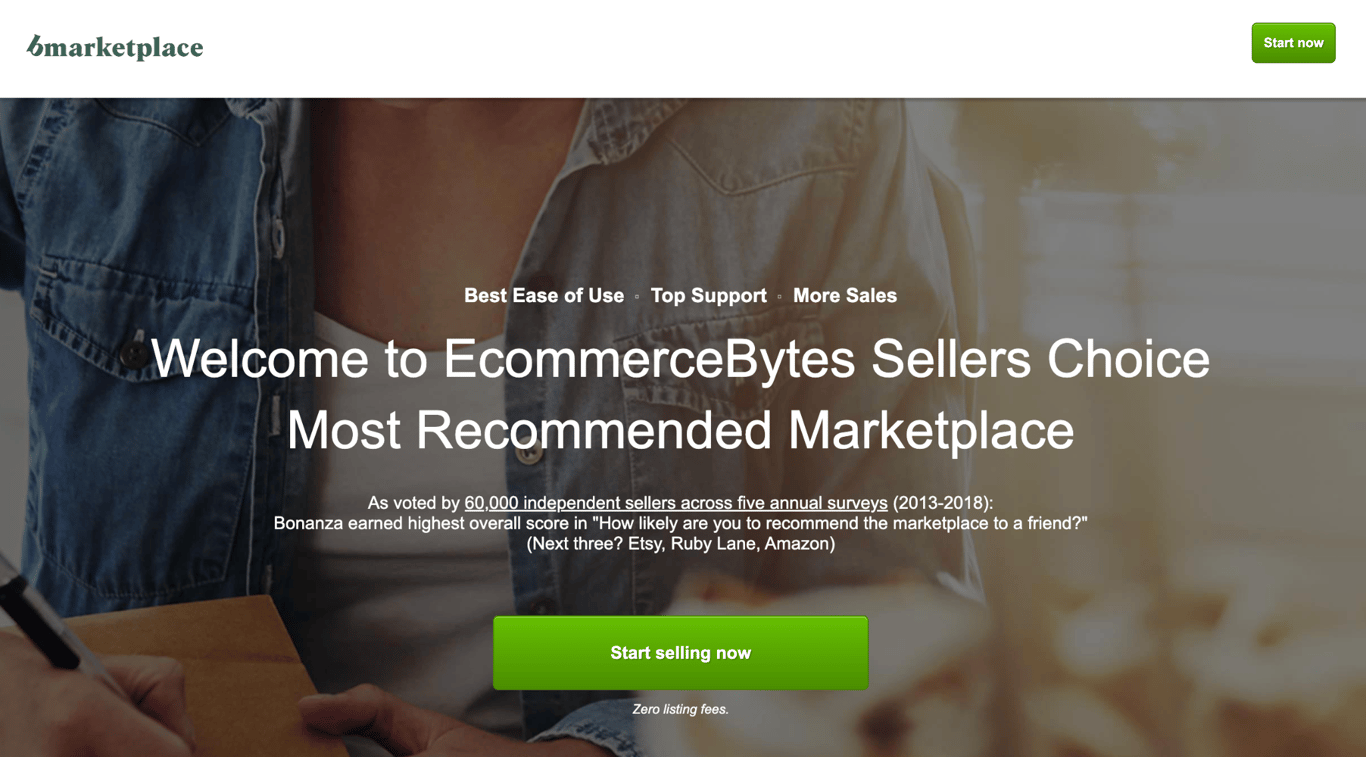
Best for: Niche products and multi-channel sellers wanting an eBay alternative.
Bonanza is a smaller marketplace that performs well for niche inventory despite its size.. It imports listings directly from eBay, so if you’re already selling there, adding Bonanza takes minimal extra work.
Bonanza’s fees rose in 2025. Every sale now carries an 11% final value fee (dropping to 1.5% on the portion of an order above $4,000), plus a $0.25 transaction fee for sellers without a membership subscription. New sellers also pay a one-time $14.99 account setup fee, and those with more than 50 active listings pay $0.03 per item per month, capped at $20.
Opting into Bonanza’s advertising program raises the final value fee instead of adding a separate charge. You can choose a rate of 13%, 19%, or 30%, withhigher rates providing more exposure through Google Shopping and Bonanza’s affiliate partners.
One fee worth knowing about is the one you don’t pay. Bonanza gives every seller a unique referral link – when a buyer clicks that link and makes a purchase, you skip the final value fee entirely. That means any traffic you drive yourself, from your blog, social media, or email list, converts fee-free.
Bonanza is no longer the low-cost eBay alternative it once marketed itself as. Run the numbers for your category before committing.
Bonanza pros:
- Direct listing import from eBay keeps setup work to a minimum.
- Less competition than on the big platforms.
- Referral-link sales carry zero final value fees.
- Adjustable advertising intensity, with fees due only when items sell.
Bonanza cons:
- Smaller buyer base means items may take longer to sell.
- The base fee jumped from 3.5% to 11% in May 2025, so margins are much thinner than they used to be.
- Set-up, transaction, and listing-count fees stack on top of the commission.
eBid
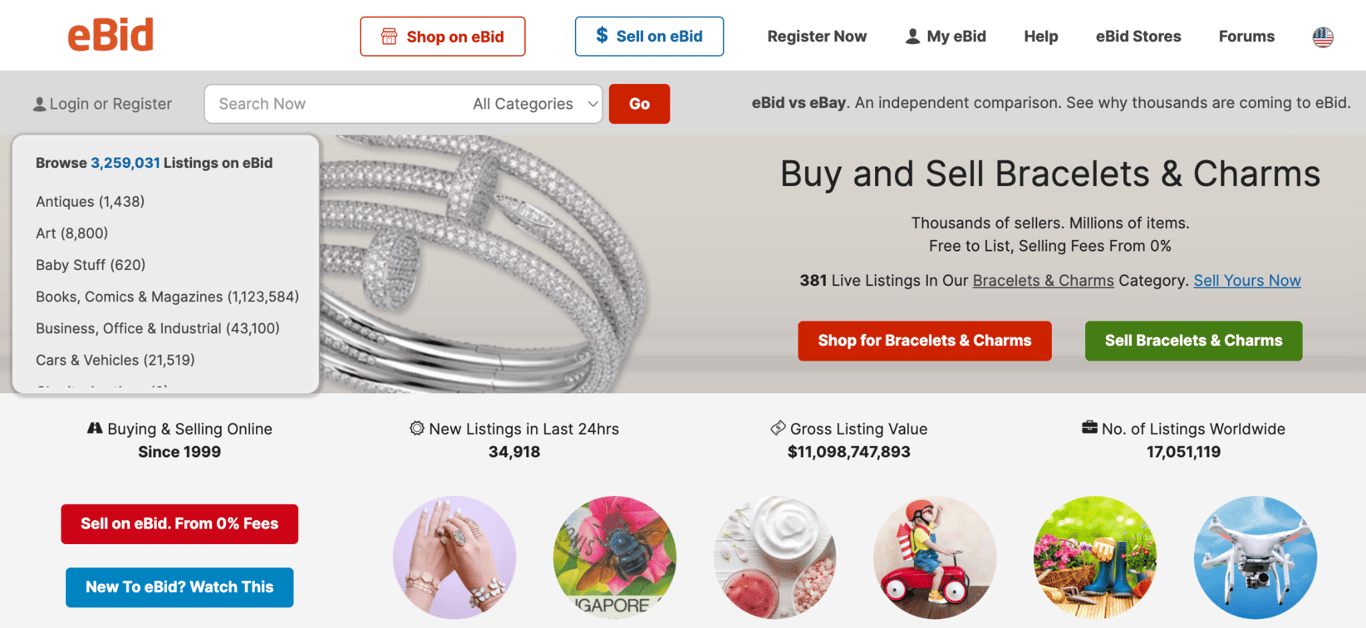
Best for: Budget-conscious auction sellers.
eBid is an auction marketplace designed for sellers who want lower fees and don’t mind a smaller audience. It’s best suited to collectible-style inventory where the auction format makes sense.
The platform charges no listing fee in most cases and takes a 5% final value fee on sales from free Silver accounts. A paid Gold account – from $9.99 for 30 days – lowers that to a flat 2%. Platinum Lifetime, a one-time $139.98 payment, cuts it further: 0% on free-format listings, or 2% on Gallery listings.
eBid pros:
- Lower fees than eBay in most scenarios.
- Less competition from other sellers.
- Auction format built in.
eBid cons:
- Much smaller buyer pool than eBay or Amazon.
- Fewer marketing and analytics tools.
Best sites for fashion and secondhand clothing
The best sites to sell clothes online are Poshmark, Depop, and Vinted, each built around social and secondhand fashion but serving slightly different audiences and seller types.
Poshmark
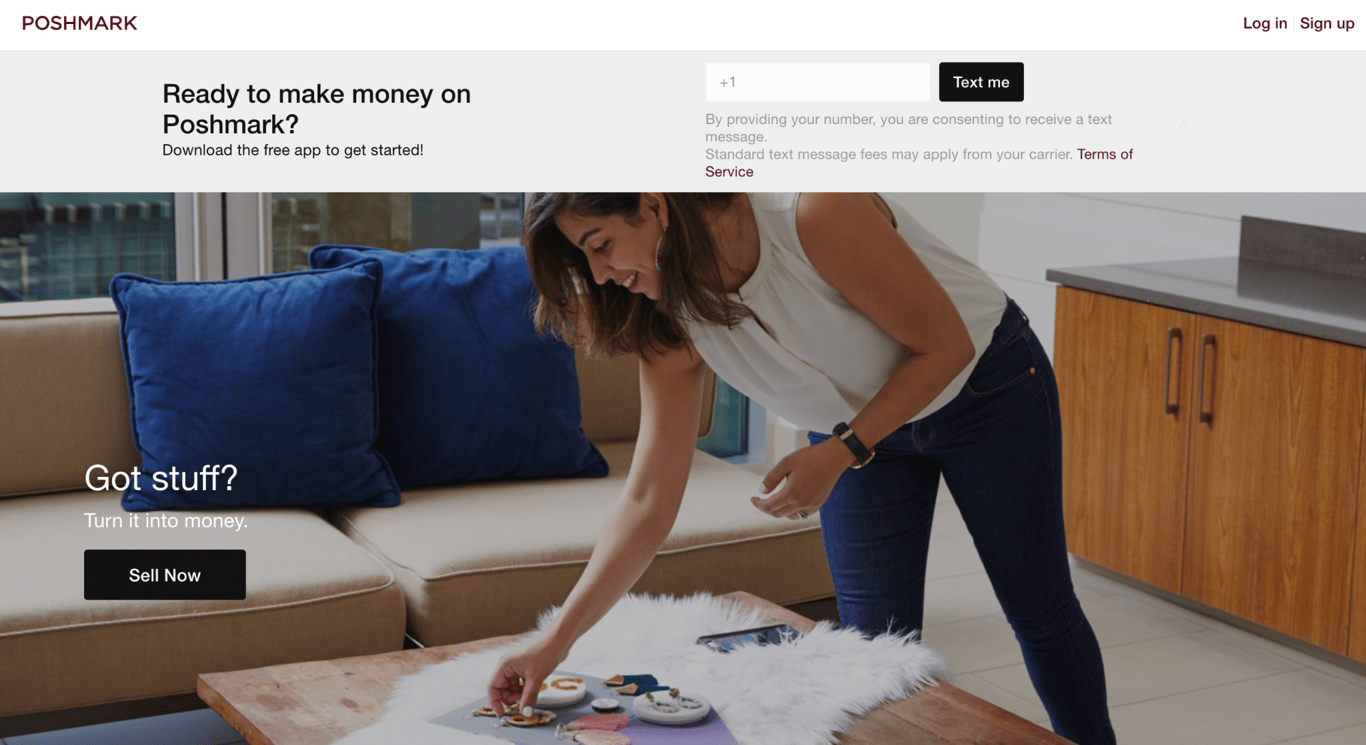
Best for: Fashion and secondhand clothing sold socially.
Poshmark is one of the most established fashion resale platforms in the US, with a built-in social layer (followers, shares, and “Posh Parties”) that helps products get discovered. It’s app-first and works well for sellers who want to build a following.
Poshmark’s fees are straightforward: a flat $2.95 for sales under $15, and a 20% commission on sales of $15 or more. The cut is steep, but for fashion items where buyers are actively looking to spend, Poshmark’s audience quality can make up for the lower payout.
Poshmark pros:
- Large, active US buyer base for fashion.
- Social discovery helps items sell without paid ads.
- Simple listing and messaging flow.
Poshmark cons:
- 20% commission is among the highest in fashion resale.
- Works best for specific categories, such as women’s fashion and recognizable brands; doesn’t fit every product type.
Depop
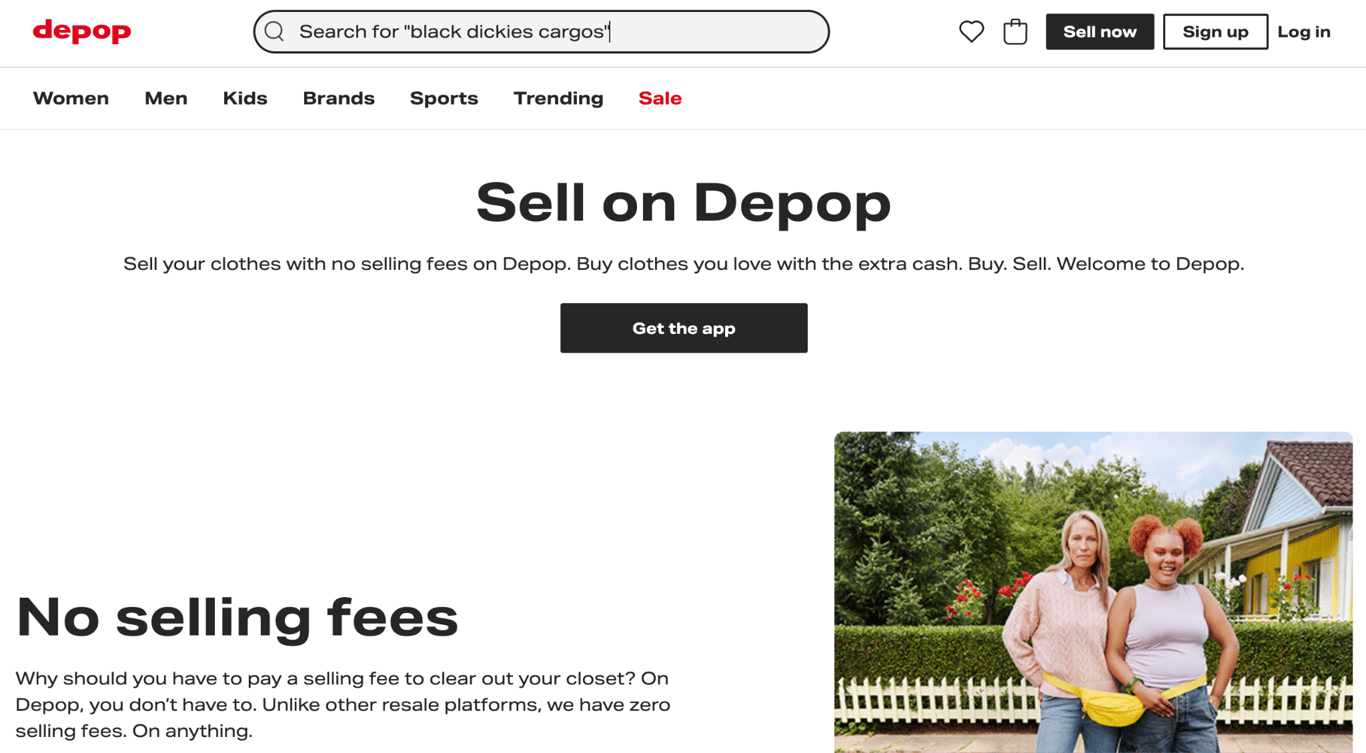
Best for: Trendy, Y2K, and streetwear fashion aimed at a Gen Z audience.
Depop has built a distinct niche in fashion resale: vintage, streetwear, and anything aesthetically driven. The buyer base tends to be younger and brand-conscious, which makes it a strong fit for curated, on-trend items.
Depop changed its fee structure in 2024. In the US, Depop eliminated its 10% marketplace fee, so sellers now pay only a 3.3% payment processing fee plus $0.45 per transaction, making it one of the cheapest options for fashion resale.
Boosted Listings are optional but carry a 12% fee if a boosted item sells.
Depop pros:
- Lower fees than other fashion platforms.
- Strong Gen Z buyer base for vintage and streetwear.
- App-first, with social-style discovery.
Depop cons:
- Works best for fashion, not general merchandise.
- The Boost fee (12%) adds up if you rely on promoted listings.
Vinted
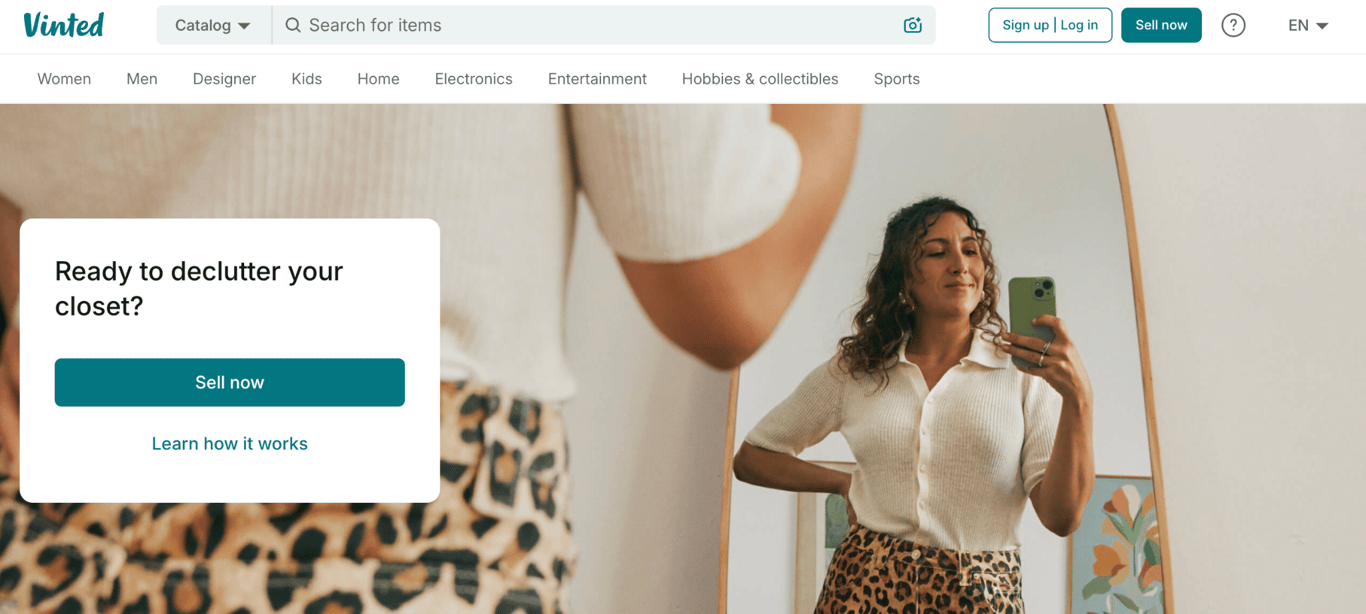
Best for: Casual secondhand clothing sellers who want zero seller fees.
Vinted’s model is simple: sellers pay nothing. No listing fee, no commission, no payment processing charge. The buyer pays a Buyer Protection fee of 5% of the item price plus $0.70, which funds purchase protection and platform operations.
Vinted officially launched its US expansion in January 2026, starting with New York, after years as Europe’s largest platform for selling vintage clothing online and everyday secondhand fashion.
The US platform is still growing, so buyer volume is lower than on Poshmark or Depop. But for sellers, the zero-fee structure is hard to beat for testing items or clearing casual inventory.
Vinted pros:
- No selling fees: sellers keep 100% of the sale price.
- Buyers also pay shipping, so your earnings match your listing price.
- Clean, easy listing process.
Vinted cons:
- The US market is still early-stage, with a smaller buyer pool than established platforms.
- Works best for casual sellers; not optimized for high-volume businesses.
Best sites for handmade, vintage and collectibles
The best sites for handmade, vintage, and collectible items are Etsy and Ruby Lane. Buyers come to these platforms specifically for unique, curated goods like original artwork, vintage finds, and craft ideas to sell, which makes the right product types far easier to sell than on general marketplaces.
Etsy
Best for: Handmade, vintage, and craft products.
Etsy is the go-to marketplace for craft sellers and independent makers. The platform’s search is built around discovery: buyers browse by category, aesthetic, and occasion, so your products can surface without a huge following or an ad budget.
Etsy charges a $0.20 listing fee per item, and listings stay active for four months or until they sell. When an item sells, you pay a 6.5% transaction fee on the total sale price, including shipping if you charge it, plus a 3% + $0.25 payment processing fee in the US.
Optional services like Etsy Ads, Offsite Ads, and shipping labels carry separate charges on top. As a new seller, you may also pay a one-time shop set-up fee, shown before you finish opening your shop. Because the transaction fee applies to the full order value, including shipping, factor that into your pricing from the start.
Pro tip: Offsite Ads are mandatory for sellers who made more than $10,000 on Etsy in the past 365 days. Below that amount, the fee is 15% and you can opt out.
If you’re specifically looking to sell art online, Etsy is the natural starting point: original pieces, prints, and digital downloads all have strong demand on the platform.
Etsy pros:
- Buyer intent is strong: people shop Etsy specifically for unique and handmade items.
- Built-in search and discovery tools.
- Good for building a recognizable shop brand.
Etsy cons:
- Competition is growing in the most popular categories.
- Fees stack in layers: listing, transaction, processing, and a growing list of separate charges.
Ruby Lane
Best for: Antiques, vintage, and high-end collectibles.
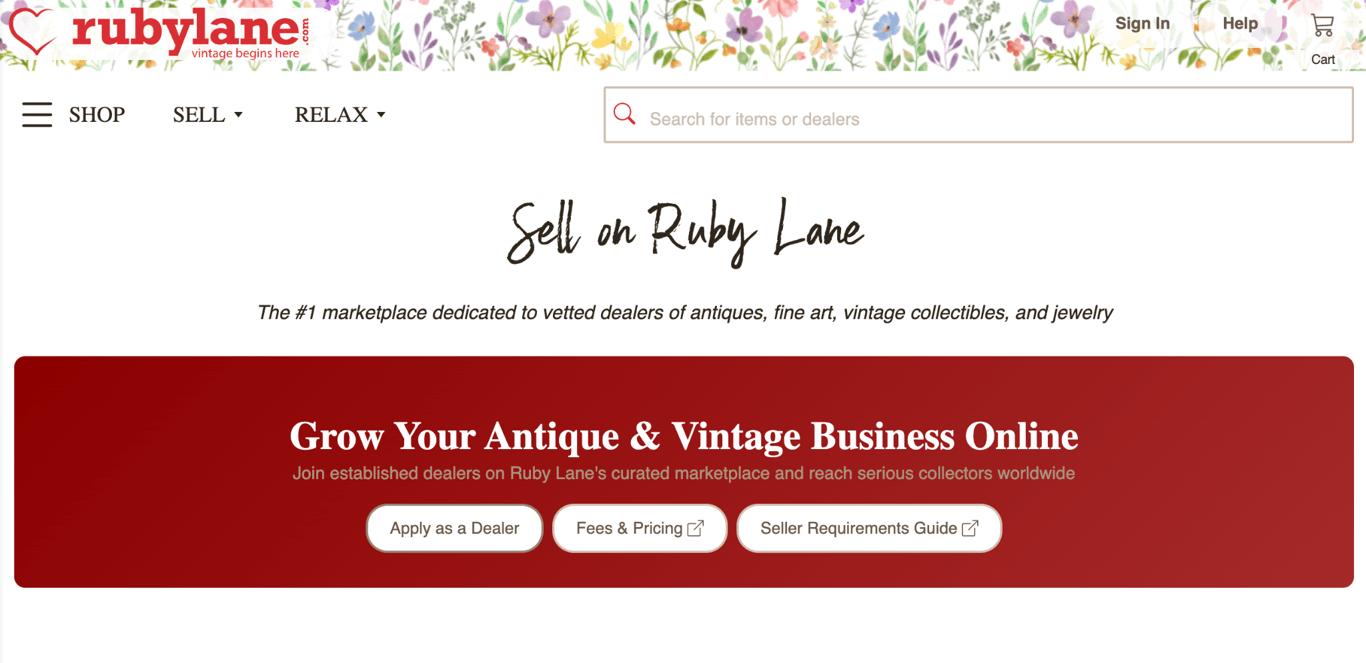
Ruby Lane is a niche marketplace built for premium vintage and antique sellers, particularly strong for selling jewelry, estate pieces, and fine ceramics.
The buyer base comes specifically for curated, high-quality items, which makes it a better fit than general platforms for sellers with higher-priced inventory.
Ruby Lane charges a $45 monthly shop fee with unlimited items and free listings, plus a tiered service fee on each sale: 9.9% on the first $2,500, 5% on the next $5,000, and 2.5% on the portion above $7,500. PayPal’s payment processing fee applies separately.
The fee breakdown favors exactly what Ruby Lane is built for: the more an item sells for, the smaller the percentage you give up. A $100 sale costs $9.90 in service fees, while a $10,000 sale costs $560 – an effective rate of just 5.6%.
The monthly fee applies whether you sell or not, which makes Ruby Lane unsuitable for casual sellers. It’s built for established collectors and antique dealers who sell regularly.
Ruby Lane pros:
- Targeted audience actively looking for antiques and vintage.
- Tiered fees reward higher-value items, unlike flat-rate marketplaces.
- Lower competition for quality listings.
Ruby Lane cons:
- The $45 monthly fee is charged regardless of sales.
- PayPal processing fees stack on top of the service fee.
- Not practical for small inventories or casual selling.
Best sites for local & free selling
Local platforms let you sell to nearby buyers with little or no fees, and no shipping required. They’re the right choice for furniture, appliances, and anything too heavy or fragile to ship cost-effectively.
Facebook Marketplace

Best for: Quick, fee-free local sales.
Facebook Marketplace is the go-to local selling platform for most people. Listings appear to buyers nearby, and for in-person cash transactions, Facebook doesn’t charge sellers anything. The combination of zero fees and the platform’s massive user base makes it one of the most efficient ways to sell local items quickly.
For local pickup sales, you keep everything. Fees apply only if you offer shipping: shipped orders incur a 10% selling fee, with a $0.80 minimum per order.
Facebook Marketplace pros:
- Huge built-in user base that gives listings immediate local visibility.
- No fees for local cash transactions.
- Easy listing via phone or desktop.
Facebook Marketplace cons:
- Limited protections for local deals: screen buyers and use safe public meetups.
- The 10% shipping fee makes low-priced shipped items less profitable.
Craigslist
Best for: Local, in-person sales of bulky items.
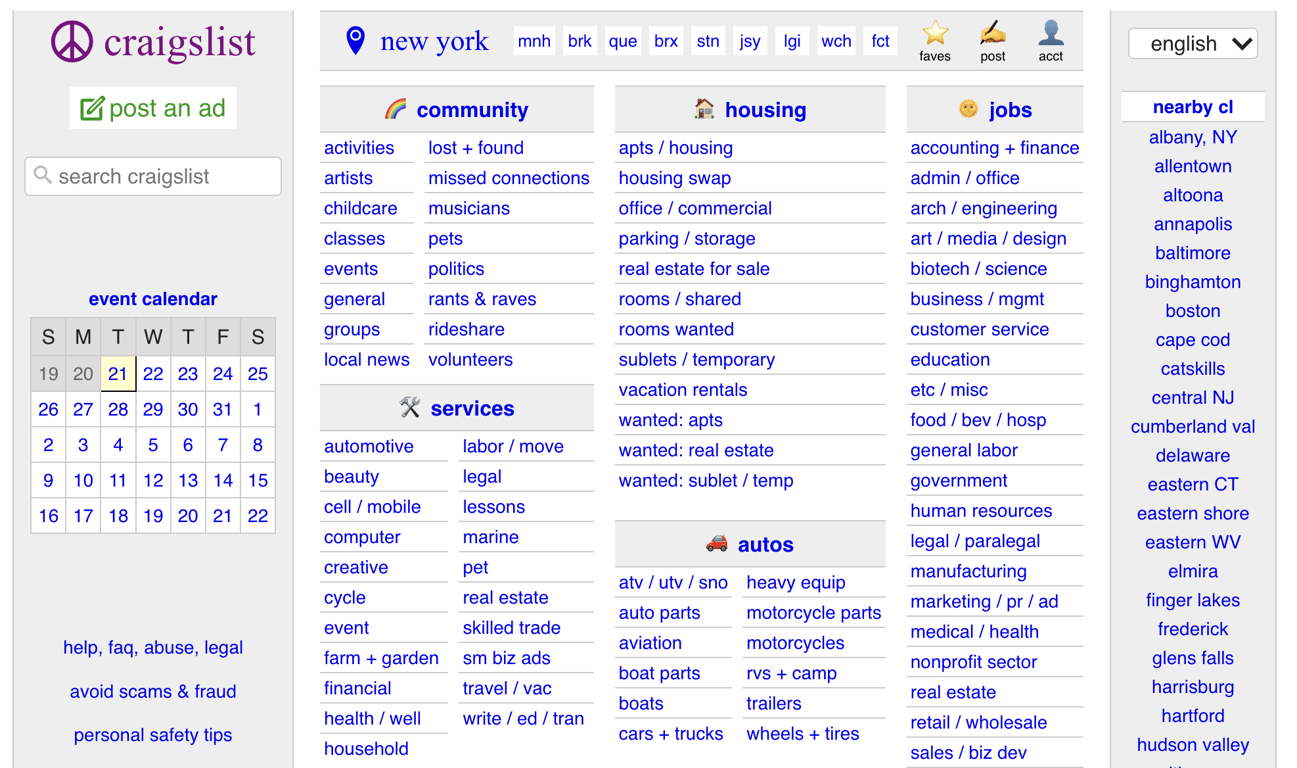
Craigslist is simple, unpolished, and still effective for local selling, especially for furniture, appliances, vehicles, and anything that doesn’t make sense to ship. No account needed to browse, and listings reach buyers in your local area.
Most categories are free to list. Some exceptions apply: certain job posts, apartment listings in specific cities, dealer car listings, and a few other categories carry fees.
Always meet buyers in a well-lit public place. Craigslist has no identity verification, so take common-sense precautions for every in-person transaction.
Craigslist pros:
- Completely free for most sellers.
- No account or app required for buyers to contact you.
- Well-established for high-value local items like furniture and cars.
Craigslist cons:
- No built-in payment or checkout system: you handle all transactions directly.
- Fewer safety features than newer platforms.
Nextdoor

Best for: Free sales to buyers in your immediate neighborhood.
Nextdoor is a neighborhood social network first and a selling platform second. Listings reach verified local members in your street or surrounding blocks, creating a level of trust you don’t get on anonymous platforms like Craigslist.
Listing and selling on Nextdoor is free, with no transaction fees. You coordinate everything in person, and the buyer pays you directly.
The trade-off is reach: Nextdoor works well for everyday items like household goods, garden tools, and children’s furniture, but the audience is intentionally limited to your local neighborhood. It’s a supplement to other platforms, not a replacement.
Nextdoor pros:
- Neighborhood trust makes it easier to deal with buyers.
- No fees at all.
- Verified neighbors reduce the risk of no-shows.
Nextdoor cons:
- Very small audience compared to Facebook Marketplace or Craigslist.
- Best as a secondary channel, not a primary sales platform.
OfferUp
Best for: Local selling with built-in safety features.
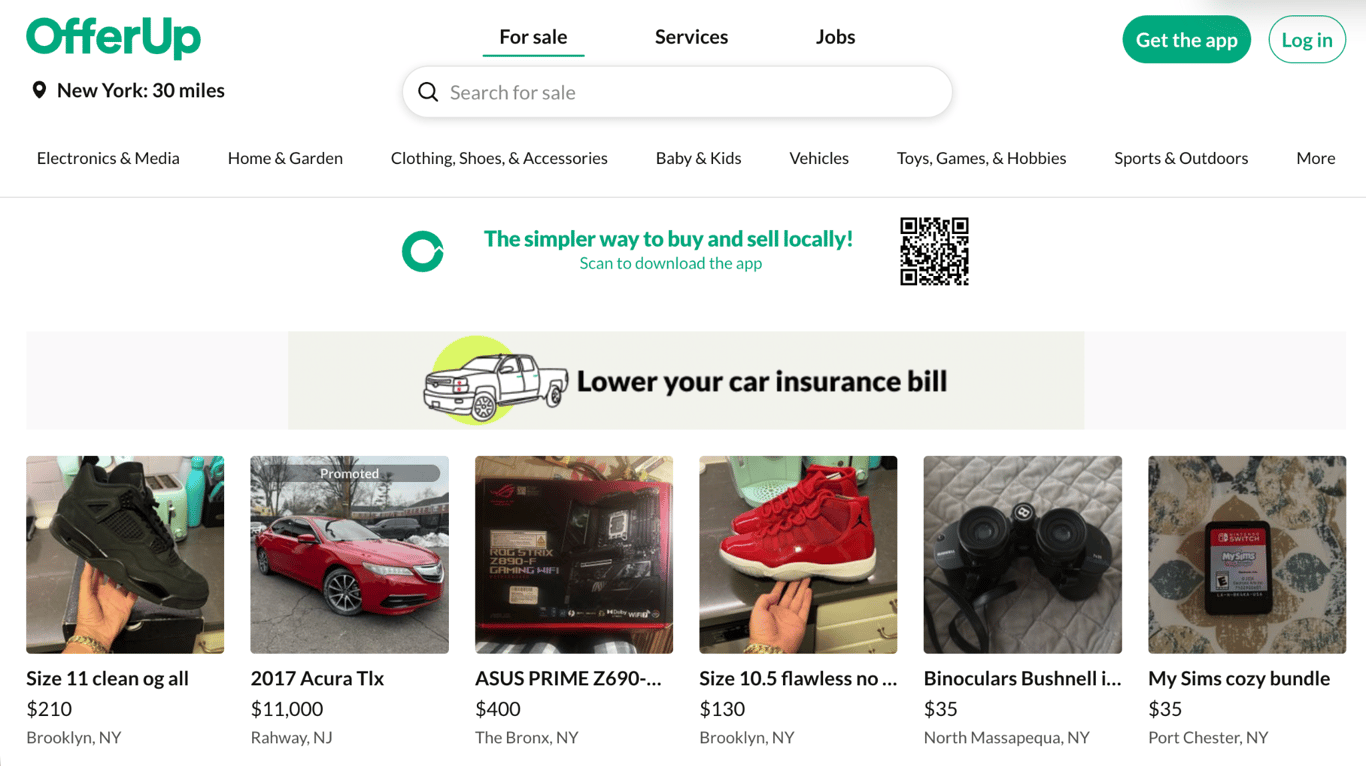
OfferUp fills the gap between Craigslist’s simplicity and Facebook Marketplace’s social features. The app is clean and mobile-first, with built-in identity verification through its TruYou program.
TruYou links your account to a government-issued ID and phone number, and listings from verified sellers get a badge that buyers actively look for.
Local, in-person sales are free, while shipped orders carry a 12.9% service fee, with a $1.99 minimum. Free listings are capped monthly: once you use them up, extra listings cost a per-listing fee, or you can subscribe for a bundle at a lower per-listing rate.
OfferUp pros:
- Clean, easy-to-use interface that’s simpler to navigate than Craigslist.
- TruYou verification builds buyer confidence.
- Zero fees for local cash sales.
OfferUp cons:
- 12.9% fee on shipped items is relatively high.
- Smaller buyer base than Facebook Marketplace in most areas.
Best platform to build your own store
To sell online under your own brand, build a store with a platform like Hostinger Website Builder or Shopify and keep full control of your customers, design, and margins.
Marketplaces offer a built-in audience, but your own store is the long-term move when you’re ready to build something that doesn’t depend on another platform’s rules or algorithm.
Hostinger Website Builder

Best for: Building your own store affordably with full control and no per-sale fees.
Hostinger Website Builder’s Business plan is one of the most budget-friendly ways to build your own online store. It covers hosting, SSL, a drag-and-drop editor with built-in AI tools, and ecommerce tools for up to 1,000 products, with no commission on your sales.
The Business Website Builder plan costs $3.79/month with a 48-month commitment. Hostinger charges 0% transaction fees, so every sale goes directly to you.
The 0% transaction fee matters more than the monthly price. On a typical marketplace taking a 15% commission, your fees grow with every sale. With Hostinger, your costs stay fixed regardless of how much you sell.
The main trade-off is discoverability. Your store won’t appear in marketplace search results, so marketing is your responsibility. That means SEO, social media, or paid ads to drive traffic.
Hostinger Website Builder pros:
- No per-sale fees or commissions.
- Built-in AI tools for product descriptions, images, and site design.
- Up to 1,000 products, 100+ payment methods supported.
Hostinger Website Builder cons:
- No built-in marketplace audience: you drive your own traffic.
- Less room to grow than Shopify for high-volume operations.

Shopify
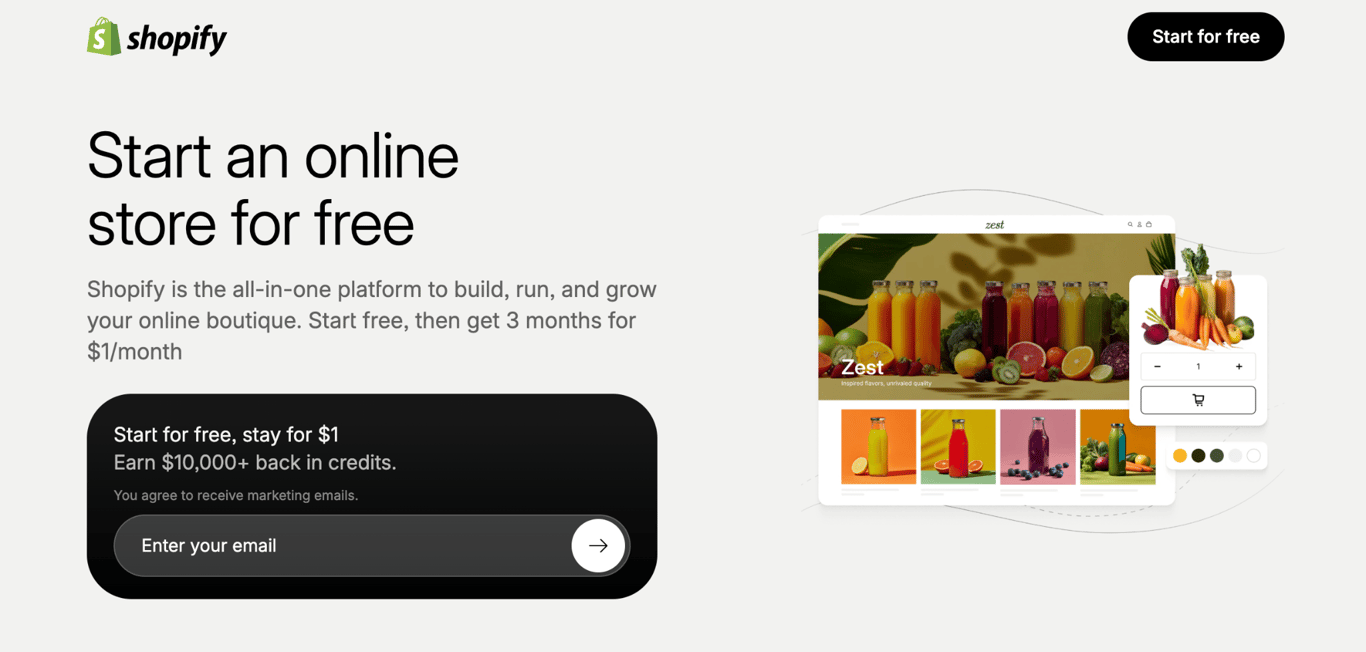
Best for: Building a fully branded online store that can grow with your business.
Shopify is the most widely used ecommerce platform globally, built specifically for running high-volume online stores. It covers everything from basic storefronts to multi-channel selling across social media, Amazon, and physical retail through integrated point-of-sale (POS) hardware.
Shopify’s main plans start at $39/month (Basic), rising to $105/month (Grow) and $399/month (Advanced) when billed monthly. Annual billing cuts prices by roughly 25% across the board.
All plans charge payment processing fees on top: 2.9% + $0.30 per transaction on Basic, with lower rates on higher tiers. Using a third-party payment gateway instead of Shopify Payments adds further transaction fees.
Shopify’s app marketplace is one of its biggest advantages: thousands of integrations for email marketing, subscriptions, print-on-demand, dropshipping, and more. That range of add-ons also means costs can add up fast.
Shopify pros:
- Purpose-built for ecommerce at every stage of growth.
- Massive app marketplace for adding new features.
- Multi-channel selling across social platforms, Amazon, and in-person POS.
Shopify cons:
- Significantly more expensive than Hostinger for smaller stores.
- Third-party payment gateways add an extra transaction fee on top of processing costs unless you use Shopify Payments.
- App costs can quickly add up and increase your monthly total.
Tips to sell online
The main tips to sell online are pricing with fees in mind, matching the platform to your product, building trust into every listing, starting small, and working toward a store you control. These apply whether you’re on a marketplace or running your own store.
Price with fees in mind. Marketplace commissions, payment processing, and shipping labels reduce your profits faster than most new sellers expect. Calculate your real profit per item before you list, not after.
Match the platform to the product. Vintage clothing belongs on Depop or Vinted. Handmade goods belong on Etsy. Furniture belongs on Facebook Marketplace or Nextdoor. Trying to sell the wrong product on the wrong platform costs time with no payoff.
Make listings easy to trust. Buyers can’t inspect the item in person. Clear photos from multiple angles, accurate dimensions, honest condition descriptions, and clear return terms do the work that physical retail does automatically.
Start small and track what sells. List a manageable batch, measure what moves, then do more of what works. Uploading hundreds of listings before you understand your conversion rate wastes time and creates inventory management problems.
Build toward a platform you control. Marketplaces are where you get found. Your own store is where you build something durable: brand recognition, customer emails, and a foundation for increasing your online sales without depending on another company’s pricing rules or algorithm change.

Matleena is a seasoned Content Writer with 5 years of content marketing experience. She has a particular interest in emerging digital marketing trends, website building, and AI. In her free time, Matleena enjoys cups of good coffee, tends to her balcony garden, and studies Japanese. Follow her on LinkedIn