Base44 vs. Lovable: Key differences in features and use cases
May 15, 2026
/
Larassatti D.
/
10 min Read
Choosing an AI app builder usually comes down to one trade-off: how fast you can go live versus how much control you keep over the result. Base44 and Lovable sit at opposite ends of that spectrum.
Base44 handles your UI, database, authentication, and hosting in a single build process – you describe the app, it generates the stack. No backend configuration, no deployment setup. That speed comes with a ceiling: less control over the code, fewer options for extending the app later.
Lovable takes the opposite approach. It produces clean React code with native Supabase and GitHub integration, giving developers full visibility into what gets built. The trade-off is setup time – you’ll need to connect backend services and manage deployment separately.
If neither of them fits, there’s a third option worth putting in the same conversation: Hostinger Horizons. It’s an AI-powered no-code builder that bundles app creation, hosting, a free domain, ecommerce, and email into one platform – at a lower starting price than either tool.
The table below compares all three across the features that matter most when making this call.
Features | Base44 | Lovable | Hostinger Horizons |
AI workflow | Prompt-to-app with built-in database, auth, and hosting | Prompt-to-app with Supabase backend and GitHub sync | Prompt-to-app with integrated hosting, domain, and email |
Price | From $20/month | From $25/month | From $6.99/month |
Free tier | 5 daily AI credits (25/month max) | 5 daily AI credits (30/month max) | 7-day free trial, with 5 AI credits |
Hosting | Yes | Yes, with Lovable Cloud | Yes, with a free domain and SSL available |
Code export | Yes | Yes, via GitHub | Yes |
Ecommerce | Not built in | Provides integration with Shopify | Built-in ecommerce functionality |
Backend/database | Built in | Supabase integration | Built in |
What are the advantages of Base44 over Lovable?
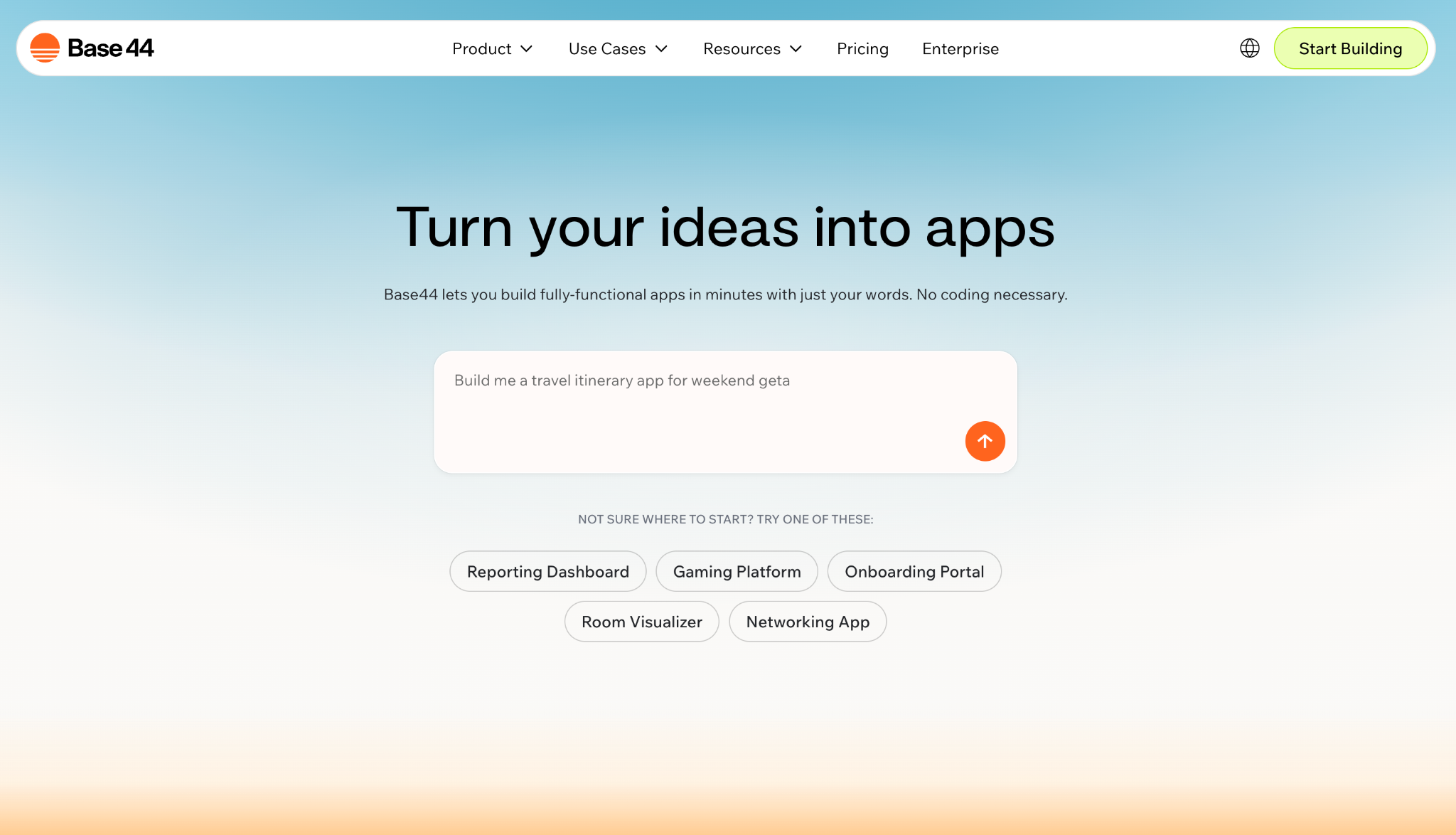
Base44 works best for users who want a fast, guided path from idea to working app. Here are its main strengths compared to Lovable:
- Built-in backend infrastructure. Base44 includes a database, user authentication, and role-based access control out of the box. Lovable requires a Supabase setup for similar backend features, which adds an extra step to the workflow.
- Faster time to a functional prototype. The platform generates your data schema, routes, and UI in a single build process – no external services to configure first. Lovable’s cleaner code output comes at the cost of that setup overhead.
- Structured AI generation with less guesswork. Base44 offers an Idea Library with pre-built categories and styling instructions. These reduce the number of decisions you should make upfront.
- Predictable layouts and consistent results. Base44’s templated approach produces structurally reliable output from the first build. Lovable’s design-first approach offers more visual range, but results can vary more depending on how the prompt is written.
- Discussion mode for planning. A discussion mode lets you refine your idea before committing a prompt, so you get better output on the first try and waste fewer credits. Lovable moves straight to generation, which works well if you know exactly what you want.
What are the disadvantages of Base44 compared to Lovable?
Base44’s structured approach comes with trade-offs. Here’s where it falls short:
- Limited design customization. Base44 offers less visual control over layouts, typography, and component-level styling. If your project requires strong branding or a unique visual identity, you’ll hit design restrictions faster than with Lovable.
- Scalability concerns for complex projects. While Base44 handles simple-to-moderate apps well, more complex applications with layered business logic or heavy data handling may push the platform’s boundaries.
- Wix ecosystem dependency. After Wix acquired Base44, the platform’s pricing shifted, and its product roadmap became less transparent. Some users report feeling locked into the Wix ecosystem, which affects long-term flexibility. If that’s a concern, it’s worth considering other tools similar to Base44 before committing.
What are the advantages of Hostinger Horizons over Lovable and Base44?
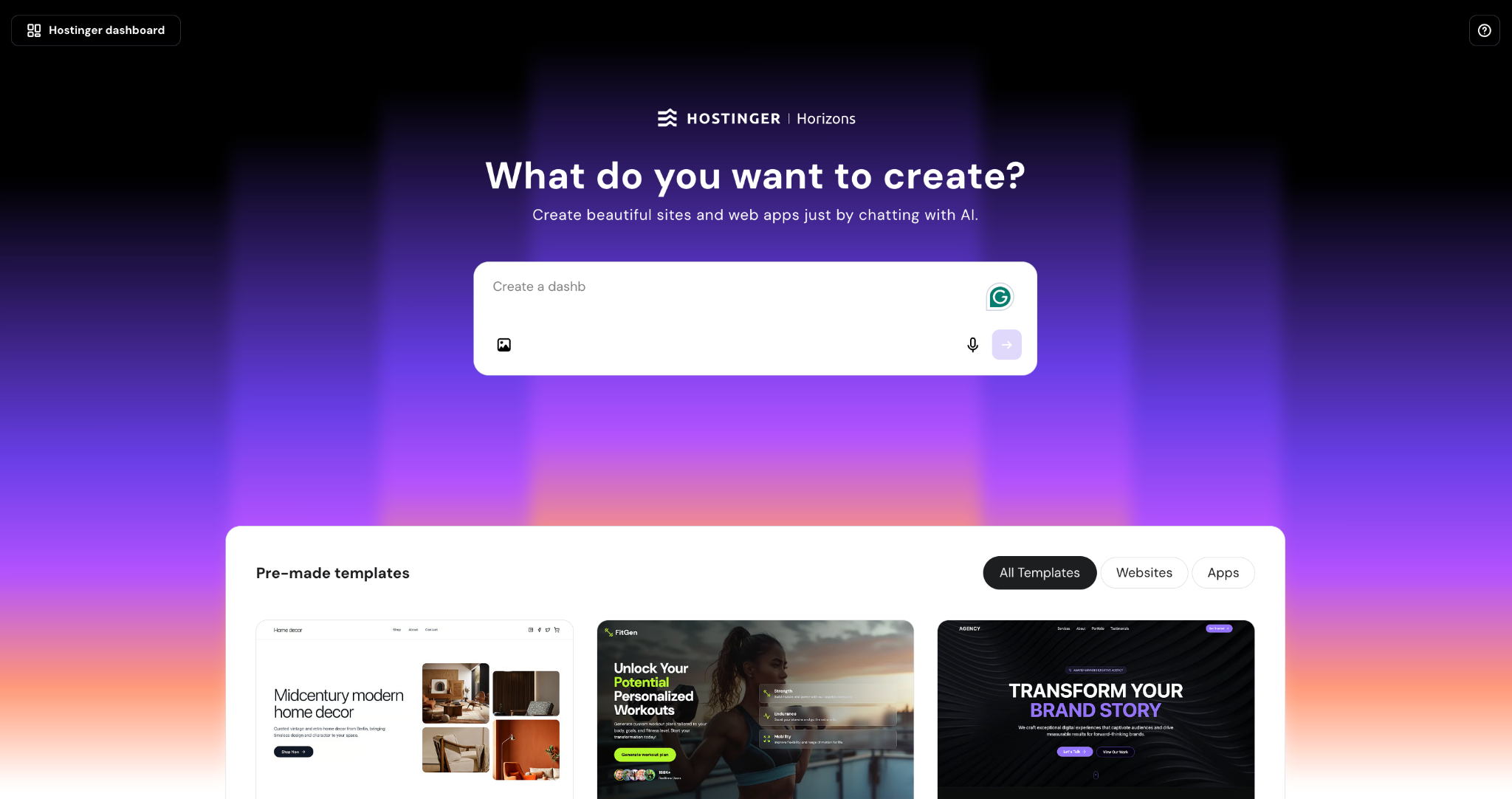
Hostinger Horizons takes a different approach by combining AI app building with the infrastructure you need to go live – all in one platform. Here’s how it stands out:
- Lowest entry price. Plans start at $6.99/month, which is much lower than Base44’s $20/month Starter plan and Lovable’s $25/month Pro plan.
- All-in-one hosting, domain, and email. Every paid plan includes web hosting, a free custom domain name (for Starter plan and above), an SSL certificate, CDN, and professional email. All of these can be managed from a single control panel.
- Built-in ecommerce engine. Hostinger Horizons includes a native online store feature on Starter plans and above, supporting 100+ payment methods and multiple shipping zones. Base44 has no built-in ecommerce functionality, and Lovable requires a separate Shopify subscription.
- Transparent credit system. One message equals one credit, and follow-up questions or prompt guidance from Horizons don’t consume credits. Both Base44 and Lovable use dynamic credit charging based on complexity, making costs harder to predict.
- 24/7 multilingual support. Horizons offers round-the-clock live chat and email support with both an AI chatbot and human agents. Base44 and Lovable rely primarily on email and ticket-based support.
- Free prompt guidance. Horizons includes an AI assistant (Kodee) that helps you refine and optimize your prompts before building, at no extra cost. This reduces wasted credits and improves output quality, especially for beginners.
What are the advantages of Lovable over Base44?
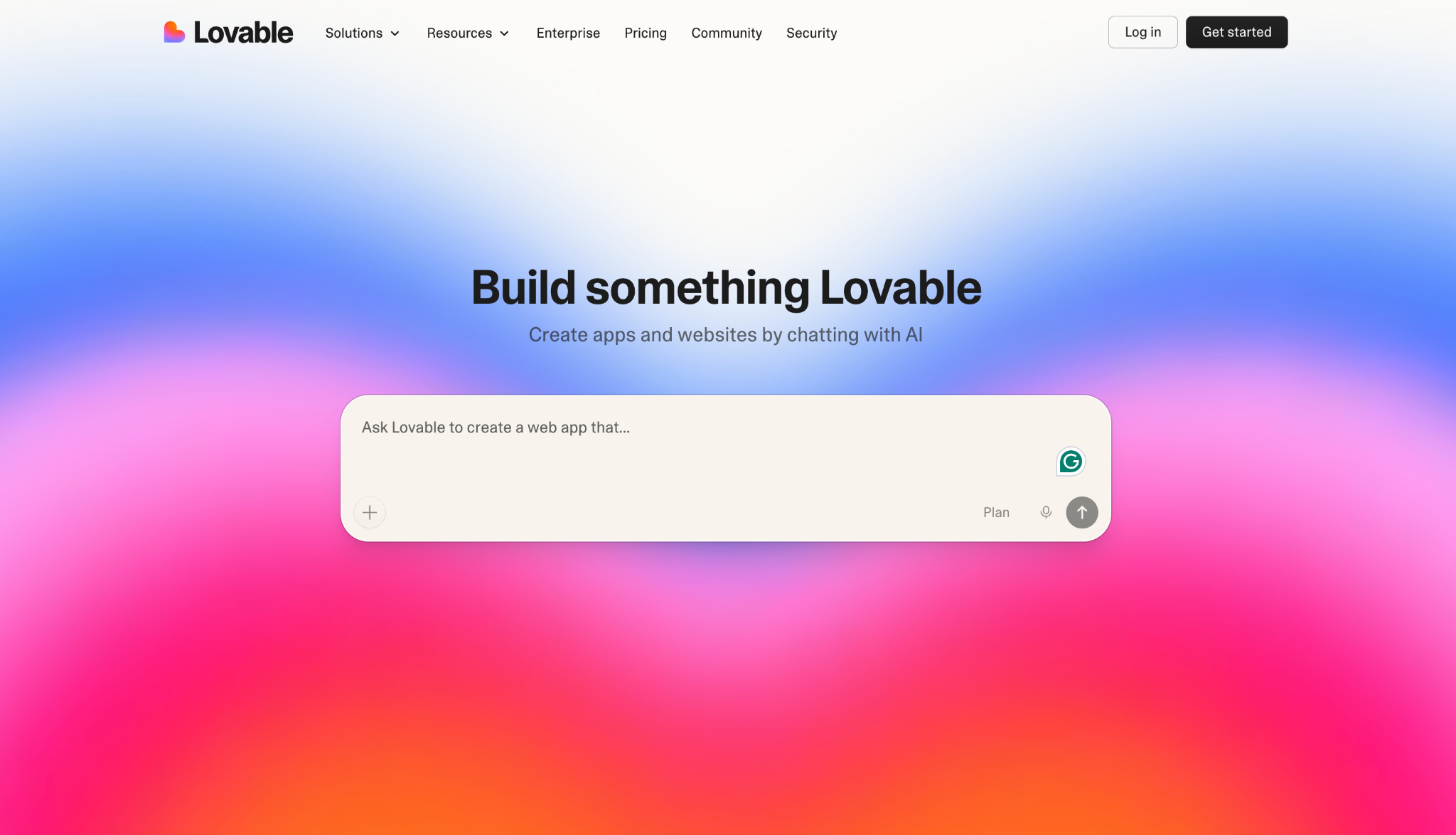
Lovable shines when your project demands design control, creative flexibility, and developer-friendly workflows. Here’s where it leads:
- Superior visual design output. Lovable consistently produces more polished, modern-looking UI from the first generation. Base44’s templated approach prioritizes structural consistency over aesthetics, so if design quality matters to your brand, Lovable delivers stronger results without extra prompting.
- Visual Edits for direct styling. A Select Tool lets you click on specific UI elements and modify properties like text, color, font, and layout directly. This creative website builder approach gives you fine-grained design flexibility that Base44’s template-guided system lacks.
- Full code access through Dev Mode. Paid users get a code-first editing environment for making granular changes to the generated React code. Base44 limits direct code access, which makes this a significant advantage for teams with specific branding or technical requirements.
- GitHub sync. Two-way GitHub integration provides version control, team collaboration, and the ability to continue development in any IDE. Base44 doesn’t offer native GitHub integration, making Lovable the stronger choice for projects involving designers and developers working together.
- Supabase integration for backend power. Lovable connects directly to Supabase for database management, authentication, and storage – giving you more configurability than Base44’s built-in backend. That flexibility comes with a trade-off: it requires a separate setup rather than working out of the box.
- Team collaboration. Workspace collaboration is included on Free and Pro plans for up to 20 members, making Lovable better suited for team-based creative and development workflows.
What are the disadvantages of Lovable compared to Base44?
Lovable’s flexibility comes at the cost of speed and simplicity. Here’s where it falls behind:
- Steeper learning curve. Getting the most out of Lovable requires understanding how to write effective prompts for complex apps, configure Supabase, and navigate GitHub workflows. Base44’s guided approach is easier for beginners who just want a working app fast.
- More setup complexity. Lovable doesn’t include a built-in database or hosting. You need to connect Supabase separately for backend functionality and deploy through another provider like Vercel, Netlify, or GitHub Pages. There’s a Lovable Cloud option that bundles hosting, database, auth, and storage, but it runs on usage-based pricing separate from your subscription.
- Higher starting price. Lovable’s Pro plan costs $25/month for 100 credits, while Base44’s Starter begins at $20/month. For budget-conscious users building simple apps, Lovable’s pricing feels steep for what you get early on.
- Unpredictable credit usage. Lovable charges credits dynamically based on the complexity of each interaction. A simple button change might use 0.5 credits, while a structural edit uses more than two. If that unpredictability is a dealbreaker, it’s worth browsing Lovable alternatives for platforms with more transparent pricing models.
Which is easier to use – Base44 or Lovable?
Base44 gets beginners to a working app faster with fewer decisions. Lovable rewards users who invest time learning the platform with stronger output and finer control.
Base44 handles more decisions for you: database setup, authentication, hosting, and deployment all happen automatically during app generation. The community template library offers pre-built starting points across categories, so you don’t have to start from a blank prompt.
It also has a discussion mode that lets you brainstorm with the AI before entering a prompt, which helps if you’re not sure exactly what to build yet. Everything lives in a single dashboard, so there’s no switching between tools.
Lovable has a steeper learning curve, but gives you more control once you’re comfortable. You’ll need to understand how Supabase connects for backend functionality, how GitHub sync works for version control, and how to write effective prompts for complex features.
The workflow also spans multiple interfaces – Lovable’s builder, the Supabase dashboard, and GitHub. For structural changes, though, you need to go back to prompt-based interaction.
Is Hostinger Horizons easier to learn than Base44 and Lovable?
Yes – Hostinger Horizons has a shallower learning curve than both Base44 and Lovable.
The entire workflow happens in a single chat interface. You describe what you want, the AI builds it, and you publish with one click. There’s a template library if you prefer a quicker start as well. You don’t need to configure an external database, set up a deployment pipeline, or create a GitHub account.
Hostinger Horizons includes an AI assistant tool that helps you write better prompts before you start building. Simply start a conversation with the tool by clicking the Ask Kodee button in the top toolbar and asking it to help you create the prompts. This way, even beginners get better results from the start and waste fewer credits on trial-and-error prompting.
Hostinger also provides extensive learning materials, including step-by-step tutorials, how-to guides, and use-case examples.
Which is better for customization – Base44 or Lovable?
When it comes to design customization, the two platforms sit at opposite ends of the spectrum.
Base44 prioritizes efficiency over flexibility. You get consistent, template-guided layouts with limited options for changing fonts, spacing, and component-level design. This works well when you need a functional app quickly, and design isn’t the primary concern.
But if you need layout control for strong branding, such as custom color systems, unique navigation patterns, or pixel-level styling, Base44’s restrictions will limit your options. In that case, it may be worth exploring other platforms like Base44 that offer more design flexibility and customization.
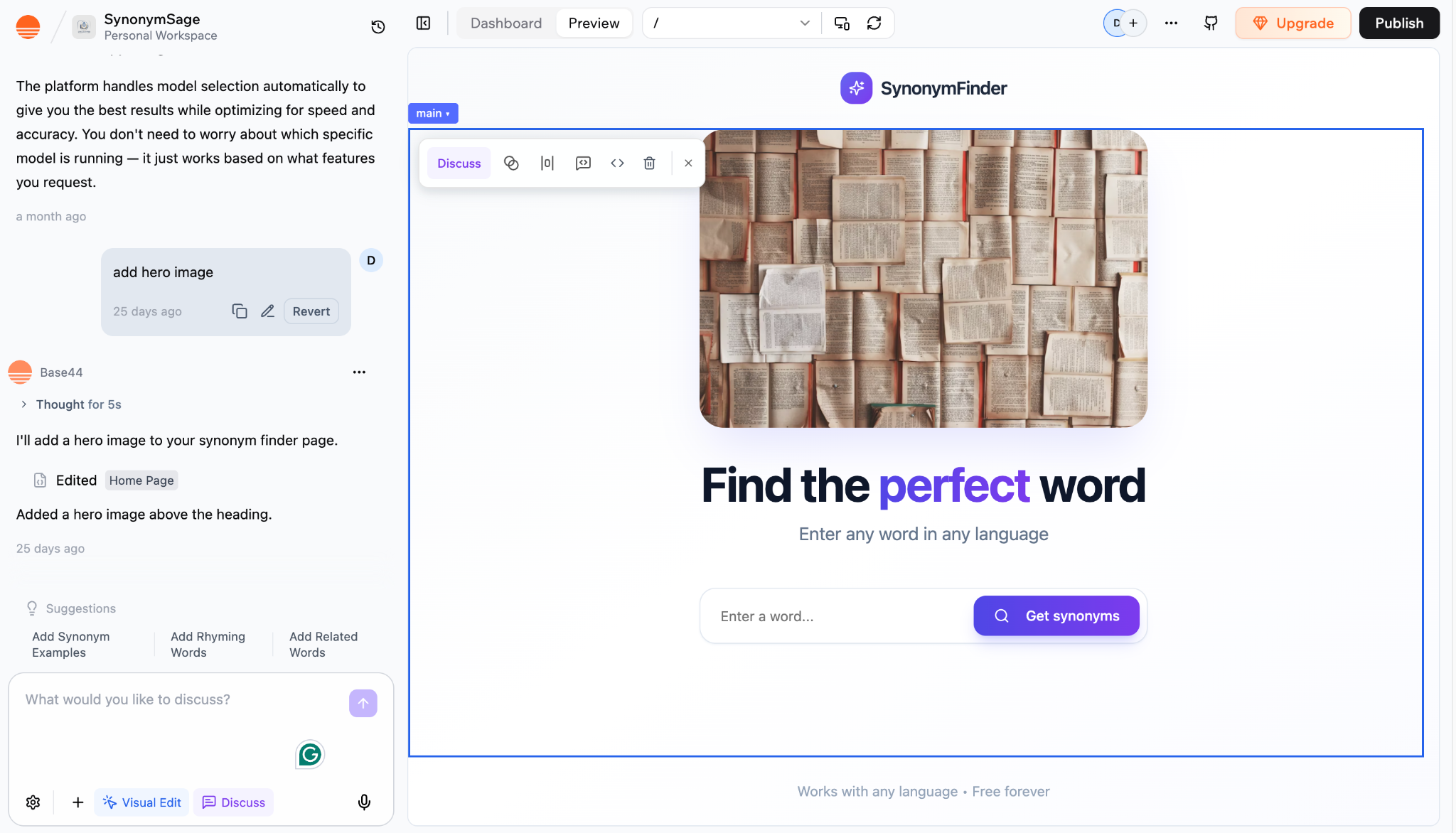
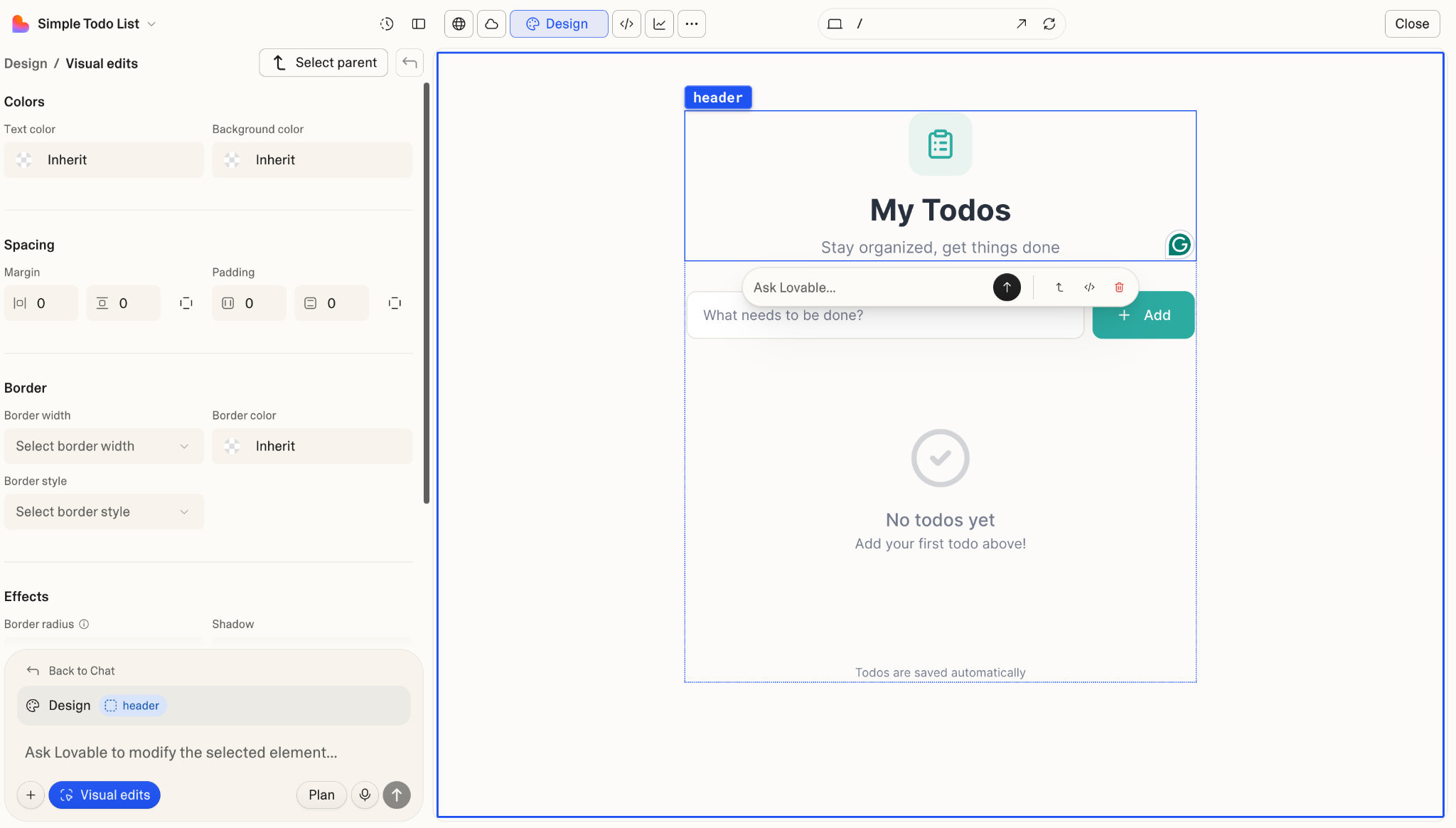
Lovable prioritizes more creative control. Its Visual edits feature lets you modify individual UI elements directly, while Code mode opens the full codebase for granular styling changes.
Additionally, the React + Tailwind CSS output gives you design flexibility that’s standard in professional web development.
How does Hostinger Horizons compare with Base44 and Lovable in terms of customization?
For users who want more control than Base44 provides but don’t need Lovable’s full developer workflow, Hostinger Horizons offers a practical middle ground.
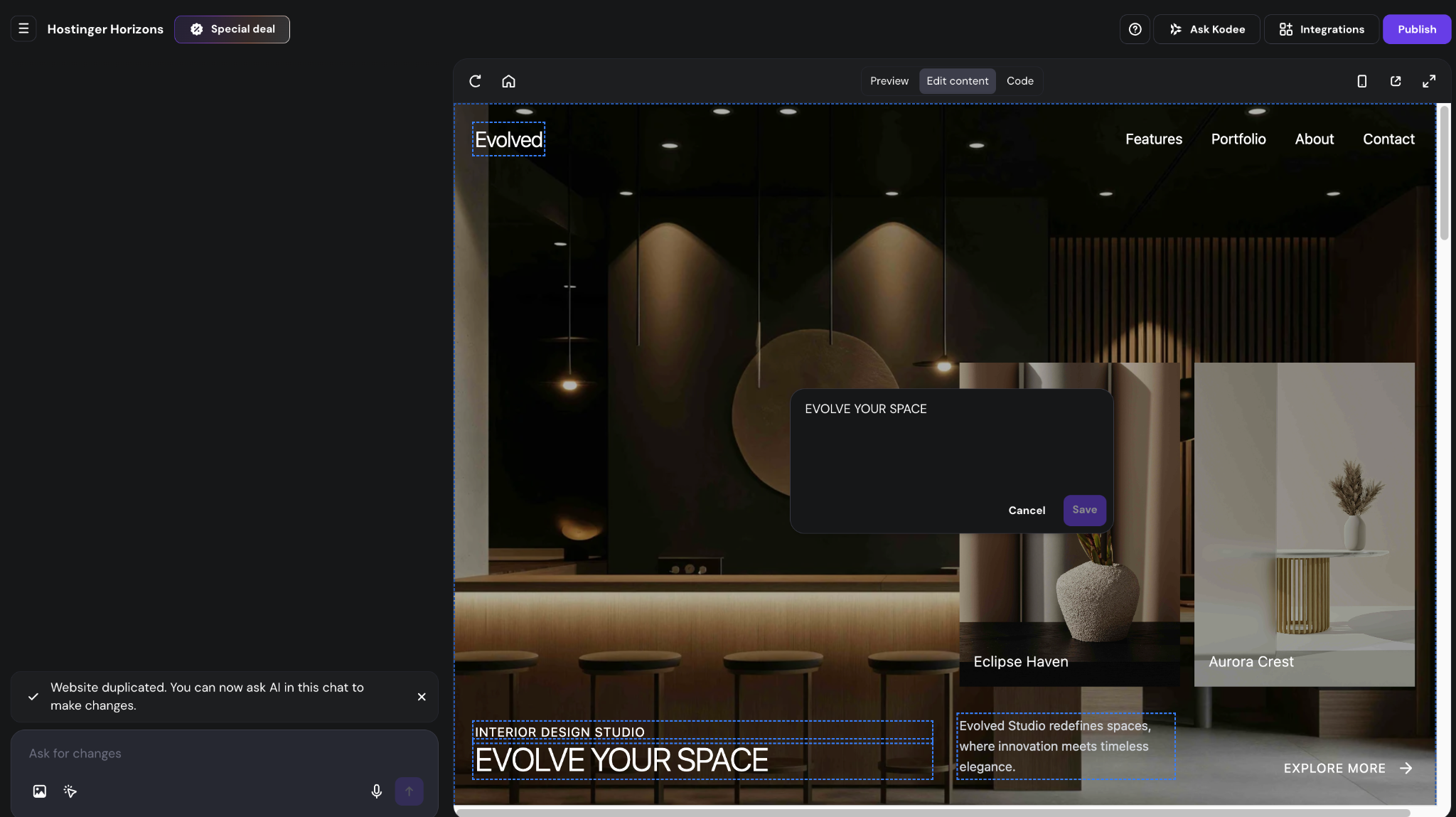
Like Base44, it uses a chat-based interface to generate and modify designs – you describe changes, and the AI applies them. But Horizons also supports direct text and image editing in the preview, plus a code editor on the Hobbyist plan and above for manual adjustments.
Additionally, Hostinger Horizons doesn’t require external tools for common customization needs. You can adjust design, content, SEO elements, and ecommerce settings from a single dashboard. The platform also auto-generates responsive, mobile-friendly designs by default.
Which is better for scalability – Base44 or Lovable?
For website performance at scale, Lovable’s architecture gives you more room to grow. Base44 is better suited for apps that won’t need significant expansion after launch.
Base44 handles short-term launches and simple-to-moderate apps well. The built-in infrastructure means you don’t manage servers or databases separately, which simplifies maintenance.
But for projects that grow in complexity, like apps with multiple user roles, complex data relationships, or heavy API usage, the platform’s limitations become apparent. The guided AI workflow and the credit system constrain development scalability.
Lovable supports longer-term, more complex projects. GitHub integration lets you take your codebase off the platform entirely and continue development with traditional tools. Supabase provides a production-grade database. The React + Vite output is maintainable by any developer.
How does Hostinger Horizons compare with Base44 and Lovable in terms of scalability?
Hostinger Horizons benefits from Hostinger’s hosting infrastructure and the tools available in its ecosystem.
Every project runs on optimized servers with CDN enabled by default, WebP image optimization, and SSL certificates included. You can have all these settings and your domain name managed in a single control panel dashboard. This gives Hostinger Horizons a performance baseline that neither Base44 nor Lovable provides out of the box.
The integrated backend includes data storage, email sending, user authentication, and separate live and preview environments for safer deployments. Additionally, the ecommerce engine includes payment processing, inventory tracking, and shipping configuration.
For the majority of small-to-medium web apps, Hostinger Horizons scales well within its infrastructure and keeps costs predictable. In case you want higher resources, you can also export the web app’s source code and host it in a virtual private server (VPS).
Which one offers more integrations – Base44 or Lovable?
Both platforms support third-party integrations, but they approach extensibility differently.
Base44 bundles several integrations directly into the platform. AI calls, email, and SMS sending, file uploads, and image generation all work out of the box – no API keys or external accounts needed.
These features use integration credits, which your app’s end users consume when they trigger actions. The free plan includes 100 integration credits per month, and paid plans scale up to 50,000.
On paid plans, Base44 also unlocks OAuth-based connectors for tools like Notion, Slack, Google Calendar, Salesforce, HubSpot, and Monday.com. The platform currently offers around 26 connectors, and the catalog is growing since the Wix acquisition.
Lovable takes a more modular approach. It offers shared connectors for Stripe (payments), Supabase (database and auth), Shopify (ecommerce), Slack (messaging), ElevenLabs (text-to-speech and audio), Firecrawl (web scraping), Perplexity (AI-powered research), and Miro (turning visual brainstorms into prototypes).
For anything beyond these, you connect third-party APIs manually through backend functions or secrets.
Lovable also supports personal connectors through MCP servers, which let you bring in additional external tools during the app creation process. This gives you more long-term flexibility, but requires more setup and maintenance than Base44’s built-in approach.
Does Hostinger Horizons support key integrations offered by Base44 and Lovable?
Hostinger Horizons takes a different approach to integrations. Instead of relying heavily on third-party connections, it builds the most essential features directly into the platform – hosting, backend data storage, user authentication, email sending, and an ecommerce engine all come included without external setup.
For features that do require third-party services, Hostinger Horizons supports:
- Stripe for payment processing beyond the built-in ecommerce engine.
- Google AdSense for monetizing web apps with advertising.
- Zapier for connecting to thousands of external apps and automating workflows.
- Mailchimp for integrating email marketing services.
The platform also auto-generates sitemap.xml, robots.txt, and llms.txt files, which are great for your site’s visibility in search engines and AI tools.
The sitemap file lists all your site’s pages so search engines like Google can discover and crawl them efficiently. The robots.txt file tells search engines which pages to index and which to skip.
Meanwhile, the llms.txt file helps AI-powered search engines like ChatGPT, Gemini, and Perplexity accurately understand and index your site content.
The list of third-party integrations is smaller than those offered by Lovable and Base44. But most essential features are already handled with fewer external connections in the first place. At the same time, feature enhancements are constantly happening.
Which should you choose to build a web app – Base44, Lovable, or Hostinger Horizons?
All three tools generate working apps from plain-language prompts. But what happens after the first version appears on your screen helps you decide which tool is best for you.
If your priority is getting a backend-ready app with zero configuration, Base44 is the best option. Database, auth, user roles, and hosting are baked in from the first prompt. That’s a real advantage for solo founders testing internal tools, simple SaaS ideas, or data-driven dashboards.
The downside is that you’re trading creative control for speed – and once your app outgrows the platform’s structure, moving off it isn’t straightforward.
If your priority is design polish and long-term code ownership, Lovable is the stronger pick. The React output is clean enough that a developer can take it and keep building without having to start over.
But that flexibility costs time upfront – connecting services, learning prompt patterns for complex features, and managing deployment yourself. It’s the right trade-off for brand-sensitive projects and teams that plan to iterate well beyond the MVP stage.
And if your priority is going live with the least overhead, Hostinger Horizons removes the most steps between having an idea and having a URL people can visit. Hosting, domain, SSL, email, backend, and even an ecommerce engine are already there.
You don’t piece together a stack – you just build and publish. It’s particularly strong for small business owners who need a working web presence, not just a prototype.
Here’s a practical way to think about it based on where you are right now:
- Building your first ecommerce store or client-facing tool? Hostinger Horizons bundles the storefront, hosting, and domain into one plan.
- Validating a product idea quickly? Base44 gets you to a functional MVP fastest, or try Hostinger Horizons if you also need a storefront or custom domain from day one.
- Developing a SaaS product? Lovable for code ownership and developer workflows. Hostinger Horizons if you want managed infrastructure without the operational overhead.
Still not sure which one to pick? Try creating a web application with AI using the free version and experience the tool yourself.
All of the tutorial content on this website is subject to Hostinger's rigorous editorial standards and values.

Larassatti Dharma is a content writer with 4+ years of experience in the web hosting industry. She has populated the internet with over 100 YouTube scripts and articles around web hosting, digital marketing, and email marketing. When she's not writing, Laras enjoys solo traveling around the globe or trying new recipes in her kitchen. Follow her on LinkedIn