Why choose cloud hosting plans: 6 reasons to scale your hosting to the cloud
Jan 22, 2025
/
By Matleena S.
/
5 min Read
Choosing a web hosting plan can be tricky, especially if your website needs to handle high traffic loads, and a shared hosting plan won’t cut it.
If you don’t have the technical know-how or time to manage a virtual private server, you should consider using cloud hosting.
Cloud hosting benefits projects that require improved performance, better resource utilization, and reduced downtime overall. Cloud computing-powered servers can be just what you need to scale your online business.
In this article, we will discuss how cloud hosting works and its main advantages when compared to other hosting options.

6 Reasons to choose cloud hosting
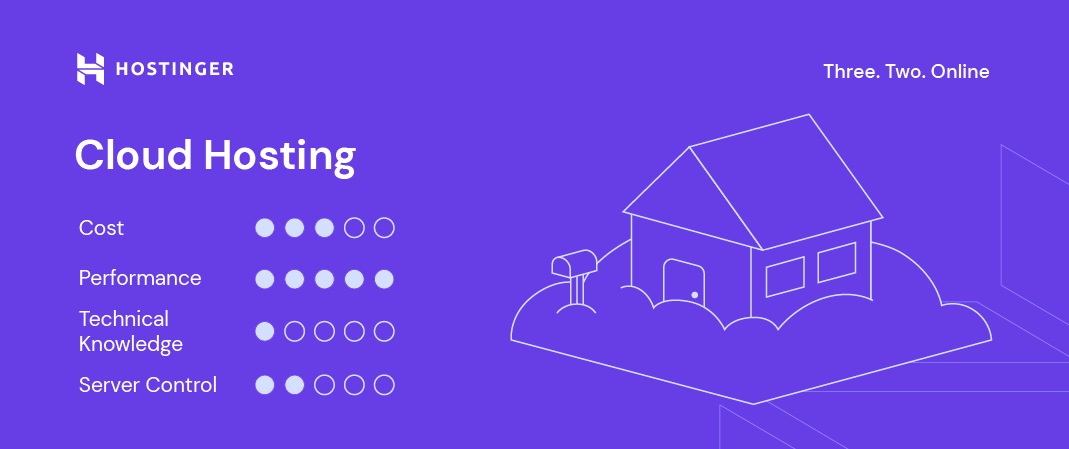
While shared hosting is the ideal affordable solution for small-scale websites, cloud hosting is perfect for projects that require scalability, stability, and more power.
Unlike VPS hosting, which requires technical skills to set up and manage the server, cloud providers are usually responsible for managing the server. Thus, users can focus on optimizing their websites and growing their brands.
Suggested reading
Some of the main benefits of cloud hosting include:
- Stable website uptime
- More robust risk management
- Advanced DDoS attack protection
- A dedicated IP address
- Better IP address reputation
- Improved email marketing opportunities
Most commonly, cloud solutions are the first choice for companies and professionals who need top performance at all times. This is reflected in the price – cloud plans often cost more than shared hosting plans.
Learn more about web hosting
Website uptime
Cloud hosting runs on virtual servers rather than a single physical server like traditional web hosting. This means that if there are any technical issues with one virtual server, the other servers in the network will take the load to ensure that your site remains up and running.
With a cloud hosting plan, you tend to get greater site performance and stability. With shared hosting, you risk downtime if another site on the shared server experiences traffic spikes due to the shared server resources.
On the other hand, cloud hosting services won’t be affected by the traffic on other websites thanks to virtualization technology.
Cloud hosting solutions also typically access up to 20 times more resources at any given time than traditional hosting.
| Features | Startup | Professional | Enterprise |
| Pricing | ₱409.00/month | ₱609.00/month | ₱1,289.00/month |
| Number of email accounts | 100 | 100 | 100 |
| Memory | 3 GB | 6 GB | 12 GB |
| SSD storage | 200 GB | 250 GB | 300 GB |
| Number of CPU cores | 2 | 4 | 6 |
| Bandwidth | Unlimited | Unlimited | Unlimited |
This means that even if your site is under high demand or experiencing a spike in traffic, its performance won’t be compromised.
At Hostinger, the server hardware is identical for both shared and cloud hosting plans, but cloud services typically suffer less from overbooking.
To put this into perspective, generally, the shared tier servers have around 2,400 orders per server, while cloud servers only have around 170 orders per server.
Risk management
Since you’re storing all your site data in the cloud, cloud services aren’t affected by adverse events the way physical dedicated servers are, helping to safeguard your data from accidental loss or other malicious activity.
Disaster recovery times are also much shorter with cloud hosting compared to traditional hosting solutions. Since your site is powered by a network of virtual servers, chances are small of you losing revenue or traffic if there’s an issue with a single server.
DDoS attack protection
With cloud solutions, you get greater DDoS attack protection. Basically, if your hosting provider suffers from a DDoS attack, websites running on cloud servers are less likely to be affected, as cloud hosting servers rely on multiple servers.
The more robust protection against DDoS attacks available in cloud plans is especially important for online stores and high-traffic sites. These types of websites benefit from constant site accessibility and won’t suffer from lost sales due to site downtime.
Dedicated IP address
A dedicated IP address is an IP address that is exclusively assigned to a single hosting account. This means that the site associated with the hosting account is the only site that can be accessed using that IP address.
There are several benefits to having a dedicated IP address:
- Better performance. If you have a dedicated IP address, your website will load faster as the server can quickly identify from which domain the request is coming.
- Increased security. With a dedicated IP address, you can install a more advanced SSL certificate on your website.
- Improved email deliverability. Some email providers may block emails coming from shared IP addresses due to the increased risk of spam. Having a dedicated IP address can improve their deliverability.
- Enhanced control. With a dedicated IP address, you have more control over your hosting environment. This is especially useful for more complex online projects that require careful resource allocation.
All of Hostinger’s cloud plans come with a dedicated IP address for no extra cost.

IP address reputation
Compared to traditional hosting, where multiple sites share a single IP address, cloud hosting is better for IP address reputation.
If your website’s IP address has a poor reputation, it can become difficult for visitors to access your site, as email providers, web browsers, and other online services may block it.
On top of that, if your IP address is associated with spam or other malicious activity, you risk becoming a target for cyber attacks. These, in turn, could compromise the security of your site overall and diminish trust with your target audience.
By choosing a trustworthy web hosting provider and ensuring that your website’s IP address has a good reputation, your site remains accessible to visitors and protected from potential security threats. This can be especially important if you rely on the website as your main source of income.
Email marketing opportunities
If you’re planning on setting up an email marketing strategy for your website, you can also benefit from the dedicated IP address that comes with cloud hosting.
Some email providers can block emails from shared IP addresses due to the increased risk of spam. This can become problematic if you’re sending out automatic emails, such as order confirmations, shipping notifications, or newsletters.
Having a dedicated IP address improves your email deliverability, making it easier to reach your audience.
Pro Tip
Hostinger cloud hosting plans let you create up to 100 domain-based emails. Using a business email is another great way to improve branding and authority.
Conclusion
If you need more resources, unparalleled website performance, and secure data storage, you should consider using a cloud hosting solution.
Cloud hosting offers great scalability and security, ensuring your site won’t be affected by traffic spikes or shady activities of other sites. Instead of sharing the resources of a single server with other users, you can optimize your virtual server to best suit your project’s needs.
If you’re looking for a hosting solution that is almost as powerful as a VPS or a dedicated server but doesn’t require as much technical know-how, cloud hosting could be just the right choice.
Why choose cloud hosting FAQ
Find answers to common questions about cloud hosting below.
How does cloud hosting ensure reliability?
Instead of a single physical server, cloud hosting uses multiple virtual servers. Even if one of the servers is down, another server in the cloud network can take over the tasks of the malfunctioning one.
Is cloud hosting cost-effective?
Yes, cloud web hosting is one of the most cost-effective ways to run a high-traffic site. Since cloud plans are highly scalable, upgrading and adding more resources to your hosting plan is easy.
Is cloud hosting scalable?
Absolutely – cloud computing is all about scalability. Everything from data storage capacity to processing power and networking capabilities can be scaled to fit your needs.
All of the tutorial content on this website is subject to Hostinger's rigorous editorial standards and values.

Matleena is a seasoned Content Writer with 5 years of content marketing experience. She has a particular interest in emerging digital marketing trends, website building, and AI. In her free time, Matleena enjoys cups of good coffee, tends to her balcony garden, and studies Japanese. Follow her on LinkedIn



Comments
0 responses