Replit vs. Base44: Key differences in features and use cases
May 20, 2026
/
Simon L.
/
13 min Read

Replit is a full AI coding environment where you can write, run, and deploy code across 50+ languages, all from your browser.
Base44 is a structured AI builder that turns plain-language prompts into complete web apps with built-in databases and user login systems, no coding required.
Choosing between a no-code vs. low-code AI development platform comes down to how much control you want, how fast you need to launch, and whether you plan to scale beyond a prototype.
There’s also a strong third option worth considering. Hostinger Horizons is an AI web app builder that combines prompt-based app creation with built-in hosting, a free domain, SSL, CDN, and professional email.
It’s designed for people who want to go from idea to live project without patching together separate services for deployment and infrastructure.
Here’s a quick side-by-side on the things that matter most when choosing an AI development platform.
Feature | Replit | Base44 | Hostinger Horizons |
Approach | AI-assisted code editor and autonomous agent | No-code AI app generation from prompts | No-code AI builder with bundled hosting |
Starting price | $20/mo (Core, annual) | $20/mo (Starter, annual) | ₹989.00/mo (Explorer, annual) |
Hosting included | Yes, but consumes credits; free-tier links expire | Yes, on Base44’s managed servers | Yes, with SSL and CDN on all plans |
Custom domain | Paid plans only | Builder plan and above | Starter plan and above |
Code access | Full editing in 50+ languages | View/export frontend; backend locked | Code editor on higher-tier plans |
AI assistance | Replit Agent (autonomous, multi-step) | Prompt-to-app with discussion mode | Prompt-to-app with planning agent and auto-fixer |
Pricing model | Subscription and usage-based credits | Subscription with dual credits (message and integration) | Flat subscription with per-message credits |
Deployment | Manual setup (multiple deployment types) | Instant, platform-hosted | 1-click publish, hosting included |
Best for | Developers, technical teams, complex apps | Non-technical users, fast MVPs, internal tools | Beginners to pros wanting all-in-one simplicity |
What are the advantages of Base44 over Replit?
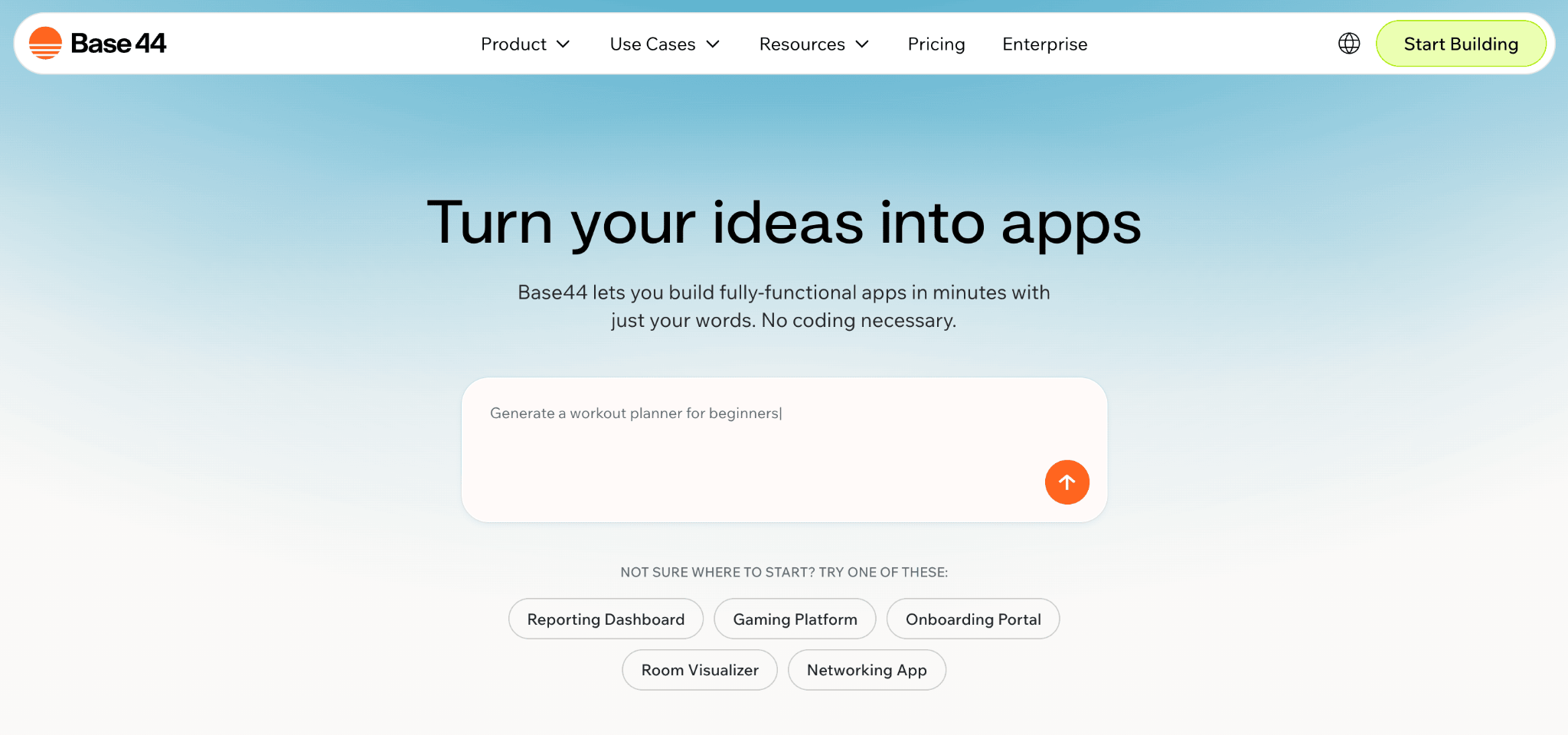
Base44 is a structured AI web app builder made for people who want results without technical decisions. If you’ve got an idea for a customer feedback tool, a booking system, or an internal task tracker, you can describe it in plain language and have a working app within minutes.
- Everything is generated from a single prompt. Base44 handles the interface, data storage, user login, and hosting – all at once. Where Replit gives you choices at every step (language, framework, database, deployment), Base44 makes those decisions for you. That’s a real advantage if you don’t have the background to evaluate technical trade-offs and just want to focus on what the app does.
- Outputs are consistent and predictable. Every Base44 app follows a clean structure with organized data, page navigation, and a polished interface. On Replit, the quality of what the agent produces depends heavily on how well you communicate with it and how familiar you are with the underlying technology.
- The backend comes ready out of the box. Data storage, user login, file uploads, and automatically generated connections to your app’s data are all included from the start. On Replit, you’d either set these up yourself or spend agent credits guiding the AI through building them.
- The onboarding is built for non-developers. Base44’s Idea Library gives you starter prompts organized by category (travel, finance, home management) so you’re never staring at a blank screen. Discussion mode lets you brainstorm with the AI before committing to a build, which keeps the process exploratory and low-pressure. These are genuinely beginner-friendly tools that make the first experience feel approachable.
- Design control is baked into the workflow. Before you even submit your first prompt, Base44 lets you pick from styling presets that shape your entire app’s visual identity. After generation, a visual editor lets you click any element to tweak colors, fonts, spacing, and layout without touching the chat.
What are the disadvantages of Base44 compared to Replit?
Base44 works well within its lane. But if your project grows beyond a prototype or your needs become more specific, you’ll start feeling the edges of the platform.
- Backend customization is off-limits. You can view and export the visual side of your code on paid plans, but the server-side logic stays locked inside Base44’s systems. If you need to handle recurring payments with custom rules, or you want to speed up a slow-loading page by optimizing how data is retrieved, those aren’t things you can fix yourself. That’s a real customization limit for anything beyond simple apps.
- Production reliability is a concern. In February 2026, Base44 had a platform-wide outage that took apps offline without warning. For a side project, that’s an inconvenience. For a business that depends on uptime, it’s a serious scalability concern. You’re entirely dependent on their servers with no way to set up backups or failover options.
- Complex logic gets messy. Multi-step processes, conditional rules, and sophisticated business logic become hard to manage as your app grows. If you’re building something like a platform with multiple user types, different permission levels, and usage-based billing, Base44’s structured approach starts working against you.
- The credit system has friction. Base44 uses separate credits for building (message credits) and running your app (integration credits). You can’t top up one without the other. On the free tier, 5 daily messages and 25 monthly total means you’ll burn through your allowance in a single focused session.
- Moving off the platform isn’t straightforward. You can export your project as a download or push it to GitHub (still in beta), but your stored data and server logic don’t come with you. Teams that outgrow Base44 often face costly rebuilds for advanced app development projects.
If you’re building a quick MVP, an internal dashboard for your team, or a simple customer-facing tool and you don’t plan to scale aggressively, Base44 still does that job faster than almost anything else. The limitations mainly bite when projects outgrow the prototype stage – that’s when you should start thinking about Base44 alternatives.
What are the advantages of Replit over Base44?
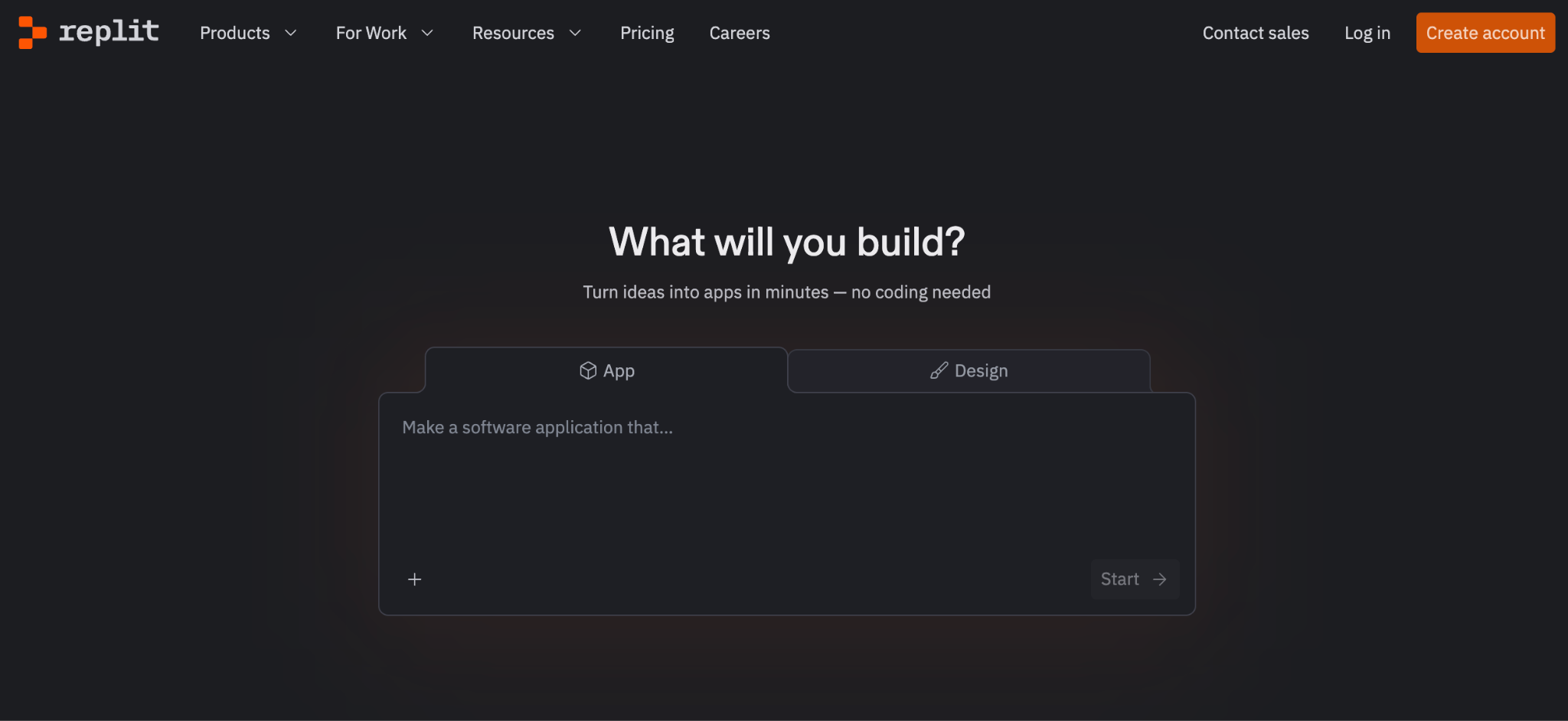
If you know how to code, or you’re willing to learn, Replit is in a different league. It’s a full AI coding environment with the kind of depth that lets you build practically anything.
- Full code access across 50+ languages. Replit gives you a browser-based workspace where you can write, edit, and test every line of your project. Want to build a Python backend with a React frontend and a database? You can do all of that in one place. Base44 doesn’t offer this level of control.
- The AI agent handles complex, multi-step tasks. Replit Agent doesn’t just generate an app from a prompt. It can set up data storage, install the tools your project needs, prepare your app for launch, and troubleshoot errors on its own. It’s more of a coding partner than a one-shot generator.
- Real collaborative development for teams. The Pro plan ($100/month) supports up to 15 builders in a shared workspace with pooled credits. That’s about $6.67 per person, with real-time collaborative development that lets multiple people work on the same project simultaneously. Base44 doesn’t have comparable team features.
- No ceiling on complexity. Custom connections to other services, advanced data processing, third-party integrations, complex business logic: Replit handles whatever you can build. If you’re developing a full-stack application with multiple components and custom user authentication, this is where you need to be.
- Proper version control with GitHub. Replit connects to GitHub for tracking changes, reviewing code, and maintaining a history of your project. For professional workflows where you need accountability and team collaboration, this matters.
What are the disadvantages of Replit compared to Base44?
Replit’s flexibility is its strength and its biggest source of friction. If you don’t need developer-grade tools, that power just gets in the way.
- The complexity works against you on simple projects. Even with AI assistance, you’re inside a full development environment with project files, a command line, settings files, and deployment options. If all you need is a task tracker or a booking page for your small business, that’s a lot of machinery for a simple job. Base44’s chat interface will feel dramatically simpler for anyone who’s never opened a terminal before.
- Setup takes longer than you’d expect. Say you want to build something straightforward, like a client intake form that saves responses to a database. On Base44, you describe it in a sentence and it’s done. On Replit, you’re choosing a language, organizing the project, connecting the data storage, and deciding how to launch it. Each of those steps is a potential stumbling block for non-technical users.
- Credits vanish fast. Replit Core includes $25/month in credits, but AI interactions, running your app around the clock, and data storage all draw from the same pool. Many active builders report spending $50 to $150 beyond the base subscription once usage charges kick in. And on Core, unused credits don’t roll over; they expire every billing cycle.
- The Agent can break what’s already working. This is a common frustration in user reviews: you ask Replit’s Agent to fix one thing and it quietly changes something else that was fine. It might change code you’ve already tested, override styling decisions, or introduce new bugs while solving the original one. The real sting is that you’re charged credits for those mistakes, and then charged again when you ask it to undo the damage.
None of this takes away from what Replit does well. If you’re a developer building a complex product, working with a team, or learning to code with serious AI assistance, it’s one of the best platforms out there.
The drawbacks mostly affect people who don’t need that level of power and would be better served by a simpler tool.
If that sounds like you, it’s worth exploring some Replit alternatives before committing.
What are the advantages of Hostinger Horizons over Replit and Base44?
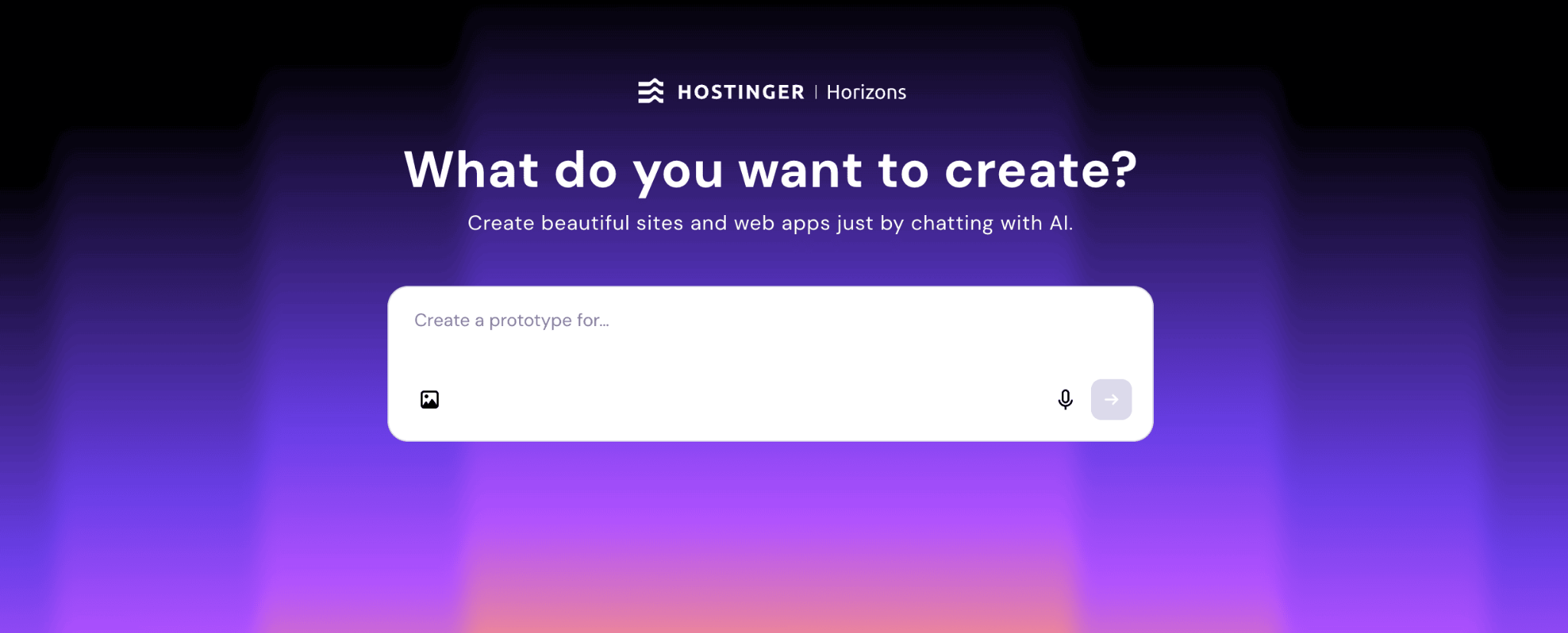
Hostinger Horizons occupies the gap between these two platforms. With this vibe coding tool, you get prompt-based simplicity similar to Base44, but with hosting you’d normally associate with a traditional web host.
While it doesn’t give you Replit’s full-code freedom, it offers more customization than Base44 without requiring you to manage servers or deployment pipelines.
- Everything ships together. Hosting, SSL, CDN, and a professional email are bundled into every plan. There’s no separate hosting bill, no third-party security certificate setup, and no domain configuration headaches. You make your web app and publish it from the same interface.
- The entry price is lower. Starting at ₹989.00/month, Horizons costs less than both Replit Core ($20/month) and Base44 Starter ($20/month). The Starter plan adds ecommerce, priority support, and a custom domain, which is still cheaper than Base44’s $40/month Builder plan where custom domains first appear.
- Iteration doesn’t punish you. On Replit, every agent interaction costs credits, including when you’re correcting the AI’s mistakes. Horizons uses a simpler credit-per-message model. The auto-fixer handles common errors without consuming additional credits, so a broken layout or a failed feature doesn’t cost you twice.
- The prompt guidance actually helps. Horizons has a planning agent that asks targeted questions before generating anything. Instead of needing to write the perfect prompt yourself, the tool helps you build one. This is especially valuable if you’re new to building with AI and aren’t sure how to describe what you want.
- It’s backed by established infrastructure. Hostinger serves over 4 million clients globally. Your app runs on their proven hosting setup rather than a startup’s managed environment. That doesn’t guarantee zero downtime, but it’s a different risk profile than depending on a platform that launched more recently.
- Maintenance stays minimal. Since hosting, security, performance optimization, and email are all managed for you, there’s less to think about after launch. Compare that to Replit, where keeping an app running 24/7, storing data, and handling traffic spikes all need ongoing attention and budget.
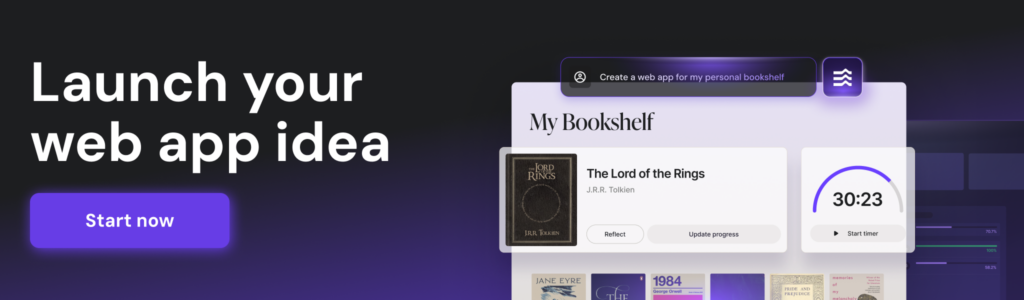
It’s worth noting that Horizons is newer than both Replit and Base44, so its feature set is still evolving. Power users who need deep code-level control or complex third-party integrations may eventually want more than it currently offers.
But for the majority of builders who want to create, launch, and maintain a web app without juggling multiple services, it covers a lot of ground that the other two don’t.
Which one is more beginner-friendly: Replit or Base44?
Base44 is the easier starting point. Its entire workflow revolves around a chat interface where you describe what you want, and the AI builds it.
The Idea Library gives you pre-written prompts organized by category, and the discussion mode lets you talk through your concept before committing to generating anything.
There’s no file system, no terminal, no settings files. For a first-time creator, it feels like having a conversation rather than writing software.
Replit rewards coding experience. The AI agent can shoulder a lot of the work, but understanding what it’s doing helps you get better results and fix problems when they come up.
Someone with even basic coding knowledge will find Replit’s AI onboarding and in-workspace assistance genuinely empowering. But as a beginner AI app builder with zero technical background, Base44 has a meaningfully lower floor.
Is Hostinger Horizons easier to learn than Replit and Base44?
For most people, yes. Like Base44, Horizons uses a prompt-based workflow where you describe your app and the AI generates it. The difference is in the details that smooth out the experience.
The planning agent is the big one. Instead of requiring you to write a well-structured prompt from scratch, it asks you questions and builds one collaboratively. That alone removes a significant barrier for anyone who isn’t sure how to describe technical requirements to an AI.
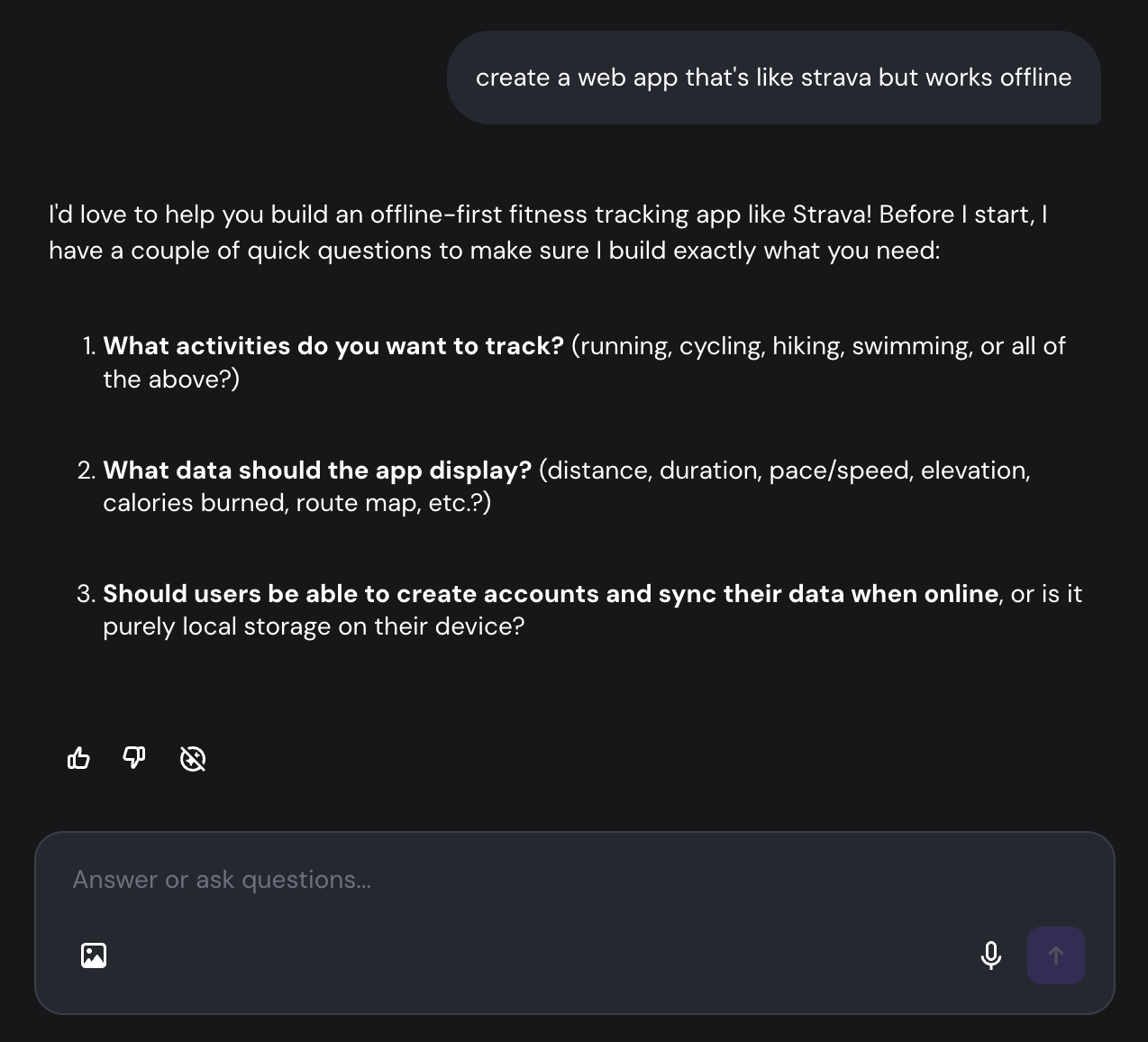
Then there’s the automatic error fixer. When something breaks during the build, Horizons catches common issues and resolves them without asking you to understand what went wrong.
On Replit, debugging is part of the process. On Base44, fixing an error means spending another message credit. Horizons handles it in the background.
There’s also no daily message cap on any plan, just a monthly credit allowance. That might sound minor, but it removes the anxiety of “wasting” a prompt on something experimental.
You can iterate freely, which is exactly what beginners need to build confidence. If you’re just getting started, understanding website setup basics can also help you see the bigger picture of what goes into launching a project.
Which is more flexible: Replit or Base44?
Replit gives you full development flexibility, and by a wide margin. Say you’re building a dashboard that needs to pull live inventory data from a supplier, cross-reference it with your own sales numbers, and display everything in a custom chart that updates in real time.
On Replit, you can connect to multiple data sources, write the logic that ties them together, and design the exact interface you want. You have complete control over both the visual design and the underlying logic, in any language and any framework.
Base44 can’t do that. The AI generates apps following a set structure, which is why it’s so fast, but it also means you can’t deviate much from the default patterns.
You could build a basic dashboard with the data Base44 provides, but pulling from external sources, combining datasets, or creating custom visualizations would require workarounds the platform wasn’t designed for.
How does Hostinger Horizons compare with Replit and Base44 in terms of customization?
Horizons sits in the middle. It starts with the same prompt-based simplicity as Base44, but higher-tier plans unlock a code editor where you can make direct adjustments.
You won’t get Replit’s full-code freedom, but you can go meaningfully beyond what Base44 allows.
In practice, this means you can build a customer portal, adjust the styling to match your brand, tweak the layout, and modify specific behaviors without needing to manage a full codebase.
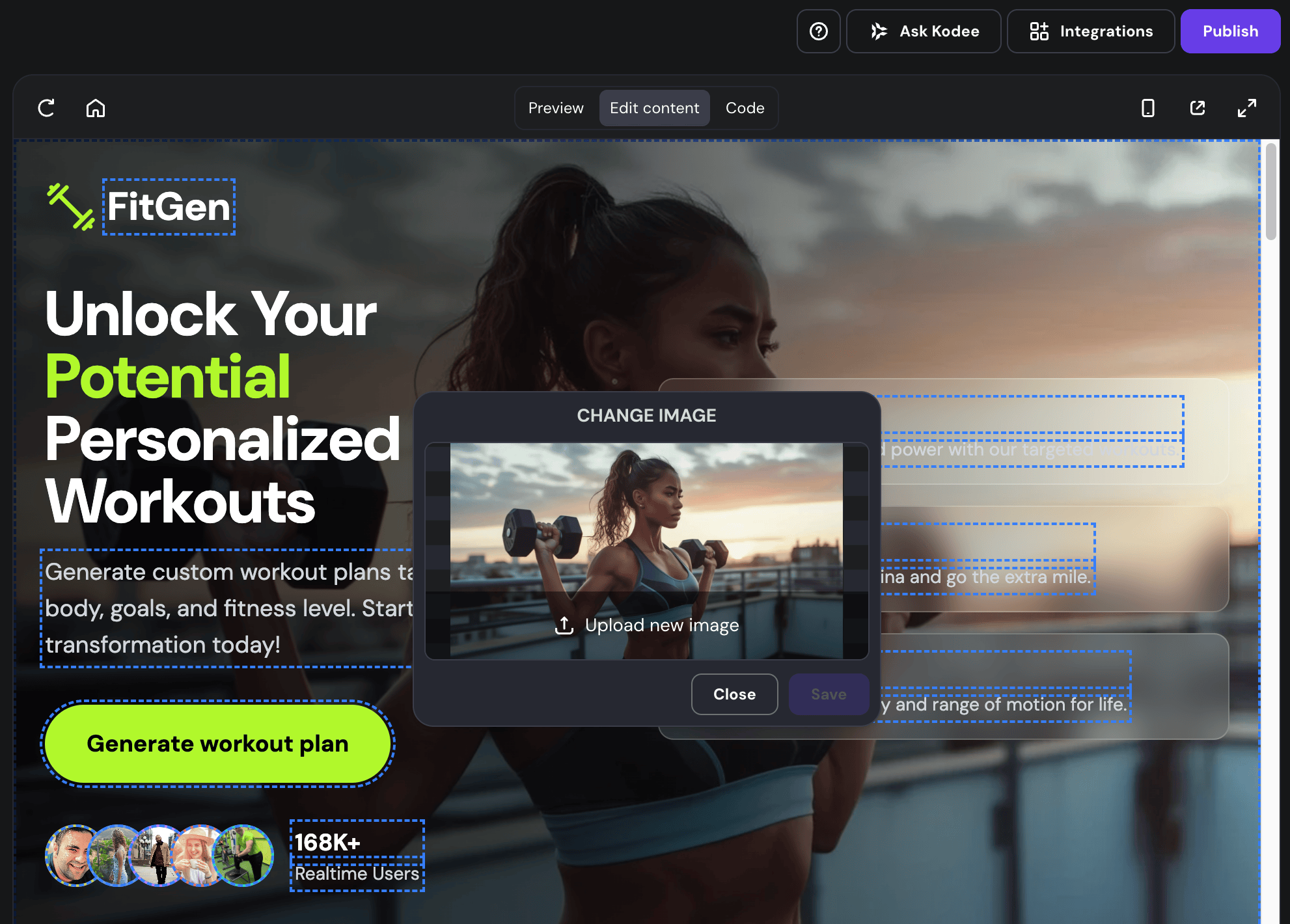
If you want to make a time tracking web app that looks and feels like your existing website, or you want your product page to display information in a specific way, Horizons gives you enough control to get there without asking you to become a developer in the process.
Which is better for scalability: Replit or Base44?
This matters most when your app starts getting real usage. Imagine you build a simple project management tool. With 50 users, both Replit and Base44 will run it just fine. But what happens when that number hits 5,000?
On Replit, you have options. You can set your app to automatically handle traffic spikes by adding more computing power when demand increases.
You can fine-tune how data is stored and retrieved so pages keep loading quickly as your user base grows. You can also choose exactly how much memory and processing power your app gets.
That control means you can scale deliberately. The tradeoff is that those scaling features all cost credits, and costs can spike without warning during busy periods. You’ll need to actively monitor usage and manage your budget.
On Base44, you’re largely at the mercy of the platform. Your app runs on their servers, and you can’t adjust how resources are allocated.
If 5,000 users hit your app at the same time and pages slow down, there’s no setting to change and no optimization to make on your end.
The February 2026 outage is a good example of the broader risk: when the platform has a problem, every app goes down, and all you can do is wait.
Base44 works well for prototypes, internal tools, and early-stage products where consistent website performance at scale isn’t critical yet.
How does Hostinger Horizons compare with Replit and Base44 in terms of scalability?
In that same 50-to-5,000-user scenario, Horizons handles the growth without requiring you to configure anything.
You won’t get the fine-grained control that Replit offers a developer who wants to optimize every detail, but you also won’t hit the platform-level ceiling that Base44 imposes.
The CDN helps pages load faster for users in different locations, and the underlying infrastructure is managed by a company with a longer track record than either competitor.
For projects that need to grow steadily without requiring you to learn server management, Horizons offers a middle path: more room to scale than Base44, with far less operational work than Replit.
Which one is cheaper: Replit vs Base44?
For solo builders with simple projects, Base44 and Replit start at the same price point. But once you need a custom domain or higher credit limits, Base44 gets more expensive. Replit gets costly for heavy AI users too, but teams benefit from the Pro plan’s flat structure.
The sticker prices are just the starting point. How each platform charges you in practice makes a big difference to your actual costs.
Replit Core costs $20/month and includes $25 in usage credits. Those credits cover AI interactions, computing power, app hosting, and data storage.
Once they’re gone, you’re on pay-as-you-go billing, which is where things get unpredictable. Active creators commonly spend an extra $50 to $150 per month. The Pro plan at $100/month for up to 15 builders is a better value for teams, and it includes credit rollover.
Base44 Starter costs $20/month annually with 100 message credits and a separate pool of integration credits. The Builder plan at $40/month adds custom domains, code export to GitHub, and more credits.
The dual-credit system (one pool for building, another for running your app) means you’re tracking two budgets. If your app gets real traffic and uses features like email sending or file uploads, integration credits can run out before your message credits do.
How does Hostinger Horizons compare to Replit and Base44 in terms of pricing?
Hostinger Horizons starts at ₹989.00/month for the Explorer plan, which is the lowest entry price of the three. The Starter plan adds ecommerce features, priority support, and a custom domain. Hobbyist and Hustler serve power users and agencies with higher credit limits.
What sets Horizons apart is what’s bundled in. Every plan includes hosting, SSL, CDN, and a professional email address, with higher tiers that include a free domain for the first year.
On Replit, hosting eats into your credits. On Base44, a custom domain requires the $40/month Builder plan. Horizons also avoids dual-credit complexity: it’s one credit per message, no separate charges when users interact with your app.
There’s also a 30-day money-back guarantee and a free 7-day trial with 5 messages. If you’re unsure whether AI app building is right for your project, that’s enough to test the workflow before committing.
Which platform makes it easier to deploy: Replit or Base44?
Base44 has the simpler deployment of the two. When you build an app, it’s instantly hosted and shareable with a live link. No configuration, no choosing between deployment types, no server decisions.
Replit offers more options: it can automatically scale your app based on traffic, run it on a dedicated server, or host it as a simple static page.
That flexibility is valuable for production apps with specific performance needs, but it also means you need to understand what each option does and set it up correctly.
For developers, that’s routine. For non-technical users, it’s a wall.
Something worth noting is that both platforms have limitations for serious production use. Base44’s hosting is locked to their platform with limited control. Replit’s hosting consumes credits continuously, and costs can spike with traffic.
How does Hostinger Horizons compare with Replit and Base44 for deployment?
This is where Horizons stands out. Publishing is a one-click action, and there’s no infrastructure to configure on your end.
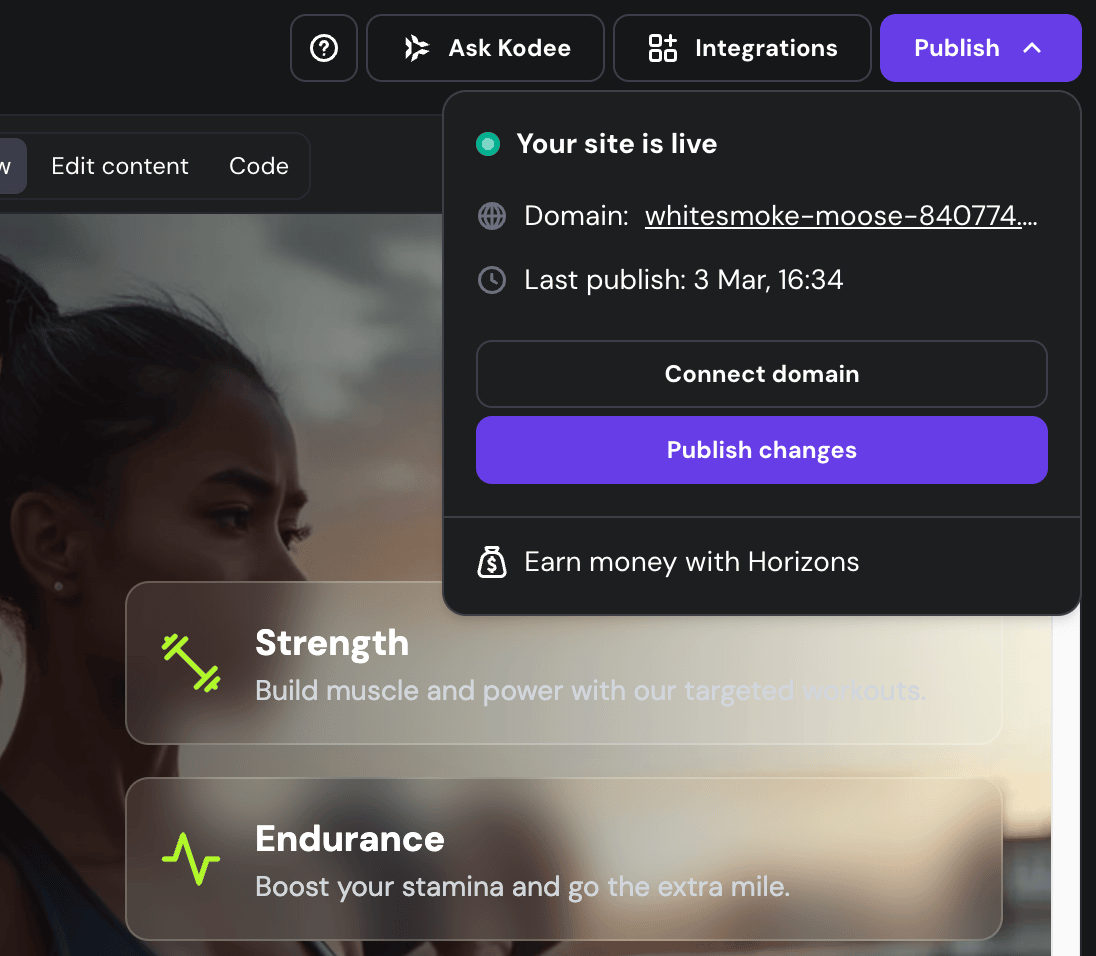
What makes it more useful than Base44’s instant deploy is what comes with it: version history with one-click rollback to any previous state, plus a testing environment so you can preview changes before pushing them live.
You get the speed of Base44’s deployment with safeguards that Base44 doesn’t offer, and without the manual setup that Replit requires.
There’s also a practical cost difference. On Replit, keeping a deployed app running consumes credits around the clock, even when nobody’s using it.
On Horizons, hosting is included in your plan. Your published app stays live whether you’re actively editing it or not, and you’re not watching a credit meter tick while it sits there.
For anyone shipping a real product to real users, that predictability matters.
Which should you choose to start vibe coding: Replit, Base44, or Hostinger Horizons?
All three platforms let you vibe code with AI, but they’re built for different people at different stages.
The right choice depends on three things: your technical comfort level, how much you want to spend (including hidden costs), and how much post-launch maintenance you’re willing to take on.
Choose Replit if you have development experience and want full code control. It’s the right pick for building complex apps with custom backends, working in a team, or learning to code with AI assistance. Just budget for credit overages (especially with heavy Agent use) and be comfortable managing a developer-oriented workflow.
Choose Base44 if you’re non-technical and need a working prototype fast. It’s ideal for validating a startup idea, building an internal tool for your team, or spinning up a client demo in an afternoon. Just know that customization limits and platform reliability will eventually matter if the project takes off.
Choose Hostinger Horizons if you want AI-driven simplicity with real hosting infrastructure behind it. The bundled hosting, lowest entry price, and straightforward credit model make it a practical choice for solopreneurs, small businesses, and freelancers. You can build a customer-facing web app, publish it on a custom domain, and manage everything from one place.
Whatever you pick, the fastest way to figure out if a platform fits is to actually build something small on it.
Start with a single feature or a basic version of your idea, see how the workflow feels, and then decide whether to commit.
All of the tutorial content on this website is subject to Hostinger's rigorous editorial standards and values.

Simon is a dynamic Content Writer who loves helping people transform their creative ideas into thriving businesses. With extensive marketing experience, he constantly strives to connect the right message with the right audience. In his spare time, Simon enjoys long runs, nurturing his chilli plants, and hiking through forests. Follow him on LinkedIn.


