How to sell furniture online in India in 6 steps
Mar 10, 2026
/
Jordana A.
/
14 min Read

To sell furniture online in India, choose a sales model, complete business and GST registration, source quality inventory, set profitable pricing in ₹, build a mobile-optimized ecommerce store, and manage nationwide shipping and returns efficiently.
India’s growing ecommerce adoption, rising housing demand, and mobile-first buying behavior create strong opportunities for furniture sellers. Manufacturers, resellers, designers, and dropshippers can reach customers across states without operating a physical showroom.
There are six core steps to building a profitable online furniture business:
- Select your business model – marketplace selling, direct-to-consumer website, manufacturing, or reselling.
- Complete legal and tax setup – business registration, GST compliance, and payment systems.
- Source and manage inventory – partner with reliable Indian suppliers or production hubs.
- Calculate margins and set competitive prices – account for materials, logistics, commissions, and COD risks.
- Build and design your online store – create a fast, mobile-friendly ecommerce website.
- Handle fulfillment and customer service – manage shipping, returns, and buyer communication effectively.
Executing these steps systematically allows you to scale beyond marketplaces and build a sustainable furniture brand in India.
1. Choose the right furniture business model
First things first, let’s brainstorm what kind of furniture you want to sell and who your target audience is. We’ll help you choose the right business model and define your niche, so you can build a strong foundation for your brand.
Furniture business models explained: maker, designer, reseller, and more
The best furniture business model is the one that fits your starting budget, available logistics, and potential customers. Here are the most common furniture business models and their pros and cons.
Furniture maker
If you have a knack for carpentry and the resources to make furniture yourself, this is just the model for you. You get full control over your products, allowing you to offer custom pieces or keep an exclusive lineup ‒ just like Fabian Spiegel (@fabianspiegel.design on Instagram) does with their handcrafted furniture.
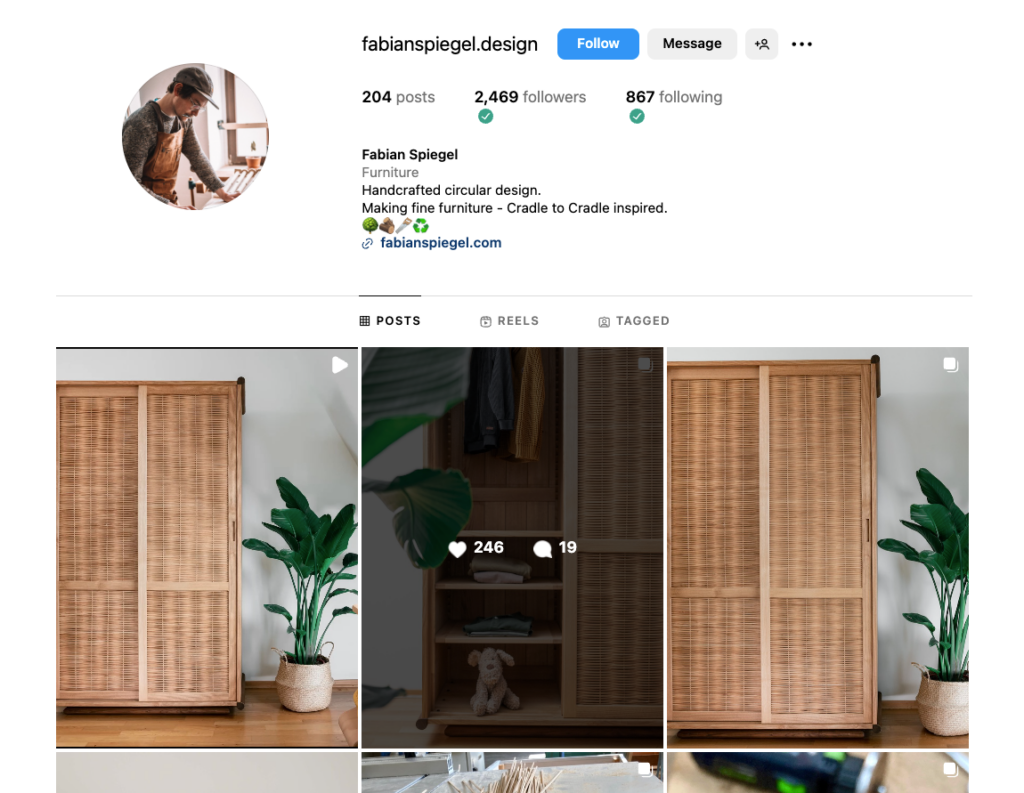
Unique furniture usually sells for more since it’s one of a kind. With the right production flow and marketing strategies, you can drive demand and earn good money.
The downside is that you’ll have to find and buy your own materials, track inventory, and handle shipping all on your own. Balancing making furniture and growing your business can be difficult since both take a lot of time and effort.
Furniture designer
This business model suits those who just want to focus on design. You create the designs and choose the materials, then work with builders or manufacturers to bring your vision to life.
Philippe Starck (www.starck.com), the well-known French architect and designer, is one of the big names using this model. He handles the design and teams up with manufacturers like Kartell and Alessi, who take care of production and shipping.
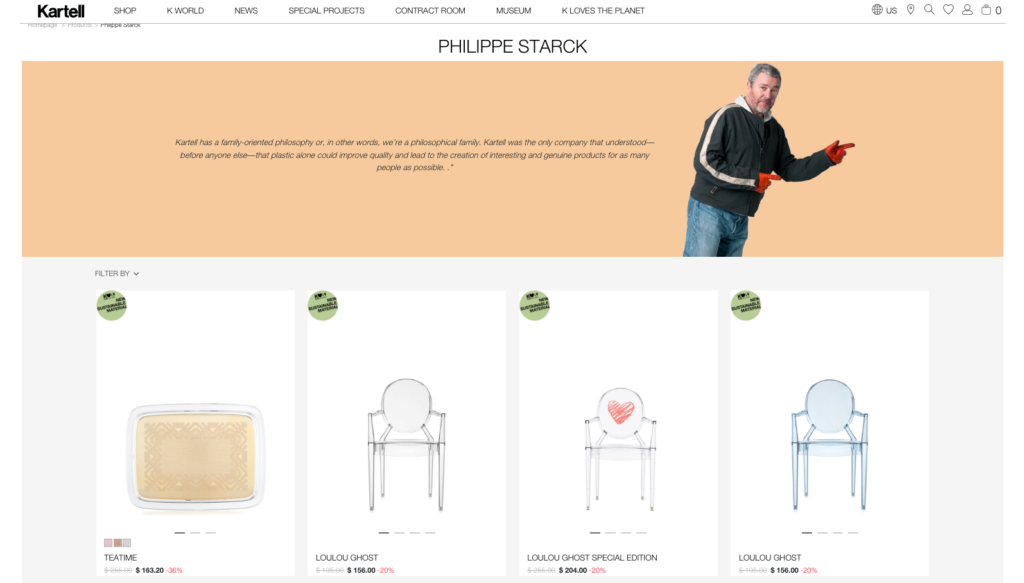
Exceptional design skills and knowledge of materials are essential, but so are strong communication and project management. Much of your business relies on others’ expertise, so networking with the right suppliers, builders, manufacturers is key to success.
That said, relying on others means you have less control over production quality and timelines. Delays or mistakes by manufacturers can impact your reputation. Also, profit margins might be lower since you’re sharing revenue with production partners.
Reseller
Can’t design or build your own furniture? You can still start a furniture business by selling other people’s products and curating them into a unique, attractive collection.
For this model, the easiest way to source products is by buying directly from brands and manufacturers. For vintage furniture, it’s more hands-on ‒ shopping at flea markets or attending auctions ‒ and usually requires space to store inventory.
Creativity is a key skill that can make or break your business. Whether you’re spotting the latest trends or finding hidden gems from lesser-known furniture makers, having a good eye for what will sell can make all the difference. That’s why many resellers also work as furniture consultants.
For example, ducknest (ducknest.com.au) offers personalized consultations to help clients choose curated European furniture packages. They carefully choose luxury pieces from exclusive brands and guide customers through delivery, installation, and styling. This approach makes it easier for clients to get a cohesive, high-quality furniture setup without the hassle of managing every detail themselves.

Dropshipper
This model is similar to reselling but without the hassle of managing inventory or shipping. You partner with manufacturers who handle all the logistics, so you can focus on marketing and selling the products.
Dropshipping is popular because it has low startup costs and less risk, making it great for new entrepreneurs. However, as with designers and resellers, if your partners don’t maintain high quality or fail to fulfill orders on time, it can damage your brand.
Should you sell furniture on marketplaces or your own website in India?
You can sell furniture online in India through marketplaces like Amazon and Flipkart or by building your own ecommerce website. While marketplaces help you start quickly, your own website gives you higher profit margins, brand control, and long-term growth.
Most Indian furniture sellers follow one of these three paths:
Selling on online marketplaces (fast entry)
Marketplaces such as Amazon, Flipkart, and Pepperfry allow you to list products and reach existing buyers immediately. After registering as a seller (usually requiring a PAN card and GST registration), you can upload listings and either manage delivery yourself or use the platform’s logistics services.
This option helps you:
- Start selling quickly
- Access built-in traffic
- Use marketplace logistics support
- Avoid initial website setup
However, marketplaces typically charge 10–25% commission per sale, plus additional fees for logistics or advertising. You also compete with many sellers offering similar products, which often leads to price-based competition.
Marketplaces are useful for testing demand. But they don’t help you build a strong independent brand.
Selling through classifieds and social platforms
Platforms like OLX, Quikr, and Facebook Marketplace are commonly used in India for second-hand furniture. This method works well if you are selling refurbished, vintage, or personal furniture items.
You’ll need:
- Clear photos
- Accurate condition details
- Competitive pricing (usually 10–30% lower than new items)
- Readiness to negotiate
There are no high commissions, but you handle communication, delivery coordination, and payments yourself. This approach is suitable for occasional sellers rather than long-term business growth.
Selling through your own ecommerce website (long-term growth model)
Building your own furniture website gives you full control over pricing, branding, and customer relationships. Unlike marketplaces, you don’t lose a percentage of every sale to commissions, which significantly improves your margins over time.
With your own ecommerce store, you can:
- Set your own pricing strategy
- Offer custom-made or made-to-order furniture
- Build a brand customers remember
- Collect customer emails for repeat sales
- Run ads that send traffic directly to your store
- Avoid competing side-by-side on the same product page
Many Indian sellers start on marketplaces to validate demand, then launch their own website to increase profitability and reduce dependency.
If your goal is to build a serious furniture business, not just make occasional sales, owning your website gives you more control, stronger brand positioning, and better long-term returns.
How to define your furniture niche and product focus
There are different styles of furniture to tap into, but specializing in one niche can make your business unique. A niche focuses your efforts on a specific group of customers and makes your marketing more effective. Plus, it’s easier to become known as an expert in your niche, which builds trust and loyalty.
Picking a niche that aligns with your brand, expertise, and passion helps keep motivation high and builds credibility. For profitability, the ideal niche should have steady or growing customer interest and long-term appeal. Thriving in a niche with less competition might seem easier, but it could also mean the customer base is too small to sustain your business.
Also, consider pricing and costs to make sure the niche is financially viable. Some niches have high profit margins but expensive materials, while others are only popular in certain areas. You can answer these questions through market research.
Here are some profitable furniture niches to consider:
- Eco-friendly furniture. Caters to the rising demand for environmentally friendly options made from recycled or renewable materials.
- Small-space or multi-functional furniture. Perfect for people living in apartments or tiny homes who need space-saving solutions.
- Luxury and designer furniture. Targets buyers looking for high-end, exclusive pieces.
- Antique furniture. Popular among collectors and people who love classic styles.
- Office furniture. As more people split time between home and the office, the need for stylish, ergonomic furniture that fits both environments is growing.
- Outdoor furniture. For customers who want to create cozy outdoor living spaces.
Building a strong furniture brand identity and trademark basics
Your brand identity is how customers recognize and remember your furniture business. It includes your business name, logo, colors, style, and the overall feeling your brand gives. Just like having a niche, a strong brand helps you stand out and build loyal customers.
To protect your brand, consider registering a trademark. Whether you design, build, resell, or dropship furniture, a trademark lets you legally stop others from copying your name or logo. It adds value to your business if you ever want to sell or grow, while also building customer confidence by showing you’re professional and trustworthy.
2. Lay the legal and financial foundations
Before selling furniture online in India, register your business, comply with tax regulations, and set up proper financial systems. These steps apply whether you sell through marketplaces or your own ecommerce website.
Start by choosing a simple business structure. Most small furniture sellers begin as a sole proprietorship because it’s affordable and easy to manage. If you plan to scale, you can later register as an LLP or Private Limited company. Registering under Udyam (MSME) is also useful, as it helps you access government schemes and business loans.
GST registration is mandatory if your annual turnover exceeds ₹40 lakh (for goods, in most states). However, if you sell on marketplaces like Amazon or Flipkart, you generally need a GSTIN regardless of turnover. GST allows you to sell across states and claim input tax credit on raw materials and logistics.
Open a separate business current account to keep finances organized. This improves bookkeeping, tax filing accuracy, and credibility with suppliers and marketplaces.
If you build your own website, integrate Indian payment gateways such as Razorpay or PayU to accept UPI, cards, and net banking. You can also offer Cash on Delivery (COD), but factor in higher return-to-origin (RTO) risks. Marketplace payouts are usually released within 7–10 days, depending on return policies.
Depending on your operations, you may also need a trade license, workshop approvals, or basic insurance to protect against transit damage and inventory loss.
Calculating margins and setting competitive prices
To price furniture profitably in India, calculate all direct and indirect costs before applying a markup.
For new furniture, a common benchmark is 2.5x to 2.75x your production or wholesale cost.
For example, if a dining table costs ₹15,000 to produce, your selling price may range between ₹37,500 and ₹41,250 to cover overhead and marketing expenses.
Used furniture is typically priced at 60–80% of the current new price, depending on condition and demand. On platforms like OLX or Facebook Marketplace, leave room for negotiation, as buyers often expect price flexibility.
When setting prices, account for:
- Material costs (teak, sheesham, engineered wood)
- Labor and finishing
- Packaging and interstate logistics (₹1,000–₹5,000+ depending on size and distance)
- Marketplace commissions (10–25% per sale)
- Potential COD returns
Avoid underpricing just to compete. Instead, highlight quality, durability, customization, and solid wood construction to justify your pricing and protect margins.
3. Source and manage your furniture inventory
You can source furniture inventory in India by manufacturing it yourself, partnering with local furniture hubs, or buying from verified wholesalers on B2B platforms like IndiaMART. Managing inventory requires organized storage, humidity control, and accurate stock tracking.
Your sourcing strategy depends on your business model.
If you manufacture furniture, source raw materials such as plywood, MDF, teak, or sheesham from local timber and hardware markets to reduce transportation costs. Local sourcing improves margins because interstate freight for wood increases material costs by 8–15%.
If you resell furniture, partner with established Indian production clusters such as:
- Jodhpur (Rajasthan) for solid wood furniture
- Saharanpur (Uttar Pradesh) for carved wooden designs
- Moradabad for metal and decorative pieces
You can also find suppliers through IndiaMART or TradeIndia, where manufacturers list bulk-ready inventory. Always request samples, check finishing quality, confirm minimum order quantities (MOQs), and negotiate pricing before placing large orders.
If you use a dropshipping model, work with domestic suppliers who can deliver large items safely. Furniture is heavy and bulky, so international dropshipping usually reduces margins due to high shipping costs and longer delivery times.
Inventory management directly affects profitability. Furniture occupies significant space, so plan storage carefully.
Start with a small workshop, garage, or rented godown if order volume is low. As sales grow, organize storage by:
- Separating ready-to-ship and made-to-order pieces
- Protecting wood from moisture during monsoon season
- Using padding and vertical racks to prevent scratches
- Labeling products clearly for faster dispatch
Manual tracking works initially, but inventory tools such as Zoho Inventory help prevent overselling and stock miscalculations once orders increase.
Efficient sourcing improves margins. Organized inventory management improves delivery speed and reduces damage-related losses.
4. Build a successful online furniture storefront
To build a successful online furniture storefront in India, choose a domain name, set up reliable hosting, add optimized product listings, configure payments and shipping, and test the complete buying journey before launch.
Follow these steps to launch your furniture website:
- Choose your domain name and register it. Pick a name that’s easy to remember and matches your brand.
- Choose and set up your hosting and website platform. The hosting provider stores your website’s data, while the platform provides the tools for designing and managing your store’s layout, products, and transactions.
- Add your products. Upload clear product photos, write detailed descriptions, and set prices.
- Organize your product categories. This is especially important for furniture businesses with a large catalog. Clear, intuitive categories allow visitors to find products quickly, improving their shopping experience and encourage purchases.
- Set up payment and shipping options. Offer payment methods your audience uses and clear shipping details.
- Create essential pages. Include About, Contact, FAQ, and Privacy Policy pages to build trust.
- Test your store. Make sure everything works properly throughout the customer journey, from browsing to checkout.
- Launch your store and start marketing. Start promoting your online store through social media, email marketing, and other marketing strategies to drive traffic to your site.
Keep in mind that the exact steps might vary depending on the platform you choose. For example, with Hostinger, purchasing an annual hosting plan includes a free domain name for the first year. This means Step 1 (registering your domain) happens at the same time as Step 2 (setting up your hosting account).

Best ecommerce platforms for selling furniture online
The best ecommerce platforms for selling furniture online in India are Hostinger Website Builder, WooCommerce, Shopify, BigCommerce, and Squarespace, based on pricing, scalability, and ease of use.
The key to creating an online store by yourself is choosing the right platform. While many options are available, we’re focusing on platforms that give you the freedom to fully manage and customize your store, leaving out marketplaces like Amazon and Etsy.
Here are the five best ecommerce platforms for building your furniture store, along with comparisons to help you weigh the pros and cons:
| Platform | Scalability | Ease of use | Pricing |
| Hostinger Website Builder | Offers multiple hosting options for scaling performance, but third-party integrations are still limited | Beginner-friendly with AI setup and drag-and-drop editor | Starts from ₹199/month |
| WooCommerce | Highly scalable and customizable with plugins and themes | Requires WordPress knowledge and separate hosting setup | Plugin is free; hosting costs vary |
| Shopify | Provides tools for omnichannel selling, though access depends on the chosen plan | Easy setup but transaction fees may apply | Starts from approx. ₹1,500+/month (converted from USD) |
| BigCommerce | Great scalability, built for large businesses with complex needs | Requires some technical familiarity | Starts from approx. ₹2,400+/month (converted from USD) |
| Squarespace | Scalable for small to medium businesses, with custom website solutions for growth | Drag-and-drop builder, limited advanced ecommerce flexibility | Starts from approx. ₹1,900+/month (converted from USD) |
For new furniture sellers in India, ease of setup and cost efficiency matter most. Platforms with lower monthly fees and built-in ecommerce tools reduce upfront investment.
If you want full control over branding, payments, and shipping without marketplace commissions, building your own ecommerce store is the most scalable approach. Choose a platform that supports Indian payment gateways, mobile responsiveness, and flexible shipping configuration.
Designing and theming your online furniture store for maximum impact
Learning how to build an online furniture storefront involves planning the design. A well-designed store not only looks great but also enhances the user experience and builds trust.
Since most Indian users shop on mobile devices, choose a responsive theme that loads quickly on slower internet connections. A mobile-first design improves user experience and reduces bounce rates.
Focus on these key points to make your store’s design impactful:
- Aesthetics and usability. Use clear calls to action and high-quality product images to capture attention, but remember to optimize all visuals so they don’t slow down your site. Include a search bar and a simple menu to improve navigation, allowing customers to quickly find what they’re looking for.
- Color psychology. Colors can influence emotions and buying decisions. For furniture stores, neutral tones like beige or gray create a sense of comfort and elegance, while vibrant colors can add energy to special promotions or specific sections. Once you’ve chosen your color palette, keep it consistent throughout the store to reinforce your brand identity.
- Layout. Avoid overcrowding your pages with too many products or details. Instead, use whitespace to give each item room to stand out and make your site feel more inviting. Choose a responsive design for a smooth experience on any device.
- Accessibility. Make sure your website is accessible to all users, including those with disabilities. Pick readable fonts with high contrast against the background, and include alt text for images to accommodate customers using screen readers.
5. Use marketing strategies to drive online furniture sales
Offering quality furniture on a well-designed online store won’t do you much good unless people know about it. You’ll need to use a mix of ecommerce marketing strategies across different channels to spread the word.
Implementing search engine optimization (SEO) practices will help your store appear in search results, allowing people to easily find your products. Combine SEO with social media, email marketing, and paid ads to keep customers engaged with updates, promotions, and new launches.

Consider adding ecommerce content marketing to enhance your SEO. Helpful content like product guides, decorating tips, or customer reviews boost SEO, establish credibility, and build trust with your audience. Segment your customers by factors like shopping behavior or location to make your marketing efforts more personalized and relevant.
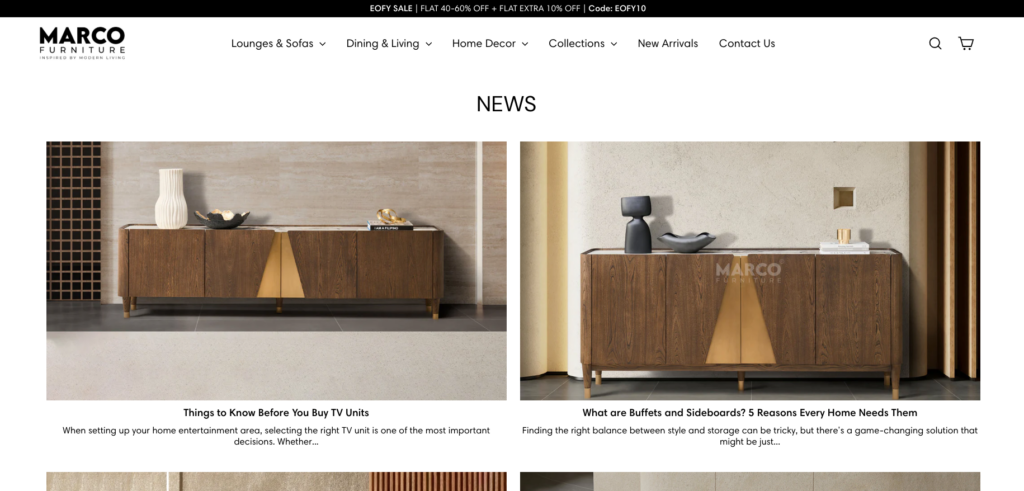
As you plan, don’t forget to set clear goals and manage your ecommerce marketing budget. Whether it’s on ads, content, or other channels, track what’s working so you can fine-tune your efforts.
Did you know?
Hostinger makes starting a newsletter campaign easy with Reach, our new AI-powered email marketing tool.
6. Fulfill orders and ship furniture
To fulfill and ship furniture successfully in India, choose between self-fulfillment or marketplace-managed logistics, use reliable carriers for bulky deliveries, and implement protective packaging to reduce damage and returns.
Your fulfillment strategy depends on whether you sell through marketplaces or your own website.
If you sell on marketplaces like Amazon or Flipkart, you can use their fulfillment services. Under models such as Fulfilled by Amazon (FBA) or Flipkart Fulfillment, you send inventory to their warehouse, and the platform handles storage, packing, delivery, and customer support. Alternatively, options like Amazon Easy Ship allow the marketplace to pick up products from your location and deliver them to customers.
Marketplace fulfillment simplifies operations, but it includes storage fees, shipping charges, and commission (typically 10-25% per sale). Payments are usually settled within 7-10 days, depending on the return window and platform policy.
If you sell through your own ecommerce website, you manage logistics directly. In India, commonly used carriers for furniture and large parcels include:
- Delhivery
- Blue Dart
- DTDC
- Porter (for intra-city bulky transport)
- VRL Logistics and other freight services for interstate shipping
Large furniture items often require freight transport rather than standard courier services. Shipping costs can range from ₹1,000 to ₹5,000 or more, depending on size, weight, and distance.
Proper packaging is essential. Use:
- Foam padding and corner protectors
- Thick corrugated boxes
- Stretch wrapping for wooden surfaces
- Custom crating for high-value solid wood pieces
Strong packaging reduces transit damage, which directly protects your margins and brand reputation.
You should also clearly define delivery timelines. Interstate furniture shipping may take 4–10 days, depending on location. Transparent communication reduces disputes and refund requests.
As your order volume increases, negotiate bulk shipping rates with carriers. Regular shipping partnerships can lower per-order logistics costs and improve profitability.
Efficient fulfillment improves customer satisfaction, reduces returns, and protects your long-term margins.
Did you know?
With Hostinger Website Builder, you can set unlimited shipping zones and offer up to 25 options per zone. This flexibility lets you tailor shipping strategies by region, speed, and price, helping you serve customers globally while managing costs.
Handling returns and customer service
To handle returns and customer service effectively in India, create a clear return policy, manage Cash on Delivery (COD) risks, respond quickly to buyer concerns, and communicate delivery expectations transparently.
Furniture returns are costly because items are bulky and expensive to transport. A clear and visible Return and Refund Policy reduces confusion and protects your margins.
Your policy should clearly state:
- Return eligibility window (for example, 7 days after delivery)
- Conditions for damaged or defective products
- Who bears return shipping costs
- Refund processing timelines
If you offer Cash on Delivery (COD), factor in potential Return-to-Origin (RTO) losses. In some regions, COD orders have higher cancellation or refusal rates. Since furniture shipping is expensive, frequent RTOs can significantly impact profitability.
To reduce unnecessary returns:
- Provide accurate dimensions and weight details
- Include multiple product images
- Mention assembly requirements clearly
- Share realistic delivery timelines
Proactive communication lowers disputes.
For marketplace sellers, follow the platform’s return guidelines strictly. Marketplaces often favor buyer protection, so proper packaging and documented dispatch proof help protect your seller rating.
Customer service speed directly affects trust. Respond to inquiries quickly through:
- WhatsApp Business
- Live chat
- Phone support (if available)
Furniture buyers often ask about customization, material type, delivery timelines, and installation support. Clear answers improve conversion rates and reduce post-purchase complaints.
To improve ecommerce customer experience, follow up with customers after they receive their products. Send them care tips or helpful advice for maintaining their furniture. This post-purchase engagement completes their buying experience, boosts loyalty, and shows you genuinely care about their satisfaction.
Efficient return handling and responsive customer service improve customer satisfaction and protect your long-term reputation.
Exploring the future of selling furniture online
The future of selling furniture online in India is driven by urbanization, growing ecommerce adoption in Tier 2 and Tier 3 cities, rising rental demand, and increasing preference for direct-to-consumer (D2C) brands.
India’s expanding middle class and rising homeownership continue to increase demand for home furniture. At the same time, more consumers in smaller cities are shopping online, making ecommerce a primary sales channel instead of a secondary one.
Remote work and hybrid office models are also increasing demand for:
- Ergonomic office chairs
- Compact study tables
- Space-saving storage units
Small-space and multi-functional furniture remains particularly relevant in metro cities like Mumbai, Bengaluru, and Delhi, where apartment sizes are limited.
Another growing opportunity is rental furniture and subscription-based models, especially among students and working professionals who relocate frequently. Businesses that offer flexible purchase or rental options can capture this expanding segment.
Demand for solid wood, handcrafted, and sustainable furniture is also increasing as customers look for durability over disposable options. Sellers who emphasize material quality, craftsmanship, and customization can position themselves in higher-margin segments.
India’s ecommerce ecosystem is evolving rapidly, with mobile-first shopping, digital payments, and D2C brands expanding across industries. If you want to understand where online selling is heading, reviewing the latest ecommerce trends can help you align your furniture business with upcoming consumer behavior shifts.
While marketplaces provide initial reach, long-term growth increasingly favors sellers who build their own branded ecommerce presence. Owning your website allows you to:
- Control customer relationships
- Retain higher margins
- Launch new collections independently
- Build repeat purchase behavior
As more Indian consumers move online for home purchases, furniture businesses that establish a strong digital presence today will benefit from sustained long-term growth.
All of the tutorial content on this website is subject to Hostinger's rigorous editorial standards and values.

Jordana is a Senior Content Writer with a background in Information Systems. She has over five years of experience in WordPress and is casually dabbling with PHP and MySQL. Her passion for writing and technology drives her to create tutorials for anyone wanting to build their online presence. Follow her on LinkedIn.


