Hostinger Microgrants: Scaling sustainable fashion with Panarima
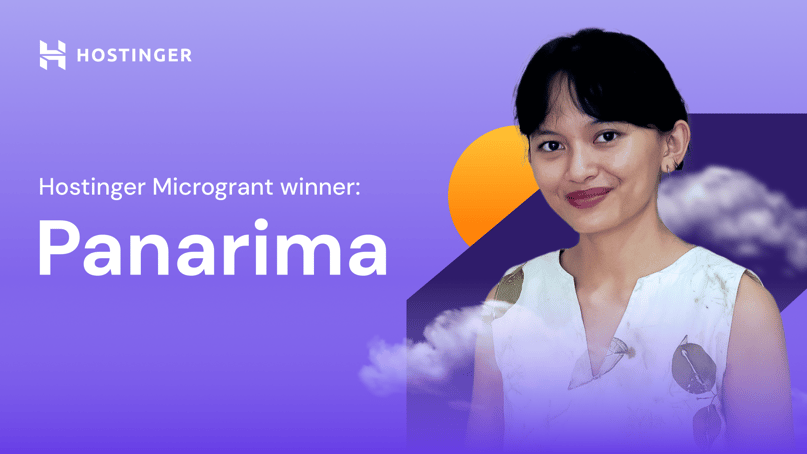
In the lush landscapes of Boyolali, Indonesia, the ancient art of botanical printing is finding a new rhythm. This time, it’s supported by modern digital tools.
For Maya Dwi Pratita, the founder of sustainable fashion brand Panarima, the challenge was clear: how to take a hyper-local, handmade product to a global audience without losing its soul.
She had the craft and growing customer interest. What she didn’t have was a home on the internet or the tools to scale production without outsourcing.
This is the story of how the Hostinger Microgrant helped her bridge the gap between nature and technology.
What is the Hostinger Microgrant initiative?
The Hostinger Microgrant initiative is a global program to help entrepreneurs build their own online platforms by removing financial and technical barriers.
In the Indonesian edition of the program, selected winners receive IDR 20,000,000 in funding, along with a suite of Hostinger tools and services to get started.
The goal is simple: help entrepreneurs rely less on restrictive third-party marketplaces and take ownership of their online presence.
Who is Panarima?
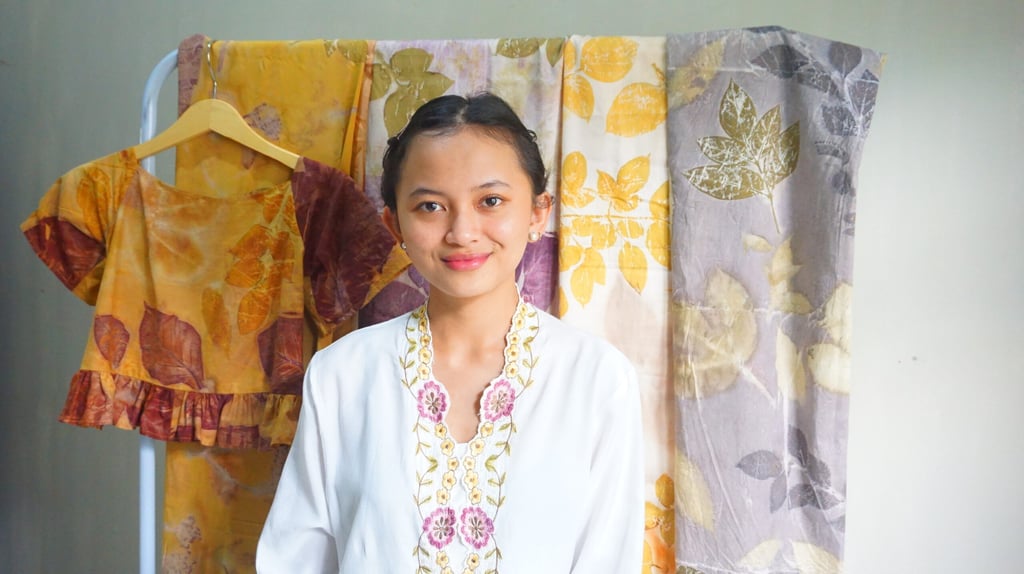
Panarima is more than a fashion label. It’s a social enterprise. Based in Boyolali, Central Java, the brand specializes in eco printing.
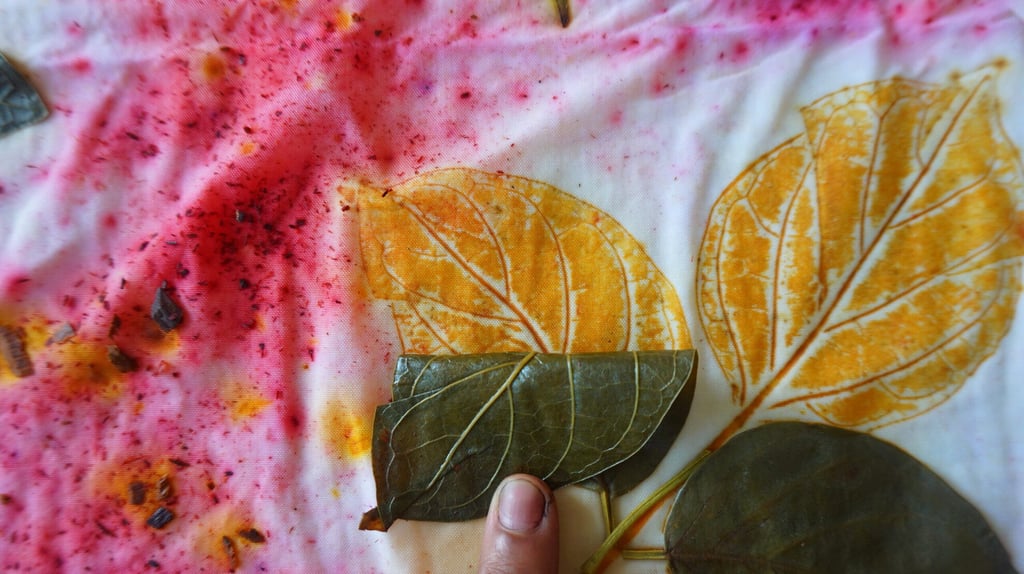
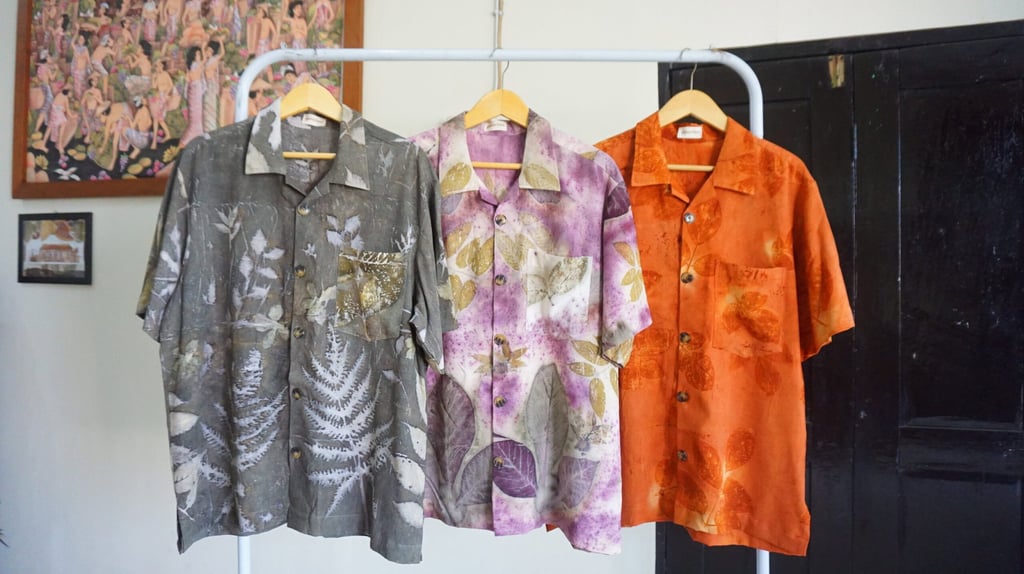
This technique uses real leaves and flowers to create natural patterns on fabrics such as cotton, silk, and rayon.
Every piece reflects Indonesia’s botanical richness, using natural dyes and locally sourced materials.
The name itself points to the brand’s philosophy.
“Panarima is taken from the Javanese language, meaning gratitude – in hope to give direct gratitude towards everyone and everything that’s involved in our process of creation,” Maya explains.
This philosophy shapes how Maya works with local home tailors in Boyolali. By collaborating directly with them, she shares the economic benefits of the brand’s growth with her community.
What challenges did Panarima face?
Before the microgrant, Panarima faced real limits when it came to scaling.
The brand was active on Instagram, but Maya struggled to tell the whole story behind each piece.
“I mostly face [challenges] online because I struggle with our online presence – on how to tell our story,” she says.
Without a website, Panarima depended heavily on social media algorithms for visibility. There was no central place to explain the brand’s values or the intricate eco printing process to potential customers.
Production created another bottleneck. Maya needed specific equipment but didn’t have the budget to invest in it.
“We want to cut the production budget that we usually use because we don’t have this specific machine,” she explained at the time.
As a result, even small details, such as buttonhole-making, had to be outsourced. That added extra time and cost to every garment.
How did the Hostinger Microgrant help?
The grant funded the creation of Panarima’s official website using Hostinger’s tools. This gave Maya a dedicated online home and reduced reliance on third-party platforms.
Q: How is the transition to your own website going?
Maya: “The transition is nearly complete (around 80%). Our website is live, and we’re continuing to migrate our international customers there. Hostinger has been very user-friendly and accessible, especially for someone without a technical background like myself.”
Part of the grant was also used to improve Panarima’s workshop. Maya invested in equipment that made daily production easier and more efficient.
Panarima purchased a new cutting table, snap button tools, and a Janome sewing machine.
Q: What improvements have you made in your business thanks to the grant?
Maya: “The Janome machine allows us to create button embroideries in-house – before this, I had to spend extra time and money just to make buttonholes elsewhere. These upgrades truly help us work more productively and independently.”
What is the social and economic impact?
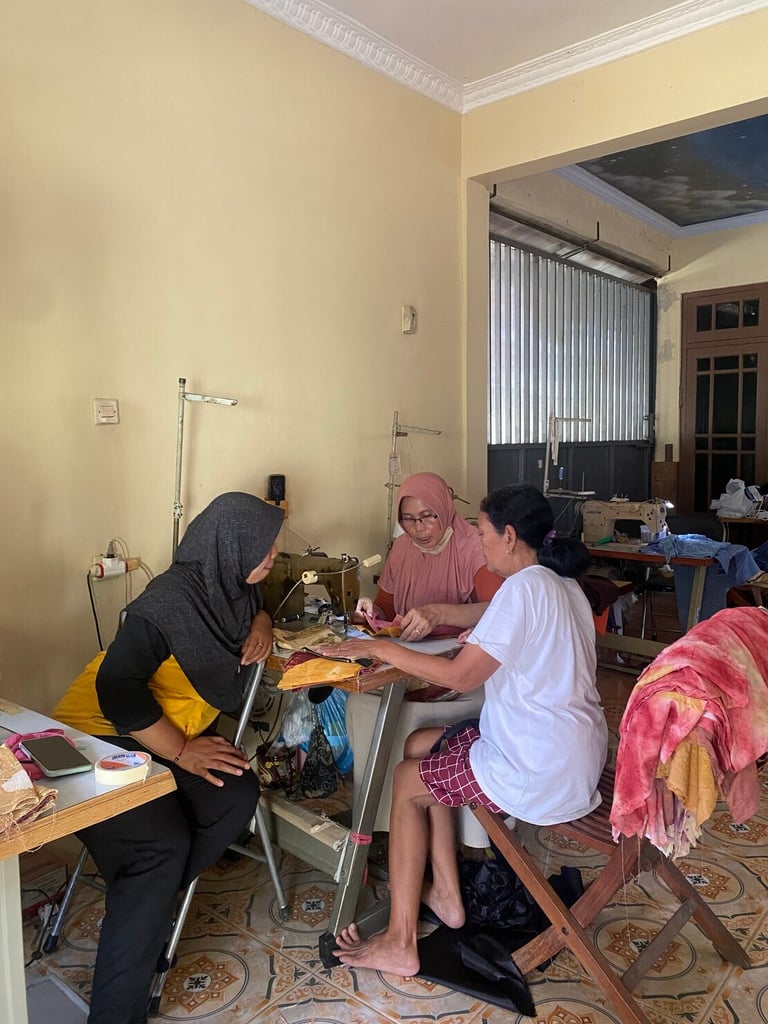
The grant also strengthened the people behind Panarima, from Maya herself to the local home tailors she works with.
Q: Have you seen changes in the type or volume of orders you’re able to take on? And has that affected how you work with your home tailors?
Maya: “Yes, the improved production capacity has helped us secure more corporate work. We completed two corporate orders with Makadaya Impact Store in Ubud, Bali. Our local home-tailors are still working with us regularly, especially when fulfilling larger corporate orders.”
What are the results and future plans?
By bringing production in-house, Panarima has sped up its workflow and reduced costs.
Q: Can you estimate how much time or cost the new equipment has saved you?
Maya: “Over the past six months, these tools have helped us shorten production time by 3–4 days per corporate order and save approximately Rp300,000 to Rp500,000 per order. This efficiency also allows us to take on more customized and local-market projects, as we no longer need to travel as much for outsourced production.”
On the digital side, the results are just as encouraging.
Panarima has been featured by Telobag as an “Eco Hero,” collaborated with Nasho, and attracted new customers through Instagram. The website is also nearly ready to serve global buyers directly.
Why is a website important for sustainable brands?
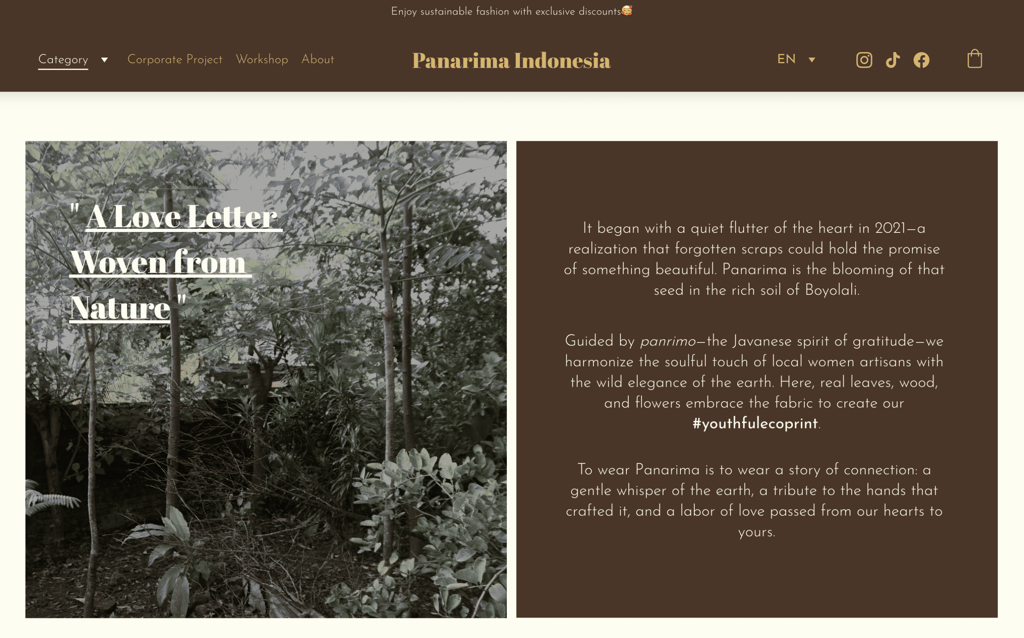
Sustainable fashion relies on storytelling. Customers want to understand the “who, why, and how” behind the price tag – something social media captions often can’t fully convey.
Q: How has the website contributed to your business growth or visibility?
Maya: “The website has helped me tremendously in sharing the story, vision, and mission behind Panarima. Another thing I truly love is the creative freedom it gives – we can customize the layout, fonts, images, and color palette to perfectly reflect our brand identity. It feels like having our own digital studio, one that truly represents Panarima’s personality and values.”
By having its own platform, Panarima can build trust with international buyers and establish credibility in a way social media profiles alone can’t.
Lessons from Panarima’s digital transformation
Traditional craftsmanship can thrive in the modern era with the right tools in place.
With Panarima, Maya built a business that is efficient, independent, and rooted in community. She did this by combining a deep respect for nature with practical digital tools.
Owning your online presence is often the first step toward independence.
Ready to tell your story? You can create a website today and start building a digital home for your brand.

Ariffud is a Technical Content Writer with an educational background in Informatics. He has extensive expertise in Linux and VPS, authoring over 200 articles on server management and web development. Follow him on LinkedIn.