Is dropshipping worth it in 2026?
Apr 17, 2026
/
Ksenija
/
10 min Read
Yes, dropshipping is worth it in 2026. Net profitability comes down to ad spend, supplier quality, platform fees, and niche selection – all of which are manageable with the right approach.
It is not an automated income. It is a retail model that requires strong marketing execution, supplier coordination, customer support, and tight margin management.
In a traditional selling model, you buy stock upfront and control fulfillment. That gives you control over packaging and delivery but exposes you to inventory risk.
In dropshipping, you pay suppliers only after a sale. That reduces upfront investment and limits downside on unsold products. In exchange, you give up control over fulfillment, shipping speed, and stock accuracy.
The economics of dropshipping can be evaluated through:
- What average dropshipping margins actually represent
- Which costs erode the contribution margin
- Which niches offer structural advantages
- How to calculate net profit and break-even CAC
- The operational advantages and limitations of the model
What is dropshipping and how does it work?
Dropshipping is a model in which you sell products without stocking them. When a customer places an order, you forward it to a supplier, and the supplier ships the product directly to the customer – and that’s the gist of what dropshipping is and how it works.
To start a dropshipping business, you’ll need five core participants, each responsible for a specific function:
- Retailer. The store owner who manages the storefront, pricing, marketing, and customer communication.
- Supplier. A wholesaler or manufacturer that stores inventory and handles picking, packing, and shipping.
- Customer. The buyer who places the order and receives the product.
- Payment processor. The service that transfers funds from the customer to the retailer and applies transaction fees.
- Shipping carrier. The logistics provider that delivers the package to the customer’s address.
In a traditional retail model, you purchase stock upfront, store it, pack orders, select packaging, manage shipping methods, and process returns yourself. You control fulfillment but carry inventory risk and upfront costs.
In dropshipping, the supplier handles storage and fulfillment, and you pay per order after collecting payment.
This removes inventory investment and reduces fixed costs. In return, you give up control over packaging, shipping speed, and stock accuracy. You still own branding, pricing, customer support, and return handling, even though the supplier ships the product.
Does dropshipping still generate profit in 2026?
Yes, dropshipping still generates profit in 2026, but only when each order earns more than it costs to acquire and refund the customer. If acquisition and refund costs exceed the money left after product, shipping, and fees, scaling increases losses, not income.
Profitability also depends on how well you manage the following external challenges:
- Rising ad costs that increase Customer Acquisition Cost (CAC) as competition intensifies on major platforms.
- Higher shipping expectations that force sellers to subsidize fast or free delivery, reducing the margin per order.
- Greater market saturation that pushes prices downward and compresses gross margin before advertising costs apply.
Many sellers look at “average margins” and assume the model is profitable. That comparison is misleading because markup or gross margin is not net profit. A 40% gross margin means nothing if advertising, payment fees, refunds, and shipping absorb most of it.
Start with contribution margin, not markup. Contribution margin is what remains after product cost, transaction fees, shipping subsidies, and refunds tied to the order. From that amount, you still need to cover the customer acquisition cost. If CAC exceeds contribution margin, you lose money on every sale, regardless of your markup.
Let’s assume you sell a product for $50 and your supplier charges $25. You now have a $25 gross margin (50%) before other costs.
Now subtract $2 in payment processing fees and a $5 shipping subsidy. You are left with an $18 contribution margin.
That $18 is what must cover your customer acquisition cost and refund risk. If it doesn’t, the order is not profitable.
If your average CAC is $20, you are already losing $2 per order. Now add a 5% refund rate. If each refund costs you $25 in product and processing losses, that reduces your real margin further across all orders. The apparent 50% markup collapses into a negative net profit.
Dropshipping generates profit, but only when unit economics are managed at the order level.
What is the average dropshipping margin?
The average net profit margin for dropshipping falls between 10% and 30%, but that range is often misunderstood. Most public margin figures refer to gross margin, not net profit.
Gross margin measures the difference between the selling price and product cost, while net profit reflects what remains after all expenses, including advertising, transaction fees, refunds, and shipping subsidies.
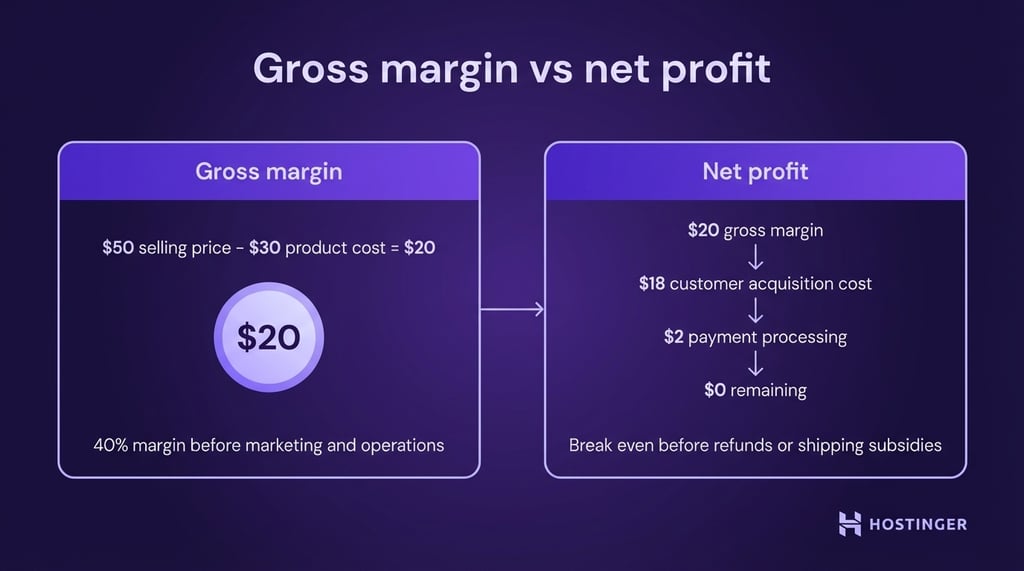
Gross margin is calculated before marketing and operational costs. For example, if you sell a product for $50 and the supplier charges $30, your gross margin is $20, or 40%.
That number looks strong on paper, but it does not include Customer Acquisition Cost, payment processing fees, chargebacks, or returns.
Net profit is what remains after those costs are deducted. Using the same example, if you spend $18 to acquire the customer and $2 on payment processing, the $20 gross margin disappears. The order breaks even before accounting for refunds or shipping subsidies.
 ) after costs, illustrating key financial concepts for understanding profitability.” class=”wp-image-145885″>
This is why claims of “10–30% margins” can be technically true and still misleading. Those figures usually refer to gross margin, not net profit. After accounting for advertising and operational costs, the actual take-home profit per order may fall into the single digits or even turn negative.
Margin also varies based on structural factors, including:
- Category, since some products carry higher supplier markups than others
- Price point, because higher-ticket items can absorb higher acquisition costs
- Sales channels, such as paid ads, marketplaces, and organic traffic, have different cost structures
If you want to assess if you can make money with dropshipping, calculate the contribution margin first, then subtract realistic acquisition and refund costs. Gross margin alone does not determine profitability.
Which costs reduce dropshipping profit?
Product costs, shipping expenses, payment fees, customer acquisition costs, refunds, and operational tools all reduce dropshipping profit. Each of these costs lowers contribution margin at the order level and determines whether a sale remains profitable.
Product cost and supplier pricing
This is what you pay the supplier per unit. The higher this cost, the less margin you have left to cover ads and other expenses.
For example, if you sell a product for $60 and your supplier charges $30, your gross margin is $30. If the supplier raises the price to $38, your margin drops to $22 before advertising or fees.
Shipping costs and free shipping pressure
Delivery charges are either passed on to the customer or absorbed by you. When you advertise free shipping, that cost comes directly out of your margin.
If shipping costs $8 and you advertise free shipping, that $8 is deducted directly from your contribution margin.
Payment processor and transaction fees
Payment processors usually charge a percentage of the sale plus a small fixed fee. For example, if the fee is 3% of the order value plus $0.30, a $50 sale would cost you:
- 3% of $50, which equals $1.50
- An additional fixed $0.30 fee
The total processing cost for that order would be $1.80.
Customer Acquisition Cost and creative testing
Advertising spend determines how much you pay to generate one order. If you spend $500 on ads and produce 25 sales, your acquisition cost is $20 per customer. If your pre-ad margin is $18, each order results in a $2 loss.
Refunds, returns, chargebacks, and lost packages
These occur after you have already paid the supplier to fulfill the order. When you issue a refund, you return the customer’s money, but you usually do not recover the original product cost or payment fees.
For example, if a $50 order is refunded and you paid $25 to the supplier and $2 in processing fees, that $27 is typically lost, even though the sale is reversed.
Apps and operational tools
Store platforms, supplier integrations, email or SMS tools, tracking software, and support systems create fixed monthly costs. These expenses must be covered by the order margin. If tools cost $300 per month and you process 100 orders, you must allocate $3 per order before advertising.
To protect profit, calculate the contribution margin first, then subtract realistic acquisition, refund, and software costs. If the remaining margin per order is thin, growth will amplify losses rather than revenue.
Which dropshipping niches are most profitable in 2026?
Dropshipping is more likely to be worth it in categories where demand is growing, margins are defensible, and repeat purchases are common.
In 2026, the most profitable niches include fashion micro-niches, food and personal care, beauty sub-categories, and electronics and device accessories.
These categories are part of ecommerce trends that combine a large market size, repeat purchasing behavior, and room for differentiation.
Fashion and apparel
Fashion accounts for over 34% of dropshipping revenue share, making it the largest product segment.
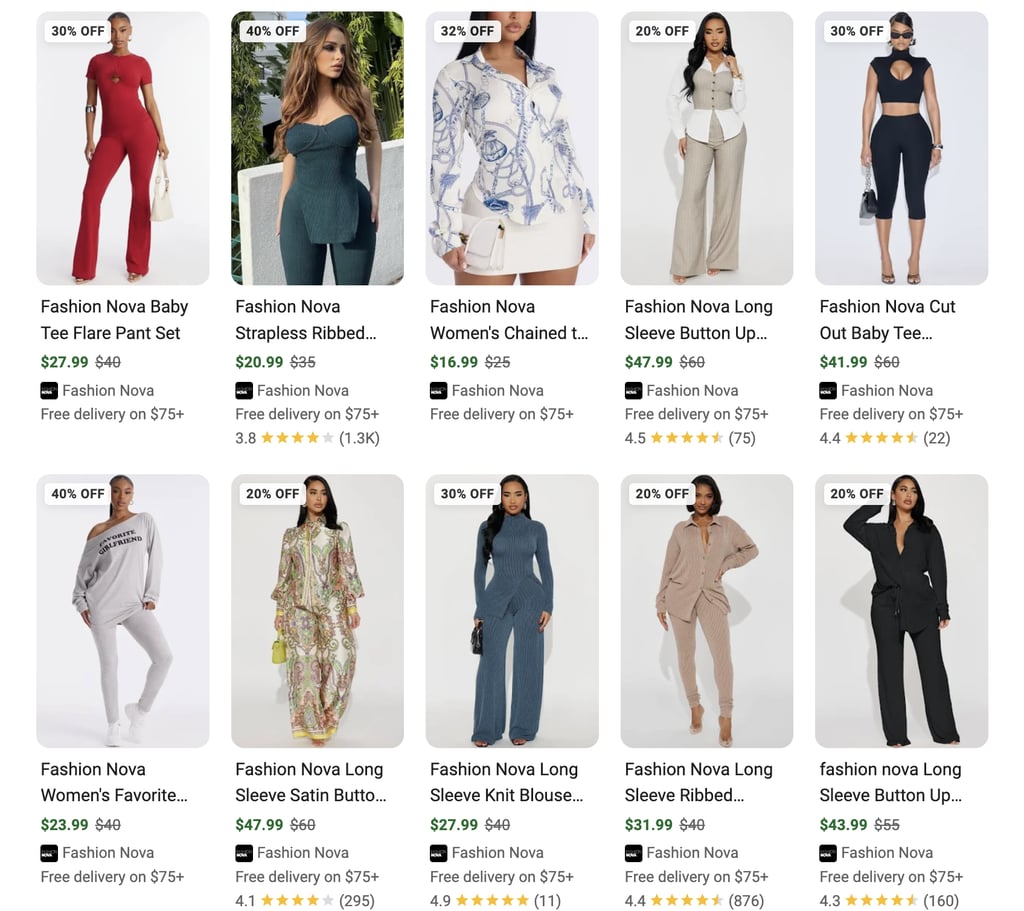
It is also the most showcased category in live commerce, reinforcing how closely it aligns with social-driven buying behavior.
People discover clothes on TikTok, Instagram, and livestreams, then buy what they see. Trends change quickly, so customers keep coming back for new styles every season.
Food and personal care
This segment is projected to grow at a 23.6% Compound Annual Growth Rate. Many products in this category are used daily or monthly, creating built-in repeat demand.
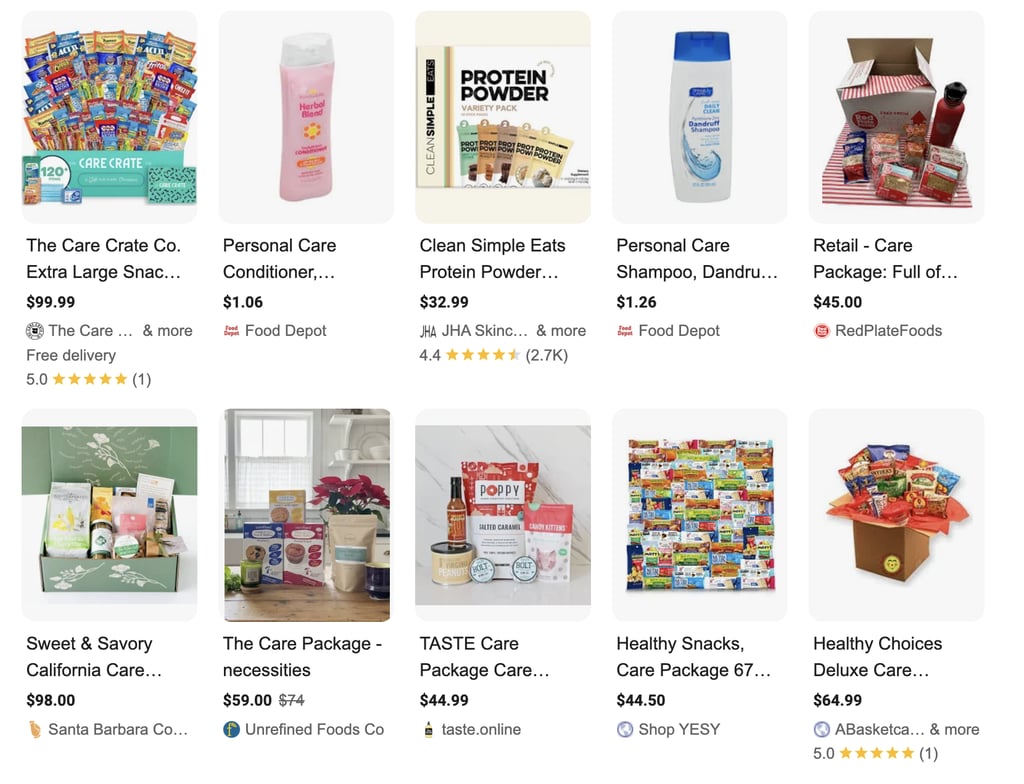
Skincare, supplements, protein powder, and hygiene products are consumables – customers use them up and need to reorder. The same goes for food items. That automatic reordering increases lifetime value because a single customer can make multiple purchases without new ad spend each time.
Beauty micro-categories
Global beauty recorded 7.3% year-over-year value growth, with ecommerce driving expansion. Beauty products are typically tied to ongoing routines, such as skincare or haircare, which leads to repeat purchasing behavior.

Unlike general personal care, beauty micro-categories focus on specific problems or audiences rather than everyday essentials.
Examples include acne treatment, anti-aging skincare, curly hair care, sensitive skin products, vegan cosmetics, and K-beauty routines. These niches attract customers looking for targeted solutions, not just basic use.
This creates a different type of demand. Customers build routines around products that work for them. That increases retention and allows for stronger branding and higher margins, because buyers are less price-sensitive when a product solves a specific problem.
Electronics and device accessories
This category stays in demand because people rely on devices every day. They use phones, laptops, and tablets constantly, and need accessories to charge, protect, and extend their use.
Products such as chargers, cables, cases, and earbuds do not last forever. People lose them, damage them, or replace them when they stop working or no longer fit new devices. This creates steady replacement demand instead of one-time purchases.
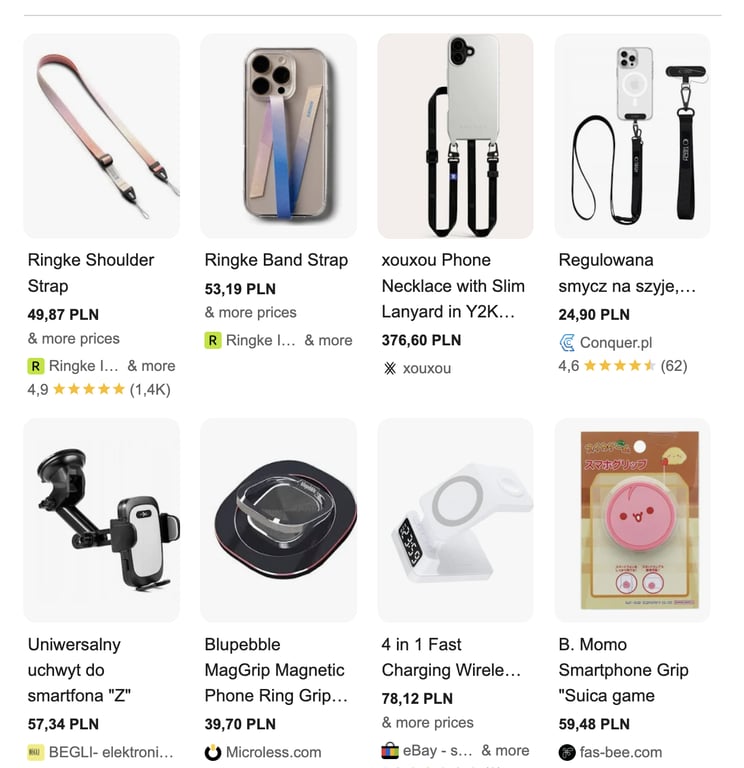
New device releases also drive sales. When people buy a new phone, they often buy several accessories at the same time. This increases order value and creates natural bundling opportunities.
How do you calculate whether dropshipping is worth it?
Dropshipping is worth it only if each order produces real net profit after all variable costs, not just a strong-looking markup.
You calculate this by breaking down profit per order and testing whether your acquisition cost and refund rate leave the margin intact.
What is the dropshipping profit formula?
The dropshipping profit formula calculates how much money you keep from each order after all variable costs are deducted, and it goes like this:
Net profit per order = Selling price – Product cost – Shipping – Payment fees – Customer acquisition cost – Returns/refunds allowance – Allocated tools cost
In plain terms, you subtract every cost required to generate and fulfill one order.
Here is a simple example:
- Selling price: $80
- Product cost: $40
- Shipping: $8
- Payment fees: $3
- Customer acquisition cost: $22
- Returns/refunds allowance: $4
- Tools (allocated per order): $3
Net profit per order = 80 – 40 – 8 – 3 – 22 – 4 – 3 = $0
This store breaks even. It makes sales, but it does not generate profit. If your net profit per order is zero or negative, growth increases workload but not earnings.
What is the break-even customer acquisition cost?
Break-even CAC is the maximum you can pay to acquire a customer without losing money.
To calculate it, first determine your contribution margin before ads:
Contribution margin = Selling price – Product cost – Shipping – Payment fees – Returns allowance – Tools
Let’s use the same $80 example:
Contribution margin = 80 – 40 – 8 – 3 – 4 – 3 = $22
That means your break-even CAC is $22.
If you pay more than $22 to acquire a customer, you lose money on that order. If you pay less, you generate profit.
One practical rule follows from this: if your CAC is unstable or consistently rising, dropshipping becomes harder to sustain because your controllable margin is fixed while acquisition costs are not.
Before scaling, calculate these numbers using real data. If the math does not work on one order, it will not work at scale.
What are the key advantages of dropshipping?
Dropshipping’s main advantages stem from lower financial risk and reduced operational complexity compared to inventory-based retail.
These advantages fall into four areas:
- Lower upfront investment and reduced capital risk. You do not purchase bulk inventory before making sales. Products are paid for only after a customer places an order. This lowers the initial cash required to start and reduces exposure if a product fails to sell.
- No unsold inventory exposure. Since you do not manage inventory, you avoid warehouse costs, storage fees, and clearance discounts. If demand drops, you remove the listing rather than liquidate inventory.
- Faster product validation. You can launch new products without committing to bulk purchases. If a product does not convert, you remove it without sunk inventory cost. This shortens the testing cycle and limits the downside per experiment.
- Simplified fulfillment service operations. The supplier handles storage, picking, packing, and shipping. You focus on pricing, positioning, marketing, and customer communication instead of managing physical logistics.
Each advantage reduces either capital exposure or operational workload, which is why dropshipping lowers entry barriers compared to traditional inventory models.
What are the key disadvantages of dropshipping?
Dropshipping splits who controls fulfillment from who is accountable for the outcome. Suppliers control fulfillment, but you remain responsible for revenue, refunds, and reputation.
This structure creates the following predictable downsides:
- Limited control over product quality and higher refund risk. You don’t inspect products before they ship. If items arrive damaged, inconsistent, or not as described, customers hold your store responsible. This leads to refund requests, return disputes, chargebacks, and negative public reviews, all of which reduce future conversion rates.
- Dependency on supplier performance and delivery reliability. Inventory accuracy and fulfillment speed sit outside your control. If stock data is wrong or fulfillment slows down, customers experience delays and unclear tracking updates. You handle complaints even when the issue originates with the supplier.
- Compressed pricing power and margin pressure. Many sellers source identical products from the same suppliers. When differentiation is weak, customers compare prices directly. Competition shifts to discounting, which shrinks contribution margin and increases reliance on paid ads.
- Higher customer support workload. Customers contact your store, not the supplier, when problems occur. Late deliveries, lost packages, damaged goods, and return disputes all require resolution from your side. As order volume grows, support volume grows with it.
Each disadvantage follows the same pattern: fulfillment control rests with the supplier, while financial and reputational risk remains yours.
Is dropshipping the right business model for you?
Dropshipping works when the numbers make sense, and you are prepared to run it like a real business. Profitability and operational discipline matter more than hype.
You can use these criteria as a decision filter:
Dropshipping is worth it if:
- Your unit economics stay positive after CAC, transaction fees, refunds, and returns.
- You can differentiate your offer for a specific audience instead of competing on price alone.
- Your suppliers meet delivery times and quality standards consistently.
- You are ready to handle customer support as a core part of the business.
- You have time and budget for structured testing, not just launching.
Avoid dropshipping if:
- You expect passive income or fully hands-off operations.
- You have no marketing budget for ads, testing, or product samples.
- You are not prepared to manage returns, delays, and customer complaints.
- You plan to sell undifferentiated products in saturated niches.
- You do not track CAC, margin per order, and break-even thresholds.
To make sure you’re making the right call, follow this structured validation sequence:
Validate niche → Validate offer → Test acquisition channel → Calculate break-even CAC → Scale what stays profitable.
Once the economics hold, move to execution. Build store infrastructure using one of the dropshipping website builders that support testing, clear analytics, and supplier coordination. The right platform should make measurement and iteration easier, not add operational friction.

Ksenija is a digital marketing enthusiast with extensive expertise in content creation and website optimization. Specializing in WordPress, she enjoys writing about the platform’s nuances, from design to functionality, and sharing her insights with others. When she’s not perfecting her trade, you’ll find her on the local basketball court or at home enjoying a crime story. Follow her on LinkedIn.