What are learning agents and how do they work?
Sep 11, 2026
/
By Alma
/
9 min Read
Learning agents are AI systems that use feedback from past results to improve their future decision-making.
They’re useful when conditions change, the same decisions happen repeatedly, or fixed rules can’t cover every situation. The agent observes what’s happening, chooses an action, checks the result, and uses that feedback to adjust what it does next.
That ability makes learning agents useful for tasks in customer support, recommendations, education, and games, where feedback from one result can improve later decisions.
But learning from experience also adds complexity: the agent needs reliable feedback, a controlled way to update its behavior, and safeguards against learning the wrong lesson or weakening something it already does well.
What is a learning agent?
A learning agent is a type of AI agent that uses the results of earlier actions to improve later decisions.
Other AI agents are built to observe their environment, decide what to do, and take action; learning agents incorporate feedback so those decisions improve over time.
For example, a fraud-review agent chooses whether to approve a purchase, block it, or send it to a human analyst. Approving every unusual purchase would expose the business to fraud, while blocking every unusual purchase would frustrate legitimate customers.
When analysts later review those transactions, their decisions provide feedback. If they repeatedly approve purchases the agent flagged as suspicious, the system can use that pattern to handle similar transactions differently in the future.
For that learning process to work, the agent needs a few things:
- Feedback tied to the right action. The system needs to know which decision produced the result it’s evaluating.
- A measure of success. Rewards, penalties, corrections, task results, or human evaluations tell the system whether the action worked.
- Separate decision and learning processes. The current policy determines what the agent does now, while the learning process uses feedback to improve that policy.
- A way to test alternatives. The agent can try approved alternatives instead of always repeating the option that currently performs best.
A machine learning model isn’t automatically a learning agent. A model can make a prediction or generate an output without acting on it or learning from what happens afterward. A learning agent has an ongoing loop between action, result, feedback, and later decisions.
That action-and-feedback loop is what makes it a rational agent: it doesn’t just predict, it chooses the action expected to produce the best outcome and adjusts as new results come in.
Reinforcement learning is one way to support that loop, but it isn’t required. Other learning methods can also be used, as long as feedback from earlier results changes the agent’s behavior later.
What are the components of a learning agent?
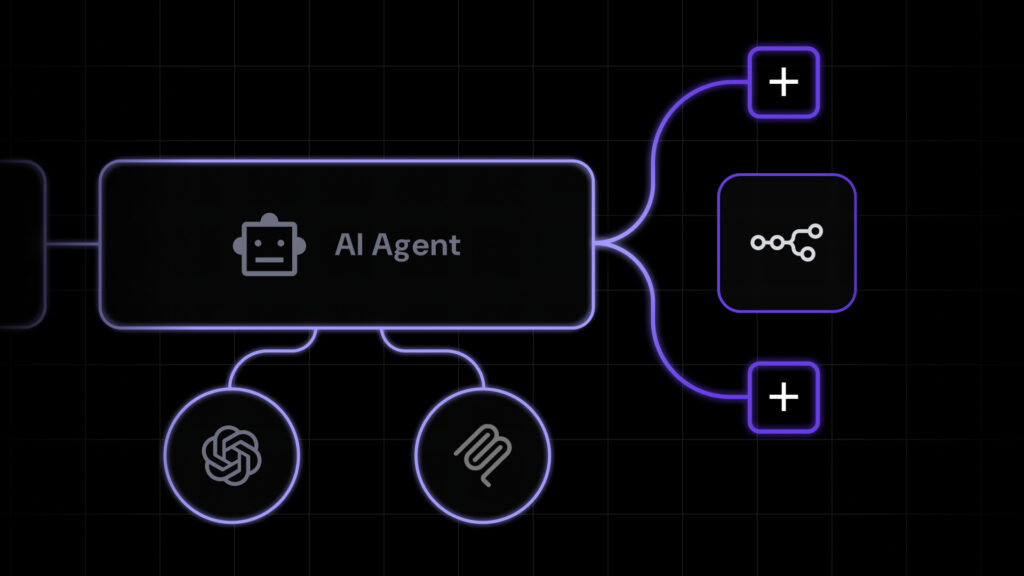
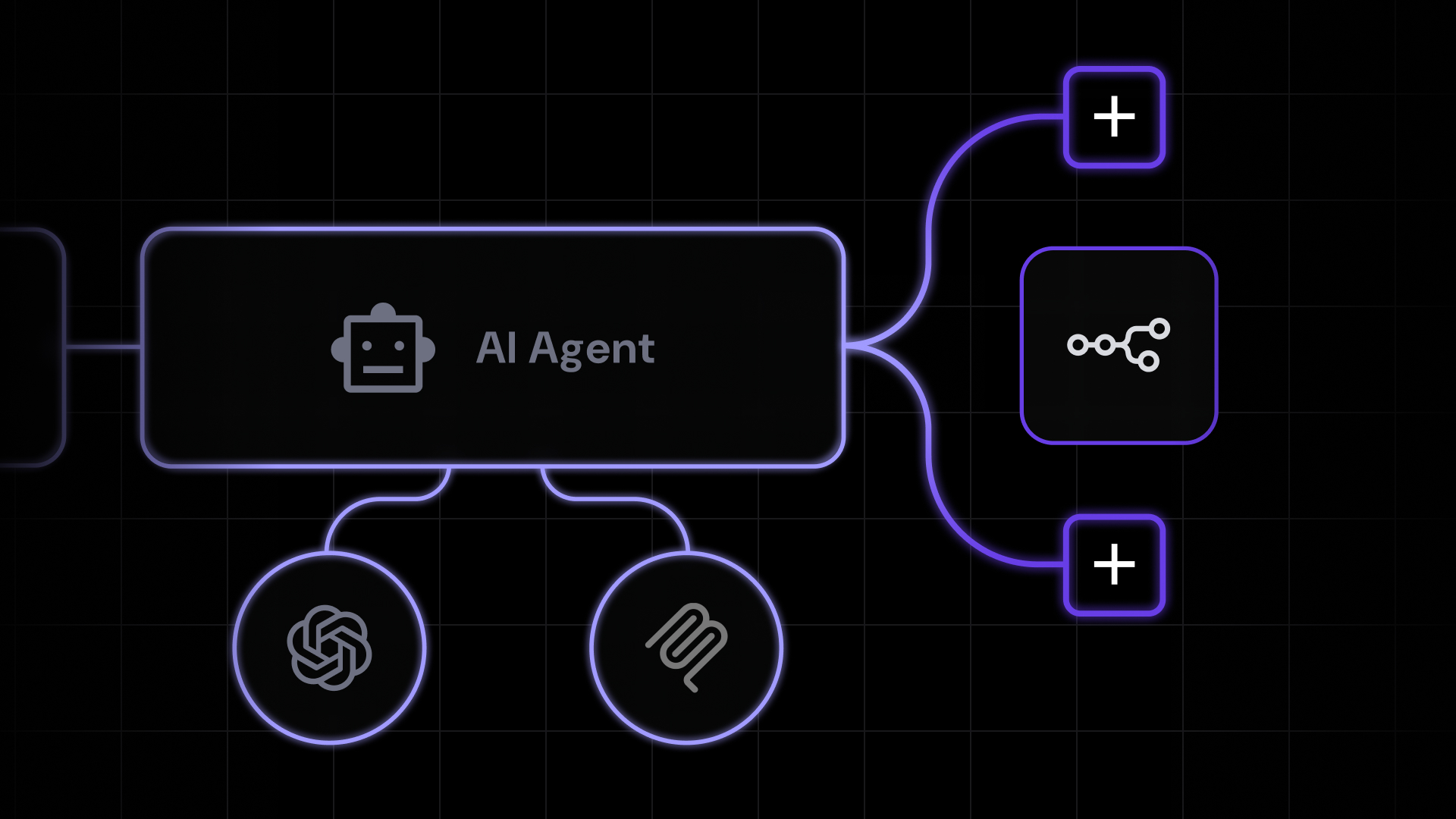
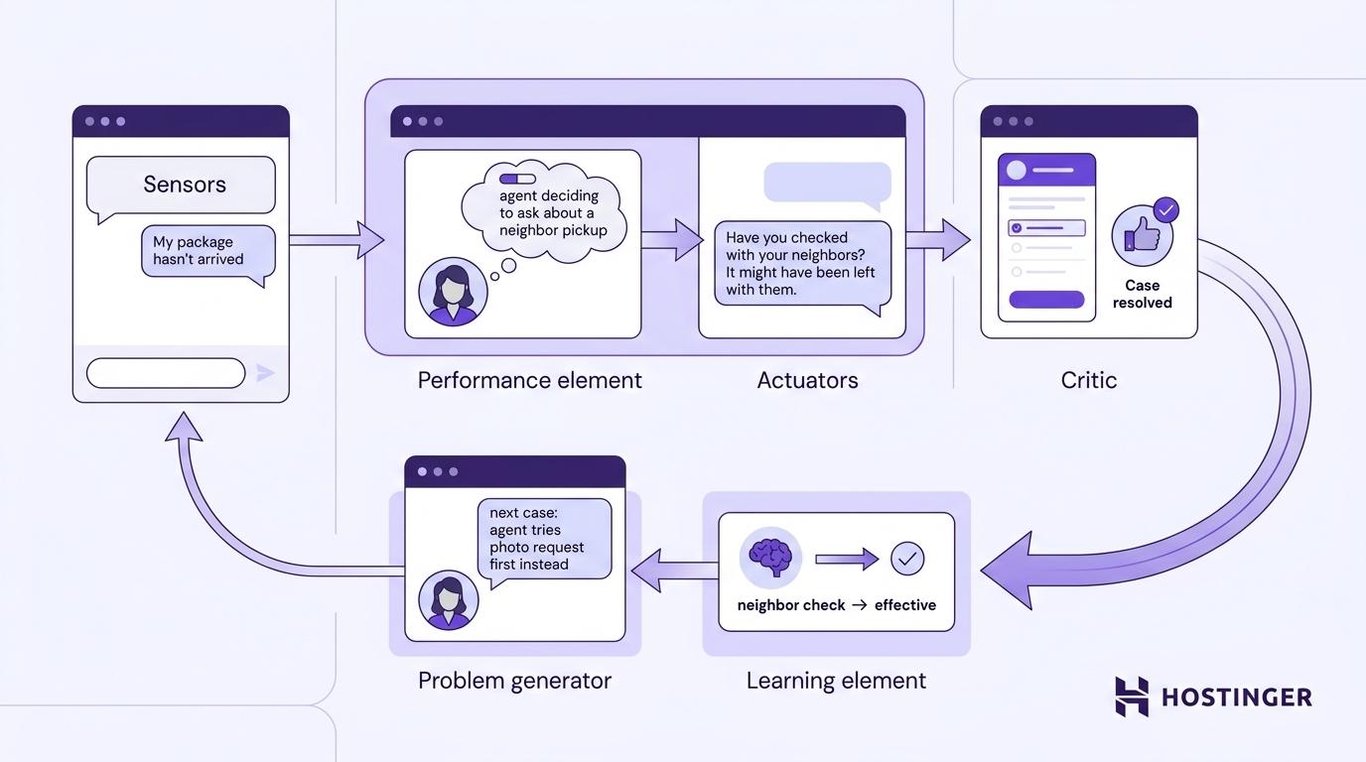
A learning agent has six main components: sensors or perceptors, a performance element, actuators, a critic, a learning element, and a problem generator.
Sensors provide the current information, the performance element chooses an action, actuators carry it out, and the critic evaluates the result. The learning element uses that feedback to improve future decisions, while the problem generator suggests alternatives the agent can test.
To see how they connect, imagine a customer-support agent handling missing-package requests. It needs to understand the order, decide how to respond, carry out that response, check whether it solved the problem, and use the result to improve future cases.
Sensors or perceptors
Sensors or perceptors are the input channels that bring current information into the agent.
That information arrives through sources such as user messages, API responses, database queries, event notifications, and system logs. The agent can automatically receive data when an event occurs or request it when it needs more information.
For a customer support agent handling a missing package, the customer’s message serves as the initial request. The agent might then query the order database for the order details and call the carrier’s tracking API for the latest delivery status.
Those inputs become the agent’s current view of the case. If the carrier API returns outdated information, the agent may make the wrong decision even though its decision logic works correctly.
Performance element
The performance element uses the information currently available to determine what the agent should do next.
It follows the agent’s current policy, which is the decision logic that connects a situation to an action. The performance element reads the current case information, identifies the available actions, removes any that aren’t allowed, and applies the policy to choose among the remaining options.
For the missing-package case, tracking might show that the parcel was scanned as delivered at the correct address. The available actions could include asking whether someone else accepted it, requesting a delivery photo, opening a carrier investigation, or escalating the case.
Under the current policy, the performance element might ask whether another person at the address received the package.
Actuators
Actuators turn the agent’s chosen action into something that actually happens outside the decision process.
In software, they usually work through tools or integrations. The agent might send a message through a support platform, call an API, update a database field, or create a ticket in another system.
If the performance element decides to open a carrier investigation, the actuator sends the required request to the carrier’s API and records the response.
The result matters too. If the API returns an error, the agent needs to know that the investigation was not created. Otherwise, it could tell the customer that the case has been escalated when nothing actually happened.
Critic
The critic checks what happened after the action and turns that result into feedback the agent can learn from.
It does this by comparing the recorded outcome with a measure of success. That measure might come from a customer response, whether the case was resolved, a human reviewer’s judgment, or another task-specific result.
Suppose the agent asks whether someone else at the address accepted the package. If the customer replies that a neighbor had it and closes the case, the critic records that action as successful for that situation.
If the customer comes back two hours later because the package is still missing, the critic records a worse result.
The measure has to reflect the real goal. If the critic only rewards rapid ticket closure, the agent could learn to close cases quickly rather than actually solve them.
Learning element
The learning element uses the critic’s feedback to adjust the agent’s handling of similar situations in the future.
Exactly what changes depend on how the system is built. It could update a rule, adjust model parameters, change stored knowledge, or replace the policy with a newly trained version.
For example, the system might discover that asking about neighbors works well when a parcel was scanned at the customer’s address, but rarely helps when tracking shows the parcel was delivered several streets away.
The learning element can use those reviewed cases to change the policy so that the first situation triggers the neighbor question while the second triggers a carrier investigation instead.
That change doesn’t have to happen immediately. With offline learning, teams can collect the cases, update the model or policy, test the new version, and then deploy it. With online learning, the system changes while it is operating.
Problem generator
The problem generator selects approved alternatives for the agent to try when testing another approach could provide useful information.
It doesn’t invent unrestricted actions. It works within the actions the system is already allowed to take and identifies cases where trying a different option could provide useful evidence.
Let’s say the support agent usually asks whether someone else at the address received the package when tracking shows it as delivered. The problem generator could select suitable cases in which the agent instead asks for the carrier’s delivery photo first.
The system then compares what happens. If the photo request resolves more cases with fewer follow-up contacts, that evidence can eventually change the policy.
Using the option that currently performs best is called exploitation. Trying an approved alternative to learn whether it performs better is called exploration.
How does a learning agent work?
A learning agent works by observing the environment, choosing and executing an action, evaluating the result, and using the feedback to improve future decisions.
The agent doesn’t have to change immediately after every result. It can collect feedback, test an update, and use the revised policy later.
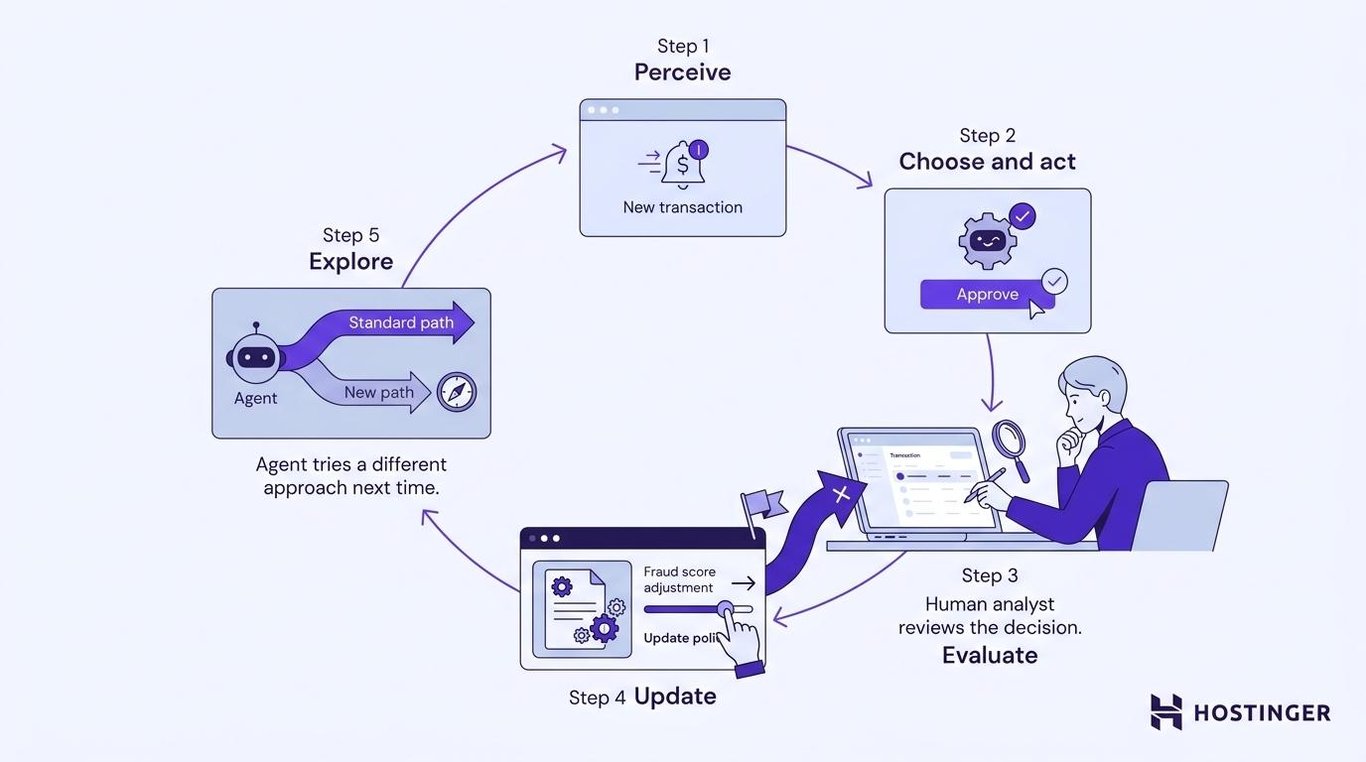
- Perceive the environment. Sensors or software inputs collect the current conditions and relevant history.
- Choose and perform an action. The performance element uses the current policy, and an actuator carries out the chosen option.
- Evaluate the outcome. The critic compares the result with the intended goal.
- Update the knowledge or policy. The learning element proposes and tests a change before the system starts using it.
- Explore when useful. The problem generator suggests an approved alternative when more evidence would improve later choices.
For instance, in an educational platform, a student answers a fraction question incorrectly. The system records the question, the answer, and the student’s current skill level before deciding what to do next.
It then presents an easier visual exercise. If the student answers correctly, the result serves as feedback that the simpler explanation helped. The system can use that feedback to adjust the student’s proficiency estimate and choose a more suitable question later.
But one result isn’t enough to justify every change. The platform can collect several results, test an updated policy, and apply that update only after it performs better than the current version.
The feedback also has to be linked to the right action. If the system connects a student’s improvement to the wrong exercise, it may reinforce a strategy that didn’t actually help.
Common examples of learning agents
Common learning AI agent examples include persistent support assistants, conversational recommenders, personalized learning platforms, and game-playing systems.
Persistent customer-support assistant. Support systems can use past interactions to identify patterns that improve future handling.
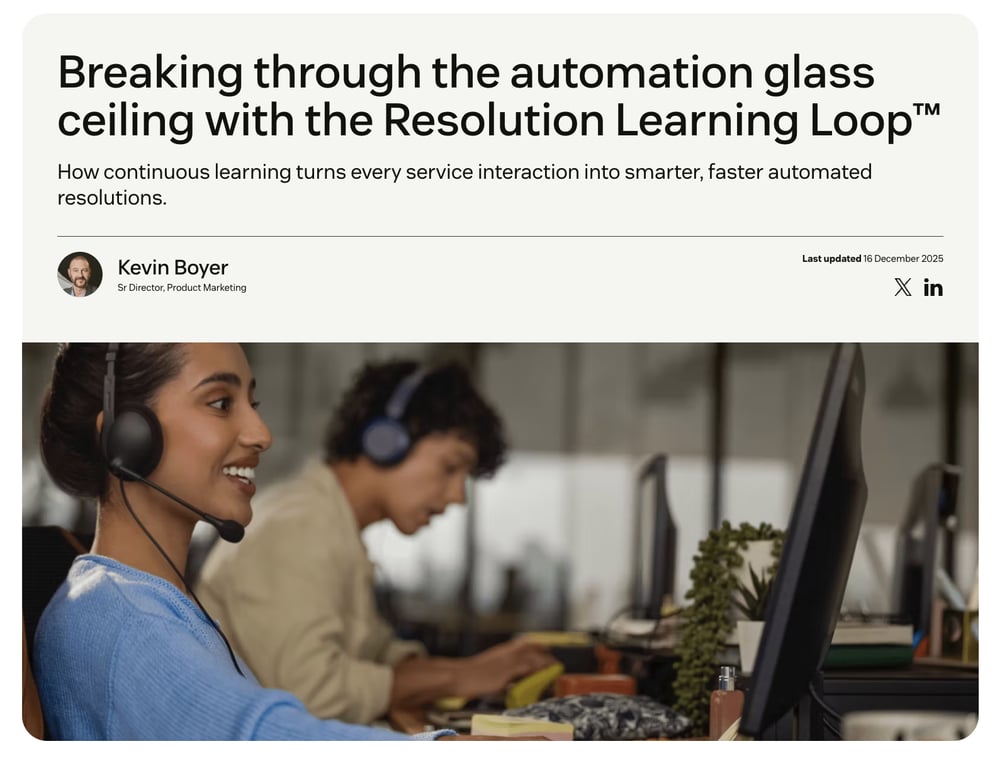
For example, Zendesk’s Resolution Learning Loop analyzes interaction data, including outcomes, quality scores, and agent actions, to identify where teams can improve workflows, knowledge, and automations over time.
Conversational recommendation system. A recommendation system can learn from a user’s responses and use that feedback to improve what it suggests next. For instance, it might ask whether someone who likes science fiction prefers space operas or dystopian stories, then use the answer to narrow later recommendations.
Google Research found that its conversational framework improved personalized recommendations by 25% over a static model after asking just two questions.
Personalized learning platform. An educational platform can use a student’s answers to estimate what they already understand and adjust the difficulty or type of exercise it gives them next.
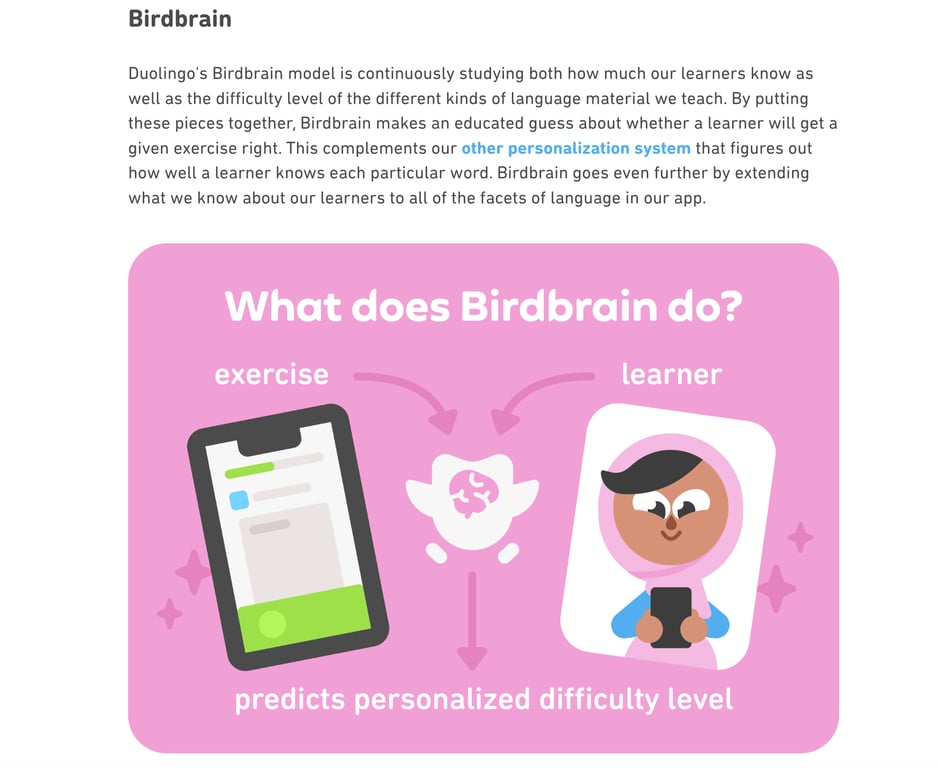
For instance, Duolingo’s Birdbrain system uses completed exercises to update both the student’s proficiency estimate and its estimate of exercise difficulty, then uses those signals to choose suitable later practice.
Game-playing agent. A board-game agent can keep using a reliable defensive opening or try an aggressive strategy during self-play. Wins and losses indicate which positions favor each approach, allowing the agent to adjust its policy based on those results.
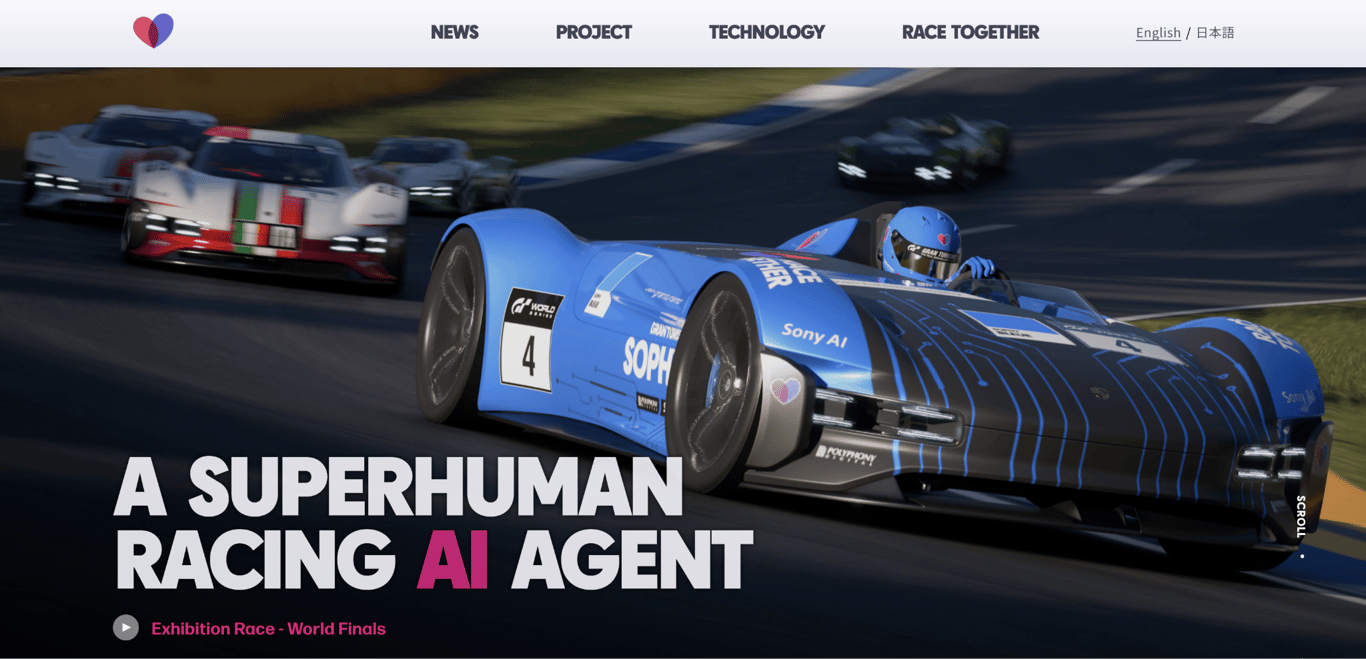
Take, for instance, Sony AI’s Gran Turismo Sophy. It’s a racing AI agent trained with deep reinforcement learning. Through repeated training, it learned driving skills and racing strategies by receiving feedback from its actions and improving its policy over time.
Benefits of learning agents
The main benefits of learning agents are that they can improve from feedback, adapt when conditions change, and reduce the need for people to update rules manually.
- They improve from feedback. When a result shows that an earlier choice didn’t work well, the agent can use that information to make a different choice next time. A game-playing agent, for example, might stop using an aggressive opening after repeated losses against the same defensive strategy.
- They adapt to changing conditions. Because later decisions can reflect new results, the agent doesn’t have to keep following a strategy that worked in the past. A building controller might change its heating and cooling schedule after hybrid work reduces office occupancy on certain days.
- They reduce manual rule updates. Instead of requiring a developer to create a new rule for every change in behavior or preference, the system can adjust based on reviewed feedback. A product-ranking agent might change which products it prioritizes as customer preferences shift.
Limitations of learning agents
The main limitations of learning agents are that they can learn from bad feedback, make risky changes, and lose earlier capabilities when updates go wrong.
- They can learn the wrong lesson. If the feedback doesn’t reflect the user’s real intent, the agent can reinforce a bad pattern. A video recommender might treat autoplayed videos as a strong interest and start filling the home feed with similar content, even though the user wasn’t actually watching.
- They’re more complex to build and maintain. Learning agents need more than the logic that makes the current decision. They also need a way to collect feedback, connect it to the right action, test updates, and monitor whether the new behavior actually improved. That adds more development and monitoring work than an agent whose decision rules stay fixed.
- Experiments can create real disruption. Learning agents may test different actions to find better ones, but poorly timed experiments can hurt performance. A delivery scheduler that tries a new batching strategy during peak demand might group too many distant orders together and cause widespread delays.
- Updates can break behavior that already worked. A new version might improve one task while making another worse. A document-processing agent could get better at recognizing international tax formats but start placing tax values in the invoice-total field for older templates, leading to incorrect payments.
Because updates can change the agent’s behavior, teams should compare each new version with the current one, keep a rollback option, and restrict high-risk actions that could cause financial, legal, or irreversible harm.
The system also needs ongoing monitoring after deployment. Users, data, and operating conditions change, so an agent that worked well before can start making worse decisions later.
An AI risk management framework can help teams decide what to monitor and which actions need stronger controls.
A higher performance score doesn’t automatically mean the agent is getting better. If complaints, manual corrections, or rollbacks rise at the same time, the score may be rewarding the wrong behavior.
Is a learning agent the right choice for you?
Choose a learning agent when the system needs to keep improving after deployment, and you have reliable feedback to guide those changes.
Simple reflex, model-based, goal-based, and utility-based agents can all operate without changing their decision logic in response to experience.
- Simple reflex agents respond to the current input. An automatic door, for example, can open whenever its sensor detects someone approaching. This works when the current input is enough to choose the right action.
- Model-based reflex agents keep track of relevant context. A robot might remember that an obstacle was detected moments earlier even when it’s no longer visible. They’re useful when the current input doesn’t show everything the agent needs to know.
- Goal-based agents choose actions based on a desired result. A delivery agent might consider different routes based on whether they get a package to its destination. They fit tasks in which achieving a specific outcome matters more than reacting to a single condition.
- Utility-based agents compare the value of different outcomes. That same delivery agent could weigh travel time, fuel cost, and risk to choose the best route rather than simply one that reaches the destination.
Learning agents add something different: a feedback-and-update loop that lets experience influence future behavior. A spam filter, for example, can adjust as users mark messages as spam or not spam, while a recommendation system can improve its suggestions based on how people respond to earlier recommendations.
If the task can already be handled with fixed rules, stored context, goals, or utility scores, a learning agent may add unnecessary complexity. It becomes more useful when the system faces recurring decisions where past results can meaningfully improve what it does next.
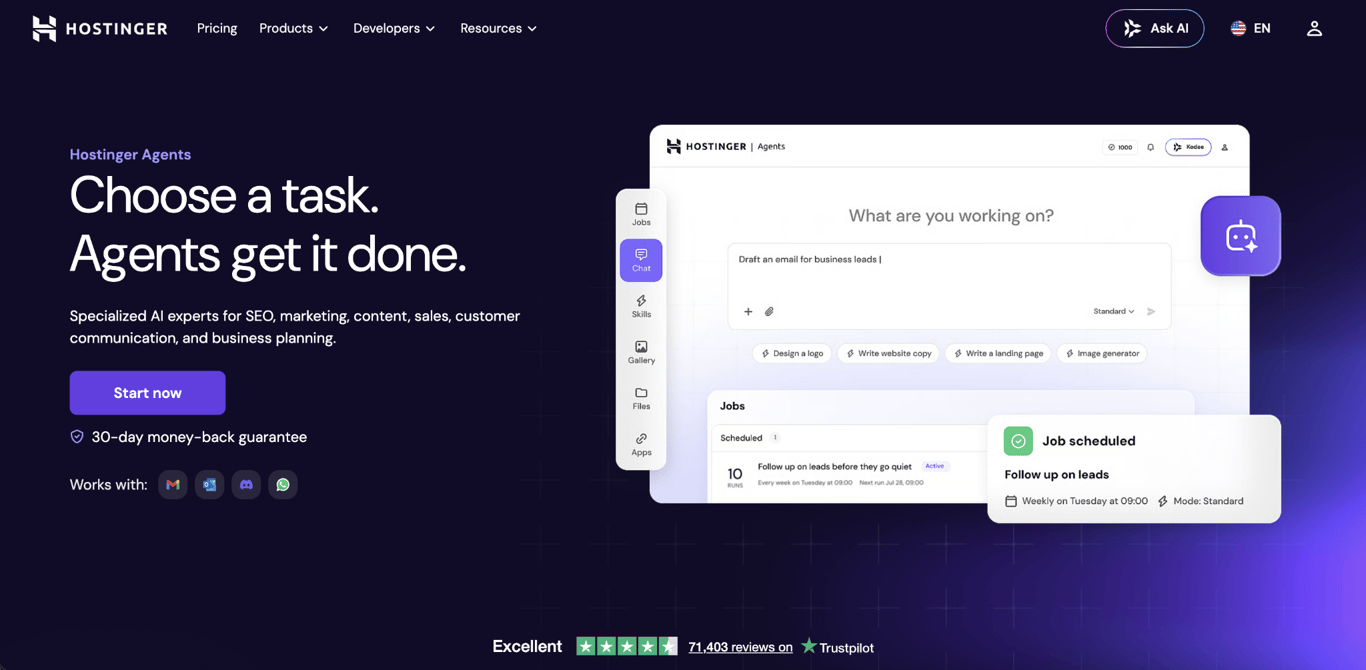
If your main need is AI support for specific business tasks rather than a system that learns from its own results, Hostinger Agent provides ready-made AI specialists for SEO, marketing, writing, sales, customer communication, and other business tasks.
This article is a localized version of What are learning agents and how do they work?, originally published in English.
All of the tutorial content on this website is subject to Hostinger's rigorous editorial standards and values.

Alma is an AI Content Editor with 9+ years of experience helping ideas take shape across SEO, marketing, and content. She loves working with words, structure, and strategy to make content both useful and enjoyable to read. Off the clock, she can be found gaming, drawing, or diving into her latest D&D adventure.