Email copywriting: What it is and how to do it
May 08, 2026
/
Alma
/
8 min Read
Email copywriting is the practice of writing persuasive, goal-driven emails that prompt readers to take one clear action. Strong email copy focuses attention fast, highlights a relevant benefit, and makes the next step obvious without wasting time or space.
This type of writing plays a key role across digital marketing, sales, and customer retention. It’s how email marketing copy turns a subject line into an open and a message into momentum, especially when timing, tone, and intent line up with what the reader actually needs.
Effective email copy relies on a few core components working together – a subject line that earns attention, body copy that guides the message, a clear call to action (CTA), and a tone that feels human.
Each part supports the goal of helping the reader decide what to do next.
What sets email copy apart from general content writing is constraint. You’re working with limited space, limited attention, and a single chance to earn engagement. That pressure is exactly why clarity, structure, and purpose matter so much in every email you send.
What is email copywriting?
Email copywriting means writing emails that persuade someone to take one specific action, such as clicking a link, booking a call, or buying a product.
Effective email marketing copy respects the reader’s time by focusing on one idea, one benefit, and one action. These principles align with core email marketing basics, where segmentation, timing, and campaign goals determine how messages perform.
Think of a product update email that explains what changed, why it matters, and where to click.
Effective email copy shares four defining characteristics:
- Clarity. The reader understands the point within seconds.
- Brevity. Every sentence earns its place.
- Personalization. The message reflects who the reader is and why they’re here.
- Relevance. The timing and intent actually make sense.
This is where segmentation matters. When you group subscribers by behavior or lifecycle stage, your message reads like it was written for a person, not a list. Add empathy and a clear value proposition, and the email stops getting ignored.
What is the process of writing email copy?
The goal is simple: connect what your business needs with what your reader wants to do next.
Good copy isn’t guesswork. It’s a repeatable workflow you can improve with every send.
1. Define the email goal and audience intent
Start by deciding what this email needs to do, not what you want to talk about. This first step sets the direction for the entire email copywriting process.
Let’s say you’re writing a promotional email for a project management tool that just launched a new feature: automated task reminders. Your goal isn’t to “announce the feature.” The goal is to get users to try it once.
Now look at intent. These readers already use the product, but they’re busy. They’re not actively looking for updates – you’re interrupting them. That means the email has to feel immediately useful, or it won’t get opened.
Once you define one clear goal and one audience state, the rest of the email has direction instead of guesswork.
2. Write a compelling subject line and preview text
This is where interest is won or lost.
Because our example email isn’t onboarding, the reader may not feel the strong need to open it. Your subject line has to earn it by highlighting a benefit the reader already cares about. Strong email subject lines make the value obvious at a glance.
For example:
- Subject line: Spend less time chasing tasks
- Preview text: New reminders help your team stay on track automatically
The subject line taps into a familiar frustration. The preview text explains how the email helps solve it. Together, they answer the silent inbox question, “Why should I open this now?”
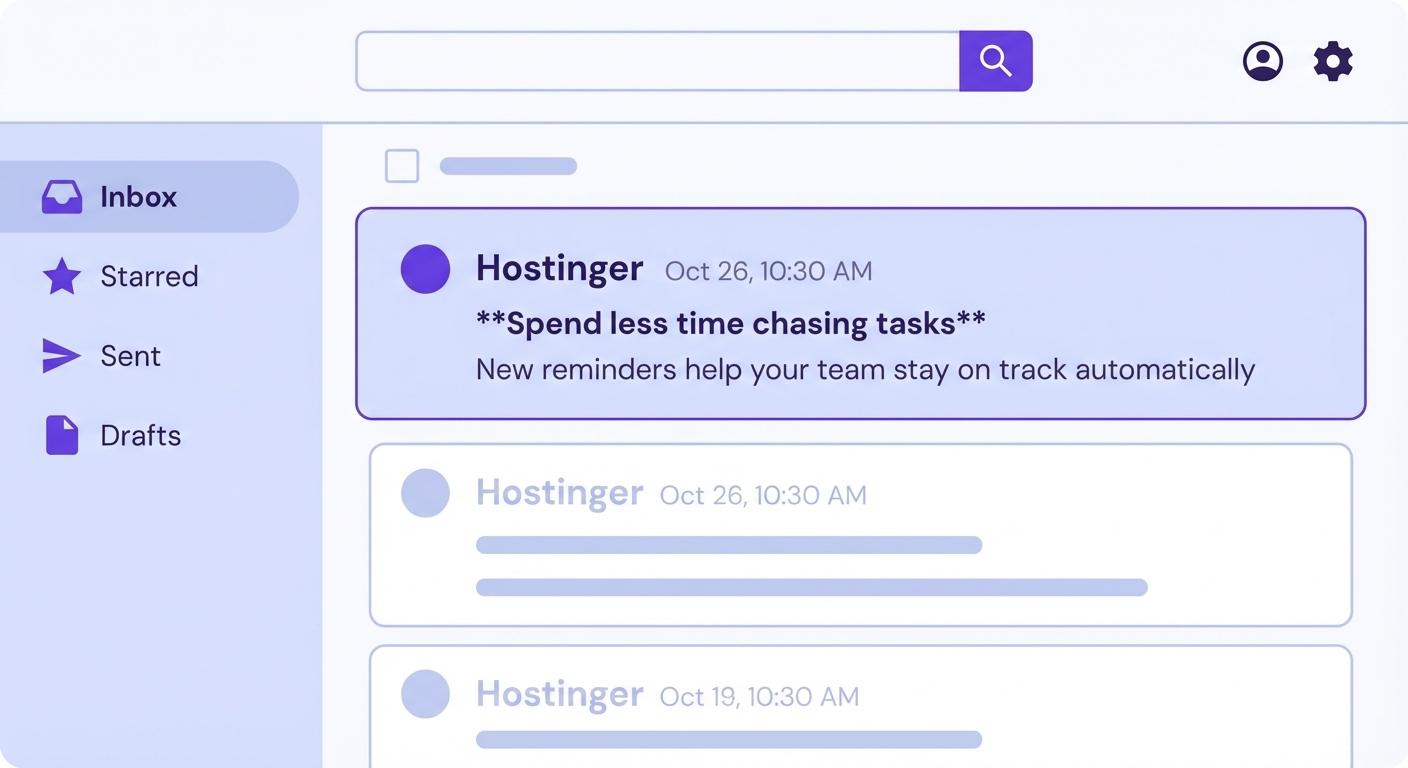
Picture someone scrolling through their inbox between meetings. You don’t have their attention yet – this is where you earn it.
3. Craft focused, reader-centric email body copy
Once your reader opens the email, deliver on the promise quickly.
Start by naming the problem the reader already recognizes, then showing how the feature helps. A simple body might look like this:
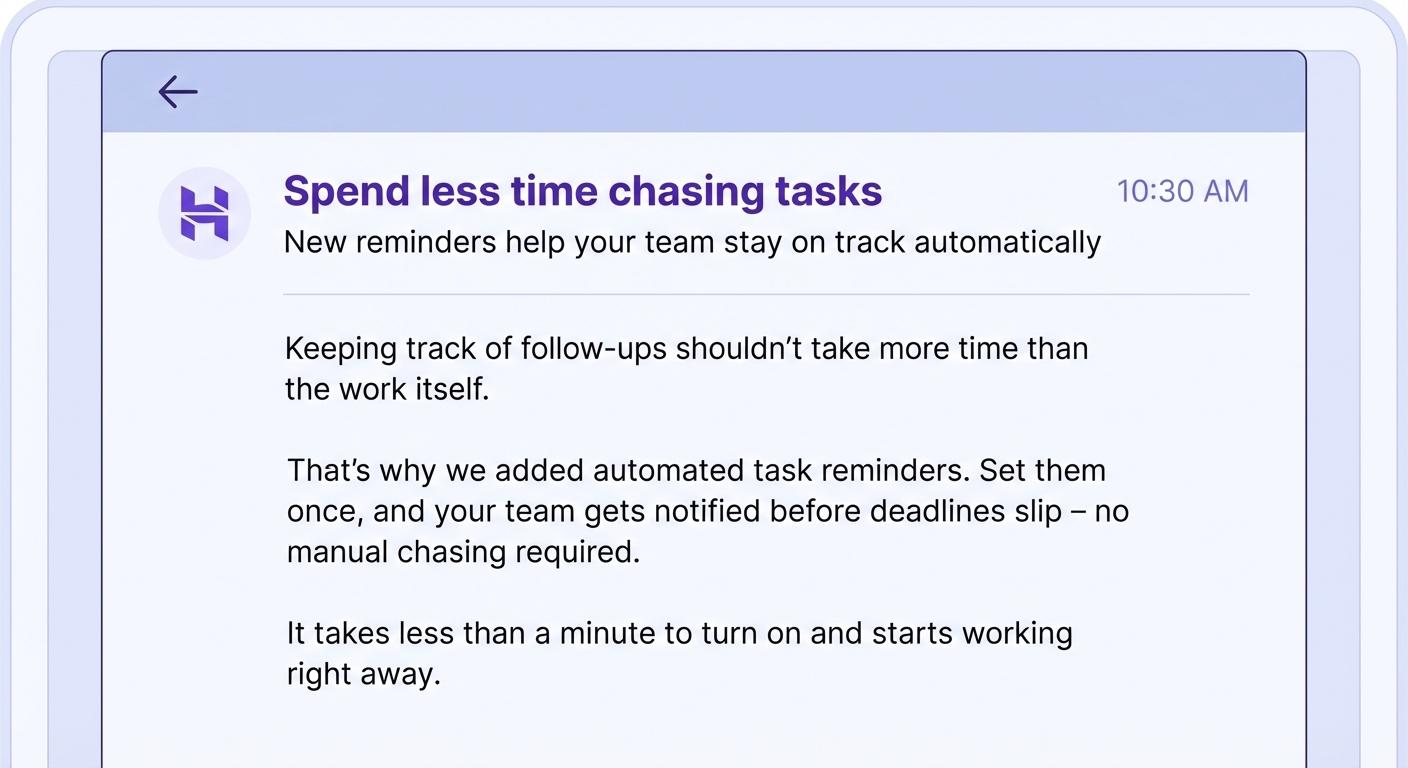
Notice what’s happening here. You’re not explaining how reminders work internally. You’re explaining why the reader should care and how easy it is to try.
This is where email copy differs from documentation. You guide attention instead of dumping information.
4. Add a clear and specific call to action
Now you tell the reader exactly what to do next.
A CTA like “Turn on task reminders” works better than “Learn more” because it removes ambiguity. The reader knows what happens after the click and why it’s worth it.
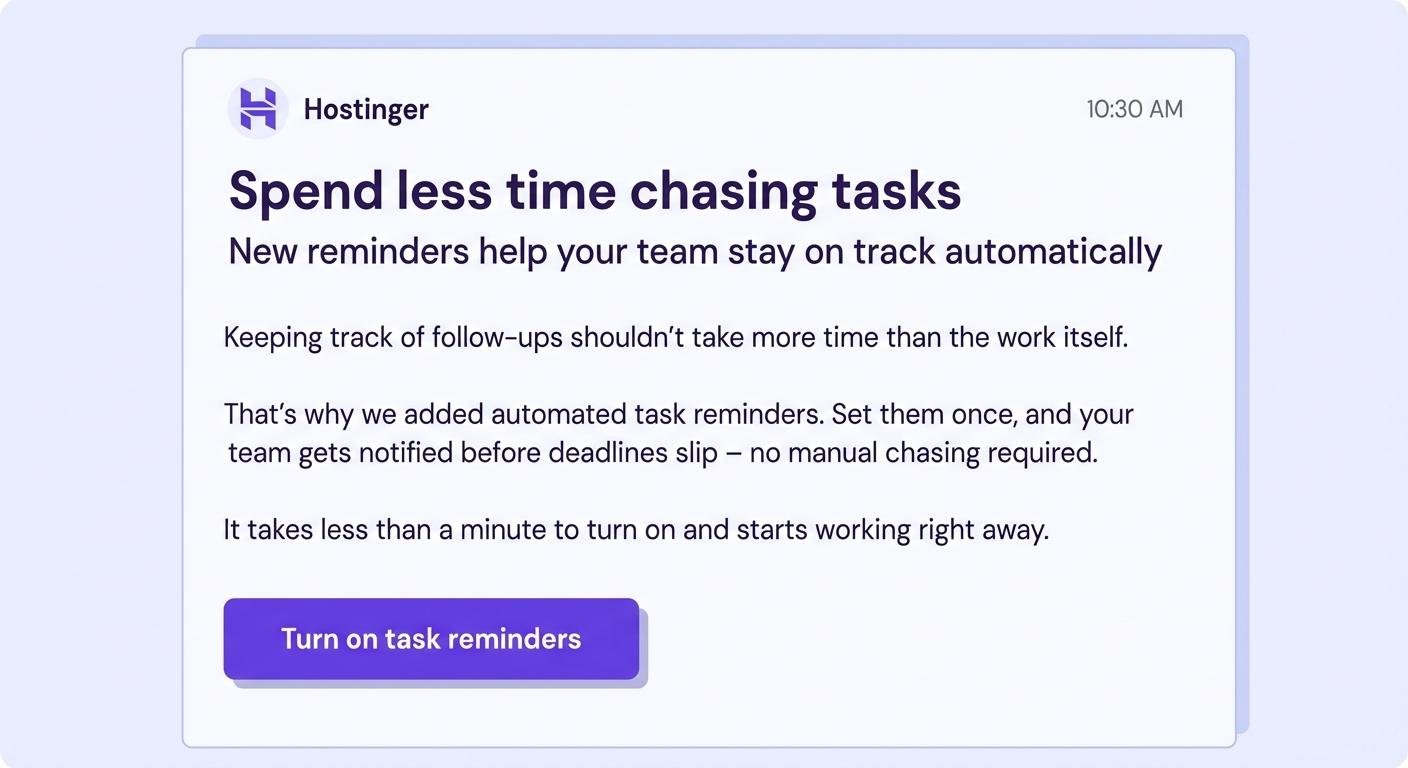
At this stage, you’re not asking for commitment. You’re inviting a low-effort action that matches the promise made in the subject line.
5. Optimize, test, and iterate
This is where promotional emails really teach you something and where your email writing workflow becomes repeatable.
You might test two subject lines: one focused on saving time, and one focused on avoiding missed deadlines. The one with higher opens tells you which pain point matters more to your audience.
You should also look at clicks. If opens are strong but clicks are weak, the body copy or CTA isn’t pulling its weight. If clicks are strong but feature usage is low, the friction likely happens after the click, not in the email itself.
Over time, this feedback sharpens your process and keeps decisions grounded in real behavior instead of assumptions. That’s how you learn what actually drives action and how each send gets easier to write than the last.
Types of email copywriting
The way you write an email changes depending on what you’re asking the reader to do and how ready they are to do it. Each type solves a different problem, so the subject line, message, and CTA change with intent.
Promotional email copywriting
You write promotional email copy when you want immediate action – launching a product, announcing a discount, or running a limited-time offer. The copy focuses on benefits first, then urgency, while quietly handling objections.
A good rule of thumb is to highlight one strong reason to act instead of overwhelming readers with options. Think of a seasonal sale email that pushes one clear deal, not a full catalog.
Example subject line:
Your workflow just got faster – try this new feature
This works because it leads with a benefit rather than an announcement.
Newsletter email copywriting
Newsletter copywriting works when you’re playing the long game. You’re not pushing for instant conversion – you’re staying useful, relevant, and familiar over time.
A strong newsletter usually shares one insight, one resource, and one soft CTA. That consistency builds trust and keeps readers opening your emails week after week.
Example subject line:
One small change that saves teams hours each week
The subject sparks curiosity without pressure, which fits the relationship-building goal. This long-term approach reflects proven newsletter best practices, where consistency and value drive sustained engagement.
Transactional email copywriting
You use transactional email copy for confirmations, resets, onboarding steps, and notifications. Readers open these emails because they need them, which means clarity matters more than persuasion.
Your job is to remove friction and reassure the reader quickly. The best transactional emails tell people exactly what happened and what to do next.
Example subject line:
Reset your password in one click
This works because it’s direct, specific, and reduces anxiety immediately.
Once the main task is completed or clearly in progress, you can include a subtle follow-up option – like “Review your account security” – as long as it doesn’t compete with the primary action.
Cold email copywriting
Cold email copywriting only works when relevance is obvious from the first line. You’re reaching out without permission, so respect, personalization, and value come first.
A good cold email feels like a helpful introduction, not a pitch. You show that you understand the reader’s situation before asking for attention.
Example subject line:
Quick idea to reduce missed deadlines for your team
This signals value and context without sounding salesy or intrusive.
Core components of high-performing email copy
Email copy becomes high-performing when structure and psychology support each other inside one message.
1. Subject lines and open-rate optimization
Strong email subject lines combine curiosity, specificity, relevance, and timing. Personalization helps, but misleading clickbait kills trust fast.
Curiosity works best when it’s grounded in a real benefit. Vague or exaggerated subject lines may earn an open once, but they quickly train readers to ignore future emails.
2. Email body structure and readability
Effective email body copy is easy to scan. Short paragraphs, logical flow, and clear emphasis guide readers naturally toward the CTA without forcing a decision.
A welcome email that says “Click here to set up your profile” beats three paragraphs about company history every time.
3. Tone, voice, and personalization
Your email tone of voice shapes trust. When it aligns with your brand and adapts to behavior, emails feel human rather than automated. Keep the tone consistent as you scale by following clear brand voice guidelines.
Dynamic email personalization, such as referencing a recent action or behavior, makes messages feel written for one person rather than an audience.
When a clear subject line sets expectations, focused body copy delivers on the promise, and tone reinforces trust, the entire email feels intentional, rather than intrusive.
How to avoid email copywriting mistakes
Even strong campaigns lose momentum when common email copywriting mistakes creep in. The good news is that each one is fixable once you know what to look for.
- Unclear goals. When readers don’t know what to do next, they don’t do anything. This leads to low clicks and stalled conversions. Fix this by choosing one clear action per email and cutting everything that doesn’t support it.
- Overloaded content. Packing too many ideas into one message dilutes the impact and overwhelms readers. This is how emails get skimmed and forgotten. Focus on one benefit and save the rest for future sends.
- Generic messaging. Poor email copy ignores context and treats every reader the same, which makes messages feel irrelevant. Segment your audience so the email matches where the reader is and what they care about right now.
- Weak CTAs. Vague calls to action like “Learn more” lower clicks because they create uncertainty. Match CTA wording to intent so readers know exactly what happens after they click.
- Ignoring performance data. Repeating the same approach without reviewing results leads to ongoing email marketing errors. Look at opens, clicks, and replies to see where the message breaks down and adjust the next send.
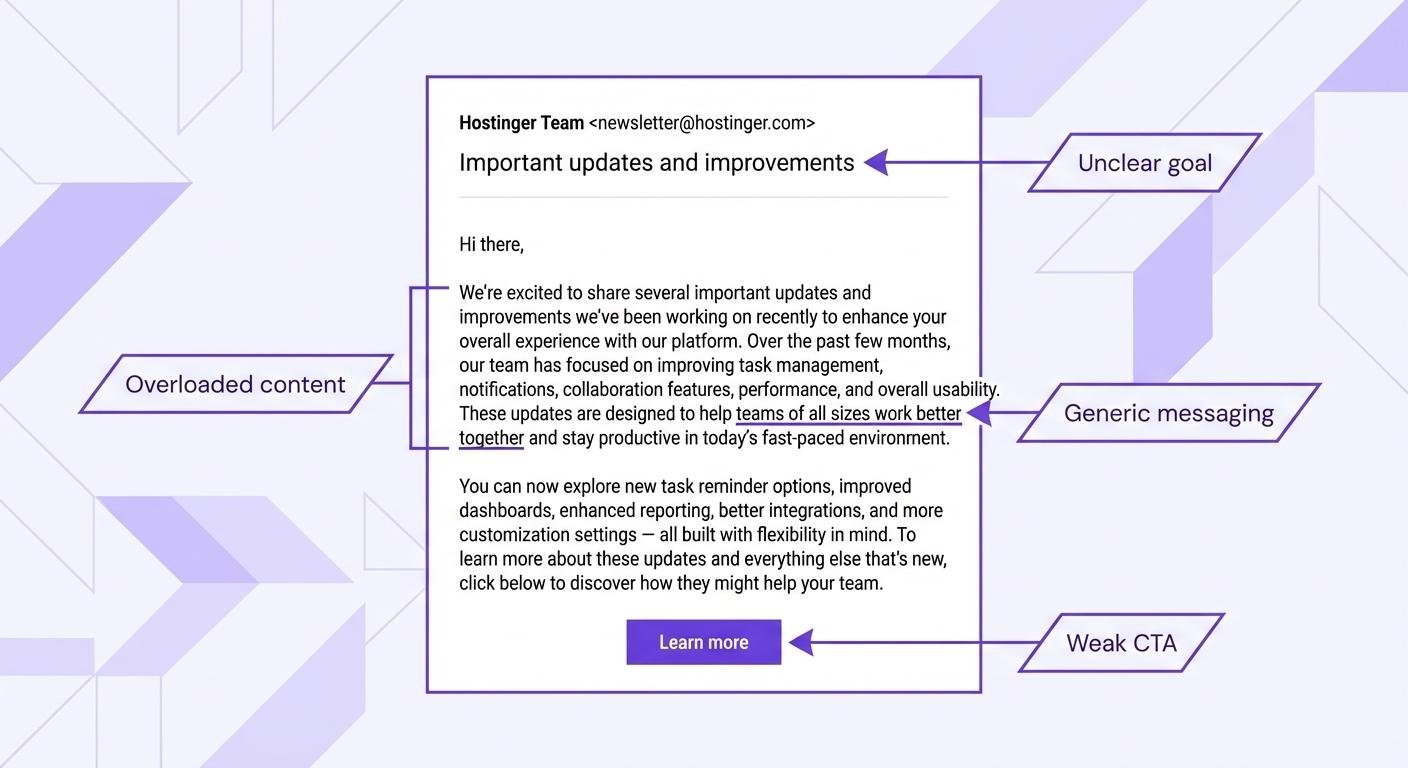
Each fix starts with clarity. Once the goal is sharp and the reader’s intent is clear, the writing follows, and your emails start pulling their weight again.
What is the easiest way to write email copy?
The easiest way to write effective email copy is to pair a clear strategy with AI-assisted tools that speed up execution without sacrificing quality.
Here’s how it works: AI email copywriting helps you generate ideas, shape structure, adapt tone, and test variations faster. You still decide the goal, audience, and intent – the tool simply removes the blank page and repetitive work.
Manual writing works best for small lists, one-off messages, or highly personal emails where nuance matters most. Email copywriting with AI shines when you need speed, consistency, or multiple versions for testing across campaigns.
AI doesn’t replace strategy. It supports it and makes writing good email copy easier to repeat.
How AI-assisted email copywriting works
AI-assisted email copywriting works best when you start with clarity, not prompts. You define the goal, audience segment, and desired action first. That’s what makes this the easiest way to write email copy without sacrificing quality.
From there, you use AI email tools to generate subject lines, opening hooks, and CTA variations. This speeds up ideation and structure, especially when you need multiple angles to test.
You still review and edit everything. That’s where AI stays effective – the tool supports tone adaptation and optimization, but strategy and judgment stay with you.
Testing different versions shows what actually performs. AI improves the quality and speed of your copy, while email marketing automation handles segmentation, scheduling, and delivery. Together, AI-assisted copywriting and automation systems create a scalable email workflow that saves time without sacrificing strategy.
How Hostinger Reach helps write effective email copy
Hostinger Reach is an AI-powered email marketing tool designed to simplify email copy creation while keeping you in control. You use it to generate subject lines, email bodies, and CTAs that align with specific campaign goals, rather than starting from a blank page.
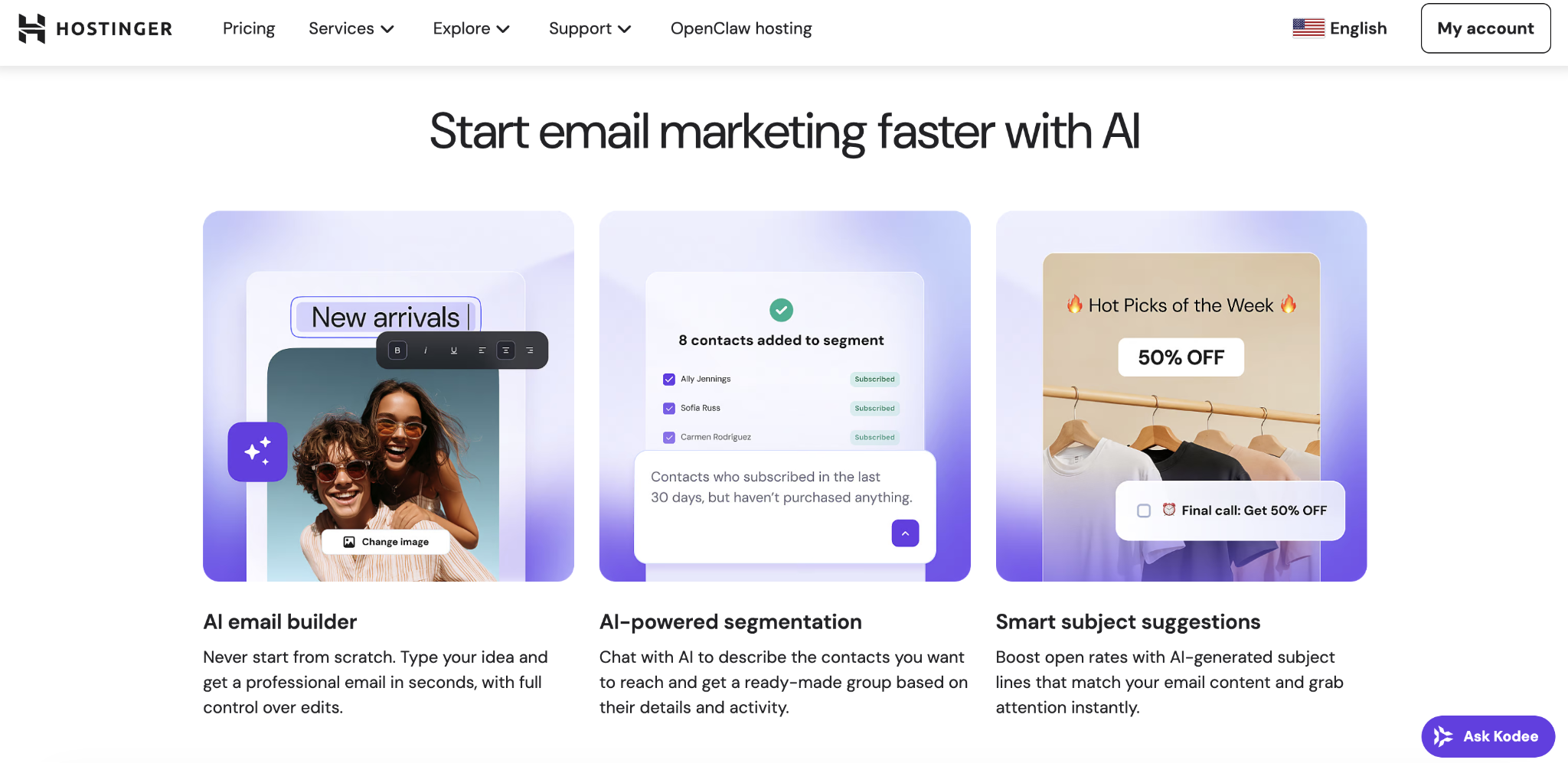
Its built-in optimization features help maintain clarity, tone consistency, and engagement across campaigns. Common use cases include newsletters, promotional emails, onboarding sequences, and re-engagement flows.
You always review and customize the output, so your message stays authentic and aligned with your brand. As part of Hostinger email marketing, Reach works alongside other email copywriting tools and an integrated AI email generator experience.
How to improve email copywriting skills
You improve writing email copy by paying attention to what actually happens after you hit send. Opens, clicks, and replies show you what resonates and where your message loses momentum.
The fastest way to get better is to practice on real material. Rewrite past campaigns, turn strong emails into reusable templates, and collect swipe files from brands you respect. Studying real email copywriting examples helps you recognize patterns that work, not just ideas that sound good.
Testing frameworks take this further. Small experiments with subject lines, openings, or CTAs build confidence because you’re learning from behavior, not opinions. With consistent practice, those small adjustments compound into better results.
Track email marketing metrics, refine what you send next, and keep shipping. That loop – write, test, adjust – is what helps you improve consistently.
All of the tutorial content on this website is subject to Hostinger's rigorous editorial standards and values.

Alma is an AI Content Editor with 9+ years of experience helping ideas take shape across SEO, marketing, and content. She loves working with words, structure, and strategy to make content both useful and enjoyable to read. Off the clock, she can be found gaming, drawing, or diving into her latest D&D adventure.


