How to start and grow a successful online tutoring business
Oct 14, 2026
/
By Nurul S. & Miglė C.
/
11 min Read
Online tutoring is an appealing option for educators to reach global students and make a positive impact, all from the comfort of their homes. Starting an online tutoring business is simpler than you think, with plenty of resources to guide you.
From obtaining certificates to retaining students, we’ll cover the essential steps to start and grow a successful online tutoring business.
Why start an online tutoring business?
Starting your own online tutoring business comes with a lot of benefits. Here’s why it’s a great idea.
Growing market
The global online tutoring service market is booming. According to Grand View Research, the market size was valued at $7.69 billion in 2022 and is expected to grow at a compound annual growth rate (CAGR) of 14.9% from 2023 to 2030.
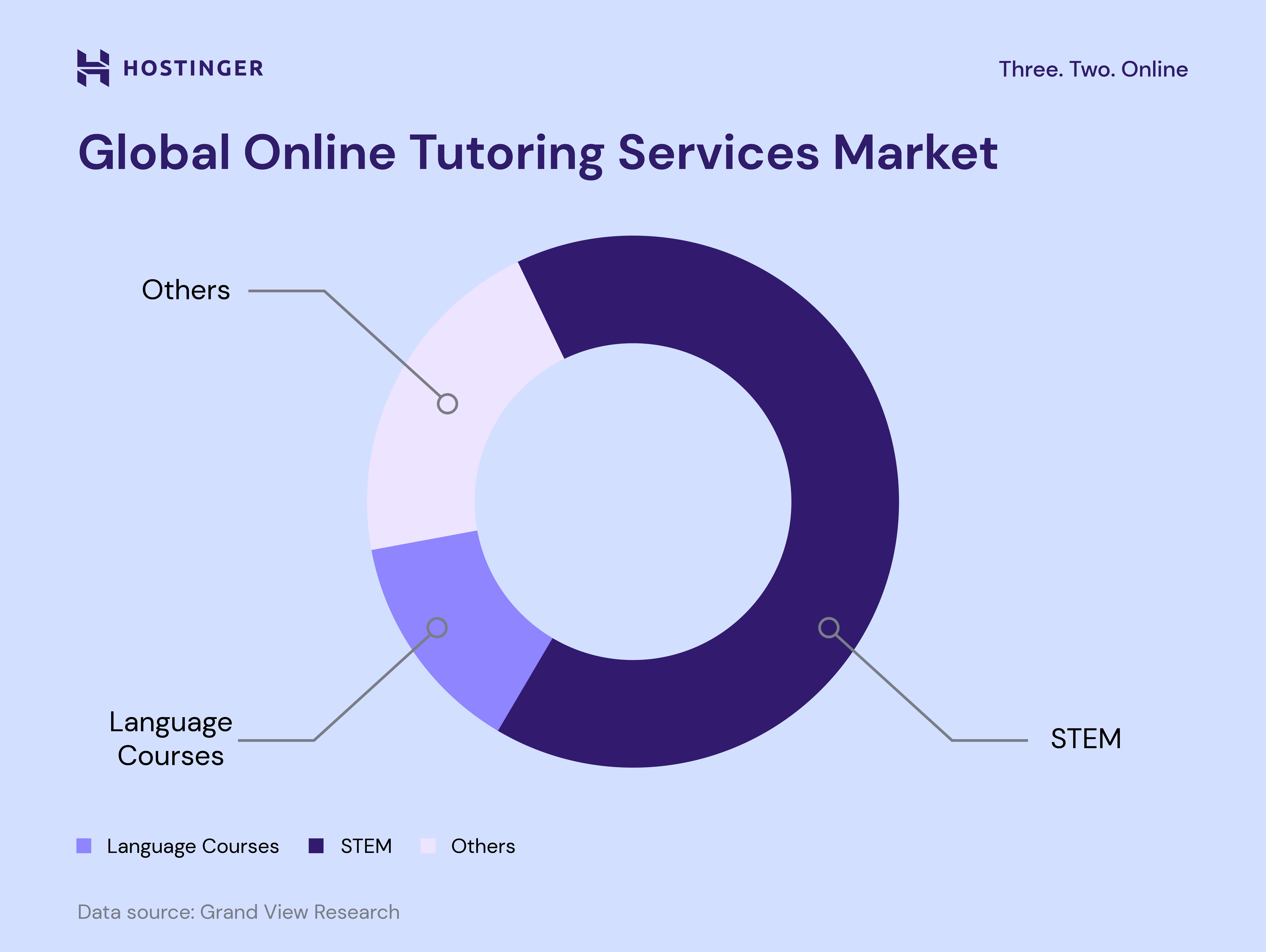
STEM subjects lead the way with 63%, followed closely by language courses. With the rise of remote learning and the need for personalized education, there is an increasing demand for online tutoring.
Flexibility
One of the most significant advantages of online tutoring is its flexibility. You can choose your own schedule and work from any location. Whether you’re a night owl or an early bird, you can schedule sessions that fit your lifestyle.
Reach students worldwide
Going online means geographical limitations do not limit you. You can connect with students worldwide, attract diverse clients, and expand your business beyond your local area.
Cost savings
Running an online tutoring business is much cheaper than traditional in-person tutoring. There’s no need to rent a space or spend money on commuting. These savings mean you can offer competitive rates while making a good profit.
Essential requirements to start an online tutoring business
To start a tutoring business, you should consider several key requirements.
1. Identify your niche
Relevant subject knowledge and teaching experience are important for tutoring businesses. These help you find the right niche and ensure you can effectively teach and engage your students.
- Experience and knowledge. Your background in the subject matter helps you start by providing suitable learning materials, building your curriculum, and attracting the right audience.
- Market size and profitability. Understanding the market size and potential profitability helps you grow your business and make it sustainable in the long run.
Once you’ve identified your niche, obtaining tutoring certifications comes next. These certifications enhance your credibility and show your qualifications in a particular area.
To obtain tutoring certifications, you can explore several options:
- Online platforms. Websites like Coursera and Udemy offer certification programs in various subjects and tutoring skills.
- Professional organizations. The International Tutor Training Program Certification (ITTPC) by the College Reading and Learning Association (CRLA) and the National Tutoring Association (NTA) provide recognized certification programs. Check with your local regulation board to see if these certifications are required in your area.
- Local universities and colleges. Many higher education institutions offer courses and certification programs specifically designed for tutors.
Fortunately, you don’t need a degree in education to become an online tutor. Various certifications and continuous professional development can help you establish yourself as a reputable tutor without a formal degree.
Here are a few options to consider:
| Education topic/category | Do you need a degree? |
| K-12 (Kindergarten to Grade 12) subjects | No |
| Test Preparation (SAT, ACT, GRE) | No |
| Foreign Languages | No |
| STEM Subjects (Science, Technology, Engineering, Math) | Yes (preferred) |
| College-Level Courses | Yes |
| Skill Development (Writing, Public Speaking) | No |
| ESL (English as a Second Language) | Yes (preferred) |
| Special Education | Yes |
If you plan on getting certifications, consider obtaining dual certification in subjects that correlate well. For example, if you’re certified to teach English, adding English as a Second Language (ESL) certification can help broaden your student base.
2. Prepare technical requirements
Before starting your virtual tutoring business, make sure you have all the technical equipment. This includes a computer, high-speed internet, webcam, and microphone to ensure smooth virtual tutoring sessions.
Next, select your preferred video conferencing tools. Zoom and Google Meet are currently the most popular platforms, but you can consider using multiple platforms to offer your students more options.
Consider factors such as background noise, lighting, and privacy. It’s essential to have a distraction-free environment where you can conduct online tutoring sessions without interruption.
Additionally, ensure you have a good setup with proper lighting and positioning of your webcam and microphone for clear communication with your students.
Make a business plan for a tutoring business
To set up your own tutoring business successfully, planning well is important. Define your goals, target audience, and budget to help build a strong foundation for growth and lasting success.
1. Set goals
Start with a clear vision and goals for your tutoring business. This will help guide your decision-making and determine your short and long-term goals.
Expert Tip
At the Open Institute of Technology (OPIT), I started with a clear vision: improving education access and quality through digital technology. You’ll need to make short and long-term goals; ours was to achieve European accreditation and register 20 million students, respectively.

Riccardo Ocleppo
Founder and CEO of OPIT
After that, define your short-term and long-term business goals and divide them into the following categories:
- Online tutoring platforms, such as a website.
- Tutoring business model, including its curriculum, lesson plans, and materials.
- Marketing and advertising strategies.
- Financial management and budgeting.
Then, divide those categories into short-term and long-term goals. Short-term goals refer to the initial stages of your business, typically within the first six months. Long-term goals focus on the growth and sustainability of your business in the long run.
Here’s an example of short and long-term goals for your business plan. Adjust this to fit your specific goals and objectives.
| Short-term goals | Long-term goals |
| Month 1-2. Create a professional website and schedule tutoring. Month 3-4. Launch initial marketing campaigns on social media and through online ads. Month 5-6. Acquire your first students and gather feedback to improve your services. | Year 1. Expand your course offerings and upgrade your tutoring equipment. Year 2. Increase your student base to 100 and implement advanced marketing strategies. Year 3. Develop a mobile app for your tutoring services. Year 5. Partner with schools and educational institutions to further grow your business. |
2. Identify target audience
Knowing your target student demographic helps you create an online course that fits their needs and interests. This will help attract more potential students and ensure you’re providing high-quality and relevant content for them.
To find your target students, start by considering what subject or subjects you specialize in and who would benefit most from your expertise. For example, if you excel in math, your target audience may be high school or college students who struggle with the subject.
On the other hand, if you have a background in business, your target demographic could be entrepreneurs or working professionals looking to enhance their skills.
Expert Tip
Finding your target students is all about understanding who might benefit from your services the most. For us, it was aspiring technology professionals and university students, respectively.
Riccardo Ocleppo
Founder and CEO of OPIT
3. Finalize budget
Creating a budget for your online tutoring business helps manage spending and ensure profitability. Let’s divide the process into outlining anticipated expenses and setting tutoring rates.
Start by identifying the costs of launching and running your online tutoring business. These may include:
- Website development. Hosting, domain registration, and design costs.
- Marketing. Advertising on social media, Google ads, and other promotional activities.
- Equipment. High-quality webcam, microphone, and any other necessary teaching tools.
- Software. Subscriptions to tutoring platforms, video conferencing tools, and educational resources.
Next, connect your business expenses with your goals to determine the appropriate pricing for your tutoring services.
Research what other online tutors with similar qualifications and services charge to find your tutoring rate. This research will give you a baseline for setting your prices.
Consider your experience and expertise when setting your rates. Your qualifications and experience should influence your pricing, as more experienced tutors can generally charge higher rates.
Finally, set short-term and long-term financial goals. Your rates should help you achieve these goals, whether breaking even in the first few months or hitting a certain profit margin within a year.
Build a website
A website showcases your expertise, provides essential information about your services, and allows students and parents to contact you quickly. This part covers how to create and enhance your website with various features.
1. Create the website
To create a successful online tutoring website, you need a user-friendly platform that allows you to design and customize your site easily. Platforms like Hostinger AI Builder are an excellent choice.
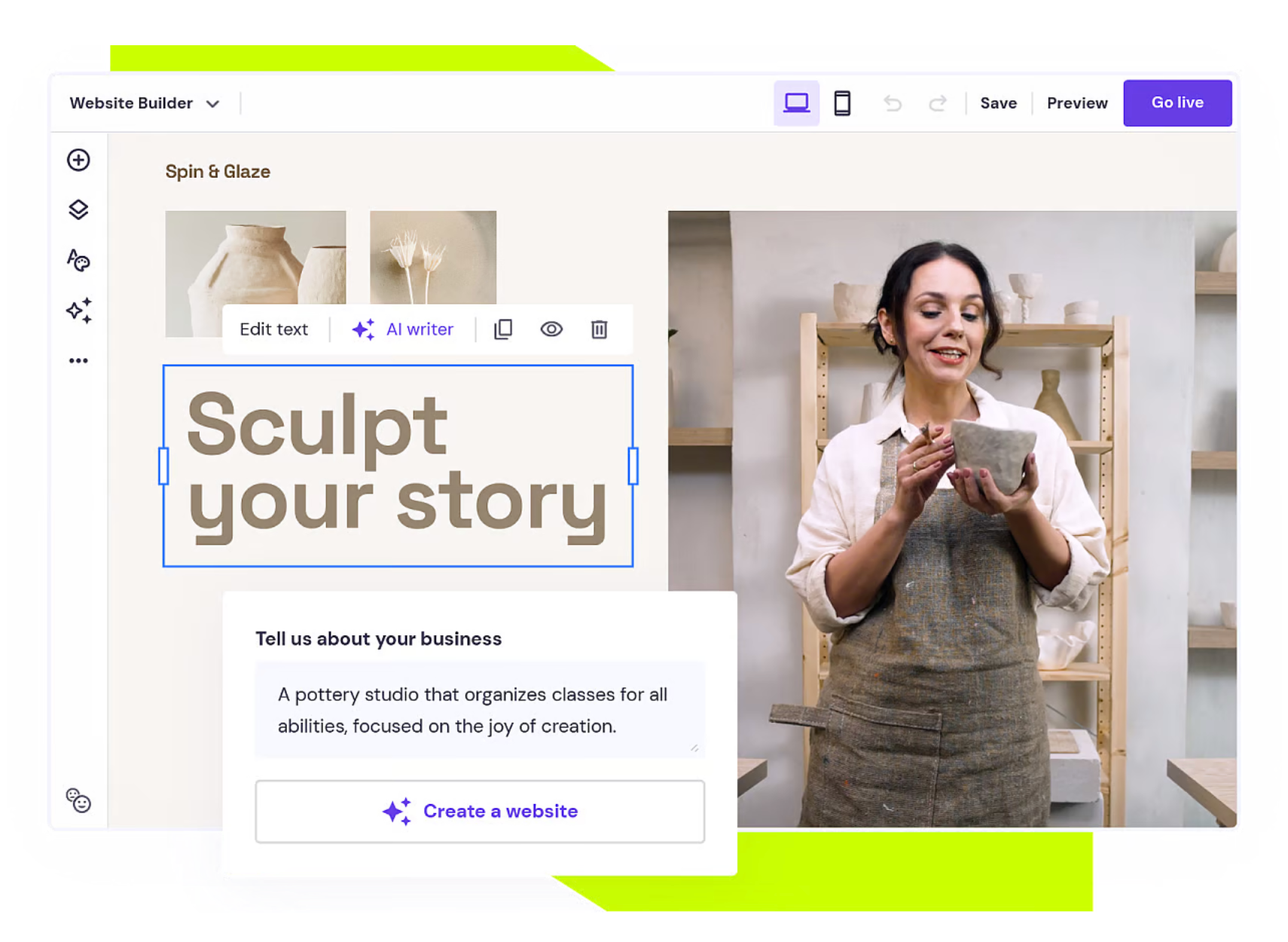
Hostinger AI Builder is designed for beginners, making it easy to understand and use. It offers a user-friendly interface that allows you to drag and drop elements, customize layouts, and add multimedia content effortlessly.
There are two pricing Hostinger Website Builder plans. We recommend the Unlimited plan, costing at CA$ 4.99/month.
This plan provides various AI tools for a seamless website creation process. These include an AI Website Builder, Blog Generator, SEO, and Heatmaps.
It also includes eCommerce functionality, allowing students to pay for your tutoring services directly on the website. Moreover, it comes with 0% transaction fees, helping to maximize your profit.
You can create a website using the AI builder or a designer-made template. If you’re going with a pre-made template, here are some of our recommendations:
- Missouri. Straightforward design with minimum pages for a simple user journey.
- Tati Uribe. Has a separate services page organized in a dropdown, perfect for tutors with multiple offerings.
- Blank service template. Allows you to customize every aspect of your website, giving you complete control over the design and layout. Perfect if you have a specific vision and want to bring it to life on your website.
Feel free to explore additional education website templates if you prefer building your site with a customizable theme.
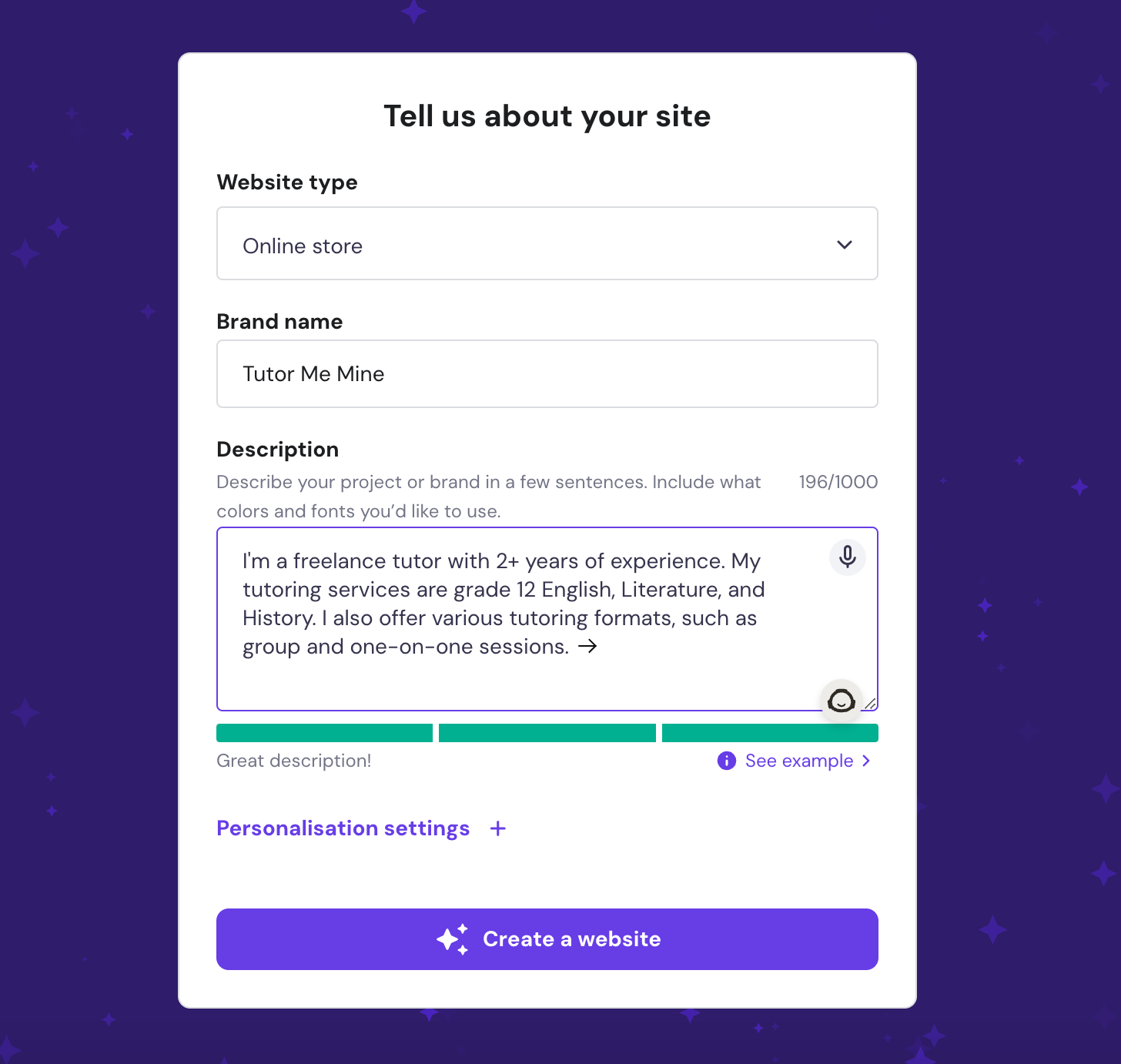
However, we suggest using the AI builder for its fast setup. To create a website, enter your business details, such as website type, name, and description. You can also choose your preferred website colors.
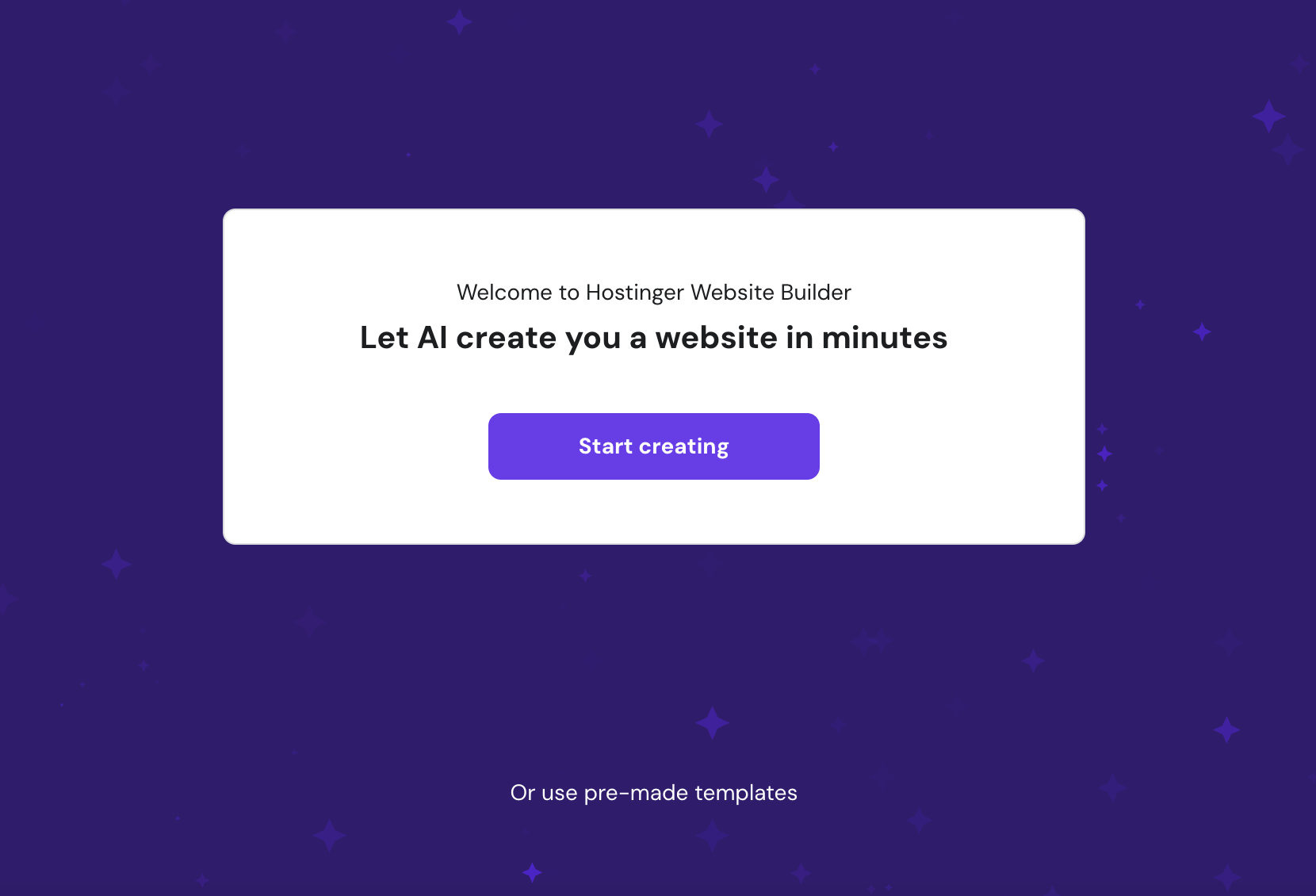
Choose the Online store option as your website type. It has an Appointment feature to set tutoring duration, pricing, and location.
In addition to these templates, our platform offers other powerful features, such as SEO tools, social media integrations, and analytics, to help you optimize your website’s performance and reach a wider audience.
2. Add your tutoring services as products
Start adding your tutoring services through the Appointment feature. Using Hostinger Website Builder, go to the Store manager and set up your product page by adding your country and currency.
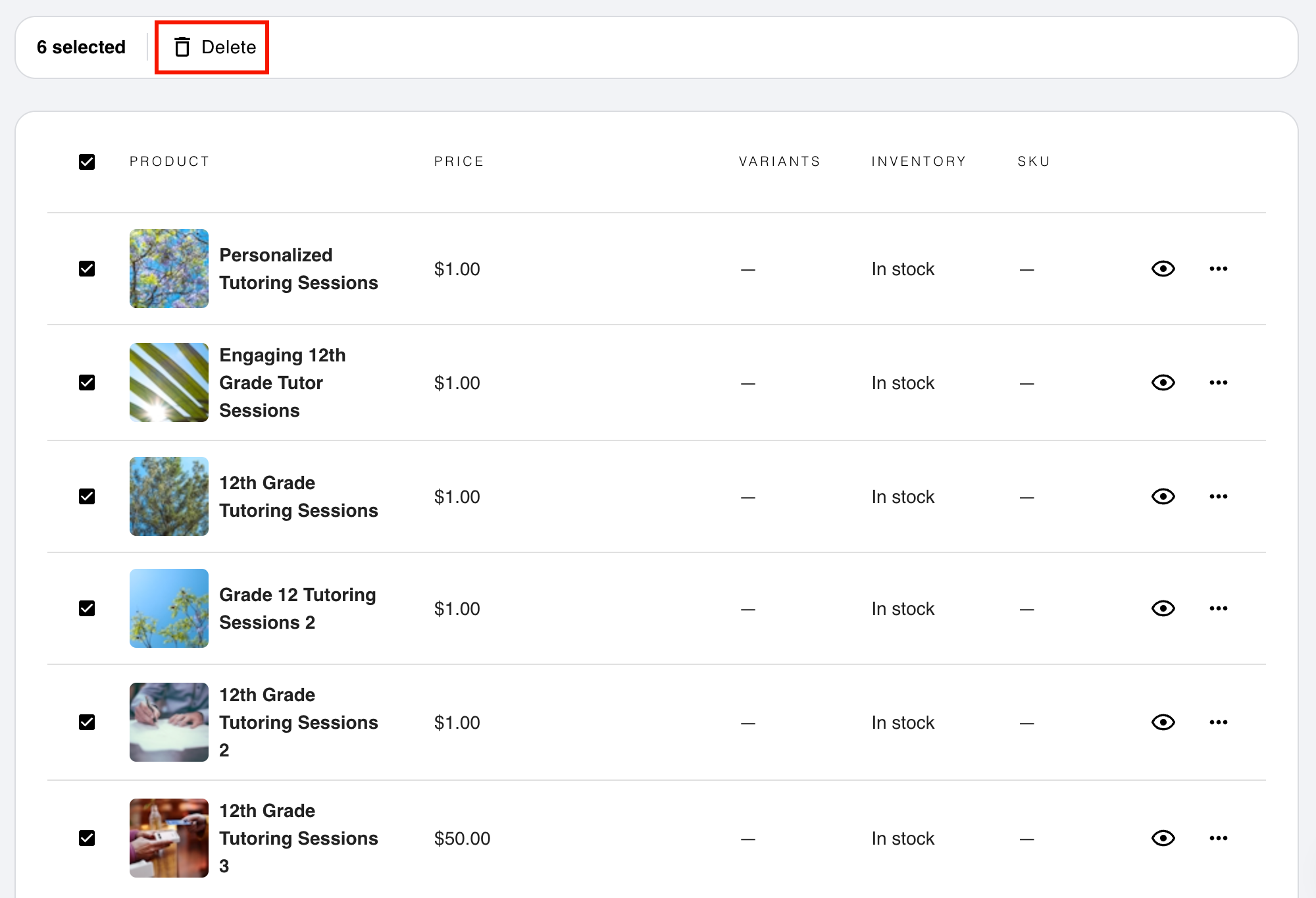
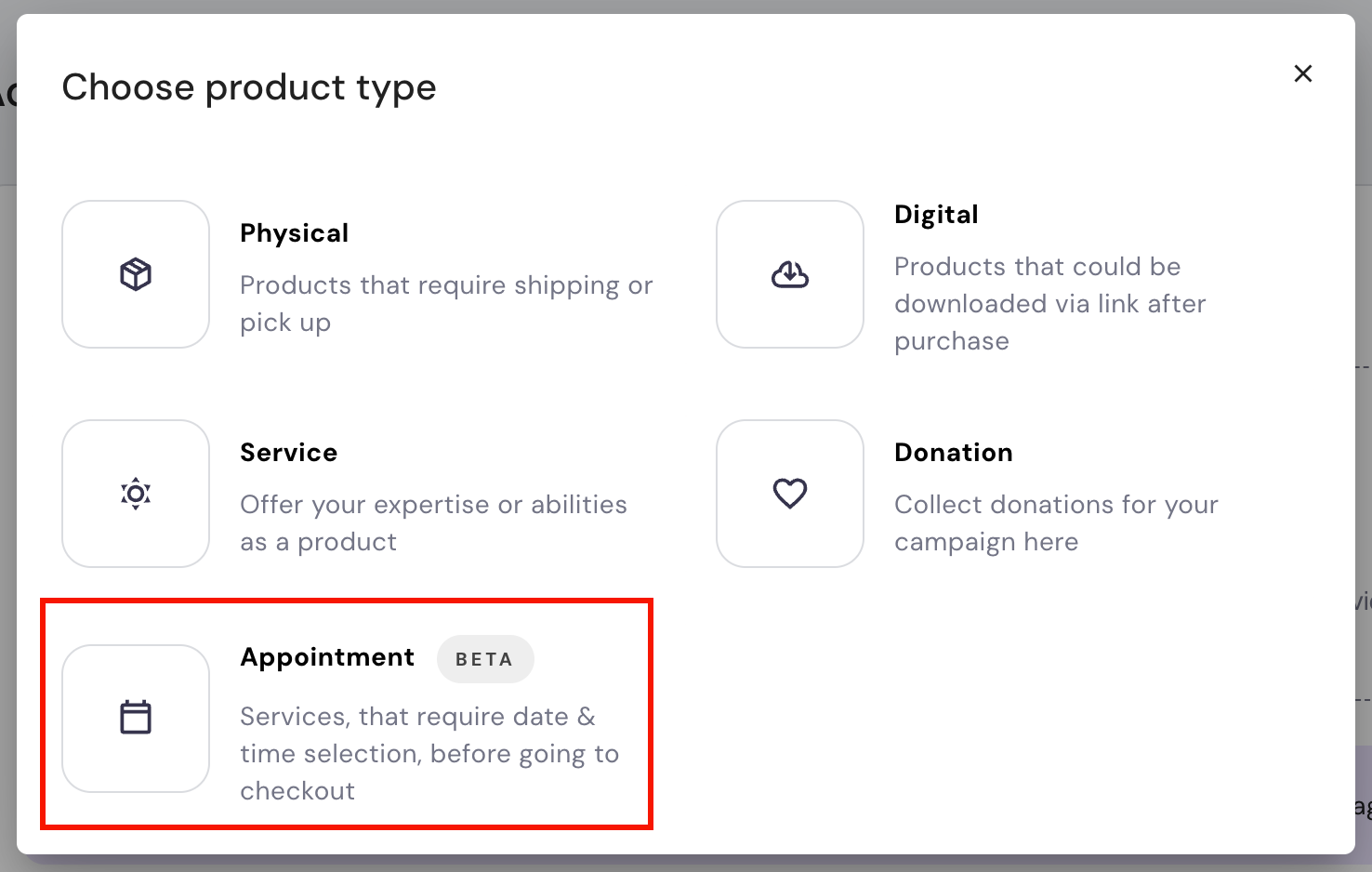
Note that choosing the Online store website type will provide product placeholders. However, you need to change from Physical to Appointment product type for service-based businesses.
To do so, delete all the default physical products on your website. Simply tick the box to delete all products in one go.
After that, add a new product and choose Appointment as the product type.
You can add more details like product images, titles, and descriptions.
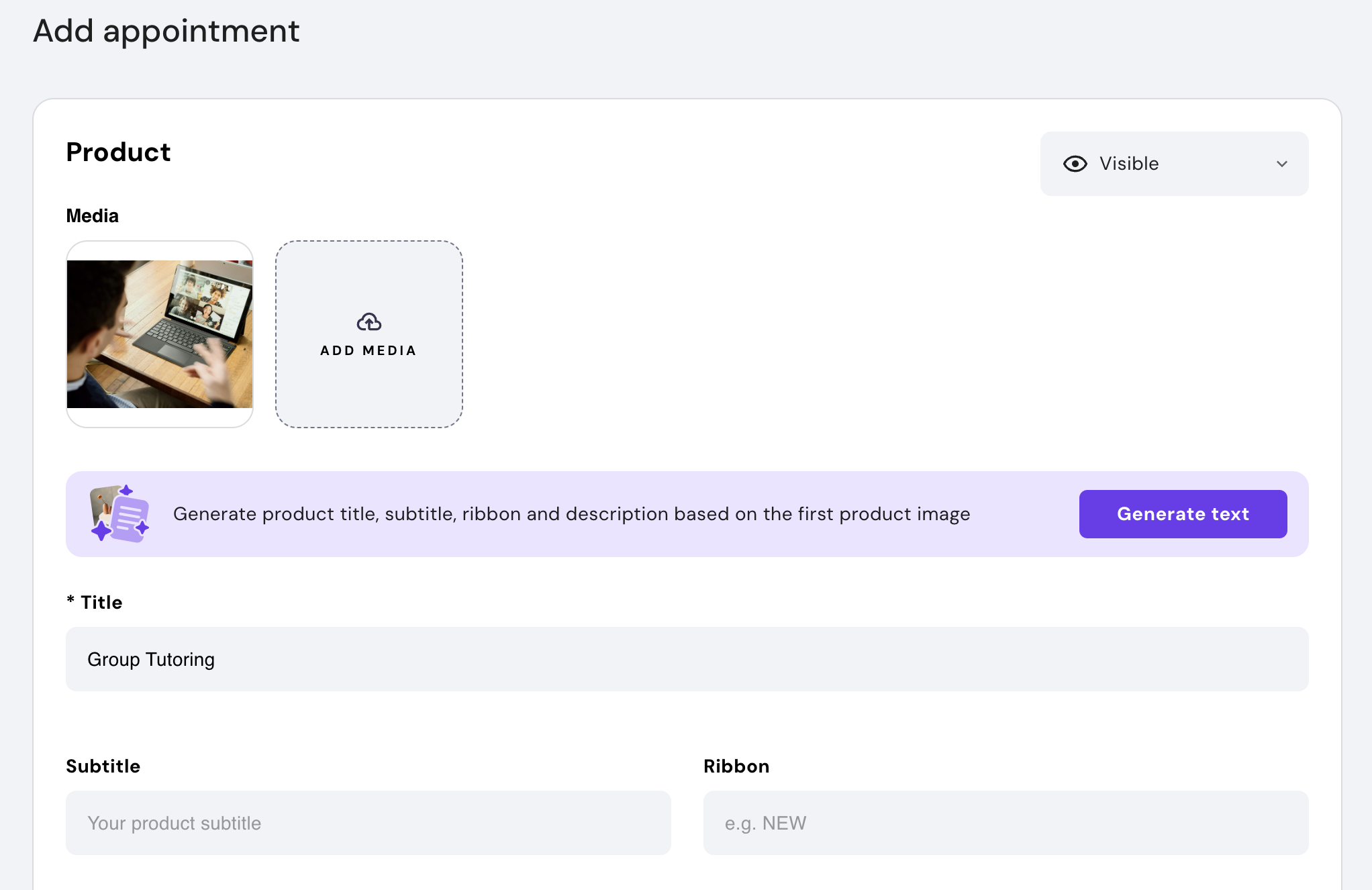
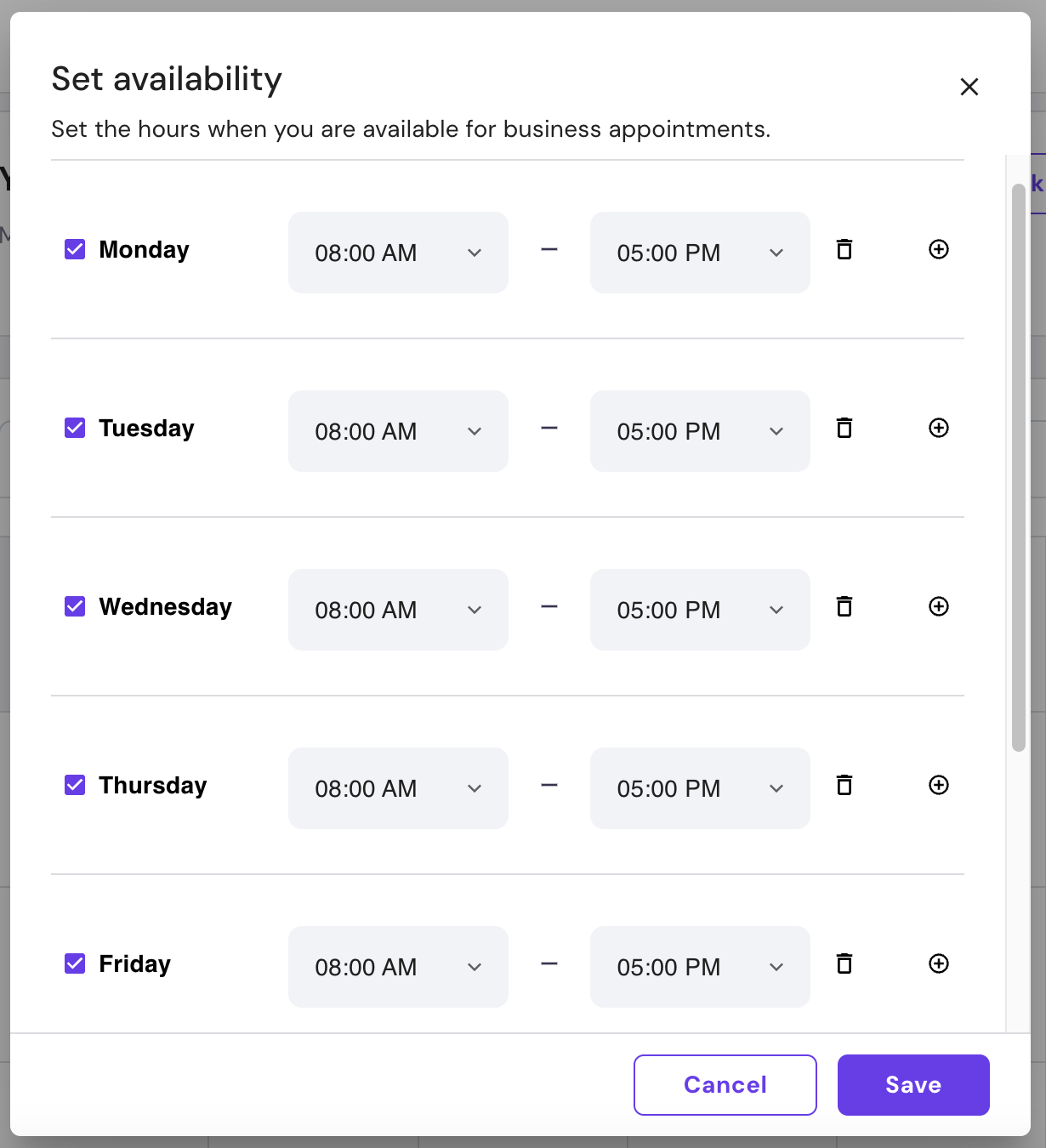
Complete the process by adding the product price, category, and the time and place of your tutoring appointment. Remember to edit your availability.
3. Set up payment methods
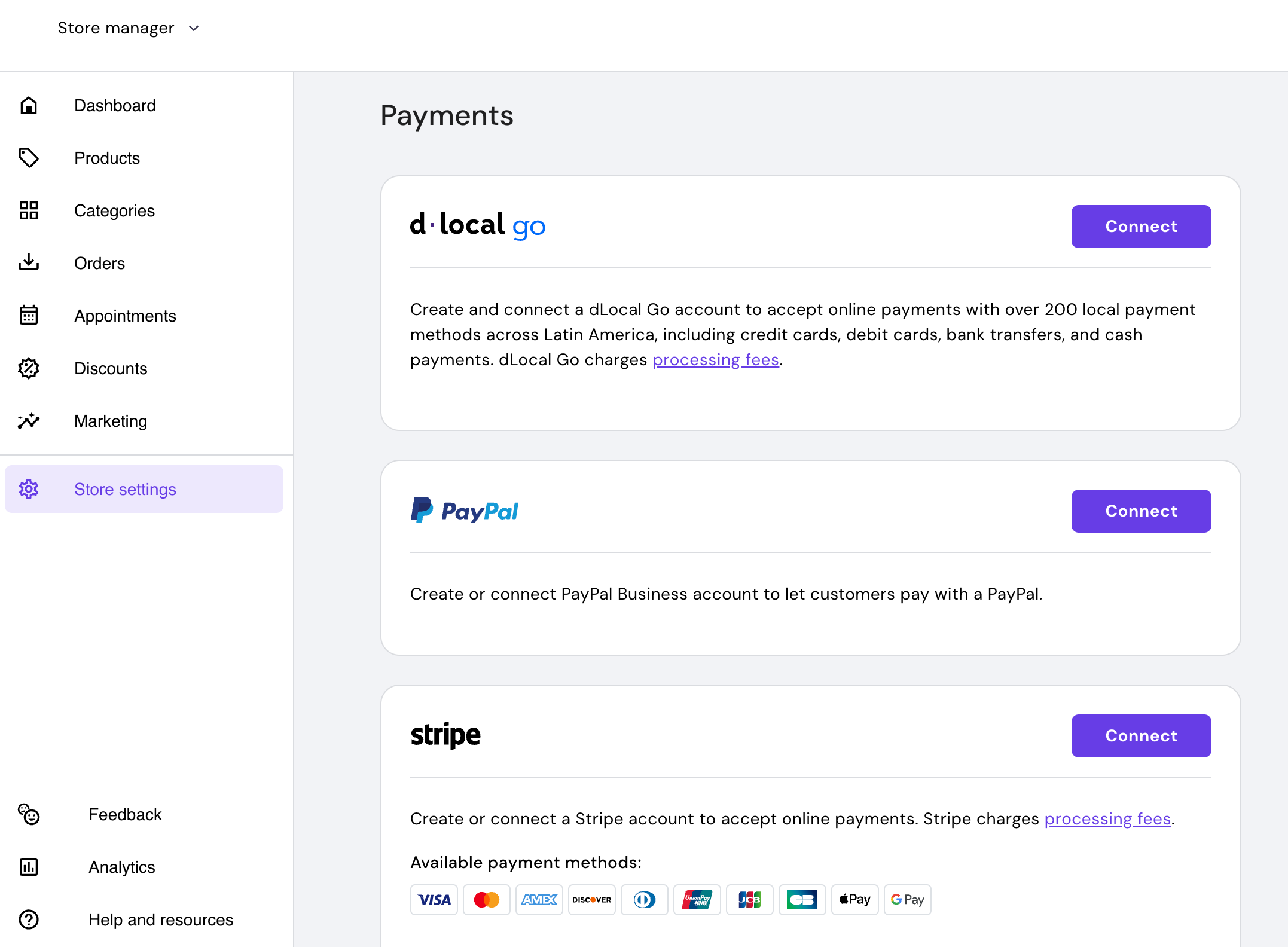
Connect various payment gateways like PayPal, Stripe, and manual bank transfers to your website. For LATAM students, choose dLocal.go.
Go to Store manager → Store settings → Payments. Click Connect on your preferred payment methods.
4. Complete your tutoring website
Enhance your tutoring website to make it more appealing to potential students. Start by customizing the About and Contact pages. Add a portrait of yourself or edit the contact form if you wish.
Adding a Blog page also helps students understand your teaching methods. Share tips and tricks, updates on tutoring services, or even student success stories to showcase your expertise.
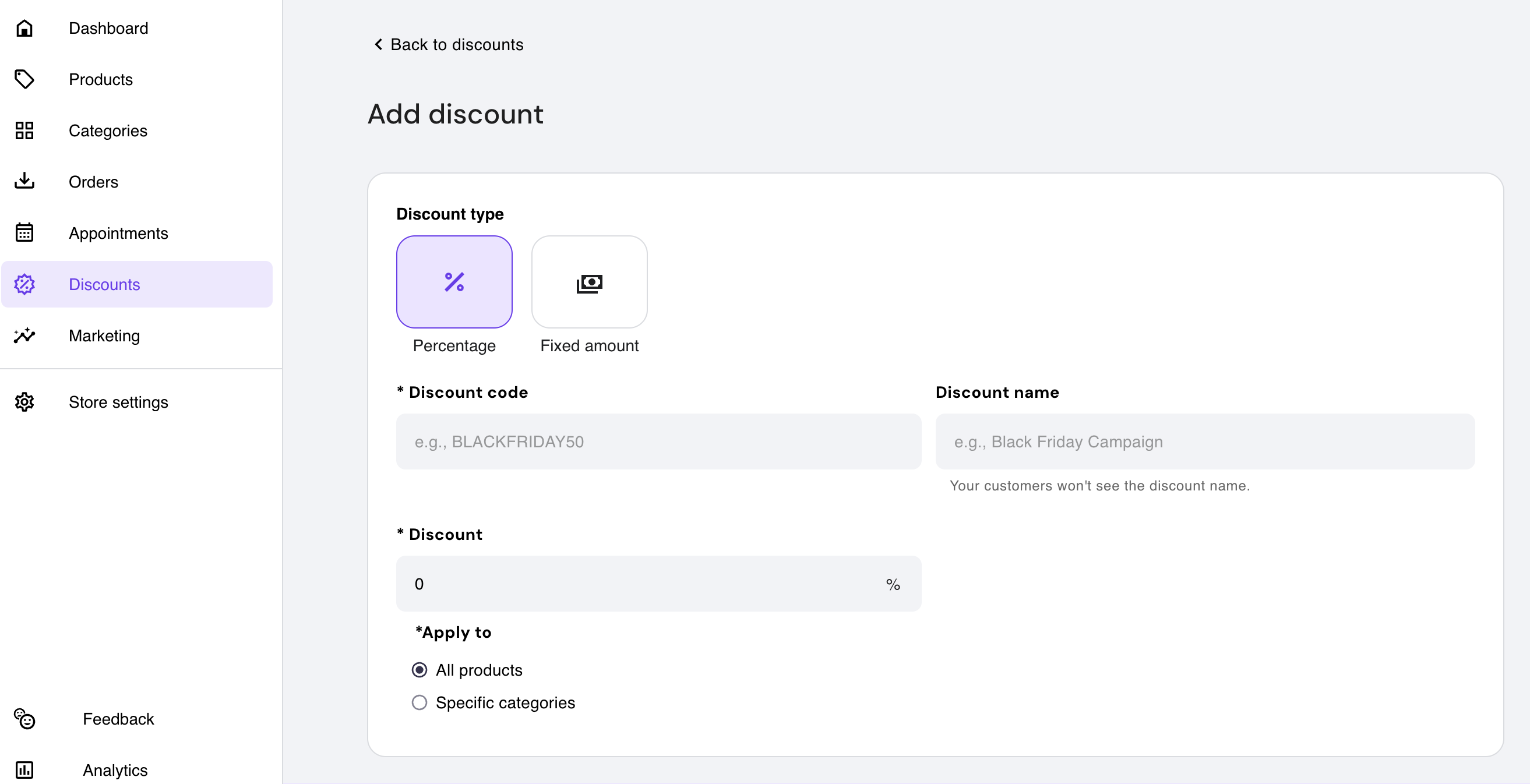
Finally, to generate interest, consider adding discount prices. For example, offer discounts for the first 100 student signups. To do so, go to the Store manager → Discounts.
Market your online tutoring services
Effective marketing is crucial for attracting students to your online tutoring business. It helps you reach a broader audience, build credibility, and stand out in a competitive market.
1. SEO for online visibility
Search engine optimization (SEO) involves optimizing your website to rank higher on search engine results, such as Google. The higher your website ranks, the more visible it is to potential students to find you.
SEO drives organic traffic to your tutoring website, improving your chances of attracting students without relying solely on paid ads. It ensures that your business appears in relevant search queries, enhancing your credibility and reach.
There are some SEO marketing strategies to try. First, use relevant keywords. Identify and incorporate keywords that potential students are likely to search for. If you’re a math tutor, keywords might include “online math tutor,” “math tutoring,” “algebra help,” and “geometry tutor.”
Second, update the SEO title and description. Craft compelling and keyword-rich titles and descriptions for your web pages from your keyword list to improve click-through rate (CTR).
Third, add image alt text. Use descriptive alt text for images on your site to improve accessibility and boost your SEO.
Once you have all these elements, you can add them to your site. If you use Hostinger AI Builder, the built-in SEO tools will help you add these seamlessly to each website page.
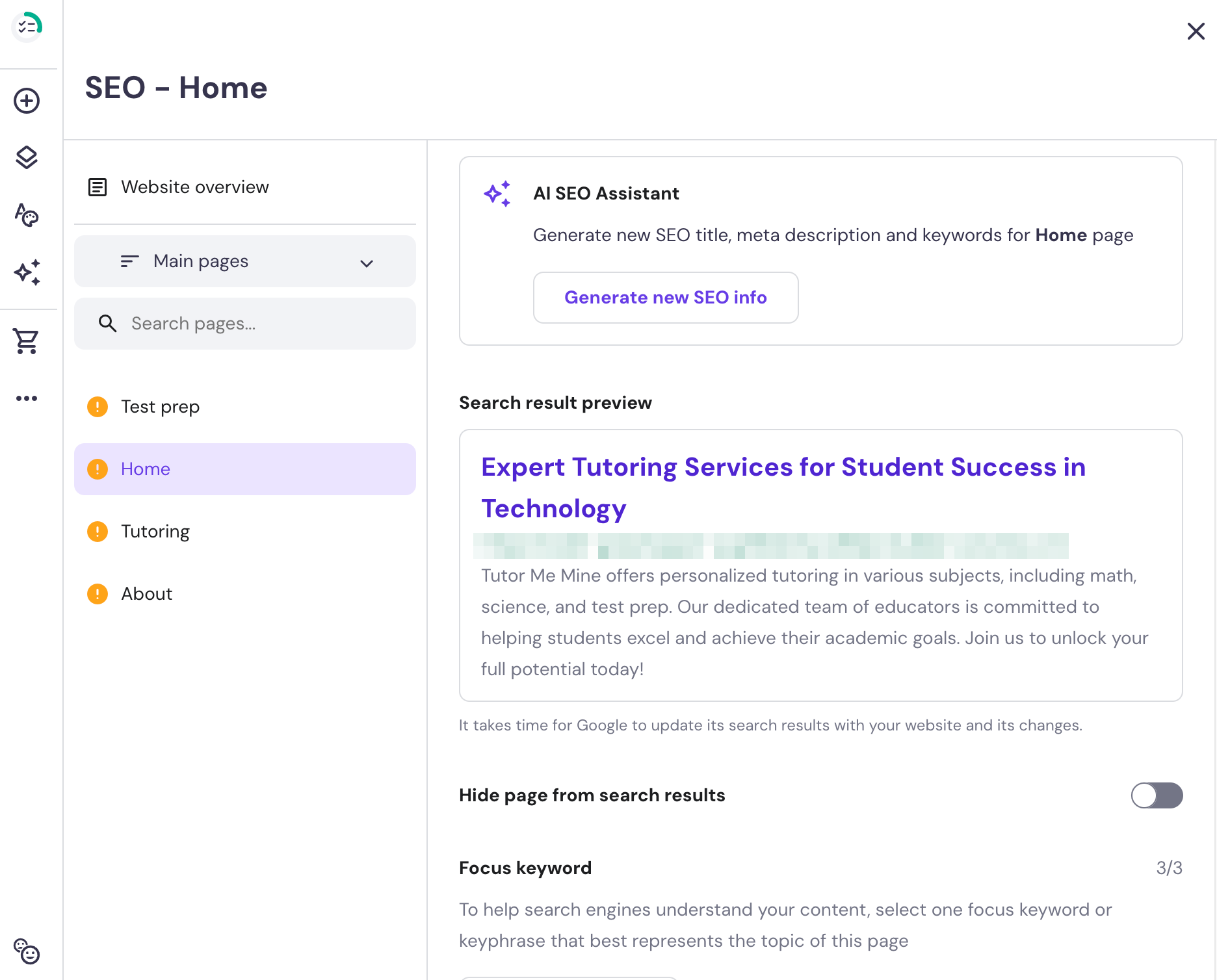
Lastly, create quality content. Regularly publish high-quality blog articles or tutorials related to your tutoring subjects. Use your keywords, but don’t overdo it. Adding too many keywords can hurt your SEO efforts.
SEO takes time and effort. However, by following these tips, you’re a step closer to improving your website’s visibility and attracting more potential students to your tutoring services.
Download website launch checklist
2. Utilize social media
Social media platforms are powerful tools for reaching and engaging with potential students. They allow you to showcase your expertise, share success stories, and interact with your audience in real time.
To start, here are some social media options and the marketing strategy for each:
- Facebook. Use Facebook Groups to share informative posts, success stories, and upcoming events. Running targeted ads on Facebook can also help you reach a specific audience.
- Instagram. Post photos and videos of your tutoring sessions, success stories, and educational tips. Use Instagram Stories and Reels to engage with your audience through quick, interactive content.
- TikTok. Create short, engaging videos with quick tips, study hacks, and motivational messages. TikTok’s algorithm can help your content go viral, reaching many potential students.
- YouTube. YouTube is an excellent platform for demonstrating your teaching style and expertise. Share longer-form content like tutorial videos, study guides, and webinar recordings.
3. Leverage reviews and testimonials
Collecting and showcasing positive testimonials can significantly impact your business. They build trust, demonstrate success, and provide social proof to potential students.
Start by asking satisfied students and parents to leave reviews on your website or social media pages. Additionally, share success stories and positive feedback on social media to attract more students.
You can also prominently post testimonials on your website. This could be on the homepage, tutoring service page, or blog.
Editor's Note
Testimonials are everywhere on the Think In Italian site, even on the blog posts, which are mostly informational content. I include them to offer credibility since my brand is not widely recognized, and visitors to my website are typically unfamiliar with it.

Stefano Lodola
Founder of Think In Italian
Attract and retain students
Finally, attracting and retaining students helps grow and sustain your tutoring business. It affects your ability to earn a steady income and build a strong reputation in the education field.
1. Find students
To attract students to your online tutoring business, consider implementing these strategies:
- Online ads. Use targeted ads on platforms like Google, Facebook, and Instagram to reach potential students. Highlight your unique selling points and offer free trial sessions.
- Referrals. Encourage satisfied students and parents to refer your services to others. Offer referral discounts or incentives to motivate them.
- Networking. Attend education fairs, join local community groups, and participate in online forums related to education. Networking can help you connect with parents, students, and educators needing your services.
2. Build relationships
Here are a few ways to build rapport and maintain long-term student relationships:
- Personal connection. Take the time to understand each student’s unique needs, interests, and learning styles. Personalized attention helps build trust and rapport.
- Consistent communication. Maintain regular contact with students and their parents through emails, newsletters, or messaging apps. Keep them updated on progress and upcoming sessions.
- Positive environment. Create a welcoming and supportive learning environment. Encourage questions, provide constructive feedback, and celebrate student achievements.
- Flexibility. Be flexible with scheduling and adapt to your students’ needs. Offering varied session times can accommodate different time zones and busy schedules.
- Continuous improvement. Seek feedback from students and parents regularly. Use this feedback to improve your teaching methods and materials, showing your commitment to their success.
Expert Tip
Retaining student loyalty is about meeting their needs, providing consistent value, and using feedback to always improve. We created a community where students share study materials – serving as both a resource and a supportive community that keeps them engaged.
Riccardo Ocleppo
Founder and CEO of OPIT
Conclusion
Online tutoring is an attractive option for many. It offers the flexibility to work from anywhere and reach a global audience. It also provides the opportunity to make a significant impact on students’ lives.
Starting an online tutoring business is an accessible venture. To recap, here are essential steps to start and grow your online tutoring business:
- Planning your business. Define your niche, obtain relevant certifications, and create a detailed business plan.
- Creating a website. Develop a professional website to showcase your services, qualifications, and testimonials. Hostinger AI Builder is a great online tutoring platform for its user-friendliness and feature-packed builder.
- Marketing your business. Use online ads, referrals, networking, and partnerships with educational institutions and private companies to attract students.
- Attracting and retaining students. Build relationships through personalized attention, consistent communication, and loyalty programs.
Take the first step towards tutoring online and making a difference in students’ lives today.
How to start an online tutoring business FAQ
Where can I get certified as an online tutor?
Get certified through global platforms like Coursera, Udemy, or the International Tutor Training Program Certification (ITTPC). You can also consider certifications from the National Tutoring Association (NTA) or local universities and colleges offering tutoring programs.
What areas should I specialize in for my online tutoring business?
Choose subjects based on your expertise, market demand, passion, target audience, and competition. Popular options include test prep, STEM, languages, and special education.
How much can I earn as an online tutor?
Online tutors typically earn between $15 and $75 per hour, depending on factors like experience, subject expertise, and demand. Specialized subjects or test preparation can lead to higher rates of income. Establishing a solid reputation or providing group sessions can also raise your earning potential.
This article is a localized version of How to start and grow a successful online tutoring business, originally published in English.

Nurul Siregar has over 3+ years of experience in the tech industry with a passion for writing about digital marketing. Nurul enjoys reading fiction novels and making digital illustration in her free time. Follow her on LinkedIn.

Miglė Cicėnaitė-Jocė is a Product Manager for Hostinger's Website Builder. She is on a mission to redefine website creation, focusing on the AI flow and its features, and is always eager for product feedback and market insights to improve the user experience. Follow her on LinkedIn.