How to use AI to start a small business as a mom (even when it feels impossible)
Running a household with kids is a fairly impressive operation. You’re managing schedules, keeping everyone fed, solving problems on the fly, and negotiating with small, irrational people who have very strong opinions about socks.
Whether you’re also holding down a job or not, the mental load is real. And most people outside the house have no idea.
Here’s the thing, though: everything you’re doing – those are actual skills. Business skills. Planning, prioritizing, budgeting, and adapting when the morning routine falls apart at 7:45 a.m.
So if you’ve ever caught yourself thinking, “What if I built something of my own?” that’s an important thing to keep in mind, because those skills are more transferable than you think. It doesn’t mean starting a business will be easy. But it does mean you’ve got more of a foundation than you probably give yourself credit for.
The gap between “I want to do this” and “I can realistically pull this off” is shrinking fast, and AI is the reason.
Starting a business used to mean saving up, hiring help, and spending months before you could even test an idea. Now you can research a market, build a website, and write marketing copy in stolen pockets of time – during naps, after bedtime, on a Saturday morning while cartoons do the babysitting.
Those windows used to barely be enough to draft a to-do list. Now they can move your business further than a full afternoon of Googling and second-guessing used to.
For moms, the biggest barrier was never ambition or talent. It was time. AI lets you make the most of whatever time you have, and since most of these tools are free or close to it, you can experiment without risking your savings. Here’s how.
Finding a business idea that actually fits your life
The goal here isn’t finding the “perfect” idea. It’s finding one that fits your schedule, your energy levels, and the skills you already have.
If you’re running on four hours of sleep and your toddler just discovered how to open the fridge, a business that requires you to be online from 9 to 5 isn’t it. But something you can build in focused bursts, on your own timeline? That’s worth exploring.
Your first business brainstorm probably won’t look like a brainstorm. It’ll be a notes app list typed at 11 p.m. with one eye closed, half of it autocorrected nonsense. That’s fine. Don’t wait for it to feel official. Some of the best ideas start as the messiest ones.
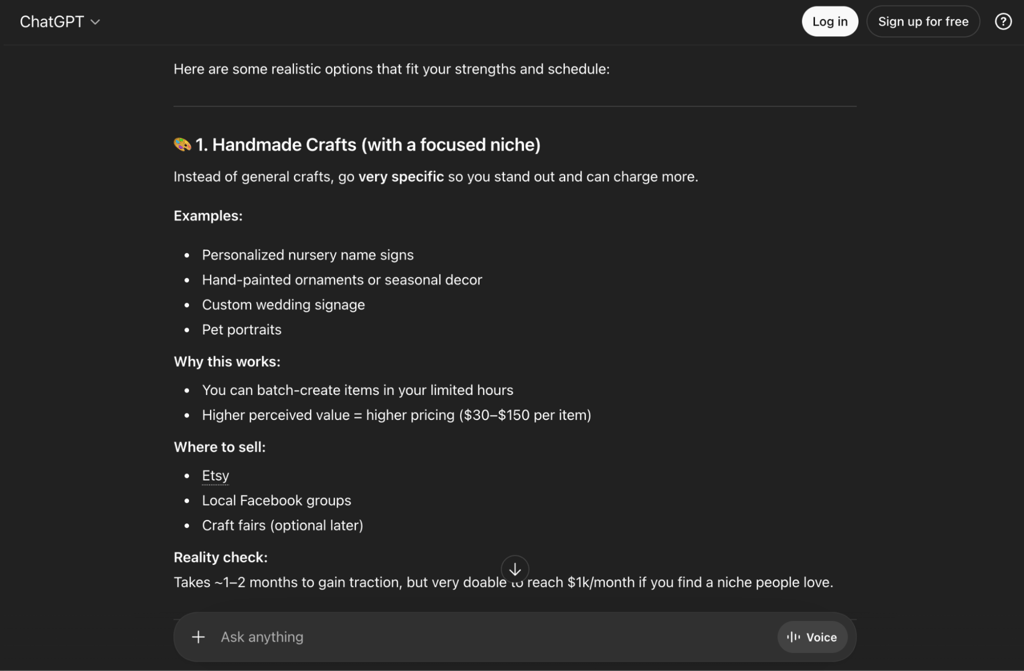
If you’re not sure where to start, ChatGPT is a great brainstorming partner. It’s beginner-friendly, conversational, and surprisingly good at helping you think through ideas you haven’t considered. Write a prompt like this:
“I’m a mom with [your available hours] of free time per week. I have experience in [your skills or background]. I want to start a small business that can eventually bring in [your income goal] per month. What are some realistic business ideas that fit my schedule and strengths?”
Customize it with your real details, and you’ll get back ideas that are actually tailored to your situation rather than generic lists.
You don’t need to invent something from scratch, though. You just need to notice what you’re already doing well.
For example, the mom who makes elaborate birthday cakes already has a business in there somewhere.
So does the one who reorganizes every space she walks into, the one who knows every non-toxic product on the market, or the one who taught herself to alter her kids’ clothes and now does it better than the tailor.
The trick is figuring out how to package what you’re already good at. That could look like digital products, a service, physical goods, or something in between. The shape of it matters less than whether it fits your life.
And if your idea is less “service I can offer” and more “tool I wish existed,” that’s buildable too, even without a technical background. Tools like Hostinger AI Builder let you create web apps by describing what you want in plain language, no coding required.
If you’ve ever thought, “someone should make an app that does X,” you might be that someone.
Planning your first 90 days without overthinking it
Once you have an idea you’re excited about, give yourself 90 days to go from concept to live business. Not 90 days of planning. 90 days of doing.
I know, 90 days sounds like a lot when some days it feels like a victory just to eat lunch sitting down. But this isn’t about working on your business every single day. It’s about having a timeline that keeps you moving forward instead of circling the same “what ifs” for months.
The longer you stay in “research mode,” the easier it is to talk yourself out of starting. And the faster you get something in front of real people, the faster you learn whether it works.
A 90-day framework gives you something concrete to work with instead of hypothetical worries.
Here’s roughly how that breaks down:
Days 1–30: Figure out if your idea has legs
By the end of this month, you want to know whether your idea has legs and what you’d actually need to get it off the ground.
Start by asking yourself two things: who exactly are you selling to, and what problem are you solving that they can’t easily solve themselves. Then look at who’s already in this space – what they charge, what they’re missing, and where you’d do it differently. That gap is your starting point.
For the research phase, Perplexity is a standout tool. It’s built for sourcing and citing information, which means you get answers backed by real data instead of vague summaries.
If you’re selling a physical product, use it to research pricing, estimate startup costs, and plan a first small launch before buying any materials or setting up a store.
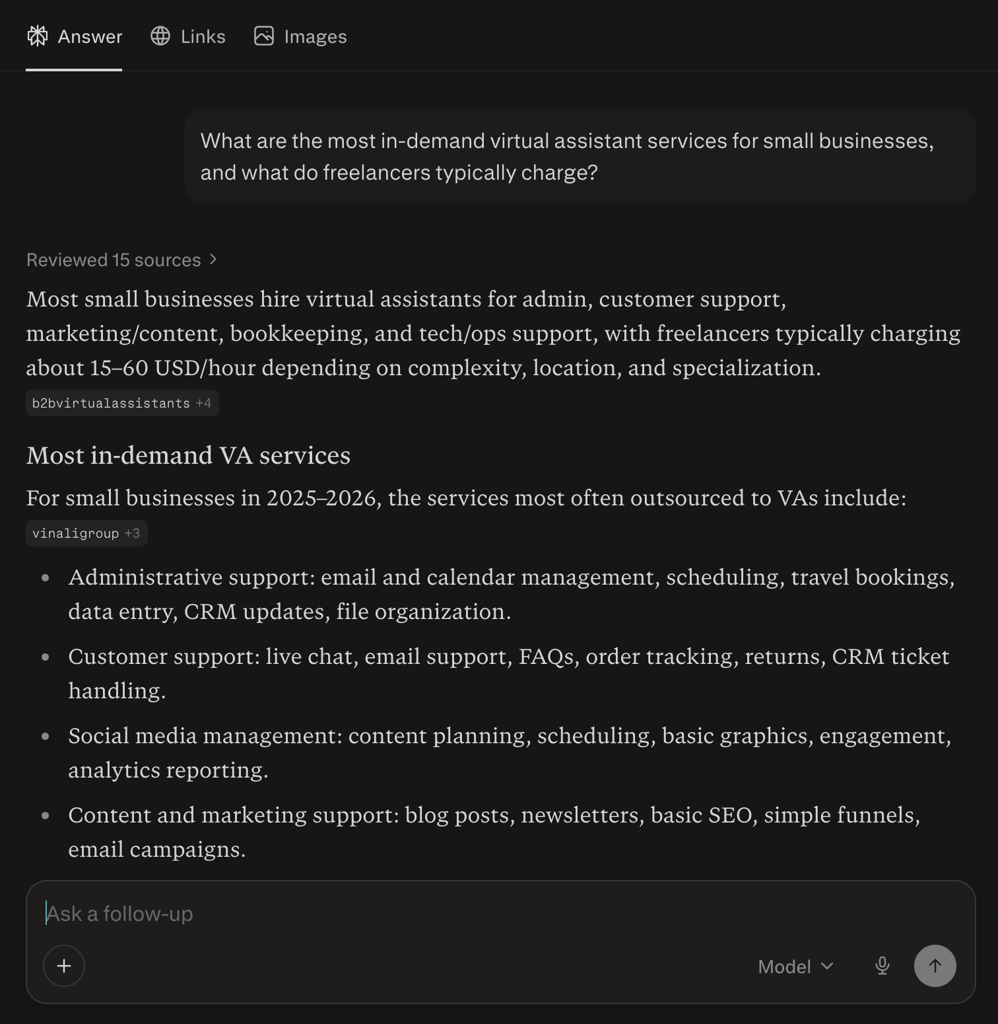
If you’re offering a service, try something like: “What are the most in-demand virtual assistant services for small businesses, and what do freelancers typically charge?” You’ll get a solid starting point with sources you can actually check.
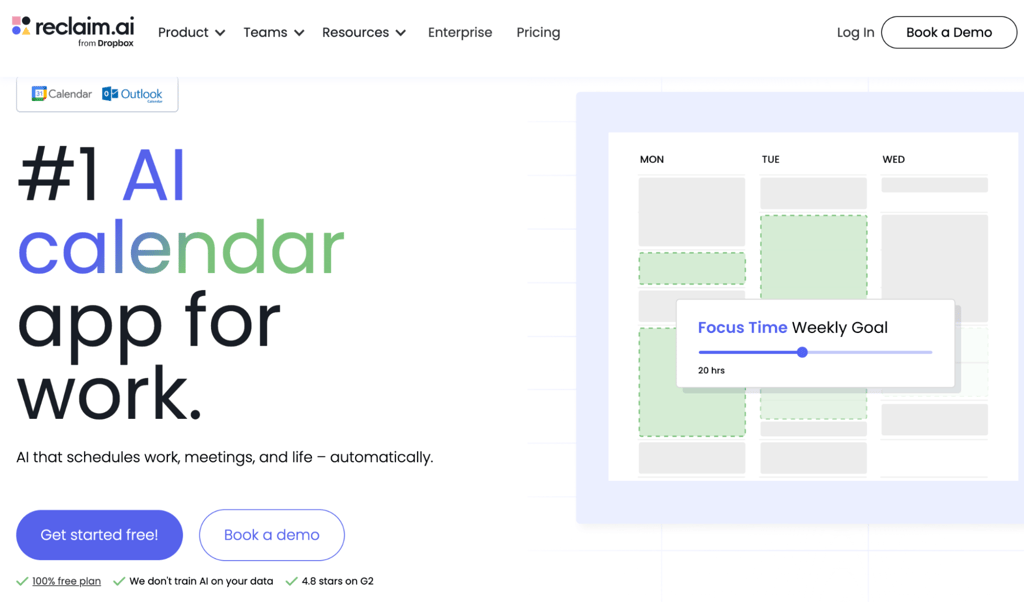
To keep yourself on track without burning out, try Reclaim.ai. It auto-schedules your tasks and breaks around your existing commitments, which means your business planning fits into your life rather than competing with school pickups and bedtime routines.
Days 31–60: Make it look and feel like a real business
Now it’s time to make your business feel real.
Start shaping your brand identity. Use an AI business name generator to brainstorm names (ask it for 20 options and narrow from there).
Develop your brand voice with Gemini, which is particularly good at helping you articulate how you want your business to sound and feel. Then create a color palette and pick fonts with Canva. You genuinely don’t need to hire a branding expert for this stage.
Then build your website. This is the thing that takes your idea from “something I’m working on” to “something people can find, explore, and buy from.”
Hostinger’s AI website builder is a strong fit if you want a fast launch without getting bogged down in technical setup. You describe your idea, and the AI generates a site you can customize from there. You can go from “I should probably have a website” to actually having one live in an afternoon.
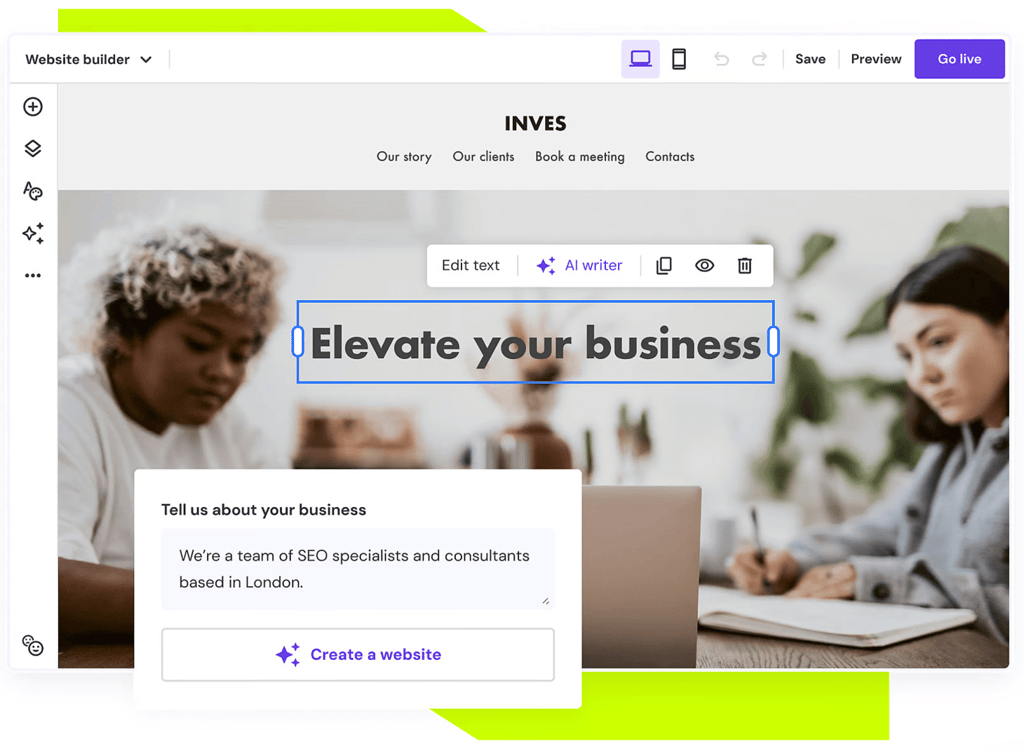
If you have web design experience and prefer working with plugins and a dashboard editor, managed WordPress hosting gives you more flexibility. Hostinger’s built-in AI tools for WordPress can help you generate pages, create content, and optimize your site as you go.
Fair warning: somewhere around here, it might hit you that this is actually happening. Naming your business, picking colors, seeing it on a real URL.
Up until now, it’s been research and thinking, low risk. A live website is different. That’s something you could actually commit to. Something you could fail at. And for a lot of moms, the moment it becomes real is also the moment the guilt shows up: Should I actually be spending time on this?
If that happens, it’s a good sign, not a stop sign. It means the idea has weight. Keep going anyway. The doubt doesn’t go away by waiting. It goes away by doing.
What matters most at this stage isn’t which tool you pick. It’s that you actually get online. A simple, clear website you can improve over time beats a perfect site that lives in your head for six months.
Days 61–90: Put it in front of real people
You’ve done the research. You’ve built the foundation. Now it’s time to put your business in front of people.
Your first audience is probably closer than you think. The group chats, the school run, the mom communities you’re already part of. Those are real people who know you, trust you, and are far more likely to share something you’ve made than a cold follower ever would be.
Create a small batch of launch content: a few social media posts announcing what you’re doing, a landing page that explains your offer clearly, and a launch announcement email. You don’t need 30 pieces of content. You need enough to get the word out and drive people to your site.
For the email piece, set up your first campaign using the AI-powered email marketing tool, Reach. It lets you create branded campaigns based on your website and generates both copy and designs, so you’re not starting from a blank page. For a first launch, that removes a lot of the guesswork.
Start your send list with your own address book: friends, family, former colleagues, your prenatal yoga classmates, anyone who knows you. Add a line encouraging them to forward it to someone who might be interested.
Moms tend to show up for each other, and a personal recommendation can move faster than anything an algorithm does for you.
Once it’s out there, pay attention to what comes back. Send a quick DM or voice note to a handful of people you trust and ask what worked, what was confusing, and what they’d actually pay for. The feedback you get from five honest people will teach you more than a hundred anonymous page views.
The goal isn’t perfection. It’s getting real responses from real people, so you know what to double down on.
But here’s something nobody talks about enough: your first launch might be quiet. You might send that email to 40 people and hear back from three. You might post on social media and get likes from your friends, but no actual sales.
That can be tough to accept when you’ve put real time and energy into something.
The thing is, a quiet launch is just like a first draft – you can always improve it. And this is where AI tools pay off the most, because the cost of adjusting is low.
You can rework your offer, rewrite your landing page, test a different audience, and try again without starting over or spending more money.
Keeping momentum without burning out
By day 90, you’re not just planning anymore. You’re live. The next challenge is keeping things moving without letting it consume every spare minute you have.
Start with email
Of all the channels out there, your email marketing strategy is the one you actually control. Social media algorithms shift constantly, and a platform change can tank your reach overnight. Your email list stays yours.
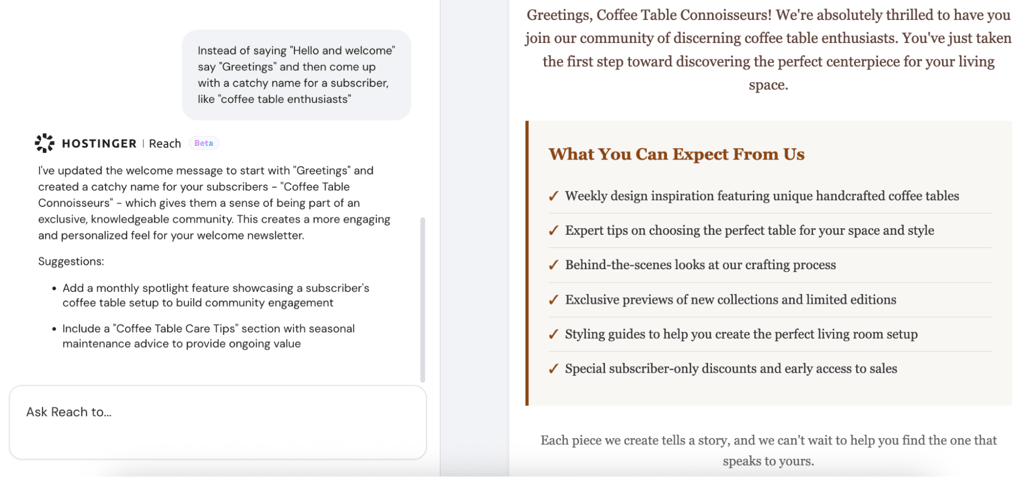
As you move past launch, Reach becomes more useful as a long-term tool. It suggests weekly campaign ideas so you’re never stuck wondering what to send, and it generates designs that match your brand. The creative side gets handled, so you can focus on just being consistent.
One email a week that’s helpful and feels like you is more effective than a beautifully designed monthly newsletter you keep putting off.
And “consistent” sometimes looks like drafting an email one-handed while someone watches Bluey on your lap. That counts. Done is better than perfect, especially if perfect means it never gets sent.
Use social media
Social media works best for small businesses when it feels personal rather than polished. You don’t need a content calendar with 30 planned posts. You need to show up in a way that lets people connect with you and what you’re building.
Start with the platform you already use and enjoy. Instagram and TikTok work well for anything visual, like products or crafts. Facebook groups are great if your business is service-based or community-driven. Trying to be everywhere at once is a fast track to burning out.
Canva is incredibly useful for creating visuals without design skills. You can generate social posts from a text description instead of spending an hour hunting for the right stock photo.
If you’re selling art or printables, for example, you can share a quick video of how you use them in your own home, post a before-and-after of a space you organized with your templates, or just share the story of why you created them.

The key is to keep it sustainable. A few posts a week that feel genuine will do more for you than daily content that feels like a chore.
If you want to save even more time, social media automation tools can help you schedule posts in advance so you’re not scrambling to think of something every day.
Get found through SEO
Search engine optimization (SEO) is a big topic, but the core idea is simple: when someone searches for what you offer, you want your site to show up.
Social media requires you to constantly create to stay visible. SEO is different. A well-written blog post can keep bringing people to your site for months after you publish it. The people it brings tend to already want what you’re selling, which makes them much more likely to buy.
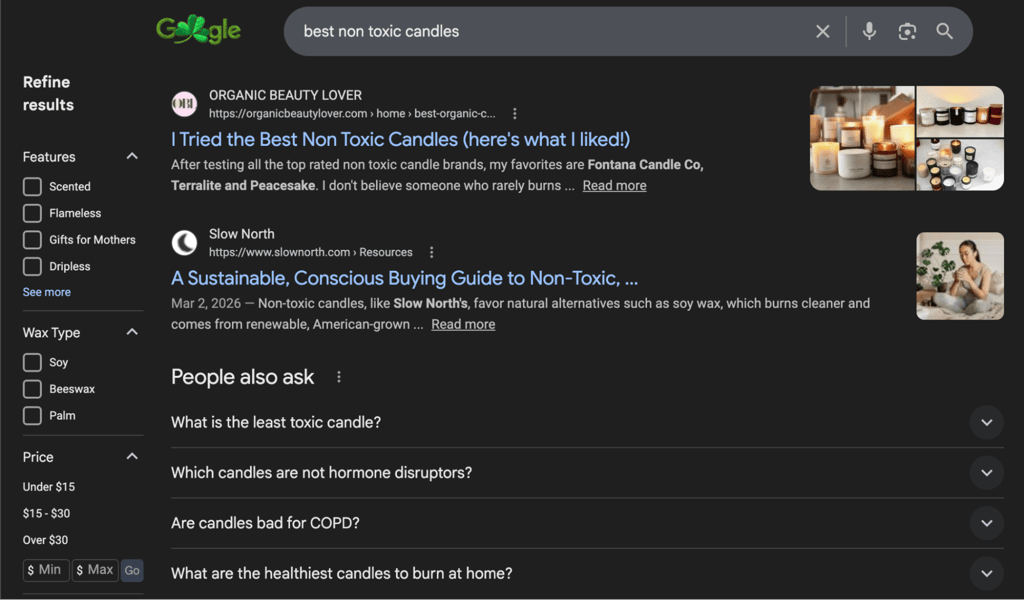
Here’s what that looks like in practice: say you sell handmade candles. You could write a blog post about choosing non-toxic candles for your home, or a guide to picking scents for different rooms.
Someone Googling “best non-toxic candles” could land on your site, read your post, and end up in your shop. That’s SEO working for you while you’re doing something else entirely.
To get started, think about what your ideal customer would actually search for, and write content that answers those questions.
You can use ChatGPT or Perplexity to brainstorm topics and help draft blog posts around them. Claude is another strong option here, especially for longer-form writing like blog posts and guides where you want the tone to feel natural.
SEO goes deeper than content alone, but you don’t need to learn every technical detail right away. For a new business, getting your content right is the highest-impact place to start. If SEO is new to you, learning how to write SEO-friendly content is a solid place to start.
Making AI work around your life
By now, you’ve seen a lot of tools mentioned. You don’t need to sign up for all of them today. They all match different stages of your business, and you’ll add them naturally as you get there.
Canva, when you need visuals. Hostinger Website Builder, when you’re ready for a site. Hostinger Reach, when it’s time to send emails.
The one choice worth thinking about early is which AI chatbot to use for the brainstorming, research, and writing stages. Here’s a quick way to think about it:
- ChatGPT is the most conversational and beginner-friendly, so if you’ve never used an AI tool before, it’s a comfortable starting point.
- Claude tends to be stronger for longer writing, like blog posts and product descriptions, where you want the tone to feel natural.
- Perplexity is the best for research because it cites its sources so you can actually verify what you’re reading.
Most of them are free to start with, so try two or three with the same task and see which one feels like the best fit. There’s no wrong answer here.
Block short sessions between school runs or after bedtime. Even 20 minutes counts if you’re focused.
The reality is that you will lose your train of thought because someone needs a snack or because you realize the laundry has been sitting in the washer since yesterday. That’s fine.
And some weeks will be worse than that. Someone brings a stomach bug home from school, or the baby decides sleep is optional for three nights straight, and suddenly your business doesn’t get touched for a week. Maybe two. That’s not failure. That’s just life with kids.
The beauty of what you’ve built with AI tools is that it doesn’t disappear while you’re gone. Your website is still live. Your email templates are still there. Your research is saved. When you’re ready to come back, you pick up where you left off.
Here’s the kind of moment that makes all the 20-minute sessions worth it: the morning you open your laptop, see that someone signed up for your email list overnight, and realize this thing is working even while you sleep.
That first small proof of concept will give you more motivation than any productivity hack ever could.
You don’t need a team, a huge budget, or years of experience to start a business. You need an idea, a few AI tools, and the willingness to keep showing up in whatever time you have.
And that guilt about wanting something for yourself? It doesn’t go away entirely. But it gets a lot quieter the first time your kid sees you working on your business and asks, “What are you making, Mama?”
You’ll realize you’re not taking something away from your family. You’re showing them what it looks like to go after something that matters to you.
The ambition is already there. AI just makes it possible to act on it.

Ana is a senior editor with 20 years of experience in content marketing, specializing in WordPress, web hosting, and design. She's worked across the full content spectrum – from writing and strategy to editorial quality and B2B storytelling. When she's not untangling passive voice or debating Oxford commas, she's probably reading something she'll insist you read too. She believes a well-placed sentence can do more work than a bullet point ever will.