Agentic AI vs. generative AI
Sep 11, 2026
/
By Ksenija
/
6 min Read
Generative AI creates content, while agentic AI completes tasks.
Generative AI responds to prompts by producing text, images, code, audio, or other content.
Agentic AI goes further by planning how to achieve a goal, using external tools, making decisions throughout the workflow, and adapting its actions until the task is complete.
Agentic AI builds on generative AI. Most agentic AI systems rely on large language models to understand requests and generate content, then combine those capabilities with planning, memory, and tool use to complete multi-step workflows.
What is agentic AI?
Agentic AI refers to AI systems that can complete tasks with minimal human input.
After receiving a goal, the system creates a plan, uses the tools and information it needs, checks the results of each step, and continues working until it completes the task.
Suppose a customer reports that they can’t access their account.
An agentic AI system verifies the customer’s identity, checks recent login attempts, resets the password if appropriate, updates the support ticket, and confirms that the issue has been resolved.
The user provides the goal, while the AI determines and completes the necessary steps.
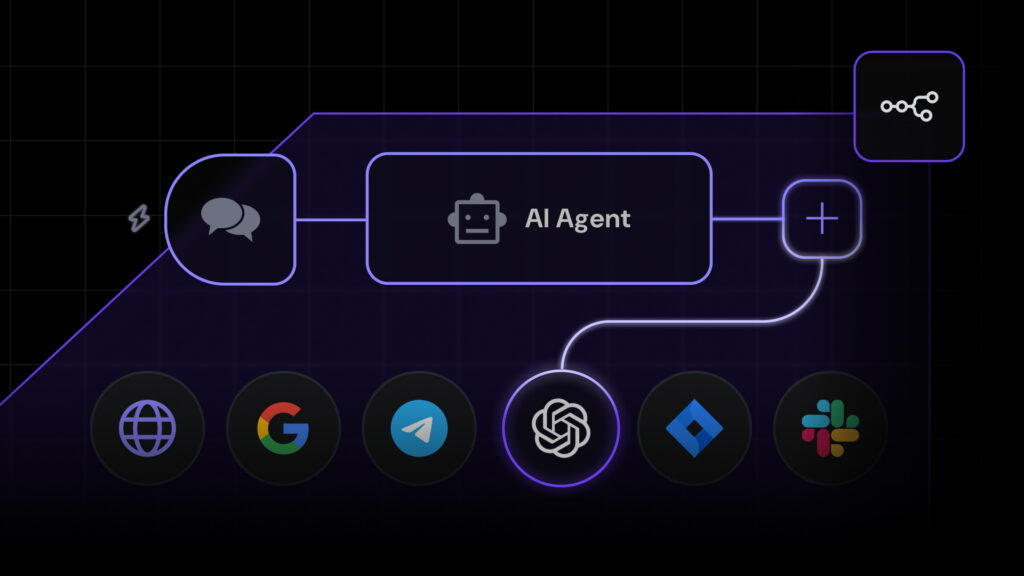
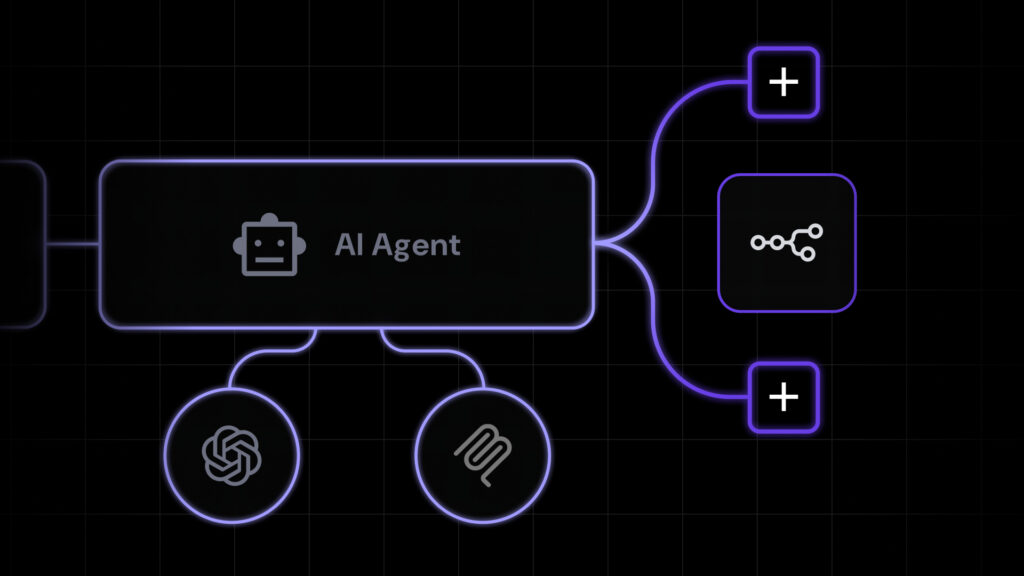
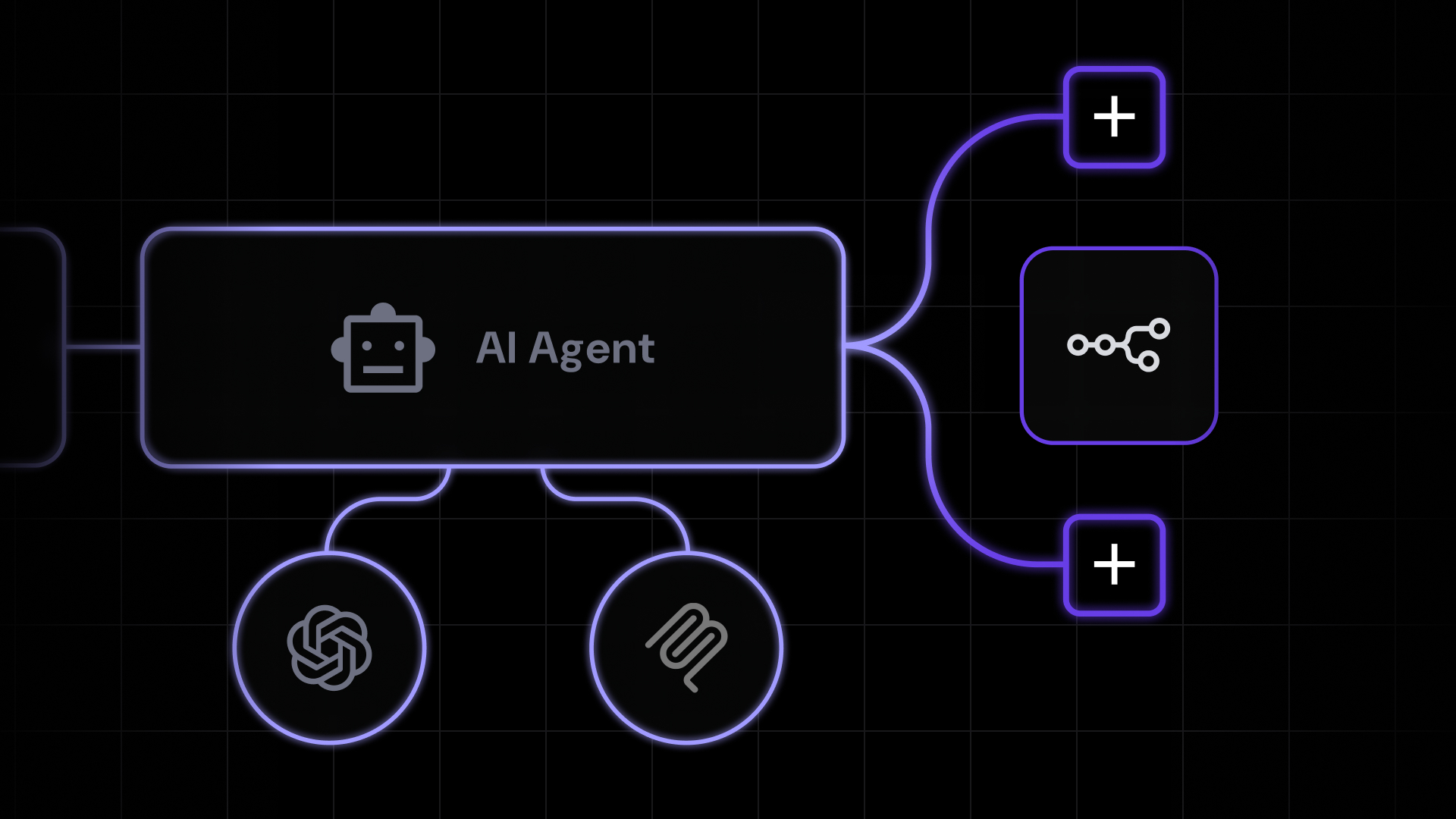
Most agentic AI systems combine a large language model (LLM) with memory and external tools.
The language model interprets the request and decides what to do next, memory keeps track of relevant context, and tools let the system search the web, retrieve documents, run code, or interact with other software.
LLM agents are one of the most common types of agentic AI. They power applications such as coding assistants, research tools, customer support systems, and workflow automation platforms by using language models to understand requests and interact with other software.
Businesses that want these capabilities without assembling the pieces themselves can use an agentic AI platform that provides ready-to-run agents.
What is generative AI?
Generative AI is a type of artificial intelligence that creates new content from a user’s prompt.
It learns patterns from large datasets during training and uses that knowledge to generate text, images, code, audio, video, and other types of content.
Generative AI produces an output based on the instructions it receives, but it doesn’t work toward a broader objective on its own.
Each response depends on the user’s prompt, and the model waits for the next instruction before continuing.
Popular examples of generative AI include ChatGPT, Claude, and Gemini for text generation, image generation tools such as Midjourney and DALL·E, and coding assistants like GitHub Copilot.
Agentic AI vs. generative AI
The biggest difference between generative AI and agentic AI is their purpose. Generative AI creates content in response to prompts, while agentic AI uses AI to plan, make decisions, and complete tasks with minimal human input.
Agentic AI vs. generative AI quick comparison:
| Feature | Generative AI | Agentic AI |
| Primary purpose | Create content | Complete tasks |
| User interaction | Responds to prompts | Works toward a goal |
| Decision-making | Generates a response based on the current prompt | Decides what actions to take throughout the workflow |
| Planning | No | Yes |
| Tool use | Optional | Core capability |
| Memory | Uses the current conversation as context | Uses working and long-term memory to retain relevant information |
| Output | Text, images, code, audio, and video | Completed workflows, actions, and decisions |
| Human involvement | Requires prompts for each step | Operates with minimal guidance after receiving an objective |
| Examples | ChatGPT, Claude, Gemini, Midjourney | Coding agents, research agents, customer support agents, AI assistants |
Generative AI and agentic AI are closely related, which is why the terms are frequently confused.
Most agentic AI systems rely on generative AI, usually a large language model, to understand requests, reason about the task, and generate content when needed.
The difference is what happens after the model produces an answer. Generative AI stops after generating an output, while agentic AI continues working by deciding what to do next, retrieving information, using external tools, and evaluating the results until the objective is complete.
In short, generative AI is reactive, while agentic AI is proactive.
How generative AI and agentic AI work together
Many modern AI applications combine generative AI and agentic AI.
Generative AI creates content, while agentic AI decides when that content is needed, how it fits into the overall workflow, and what actions to take next.
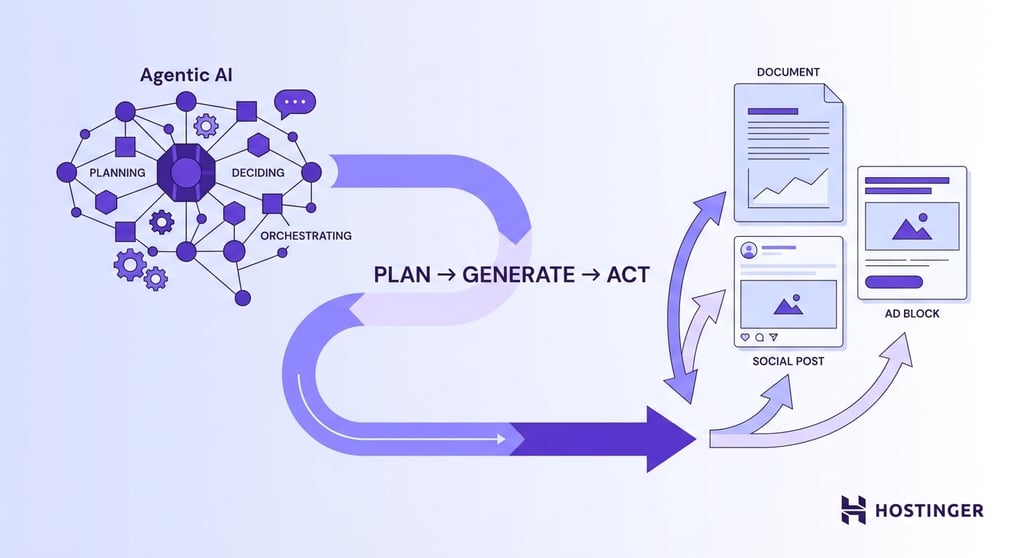
Take a marketing campaign as an example. An agentic AI system begins by researching the target audience and identifying relevant keywords.
It then uses generative AI to write email copy, create social media posts, and draft ad copy. After generating the content, the agent can schedule the campaign, monitor its performance, and refine future content based on engagement metrics.
The same pattern applies across many business workflows. Generative AI produces the text, code, images, or other content, while agentic AI coordinates the entire process from planning to completion.
Agentic AI vs. generative AI: Common use cases
Generative AI and agentic AI are used across content creation, software development, customer support, marketing, data analysis, and many other business functions.
The difference is in how they contribute to those workflows. Generative AI creates content or answers questions, while agentic AI coordinates the steps needed to complete the task.
Marketing
Generative AI helps marketers create blog posts, email campaigns, social media posts, ad copy, and images from prompts.
Each asset is generated independently, so planning, publishing, and measuring campaign performance still require manual work.
AI agents for marketing automate the entire campaign workflow. They can research keywords, analyze competitors, identify target audiences, generate campaign assets, publish content, monitor performance, and refine future campaigns based on engagement data.
SEO and research
Generative AI can suggest keywords, explain SEO concepts, or optimize existing content. Each task requires a separate prompt.
Agentic AI can perform keyword research, analyze competitors, identify content gaps, prioritize opportunities, and generate an SEO strategy using data collected from multiple tools and sources.
Software development
Generative AI helps developers write functions, explain code, generate tests, or troubleshoot specific errors.
Agentic AI assists throughout the development workflow. It can analyze a codebase, identify affected files, generate code changes, run tests, fix failed builds, and repeat the process until the implementation is complete.
Customer support
Generative AI drafts replies to customer questions based on the information provided in the prompt.
Agentic AI can retrieve customer information, search a knowledge base, troubleshoot common issues, create support tickets, escalate complex requests, and update CRM records before responding.
For example, Hostinger Agent resolves 75% of customer conversations each month without human intervention, reducing average response times from 28 seconds to 9 seconds
Data analysis
Generative AI summarizes reports, explains charts, or answers questions about a dataset.
Agentic AI retrieves data from multiple systems, combines the results, identifies trends, generates reports, and answers follow-up questions using the latest available information.
Quick overview of agentic AI vs. generative AI use cases:
| Business need | Generative AI | Agentic AI |
| Marketing | Generate blog posts, ad copy, and images | Plan campaigns, create content, schedule publishing, and monitor performance |
| SEO research | Suggest keywords or optimize copy | Research keywords, analyze competitors, identify opportunities, and build an SEO strategy |
| Coding | Generate and explain code | Write, test, debug, and improve code across multiple files |
| Customer support | Draft responses to customer questions | Retrieve account information, resolve issues, create support tickets, and escalate complex cases |
| Data analysis | Summarize reports or datasets | Retrieve data, analyze trends, generate reports, and answer follow-up questions |
Agentic AI vs. generative AI: Which one should you choose?
The right choice depends on the outcome you want to achieve.
Choose generative AI if you need to:
- Create content. Use generative AI when you need a first draft quickly. A single prompt can generate a blog post, product description, marketing email, or social media caption that you can review and edit before publishing.
- Brainstorm ideas. If you’re facing a blank page, ask generative AI to suggest blog topics, campaign concepts, email subject lines, or alternative approaches to solving a problem.
- Summarize information. Save time reviewing long documents by asking generative AI to extract the main findings from meeting transcripts, research papers, financial reports, or legal documents.
- Translate and rewrite the text. Adapt existing content for a different audience. Generative AI can translate an article into another language, rewrite technical documentation in plain English, or adjust the tone of a customer email to sound more professional.
- Get coding assistance. Use generative AI to explain unfamiliar code, generate a function from a description, or suggest improvements to a specific implementation while you remain in control of testing and deployment.
- Generate creative assets. Turn a text prompt into an illustration, marketing graphic, presentation image, or product mockup to support campaigns, documentation, or design projects.
Choose agentic AI if you need to:
- Automate repetitive workflows. If your team follows the same sequence of steps every time a task starts, agentic AI can automate the entire process. A new customer signup, for example, can trigger identity verification, account creation, welcome emails, and CRM updates without anyone coordinating each step.
- Work across multiple applications. Choose agentic AI when completing a task requires switching between business systems. An agent can retrieve customer information from your CRM, create a support ticket, send a confirmation email, and notify your team without manual data entry.
- Research and analyze information. If employees spend hours collecting information before making a decision, an agent can gather data from multiple sources, compare the findings, and present a structured summary for review.
- Complete complex tasks. Use agentic AI when one prompt isn’t enough to finish the job. A coding agent, for example, can inspect a codebase, generate a fix, run tests, resolve failures, and repeat the process until the implementation is ready for review.
- Build AI-powered workflows. If your business has processes that combine company knowledge with multiple software tools, connect an LLM to your internal systems so it can complete those workflows automatically rather than acting as a standalone chatbot.
How to use agentic AI in your business
Start by identifying repetitive workflows that require multiple steps, decisions, or interactions with other software.
Pro tip
To quickly identify the best automation candidates, map out workflows where a human currently switches between three or more tools to complete a single task. The more handoffs and context-switching involved, the higher the potential ROI from an agentic AI solution.
Customer support, content marketing, sales outreach, internal knowledge management, and report generation are good candidates because they combine information retrieval, content generation, and business actions into a single process.
Once you’ve identified a workflow to automate, the next step is deciding whether to use a pre-built solution or build your own.
Pre-built AI agents are the fastest way to automate common business tasks. Building a custom agent is a better choice when your workflow depends on proprietary data, specialized integrations, or business-specific logic.
If you don’t want to build an AI system from scratch, Hostinger’s business AI agent provides ready-to-use specialists for SEO, content creation, marketing, sales, customer communication, and business strategy.
Each agent is designed for a specific workflow and connects to popular business tools, including Gmail, Notion, GitHub, Google Drive, and HubSpot, allowing you to automate everyday tasks with minimal setup.
If your business requires a custom solution, you can use the best AI agent builders to build an agentic AI application that fits your own processes.
After defining the workflow, connecting the necessary tools, and testing the agent, you’ll need infrastructure that can run it reliably.
Hostinger’s LLM VPS Hosting provides dedicated resources for deploying and scaling self-hosted LLMs and agentic AI applications while keeping full control over your data and environment.


Ksenija is a digital marketing enthusiast with extensive expertise in content creation and website optimization. Specializing in WordPress, she enjoys writing about the platform’s nuances, from design to functionality, and sharing her insights with others. When she’s not perfecting her trade, you’ll find her on the local basketball court or at home enjoying a crime story. Follow her on LinkedIn.