11 types of ecommerce with examples
Oct 09, 2026
/
By Justina B.
/
10 min Read
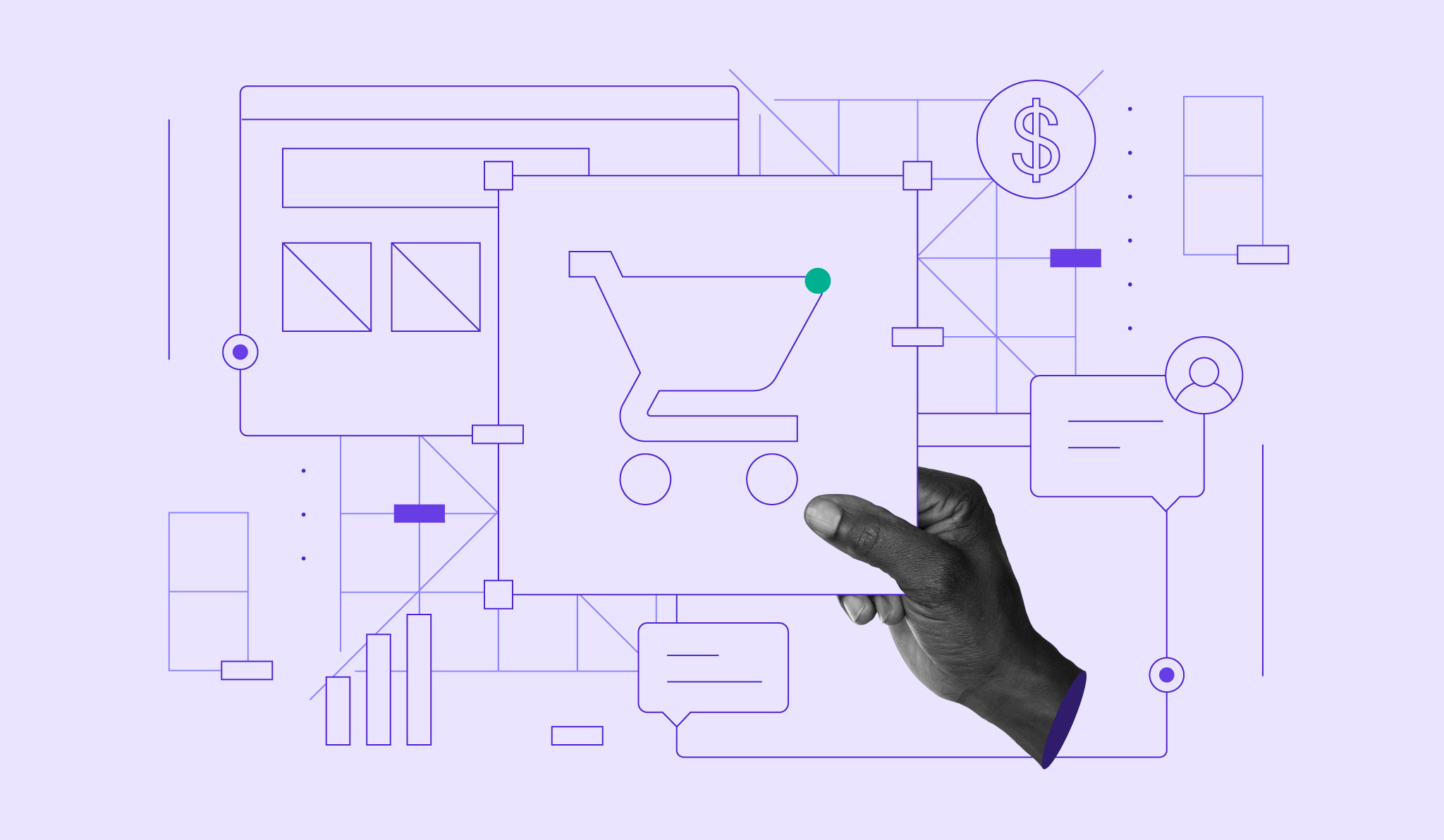
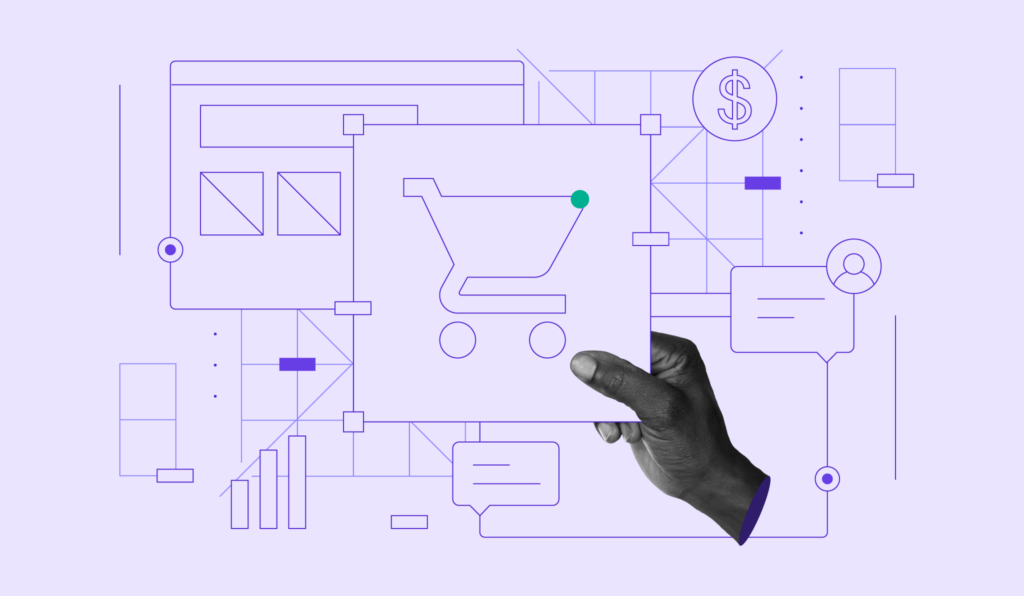
The most common types of ecommerce are Business-to-Consumer (B2C), Business-to-Business (B2B), Consumer-to-Consumer (C2C), Consumer-to-Business (C2B), Direct-to-Consumer (D2C), and Business-to-Government (B2G).
Ecommerce is the buying and selling of goods and services over the internet. Understanding its different types helps you choose the right model for how you want to sell, operate, and grow.
Ecommerce types can describe who buys and sells, where transactions take place, how customers pay, or what products are sold. B2C, B2B, C2C, C2B, B2G, and D2C describe buyer–seller relationships, while the remaining types focus on sales channels, payment models, and product formats. A business can combine several of these models.
| Ecommerce type | Who sells to whom | Example |
| Business-to-Consumer (B2C) | Companies sell to individual buyers | Function of Beauty, Amazon |
| Business-to-Business (B2B) | Companies sell to other companies | Slack, S&S Activewear |
| Consumer-to-Consumer (C2C) | Individuals sell to other individuals | eBay, Facebook Marketplace |
| Consumer-to-Business (C2B) | Individuals offer services to companies | Upwork, Fiverr |
| Business-to-Government (B2G) | Companies sell to government agencies | OpenGov, Palantir |
| Direct-to-Consumer (D2C) | Brands sell directly to end customers | Glossier, Warby Parker |
| Mobile commerce (m-commerce) | Buying and selling via mobile devices | Shopify mobile app, Walmart app |
| Social commerce | Selling through social media platforms | TikTok Shop, Instagram Shopping |
| Subscription ecommerce | Recurring payments for products/services | Trade Coffee, HelloFresh |
| Marketplace ecommerce | Third-party platforms connecting sellers and buyers | Amazon, Etsy |
| Digital products ecommerce | Selling digital goods online | Gumroad, Udemy |
1. Business-to-Consumer (B2C)
Business-to-consumer (B2C) is an ecommerce model in which a business sells products or services online to individual customers for personal use. B2C ecommerce includes physical goods such as clothing and electronics, as well as services like meal delivery and streaming subscriptions. Purchases can take place through online stores, shopping apps, or marketplaces.
One way to fulfil B2C orders is through dropshipping, where a third-party supplier stores, packs, and ships products directly to customers. Dropshipping is a fulfilment method rather than a separate buyer–seller relationship.
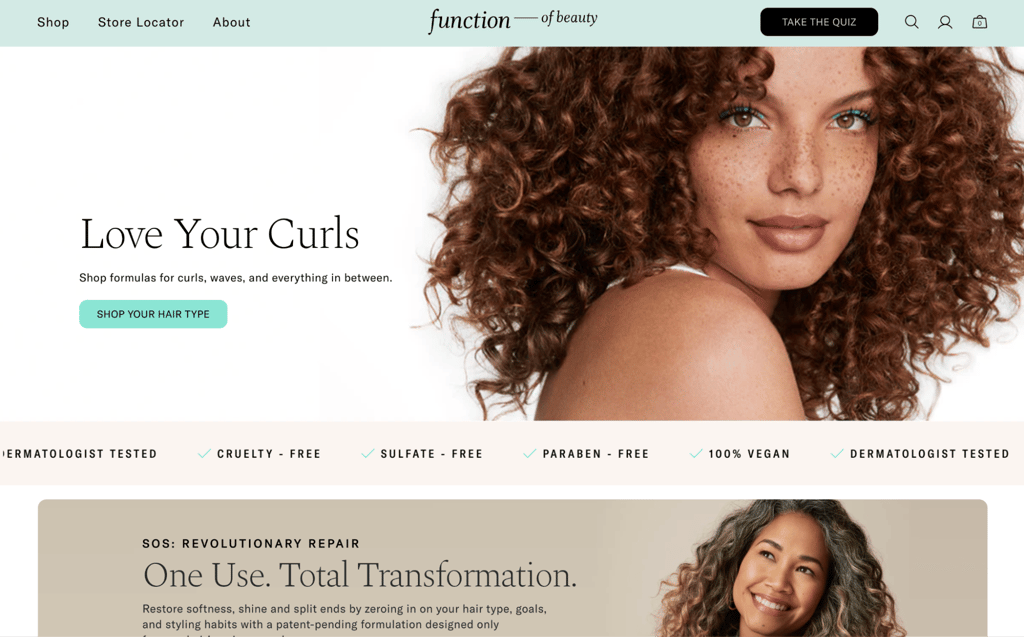
Function of Beauty is a great B2C example because it allows customers to customize their personal care formulas based on their preferences, turning a routine purchase into a personalized experience.
2. Business-to-Business (B2B)
You’re operating in the B2B space when your customers are other companies rather than individual consumers. The products and services sold here are typically used for business operations, production, or reselling, and orders can involve larger quantities or contract values than typical consumer purchases.
Wholesaling is one of the most common B2B setups. A wholesaler buys goods in large volumes from manufacturers at a discount, then resells them to retailers at a markup.
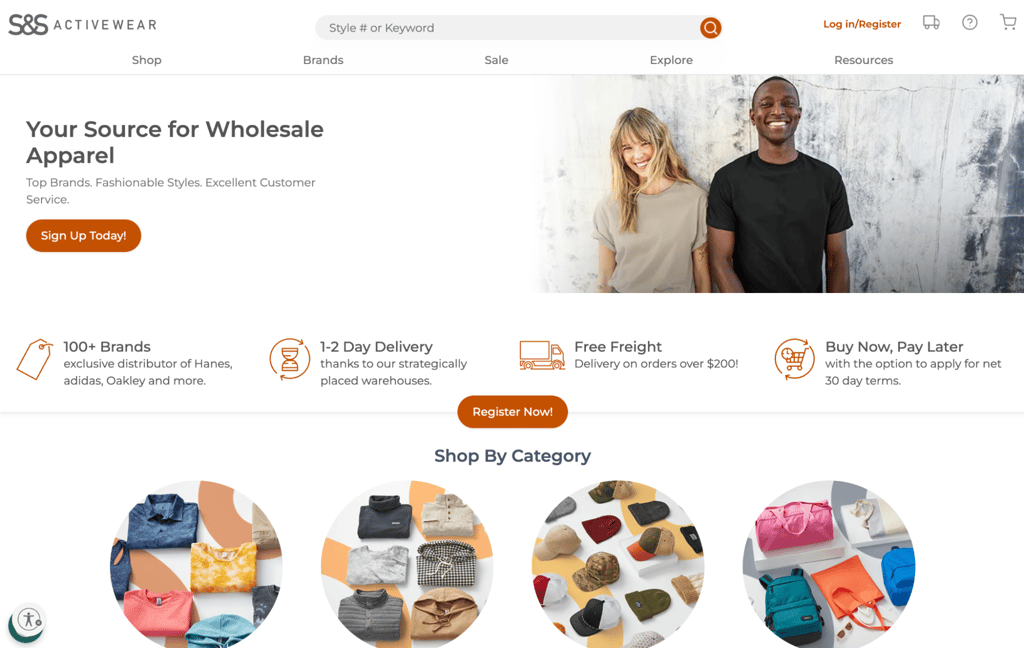
S&S Activewear, for example, is a wholesale distributor that sells branded and blank apparel to retailers and printing companies. Wholesaling is one route to consider if you’re thinking about starting an online business in the B2B space.
According to the U.S. International Trade Administration, the global B2B ecommerce market is projected to reach $36 trillion by 2026, growing at a 14.5% compound annual growth rate. The figure shows the scale of online business purchasing, particularly in industries such as manufacturing, energy, healthcare, and professional services.
B2B sales cycles can take longer than B2C purchases because business buyers may need to compare vendors, involve several decision-makers, negotiate terms, or complete procurement and compliance checks.
Because B2B purchases can involve higher order values, contracts, and sensitive company data, trust and strong ecommerce security are important throughout the buying process.
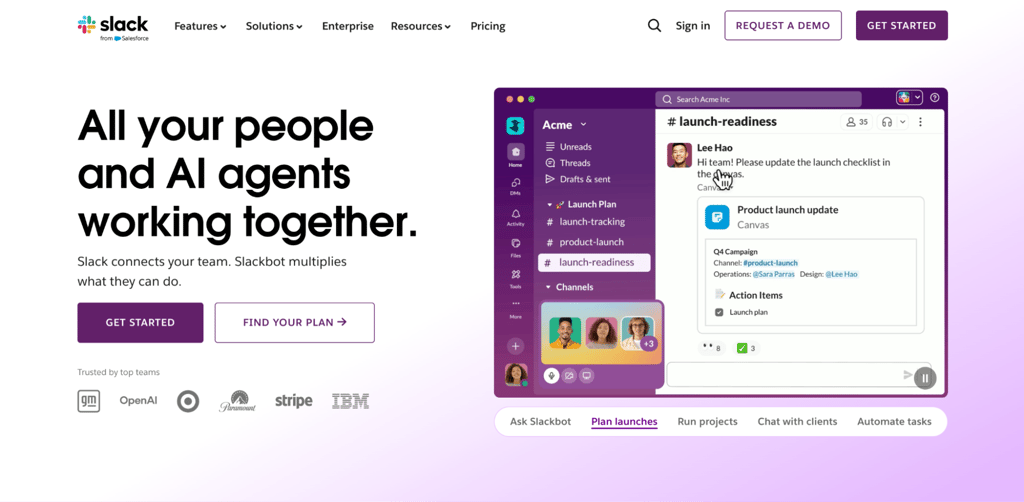
Slack is a well-known B2B example. It’s a communication platform built for businesses, with subscription plans that scale from small teams to large enterprises.
3. Consumer-to-Consumer (C2C)
C2C ecommerce lets individual consumers buy and sell products to one another through platforms that facilitate transactions. Depending on the platform, revenue can come from listing fees, transaction fees, advertising, or paid seller features.
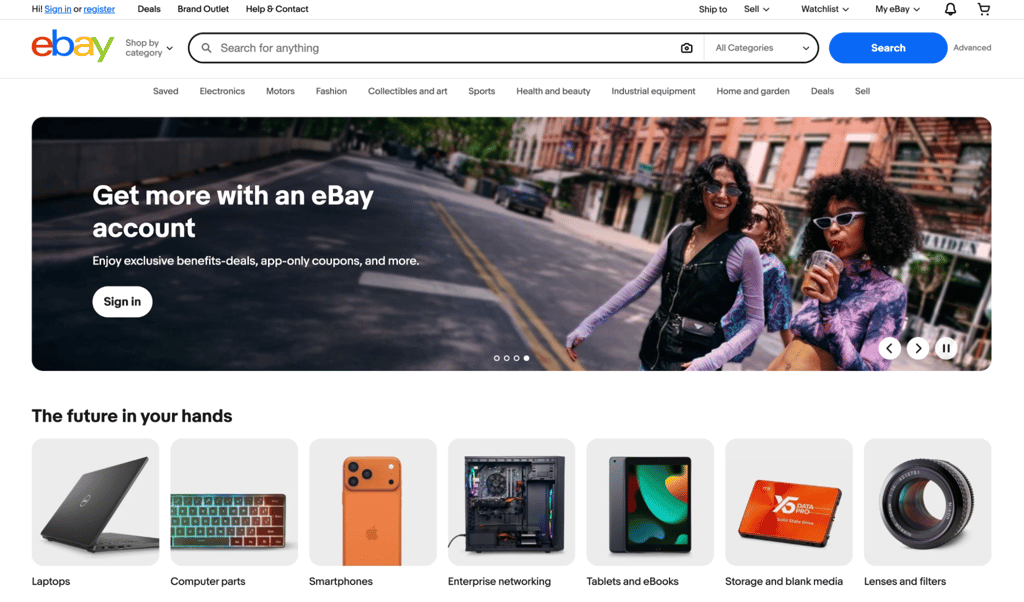
What makes C2C appealing is how fast you can get started. You list an item, set a price, and connect with buyers. Platforms like eBay, Craigslist, and Facebook Marketplace are common examples.
Facebook Marketplace lets you list items for free and connect with buyers in your region. Local pickup sales cost nothing, and US-based sellers who enable online payments and shipping pay a 10% selling fee on shipped items.
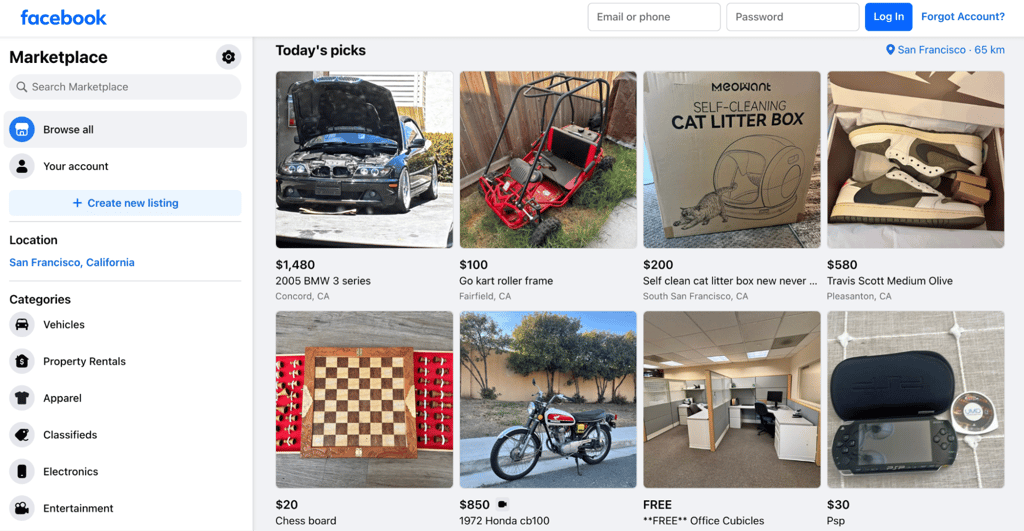
There are clear ecommerce advantages and disadvantages with C2C. You get low startup costs, fast setup, and access to a large built-in audience. On the other hand, you’ll have less control over branding and will rely on the platform’s tools to manage buyer interactions.
C2C can also be a practical way to test demand before investing in your own store. The best sites to sell online handle much of the listing, discovery, and transaction infrastructure for you.
4. Consumer-to-Business (C2B)
C2B ecommerce flips the usual direction – individuals sell their skills, creative assets, or services to businesses rather than the other way around. Freelancing, affiliate marketing, stock photography, and user testing are all common C2B transactions.
Many C2B exchanges happen through platforms that connect individuals with companies. Upwork, for example, links freelancers with businesses across industries. It charges freelancers a variable service fee of 0% to 15% per contract, set at the time the proposal is submitted.
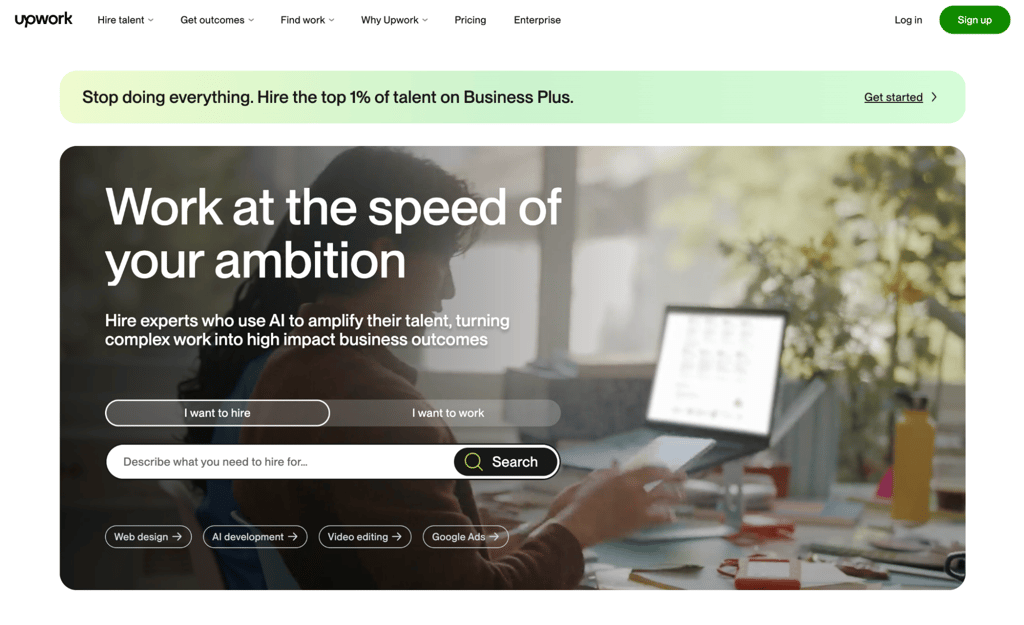
C2B ecommerce has grown alongside the creator and gig economies. More people now monetize their knowledge, content, and digital assets by selling directly to businesses.
Expertise in design, writing, photography, or education can also be packaged into digital assets for business buyers. Knowing how to sell digital products such as templates, presets, or courses can create an additional C2B revenue stream.
5. Business-to-Government (B2G)
Business-to-Government ecommerce refers to transactions in which companies sell products or services to government agencies at the local, state, or federal level. These products can include software, cloud infrastructure, professional services, equipment, supplies, and other goods required by government organizations.
Government procurement often involves formal bidding processes and compliance requirements, so businesses need to understand the purchasing process and the standards attached to each contract.
Understanding ecommerce operations is especially important when working with public sector clients. You’ll also want to know whether you need a business license to sell online before entering this space.
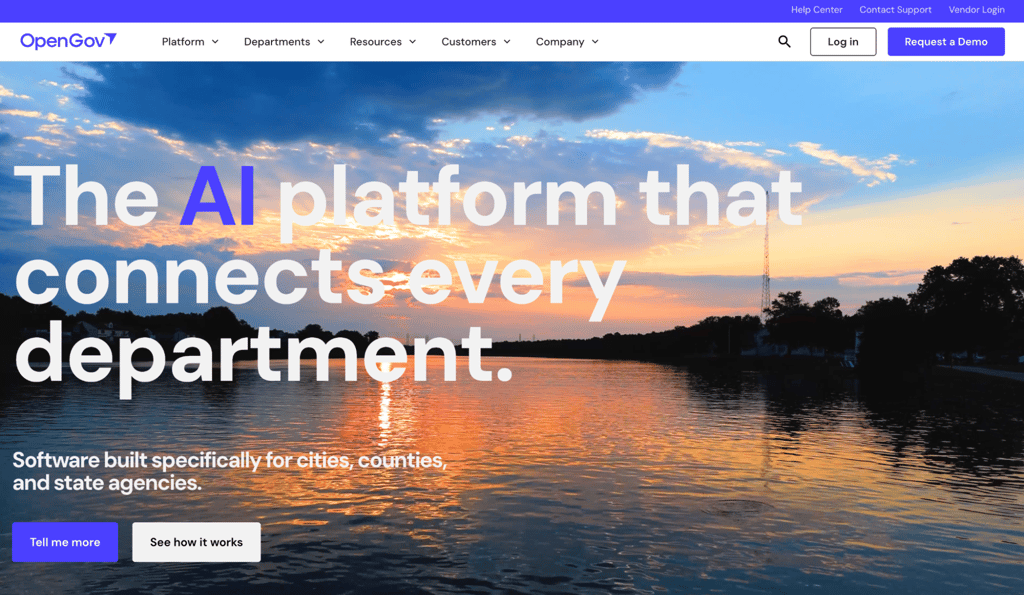
OpenGov, for example, provides an AI-powered Public Service Platform used by more than 2,000 U.S. cities, counties, state agencies, school districts, and special districts.
It provides tools for financial management, budgeting, procurement, permitting, payroll, and more, replacing manual workflows with streamlined digital processes.
6. Direct-to-Consumer (D2C)
Instead of selling through retailers or third-party shops, D2C brands manufacture or source their own products and sell them straight to you, the end customer. This model gives businesses more control over pricing, branding, customer relationships, and the buying experience.
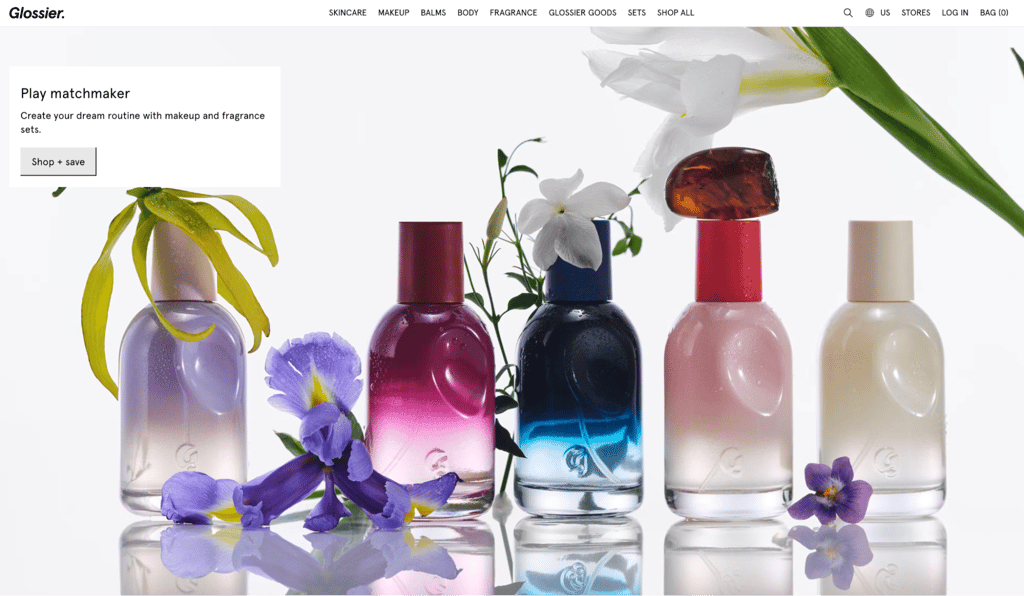
Glossier is one of the best-known D2C success stories. The beauty brand originally built its reputation by developing its own products and selling them exclusively through its website and owned showrooms, with no retail middlemen.
Two common ways D2C brands source their products are private labeling and white labeling:
- With private labeling, you work with a manufacturer to produce a product sold under your brand name, often with agreed-upon specifications, formulation, packaging, or other forms of customization.
- White labeling takes a faster route. You buy a ready-made product from a manufacturer and apply your own branding before selling it.
Both approaches let you sell under your own name without building a factory.
Warby Parker is another D2C example: it designs its own eyewear, works with manufacturers to produce it, and sells directly through its website and branded retail stores.
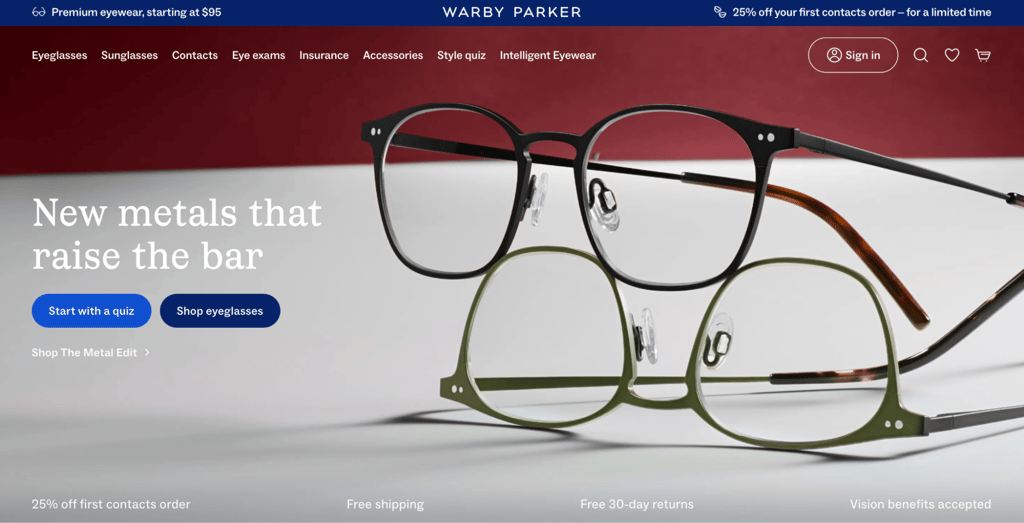
D2C gives brands a more direct relationship with customers and can provide more first-party data for personalization, retention, and loyalty programs. The trade-off is that the brand also takes responsibility for customer acquisition, fulfillment, support, and the overall buying experience.
7. Mobile commerce (m-commerce)
Mobile commerce is the buying and selling of goods and services through smartphones and tablets. That includes shopping on a retailer’s app, paying with a digital wallet, or browsing a mobile-optimized store.
According to recent ecommerce statistics, the global m-commerce market is projected to reach $2.42 trillion in 2026, expanding at a 9.5% compound annual growth rate through 2034. Mobile ecommerce accounts for 59% of all global ecommerce sales, and that share continues to climb.
Smartphone adoption and easier mobile payments like digital wallets support this shift. Worldpay reports that digital wallets accounted for 56% of global ecommerce spending in 2025, making them the leading online payment method.
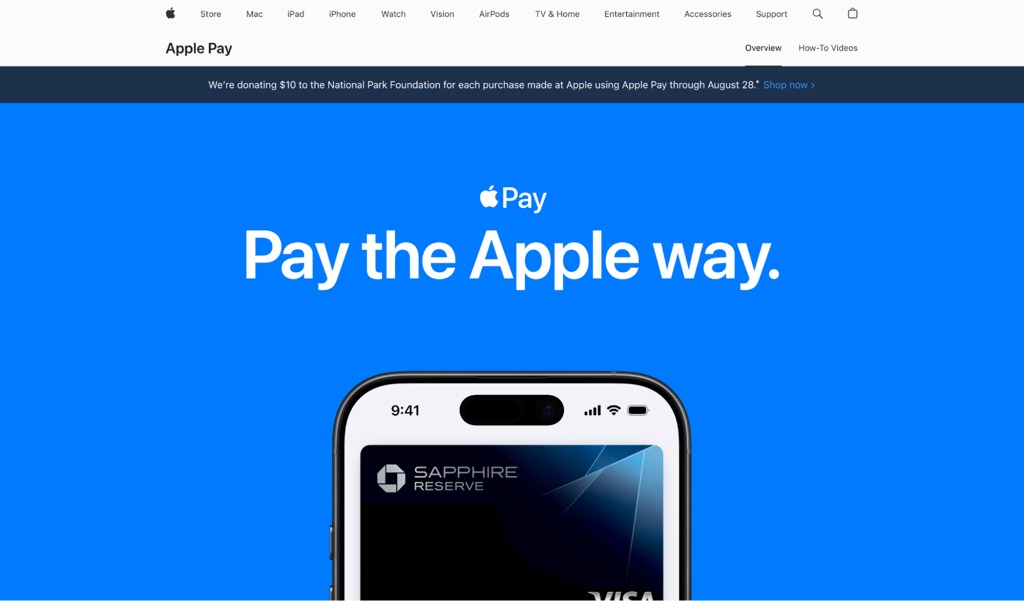
For your store, mobile commerce means thinking beyond just a responsive website. Depending on your audience and budget, useful strategies include app-based shopping experiences, one-tap checkout, push notification campaigns, and mobile-first product photography.
Page speed and checkout usability matter too. Slow pages, small tap targets, and long forms add friction on mobile, so test your store on real phones and keep checkout steps as short and clear as possible.
8. Social commerce
Social commerce turns social media platforms into sales channels where your customers discover, browse, and buy products. Learning what social commerce is shows just how far this model goes. It covers shoppable posts, livestream shopping events, and influencer partnerships with direct purchase links.
Ecommerce industry data projects US social commerce sales to surpass $100 billion in 2026. Globally, social commerce accounts for an estimated 15.2% of all ecommerce transactions in 2026, up from 13.8% in 2025.
For example, TikTok Shop has built a native checkout that lets users buy products directly in the TikTok app.
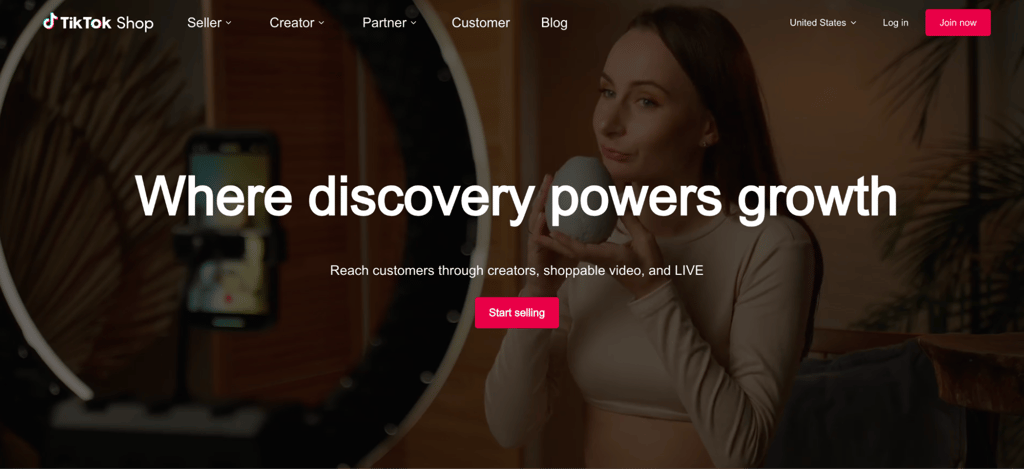
What separates social commerce from regular social media advertising is the integrated buying experience. Your customer sees a product in their feed, reads other buyers’ comments, and, where supported, completes the purchase in the same app. This can shorten the path from discovery to sale.
Social commerce can be especially relevant when your audience already uses social platforms for product discovery. This makes it an important part of your ecommerce marketing strategy. For example, according to Sprout Social, 90% of Gen Z say social content has influenced a purchase in the past six months.
9. Subscription ecommerce
Rather than making a one-time sale, subscription ecommerce lets you build recurring revenue by delivering products or services to your customers on a regular schedule. Buyers pay a weekly, monthly, or annual fee, and you automatically fulfill their orders each cycle.
The subscription economy market was valued at $557.8 billion in 2025 and is projected to grow at a compound annual growth rate of 13.3% through 2035, according to Future Market Insights.
Three main subscription models exist:
- Access. Your customers pay a recurring fee to use a premium digital platform or service. Many businesses offer a free tier with limited features (freemium) to let potential subscribers try before upgrading.
- Curation. You customize product selections based on each buyer’s preferences and ship them on a schedule. Beauty boxes, book clubs, and specialty food subscriptions work this way.
- Replenishment. This works well for products people purchase regularly, like coffee, razors, or pet food. You automatically restock these items based on the customer’s preferred delivery frequency.
Trade Coffee, a specialty coffee subscription service, demonstrates the curation model in action. New customers take a quiz to match their taste preferences, and the company sends personalized selections on a recurring schedule. Subscribers can adjust the frequency or switch to a one-time purchase at any time.
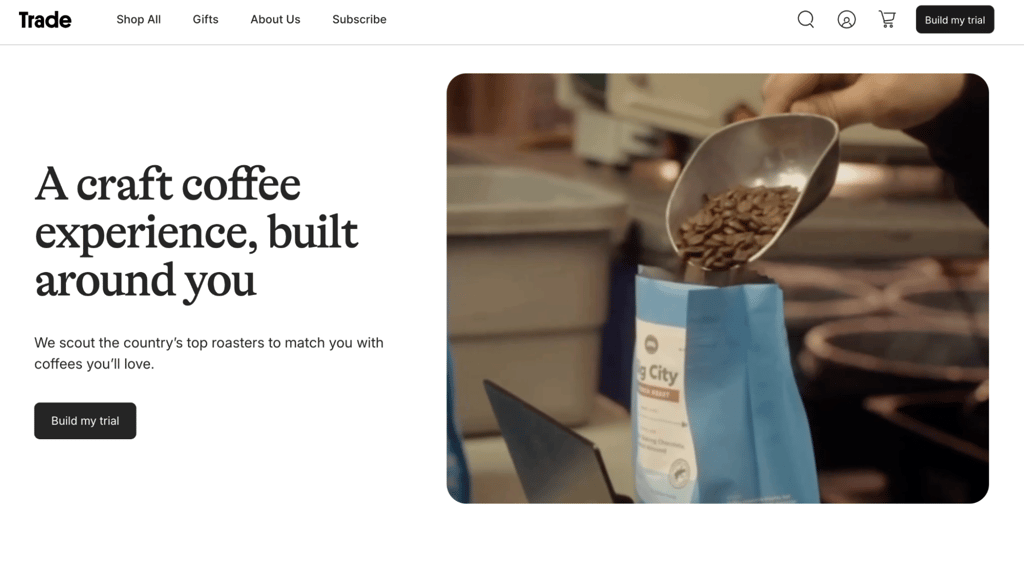
One major advantage of subscription ecommerce is more predictable recurring revenue when retention is healthy. That can make demand and inventory planning easier, while longer customer relationships can increase lifetime value compared with one-off purchases.
Strong email marketing for ecommerce is especially valuable for subscription businesses. Renewal reminders, personalized recommendations, and re-engagement campaigns help keep subscribers active and reduce churn.
Subscriptions help increase online sales by building repeat customers rather than constantly acquiring new ones. The right retention tactics matter because churn can quickly reduce that advantage.
10. Marketplace ecommerce
Marketplace ecommerce connects multiple sellers with buyers on a single platform. The marketplace typically provides search and transaction infrastructure and may also handle payments, buyer protection, fulfillment tools, or dispute processes, depending on the platform
Amazon, Etsy, and Alibaba are the most recognized examples. Amazon alone accounted for 37.6% of all US online sales in 2024, according to ecommerce industry data. Faire, a wholesale marketplace, connects independent brands with retailers. Each platform has its own audience, fee structure, and seller tools.
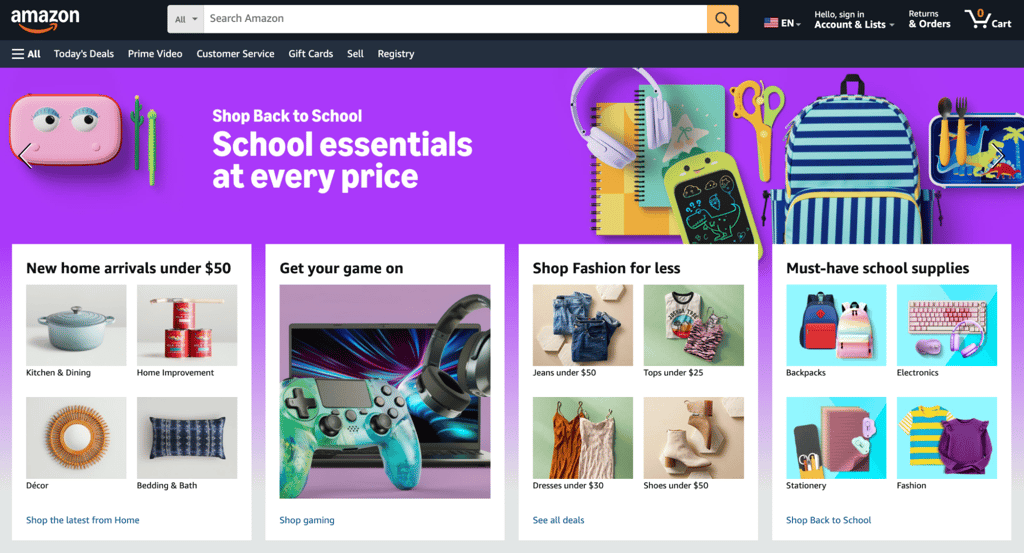
Marketplace charges can include listing fees, referral commissions, or subscription plans, depending on the platform. In return, you get exposure to a large, established audience without spending months building traffic to your own site.
You’re sharing the stage with other sellers, sometimes on the same product page. You’ll have less control over branding than on your own site, and each platform sets its own rules for how products are displayed and how disputes are handled.
A marketplace can be a practical place to test demand and reach an established audience before deciding whether to invest in a standalone store.
For a deeper look at your options, compare the best ecommerce platforms to find the right fit for your goals.
11. Digital products ecommerce
Digital products ecommerce focuses on non-physical goods delivered electronically to customers, such as courses, software, music, stock photography, printable planners, digital art, and more.
What makes digital products attractive for sellers is the economics. You create the product once, and you can make sales while avoiding the hassle of inventory, shipping costs, and the minimal cost per additional sale.
Delivery is typically instant. After a customer buys, they receive a download link or get access to a platform where they can use the product right away. You’ll want to set clear licensing terms so buyers know whether the product is for personal or commercial use or subject to a specific creative license.
Protecting your work is a normal part of selling digital goods. Tools like digital rights management (DRM), watermarking, and access-controlled platforms help to discourage unauthorized copying and limit access.
Platforms like Gumroad, Teachable, and Udemy each cater to different types of digital creators, from independent designers selling templates to educators building full course libraries.
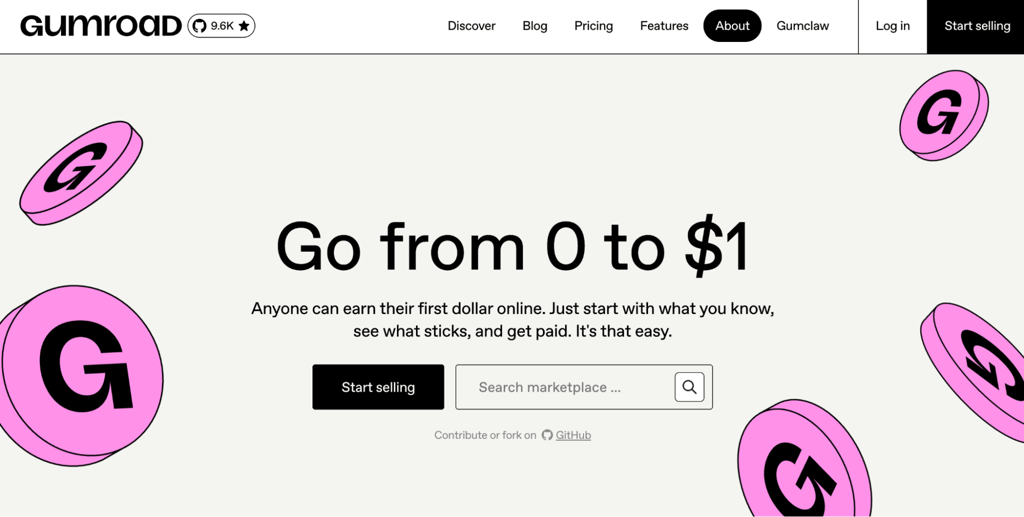
Learning how to create a digital product is a solid starting point, whether your idea is an ebook, a Notion template, or a full video course. AI in ecommerce can also assist with tasks such as drafting product copy, personalization, and marketing workflows.
How to choose the right ecommerce model
The right ecommerce model matches six things: who you’re selling to, what you’re selling, which sales channels fit, how fulfillment works, how much you’re ready to invest upfront, and your revenue strategy. Global retail ecommerce sales are forecast to reach $6.4 trillion by 2029, so whichever model you pick, the opportunity is real.
If you sell directly to individual buyers, your relationship model is usually B2C, and it may also be D2C when you sell through owned channels. B2B fits when the buyer is another company, while selling services, content, or audience value to businesses falls into C2B.
Your product type matters just as much. Physical goods need inventory management and shipping logistics. Digital products need delivery infrastructure and clear licensing. Services need a clear booking or payment flow, and subscriptions require recurring billing plus retention management.
These models aren’t mutually exclusive, and many successful businesses combine more than one. A D2C skincare brand adds a subscription option for repeat buyers. A B2C clothing store lists products on a marketplace alongside its own website. A course creator sells on Udemy while using social commerce to reach new students directly.
| Your business… | Consider these models |
| Sells physical products to everyday consumers | B2C, D2C, marketplace ecommerce |
| Provides bulk goods or services to companies | B2B |
| Offers recurring deliveries or access | Subscription ecommerce |
| Sells ebooks, courses, or software | Digital products ecommerce |
| Wants to reach buyers on social media | Social commerce |
| Targets mobile-first customers | M-commerce |
Once you’ve picked your model, you need a place to actually run your store. Hostinger Ecommerce is built to be that place, whether you’re selling physical products, digital downloads, subscriptions, services, or print-on-demand items.
You can start with an AI-built storefront or shareable payment link, then expand with more pages and sales channels as the business grows. Everything, from products and inventory to orders and payments, is managed from one dashboard, so you’re not juggling multiple tools as your business grows.
Hostinger’s ecommerce AI tools can generate product descriptions and suggested prices from product images, while AI storefront creation can generate a starting store layout without coding.
Before you launch, it’s worth estimating your ecommerce website cost to set realistic expectations. Walking through an ecommerce launch checklist also helps make sure nothing slips through the cracks.
Explore the latest ecommerce trends
Choosing an ecommerce model is only the starting point. Customer expectations, sales channels, payment methods, and ecommerce tools continue to change. Staying aware of these shifts helps you decide which models to test and eventually adapt your business to a model combination that works best over time.
A few areas are reshaping ecommerce right now. AI-powered personalization, social commerce, subscription models, flexible payment options like buy now, pay later, and more automated marketing workflows.
Marketing automation can streamline email campaigns, abandoned cart recovery, and customer segmentation.
Social commerce and subscription models, both covered earlier in this article, are also evolving rapidly. Platforms keep adding new seller tools, and customer behavior on these channels shifts season to season.
For a deeper look at what’s changing and how to act on it, explore the latest ecommerce trends shaping online retail. You’ll find data-backed insights on where the industry is heading and practical strategies you can apply to your own store.
You don’t need to chase every trend at once. Pick one or two that align with your ecommerce model. Then, test them on a small scale and measure results before committing more resources.
This article is a localized version of 11 types of ecommerce with examples, originally published in English.
All of the tutorial content on this website is subject to Hostinger's rigorous editorial standards and values.

Justina is a Content Writer passionate about marketing, with a background in social media and customer success management. She also loves reading books, traveling and exploring new places as well as cooking, and trying out new recipes. Follow her on LinkedIn.