Top 8 best real estate CRMs: Key features
Apr 27, 2026
/
Alma F.
/
14 min Read
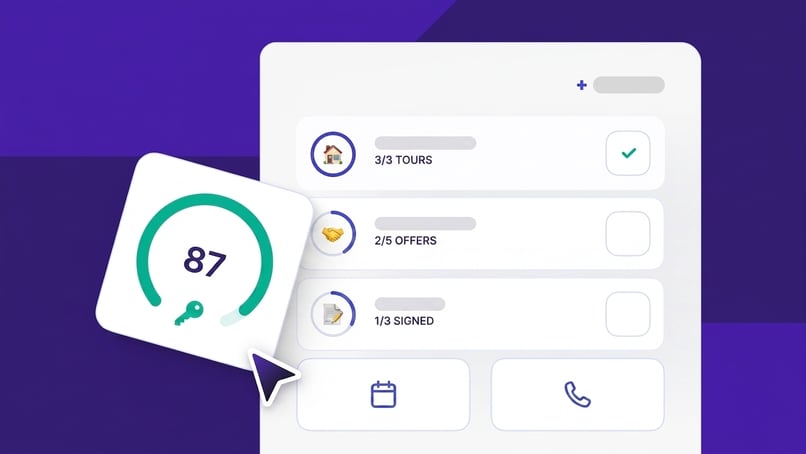
The best real estate CRMs (customer relationship management tools) help you manage leads, contacts, and property deals from one dashboard. They capture new leads the moment they come in, send texts and emails on your behalf, and show you exactly where every deal stands in your pipeline.
Without a CRM, you run into the same problems most agents face: leads that nobody called back, follow-ups that came too late, and no clear view of which deals are moving and which are stuck. The right CRM solves all three by keeping everything visible and automated.
Your pick depends on team size, budget, and where your leads come from. Solo agents typically pay $15–$50/month. Teams and brokerages on all-in-one platforms spend $300–$1,500/month.
Start with the basics: contact management, lead tracking, and deal pipelines. Then look for the features that save you hours each week: automation, marketing tools, reporting, and integrations with MLS (the shared database where agents list homes), Zillow, and Realtor.com.
Here are our picks for the best real estate CRMs:
- Best for teams handling high-volume leads – Follow Up Boss and BoldTrail
- Best for AI-driven all-in-one automation – Lofty and The Lazy Agent CRM
- Best for solo agents on a small budget – Wise Agent and Pipedrive
- Best for website-driven lead generation – Real Geeks and Sierra Interactive
1. Follow Up Boss
Best for: Teams and brokerages handling high-volume online leads who need fast response times.
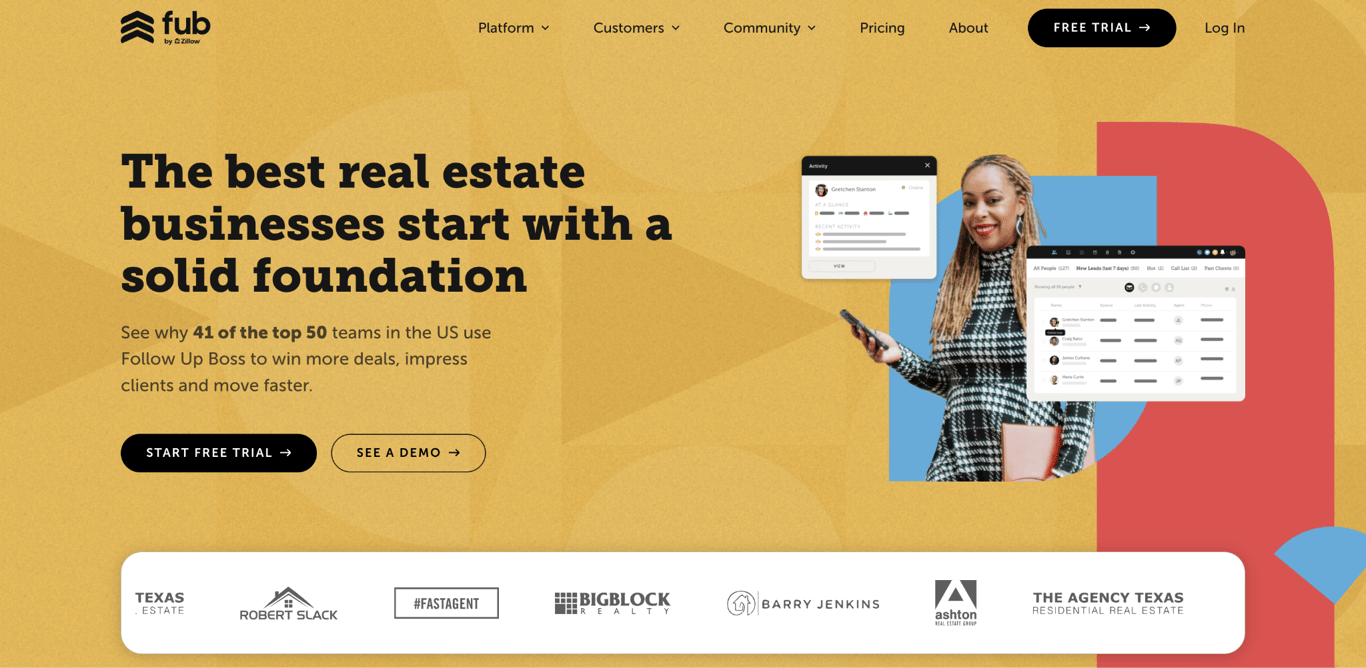
Follow Up Boss is a real estate CRM built for speed. It routes new leads to agents in seconds, logs every call, text, and email, and keeps your entire team accountable from one dashboard.
Industry data shows you’re 21 times more likely to reach a lead if you respond within five minutes instead of 30. Follow Up Boss is designed to help you hit that window, especially if you buy leads from Zillow, Realtor.com, or paid ads.
Follow Up Boss does not handle transactions, listings, or commissions. You’ll need a separate tool, such as Dotloop or SkySlope, for contract management.
Follow Up Boss key features
Follow Up Boss distributes leads to the right agent in seconds and tracks every call, text, and email from one screen.
- Lead distribution by round-robin (leads go to each agent in turn), zip code, price range, or custom rules
- Pipeline tracking with customizable stages and agent performance reports
- Built-in dialer with call recording, voicemail drop, and automatic call logging
- Two-way email and text synced inside every contact profile
- Smart Lists that group leads by behavior and trigger follow-up sequences
- 250+ integrations with Zillow, Realtor.com, Ylopo, and other major lead sources
Zillow Group acquired Follow Up Boss in 2023. Your stage changes, notes, and communication logs now sync automatically between both platforms.
Follow Up Boss pricing
Follow Up Boss offers three-tiered plans based on team size, with a 14-day free trial and no contracts. Solo agents start on Grow. Teams of five or more usually save money on Pro.
Plan | Price | Users included |
Grow | $69/month per user | Solo agents and small teams |
Pro | $499/month ($416/month billed annually) | 10 users, adds coaching tools and team leaderboards |
Platform | $1,000/month ($833/month billed annually) | 30 users, priority support and data migration |
2. Lofty (formerly Chime)
Best for: Teams and brokerages that want AI-powered lead nurturing, IDX websites, and marketing automation in one platform.
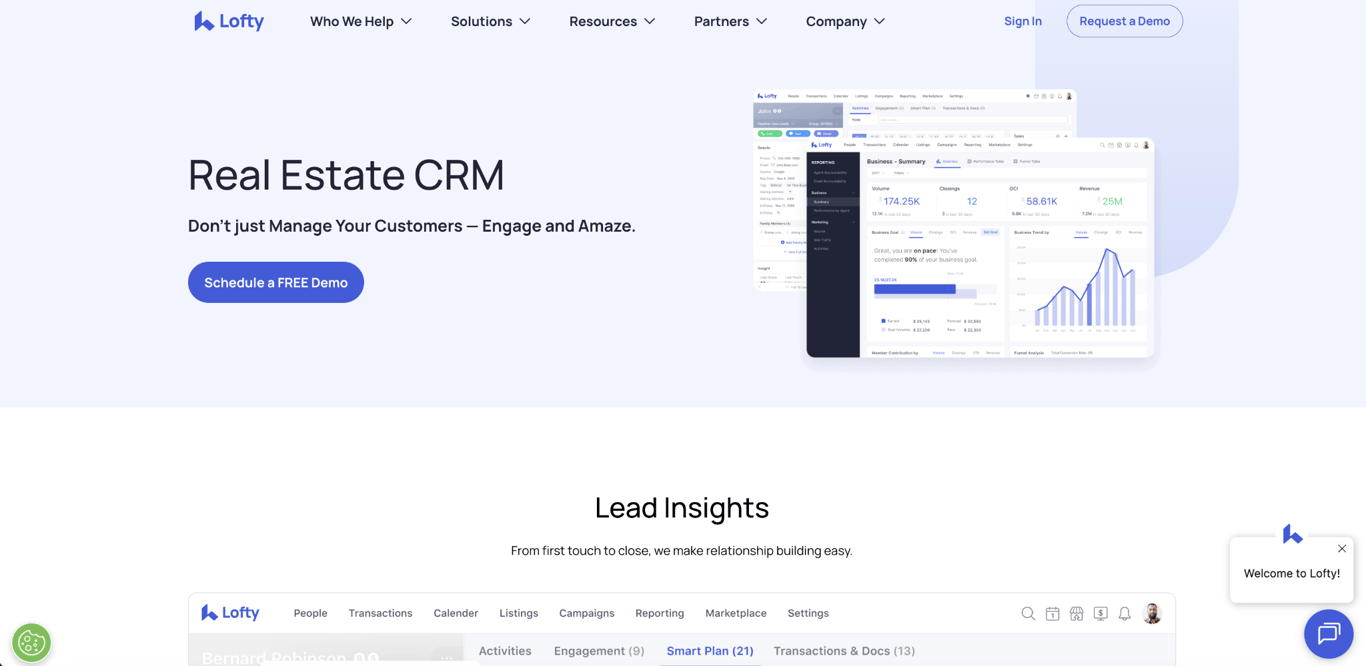
Lofty (formerly Chime, rebranded in 2023) is an all-in-one real estate platform that combines an IDX website, CRM, and marketing automation in a single system.
Two terms to know: IDX (Internet Data Exchange) lets your website pull live property listings from the MLS (Multiple Listing Service), which is the shared database where agents post homes for sale. An IDX website connects to your local MLS so visitors always see current listings.
Lofty’s behavior tracking and AI assistant are connected. The system monitors what leads do on your site, including which properties they view, what they save, and how often they return. It then sends the right follow-up at the right time, without you having to do anything manually.
Lofty key features
In addition to the AI assistant that responds to what leads do on your site, not just preset time delays, Lofty offers:
- IDX website builder with property search tools and lead capture forms
- AI Copilot that answers lead questions, qualifies prospects, and books appointments 24/7
- Smart Plans that send messages based on property views, saved searches, or pipeline stage changes
- Automated SMS and email marketing connected to behavioral tracking
- Power dialer, Dynamic CMA (comparative market analysis) reports, and social media management through Social Studio
- 33+ lead generation methods, including geo-farming (targeting a specific neighborhood with ads and outreach)
Lofty pricing
Lofty uses a subscription model with four bundled tiers. Every plan includes the core toolkit: IDX website, AI-powered CRM, email and text campaigns, marketing automation, AI Copilot, a basic dialer, CMA tool, and Social Studio. Higher tiers add features as your team grows.
- Lofty Agent. Core bundle for solo agents.
- Lofty Team. Adds 1:1 onboarding and dedicated customer success for 8+ seats.
- Lofty Broker. Adds team management, advanced lead routing, and agent subdomains.
- Lofty Enterprise. Adds single sign-on, white label, and customizable org structure.
Lead generation programs (buyer leads, seller leads, and brand advertising) cost extra, priced by lead volume plus a 20% ad management fee.
Lofty doesn’t list prices on its website. Third-party sources estimate the core bundle at around $449/month and the Enterprise tier near $1,500/month, but those numbers change depending on add-ons and team size. Bundling your IDX site, CRM, and marketing automation into one platform often costs less than buying each tool separately.
3. BoldTrail (formerly kvCORE)
Best for: Large brokerages and enterprise teams that need CRM, websites, marketing, commissions, and team management in one login.
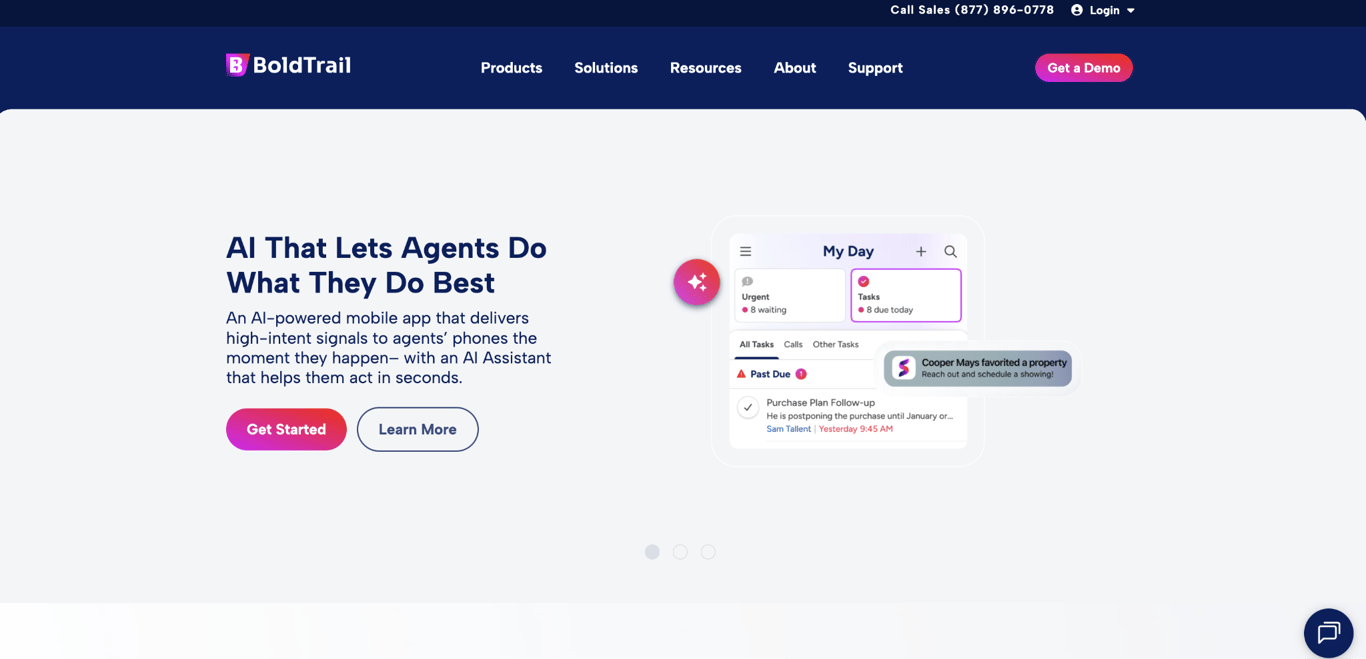
BoldTrail (formerly kvCORE) is the result of Inside Real Estate combining its front-office, back-office, and recruiting tools into a single platform in 2024.
It’s the only CRM on this list that bundles a CRM, IDX websites, marketing automation, commission tracking, compliance tools, and team recruiting into one login. That means you manage everything from a single dashboard, instead of paying for and syncing five or six separate tools.
Before you pay out of pocket, check with your broker. Many large brokerages include BoldTrail free in their agent tech stack.
If you’re paying yourself, run the numbers first. BoldTrail costs about $499/month, which is roughly $6,000/year. If you close fewer than 15 deals a year, that’s a big chunk of each commission. Wise Agent costs $49/month, and Pipedrive starts at $14.90/month.
BoldTrail key features
BoldTrail combines 20+ lead-generation tools with a CRM that scores contacts based on how actively they engage with your marketing.
- IDX websites designed to capture more leads than a basic agent site
- AI-powered Smart CRM that highlights your most engaged contacts
- Smart Campaigns with multi-channel drip sequences (pre-written emails and texts sent on a schedule)
- Team management dashboards with agent performance tracking and lead routing controls
- Reporting for lead source ROI, campaign performance, and commission tracking
- BackOffice module for compliance, admin, and recruiting
BoldTrail pricing
BoldTrail uses custom pricing based on brokerage size and agent count. Solo agent plans start around $499/month. Team and brokerage pricing varies by users and add-ons. There’s no self-serve trial. You’ll need a demo to get exact numbers.
4. Wise Agent
Best for: New agents, solo agents closing 15 to 30 deals a year, and small teams that want full features at a low price.
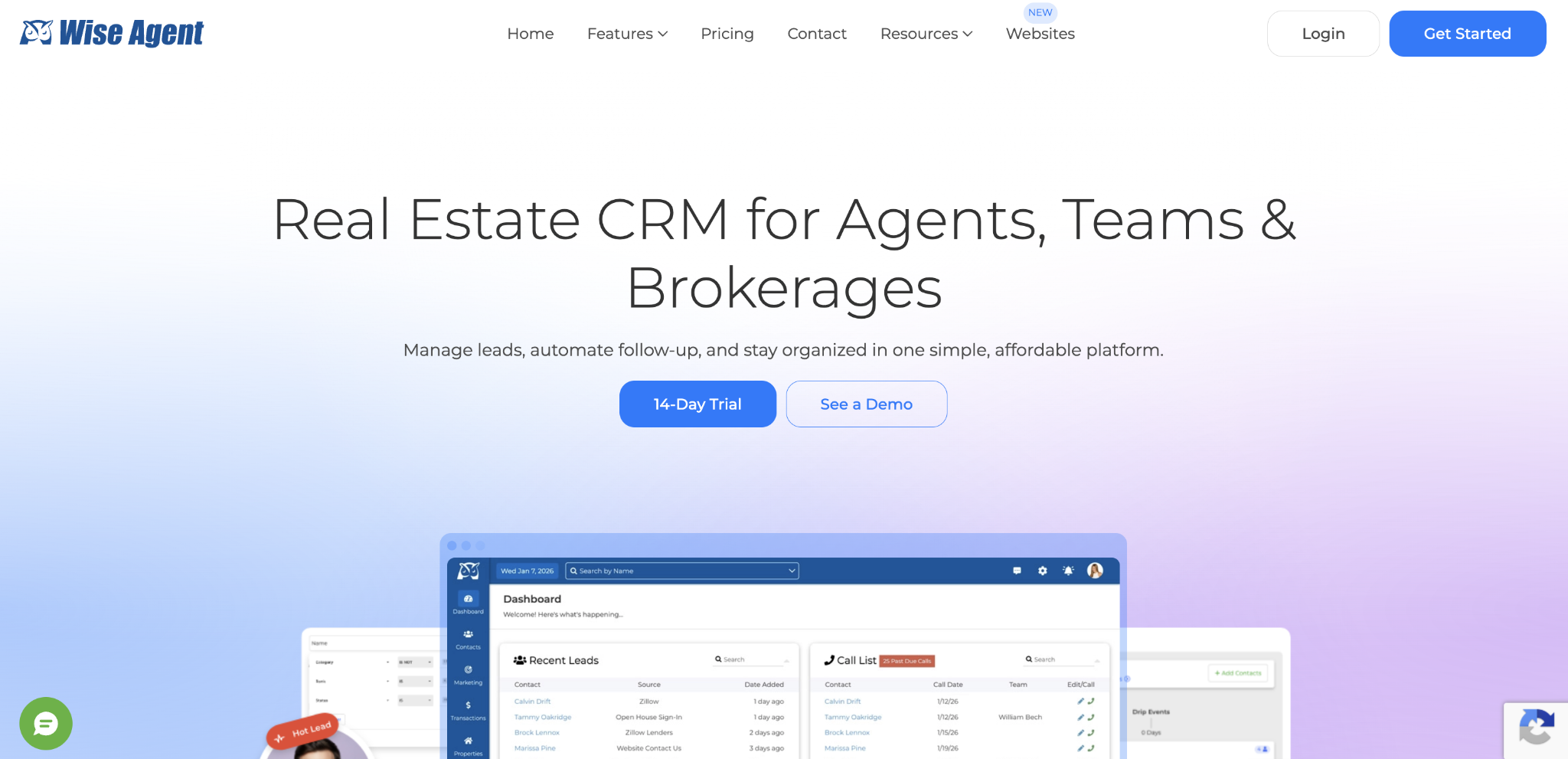
Wise Agent is an all-in-one CRM with contact management, transaction tracking, marketing tools, and 24/7 live support, all for under $50/month. You can set it up and start using it the same day.
The big differentiator at this price is the onboarding support. Most companies expect you to figure out the setup on your own. Wise Agent connects you with a real person who walks you through it over the phone. If you’re new to real estate tech, that guided setup saves you hours.
The interface looks dated next to Lofty or BoldTrail. If a modern design is important to you, this isn’t the best fit. But Wise Agent has fewer features to learn, and most agents finish setup in an afternoon.
Wise Agent key features
Wise Agent combines contacts, transactions, and marketing in one place. Every plan includes live support.
- Contact management with unlimited notes, custom fields, and automated reminders
- Automated SMS and email drip campaigns with ready-made real estate templates
- Transaction management with checklists, commission tracking, and deadline alerts
- Landing page builder for capturing leads from ads or social posts
- AI Writing Assistant for drafting emails and marketing content
- Integrations with Google, Outlook, Mailchimp, Realtor.com, iHomeFinder, and 100+ other tools
- 24/7 live support and free one-on-one onboarding
Wise Agent pricing
Wise Agent charges one flat rate with core CRM features unlocked. Texting through WiseText and some add-ons cost extra, but the main tools are not gated behind higher tiers.
- Monthly plan – $49/month
- Annual plan – $499/year (about 15% savings)
- Extra users – $20/month for a batch of five
A 14-day free trial gives you the full platform, no long-term contract required.
5. Real Geeks
Best for: Solo agents and small-to-mid teams running paid ads on Facebook and Google who want a website built for lead capture.
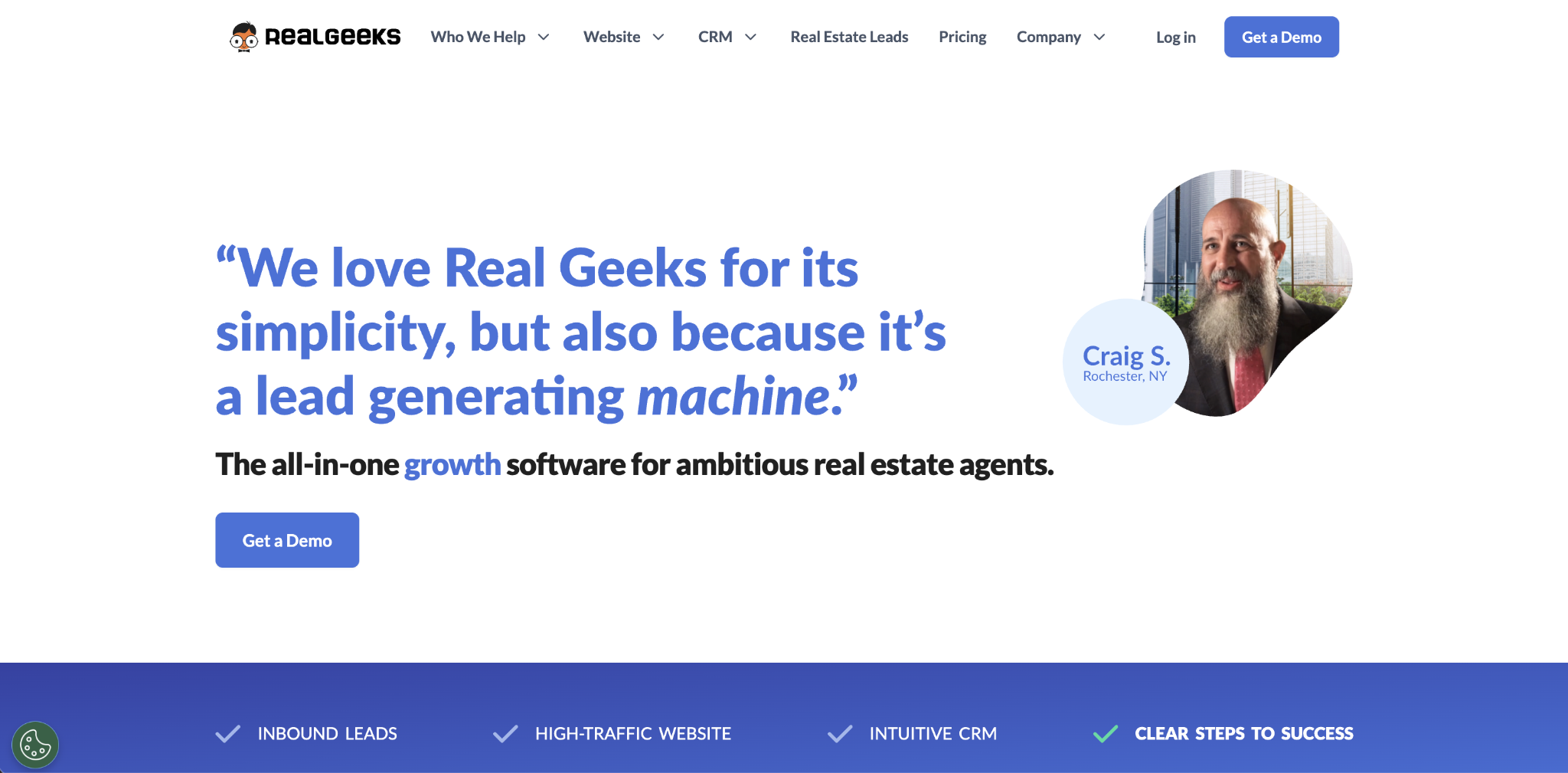
Real Geeks combines a CRM, an IDX website, and Facebook and Google ad tools in one platform. When someone clicks an ad, Real Geeks sends them to your property search site, collects their contact details through lead forms, and adds them to the CRM for automated follow-up.
Real Geeks sites ask visitors to register before they can browse listings. That approach captures more contact information, but some visitors will leave. If you prefer letting people browse freely, this isn’t a good match.
Budget for follow-up, not just ads.
Paid leads from ad platforms are mostly early-stage browsers, not ready buyers. You'll need strong follow-up campaigns (automated emails and texts over weeks or months) to convert them. Plan a real ad budget of at least $1,000/month if you use a managed ads service.
Real Geeks key features
Real Geeks centers lead generation around the website and feed every contact into the CRM for automated follow-up.
- IDX websites with mandatory registration at key points to capture visitor info
- Lead capture forms, landing pages, and home valuation tools
- CRM with behavior tracking, mass email, and multi-step drip campaigns
- Geek AI chatbot that talks to visitors 24/7 and qualifies new leads
- Built-in SMS dialer for quick follow-ups from your phone
- Facebook advertising tools and Real Leads, their managed paid ads service (optional)
Real Geeks pricing
Real Geeks pricing has two parts: the core platform (IDX site + CRM) costs $299/month, and Real Leads, their optional managed ads service, adds $1,000–$2,000+/month on top of that.
Most agents get better results running their own ads through the platform’s built-in tools. Consider Real Leads only if you don’t have time to learn Facebook Ads Manager on your own.
6. Sierra Interactive
Best for: High-performance teams that want behavior-driven follow-up and SEO-friendly IDX websites.
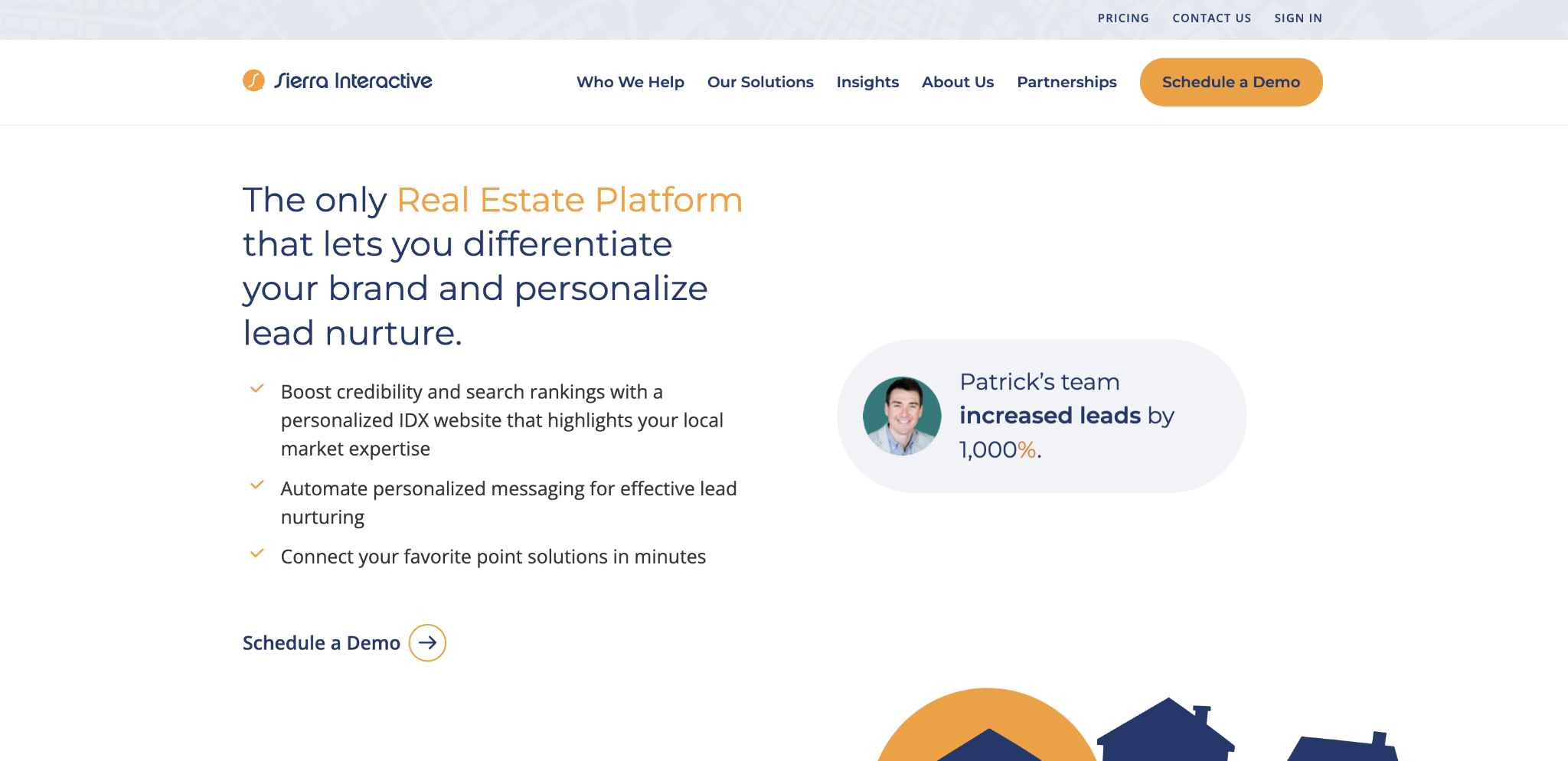
Sierra Interactive tracks what each lead does on your site and triggers automated campaigns based on that activity. Instead of sending the same email to every contact, you send targeted messages based on actual browsing behavior.
You reach more leads when your message arrives while they’re actively interested. Sierra gives you that behavioral data across hundreds or thousands of contacts at once. It also connects directly with Follow Up Boss, so you can use Sierra for your website and lead capture while running your team’s communication through Follow Up Boss.
Sierra Interactive key features
Sierra Interactive pairs behavior-based automation with IDX websites built to rank well on Google, plus an open API for custom integrations.
- Fast-loading IDX websites with strong MLS integration and lead capture tools
- Behavior tracking that triggers emails, texts, and on-site messages based on lead activity
- Advanced marketing automation workflows tied to pipeline stage and browsing patterns
- Lead routing by price, location, property type, day of the week, or round-robin
- Built-in dialer with agent accountability dashboards and lead source reporting
- Managed Google Ads and Facebook Ads with a 10% management fee
- Open API and 90+ integrations with Zillow, Follow Up Boss, Salesforce, and Sisu
Sierra Interactive pricing
Sierra Interactive publishes its pricing, which is uncommon for platforms at this level. It has two main plans.
- Agent plan – $299.95/month (solo agents and small teams)
- Teams & Brokerages plan – $399.95/month (advanced lead routing and reporting)
- Extra users – ~$20/month each
- Paid ads management – 10% fee on monthly ad spend
Facebook Ads Lite requires a $250/month minimum ad spend plus a $75/month management fee. Google Ads requires a $500/month minimum spend with no setup fee.
7. Pipedrive
Best for: Solo agents or beginners who want a clean, visual way to track deals at the lowest price on this list.
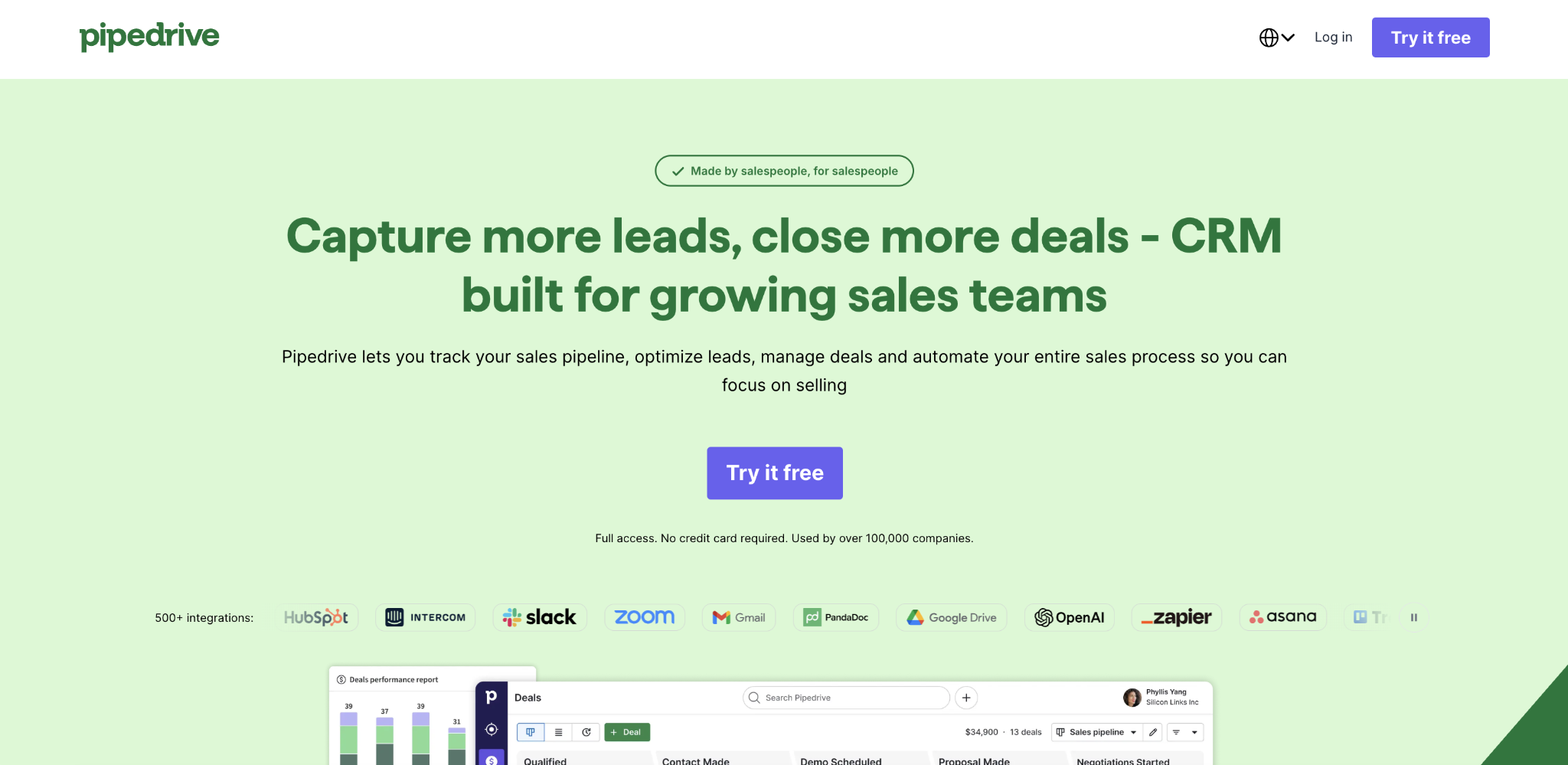
Pipedrive is a general sales CRM, not a real estate-specific one. It doesn’t include MLS integration, IDX websites, or transaction management. Agents choose it anyway for two reasons: its pricing (the lowest price on this list), and the drag-and-drop pipeline makes it easy to track deals from first contact to closing with almost no setup.
Pipedrive works best if you get most of your leads from referrals, your personal network, or a separate lead gen tool. You don’t need MLS or IDX built into your CRM when your leads aren’t coming from a website. You just need a clean place to track them.
Choosing between Wise Agent and Pipedrive? Pick Wise Agent if you want real estate templates, transaction checklists, and MLS-friendly contact fields built for the industry. Pick Pipedrive if you already handle lead generation separately and just need to see your deals moving through stages.
Pipedrive key features
Pipedrive uses a Kanban-style pipeline that lets you see all deals at once and drag cards between stages.
- Drag-and-drop visual pipeline with customizable stages and deal fields
- Email integration and sync with Gmail, Outlook, and other providers
- Activity tracking with automatic logging of calls, meetings, and tasks
- Automation for repetitive tasks and multi-step follow-up sequences
- An AI Sales Assistant that alerts you about stalled deals and suggests next steps
- 500+ third-party integrations through Zapier and native connectors
- Reporting with customizable dashboards and revenue forecasts
Pipedrive pricing
Pipedrive has five tiers, starting at $14.90 per user per month on annual billing.
- Essential – $14.90/month
- Advanced – $24.90/month
- Professional – $49.90/month
- Power – $59.90/month
- Enterprise – $99/month
Most agents do well on Advanced or Professional, and both are included in the 14-day free trial, no credit card required. One gap to know about: Pipedrive doesn’t include marketing automation, so pair it with Mailchimp or a similar tool for automated email sequences sent on a schedule.
8. The Lazy Agent CRM
Best for: Agents who want AI to run most of their client communication so they can focus on closing deals.

The Lazy Agent CRM automates lead follow-ups across text, email, social, and phone. It runs on a customized version of Go High Level, a marketing and CRM platform that other companies resell under their own brand, with heavy automation layered on top.
The tradeoff is control: you save a lot of time, but most client conversations run through AI rather than you. If always-on responsiveness and scale are your priority, you’ll like this. If you prefer writing every message yourself, you won’t.
The Lazy Agent CRM key features
The Lazy Agent CRM automates almost every lead touchpoint with AI-driven communication across channels.
- AI booking bot that follows up with leads and schedules appointments 24/7
- Magic Inbox that combines SMS, email, social DMs, and AI phone calls in one view
- Three follow-up modes: fully AI, automated with custom rules, or fully manual
- Customizable workflows for tone, qualifying questions, and meeting types
- Funnel builder for landing pages, lead magnets, and webinars
- Real Homes mobile IDX app for client engagement (extra fee)
- 24/7 human support through chat and Zoom, plus weekly office hours
The Lazy Agent CRM pricing
The Lazy Agent CRM bills every 6 or 12 months, not monthly. The base plan covers the CRM. AI usage costs extra on a pay-per-use model.
- Base plan – $3,000–$12,000 per billing period
- AI usage – pay-per-use on top of the base plan
- Solo Agent Plan – includes 3 seats (you plus a transaction coordinator and one more)
AI costs go up the more you automate, so high-volume agents will see variable bills that are harder to predict. The upfront price is higher than most CRMs on this list, but AI handles client conversations around the clock while you focus on closing deals.
Build your own real estate CRM with AI
Building a custom CRM makes sense when pre-built tools don’t match how you work. A brokerage running residential and commercial deals side by side needs a different pipeline than what standard CRMs offer. Marketplaces need their own deal screening logic. Investor-focused agents track data points like cap rates, rehab costs, and ARV (after-repair value) that no pre-built CRM includes.
You don’t necessarily need a developer for this. You can build real estate CRM software with AI by describing what you need in plain English. The AI creates the database, interface, and logic for you, and you get full control over pipeline stages, automation rules, integrations, and the interface for your agents and clients.
Most solo agents and small teams save money with a pre-built CRM. Brokerages with unusual workflows or investor-heavy pipelines often save more in the long term with a custom build because they stop paying per-user fees and get exactly the features they need. If a custom CRM improves your conversion rate by even a few percentage points, it pays for itself within a year or two.
Can I build a real estate CRM with Hostinger Horizons?
Yes. Hostinger Horizons lets you build real estate CRM with AI by typing plain-English prompts. No coding required. You describe what you want, and the AI creates the structure, database, interface, and connects to hosting in a single flow. You’ll need an active Hostinger hosting plan and a Horizons subscription.
Start with a prompt like this:
Create a real estate CRM web app with a pipeline showing Lead, Qualified, Showing, Offer, Under Contract, and Closed stages. Add contact fields for client name, email, phone, property address, and deal value. Include a dashboard with active deals, conversion rate, and monthly closings.
A prompt like that can generate a basic working version quickly. More complex features like conditional routing logic or third-party integrations take additional prompting and may need some web development knowledge to get right.
Horizons supports Stripe integration for payment tracking. Email and SMS integrations are possible via third-party APIs, but they require manual setup and aren’t plug-and-play.
Your finished CRM runs on Hostinger’s secure hosting with a custom domain.
Key features to look for in real estate CRMs
Your CRM needs to solve three problems: keeping every lead and client organized, following up without you having to do it manually, and showing you which deals are moving and which are stuck.
Contact management and lead tracking handle the first problem. Your leads come from Zillow, Realtor.com, Facebook ads, your website, open houses, and referrals. Without a CRM pulling them into one place, you lose contacts across inboxes and spreadsheets.
Automation and drip campaigns handle the second. You’re at showings, on calls, or driving between appointments most of the day. Automated email, text, and voice follow-ups keep leads warm while you’re busy.
Deal pipelines and reporting handle the third. You need to see every deal’s stage, next step, and deadline at a glance so you know where to focus your time.
Beyond those three, look for transaction management (to track the 30+ deadlines between contract and closing), mobile access (so you can update contacts from your car), and integrations with MLS, e-signature tools, and payment processors. A CRM only works if you actually use it, so a simple interface and guided onboarding matter more than most feature lists suggest.
Feature | What it does for you |
Contact and lead management | Pulls leads from Zillow, Realtor.com, Facebook, and your website into one place |
Lead tracking and deal pipelines | Shows every deal’s stage, next step, and deadline in one view |
Automation and drip campaigns | Sends email, SMS, and voice follow-ups automatically so nothing slips while you’re at showings |
IDX website integration | Connects property views to lead records so you see what each person is browsing |
AI-powered lead scoring | Ranks contacts by how likely they are to buy, based on email opens and property views |
Marketing campaigns and reporting | Shows which campaigns bring in deals, with customizable dashboards and revenue forecasts |
Transaction management | Tracks all 30+ deadlines between contract and closing |
Mobile access | Lets you update contacts, send texts, and log calls from your phone |
Real estate integrations | Connects to MLS, Zillow, Realtor.com, e-signature tools, and payment processors |
Simple interface and onboarding | Gets you running in days, not weeks, with guided setup and clear design |
Follow Up Boss and Pipedrive do not include transaction management. Wise Agent, Lofty, and BoldTrail do. If your CRM doesn’t cover transactions, pair it with Dotloop or SkySlope to manage the contract-to-closing process.
Common use cases for real estate CRMs
Real estate CRMs handle six jobs better than any other tool: lead capture, client communication, multi-channel marketing, transaction tracking, team collaboration, and conversion reporting.
Lead generation and capture. Your CRM pulls leads from IDX websites, ad campaigns, open houses, and referrals into one pipeline. You stop losing contacts scattered across your inbox and phone.
Client communication. Let’s say a new lead comes in at 11 PM. Your CRM sends a welcome text within 60 seconds and schedules a morning call. Responding within minutes instead of hours dramatically improves your chances of connecting while they’re still actively looking.
Multi-channel marketing. You want to send a quarterly market update to 300 past clients. Your CRM segments the list, personalizes each message, and sends across email, SMS, and social in one step.
Transaction management. Between an accepted offer and closing, 30+ deadlines need to stay on track: inspection, appraisal, loan contingency, and walkthrough. CRMs with transaction tools alert you before anything falls behind.
Team collaboration. For brokerages, the CRM acts as the central record. Lead routing, shared notes, agent performance tracking, and commission calculations all live in one place.
Conversion tracking. Reports show which campaigns bring in deals, which agents close fastest, and where deals get stuck. You use that data to decide where next month’s ad budget goes.
How do I leverage AI in real estate beyond a custom CRM?
AI can handle your website, marketing campaigns, and listing content on top of your CRM. Most agents use four or five separate tools for these tasks. You can cut that down significantly by using AI for each one.
Start with your website. This is where leads find you, whether they come from Google or shared listings. You can create AI-built websites for real estate agents by describing what you need. The AI handles layout, property listings, lead capture forms, search-friendly content, and mobile design.
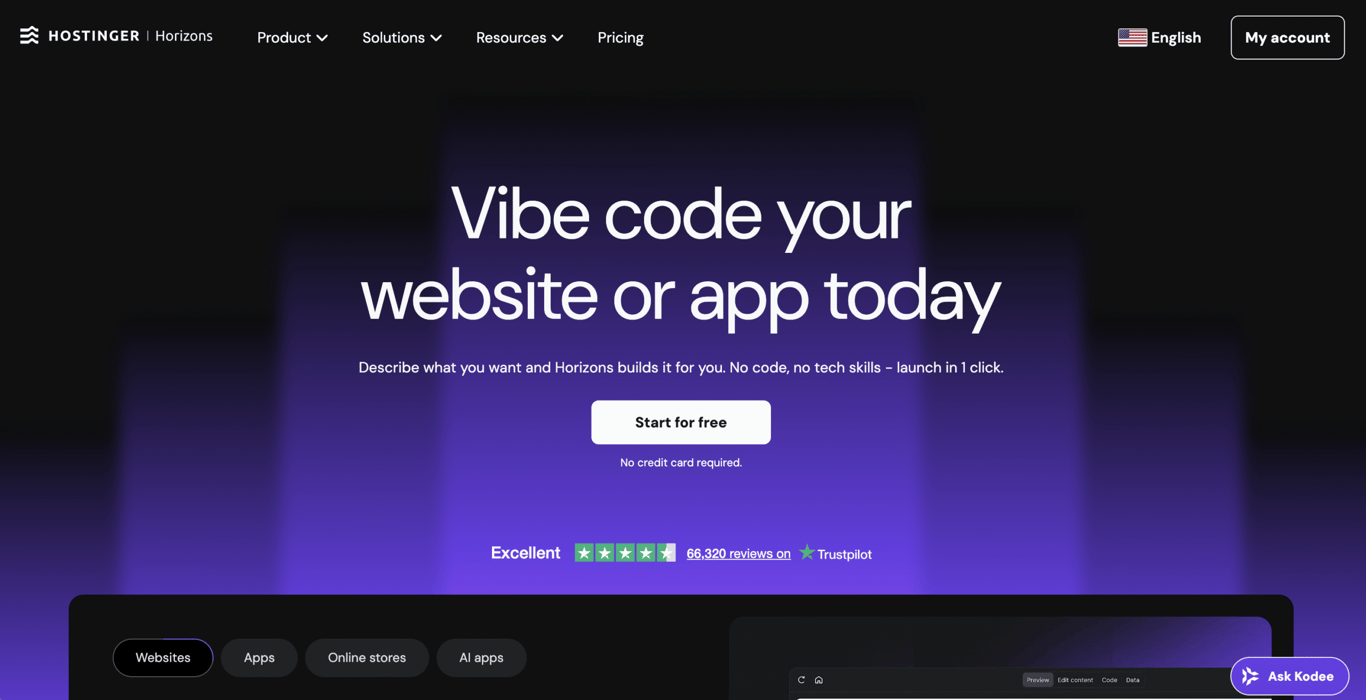
Hostinger Horizons, for example, is an AI web app builder that comes with hosting and a free domain included – so you can build, publish, and launch your CRM all from the same platform, without needing a separate website provider.
Your AI website only works if people can find it. A domain like yourname.com builds personal branding, while yourtown-homes.com ranks better in local search. Picking the right domain name for real estate early matters because changing it later resets your position in Google search results, which means fewer people find your site and fewer leads come in.
Once your site and domain are set, AI handles marketing. Drip email campaigns, property recommendations based on browsing behavior, and search-friendly blog content all run in the background. You set the rules once, and the system generates and sends content as leads move through your funnel.
AI also changes how your listings look. Virtual staging software fills empty rooms with furniture in minutes. AI photo editors remove clutter and fix bad lighting in seconds. Video generators turn static photos into 60-second social clips that perform better than photo-only posts on Instagram and TikTok.
When you connect these pieces, you stop managing a collection of separate tools. Your AI website brings in visitors from Google and ads. Landing pages turn those visitors into leads. Email and chatbots follow up with them. Your CRM helps you close. You end up with a full system that runs mostly on its own, and you spend your time on the conversations that need a human.
All of the tutorial content on this website is subject to Hostinger's rigorous editorial standards and values.

Alma is an AI Content Editor with 9+ years of experience helping ideas take shape across SEO, marketing, and content. She loves working with words, structure, and strategy to make content both useful and enjoyable to read. Off the clock, she can be found gaming, drawing, or diving into her latest D&D adventure.