
How to connect a custom domain name to your web app
Connecting a custom domain name is an essential part of creating a web app. It lets users reach your app by typing a simple, memorable name in their...

How to transfer a domain from Squarespace to Hostinger in 6 simple steps
Low starting costs, an AI website builder, and user-friendly hosting services are among the many factors that make Hostinger an excellent Squarespace...
How to transfer a domain from HostGator to Hostinger in 6 steps
Whether you seek better speed, more features, or a user-friendly control panel, Hostinger is an excellent HostGator alternative. Offering both website...
How to transfer a domain from Namecheap to Hostinger
If you aim for advanced features, cost-effective plans, or a more intuitive user experience, Hostinger is a great alternative to Namecheap.In case you...
How to transfer a domain name from IONOS to Hostinger
If you’re searching for better privacy features, customer support, user interface, or value for money for your domain name, Hostinger can be a...
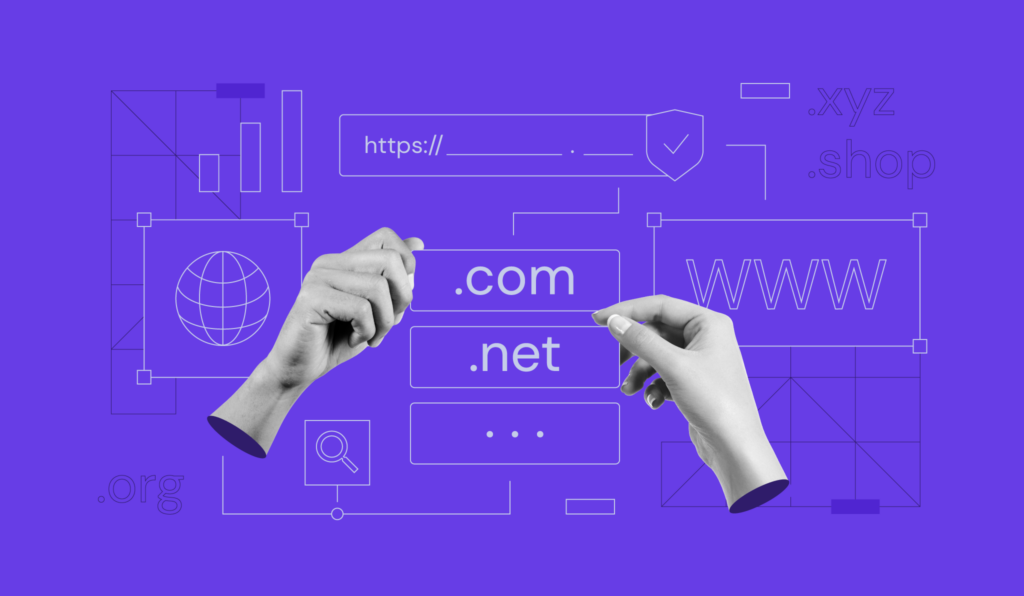
What is a domain name?
A domain name is a human-readable address that people type into a browser to visit a website, like google.com or wikipedia.org. It works as a shortcut...

How to get a free domain name in five steps
A free domain name is a web address you can register at no upfront cost. You can get one through hosting bundles, website builders, free subdomain...

How to transfer a domain from GoDaddy to Hostinger in 4 simple steps
Transferring a domain to a new registrar is a common practice. You might want to do it to save on renewal costs, get better services and support, or...
How much does a domain name cost?
On average, a typical domain name costs between £10-£15/year, but things like your chosen registrar or included add-ons can influence your...