To start an online business, choose what to sell and who to sell it to, plan and register the business, build a website that accepts payments, and then market, launch, and grow it. You don’t need technical skills, because website builders and AI tools handle most of the setup.
Here are the 10 steps to follow:
- Decide what you want to sell.
- Learn about your customers and competitors.
- Define what makes you different.
- Write a simple business plan.
- Sort out business registration and legal details.
- Build your website.
- Set up payment processing and fulfillment.
- Create a marketing plan.
- Launch and start selling.
- Grow and improve over time.
Low-cost models such as digital products, online courses and coaching, dropshipping, and print-on-demand are popular starting points because they don’t require you to buy and store inventory upfront. After the steps, you’ll find online business ideas to start with, the main benefits of running a business online, and answers to common questions about startup costs and business models.
1. Choose your online business niche
Choosing the right niche helps you determine your target audience, shapes your marketing strategy, and affects how sustainable your business is in the long run. It also makes learning how to sell online far simpler, because you know exactly what you’re selling and who you’re selling to.
Start with three things: what you know about, what people want to buy, and what can make you money. The sweet spot is where all three overlap. When you sell something you understand well, you’ll have an easier time explaining its value, and you’ll come across as more authentic.
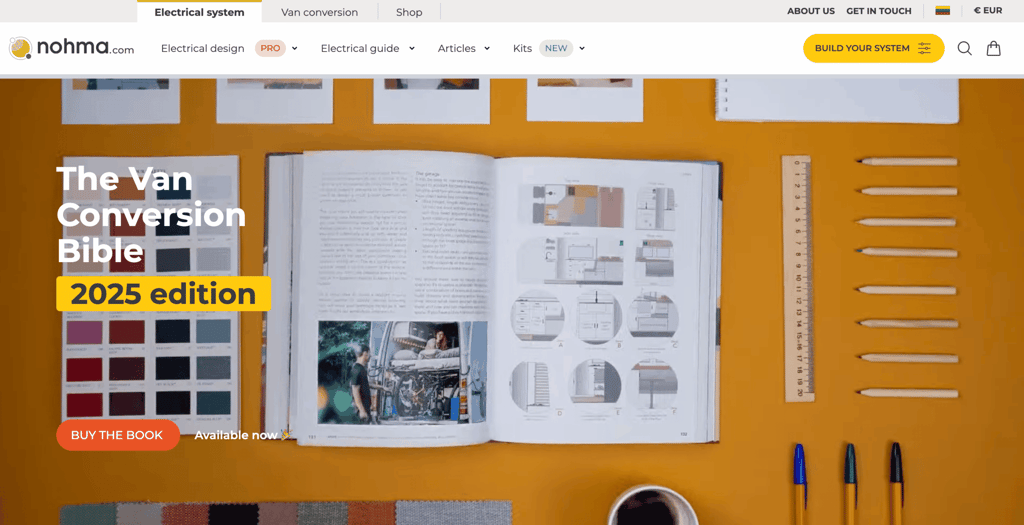
Take Charlie and Dale from Nohma. They combined their engineering skills with van-life experience to create a service business and a bestselling book with over 1,000 five-star reviews. It works because they live in a campervan themselves and actually use the systems they design.
2. Conduct market research
Once you’ve chosen your niche, gather data on customers and competitors to assess market demand and identify key industry trends. Online market research helps tailor your products or services to meet your target audience’s needs and stand out from the competition.
Here are common market research methods and the specific insights they produce:
- Surveys and questionnaires ‒ ask potential customers directly about their problems, preferences, and what influences their buying decisions.
- Competitor analysis ‒ study what similar businesses are doing, their prices, and what customers complain about in reviews to find gaps you can fill.
- Social listening ‒ monitor forums, social media, and review sites to see what people are saying about products like yours.
Use tools like Google Analytics, Facebook Insights, and keyword research platforms to dig deeper into your audience. You’ll learn what they search for online, where they spend time, and what demographics matter most.
The goal is to answer three key questions: Who exactly wants this? What problems does it solve for them? How much will they pay?
Record these findings, since they form the foundation of your business plan.
3. Create a unique value proposition (UVP)
Your unique value proposition (UVP) is a statement that describes the benefit of your offer, how you solve customers’ needs, and what sets you apart from the competition. It helps potential customers understand why they should choose your brand over others.
For example, Dropbox’s UVP, “Your stuff, anywhere,” highlights its file accessibility feature across devices. Meanwhile, Coursera’s UVP, “Learn without limits,” establishes it as a platform where anyone can upgrade their skill set.
A compelling UVP should consist of at least one of these elements :
- Customer needs ‒ clearly state what frustration or need your products or services address.
- Unique benefits ‒ explain what makes your products or services unique and what their advantages are over competitors.
- Credibility and trustworthiness ‒ include endorsements, certifications, or credentials that build trust.
- Emotional connection ‒ highlight the personal benefits and experiences your product or service offers, tapping into what motivates your customers’ decisions.
The best UVPs are short and specific. Test your UVP by reading it to someone who doesn’t know your business. If they can’t immediately understand what you do and why it matters, rewrite it. Avoid using jargon or complex language that makes your UVP difficult to remember.
4. Write a simple business plan
A business plan turns your research and value proposition into concrete decisions: what you’ll sell, at what price, to whom, through which channels, and how much money you need to start. For a small online business, a few pages are enough, and you can update the plan as you learn from real sales.
Cover these points in your plan:
- Offer and pricing ‒ what you sell, your price points, and your estimated profit per sale after product, shipping, and payment fees.
- Target customer ‒ the audience you identified during market research, including their main problem and budget.
- Business model ‒ how you’ll deliver: your own inventory, dropshipping, print-on-demand, digital downloads, or services.
- Marketing approach ‒ the two or three channels you’ll focus on first.
- Startup budget and funding ‒ one-time costs like a domain, website, first stock, and registration fees, monthly costs like hosting, software, and ads, and where the money will come from, such as personal savings, pre-orders, or a small business loan.
- Goals ‒ measurable targets for your first three to six months, such as your first 10 sales or 200 email subscribers.
If you’d rather not start from a blank page, you can write a business plan with AI and then adjust the figures to match your own research.
5. Consider the legal aspects of starting an online business
Just like a brick-and-mortar business, an online company must follow the laws that apply to its country and business type.
Basic legal requirements generally include:
- Business registration ‒ register your business name and structure with your local government.
- Business license ‒ some industries, such as food, finance, and health, require special permits to operate legally.
- Tax registration ‒ meet tax requirements by getting a sales tax license or value-added tax (VAT) number, as needed.
If your new business will collect personal information for advertising or other purposes, you must follow data protection and privacy laws like the General Data Protection Regulation (GDPR) and the Data Protection Act (DPA). Explain on your privacy policy page how you collect, use, keep, and protect customer data.
You should also have terms of service or conditions for your online business. This legal agreement protects your rights, limits liability, and explains service terms to users.
Consult legal experts before deciding on a business structure to ensure compliance with online business laws. Their advice can also help protect your business interests and intellectual property, including branding and copyrights, in the long run.
Get your legal pages done fast with Hostinger
Hostinger AI Builder provides templates to help you create legal pages for privacy policies and terms and conditions in minutes. Simply review and adapt the guidelines to ensure compliance with laws that apply to your business.
6. Build your online business website
Now you need a website where customers can actually buy from you. There are three main options you can choose: a content management system (CMS), a website builder, or a vibe coding tool.
A CMS like WordPress gives you complete control over your site’s design and functionality through themes and plugins. However, you’ll need to handle your own hosting and deal with a more technical setup.
A website builder bundles hosting, templates, and design tools in one package. It’s easier for beginners because a drag-and-drop website builder doesn’t require any technical experience.
If you want something that works right out of the box, Hostinger’s business website maker includes everything you need, such as ecommerce templates, drag-and-drop editing, payment processing, and AI tools to help with design and content. It’s designed for people who want to focus on their business instead of wrestling with a technical setup.
Not sure which fits your needs? Check out our website builder vs CMS comparison to decide.
If you’d prefer a deeper customization on your ecommerce features or want a higher interactivity on your site, you can vibe code a site with an AI web app builder. It lets you build features like user account registration, appointment booking system, or interactive product browsing, simply by describing what you need in plain English. No coding, no plugins to configure.
Before launching your business site, don’t forget to choose a domain name that is close to your business name so customers can easily remember and find you online.
7. Set up payments, security, and fulfillment
Before launch, decide how customers will pay, how their data stays protected, and how each order reaches them. Test all three with a real order, because problems here cost you sales directly.
Start by choosing payment gateways that integrate with your website and support the payment methods your customers prefer. With Hostinger’s ecommerce website builder, you can offer 100+ payment methods, including cards, PayPal, Google Pay, and Apple Pay. The methods available to your store depend on where you sell, your location, your currency, and who your customers are.
Make sure your website is secure with SSL encryption, which protects customers’ data when they enter payment details or personal information. Hostinger includes free SSL certificates with its Web, Cloud, and Agency hosting plans and installs them automatically when you add a domain.
Fulfillment depends on your business model:
| Business model | How orders are fulfilled | What to set up before launch |
|---|---|---|
| Physical products (own stock) | You store, pack, and ship each order | Shipping rates and carriers, stock tracking, returns policy |
| Dropshipping | A supplier ships directly to your customer | Reliable suppliers, realistic delivery times on product pages, a test order |
| Print-on-demand | A partner prints and ships each item after it’s ordered | Product samples, production and shipping times |
| Digital products and courses | Customers get an instant download or course access | Automatic delivery emails and working download links |
| Services and coaching | Customers book a time slot | Availability, booking confirmations, cancellation policy |
If you want to avoid inventory and shipping entirely, start with digital products or services. If you sell physical goods, dropshipping and print-on-demand lower upfront costs but give you less control over quality and delivery times than holding your own stock.
If you’re starting a service-based business, the appointment feature in Hostinger AI Builder lets customers book and pay for time slots on your site, so there’s no need to integrate a third-party booking tool.
8. Prepare digital marketing strategies
You’ve built your website, but now you need customers to find it. Here are some effective marketing strategies to try. Choose two or three that make sense for your business and do them well before expanding to others.
You don’t have to do all of this on your own. Hostinger’s AI agent gives you a built-in team of specialists, including a Business Advisor, Marketing Planner, and SEO Consultant, to help you plan and run your strategy from day one.
Search engine optimization (SEO) helps customers find your business on Google.
Start with these basics:
- Find the right keywords ‒ use tools like Google Keyword Planner to see what your customers actually search for, then use those exact phrases in your product descriptions and page titles.
- Speed up your website ‒ reduce load times to improve the user experience and lower bounce rates.
- Get local visibility ‒ set up your Google Business Profile if you serve local customers.
- Stay current ‒ Google’s ranking algorithm changes regularly, so keep learning what works.
On social media, you don’t need to post on every platform. Focus on the platforms where your customers spend the most time: if you’re selling business software, focus on LinkedIn, and if you’re selling handmade jewelry, Instagram and Pinterest work better. Answer questions, share helpful advice, show behind-the-scenes content, and engage with commenters, because the goal is building relationships, not just broadcasting.
For email marketing, start collecting email addresses from day one, because an email list is a channel you own instead of one controlled by a social media algorithm. Use email marketing campaigns to send helpful tips, exclusive offers, or product updates.
To track what works, use Google Analytics to see which marketing efforts actually bring in customers and sales. Double down on what works, and reduce what doesn’t. Most marketing takes time to show results, so write down your marketing plan and stick to it for at least three to six months before making major changes.
9. Launch your online business
After finalizing your business strategy and setting up your ecommerce platform, it’s time to launch your new business. To ensure its success, you need a launch strategy that will attract potential customers and create buzz around your brand.
Consider the following factors when planning your small business launch:
- Clear goals ‒ set realistic goals for brand awareness, customer engagement, and sales. Pick relevant metrics to measure your performance.
- Timeline ‒ align your timeline with your launch goals to ensure each phase strategically contributes to your business objectives.
- Operational readiness ‒ test your online business setup to ensure all features and operations are fully functional.
- Marketing plan ‒ decide which channels to use for creating anticipation and excitement. For example, share product teasers on social media ahead of the launch day and host a virtual launch event with Q&A sessions and live demonstrations of your product.
- Contingency plan ‒ have backup plans for potential challenges like website downtime and payment gateway issues.
10. Grow and scale your online business
Getting your first few customers is just the beginning. The next step is to turn your small business into something that can scale and grow. Here’s how you can do that.
- Focus on what’s already working – look at your data to see which marketing channels bring in the most loyal customers, which products sell the most, and where your profits are highest. Double down on these areas before trying new things.
- Use tools to take repetitive work off your plate – set up automated email sequences for new customers, schedule social media posts in advance, and automate your inventory tracking. This frees up your time to focus on bigger decisions and customer relationships.
- Keep your customers happy – it’s cheaper to sell more to existing customers than to find new ones. Stay in touch through email newsletters, ask for feedback regularly, and actually listen when customers suggest improvements.
- Be patient, but stay flexible – real growth takes time, so don’t get discouraged if it doesn’t happen as quickly as you’d like. Just look at Etsy, which took a decade to become the global marketplace it is today.
But don’t be so patient that you ignore warning signs. If something isn’t working after trying it for a few months, change course. Maybe your target market is different from what you thought, or perhaps your pricing needs adjustment.
Whether to pivot or expand depends on how your core business performs. If it isn’t meeting targets, or if consumer behavior shifts over time, you might need to pivot: change your target market, adjust your product, or use a different business model.
If your core business is working well, consider expanding with new sales channels, new products for existing customers, or new markets for existing products. Track your numbers monthly so you can spot trends early and make decisions based on data, not just gut feelings.
Want to see these lessons play out in real life? This video follows one founder’s honest account of the challenges that came after launch — delegation, paid ads, and staying adaptable.
Profitable online business ideas
Finding a venture that suits your skills, passions, and target market is the key to launching a profitable business.
If you’re looking for inspiration, here are some popular online business ideas.
Self-publish an ebook
Leverage your passion for writing to earn royalties on every ebook sale. Rates depend on the platform: Amazon Kindle Direct Publishing (KDP), for example, offers a 35% or 70% royalty option for each ebook.
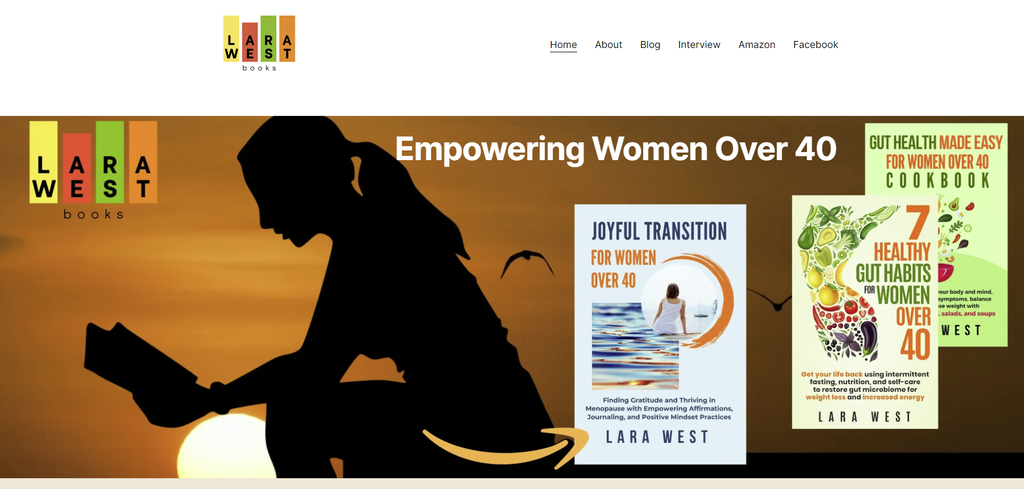
Lara West taps into this approach and uses her ecommerce platform to market her ebook and audiobooks.
Start an online store
If you want to start an online store, you may need a sizable initial investment for stock, storage, and store setup, but you keep full control over product quality, branding, and margins.
To start your business online, research trending products to sell and plan the packaging and pricing accordingly. Carefully set up customer support to ensure excellent service delivery.
Start a dropshipping business
Dropshipping involves setting up an online business with a third-party vendor who manages production, storage, and shipping for you. It requires lower startup costs than a traditional online store, making it suitable for beginners.
Because you pay the supplier for each order instead of buying stock in bulk, margins are usually lower than with your own inventory. To learn more about this venture, check out our guide on starting a dropshipping business.
Create an online course
Share your expertise through online courses or coaching. Depending on your niche, pricing, and audience size, this can bring in $1,000–$50,000/month.
For example, iLearnTech sells learning programs on C# and DevOps. The pre-recorded course materials and downloadable resources make for an excellent passive income stream.
See our tutorial for the steps you should take to sell courses online.

Start a podcast
Do a solo or group podcast discussion on your preferred topics and earn $500-10,000/month through monetization. Invest in reliable recording equipment to improve the quality of your podcast. Once you build a solid audience base, you can start attracting sponsors and generating revenue.
Browse these podcast website examples to see how creators give their shows a home online.
Why start an online business?
When it comes to numbers, the ecommerce industry’s long-term growth is steady. Ecommerce statistics indicate that nearly two-thirds of people shop online weekly, with no signs of slowing down.
One contributing factor is the low barriers to entry for aspiring sellers today. Various website-building options empower small business owners to expand their online reach without the need for advanced technical knowledge.
Consequently, more brands are joining online marketplaces to meet the growing demand, boosting global sales.
Online business models offer several advantages over traditional ones. They’re more adaptable to market trends and typically have lower startup costs. Moreover, automated sales and marketing processes make these models scalable.
Here are more reasons to start your own online business:
- Innovative revenue streams ‒ explore different revenue models like subscriptions, digital products, affiliate marketing, and online advertising to diversify income sources and increase profitability.
- Round-the-clock accessibility ‒ offer a seamless 24/7 customer experience through automation or self-service tools, expanding your audience without extra staff or geographical constraints.
- Flexibility in lifestyles and goals ‒ make money online, whether as a side hustle or a full-time job, from anywhere with internet access. You can set your own hours for a better work-life balance.
- Data-driven decision-making ‒ use tools and software to compile and analyze accurate data for informed decisions on product development, marketing strategies, and improving the customer experience.
- Niche market opportunities ‒ the internet’s wide reach helps ecommerce brands target niche markets that traditional businesses may overlook.
How much capital do I need to start an online business?
If you build it yourself, you can start an online business for as little as $50-100 per year with standard hosting and a domain. Costs go up if you hire professionals or require premium tools. Check out our detailed breakdown of website costs for small businesses.
Can I start an online business with no money?
Yes, you can start an online business without money, but free platforms have major limitations that can hurt your business later. You’re better off starting with paid hosting that fits within your budget for better features and security. Learn more about how to start an ecommerce business without money.
How do I select the right business model for my online business?
To select the right business model, identify your target market, what you’re selling, and how many orders you can handle. Popular models include dropshipping, subscription services, sell digital products, and print-on-demand. For a popular low-risk option, check out our guide on how to start a print-on-demand business.
This article is a localized version of How to start an online business in 10 steps, originally published in English.

Jordana is a Senior Content Writer with a background in Information Systems. She has over five years of experience in WordPress and is casually dabbling with PHP and MySQL. Her passion for writing and technology drives her to create tutorials for anyone wanting to build their online presence. Follow her on LinkedIn.

Auksė Žirgulė is Vice President of Product at Hostinger, where she focuses on innovating products that help people build and grow their online presence. She currently leads Hostinger AI Builder and Hostinger Ecommerce. Passionate about solving real customer problems, Auksė enjoys turning customer insights into products that drive both user value and business growth. Follow her on LinkedIn.