How to sell books online in 8 steps
Sep 17, 2026
/
By Alma & Auksė Ž.
/
10 min Read
To sell books online, choose the right selling method, check each book’s ISBN and condition, create an accurate listing, set a competitive price, and arrange payment and shipping.
The main options are buyback sites, peer-to-peer marketplaces, general marketplaces, and your own online store. Buyback sites offer a fast payout, marketplaces let you set your own price, and a dedicated store gives you more control over your catalog, brand, and customer relationships.
A successful sale also depends on matching the exact ISBN and edition, clearly describing the book’s condition, using clear photos, pricing based on completed sales, and accounting for fees and shipping.
Checking these details before listing helps prevent rejected buyback offers, buyer complaints, damaged deliveries, and sales that leave little profit. Once orders become consistent, you can repeat the same process to build a lasting book business.
1. Choose which books to sell
Choose books that people are already buying and that can sell for enough to make the effort worthwhile.
If you’re starting with books you already own, check what similar copies have actually sold for. A book might be listed at $20, but if recent buyers are paying only $5, that gives you a much better idea of what to expect.
Some types of books are easier to sell than others:
Book type | When it can be worth selling | What to look out for |
Used books | Popular titles, harder-to-find nonfiction, or books you picked up cheaply | Common novels can have lots of competing copies, so inexpensive books may work better in bundles. Specialist subjects such as local history, technical manuals, and out-of-print reference books can be easier to sell for more. |
New books | Current releases or unused copies that people are actively looking for | Check that the likely selling price still leaves you money after buying the book, packing it, and paying any selling fees. |
Textbooks | Recent editions, especially before a new school term | Always check the edition. Older versions and books with missing or already-used access codes can be much harder to sell. |
Rare and collectible books | First editions, signed copies, limited printings, and out-of-print titles | Buyers will want clear details about the edition, printing, condition, and anything else that makes the copy special. |
Children’s books are often easier to sell as a set than one at a time. You could group them by series, author, age range, or reading level. Check every copy for writing, torn pages, missing pieces, or damaged bindings so buyers know exactly what they’re getting.
If you want to buy books specifically to resell, start with one category rather than picking up anything that looks cheap.
Selling textbooks means keeping track of editions and school-term demand. Selling collectible books means knowing how to spot valuable printings, signatures, and condition differences.
Your sourcing will depend on what you decide to sell.
New books usually come from publishers, wholesalers, or distributors. Used and collectible books can turn up at library sales, estate sales, auctions, thrift stores, yard sales, and local bookshops.
Check recent sales before buying several copies of the same title. A $1 book is still a bad buy if hardly anyone wants it.
If you’re selling books you created yourself, the decision is different. You can offer printed copies, digital versions, or both.
When creating your own ebook, choose a file format that works on the devices your readers are likely to use, including phones, tablets, and e-readers.
2. Choose where to sell books online
Choose where to sell based on how quickly you want to make a sale, how much say you want over the price, and whether you’re clearing a few books or planning to sell regularly.
Category | Platform | Best when | How it works |
Buyback service | BookScouter, Bonavendi, ThriftBooks, World of Books, BooksRun | You have ordinary used books or textbooks and want a simple way to sell them | You enter the ISBN, compare or receive offers, choose one, and ship the books. Payment follows after the buyer checks them. |
Marketplace | Amazon, PangoBooks, eBay, Facebook Marketplace, Mercari | You want to set your own price, sell bundles, or list unusual and collectible copies, or reach a large built-in audience for popular titles | You create the listing, set the price, deal with buyers, and arrange shipping – Amazon additionally requires following its catalog structure and seller fees |
Your own online store | You have a growing selection of books and plan to sell regularly | You set up the store, add the books, take payments, manage orders, and bring shoppers to the site yourself. |
If you only have a few books, start by checking buyback offers. You can quickly see what buyers will pay without photographing and listing every copy.
A marketplace takes more work, but that effort can pay off for bundles, signed books, collectible editions, or copies worth noticeably more than the buyback offers you find.
Your own store becomes useful when you want repeat customers and more control over how people discover and buy your books. The tradeoff is that you need to bring shoppers to the site yourself.
When comparing online selling platforms, look at the fees, shipping, payment terms, and the workload each sale requires.
3. Check the ISBN, edition, and condition
Check the ISBN, edition, binding, publication year, and condition before requesting a quote or creating a listing.
An ISBN is a 10- or 13-digit number that identifies a specific published version of a book. It is typically found above the barcode on the back cover or on the copyright page near the front.
Search with the ISBN rather than the title alone. Hardcover, paperback, revised, international, loose-leaf, and digital editions of the same title can have different ISBNs and different prices.
Before listing or shipping the book, confirm:
- Title and author
- ISBN
- Hardcover, paperback, loose-leaf, or another format
- Edition number
- Publisher
- Publication year
- Included volumes
- Access codes, workbooks, maps, CDs, or other extra materials
A buyback offer is tied to the ISBN and edition you submitted. Sending a different ISBN can lead to a lower payment, a rejected book, or a buyer complaint.
Next, check the physical condition:
- Writing and highlighting. Note how many pages are affected and whether the text remains easy to read.
- Torn or missing pages. Missing content can make the book unusable or ineligible for buyback.
- Water damage. Look for stains, curled pages, stuck pages, mold, and changes in color or texture.
- Stains and odors. Smoke, mildew, food, and pet smells can reduce the price or cause rejection.
- Spine and binding damage. Check for loose pages, cracks, detached covers, and sections pulling away from the spine.
- Missing dust jacket. A missing jacket can reduce the value of a hardcover, especially a collectible copy.
- Ex-library markings. Disclose stamps, labels, pockets, protective covers, and withdrawn markings.
- Missing extra materials. A textbook may lose value or become ineligible for some buyback offers when a required access code, workbook, or insert is missing.
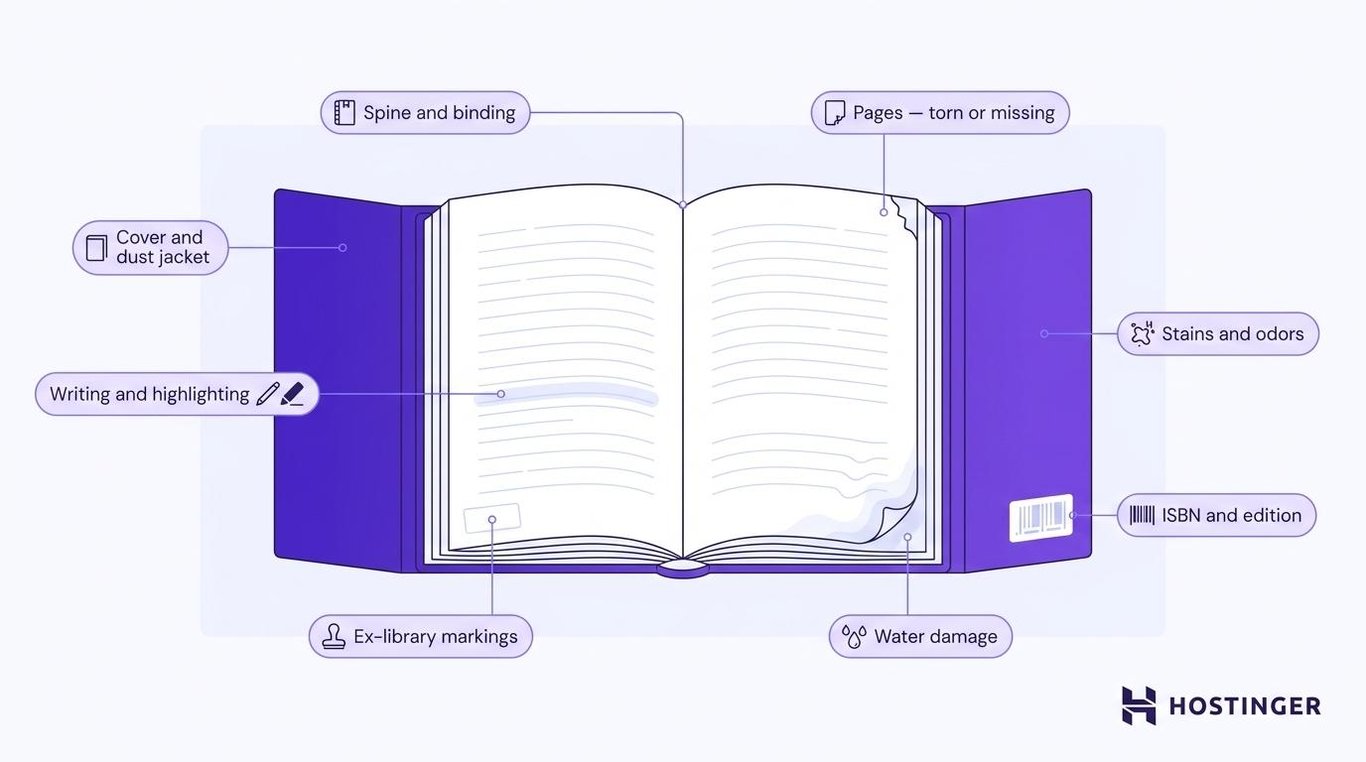
Buyback companies set their own condition rules. Read them before sending the package, as a company may reduce the offer or reject books that don’t meet its requirements.
For collectible books, also verify the printing, signature, dust jacket, and any records showing where the book came from. A specialist bookseller or appraiser can help when the edition or signature is difficult to verify.
4. Take clear book photos
Photograph the book in soft, even light against a clean background so buyers can see its edition and condition.
Indirect daylight near a window works well. A small lightbox is another option when the room is dark.
Avoid direct flash, strong glare on glossy covers, heavy filters, and busy backgrounds. These can hide damage or make the book’s color look inaccurate.
Photograph:
- Front cover
- Back cover
- Spine
- Copyright and edition page
- ISBN and barcode
- Top, bottom, and side page edges
- Dust jacket
- Signature or inscription
- Maps, cards, inserts, or other included materials
- Writing, tears, stains, creases, and binding damage
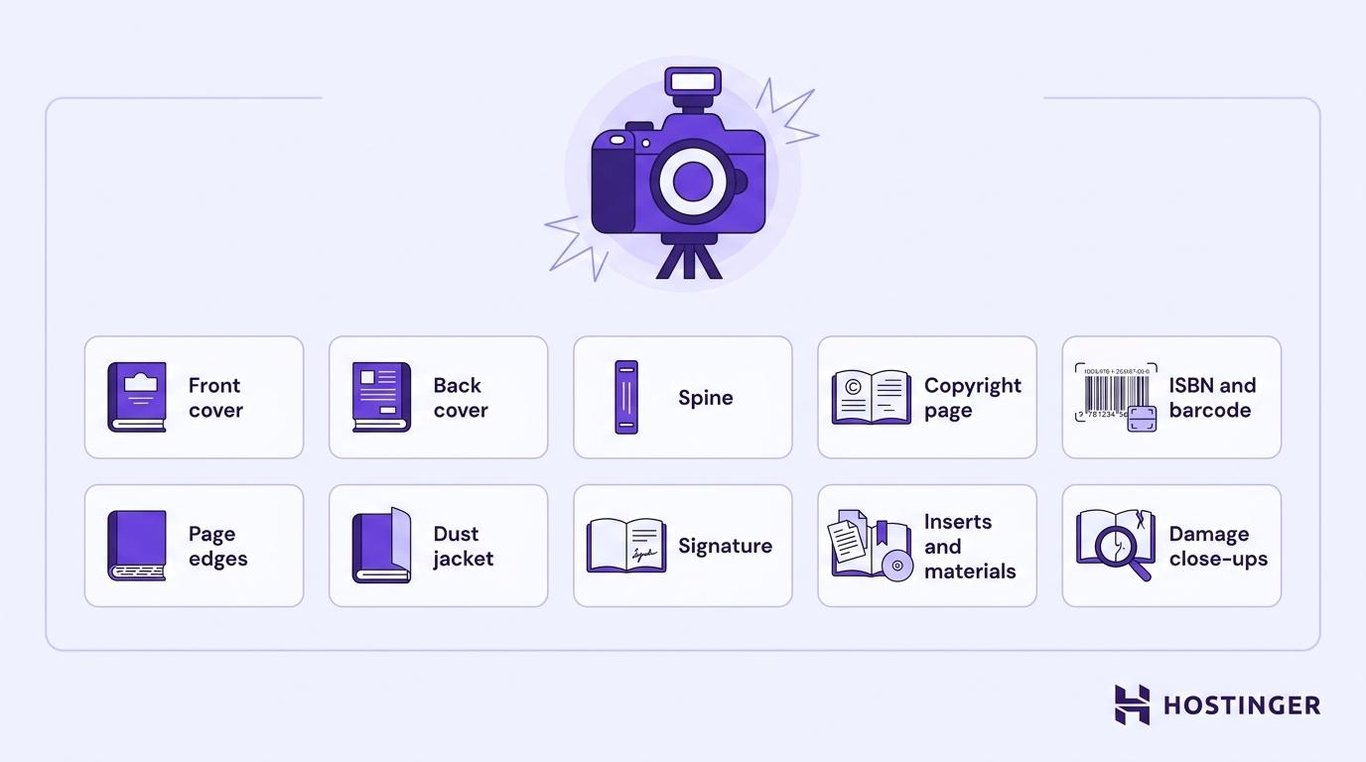
Take close-up photos of every flaw you mention in the listing. A buyer who can see a torn jacket or highlighted pages knows what will arrive, which can reduce the chance of a return or complaint.
Buyback services may not require photos before providing an offer, but make sure to photograph valuable books before shipping them. The images will give you a record of their condition if the package is lost or damaged.
Marketplace and store listings rely more heavily on photos because buyers cannot inspect the book themselves. Keep the lighting and framing consistent across your listings, but don’t edit the images to hide wear or change the book’s color.
5. Write an accurate book listing
Write a listing that identifies the exact book, explains its condition, and details what the buyer will receive.
Include:
- Title and author
- ISBN
- Format and binding
- Edition and publication year
- Publisher
- Condition
- Writing, highlighting, stains, odors, or damage
- Dust jacket and extra materials
- Shipping method and handling time
- Return and refund terms
Avoid labels such as “good condition” without an explanation. Different buyers and platforms interpret condition labels differently. Describe what you can see:
Paperback with light wear on the cover, a crease on the back, and highlighting on about 15 pages. The binding is secure, and no pages are missing.
This tells the buyer exactly what is damaged and what remains intact.
For rare or collectible books, include the printing details, signature details, dust jacket condition, and any documents that support their provenance – the record of where the book came from – or its authenticity.
If you include a summary, write it in your own words. Publisher-written descriptions and other original marketing copy may be protected by copyright, so reuse them only when you have permission, a license, or another lawful basis to do so.
When writing clear product descriptions, put the ISBN, edition, condition, and missing materials near the top. A buyer shouldn’t need to read several paragraphs to find these details.
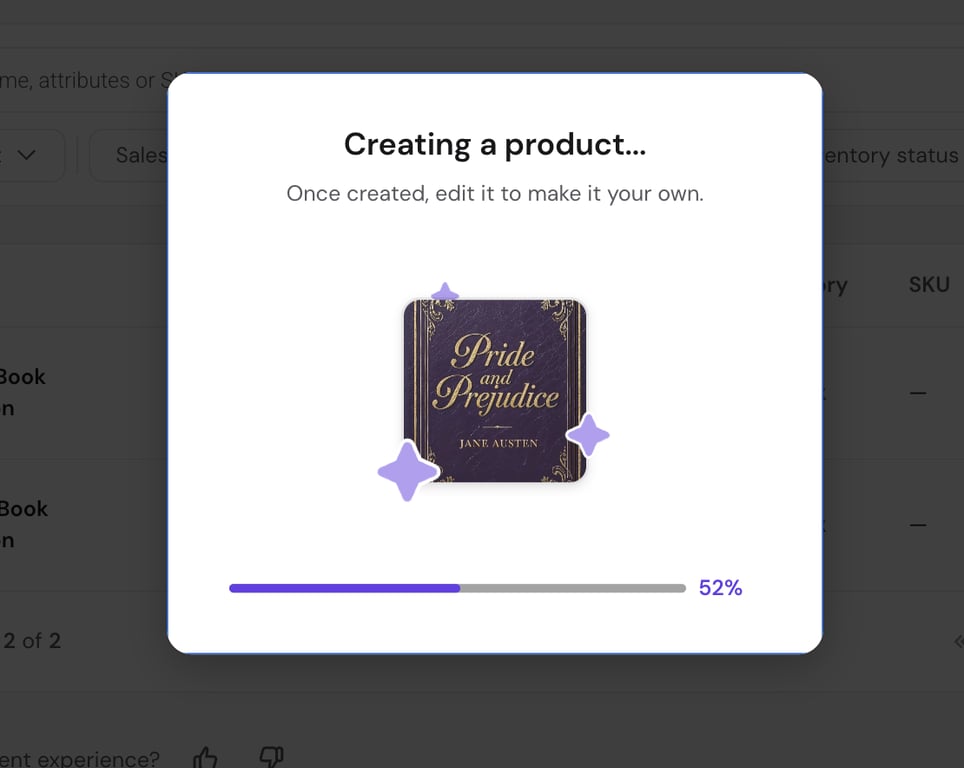
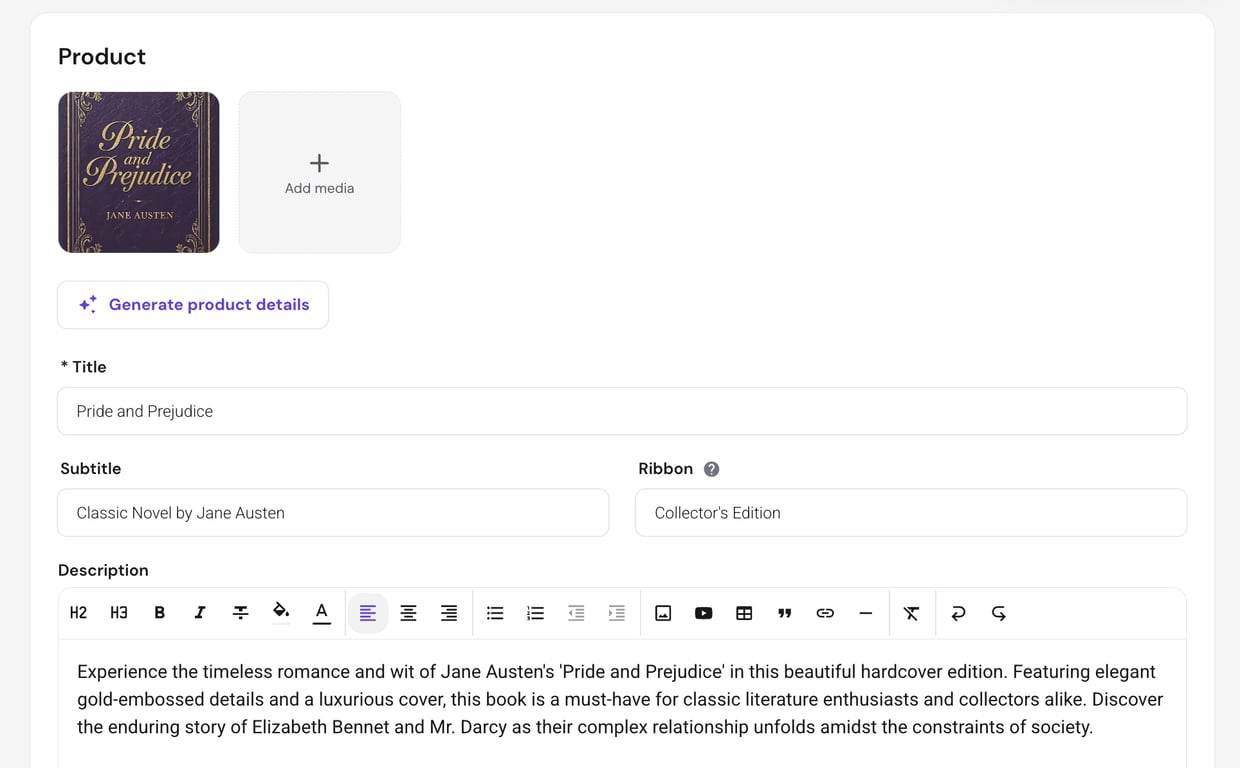
If you’re adding many books to your own online store, writing every description from scratch takes time. Hostinger Ecommerce can generate an editable product description from uploaded product images. Review the draft before publishing, then add details the image cannot confirm, such as the exact ISBN, edition, writing, odors, and missing materials.
6. Set the right price for your books
Set the price by comparing what buyers have paid for the same edition, not only what other sellers are asking.
Start with the exact ISBN and compare:
- Buyback quotes
- Recently completed marketplace sales
- Current listings for the same edition
- The book’s condition
- The binding and publication year
- Included access codes or extra materials
- How many comparable copies have sold recently
Completed sales provide better evidence than unsold listings. A seller can ask $100 for a book that buyers regularly purchase for $25.
Next, calculate what you’ll keep after the sale. Subtract:
- Marketplace or platform fees
- Payment-processing fees
- Shipping
- Packaging
- Insurance
- The amount you paid for the book
- Cleaning or repair costs
- Return shipping and refund costs you expect to cover
When calculating a profitable product price, include every cost tied to the sale.
For example, suppose a book sells for $30. A $5 marketplace fee, $6 shipping cost, $1 packaging cost, and $8 purchase cost leave you with $10 before tax and other business expenses.
The right pricing method depends on the book and where you sell it:
- Instant buyback offer. Accept the buyer’s price in return for a quicker sale with less listing work.
- Fixed price. Choose the amount and wait for a buyer.
- Accepting offers. Set an asking price but allow buyers to suggest a lower amount.
- Auction. Let buyers compete by bidding. This can work well for unusual or collectible books when several buyers are likely to compete.
- Bundle pricing. Group low-value books by author, series, genre, subject, or reading level. Bundles make shipping more worthwhile when a single book isn’t valuable enough to sell on its own.
Rare, signed, or historically important books are harder to price from ordinary marketplace results. Ask a specialist bookseller, auction house, or qualified appraiser before accepting a quick offer for an expensive copy.
7. Set up payments, packaging, and shipping
Set up payments and delivery depending on whether you’re using a buyback service, a marketplace, or an independent store.
- Buyback services often provide a prepaid shipping label after you accept an offer. The company pays after receiving and inspecting the books.
- Marketplaces can collect the buyer’s payment and generate a shipping label. Some platforms hold the money until the order is delivered or completed.
- Independent stores let you choose the payment provider, shipping methods, prices, tracking rules, and return policy.
Keep the tracking number when using a buyback service. The company may need it if the package is delayed or lost. Check the shipping deadline as well. Some buyback offers expire if the parcel isn’t sent within a set number of days.
For marketplace sales, confirm:
- Whether the buyer or seller pays for shipping
- Whether the platform provides the label
- When the payment becomes available
- What protection applies if the parcel is lost or damaged
- Who pays for an approved return
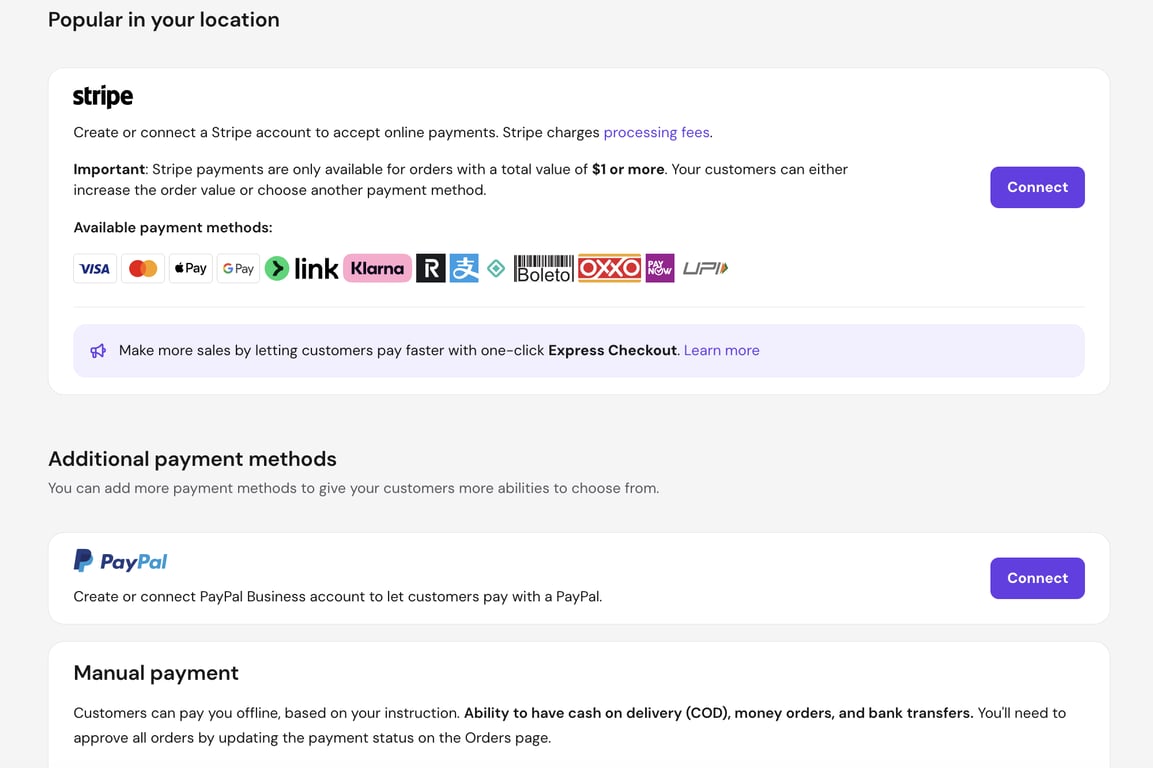
With an independent store, a secure payment gateway transmits payment information for authorization and returns the transaction result to the store. It tells the store whether the payment succeeded without exposing the card details to the seller.
For sellers using Hostinger Ecommerce, customers can pay through more than 100 supported payment methods across its payment integrations. The exact options depend on the store’s country, currency, and connected payment provider.
Hostinger doesn’t add a platform transaction fee, although the payment provider can still charge its own processing fee.
Physical books need to be packed and shipped. Digital products such as ebooks can be delivered automatically to customers after purchase.
Record each type of charge separately so you know what you keep from every order:
- Platform fee. The marketplace’s charge for providing the listing, audience, checkout, or seller services.
- Payment-processing fee. The payment provider’s charge for handling the transaction.
- Shipping cost. The carrier’s charge for delivering the parcel.
- Packaging cost. The price of the mailer, box, board, wrap, tape, and other protective materials.
Good packaging for ecommerce orders helps protect the book from bending, shifting inside the parcel, or getting wet.
Pack a book in this order:
- Place it in a waterproof sleeve or clean plastic bag.
- Protect the cover and corners with cardboard or padding.
- Put it in a rigid mailer or a correctly sized box.
- Fill the space so the book cannot move.
- Seal every opening securely.
- Attach the label without covering its barcode.
Use tracking for shipped orders. Add insurance or signature confirmation for rare, signed, or high-value books. Photograph the book and sealed package before shipping so you have a record if the buyer reports damage.
Your return policy should state:
- How long the buyer has to report a problem
- What condition the book must be in when returned
- Who pays for return shipping
- When the refund will be issued
- Whether digital purchases can be refunded
8. Market your books online
Use marketplace search, Google, BookTok, reader groups, and email to reach people looking for the titles or genres you sell.
The right approach depends on the type of seller:
- Occasional sellers need searchable marketplace titles, exact ISBNs, competitive prices, and clear photos.
- Book resellers need consistent listings, good seller ratings, useful bundles, and a clear category to focus on.
- Independent bookstores need visibility in Google, customer reviews, email campaigns, and reasons for buyers to return.
- Self-published authors need sample chapters, early readers, reviews, launch campaigns, and a mailing list.
On marketplaces, use the exact title, author, ISBN, edition, binding, and important condition details. These details help buyers distinguish your copy from other editions and listings.
Build your ecommerce marketing strategy around the genres, authors, and reader groups you stock.
Use the channels where your buyers search for books and recommendations:
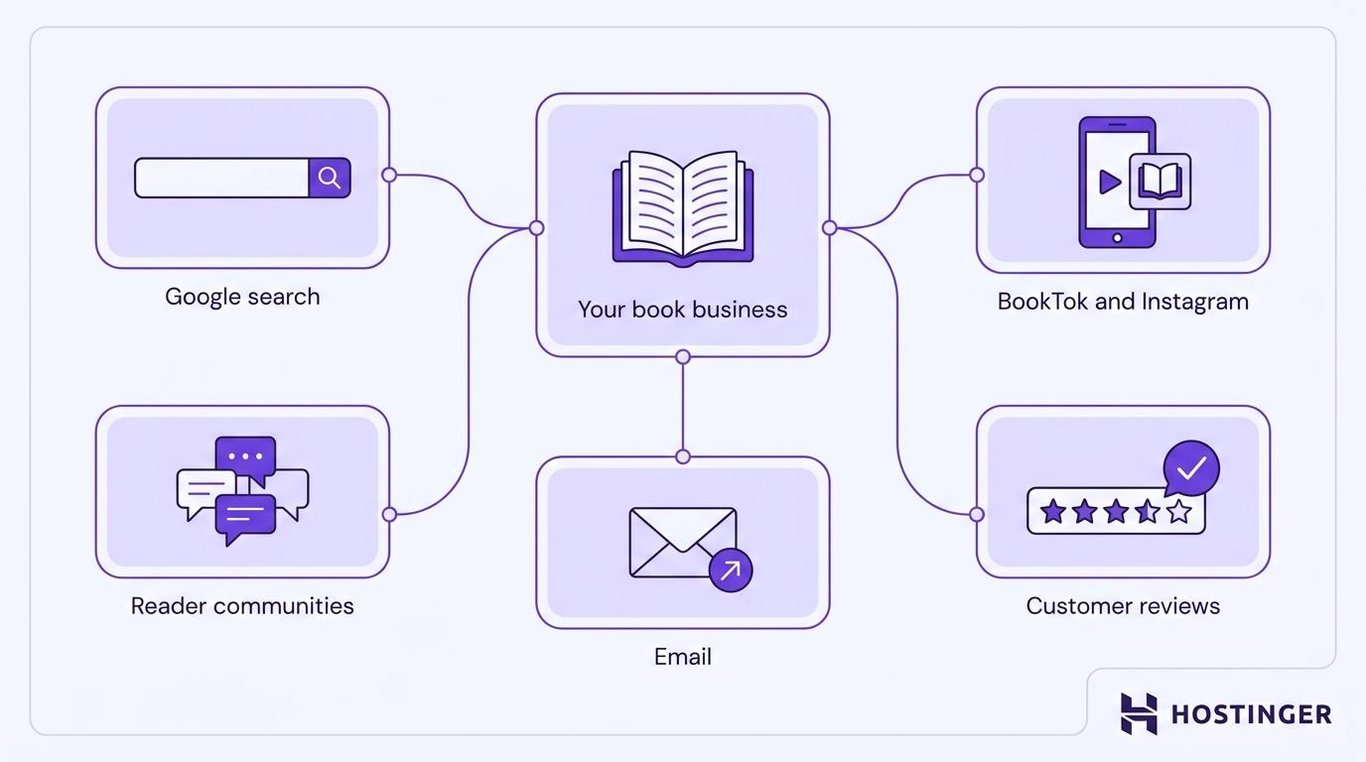
- Google search. Create clear pages for authors, genres, editions, subjects, and book categories.
- BookTok and Instagram. Share short reviews, reading lists, new arrivals, cover details, and videos of collectible features.
- Reader communities. Join local book groups, genre communities, collector forums, school groups, and university groups where selling is allowed.
- Email. Send new-arrival alerts, preorder announcements, restock notices, reading lists, and recommendations. Email marketing for ecommerce becomes useful when you regularly have new stock, releases, or offers to share.
- Customer reviews. Ask buyers to review the book’s condition, packaging, delivery, and service.
Self-published authors should start promoting before the release date. Offer a sample chapter, recruit early readers, and collect reviews before release. Give mailing list subscribers early access or a launch discount, then keep the list for future books rather than rebuilding the audience for each release.
How to grow your online book business
Grow your online book business by restocking books that sell profitably, encouraging buyers to return, and keeping your catalog and orders organized.
Track which titles, genres, price ranges, and sales channels leave the most money after fees, packaging, and shipping. Use those results to decide what to buy again, what to bundle, and what to stop selling.
When the same categories continue to sell profitably, set a weekly routine for sourcing, photographing, listing, packing, and checking stock.
Marketplaces help new buyers find your books, while starting your own online bookstore gives you more control over prices, branding, customer communication, and repeat purchases.
You don’t need to leave every marketplace at once. Keep using the channels that produce profitable sales while building your own audience through your store.
When the same book is listed on several channels, manage stock and orders in one place so a copy sold on one channel is removed from the others. This prevents canceled orders caused by selling the same copy twice.
As orders increase, scaling your ecommerce business becomes easier when you use a single process to update stock, pack orders, handle returns, and respond to customers.
Use Hostinger Ecommerce to manage physical books, ebooks, inventory, and orders across your website, quick product links, and any custom storefront you connect, all from one dashboard.
This article is a localized version of How to sell books online in 8 steps, originally published in English.

Alma is an AI Content Editor with 9+ years of experience helping ideas take shape across SEO, marketing, and content. She loves working with words, structure, and strategy to make content both useful and enjoyable to read. Off the clock, she can be found gaming, drawing, or diving into her latest D&D adventure.

Auksė Žirgulė is Vice President of Product at Hostinger, where she focuses on innovating products that help people build and grow their online presence. She currently leads Hostinger AI Builder and Hostinger Ecommerce. Passionate about solving real customer problems, Auksė enjoys turning customer insights into products that drive both user value and business growth. Follow her on LinkedIn.